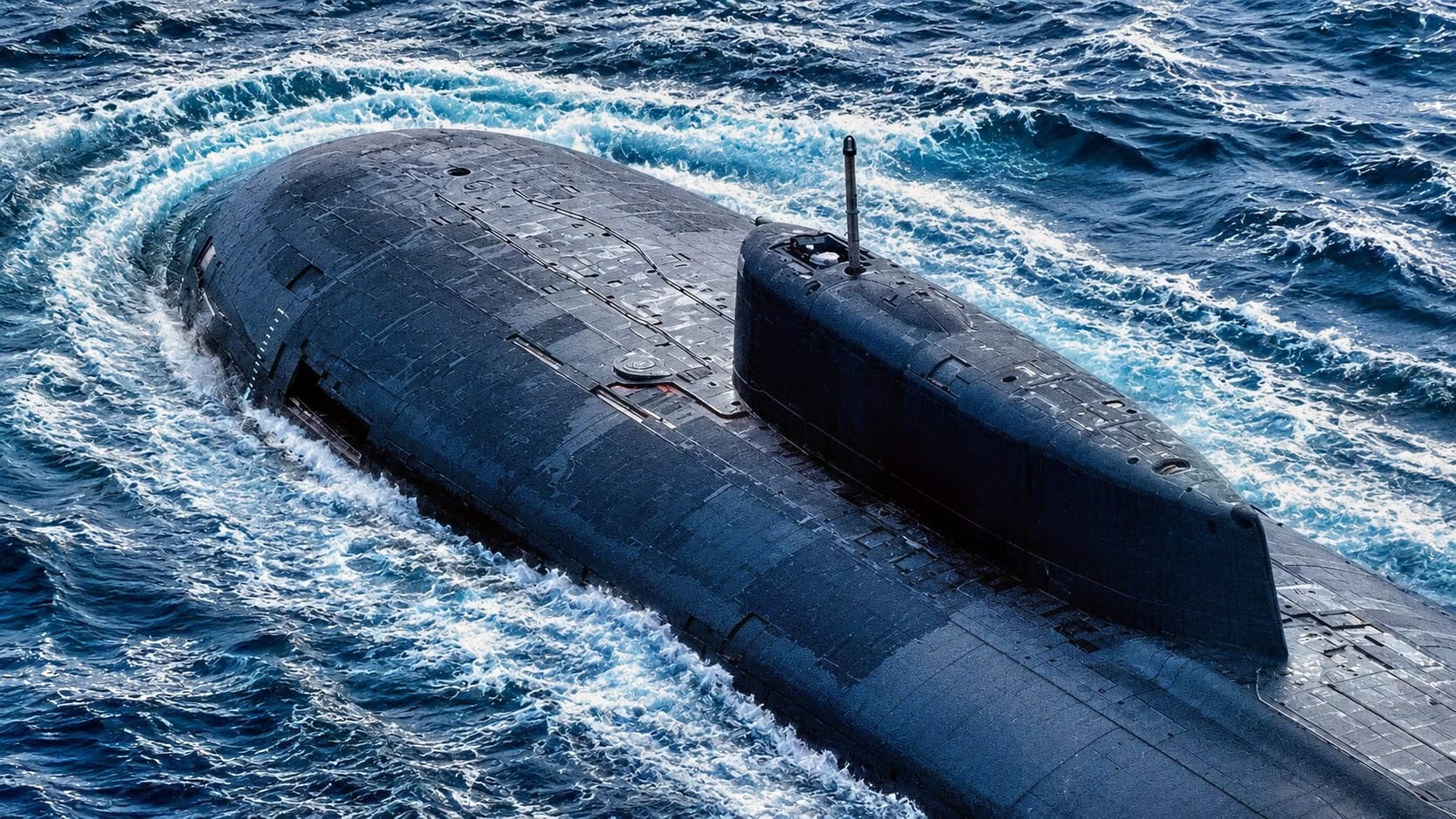
The Oscar-class was one of the Soviet Navy’s most specialized Cold War submarine classes, designed with a singular purpose: to destroy NATO carrier battle groups from long ranges.
Armed with a variety of torpedoes and cruise missiles — including some with nuclear warheads — the nuclear-powered missile submarines would have been some of the most important Soviet platforms afloat.
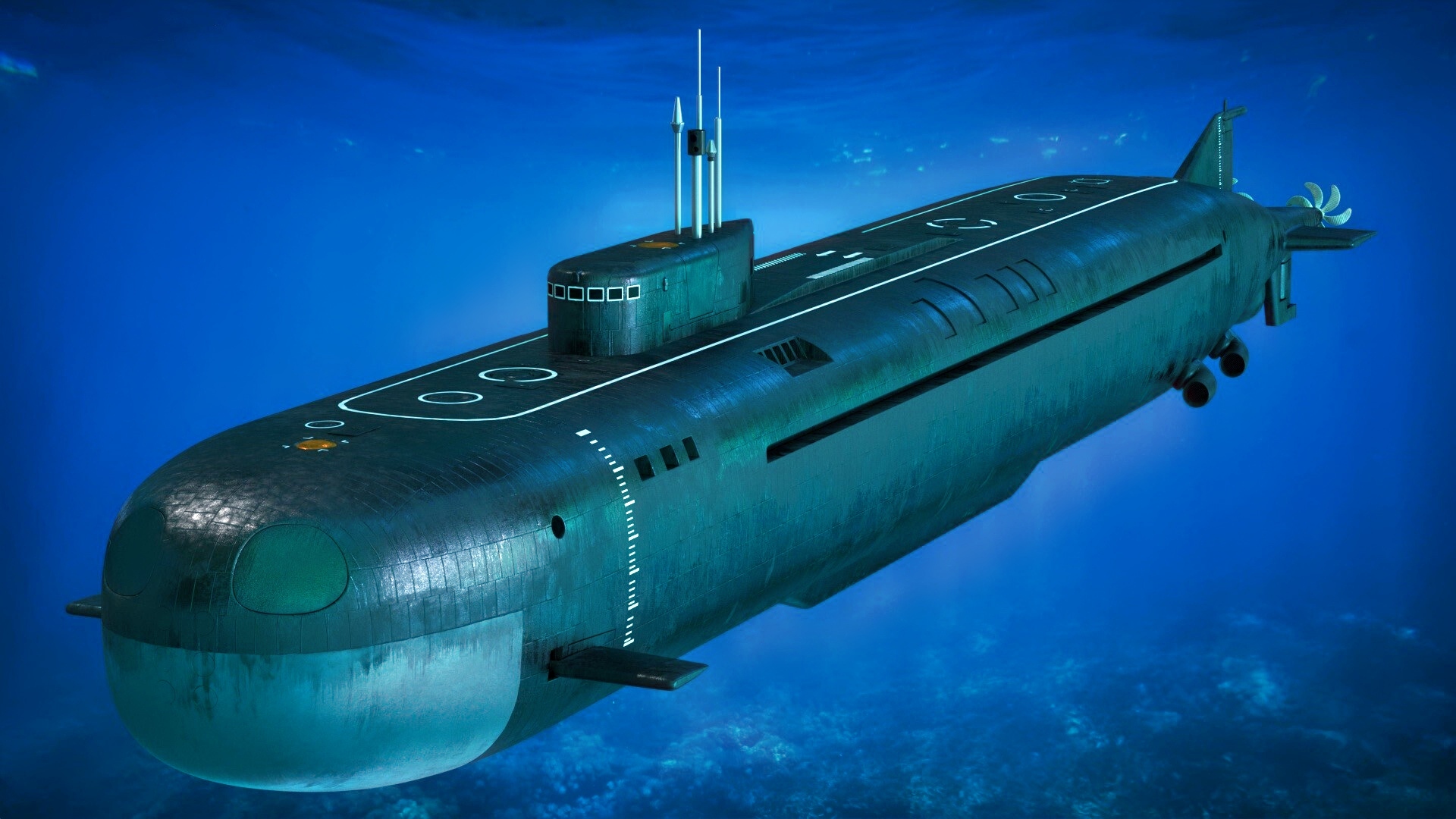
Belgorod Oscar II-Class Submarine. Image Credit: Creative Commons.
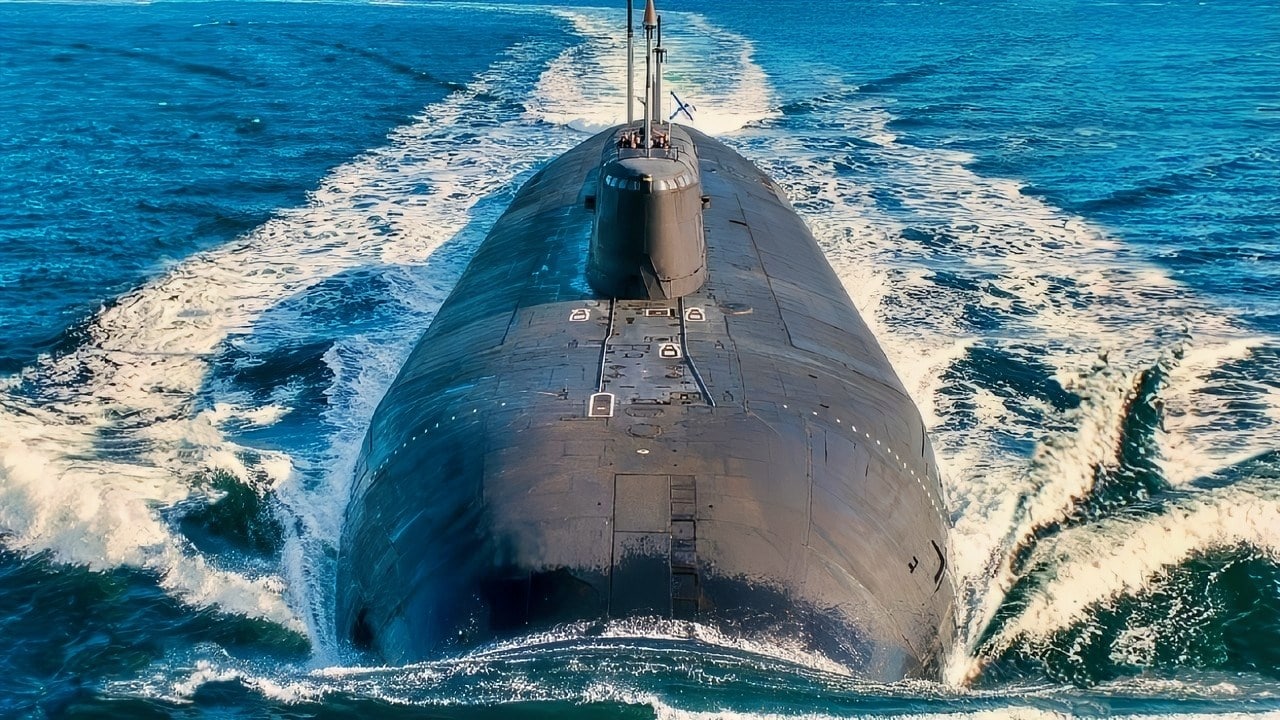
Oscar II-Class Submarine. Image Credit: Creative Commons.
A Singular Purpose for Oscar-Class: Sink U.S. Navy Aircraft Carriers
According to Soviet battle planning, American aircraft carriers and their strike groups would have been among the top targets had the Cold War ever turned hot. The Oscar-class submarines were enormous.
At about 24,000 tons when submerged, they are some of the largest cruise missile submarines ever built, a size exceeded only by the Soviet Navy’s Typhoon-class ballistic missile submarines, the Russian Navy’s Borei-class, and the U.S. Navy’s Ohio-class ballistic missile submarines.
The submarine’s broad beam and visually distinctive hump-back appearance were partially responsible for its enormous size, for within that hump were arranged 24 anti-ship missile launchers around the sides of the submarine’s sail.
Double-hulled and highly compartmentalized, the submarines were considered survivable for their crew of around 100 sailors.
A pair of nuclear reactors powered the submarines, giving them an unlimited range and endurance crimped only by the crew’s food requirements.

Oscar-Class. Image: Creative Commons.
P-700 Granit: a Carrier-killing Missile
The Oscar-class submarines were built around the P-700 Granit missile.
Designed to fly at supersonic speeds and boasting a range of 400-650 kilometers, the missile could be conventionally or nuclear armed.
Soviet naval doctrine envisioned multiple missiles launched by several Oscar-class submarines in tightly coordinated salvos to ensure a reliable strike.
Despite the missiles’ Cold War vintage, they could network with each other, sharing targeting information among themselves while in flight.
Some missiles in each salvo would fly to a higher altitude to look for targets, while other missiles in the salvo would remain at a lower altitude.
Once a target was acquired, the goal would be to overwhelm a carrier battle group’s air defenses through overwhelming speed and volume.

Oscar II Class Submarine. Image Credit: Creative Commons.
The Subdivisions: Oscar I & Oscar II
The Oscar-class is divided into two subclasses. The first Oscars, also called Project 949, was the original submarine design.
Only a pair of them was built. Entering service in the early 1980s, the submarines served as a proof of concept for the subsequent, more numerous Oscar IIs.
The Soviets dubbed the follow-on to the class as Project 949A, better known as the Oscar II-class. Compared to its predecessor, it was around 10 meters, or nearly 33 feet, longer.
The design incorporated improved electronics and measures to reduce the class’s acoustic signature. Eleven Oscar II-class submarines were built.
Following the collapse of the Soviet Union and the end of Cold War hostilities, the Russian Navy instituted a modernization program for the submarines it had inherited from the Soviet Navy.
The class saw its weapons package modernized, with its original Granit missiles replaced by newer Kalibr and Oniks missiles.
These afforded the submarines much greater operational flexibility.
Rather than serving almost exclusively as aircraft-carrier-hunting platforms, the class’s missile modernization afforded them a substantive land-attack capability as well.
The Kursk Disaster
Undoubtedly, the most well-known Oscar-class submarine was the K-141 Kursk and the infamous Kursk disaster. In August of 2000, the Kursk was part of a major Russian naval exercise in the Barents Sea when a torpedo on board suffered a catastrophic failure and exploded.
That initial explosion triggered a chain of secondary detonations within the Kursk’s torpedo compartment and caused the submarine to sink with all 118 sailors aboard.
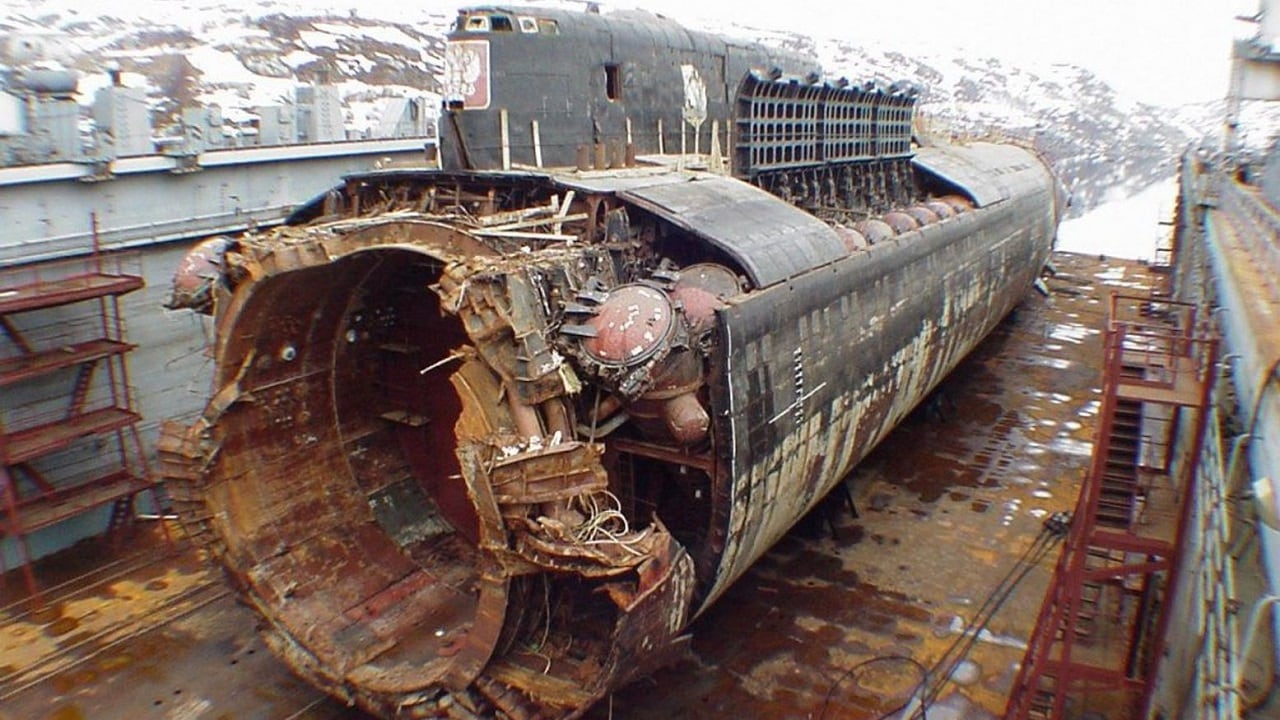
Image of Kursk submarine after accident. Image Credit: Russian Government.
The disaster was, by itself, enormously significant, but also politically sensitive due to Russia’s initial slow response and reluctance to accept offers of assistance from foreign countries.
The Oscar-class Legacy
The Oscar-class was, in some respects, the pinnacle of the Soviet Union’s naval doctrine.
While the United States Navy, the Soviet Navy’s arch-rival, placed a premium on carrier aviation and flexible, multi-role submarines, the Soviet Navy took a different tack, investing instead in highly specialized platforms intended to project power broadly around the globe, but to locate and destroy American carrier battle groups.
Some of the Soviet-era Oscar-class submarines still serve within the Russian Navy today, albeit with a more flexible mission set that can include attacking targets on land.
But their original design as carrier-killing behemoths remains distinct, and explains their incredible displacement and overwhelming firepower potential.
About the Author: Caleb Larson
Caleb Larson is an American multiformat journalist based in Berlin, Germany. His work covers the intersection of conflict and society, focusing on American foreign policy and European security. He has reported from Germany, Russia, and the United States. Most recently, he covered the war in Ukraine, reporting extensively on the war’s shifting battle lines from Donbas and writing on the war’s civilian and humanitarian toll. Previously, he worked as a Defense Reporter for POLITICO Europe. You can follow his latest work on X.