
Connect with us

Hi, what are you looking for?

Aerospace & Defense

Forget the US Air Force F-22, F-35 or F-47 NGAD: The Eurofighter Typhoon Is Stacking Billions of Dollars in Fighter Orders

The Eurofighter Typhoon, developed by Airbus, BAE Systems, and Leonardo, was designed during the Cold War and is now expected to serve into the 2060s. So far, 89 orders have been placed for the new Tranche 5 variant — Germany first, followed by Spain, Italy, and Turkey, which signed for two sets of 20 — with deliveries running from 2031 to 2034. The upgrade centers on the ECRS Mk 1/2 radar, the Saab-built Arexis electronic-warfare suite in German orders, and a pivot toward SEAD and DEAD missions. After the Franco-German FCAS program was officially canceled in June, Berlin’s fallback is the fighter it already flies, operating alongside American F-35s.

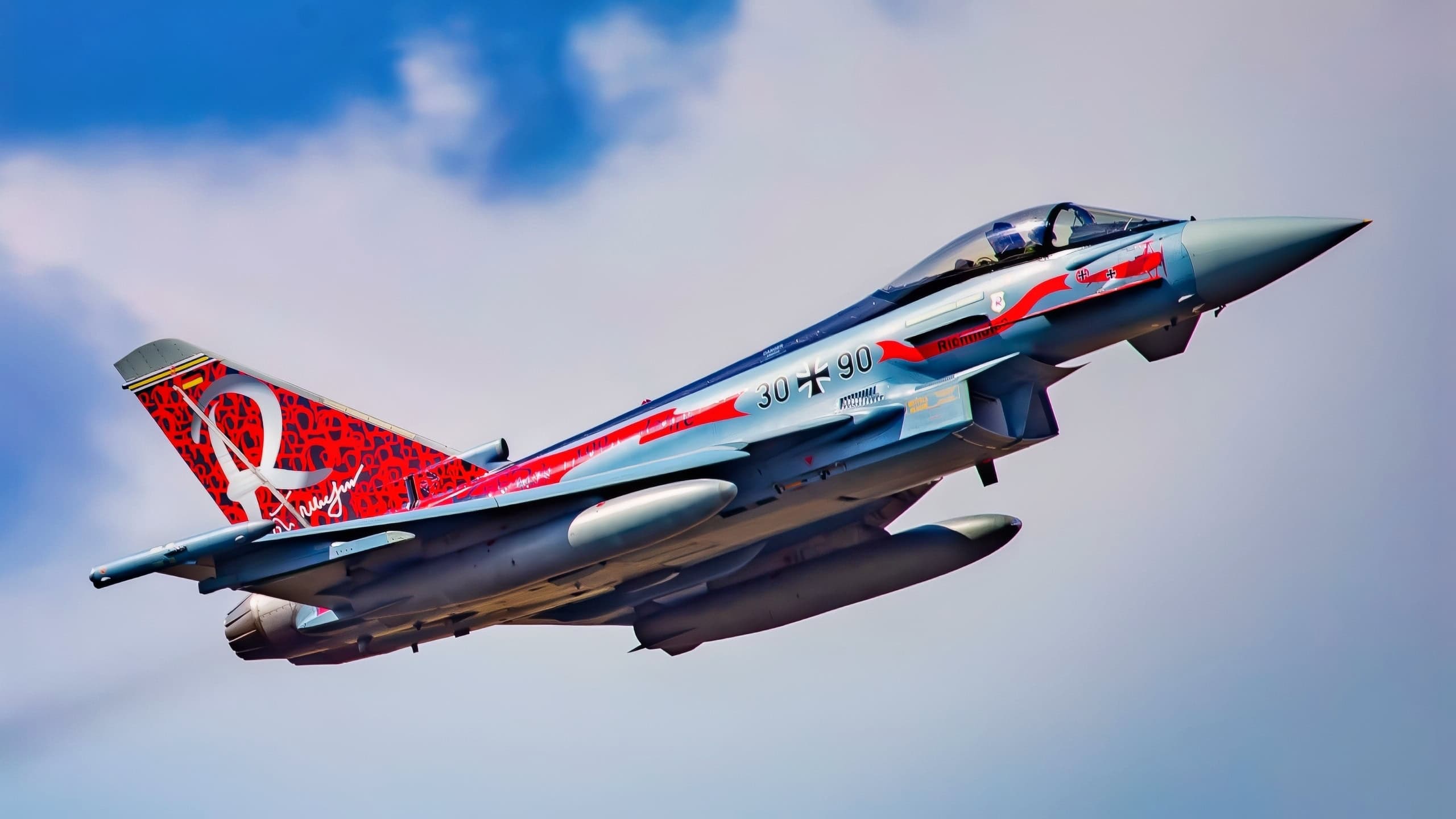
Eurofighter Typhoon In The Sky NATO
Eurofighter Typhoon In The Sky NATO. Image Credit: Creative Commons.

The Eurofighter Typhoon is a single-seat, multirole fighter developed by a multinational consortium comprising Airbus, BAE Systems, and Leonardo.

Although it was originally designed during the Cold War, it remains an important staple of many air forces in Europe and around the world.
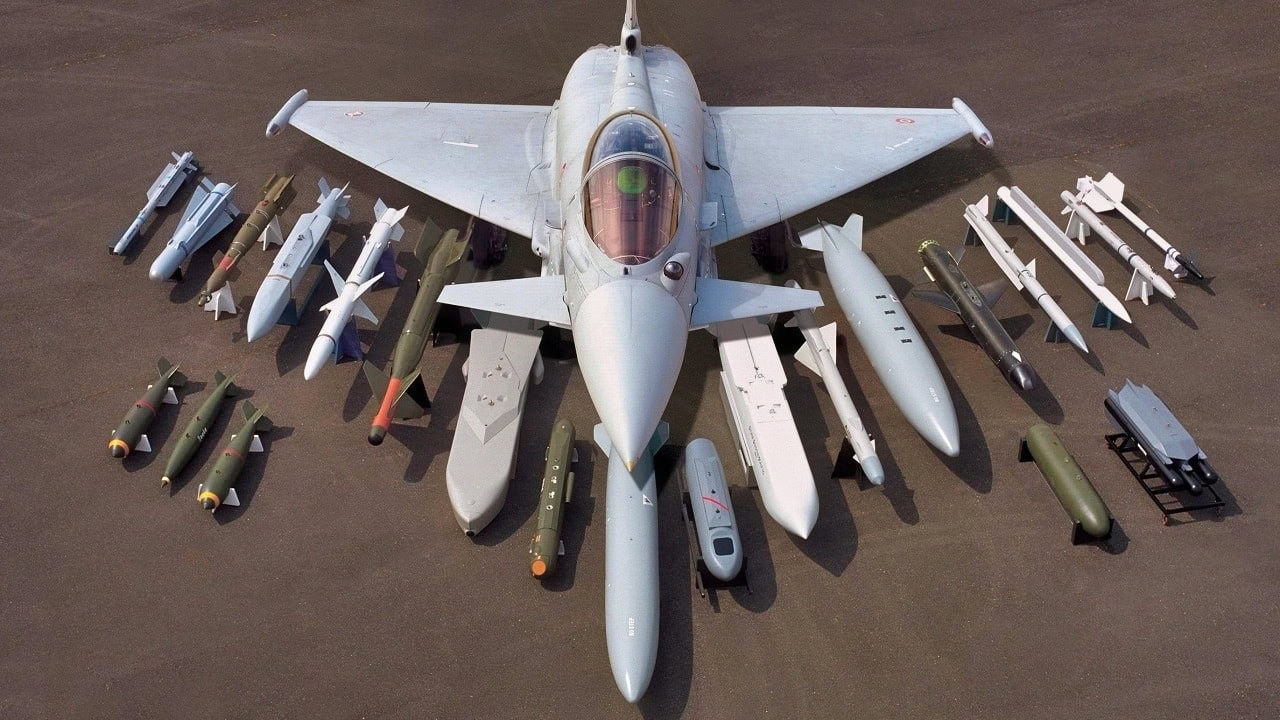
Eurofighter Typhoon

Eurofighter Typhoon. Image Credit: Creative Commons.
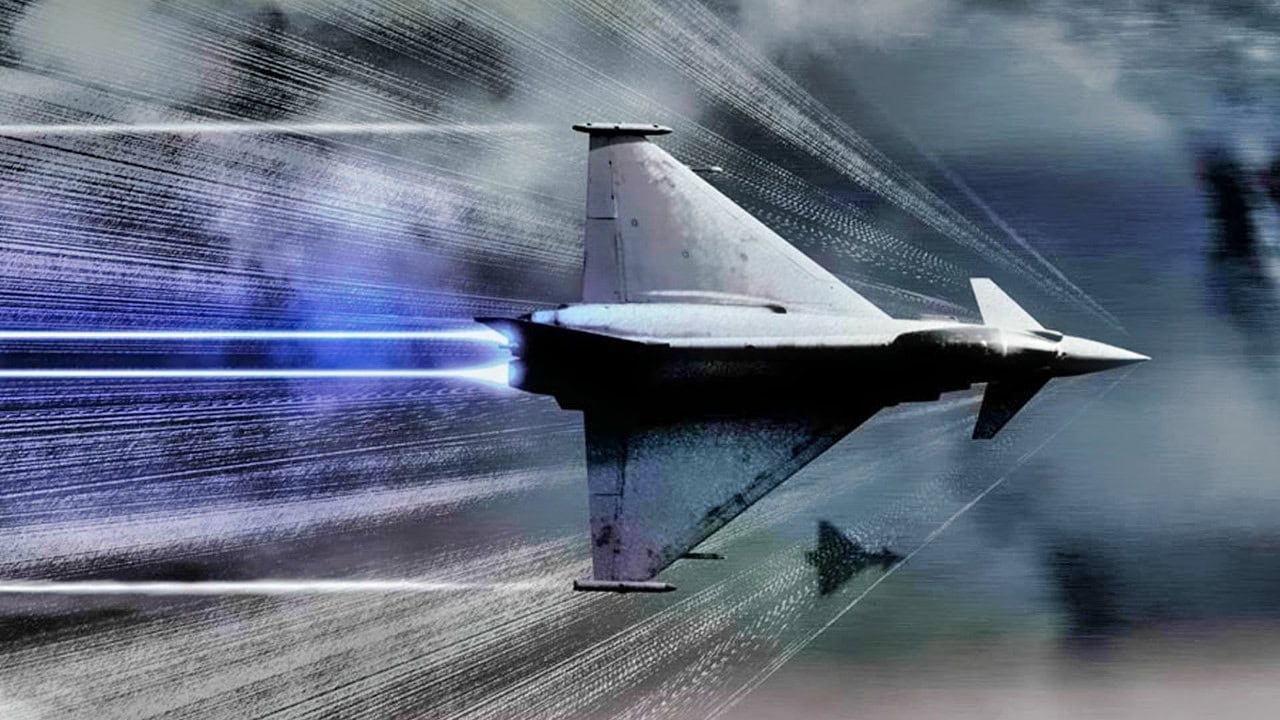
Eurofighter Typhoon Fighter.

Eurofighter Typhoon Fighter. Image Credit: Creative Commons.

The Eurofighter was originally designed as a dedicated air-superiority fighter but gradually evolved into a highly capable multi-role aircraft.

Despite the current fixation on fifth- and sixth-generation aircraft, the Eurofighter is expected to remain in service well into the 2060s.

Currently, the Tranche 4 is the most advanced variant of the aircraft in operation, with orders already underway for the new Tranche 5 variant. 

What We Know About the Eurofighter Tranche 5

Not much is currently known about the upcoming Tranche 5 variant. From what we know, it retains many of the same features as the Tranche 4 aircraft. According to Airbus, the new variant is expected to be equipped with the European Command Radar System (ECRS) Mk 1/2 AESA radar.

This new system is described as one of the latest and most advanced, though few details are known about it.

The ECRS Radar replaces the previous Captor-E AESA radar, which was a perfectly capable system in its own right.

The new Tranche 5 seems to place particular emphasis on electronic warfare capabilities, with German orders including the Arexis sensor suite, developed by Saab in Sweden.
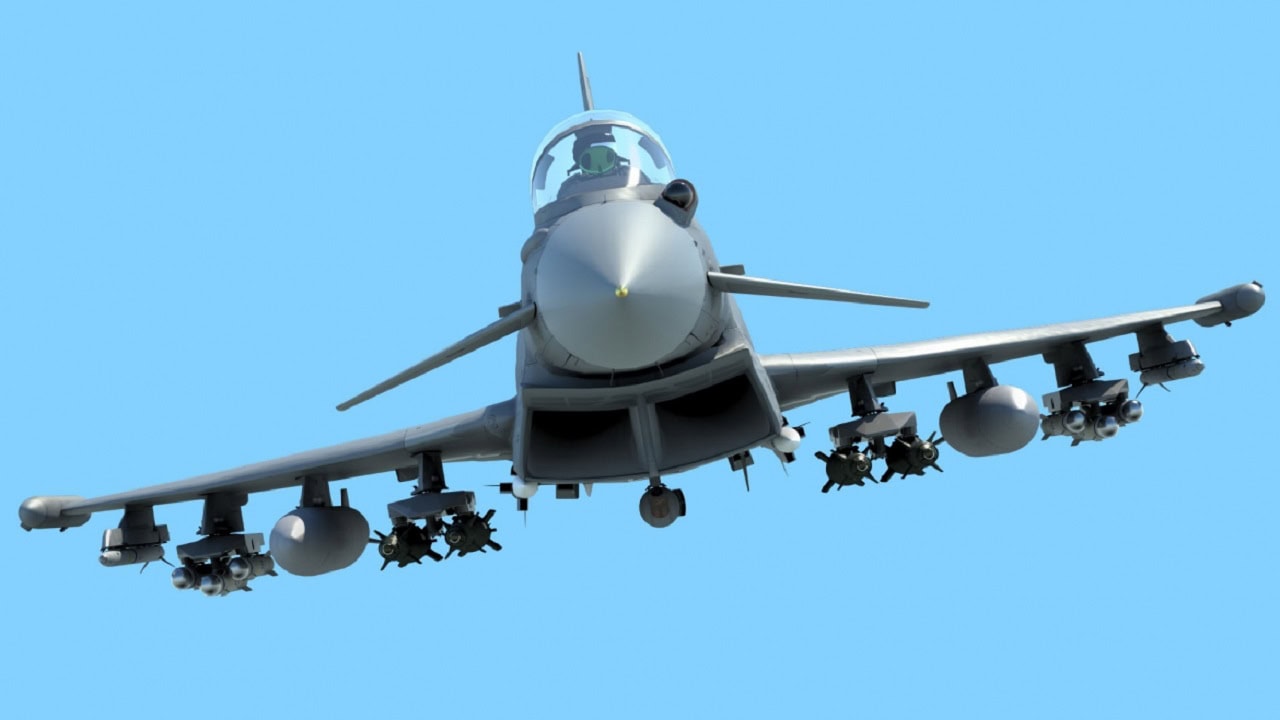
Eurofighter Typhoon

Typhoon fitted with the common launcher (computer generated image: for illustrative purposes only)

Other known upgrades include an improved cockpit interface and enhanced Radio Frequency Interoperability (RFIO).

The aim seems to be to transform the Eurofighter into an EW and SEAD/DEAD aircraft, giving it better air-to-ground capabilities and enhanced survivability in contested environments.

The aircraft is intended to act as both a stopgap and a testbed for fifth- and sixth-generation technologies. As Mike Schoellhorn, CEO of Airbus Defense and Space, explained, “The continued evolution of the Eurofighter serves as an essential technological and operational bridge to a Future Combat Air System (FCAS), ensuring a seamless transition to the next generation of air power.

With these additional Eurofighters, Germany strengthens its ability to conduct surveillance of its airspace and secure NATO’s skies, supporting Germany in its role as a reliable partner for collective security.”

Current Orders

So far, 89 orders have been placed for Tranche 5 Eurofighter Typhoons. Germany was the first to place an order for the new aircraft, followed by Spain, Italy, and Turkey, which signed a deal for two sets of 20 aircraft. “The order ensures production continuity, preserves critical capabilities along the entire supply chain and strengthens Europe’s defense capability for the coming decades,” said Jorge Tamarit-Degenhardt, the CEO of Eurofighter GmbH.

“With a planned service life well beyond 2060, the Eurofighters will be fully integrated into the future European air combat environment.” The German Luftwaffe plans to operate Tranche 5 Eurofighters alongside American-made F-35 fifth-generation stealth fighters.

Delivery of Tranche 5 aircraft is set to begin in 2031 and end in 2034.

In Germany, the aircraft are expected to replace Germany’s aging Panavia Tornado fighters, which have been in service with the Luftwaffe since the 1970s.

The aircraft are also set to replace older Tranche 1 variants, which are still in service in some NATO air forces. Germany had originally partnered with France and Spain to develop FCAS.

However, in June, the project was officially canceled due to disputes between France and Germany.

With no other options, the Germans are left with no better option than to double down on the Eurofighter for the future of its air force.

Other reports suggest that Berlin may be interested in joining the Global Combat Air Program (GCAP) with the UK, Japan, and Italy. 

The Eurofighter vs Fifth-Gen Fighters

There is a conversation to be had over what exactly the Eurofighter Typhoon’s place is on a battlefield that is gradually shifting in favor of low-observable platforms.

There are a couple of things to note in this regard. First, fifth-generation capabilities do not guarantee survival in today’s battlefield. This was firmly demonstrated over the skies of Iran when an F-35 was struck by a MANPADS missile. While the aircraft managed to make it back to base by all accounts, it still sustained heavy damage and is “unlikely to return to combat” anytime soon.

Fourth-generation aircraft are still heavily utilized in both the war in Ukraine and the war in the Middle East. They are (sometimes) cheaper to maintain than their fifth-generation counterparts and are still perfectly capable enough for modern combat operations.

The Eurofighter Typhoon is not a bad aircraft by any means, even with its lack of comprehensive stealth systems.

Its twin EJ200 engines allow it to exceed Mach 2.35 and supercruise at Mach 1.25. Likewise, the aircraft is decently maneuverable. Originally designed as an air superiority fighter, the Eurofighter’s canard-delta configuration allows it to perform sharp turns, which is good for both close-range and BVR combat.

While it is not an F-35, its avionics are still advanced, especially on Tranche 4+ aircraft. Is it as good as a fifth-generation aircraft?

In some ways, no, but in most ways, it can perform as well in air-to-ground roles as some newer fighters. 

MORE – Battleship USS California Came Back from Being Sunk 

About the Author: Isaac Seitz

Isaac Seitz, a Defense Columnist, graduated from Patrick Henry College’s Strategic Intelligence and National Security program. He has also studied Russian at Middlebury Language Schools and has worked as an intelligence Analyst in the private sector.


Written By

Isaac Seitz graduated from Patrick Henry College’s Strategic Intelligence and National Security program. He has also studied Russian at Middlebury Language Schools and has worked as an intelligence Analyst in the private sector.

1 Comment

1 Comment

  1. Laotse

    August 4, 2026 at 5:02 am

    It is no wonder Merz reacts furiously when it comes to the freeloading off German developments, especially after France was bluntly shown at the ILA who the actual high-tech developer was and is! He kicked France out of the FCAS program simply because he could! Between 1998/99 and 2029, the German military secretly commissioned the DLR and Fraunhofer Institute to develop the NGF (Next Generation Fighter) featuring the NGFE all-ceramic engine! According to the DLR, the “Diabolo” engine—featuring the NGFE core, 227 kN of wet thrust in peacetime mode, and 500 kW of power output (effectively 554 kN and 1000 kW)—could be realized as a working prototype between 2026 and 2028!
    You claim that Airbus, BAE, and Leonardo developed the Eurofighter? That is completely incorrect!
    In 1970, MBB—in conjunction with the government—commissioned the development of the “Jäger 90” (Eurofighter) by the DLR and Fraunhofer Institute! Because the technology was not yet sufficiently advanced, the Tornado was developed as a crucial intermediate step! For this, the Fraunhofer Institute developed a new engine where the power generator was positioned outside the engine housing to manage cooling amidst the extreme thermal stress of low-altitude flight! Fraunhofer also developed special alloys for the high-pressure compressor and single-crystal blade systems for the turbine wheels! A unique, ultra-durable alloy had to be created for the automatic gearbox coupled to the power generator, capable of withstanding both the immense heat and the kinetic energy loads within the transmission! These alloys remain unique worldwide to this day—only Germany possesses them!
    Once the issues with the Tornado were resolved, the DLR developed the new Eurofighter design; a prerequisite was the completion of the EJ200 engine, which Fraunhofer developed in partnership with MTU. There is ample documentation and footage showing the Eurofighter in a form nearly identical to its current version, long before the Eurofighter consortium was even formed! In the original concept, it featured a slight V-shaped vertical stabilizer! The DLR and Fraunhofer designed and developed the Tornado, the Eurofighter, and all Airbus passenger jets! Germany holds the design rights and intellectual property for all the jets mentioned!
    They are in a league of their own globally—even the USA can’t keep up! The DLR possesses the famous HPC Exoscale computer, which is in a class of its own regarding system performance!
    That is why Merz was able to state that the new A320neo—designed by DLR/Fraunhofer and 30% more fuel-efficient—is being built in Hamburg! Toulouse is losing over 60% of its order volume and its biggest profit generator!
    It is also a misconception that Airbus only came into existence with the consortium formed in the 80s—something France and the UK/BAE often take credit for! MBB actually founded Airbus together with German corporations back in 1968/69! Many don’t even know how the name originated; it came from a remark made to the MBB CEO during his morning rounds, when an employee asked if Germany was now building not just “autobuses” (city buses) but also “Himmelsbusse” (sky buses). That is how the name Airbus was born!
    Airbus Defence represents the original German entity—MBB and its partners—and effectively does not have to take orders from the Airbus Group; it can make its own decisions based on German specifications.
    The DLR has the Diabolo NGF and Mephisto drone (fully developed and tested by 2018), as well as the Polaris Aurora/Vega spaceplane!
    ….Since there are no other options, the Germans have no better choice than to rely on the Eurofighter for the future of their air force….
    The maiden flight of the Polaris Vega has been moved up from 2028 to 2027! It is 28m long with a 14–15m wingspan, a minimum takeoff weight of 28t, and a payload capacity of 1t for orbit or 10t for suborbital flight; with aerial refueling, it can reach orbit with a 10t payload and exceed Mach 10! Kinetic weapons are also in the works! A 500 kg tungsten spear traveling at Mach 10 would punch through a US aircraft carrier in 50 milliseconds! It would be destroyed in the process. A 1-ton spear would literally tear the ship apart and sink it instantly. Experts and high-tech AI agree that interception is impossible.
    Germany has allocated €35 ​​billion for a space program! Plans for an EU space station and a lunar base are already underway! Experts predict the EU will contribute another €70–100 billion over the next decade!
    Germany has also set aside an additional €30 billion for the military; experts assume this is for the FCAS project! With its current budget, Germany can easily shoulder the FCAS program on its own. Spending is set to rise steadily from €125 billion to €185 billion by 2030. Furthermore, there is no cap on the military budget! So, if an additional €20 billion is needed for FCAS, the funds will be available. On top of that, there is the 1.5% allocation for military infrastructure—used to build manufacturing halls and purchase machinery and systems—which is also set to rise from €45 billion to over €80 billion!
    In contrast, the GCAP nations look like dwarfs when it comes to funding, as they have very little money due to extreme national debt!
    Experts predict Germany’s debt-to-GDP ratio will rise temporarily by 6–10% until the implementation phase is complete. Even then, Germany’s debt would only stand at 67–72% of GDP! A 72% ratio represents an additional €420 billion that Germany can use to implement all these systems! Added to this is €630 billion from Germany’s 60 largest corporations, which have pledged this amount over three years starting in 2025 for the R&D of all required systems! Germany thus has €1.1 trillion in reserve for the entire undertaking.

Leave a Reply

Your email address will not be published. Required fields are marked *

Advertisement
OUTBRAIN_19fortyfive.com JavaScript ADCODE END--->