
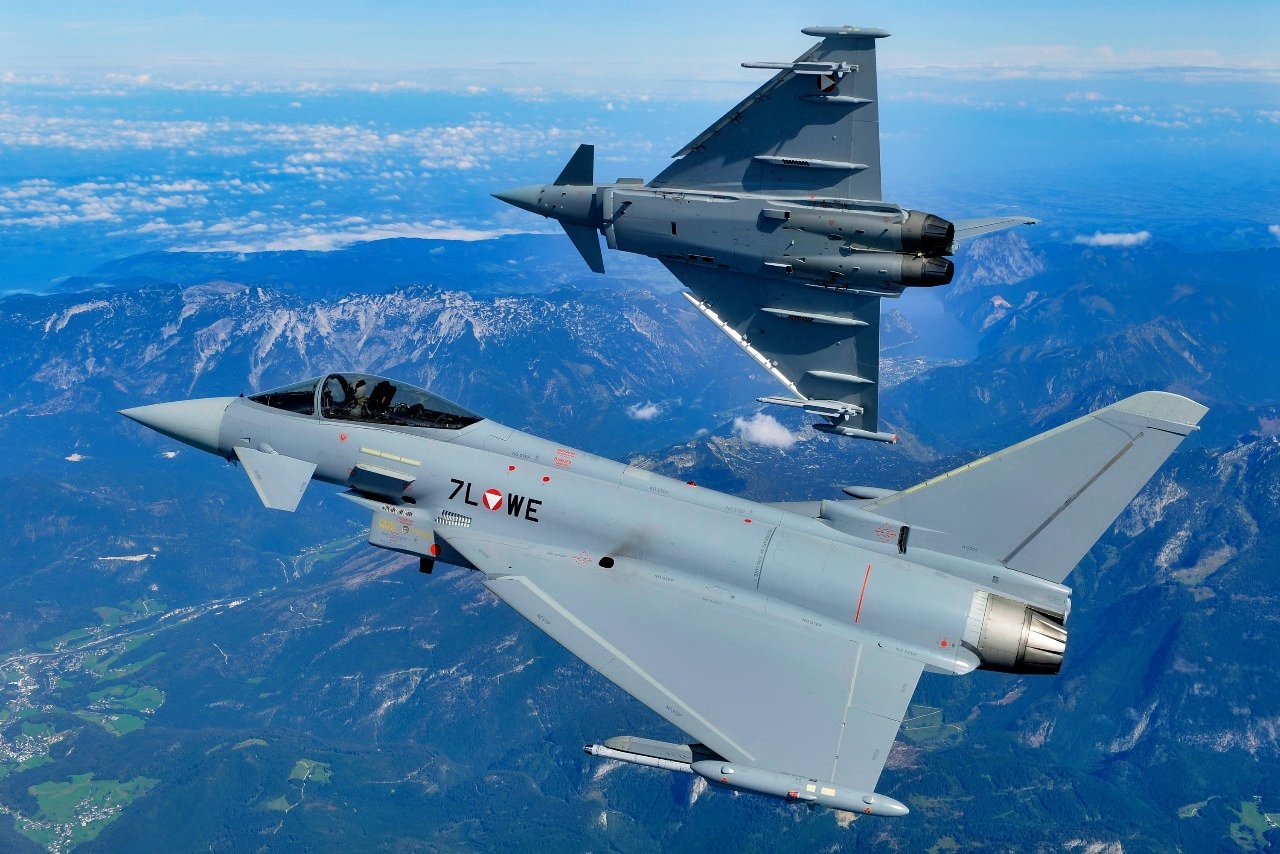
The Eurofighter Typhoon is neither stealthy nor cheap. Its purchase price is higher than that of any version of the F-35, the fifth-generation stealth fighter it competes against. Yet a wave of nations is signing up to buy the European jet anyway, led by Turkey’s $10.7 billion order in late 2025, and the reason increasingly has little to do with the aircraft’s performance. It has to do with sovereignty, with a growing reluctance among governments to stake their air forces on continued cooperation from the United States.
The Eurofighter Typhoon is enjoying an export revival that its performance alone does not explain.
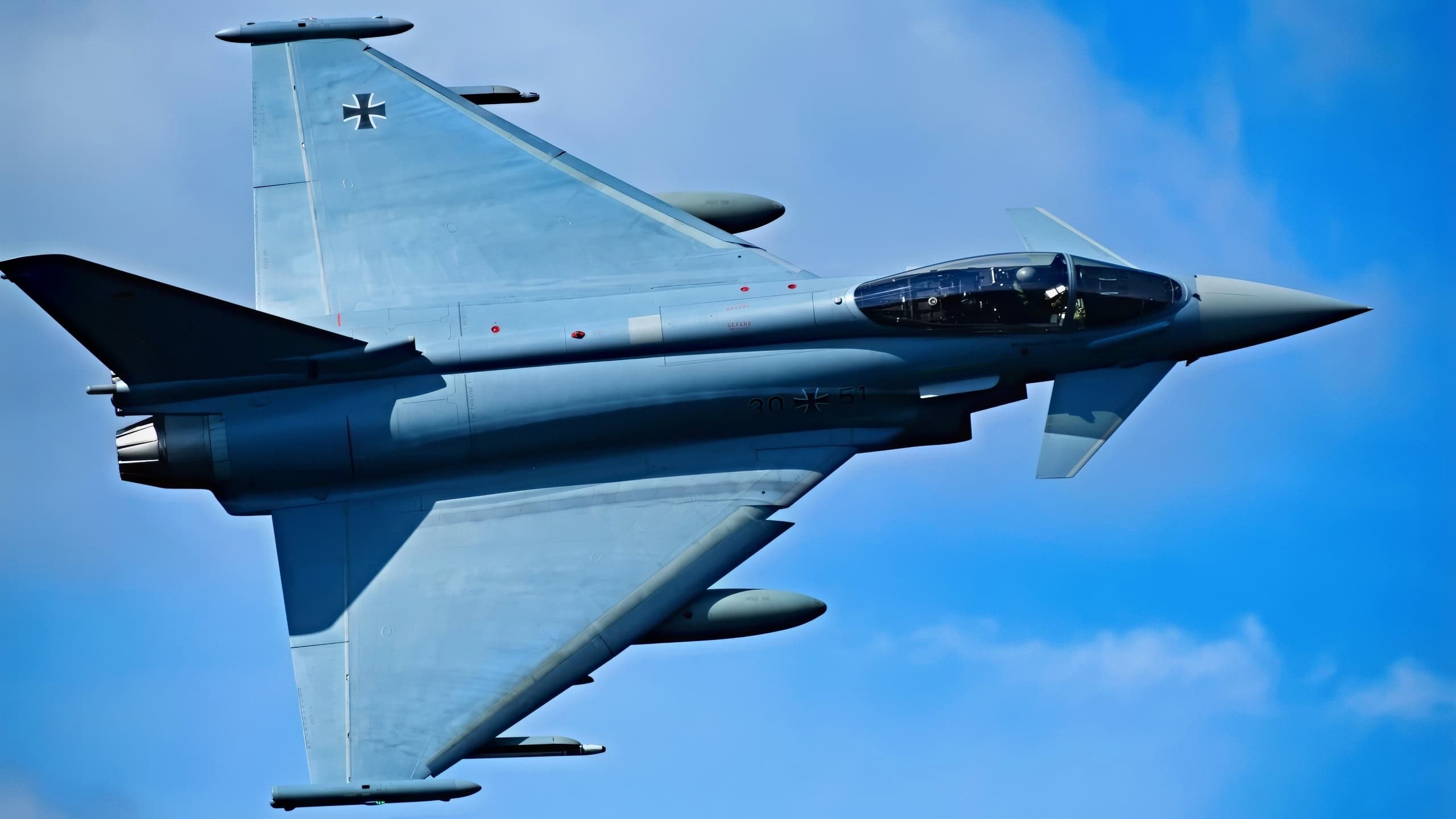
A German Air Force pilot, assigned to the German Air Force Weapons School, conducts strafing runs with an Eurofighter Typhoon in conjunction with U.S. Air Force Joint Terminal Attack Controller assigned to 2d Air Support Operations Squadron identifying targets on the ground at the 7th Army Training Command’s Grafenwoehr Training Area, Germany, June 9, 2021. (U.S. Army photo by Kevin Sterling Payne)
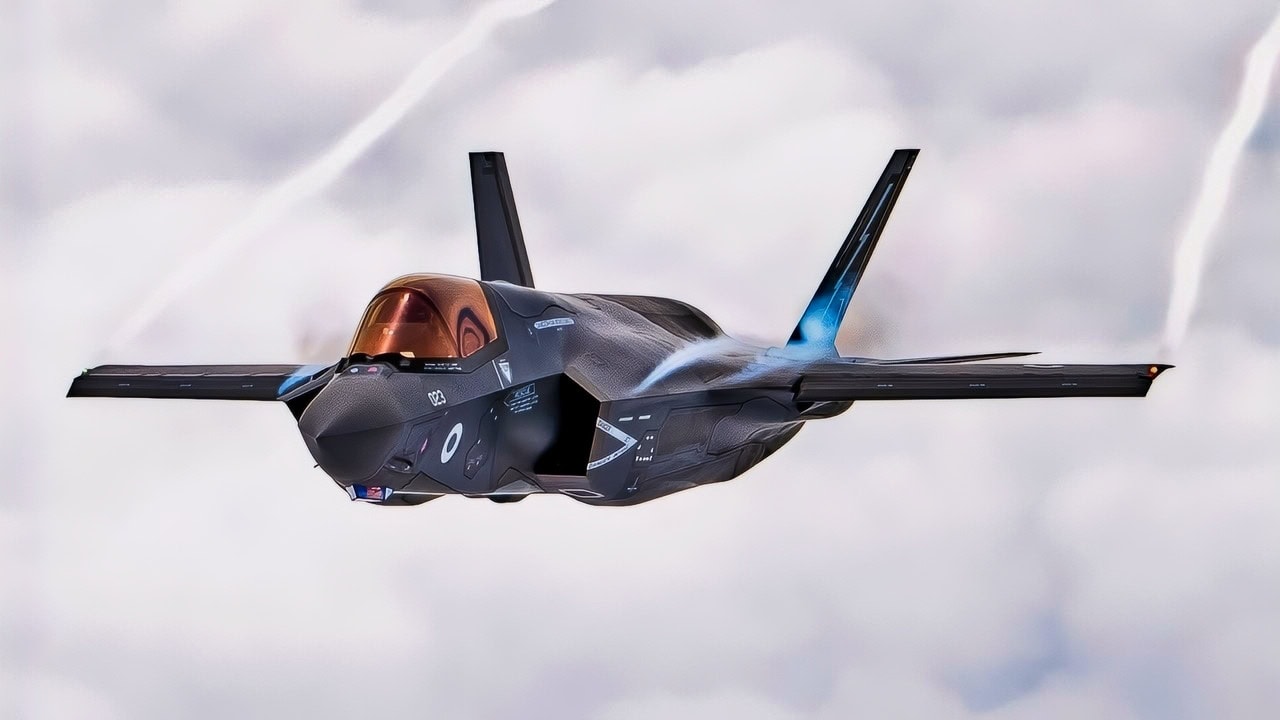
A UK F-35 flies above the Baltics on 25 May 2022.
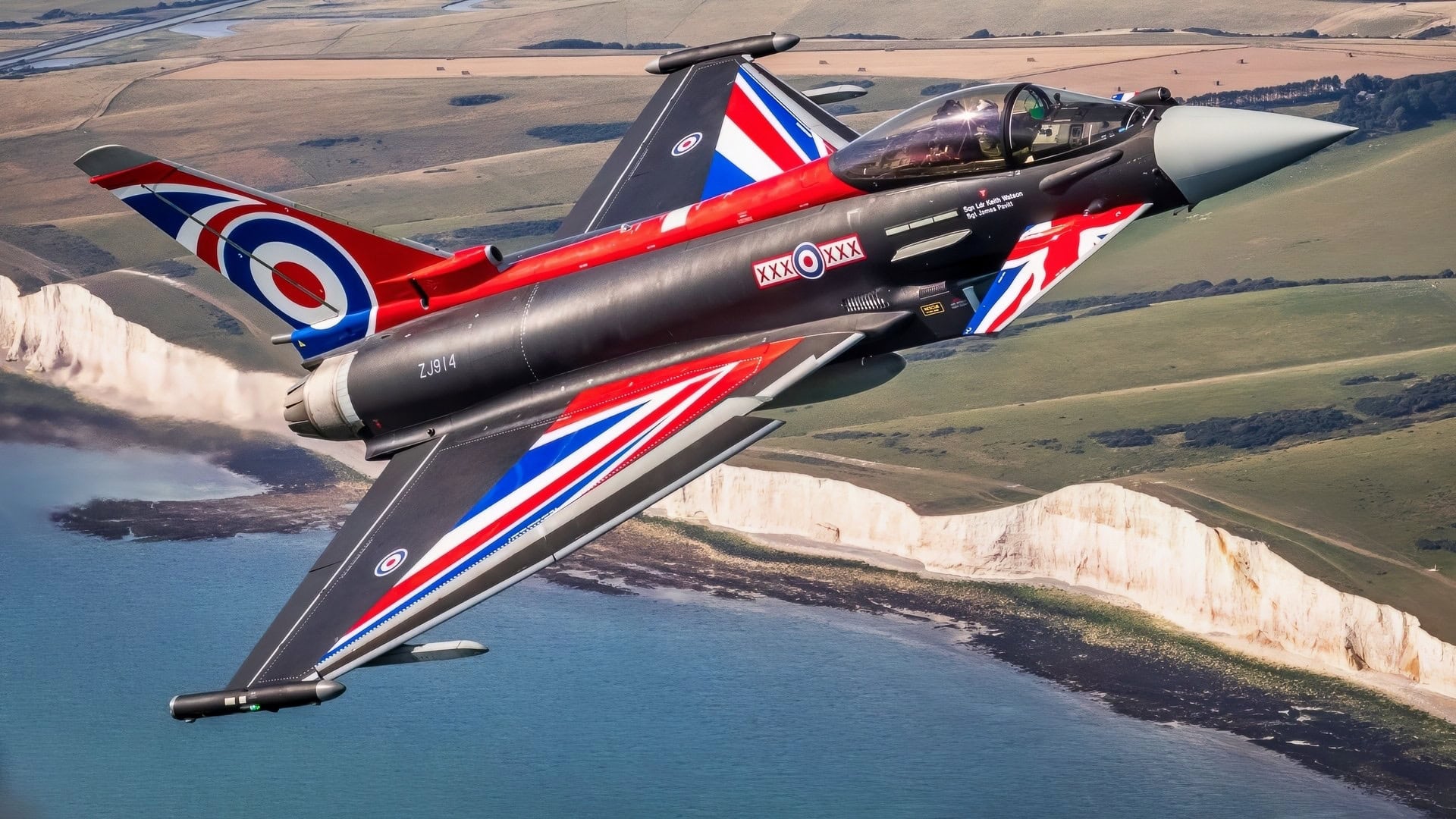
Eurofighter Typhoon Fighter NATO. Image Credit: British Government.
Built by a four-nation European consortium of Britain’s BAE Systems, Airbus in Germany and Spain, and Italy’s Leonardo, the Typhoon is a highly capable 4.5-generation multirole fighter, fast and agile, but it lacks the radar-evading stealth that defines the F-35.
It is also expensive to buy and expensive to operate.
On paper, an air force choosing between the two might be expected to take the stealthier, more modern American jet.
A striking number are choosing the European one instead, and the pattern reveals a shift in how nations assess the risks of relying on Washington for their most important weapons.
The Deals Are Stacking Up for Eurofighter Typhoon
The clearest signal came in October 2025, when Turkey and the United Kingdom signed a deal worth roughly $10.7 billion for 20 new Eurofighter Typhoons, making Turkey the program’s tenth operator.
It was the first new export order for the baseline Typhoon since 2017, and it rescued a British production line that had been facing closure, extending UK manufacturing into the 2030s. The order did not stand alone.
The head of the Eurofighter consortium has pointed to potential for up to 100 new aircraft, including the Turkish deal and a Saudi Arabian requirement covering around 54 jets, and on the day Turkey’s order was confirmed, Airbus announced formal plans to develop a proposal to replace Portugal’s aging fleet of F-16s with Typhoons.
Portugal is the more telling case, because Portugal has a free choice and is leaning towards Europe.
It has publicly said it could break from other NATO countries and decline to buy the F-35, citing concerns about Washington’s treatment of allies and its reliability as a partner. Canada, another longtime American ally, is in the middle of its own debate about the F-35 for similar reasons.
These are not countries barred from the American jet. They are countries reconsidering whether they want it.
Why Not the F-35?
Two distinct forces are driving buyers toward the Typhoon, and neither is price. The first is simple availability. Several of the Typhoon’s customers cannot buy the F-35 at all because the United States has not approved sales to them.
The Gulf states, including Saudi Arabia and Qatar, have not been cleared for the F-35 program, and Turkey was expelled from the program in 2019 after purchasing the Russian S-400 air defense system. For these buyers, the Typhoon is not being chosen over the F-35 so much as chosen because the F-35 is off the table, leaving the European jet as the most capable option they can actually acquire.
The second force is the one reshaping the calculation for allies who do have a choice, and it is about control rather than capability. Operating the F-35 means depending on the United States for sustainment, spare parts, software updates, and the mission-data files that make the aircraft effective, a dependency that becomes a strategic vulnerability if Washington ever proves an unreliable partner.
This is not the popular myth of a literal remote “kill switch,” a claim that is contested and overstated. It is a more grounded concern about reliance and political risk, the worry that in a diplomatic crisis, the United States could slow or withhold the support a fleet needs to keep flying. The Typhoon, as a purely European aircraft, promises freedom from that particular dependency.
On cost, it is worth being precise: the Typhoon is one of the most expensive jets in the world, and its flyaway price exceeds that of any F-35 variant, though the F-35 carries substantially higher operating costs over its life. The Typhoon’s appeal is not its cheapness. It comes with fewer strings.
A Jet That Keeps Getting Rebuilt
The third reason nations keep buying the Typhoon is that the consortium has refused to let the design stand still. Rather than freezing the aircraft as a fourth-generation product, the four partner nations have committed to a steady program of upgrades that keeps it competitive against newer rivals.
The current production standard, Tranche 4, was rolled out for the German Air Force in 2026, and the consortium is already developing Tranche 5.
Recent and planned improvements include the Captor-E active electronically scanned array radar, a major sensor upgrade, and an aerodynamic modification package contracted in early 2026 to improve the aircraft’s agility.
Through a program called Long-Term Evolution, the partners intend to keep the Typhoon flying into the 2060s. For a buyer, that roadmap matters because it means the aircraft purchased today will not be obsolete in a decade.
The Catch
The sovereignty argument cuts both ways, and an honest accounting must acknowledge the costs.
The Typhoon’s lack of stealth is a real operational limitation, and deploying it in heavily defended airspace would demand careful planning, intensive electronic-warfare support, and coalition enablers that the F-35 is designed to operate without.
It is also a demanding and costly aircraft to keep combat-ready.
The deeper irony is that trading American dependency for European independence means trading one set of political constraints for another.
The Eurofighter consortium requires its member nations to agree on exports, and each holds a veto, an arrangement that has repeatedly hampered Typhoon sales. Germany blocked exports to Saudi Arabia and Turkey for years over the war in Yemen and the killing of journalist Jamal Khashoggi, and that gridlock helped hand export victories to France’s more freely sold Rafale.
A buyer seeking to escape reliance on Washington ends up reliant instead on the political agreement of four European capitals.
For a growing number of governments, that trade is still worth making.
The nations lining up for the Typhoon in 2026 are betting that the risk of a four-government veto committee is more manageable than the risk of depending on a single superpower whose commitment to its allies no longer feels guaranteed.
The aircraft they are buying is not the stealthiest or the cheapest on the market. It is the one that comes with the fewest ties to a partner they are no longer certain they can count on, and in the current moment, that is proving to be the feature that sells.
MORE – Canada Could Fly Both the F-35 and JAS 39 Gripen
About the Author: Harry J. Kazianis
Harry J. Kazianis (@Grecianformula), Editor-In-Chief of 19FortyFive, was Senior Director of National Security Affairs at the Center for the National Interest (CFTNI), a foreign policy think tank founded by Richard Nixon based in Washington, DC. Harry has over a decade of experience in think tanks and national security publishing. His ideas have been published in the NY Times, The Washington Post, The Wall Street Journal, CNN, and many other outlets worldwide. He has held positions at CSIS, the Heritage Foundation, the University of Nottingham, and several other institutions related to national security research and studies. He is the former Executive Editor of the National Interest and the Diplomat. He holds a Master’s degree focusing on international affairs from Harvard University.