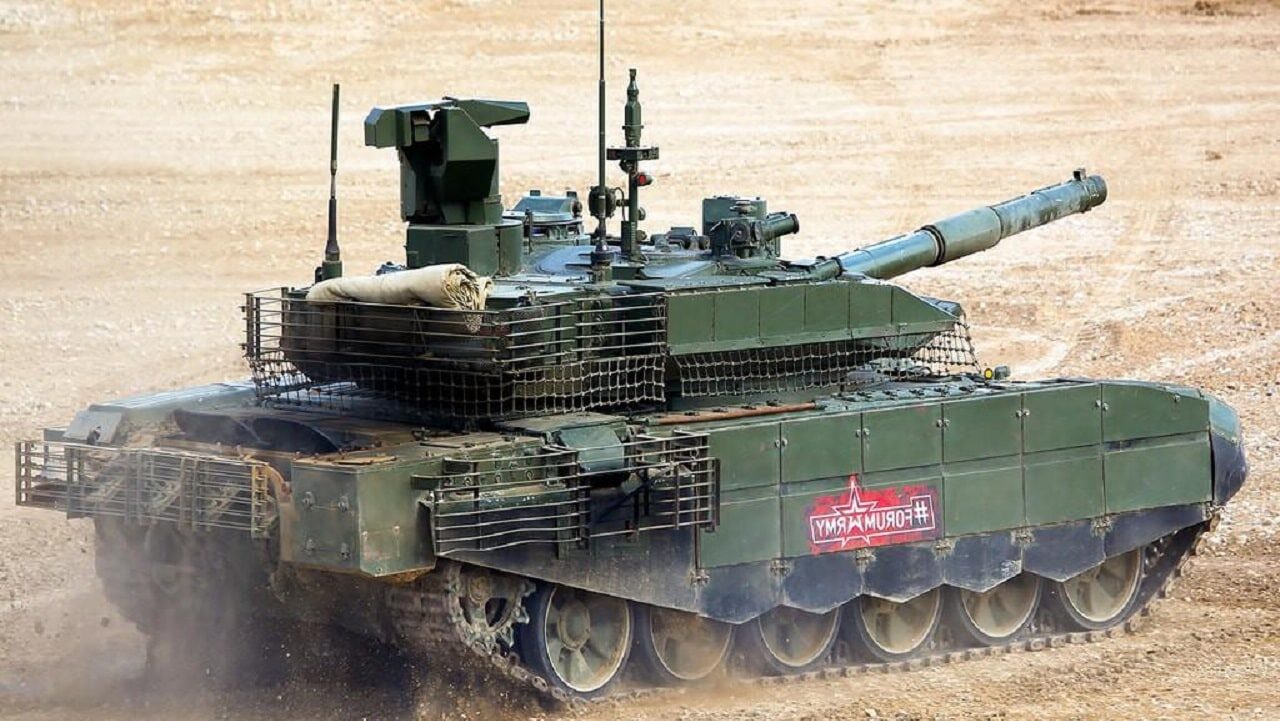
The T-90M Tank vs. the T-14 Armata: The Ukraine War continues to force wild adaptations on the systems and weapons waging it. The conflict has also highlighted the strengths and weaknesses of the weapons and platforms used in that war.
One of the biggest lessons from the war is that the Main Battle Tank (MBT) cannot perform as it was traditionally designed to.
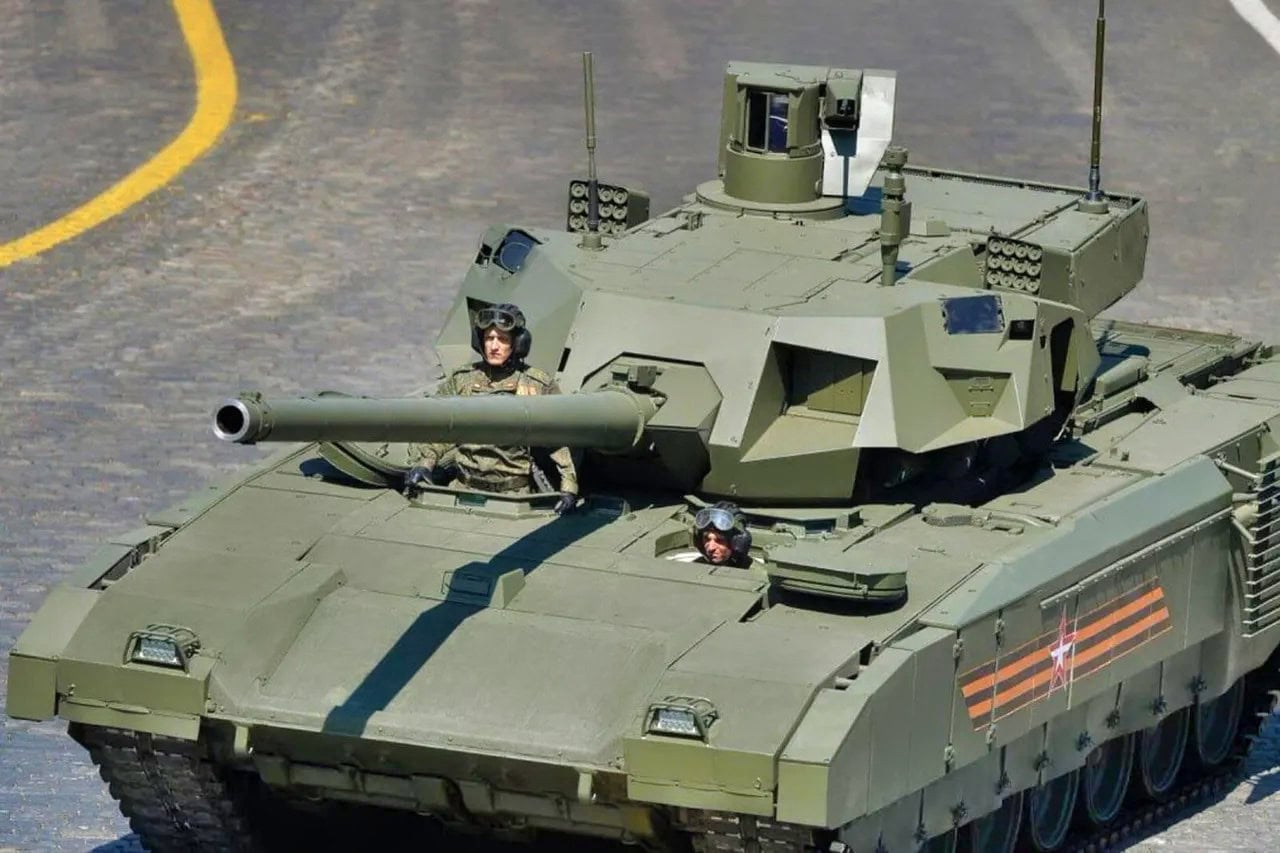
Russian T-14 Armata Tank. Image Credit: Social Media Screenshot.
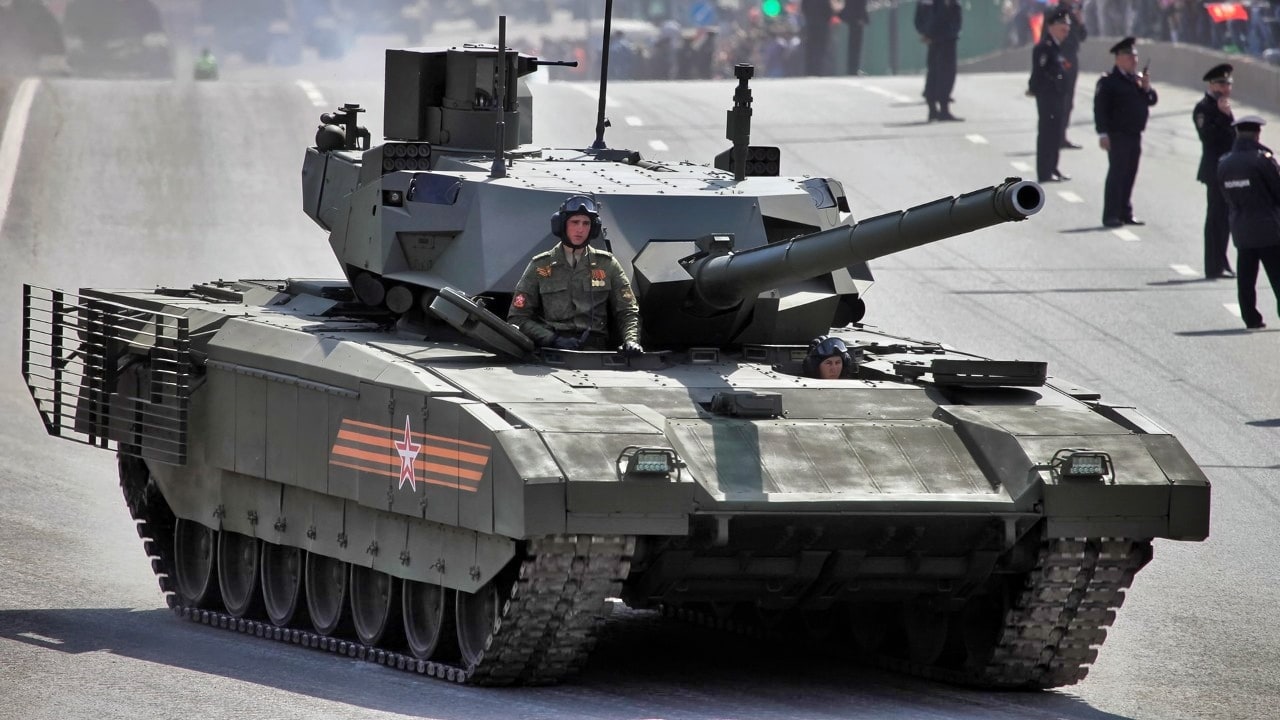
T-14 Armata Tank from Russia
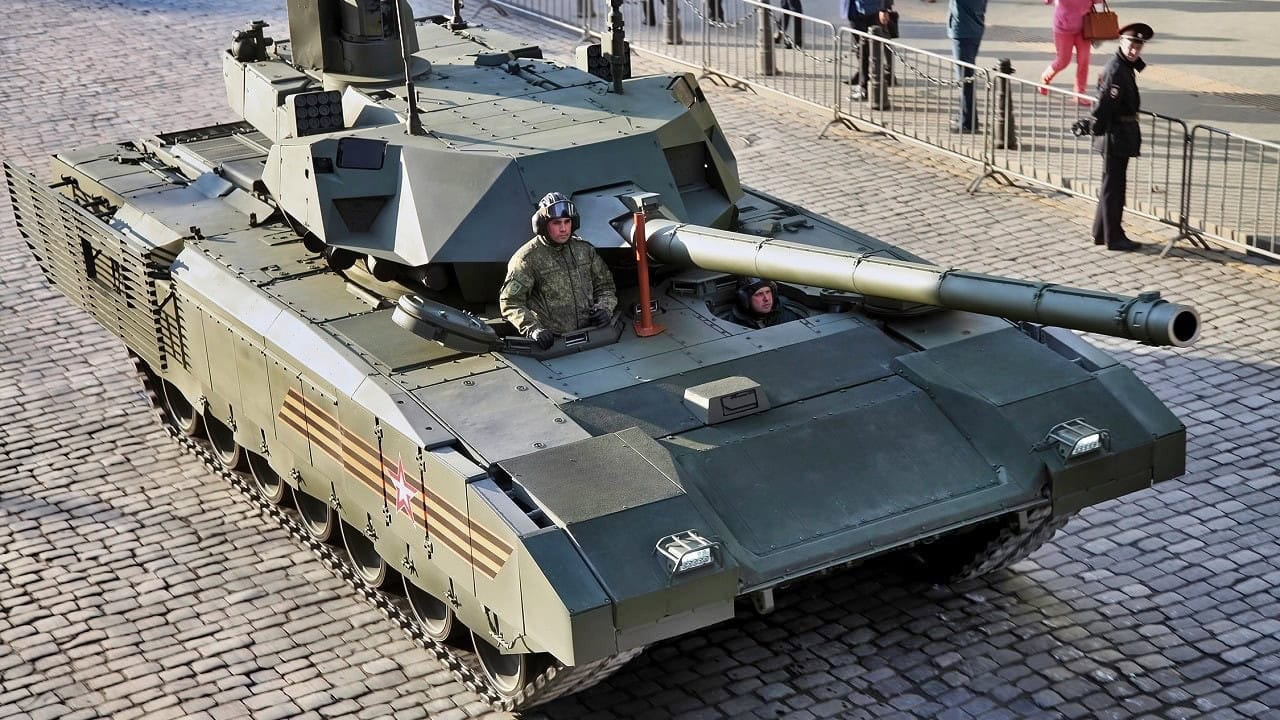
T-14 Armata Tank.
Highly advanced, expensive MBTs, like the T-14 Armata, have underperformed, whereas older Soviet-era tanks prove themselves more useful–and durable in the killing fields of Ukraine.
Consider two of the most advanced MBTs in Russia’s arsenal: the T-14 Armata and the T-90M MBT. Of the two, the T-14 is Russia’s most advanced MBT.
Russia’s T-90M has had far more combat experience in Ukraine than has the purportedly mighty T-14. Indeed, the T-14 isn’t really fighting at all.
In a comparison between Russia’s T-14 and T-90M, the Ukraine War isn’t that the T-90M is “better” than the T-14. It’s certainly been used more in the conflict.
The real story, though, is that the Ukraine War has exposed the difference between a weapons system optimized for war and one optimized for prestige.
Russia’s Tank Debate Is Really About Russian Military Power
For more than a decade, the T-14 Armata was marketed as the future of Russian armored warfare. When it debuted publicly in 2015, the Armata looked revolutionary.
That tank featured an unmanned turret, a crew protected inside an armored capsule, advanced sensors, improved survivability, and a new-generation armored chassis.
Western analysts often compared it favorably to the US M1 Abrams MBT and the German Leopard 2.
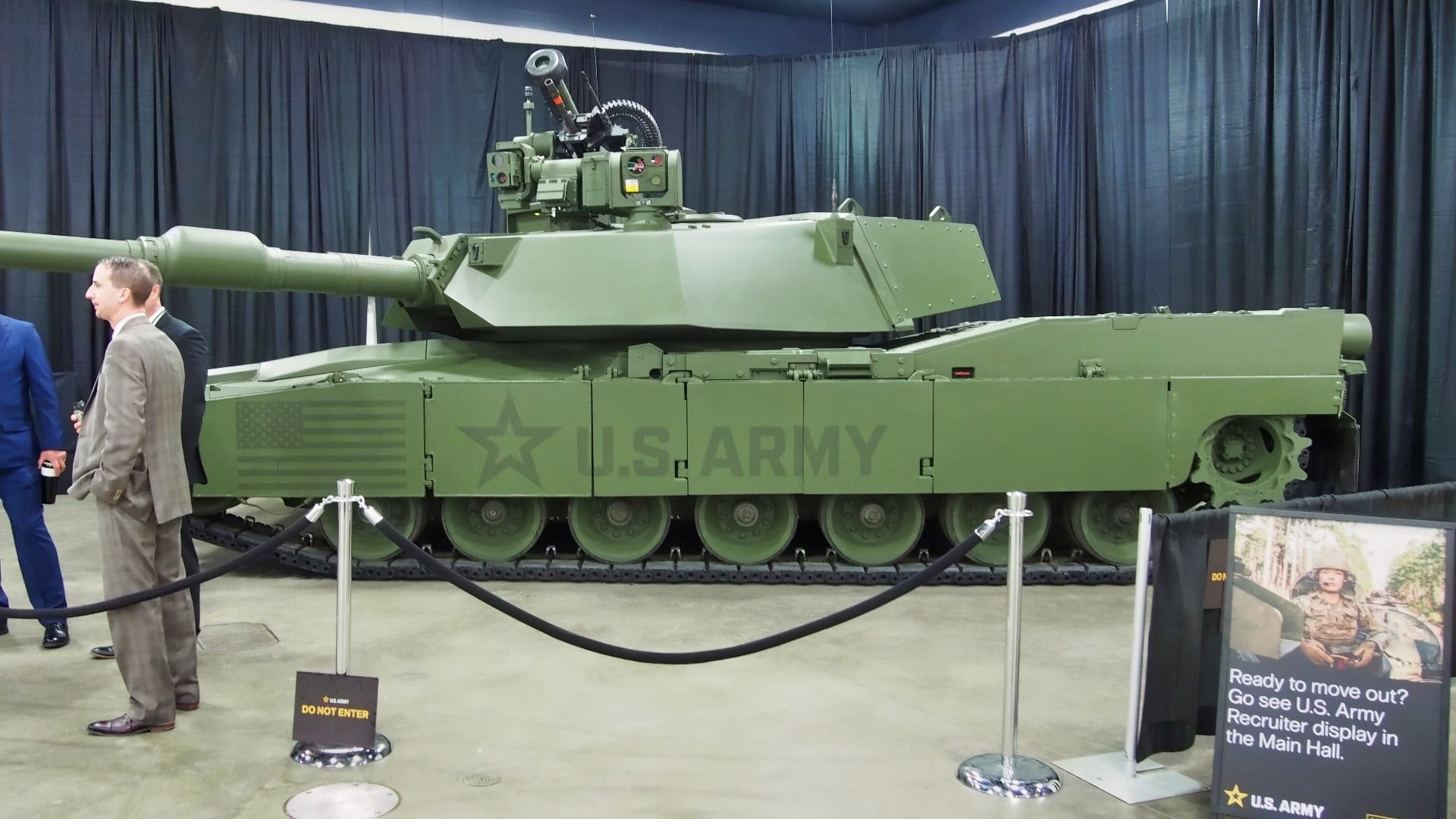
M1E3 Abrams Tank. Taken by 19FortyFive.com
The T-14 was supposed to be the tank that would finally move Russia beyond the Soviet-era T-72 lineage.
Then Ukraine happened.
The Tank That Russia Doesn’t Want to Lose
If the Armata is so revolutionary, why is it almost absent from the largest land war in Europe since 1945?
Because the T-14 has become too valuable politically to risk militarily.
Russia spent years presenting the Armata as proof that its defense industry remained a peer competitor to the West. Losing one in combat would create three problems:
-The vehicle could be captured and exploited,
-The world would see its real performance,
-The myth surrounding the platform would collapse.
That is why Moscow has held the Armata back, keeping it as a parade-ground and test-range vehicle. The T-90M, however, has not enjoyed that luxury.
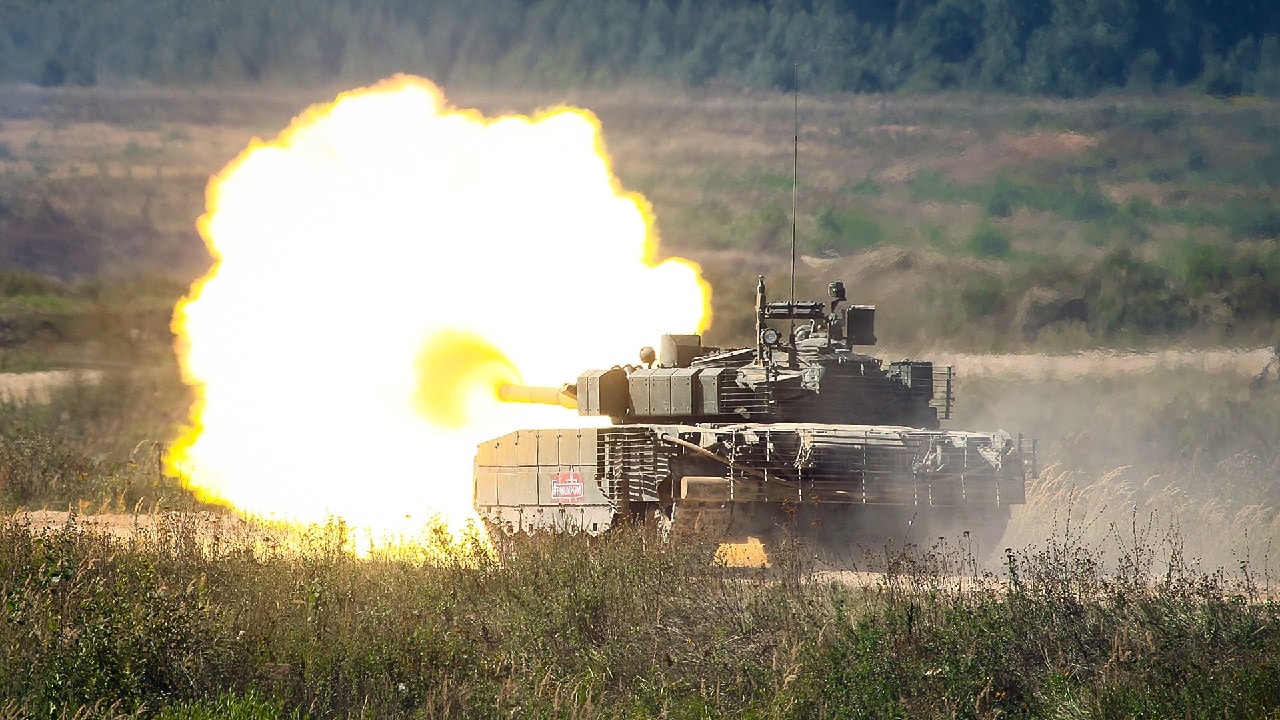
T-90M tank. Image Credit: Creative Commons.
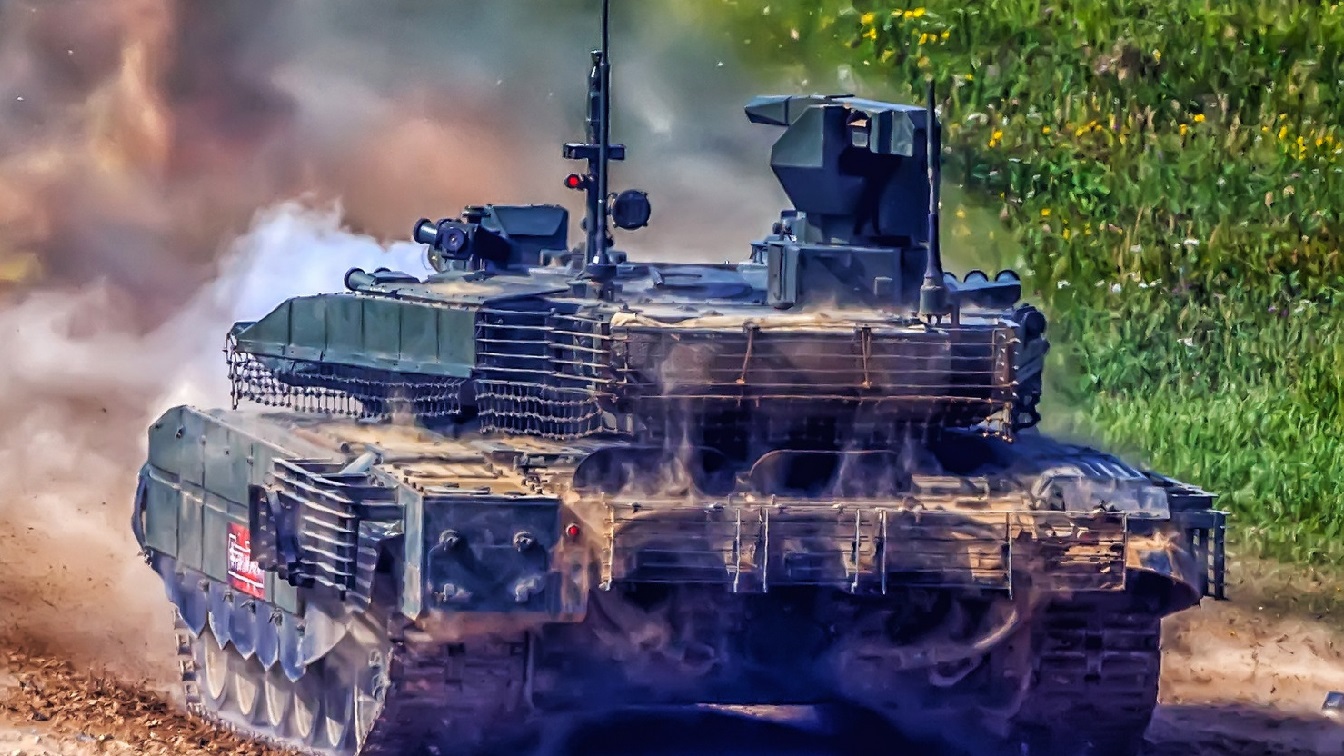
T-90M. Image Credit: Creative Commons.
The T-90M Is Russia’s Real Main Battle Tank
The T-90M is not a clean-sheet design. It is the culmination of decades of improvements to the T-72 family. In many ways, it represents the final evolution of Soviet tank philosophy.
The T-90M has better armor, optics, fire control, communications, and situational awareness. But it remains fundamentally a Soviet tank.
The T-90M is not revolutionary. Instead, it is an evolution of the older Soviet systems that came before it. And that is precisely why Russia uses it.
Their factories can quickly produce large numbers of the T-90M. It is easy to train crews on it, too.
More importantly, the T-90M is proven and rugged–and much easier to maintain in combat conditions.
Relatedly, supply chains strained by the ongoing war can sustain the T-90M.
In modern warfare, those factors matter more than the technological elegance of a system such as the T-14 Armata.
Ukraine Exposed A Harsh Truth About Modern Armor
The Ukraine War has demonstrated that the greatest threat to tanks is no longer other tanks. It is the battlefield itself.
First-Person View (FPV) drones, loitering munitions, artillery, attack helicopters, minefields, and anti-tank guided missiles are all part of the hellscape that is the Ukraine War’s front.
There’s also the threat of persistent surveillance from tiny drones. Thus, the battlefield has been made transparent.
Under these conditions, a tank can no longer rely only on its thick armor. That is likely why the Russians did not rush their T-14 Armata.
It was too expensive and inadequate for the kind of war being waged in Ukraine. Even if the T-14 is technically superior to the older T-90M, it would still be operating in the same drone-saturated environment that destroys older Soviet-era tanks all the time.
This is more of a sign that the age of the invincible tank is over.
Why Putin Praises the T-90M
Even though the T-14 is the premier modern Russian MBT, multiple outlets have quotes from senior Russian leaders heaping effusive praise upon the T-90M for its conduct in the Ukraine War.
Therefore, Moscow understands that wars are won with systems that can be mass-produced. The T-90M may not be Russia’s most advanced tank. But it is the most advanced tank Russia can field en masse.
That’s why the T-90M is infinitely more valuable for the Russian war effort in Ukraine today.
The Bigger Lesson
Russia’s T-14 and T-90M are truly developmental forks in the road for Russia. The Armata represents Russia’s desire to impress the world following the Soviet collapse.
The T-90M represents Russia as a nation that must fight a war.
And Ukraine has shown that those are not the same thing.
What’s more, this is a lesson that the United States, China, and Europe should all pay attention to as they develop their strategies for the next war.
A weapon that cannot be built in quantity, maintained under austere battlefield conditions, and that military leaders fear risking in combat is not really a weapon of war.
The T-14 Armata may be Russia’s most impressive.
But it’s really just a technology demonstrator. The T-90M has become Russia’s most useful MBT (the T-72, I believe, has been the single best Russian MBT in this war). In war, useful beats impressive every time.
About the Author: Brandon J. Weichert
Brandon J. Weichert is the Senior National Security Editor at 19FortyFive.com. He also manages The Weichert Brief on Substack. Weichert also hosts “National Security Talk” on Rumble. He is the author of four bestselling national security books, the most recent of which is A Disaster of Our Own Making: How the West Lost Ukraine (Encounter Books). Follow him via Twitter/X @WeTheBrandon.