

The United States has yet to field a single hypersonic weapon, while China and Russia have already deployed them. One reason the gap has grown is that hypersonic vehicles are extraordinarily hard to test. Few facilities on earth can recreate the speeds and temperatures involved, and the programs that need them wait in line for scarce test slots. The Air Force Research Laboratory’s answer arrived on June 18, when it switched on a new $20 million supercomputer at Wright-Patterson Air Force Base in Ohio, a machine built to simulate the flights that are too fast, too hot, and too expensive to run for real.
It is a serious piece of hardware. It also came online the same week China retook the title of the world’s fastest supercomputer, a reminder that the contest over computing power runs well beyond a single lab in Dayton.
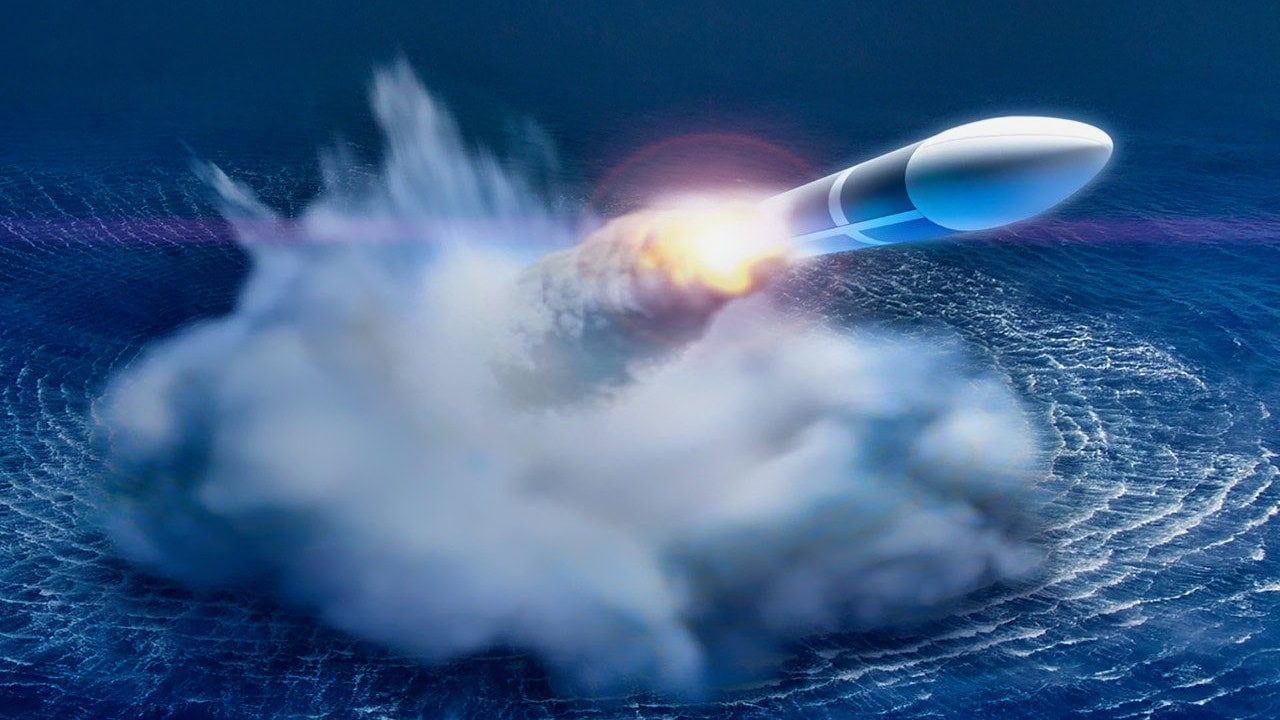
Mako Hypersonic Missile. Image Credit: Creative Commons.
A New Supercomputer At The Birthplace Of Flight
The machine is named Flyer, and the Air Force Research Laboratory cut the ribbon on it on June 18 inside a secure building in Wright-Patterson’s Area B. It is the tenth supercomputer the lab operates at the base, and on paper, the numbers are hard to absorb.
Flyer carries roughly 186,000 processing cores, 800 terabytes of memory, and 18 petabytes of storage, and the lab’s computing director said it can solve a problem in a single day that would take an average laptop about 500 years to finish, with enough memory that matching it would require about 2 million laptops. The detailed configuration, reported by Data Center Dynamics, comprises 884 compute nodes built on 169,782 AMD EPYC “Genoa” processor cores, paired with 64 Nvidia H100 and 16 Nvidia L40 graphics chips, delivering about 14 petaflops, or 14 quadrillion calculations per second.
The officials who unveiled it reached back more than a century for the comparison.
The director of the Defense Department’s high-performance computing program framed Flyer as a continuation of what the Wright brothers did in their west Dayton bicycle shop, where they built a six-foot wind tunnel and ran systematic experiments on hundreds of airfoils, translating the raw data into equations and, as he put it, computing “lift, drag and thrust.” The same impulse, refine a design through calculation before you commit it to the air, now runs on a machine in a secure facility on the ground named for those brothers.
The lab’s commander said Flyer would help researchers invent the future rather than wait for it, and the center’s director said the system would be devoted entirely to solving difficult problems for the government now known as the Department of War. Rep. Mike Turner, a Dayton Republican on the House Armed Services Committee, called it an investment that would pay dividends for years.
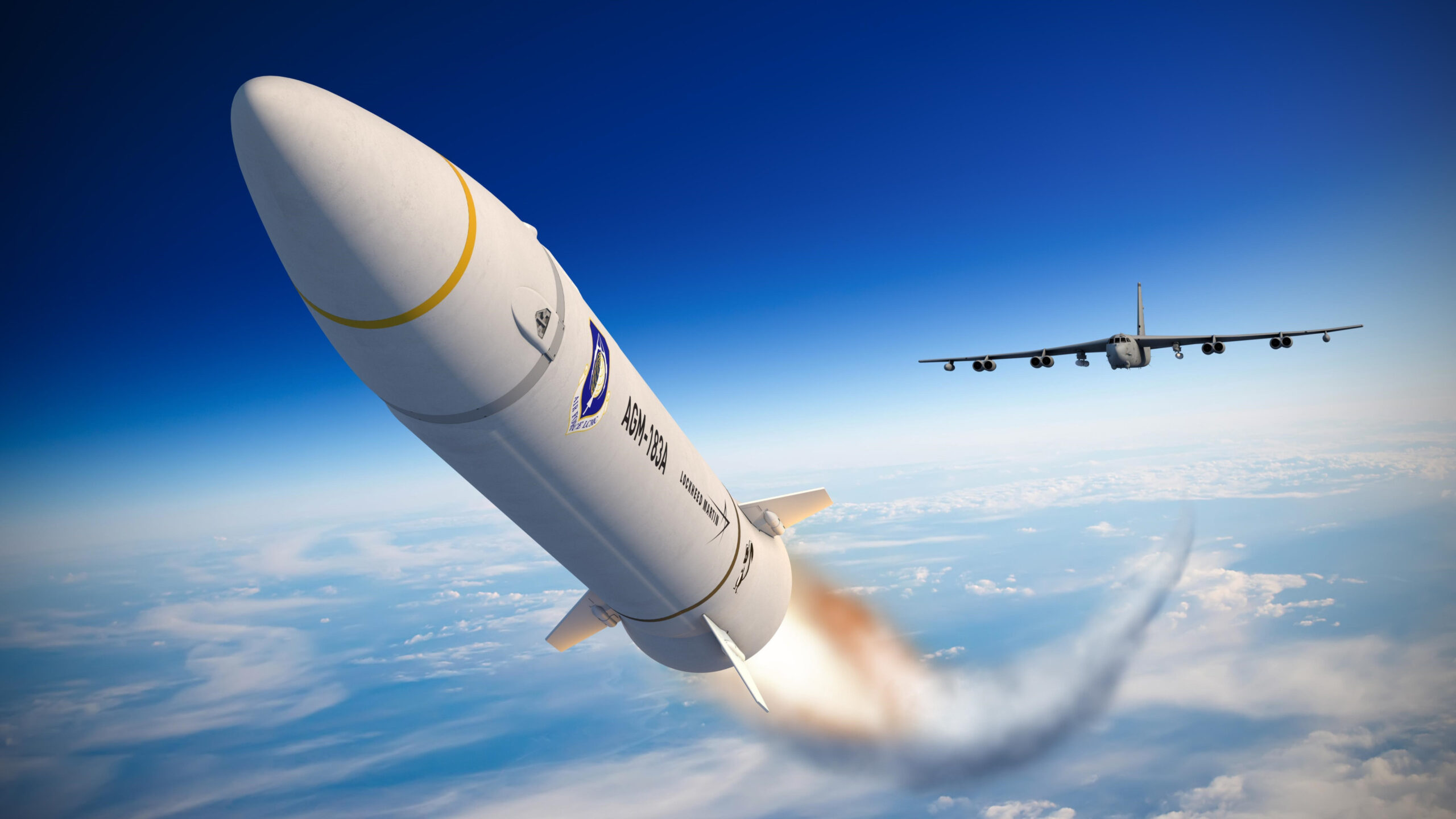
Hypersonic Missiles fired from B-52. Image Credit: Creative Commons.
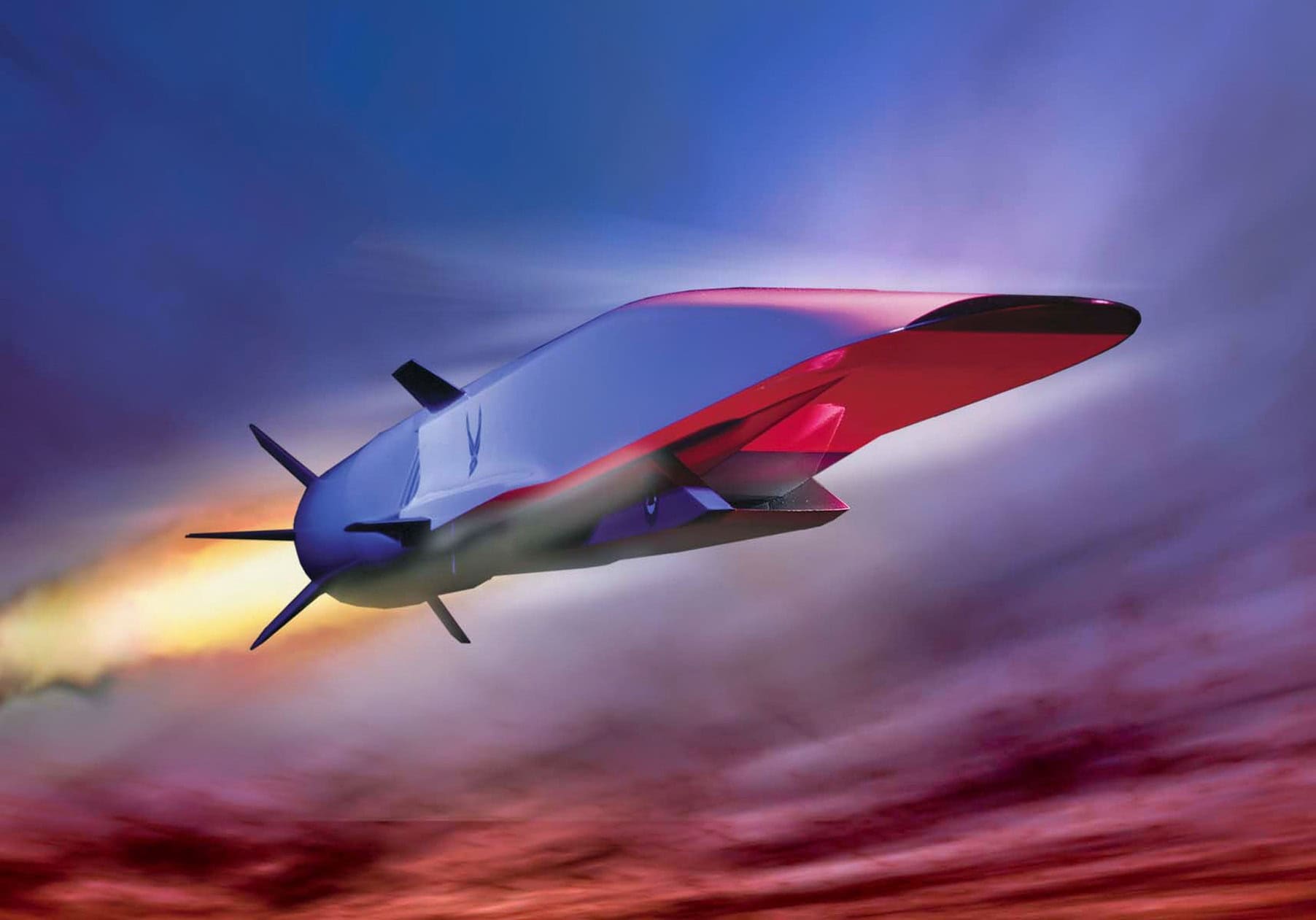
The X-51A Waverider is set to demonstrate hypersonic flight. Powered by a Pratt Whitney Rocketdyne SJY61 scramjet engine, it is designed to ride on its own shockwavem and accelerate to about Mach 6. (U.S. Air Force graphic)
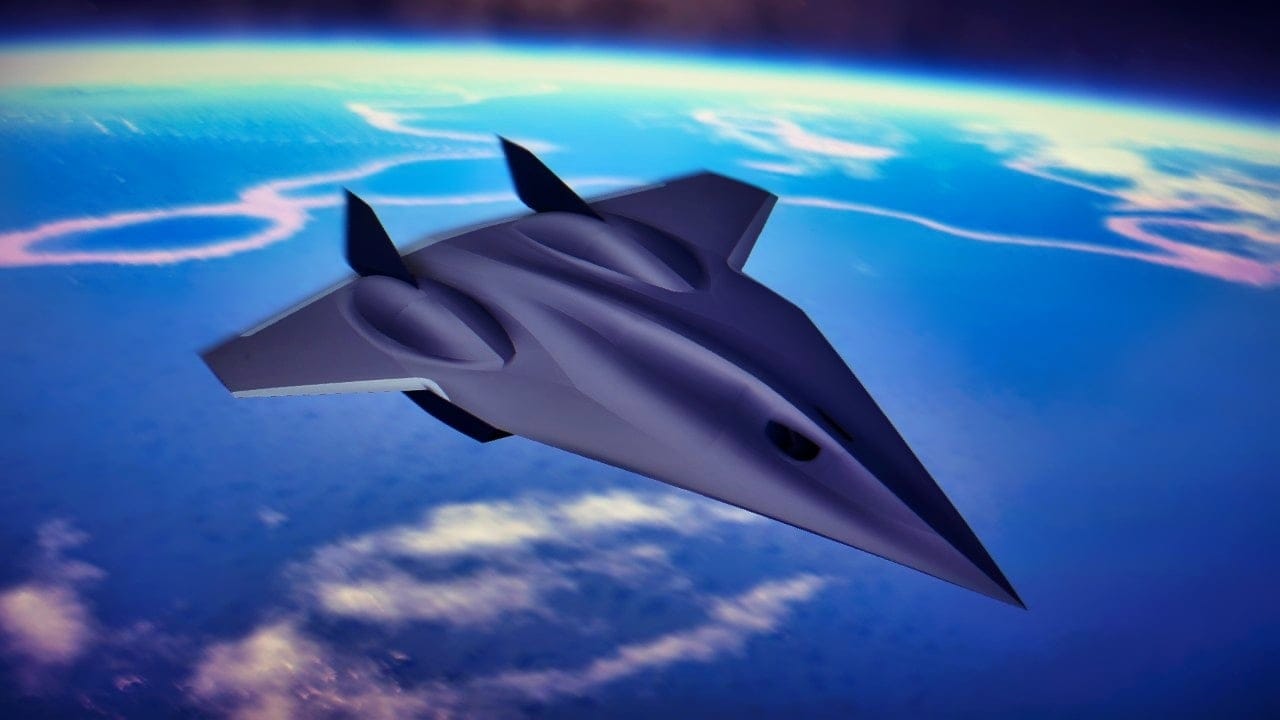
Hypersonic Aircraft. Image Credit: Creative Commons.
Why Hypersonic Weapons Need Supercomputers
The reason a computer like this matters comes down to a problem physical testing cannot easily solve. Hypersonic vehicles travel at more than five times the speed of sound, and at those velocities, the air itself heats to thousands of degrees and behaves in ways that are difficult to predict.
Recreating those conditions on the ground requires specialized wind tunnels and shock facilities, and only a handful exist capable of sustaining the necessary speeds for a usable test. Flight tests are worse; each one is expensive, slow to arrange, and limited by range availability, and a single failure can set a program back months. The bottleneck is real enough that defense officials describe limited testing capacity as one of the central constraints on American hypersonic development.
A supercomputer offers a way around the wait. Engineers can model how a vehicle behaves at extreme speed, how heat builds across its surface, and how it maneuvers, then run those simulations thousands of times and refine the design before anything is built or flown. The AFRL has long described modeling and simulation as the primary use of its computing fleet, and the lab is careful to say that simulation augments rather than replaces physical testing, narrowing the field of designs worth the cost of a real flight.
The same computing power feeds the lab’s other priorities, from computational fluid dynamics for next-generation aircraft to training the artificial intelligence models that will run autonomous systems. Flyer was ordered years ago as part of the Defense Department’s High Performance Computing Modernization Program, under a technology insertion designated TI-23, alongside a classified twin called Raven.
An earlier system at the base, Raider, named for the Doolittle Raiders and capable of about 12 petaflops, was installed in 2023 and serves the Air Force, Army, and Navy as a shared national resource.
America Is Behind China And Russia
The urgency behind all of this is that the United States is currently losing a race.
In congressional testimony, a senior analyst at the National Air and Space Intelligence Center told lawmakers that “China now has the world’s leading hypersonic arsenal,” and that Russia had deployed three hypersonic weapon systems, two of which it has used in combat in Ukraine. The United States, by contrast, has yet to field one.
The reason most often cited is sustained investment; China spent two decades building an extensive network of wind tunnels and test infrastructure devoted to hypersonics, while American testing capability and expertise degraded after the Cold War and now reside largely in academia, at places like Purdue’s hypersonics facility.
Washington has been scrambling to close the gap. The Pentagon has revived the Air Force’s air-launched rapid response weapon after earlier test failures, requesting roughly $387 million to begin buying it, and the Missile Defense Agency has poured additional money, about $475 million, into an interceptor meant to kill hypersonic weapons in flight, with a fielding target in the early 2030s.
The Defense Department has identified scaled hypersonics as one of its critical technology areas and says it is upgrading existing test ranges and standing up new ones. Russia and China, meanwhile, keep advancing systems like Moscow’s Avangard glide vehicle and Kinzhal, and Beijing’s DF-17 and anti-ship designs, as detailed in earlier coverage of the broader contest in the hypersonic race. Computing power is one of the few levers the United States can pull quickly, because building a supercomputer takes far less time than building twenty years of wind tunnels.
A Mid-Tier Machine In A Bigger Race
For all the impressive figures, Flyer is not a world-beating supercomputer, and the timing of its debut made that plain.
Its 14 petaflops are formidable for a dedicated military research system, but they sit well down the global rankings. On June 24, just days after Flyer’s ribbon-cutting, the latest TOP500 list named China’s LineShine the fastest supercomputer on the planet at 2.198 exaflops, more than two quintillion calculations per second, dethroning the American El Capitan, a 1.742-exaflop machine at Lawrence Livermore that runs the nation’s nuclear-weapons simulations. LineShine is roughly 150 times faster than Flyer, and its rise marked the first time a Chinese system had topped the list since 2017.
Flyer’s value lies in dedicated, secure, around-the-clock access for classified defense work, the kind a shared commercial or academic machine cannot provide, and raw ranking is not the point of a system built for a specific job. The juxtaposition still frames the stakes clearly.
In the same stretch of June, the United States stood up a mid-sized research computer to help chase a hypersonics lead it does not hold, and lost the top spot on the global supercomputing list to Beijing, which has been investing aggressively in high-performance computing and artificial intelligence at once. Computing has become a strategic terrain in its own right, and the competition is being waged on more than one front.
The line from a six-foot wind tunnel in a bicycle shop to a 14-petaflop machine on the same Dayton ground is more than a nice piece of local history. The tool has changed beyond recognition, but the problem is the one the Wright brothers faced: understanding how a flying machine will behave before risking it in the air.
Flyer will not field a hypersonic weapon on its own, and simulation alone cannot make up for the test ranges the United States let wither.
What it can do is let American engineers iterate faster and waste fewer expensive flights, which is exactly the kind of infrastructure the country needs to close a gap that China spent twenty years opening.
About the Author: Harry J. Kazianis
Harry J. Kazianis (@Grecianformula) was the former Senior Director of National Security Affairs at the Center for the National Interest (CFTNI), a foreign policy think tank founded by Richard Nixon based in Washington, DC. Harry has over a decade of experience in think tanks and national security publishing. His ideas have been published in the NY Times, The Washington Post, The Wall Street Journal, CNN, and many other outlets worldwide. He has held positions at CSIS, the Heritage Foundation, the University of Nottingham, and several other institutions related to national security research and studies. He is the former Executive Editor of the National Interest and the Diplomat. He holds a Master’s degree focusing on international affairs from Harvard University.

