

Most Americans imagine the vaunted aircraft carrier retiring to become a museum piece, like the USS Midway or the USS Yorktown. But in reality, most carriers end their lives far from public view, in less glamorous circumstances. In many cases, the US Navy’s carriers, including the USS Kitty Hawk, USS Saratoga, and USS John F. Kennedy, are towed to the Port of Brownsville, Texas, and methodically dismantled for recycling as steel. That is how most carriers end their service—at Brownsville, which has become America’s unofficial aircraft carrier graveyard.
Why Brownsville?
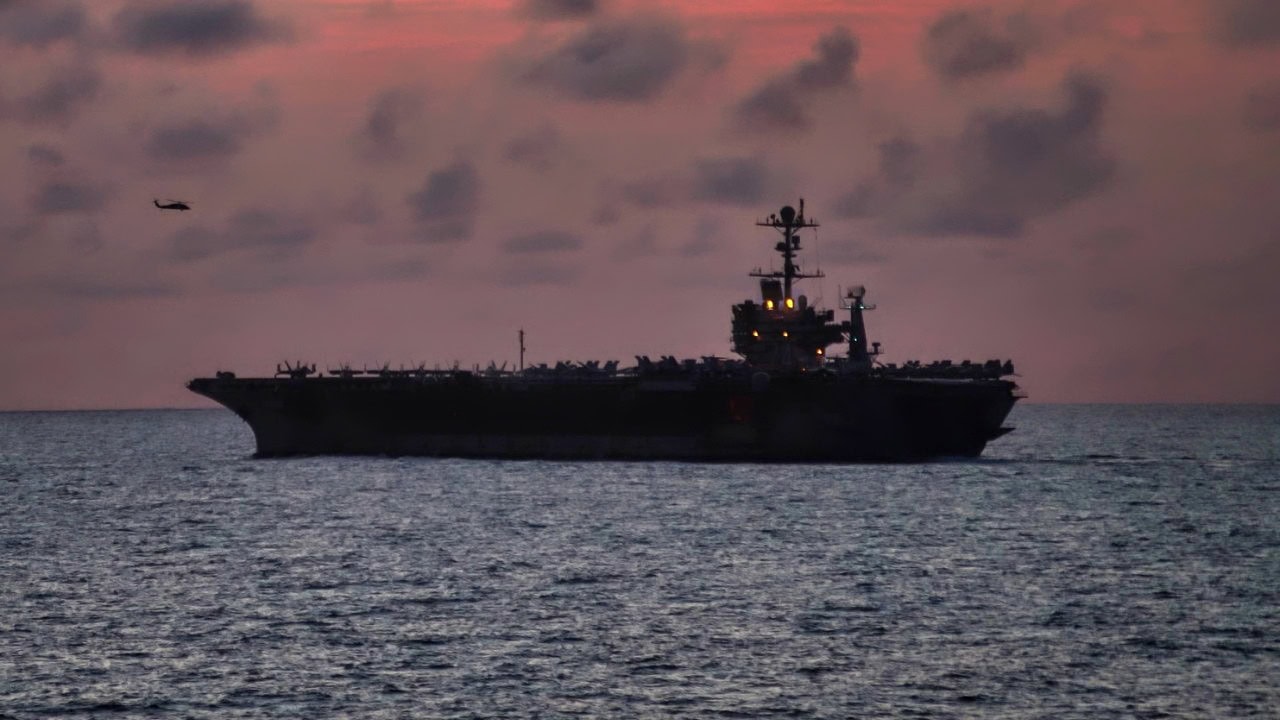
USS John C. Stennis Aircraft Carrier. Image Credit: Creative Commons.
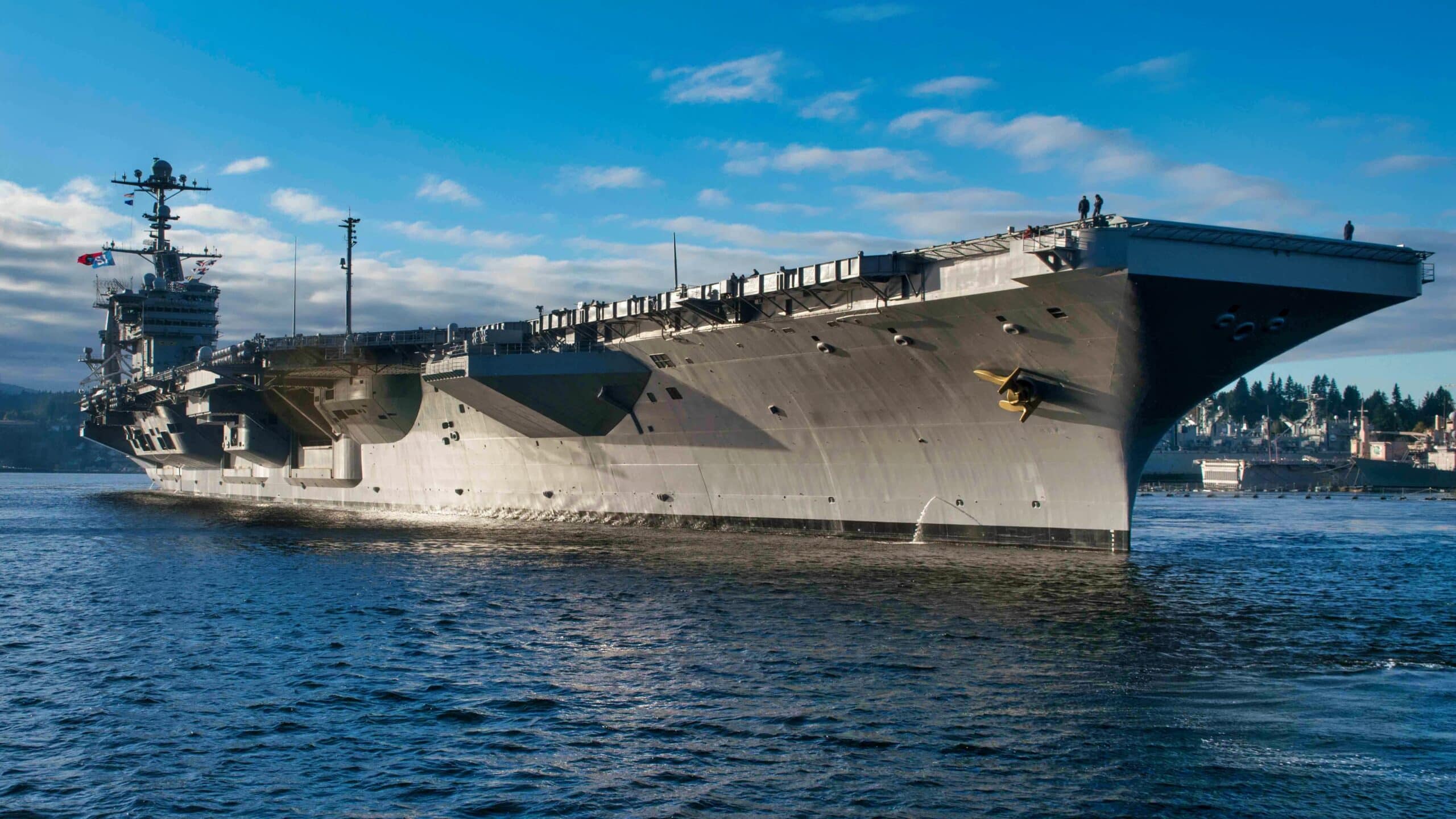
USS John C. Stennis Aircraft Carrier. Image Credit: Creative Commons.
Brownsville is home to the largest commercial ship recycling industry in the United States. Deep-water access allows retired warships to be towed safely into the port, where an experienced workforce specializing in dismantling massive vessels goes to work piece by piece.
The job is highly regulated; strict US environmental codes govern the handling of hazardous materials like asbestos, PCBs, fuels, and heavy metals—all of which are found on old carriers. Once the carriers are dismantled, nearly all the steel and valuable metals are recycled.
Aircraft Carriers at Rest
Multiple well-known US aircraft carriers have been dismantled in Brownsville. The USS Kitty Hawk was the last conventionally powered US supercarrier. It served extensively during Vietnam, the Cold War, Iraq, and Afghanistan before finally being decommissioned in 2009. The vessel was towed to Brownsville after efforts to convert the Kitty Hawk into a museum failed.
The USS Saratoga shared the same fate after participating in the Cuban Missile Crisis, Vietnam, Libya, and Desert Storm. So did the USS John F. Kennedy (CV-67), which served through the Cold War and post-9/11 operations, before famously being sold for one cent after preservation campaigns failed.
Why Not Preserve?
Preserving an aircraft carrier isn’t so simple. Aircraft carriers are enormous, measuring upwards of one-fifth of a mile long. Even in static display, carriers require hundreds of millions of dollars in long-term maintenance.
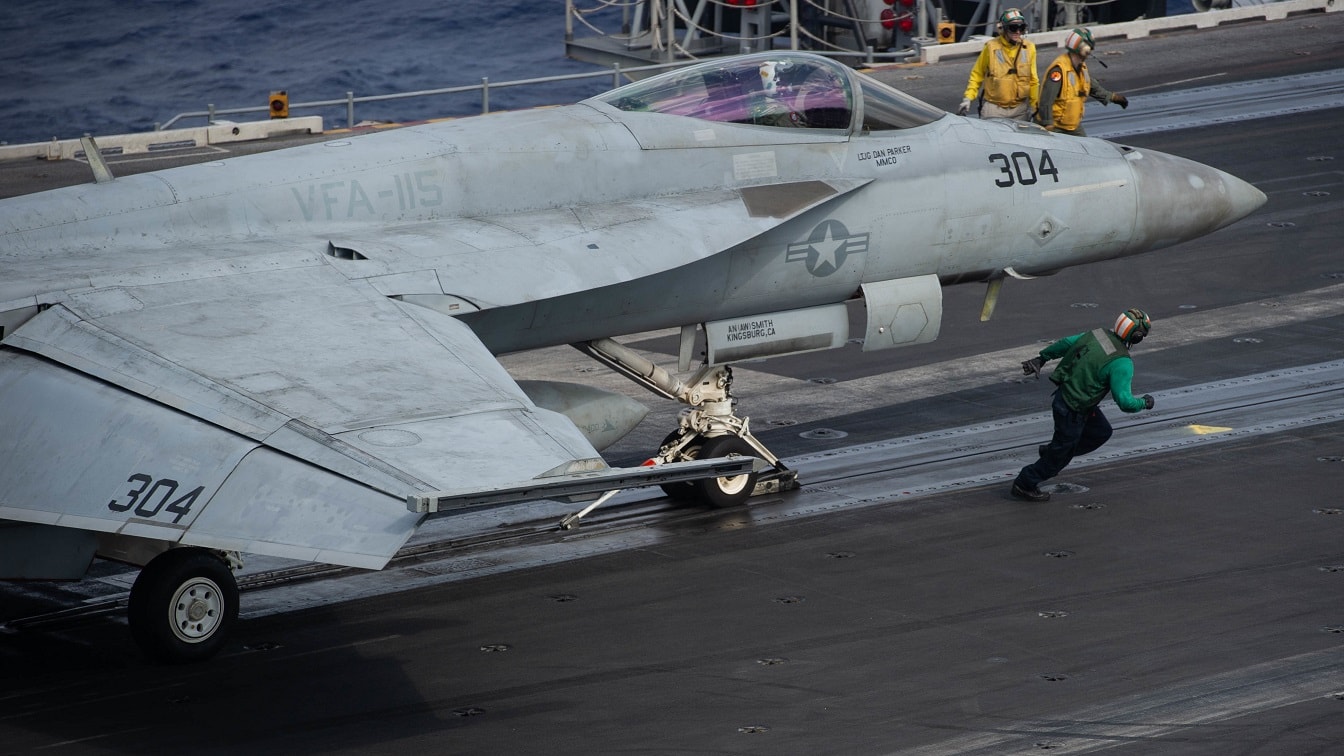
PHILIPPINE SEA (Nov. 15, 2018) Sailors prepare an F/A-18 Super Hornet, attached to Strike Fighter Squadron (VFA) 115, for take-off from the flight deck of the forward-deployed aircraft carrier USS Ronald Reagan (CVN 76) during dual carrier operations with USS John C. Stennis (CVN 74). Ronald Reagan and John C. Stennis are underway and conducting operations, in international waters as part of a dual carrier strike force operations. The U.S. Navy has patrolled the Indo-Pacific region routinely for more than 70 years promoting regional security, stability, and prosperity. (U.S. Navy photo by Mass Communication Specialist Seaman Jason N. Tarleton/Released)
The environmental remediation alone is extraordinarily expensive. And then there’s the museum itself, which requires waterfront property, permanent funding, and a tourism base. These are many separate stars that need to align. That’s why only a handful of carriers survive as museum ships, i.e., Midway, Intrepid, Yorktown, Lexington. Most carriers have no realistic path to preservation whatsoever.
Not Every Carrier Scrapped
But just because the museum pathway is closed to most, not every carrier can simply be scrapped. Nuclear-powered carriers present an entirely different scrapping challenge, for example.
The Nimitz-class, many of which are now nearing the end of their lifecycles and are nuclear-powered, cannot simply be sold to commercial recyclers. The nuclear reactors must be removed first, under Navy supervision.
The disposal process resembles the dismantling of a nuclear submarine—a complex process. The USS Enterprise (CVN-65) demonstrated the complexities and costs of the retirement process as the world’s first nuclear-powered carrier.
Shifts in Naval Power
Many of the ships that end their careers at Brownsville once represented the height of American military dominance during the Cold War. These ships, which once served as floating air bases capable of influencing events anywhere on Earth, are unceremoniously dismantled in the Gulf of Mexico.
But their dismantling reflects the normal life cycle for naval power. After innovation and construction come decades of service, and eventually, because innovation continues, obsolescence and recycling. Steel from these vessels is then sold off for use in bridges, buildings, and consumer products.
While Brownsville dismantles the carriers that helped establish American dominance during the Cold War and fought in US wars from Vietnam to Afghanistan, US shipyards are currently building the next generation of supercarriers, the Gerald R. Ford-class.
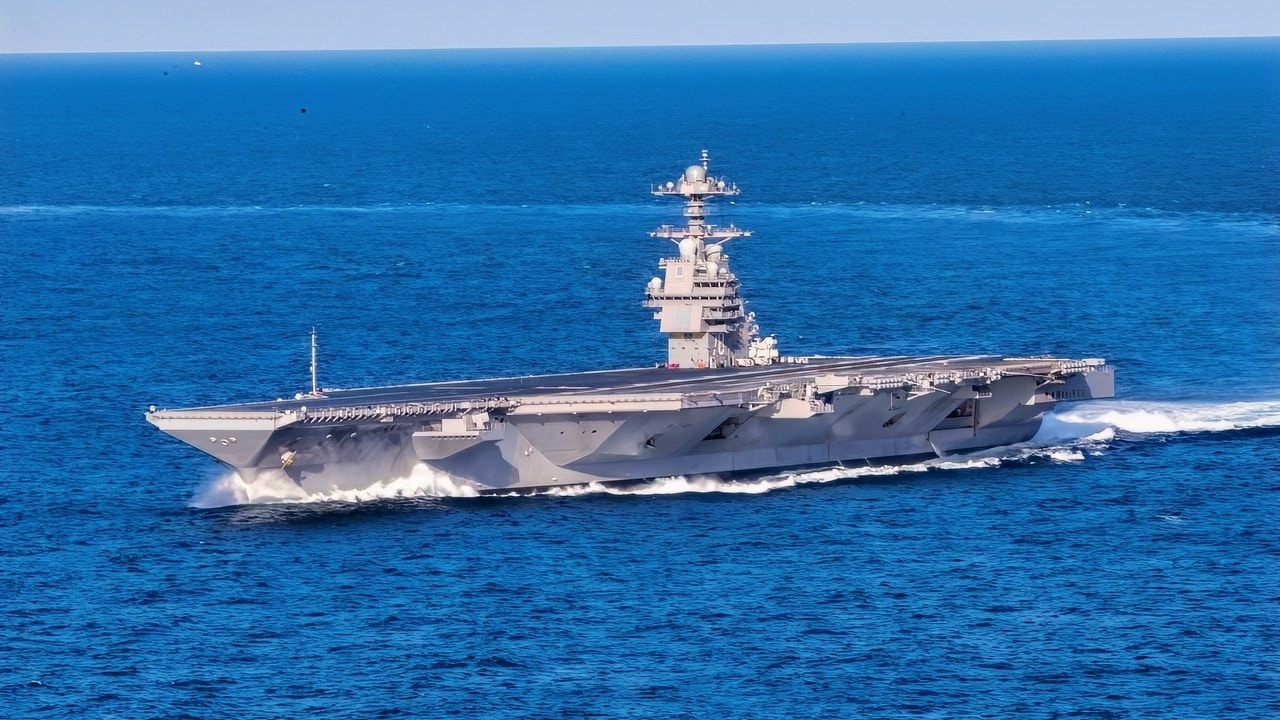
ATLANTIC OCEAN (Oct. 29, 2019) USS Gerald R. Ford (CVN 78) conducts high-speed turns in the Atlantic Ocean. Ford is at sea conducting sea trials following the in port portion of its 15 month post-shakedown availability. (U.S. Navy photo by Mass Communication Specialist 3rd Class Connor Loessin)
Therefore, Brownsville represents more than just a scrapyard. It marks the closing chapter for some of the most consequential warships ever built—warships that directly influenced geopolitical outcomes during one of the most geopolitically contentious times in world history.
Brownsville also serves as a reminder that naval power is constantly renewed; when a carrier is dismantled, it paves the way for the next generation of US sea power, a vessel that is current and world-leading.
About the Author: Harrison Kass
Harrison Kass is a writer and attorney focused on national security, technology, and political culture. His work has appeared in Tablet, City Journal, The Hill, The Spectator, and The Cipher Brief. He holds a JD from the University of Oregon and a master’s in Global & Joint Program Studies from NYU. More at harrisonkass.com.