

My best friend in the U.S. Army was a Special Forces officer with service in Iraq and Afghanistan. Once, we had a conversation about how he was responsible for “bags of cash” in Afghanistan that he used to pay for various services from friendly indigenous troops he was advising and training.
I had heard of this before, but here was someone who personally admitted the practice and how it had progressed beyond what the Army had envisioned when the war in Afghanistan started.
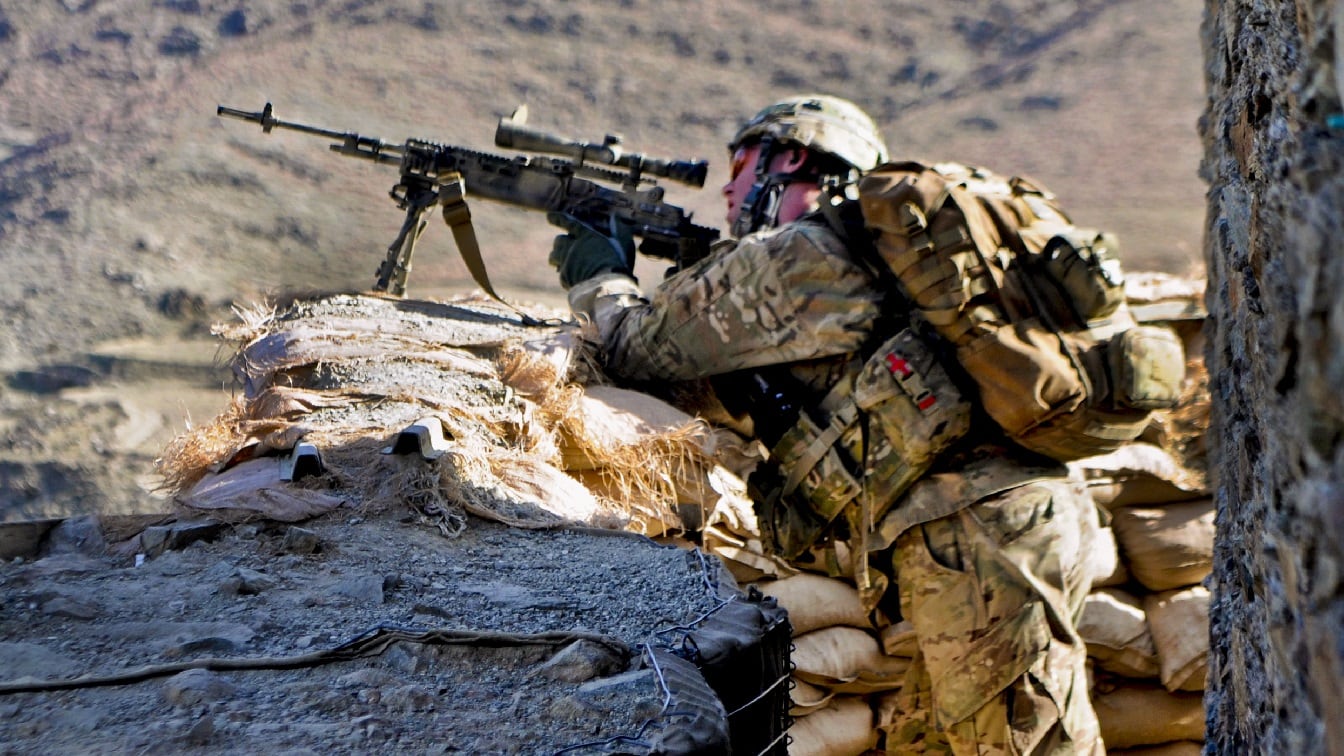
U.S. Army Sgt. Andrew Barnett scans the area using the optic lens on his M14 enhanced battle rifle outside an Afghan border police observation point in Kunar province, Afghanistan, Jan. 28, 2013. Barnett is assigned to the 101st Airborne Division’s 2nd Battalion, 327th Infantry Regiment, 1st Brigade Combat Team. U.S. Army photo by Sgt. Jon Heinrich
What Is SIGAR?
He also recommended I take a look at SIGAR. Was this some kind of new tobacco vaping product? “No, it’s pronounced SEE-gar, and it is the watchdog for all things related to distributed funds in Afghanistan,” he replied.
SIGAR stands for Special Inspector General for Afghanistan Reconstruction.
The organization had a now-defunct website that documented all the waste, fraud, and abuse occurring in Kabul and throughout the country. I took a longer look and couldn’t believe my eyes.
A Blistering Indictment of Government Spending In Afghanistan
There were all kinds of troubling projects. Roads to nowhere. Unused schools without access points. Buildings that were empty.
All of these projects cost exorbitant sums, and the taxpayer was being fleeced. Not to mention there were cases of outright theft by recipients of U.S. government funds.
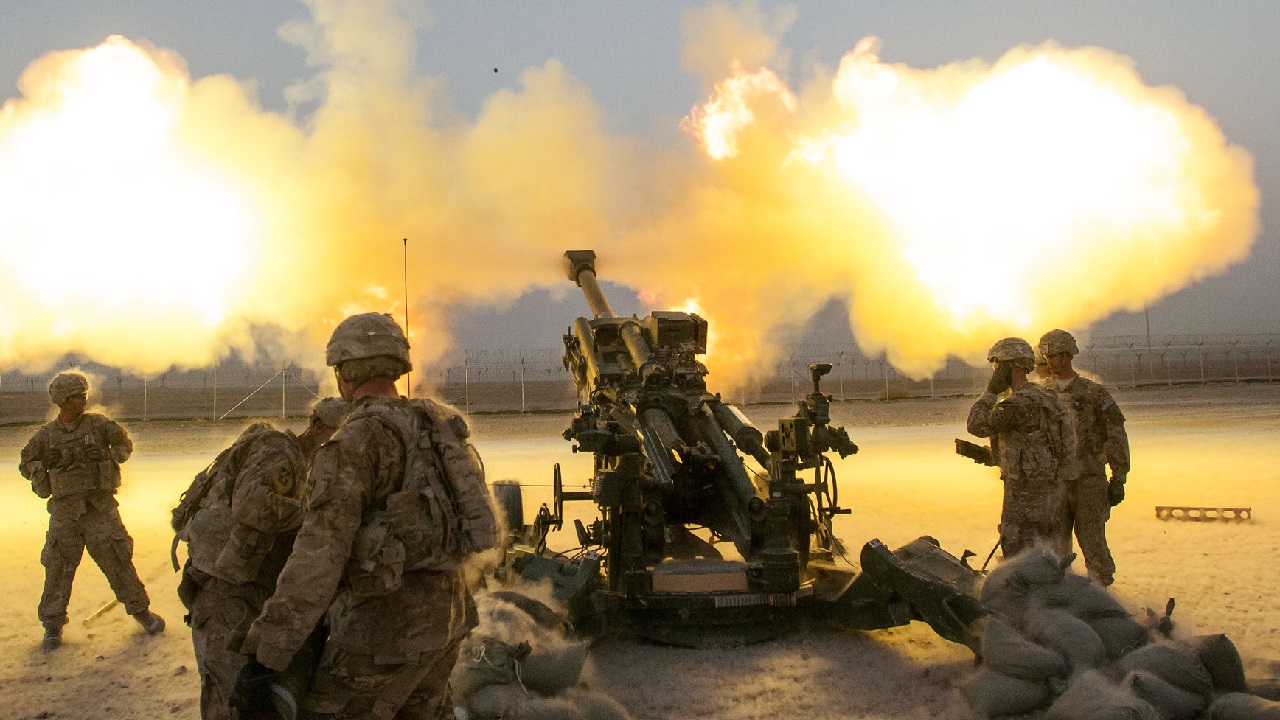
Soldiers serving with Alpha Battery, 2nd Battalion, 77th Field Artillery Regiment, 4th Infantry Brigade Combat Team, 4th Inf. Division, shoot a round down range from their M777A2 howitzer on Kandahar Airfield, Afghanistan, Aug. 22, 2014. The round was part of a shoot to register, or zero, the howitzers, which had just arrived on KAF from Forward Operating Base Pasab. The shoot also provided training for a fire support team from 1st Battalion, 12th Infantry Regiment, 4th IBCT, 4th Inf. Div. This is similar to artillery now engaged in Ukraine. (U.S. Army photo by Spc. Ariel Solomon/Released)
One case particularly stood out. This was the alternative fuel station that cost so much money that you would have become a loud whistleblower if you had known about it.
The Incredibly Expensive Gas Station
It was an expensive gas station that blew away all expectations, and not in a good way. SIGAR identified a shocking $43 million expenditure on this alternative fuel distribution center.
This was 140 times the original estimate. SIGAR also noted that the Pentagon had no idea how it had become so expensive or who was responsible for the project’s original idea.
“Even considering security costs associated with construction and operation in Afghanistan, this level of expenditure appears gratuitous and extreme,” SIGAR said in a report in November 2015.
Watchdog Leaders Were Growling Loudly
SIGAR’s leadership was upset, to put it mildly. The people in charge took their oversight job seriously, and they were not scared to ruffle some feathers in Washington.
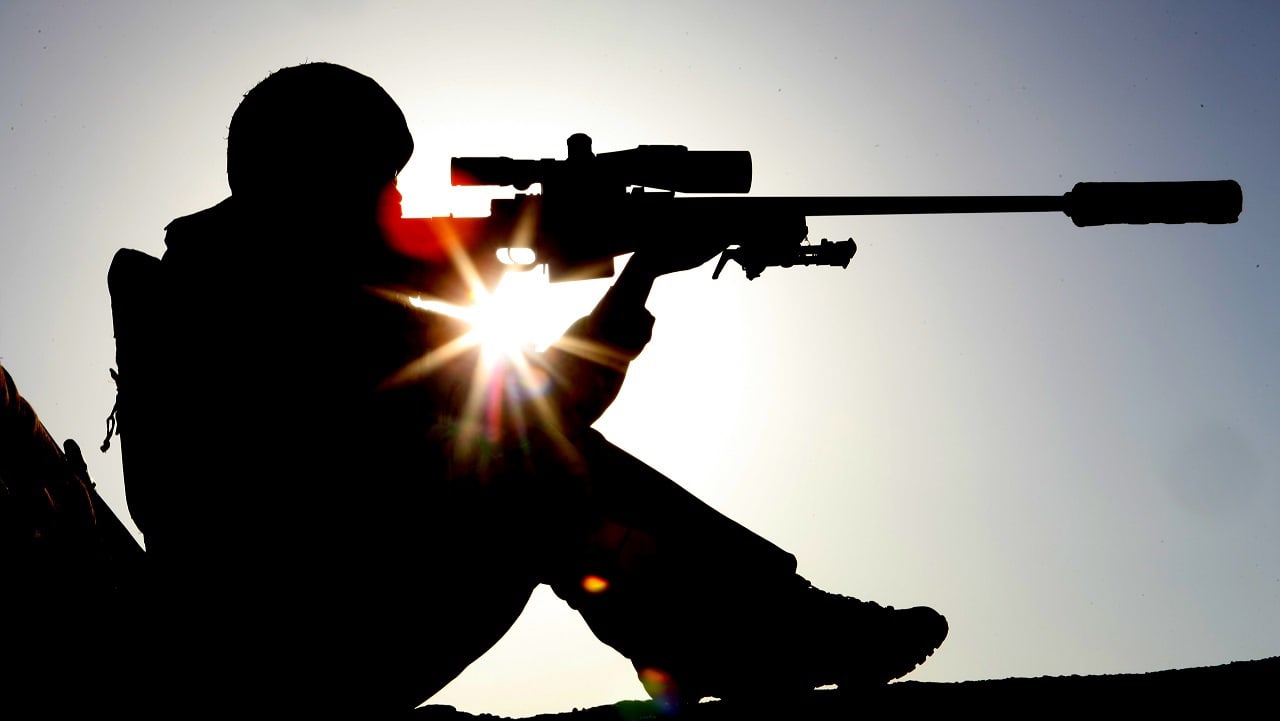
A sniper serving in Afghanistan on Operation Herrick 10 with the Sniper Platoon, D (Fire Support) Company, 2nd Battalion, The Mercian Regiment, with his .338mm L115 A3 sniper rifle.
“It’s an outrageous waste of money that raises suspicions that there is something more there than just stupidity,” John Sopko, the special inspector general, told NBC News. “There may be fraud. There may be corruption. But I cannot currently find out more about this because of the lack of cooperation.”
Mysterious Task Force Was a Money Pit
Sopko pointed his finger toward the Task Force for Stability and Business Operations (TFBSO).
This murky office had ideas that sounded good on paper but, in reality, were fraught with the risks and hazards of building infrastructure in a combat zone.
The idea was to introduce compressed natural gas to the population of the city of Sheberghan to help people become more fuel-efficient and conserve energy.
Project With No Foresight
SIGAR accused this task force of negligence because it had no real plan for what would become of the natural gas station.
There was little prior analysis. Would this fuel be used? Were there actually vehicles in Afghanistan that ran on compressed natural gas?
Did the people have money to afford it? None of these questions was ever answered.
We Are Talking About a Stunning Rip-Off
“A contract for just under $3 million was awarded to a company called Central Asian Engineering in 2011.
According to SIGAR, an economic impact assessment found the task force spent well beyond that —$42,718,730 — between 2011 and 2014 to fund the station’s construction and supervise its initial operation,” NBC News reported.
How did this project balloon from $3 million to nearly $43 million? There must have been some entity skimming or outright stealing from the government.
Sopko smelled a rat but couldn’t find out who would take responsibility for this boondoggle. Even spending $3 million was hardly worth it for a concept with no proof of feasibility before construction.
It Should Have Cost Only $500,000
SIGAR estimated that the same gas station could have been built in Pakistan for under $500,000.
Someone was getting rich on the government’s dime, and the watchdog agency pointed to this project as one of the hazards of doing business in Afghanistan. SIGAR also could find no records or paper trail for the project.
“I’m suspicious when I see something that costs 140 times more than it did and I find people trying to withhold or not cooperate with me,” Sopko said. “It raises my suspicions.”
What a Waste of Money
Congress was complicit in the whole mess, too. Lawmakers allocated $820 million to the TFBSO for economic development in Afghanistan.
There was very little oversight of these funds by the Department of Defense or lawmakers. It seemed like employees and uniformed personnel were more concerned with getting the money out the door than making sure it was spent wisely.
This kind of waste, fraud, and abuse is one reason why I was against the war in Afghanistan and wanted U.S. and coalition forces to withdraw as far back as 2010.
The United States and its allies wasted too much blood and treasure on a country that had little strategic value and only a tiny level of functioning economic and democratic institutions.
SIGAR did its job, but it was never able to move the needle on all of the malfeasance that went on during the war in Afghanistan.
This is a cautionary tale about the difficulty of nation-building when so many hands were in the till. Let’s hope that the United States never embarks on another regime change operation that requires an occupying force.
The money involved should have been a sign that nation-building would not work in South Asia. The whole experience was a tragedy that should never happen again.
About the Author: Brent M. Eastwood, PhD
Author of now over 3,500 articles on defense issues, Brent M. Eastwood, PhD, is the author of Don’t Turn Your Back On the World: A Conservative Foreign Policy and Humans, Machines, and Data: Future Trends in Warfare, plus two other books. Brent was the founder and CEO of a tech firm that predicted world events using artificial intelligence. He served as a legislative fellow for US Senator Tim Scott and advised the senator on defense and foreign policy issues. He has taught at American University, George Washington University, and George Mason University. Brent is a former US Army Infantry officer. He can be followed on X @BMEastwood.