
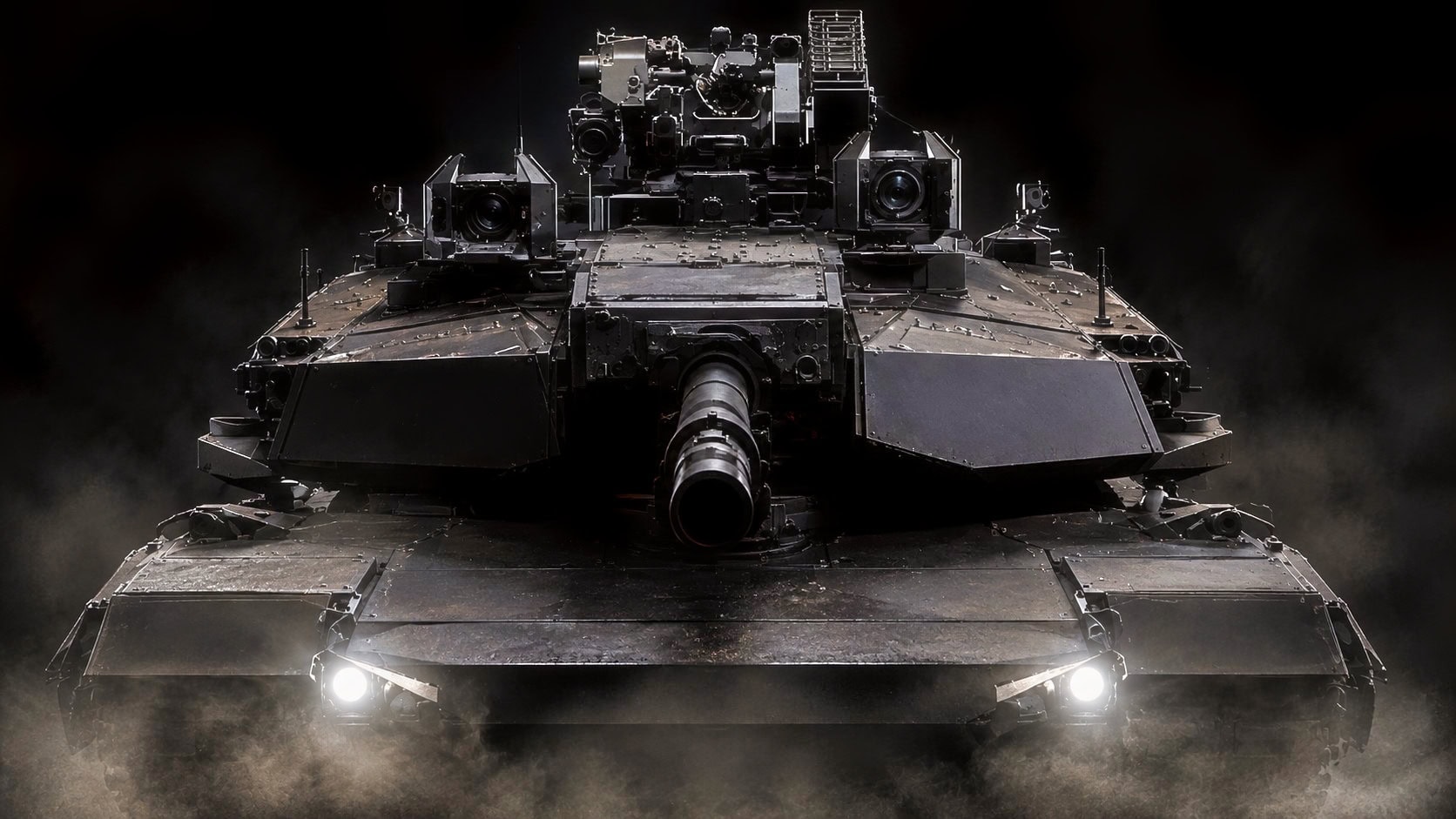
Why the M1 SEPv4 Failed: Development of the M1E3 Abrams is currently in full swing, with prototype testing set to begin in the fall of this year as the Army aims to get the tank operational as quickly as possible.
The tank was selected as the next iteration of the Abrams family following the rejection of the M1A2 SEPv4.
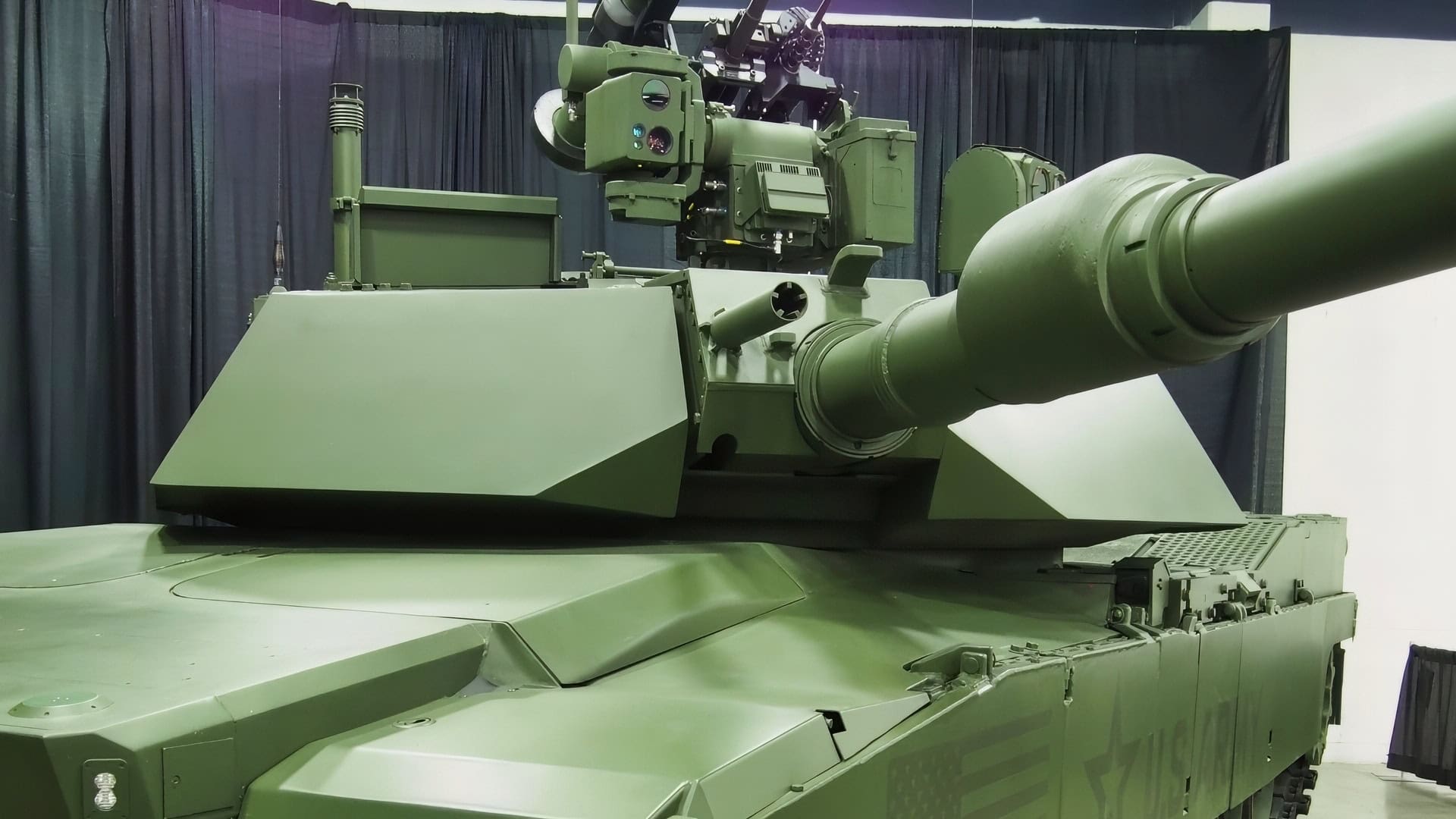
M1E3 Abrams Tank at the Detroit Auto Show. 19FortyFive.com Original Image.
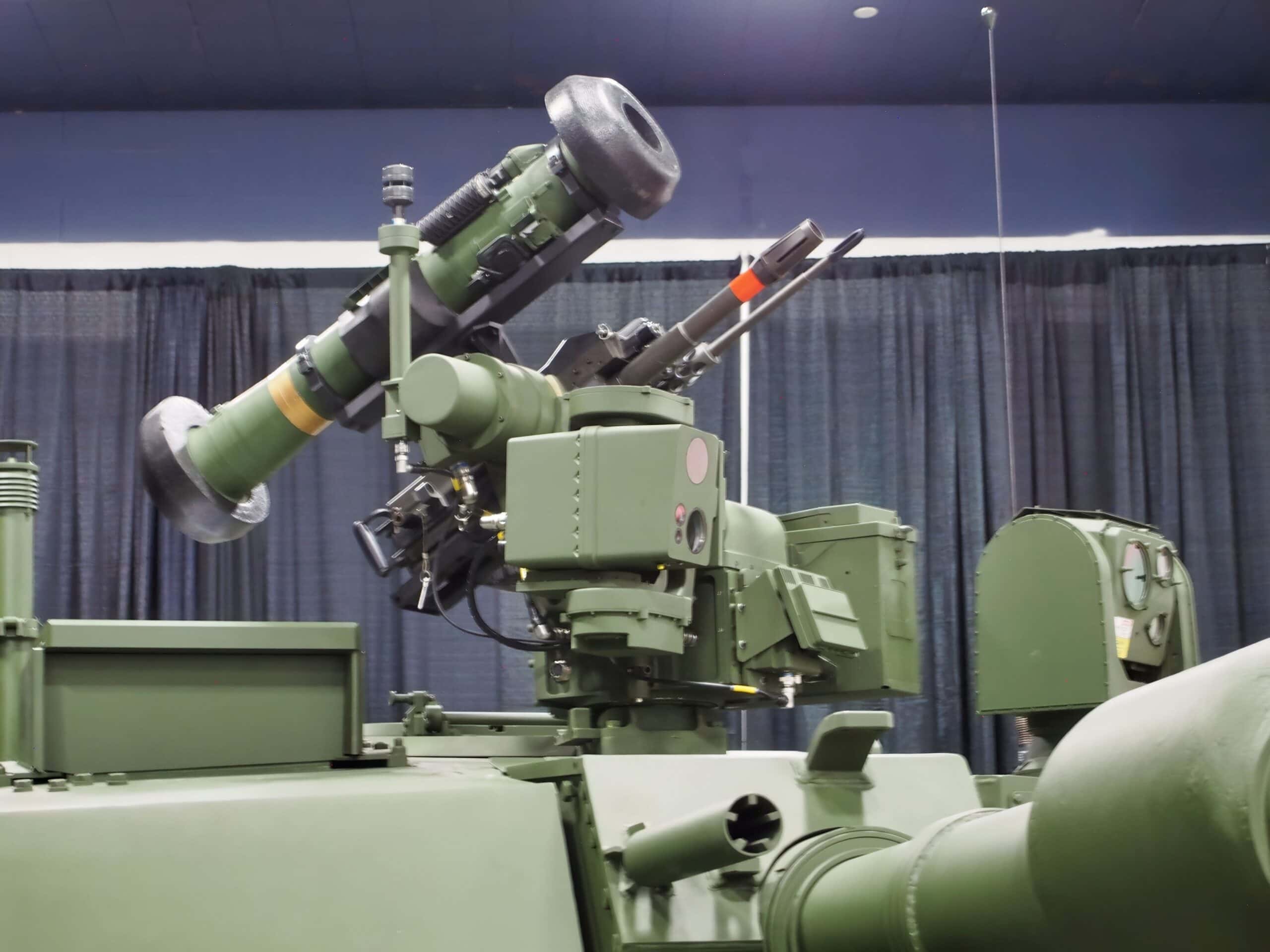
M1E3 Abrams Tank. Taken by 19FortyFive.com
The SEPv4 program, despite offering advanced capabilities, was canceled for several reasons, the main one being that the M1A2 had reached the limit of its upgradability and that a new approach was needed to ensure the tank’s survival on the modern battlefield.
The M1E3, according to the Army, incorporates the best features of the SEPv4 without its drawbacks, at a much better cost.
What the SEPv4 Offered
The M1A2 SEPv4 was first announced in 2017 as an attempt to further upgrade the SEPv3.
The SEPv3 introduced a number of improvements to the Abrams’ computer systems and imagers, including the Improved Forward-Looking Infrared (IFLR), new Vehicle Health Management Systems (HMS), a remote weapons suite (RWS), and more.
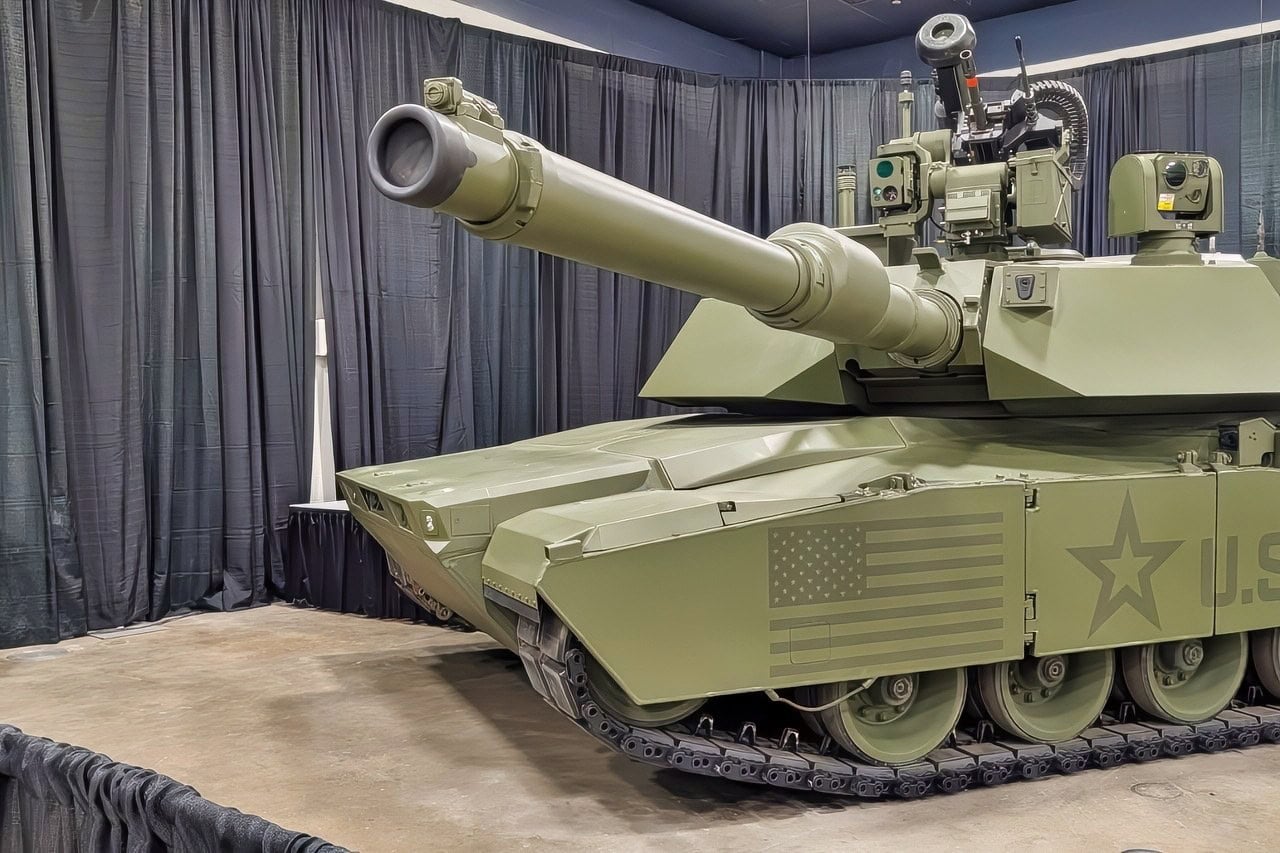
M1E3 Tank at the Detroit Auto Show. Image Credit: 19FortyFive.com
The tank also improved crew survivability by incorporating Abrams Reactive Armor Tiles (ARAT) and the Israeli Trophy Active Protection System (APS).
Compared to previous iterations, the M1A2 SEPv3 was a quantum leap in capabilities across the board.
The SEPv4 variant sought to build upon the improvements made by the SEPv3 by incorporating next-generation FLIR sights for the commander and gunner to improve target detection and acquisition.
The tank would also utilize next-generation tank rounds, such as the XM1147 Advanced Multi-Purpose (AMP) round with a programmable fuse, which can be used against hardened bunkers, infantry, and light armored vehicles.
Other improvements proposed by the SEPv4 package included upgrades to the tank’s Fire Control Systems (FCS), improved onboard diagnostics, more advanced sensors, and thermal management systems.
The goal of the program was to improve the SEPv3’s already advanced capabilities and increase the tank’s lethality and survivability.
Not Enough Bang for its Buck
However, when testing the SEPv4, the Army quickly ran into a problem: the M1A2 was reaching its upgrade limits.
After around two decades of upgrade packages, the tank’s weight had ballooned significantly. A base M1A1 weighs around 63 tons, whereas the M1A2 SEPv3 weighs around 76 to 78 tons.
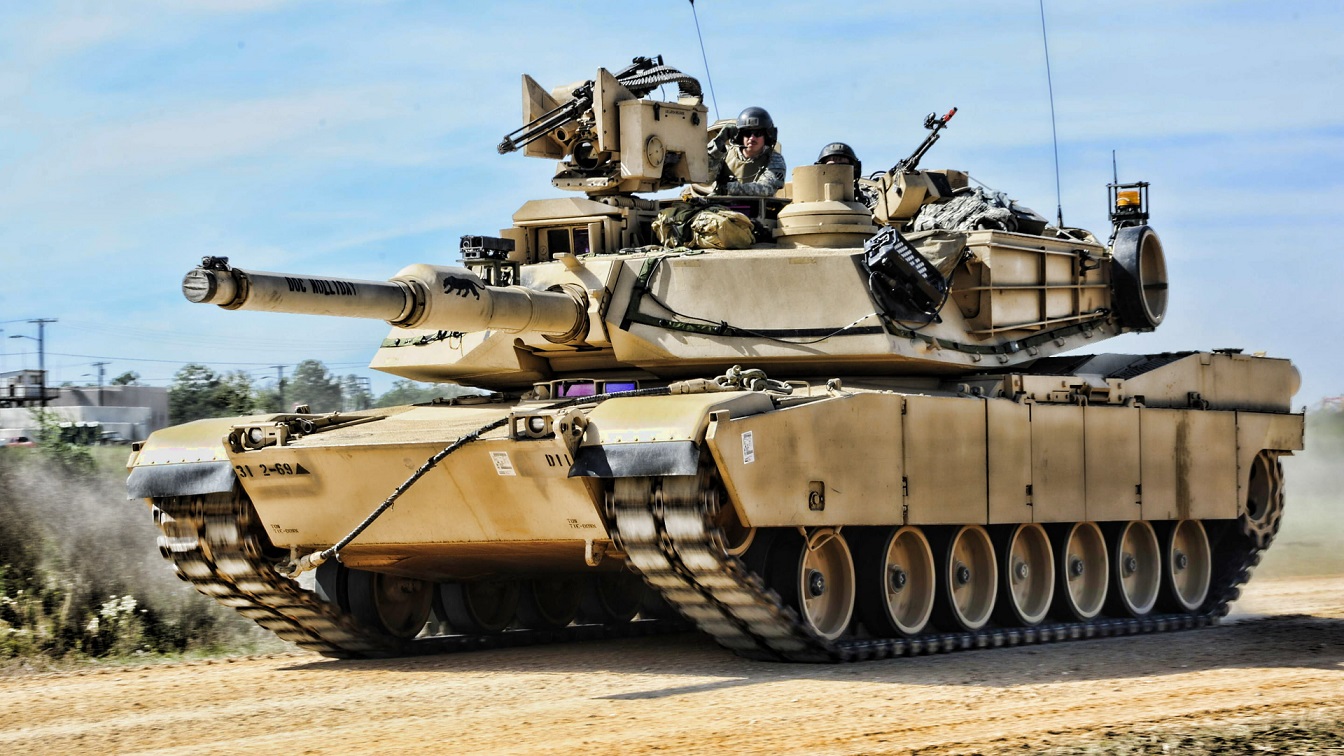
M1 Abrams Tank. Image Credit: U.S. Army.
This threatened to limit the tank’s overall versatility by making it too heavy to cross certain bridges and by giving it a much larger logistical footprint, which could be a burden in large-scale, protracted combat operations.
“The Abrams tank can no longer grow its capabilities without adding weight, and we need to reduce its logistical footprint,” said Maj. Gen. Glenn Dean, program executive officer for Ground Combat Systems.
Consequently, the platform’s potential for future upgrades diminished as more and more packages were added to the already large and heavy tank.
Combat experience from the War in Ukraine also forced the Army to rethink its assumptions about the future of armored warfare.
The SEPv4 was designed in the mid-to-late 2010s, before the ongoing conflict broke out and before drones became as prominent as they are today.
While drones were already at the forefront of everyone’s minds in 2015, few predicted the current situation in Ukraine, where cheap, mass-produced drones could take out an advanced tank costing millions of dollars with ease.
Experience in Ukraine demonstrated what does and doesn’t work for the Army.
Many aspects of the Abrams, such as its gun, armor, and sensors, perform perfectly well against contemporary threats. However, other aspects of the tank, such as its weight and fuel-hungry engine, needed attention.
Good Ideas, Bad Implementation
Many of the ideas behind the M1A2 SEPv4 were sound; however, the problem lay in the M1A2’s limitations. To that end, the Army began looking for a new replacement.
As noted earlier, many aspects of the Arbam’s design still work perfectly well today, eliminating the need for a clean-sheet approach.
Although the M1E3 has a completely different turret, the tank retains the same chassis and many of the upgrades the SEPv4 was supposed to receive.
The M1E3 will reportedly be equipped with FLIR sights and sensors, in addition to the onboard sensors and diagnostic systems present on its predecessors.
The M1E3, in contrast to the M1A2, is built to be more modular. This is to ensure that critical systems, such as the sights and onboard electronic systems, can be easily replaced and upgraded without drastically increasing the tank’s weight.
“The development of the M1E3 Abrams will include the best features of the M1A2 SEPv4 and will comply with the latest modular open systems architecture standards, allowing quicker technology upgrades and requiring fewer resources,” the Army said in an official statement.
With this approach, the Army can integrate the best systems onto the SEPv4 and SEPv3 without increasing the tank’s weight, while leaving the door open for future upgrades.
Paving the Way for the M1E3
While the M1E3 is still the same old Abrams at the end of the day, the tank is a significant departure from its predecessors.
It utilizes an unmanned turret with a three-person crew, all of whom are located in the hull for better protection.
The gas turbine engine has also been replaced by a new hybrid diesel-electric power plant to improve efficiency.
The old torsion bar suspension system has also been replaced with a new hydropneumatic system to accommodate the new crew compartment and power system.
While not a complete clean-sheet redesign, the M1E3 is very distinct compared to its predecessors.
About the Author: Isaac Seitz
Isaac Seitz, a Defense Columnist, graduated from Patrick Henry College’s Strategic Intelligence and National Security program. He has also studied Russian at Middlebury Language Schools and has worked as an intelligence Analyst in the private sector.