
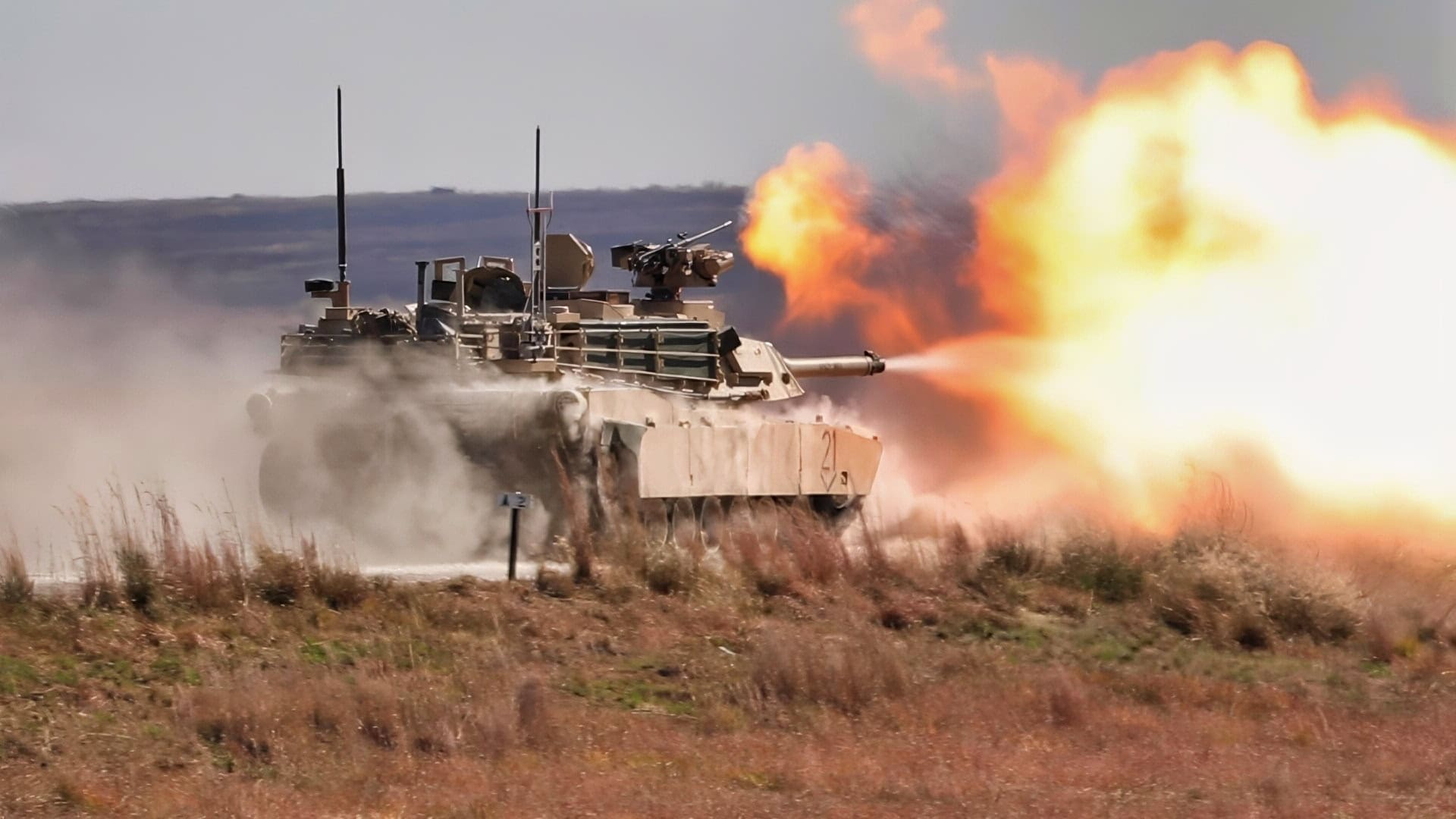
The Ukrainian 1st Assault Regiment Is Making Its American-Made M1A1 Abrams Tanks More “Drone-Proof”
The American-made M1 Abrams is the most successful main battle tank (MBT) of all time, with a combat-proven track record spanning the 1991 Persian Gulf War (Operation Desert Storm), the 2003 Iraq War (Operation Iraqi Freedom), and the current Russo-Ukrainian War.
A major reason for the M1’s endurance has been its adaptability to continuous improvements (it certainly hasn’t remained frozen in time).
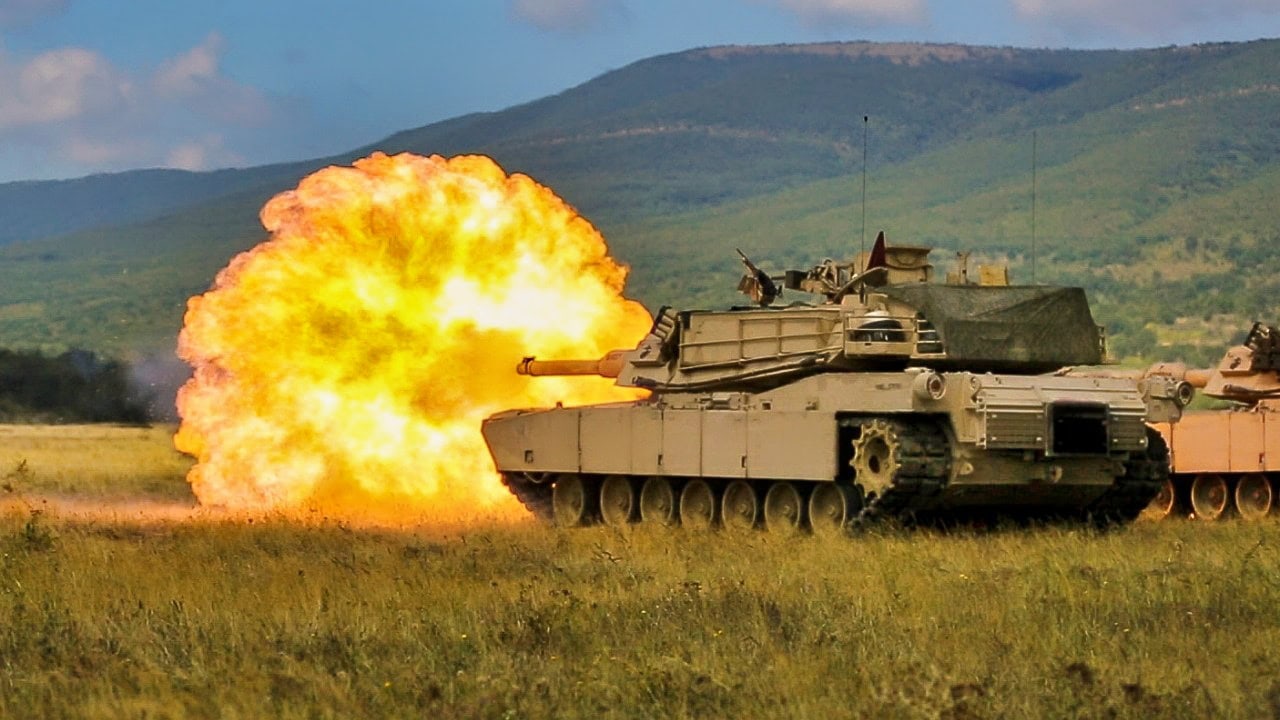
U.S. Marines with Combined Arms Company fire an M1A1 Abrams tank during a field training exercise at Novo Selo Training Area, Bulgaria, Sept. 21, 2015. The Marines underwent several days in the field to prepare for multinational training exercises over the next few months. (U.S. Marine Corps photo by Lance Cpl. Melanye E. Martinez/Released)
And speaking of the Russo-Ukrainian War, it shows that it’s not just the Abrams’s Stateside manufacturer that’s been responsible for those improvements. Units like the Ukrainian 1st Assault Regiment have also had a say in the matter.
Bottom Line Up Front (BLUF)
Without a doubt, the acquisition of the M1 was a major boost to the tank fleet of the Ukrainian Ground Forces (Sukhoputni viiska Zbroinykh syl Ukrainy [SVZSU]), which had previously been relying on Cold War-vintage Soviet-designed tanks like the T-72.
And while America was not keen for the deal to go down for a lot of reasons, mostly because it did not want the M1 Abrams exposed as not able to handle drone warfare, Kyiv needed every piece of military hardware it could get.
That said, a major menace to MBTs on both sides of the Russia-Ukraine conflict has been the use of killer drones.
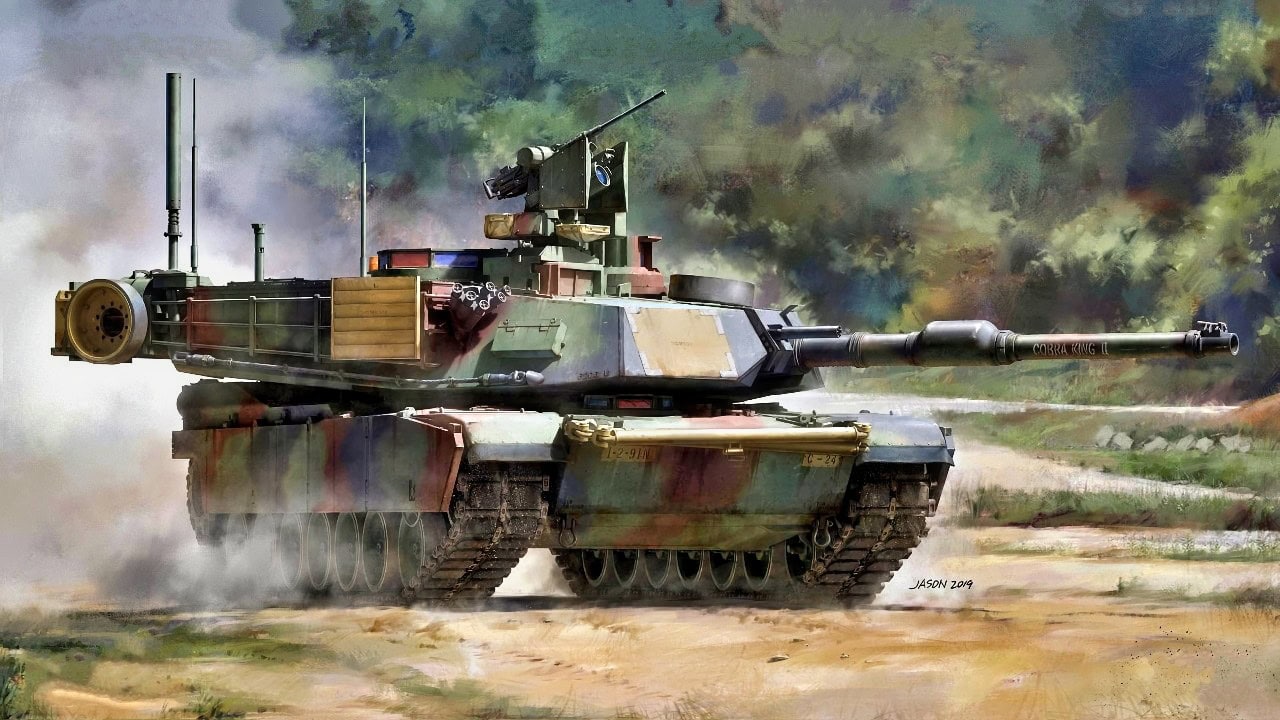
M1 Abrams Tank. Image Credit: Creative Commons.
Granted, the Ukrainians were the first of the two warring nations in that conflict to make a major impact (both literally and figuratively) with drones as an anti-tank weapon, thanks to the Turkish-made Bayraktar TB2.
Not to be done, however, the Russians began following suit, via their homegrown Lancets and Iranian-made Shaheds, and Ukrainian tank crew members—in their U.S.-made M1s and German-made Leopard 2 MBTs alike—started suffering their own heavy losses as a result, compelling Kyiv to severely curtail its tank warfare operations for a while, relegated to using them in rather piecemeal fashion.
Ukraine Upgrades an American (and Aussie) MBT
Accordingly, at least one SVZSU unit is taking steps to improve its M1S’ survivability against Russian drones.
David Axe (a respected war correspondent and graphic novelist who previously authored “War Is Boring” who wrote articles for Forbes) discusses this at length in the March 31, 2026, installment of his “Trench Art” Substack blog, titled “The Ukrainian 1st Assault Regiment Transforms Its M-1 Abrams Tanks.”
In his opening paragraph, Mr. Axe states that “The Ukrainian 1st Assault Regiment is transforming at least one of its ex-Australian M-1 Abrams tanks into a drone-proof turtle tank with many of the latest innovations. And it clearly aims to use it. We’ve seen 1st Assault Regiment tanks in action recently as part of Ukraine’s ongoing southeastern counteroffensive.”
Yes, you read that correctly: “ex-Australian.” You see, back in July 2025, the Australian government worked out a deal to send 49 of its older M1A1 specimens to Ukraine; besides the obvious benefit to the beleaguered Ukrainians, the $160.6 million deal also served as a “very convenient offloading ramp” for Australia’s “retired” M1A1s as it upgraded to the newer M1A2 SEPv3 variant.
Trump Administration officials were less than thrilled with this decision, but eh, c’est la vie, n’est ce pas? (As far as we know, the Trump Administration isn’t sufficiently upset with Australia to consider pulling out of “the Quad” like it’s seriously threatening to do with NATO.)
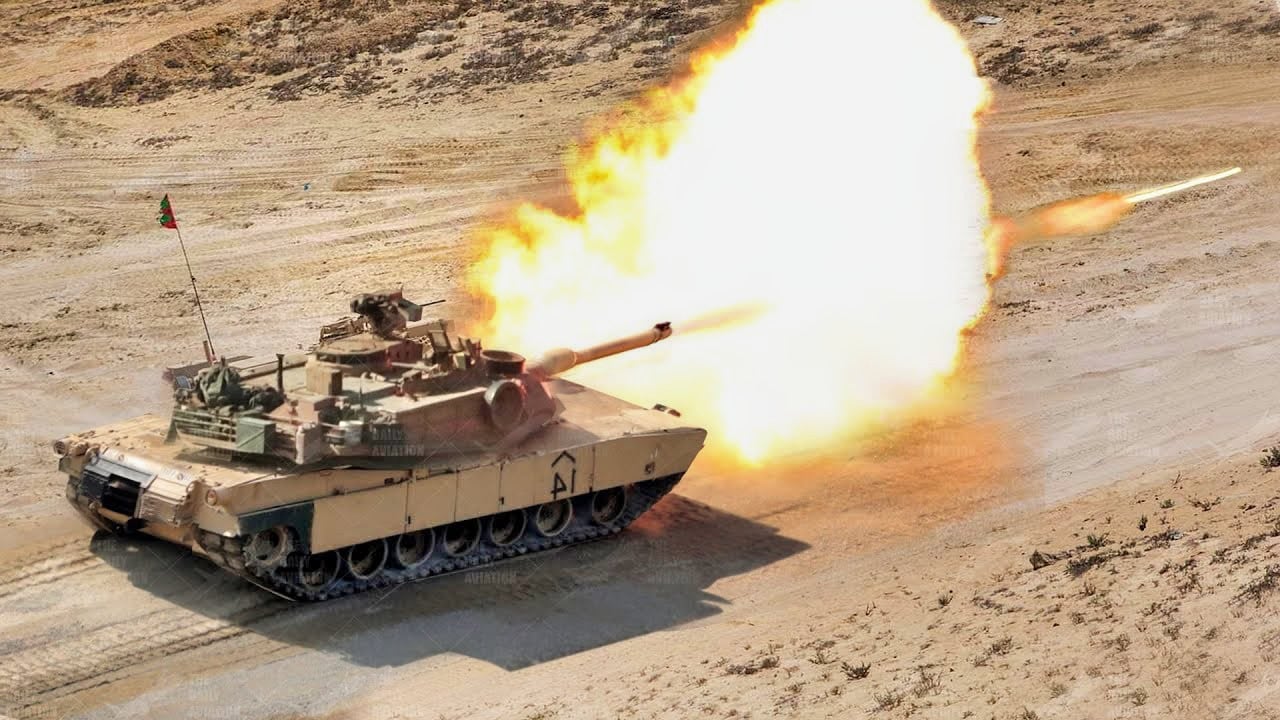
M1 Abrams Firing. Image Credit: Creative Commons.
The Trump officials’ misgivings were certainly understandable; after all, analysts at the Oryx collective have confirmed the destruction or capture of at least 11 M1S, with another dozen of the precious tanks either damaged or abandoned.
Specifics on Improvements
The SVZSU has taken these concerns to heart and acted accordingly.
To be sure, the 1st Assault Regiment was not the first Ukrainian army unit to add anti-drone protection to its M1S.
After all, the 47th Mechanized Brigade (“Magura”) added layers of explosive reactive armor and rubber skirts to stiffen the built-in composite armor on its roughly Abramses, and the 425th Assault Regiment (“SKALA”) added a large metal frame supporting thousands of drone-detonating metal spines.
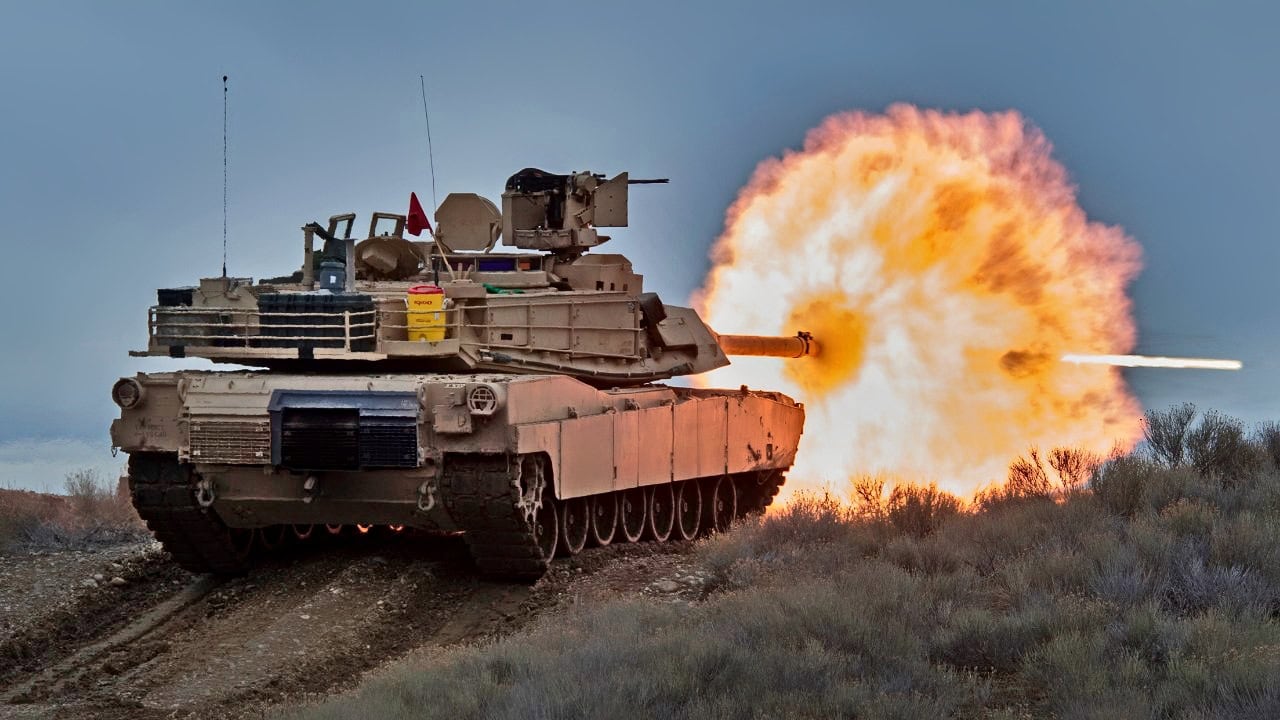
M1A2 Abrams Tanks from A Company, 2-116th Cavalry Brigade Combat Team (CBCT), Idaho Army National Guard run through field exercises on Orchard Combat Training Center (OCTC).
Since then, the 1st Assault Regiment has gone a step further, enabling its Abrams tanks to finally return to fighting like tanks, i.e., dishing out punishment with their main gun in addition to absorbing punishment. To be more precise, they’re applying a new variant of the metal frame that only surrounds the M1S’ turrets, thus enabling the turrets to traverse left and right to aim their main guns. (Gee, what a concept, eh?)
So Far, So Good
Initial reports indicate the concept is working well in the crucible of the battlefield. As Mr. Axe elaborates, “On or just before Monday [March 30, 2026, that is], a 1st Assault Regiment tank was observed rolling up on a Russian infantry position outside the village of Pryluky in southeastern Ukraine’s Zaporizhzhia Oblast, and blasting that position at close range with its 120-millimeter main gun.”
To further drive home the significance of this seemingly minor tactical victory, David adds, “If the footage of that apparently successful M-1 assault around Pryluky is any indication, it was a winning bet. Ukraine’s tanks are back.”
A Brief History of the 1st Assault Regiment
The 1st Assault Regiment traces its roots back to January 20, 2014 (barely two months before Vladimir Putin annexed Crimea). The regiment previously belonged to the Right Sector’s Voluntary Ukrainian Corps and later the 67th Mechanized Brigade until April 2024.
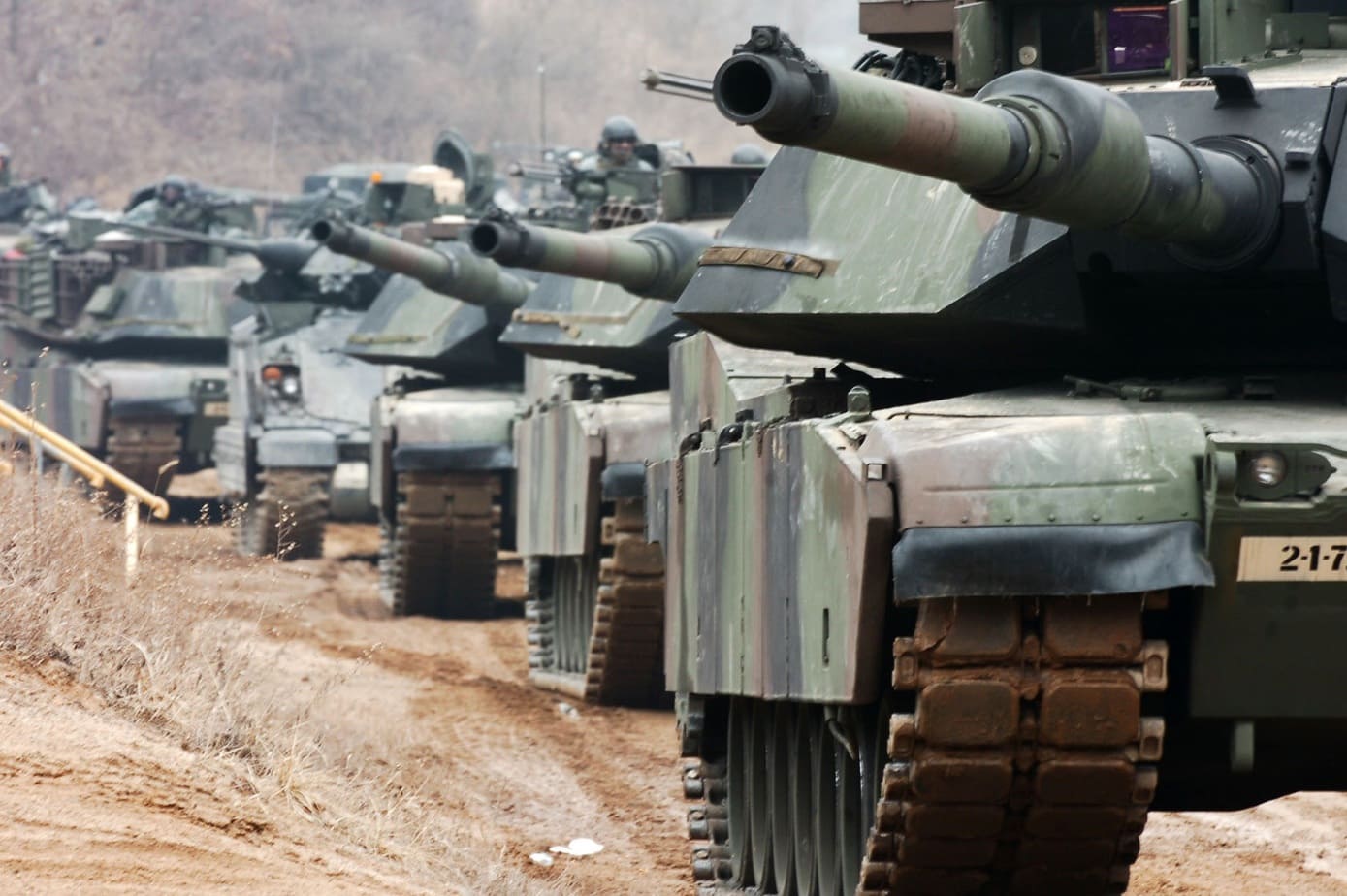
VLC1 – M1A1 Abrams from 1-72nd Armor Regiment line up in preparation to assault a town during Warrior Focus, a training exercise involving the entire 1st HBCT, Feb. 10 at the Combined Arms Collective Training Facility at Rodriguez Live Fire Complex.
The unit now officially goes by the full name “1st Separate Assault Regiment named after Dmytro Kotsiubailo,” in homage to Lieutenant Dmytro Ivanovych “Da Vinci” Kotsiubailo, the youngest battalion commander in the history of the Ukrainian Army, killed in action on March 7, 2023, at the age of 27, during the Battle of Bakhmut.
The unit’s motto is “Iron and Fire” (“Zalizo i vohonʹ”).
MORE – The SR-71 Blackbird Required Titanium Manufacturing That Didn’t Exist
About the Author: Christian D. Orr, Defense Expert
Christian D. Orr is a Senior Defense Editor. He is a former Air Force Security Forces officer, Federal law enforcement officer, and private military contractor (with assignments worked in Iraq, the United Arab Emirates, Kosovo, Japan, Germany, and the Pentagon). Chris holds a B.A. in International Relations from the University of Southern California (USC) and an M.A. in Intelligence Studies (with a concentration in Terrorism Studies) from American Military University (AMU). He is also the author of the book “Five Decades of a Fabulous Firearm: Celebrating the 50th Anniversary of the Beretta 92 Pistol Series, the second edition of which was recently published.