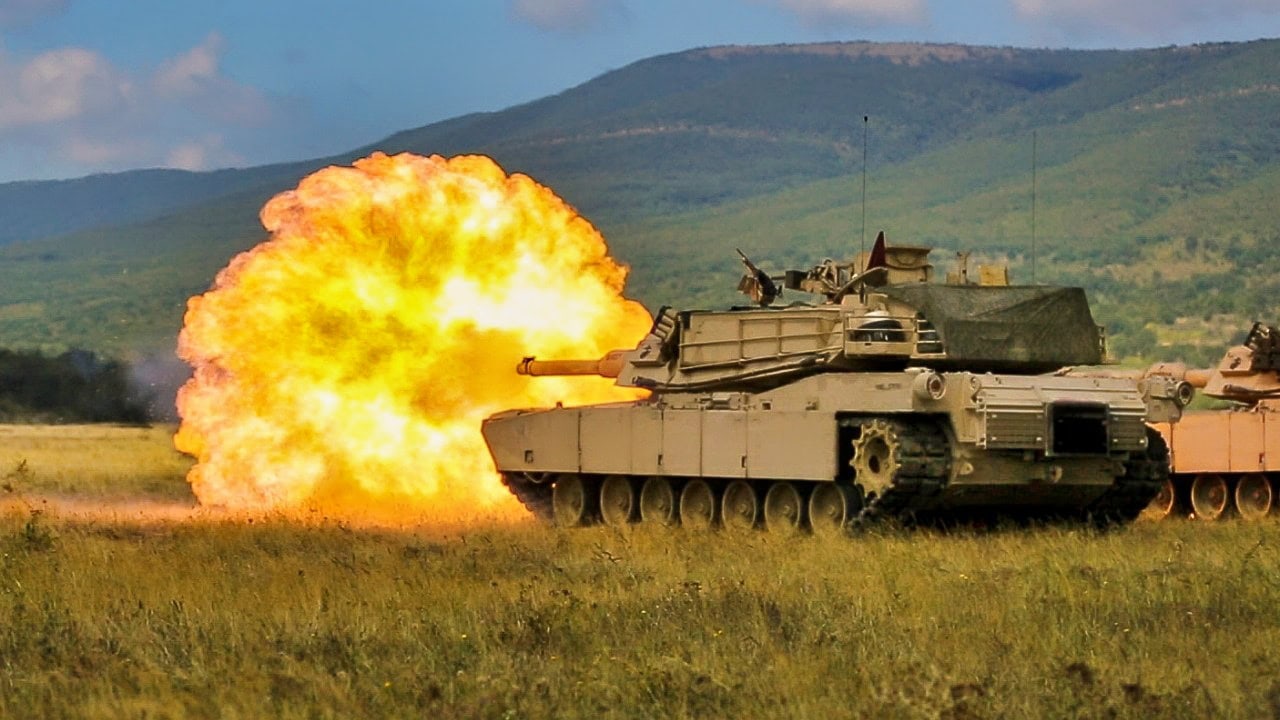
Summary and Key Points: Ukraine sought M1A1 Abrams tanks, expecting Desert Storm-style dominance, but the battlefield delivered a different verdict. In fact, the last 49 of these tanks were delivered recently.
-The biggest limiter is scale: too few tanks arrived to reshape the front.
-The bigger shift is the modern kill chain—persistent drone surveillance, faster artillery targeting, and lethal anti-tank guided missiles make heavy armor far easier to find and disable.
-Sustainment burdens compound the problem, with maintenance demands and complex logistics straining a force already under pressure.
M1A1 Abrams in Ukraine: Why the M1’s Desert Storm Magic Didn’t Translate
U.S. officials reportedly worried the Abrams would be difficult for Ukraine to keep running—and that top-attack drone threats exploit a known vulnerability.
Soon after Russia invaded, Ukraine began to clamor for U.S. M1A1 Abrams main battle tanks. The advanced U.S. MBT, as anticipated, was expected to defeat the less-advanced Russian tank models at a healthy clip.
During the 1991 Operation Desert Storm, the U.S. M1 destroyed some 2,000 Russian-made Iraqi armored vehicles; mostly T-72, T-62, and T-55 models.
Only nine M1 Abrams tanks were destroyed during the entire war, with seven lost to friendly fire and two intentionally destroyed to prevent capture after being disabled.
Overall, the M1 enjoyed a 20-to-1 kill ratio.
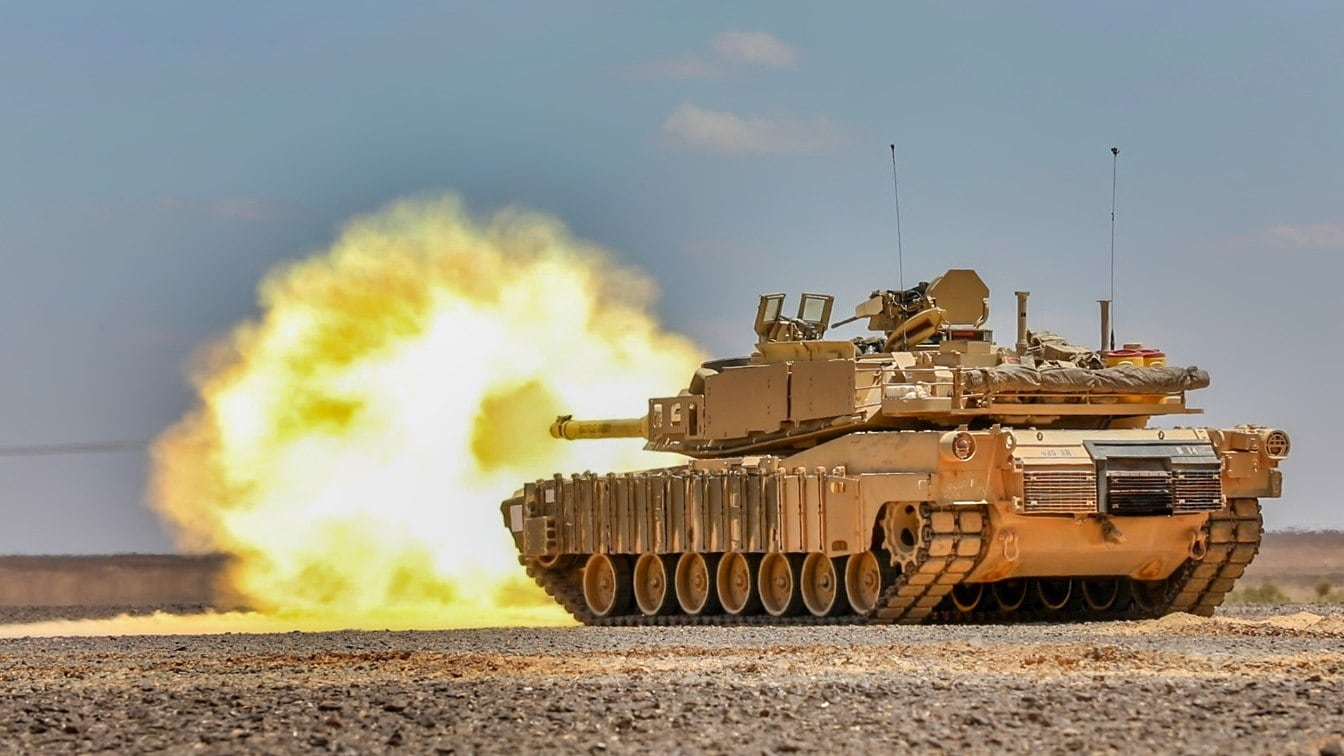
A U.S. Army M1A1 Abrams tank fires as part of Eager Lion 2024 at Training Area 5, Jordan, May 13, 2024. Eager Lion 24 is a multilateral exercise, with 33 participating nations, hosted by the Hashemite Kingdom of Jordan, designed to exchange military expertise, and improve interoperability among partner nations, and considered the capstone of a broader U.S. military relationship with the Jordanian Armed Forces. Jordan is one of U.S. Central Command’s strongest and most reliable partners in the Levant sub-region. (U.S. Army photo by Spc. Nataja Ford)
A similar level of success was anticipated for the M1s sent to Ukraine, but the results were far less lopsided. There are several reasons why the earlier success of the M1 has not been repeated in the war in Ukraine.
Struggling To Achieve Success
First is the question of numbers: too few tanks were deployed in Ukraine to have a significant effect on the battlefield.
As of January 2026, Ukraine had received somewhere between 80–100 M1A1 Abrams. Kyiv received these from the United States and Australia, with the latter completing delivery of 49 tanks in early 2026.
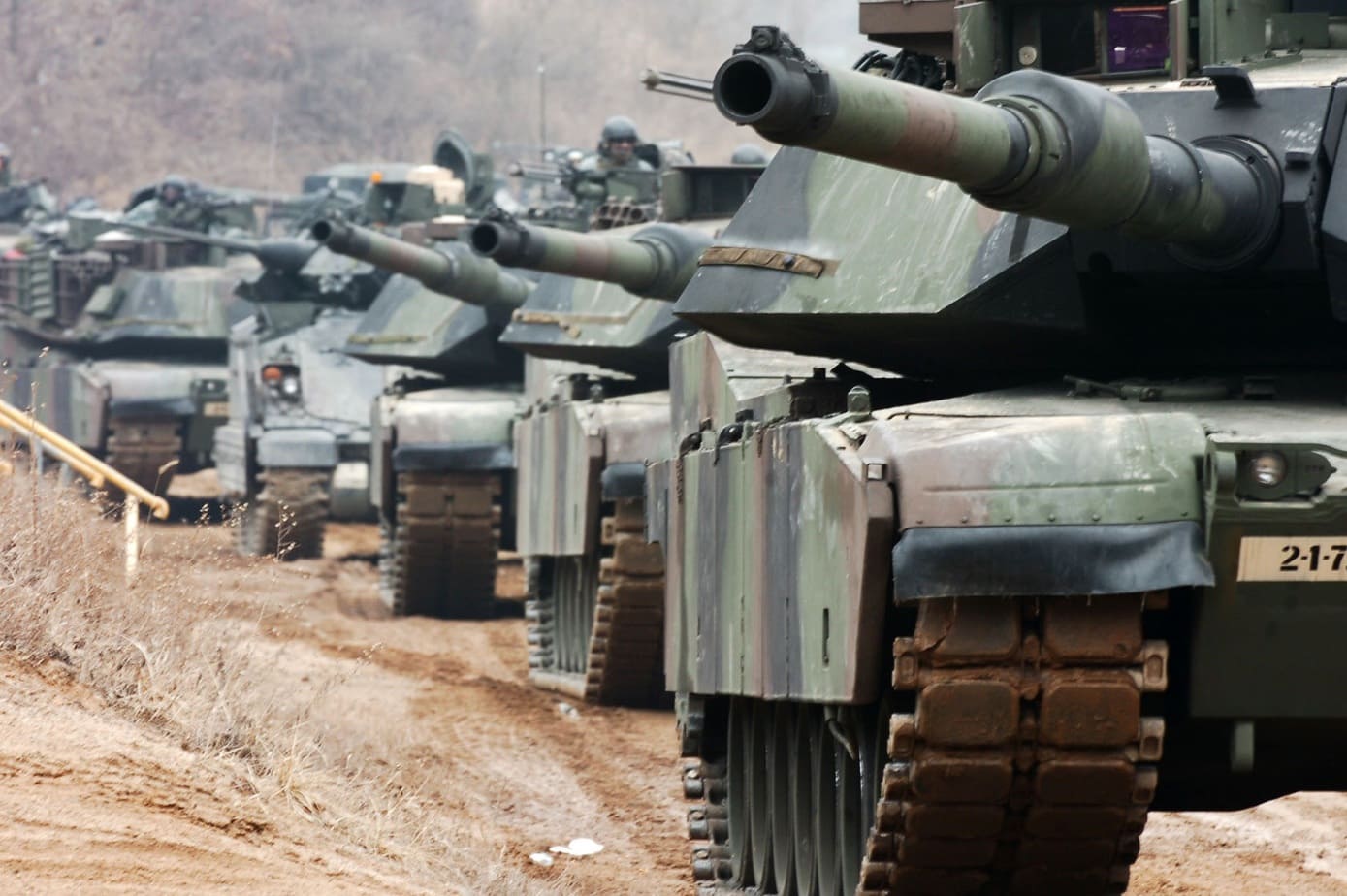
VLC1 – M1A1 Abrams from 1-72nd Armor Regiment line up in preparation to assault a town during Warrior Focus, a training exercise involving the entire 1st HBCT, Feb. 10 at the Combined Arms Collective Training Facility at Rodriguez Live Fire Complex.
Further, during Operation Desert Storm, so-called Remotely Piloted Vehicles (RPV) were the only unmanned air assets in the fight. They had none of the offensive capability of today’s battlefield drones and could only conduct low levels of surveillance.
Tanks in that conflict had little to fear in the way of an airborne strike. But today, the M1s have suffered considerable losses as a result of Russian drone surveillance, much more precise artillery strikes, and anti-tank guided missiles. According to some reports, as much as 80 percent of the M1 fleet may have been incapacitated.
US Opposition to Australia’s Donation
U.S. officials reportedly expressed private frustration over the Australian decision to donate their retired Abrams tanks to Ukraine.
Washington was concerned about the tanks’ much higher maintenance demands, complex logistical chains, and the attrition rates resulting from high-intensity combat in which drones play an increasing role.
The U.S. was reluctant to authorize the M1A1 donations due to concerns about the tank’s performance in the field. Washington even compelled Australia to wait for U.S. approval before exporting the American-made tanks to a third country.
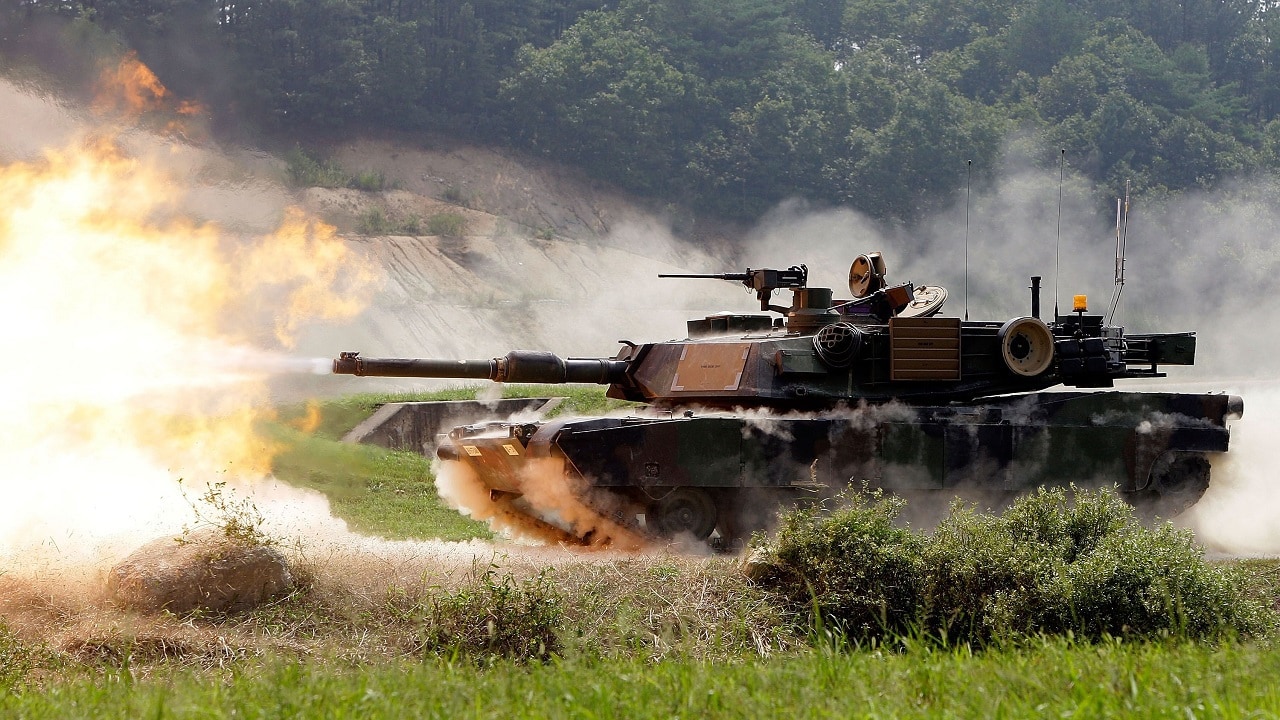
M1 Abrams Main Battle Tank. Image Credit: Creative Commons.
“Last year, even before Donald Trump returned as president, we warned the Australians that sending these Abrams tanks would be complicated, and once they finally get to the battlefield, the Ukrainians will find them difficult to sustain,” an unnamed U.S. official told the Australian Broadcasting Corporation.
“We are starting to doubt if the Ukrainians actually want these vehicles. The tank roof is the weakest point of the Abrams and this is a drone war,” the official said.
In 2024, it was reported that the M1s had been withdrawn from front-line service due to heavy damage and losses suffered in combat, a claim the Ukrainians denied.
About the Author: Reuben F. Johnson
Reuben F. Johnson has thirty-six years of experience analyzing and reporting on foreign weapons systems, defense technologies, and international arms export policy. Johnson is the Director of Research at the Casimir Pulaski Foundation. He is also a survivor of the Russian invasion of Ukraine in February 2022. He worked for years in the American defense industry as a foreign technology analyst and later as a consultant for the U.S. Department of Defense, the Departments of the Navy and Air Force, and the governments of the United Kingdom and Australia. In 2022-2023, he won two awards in a row for his defense reporting. He holds a bachelor’s degree from DePauw University and a master’s degree from Miami University in Ohio, specializing in Soviet and Russian studies. He lives in Warsaw.