
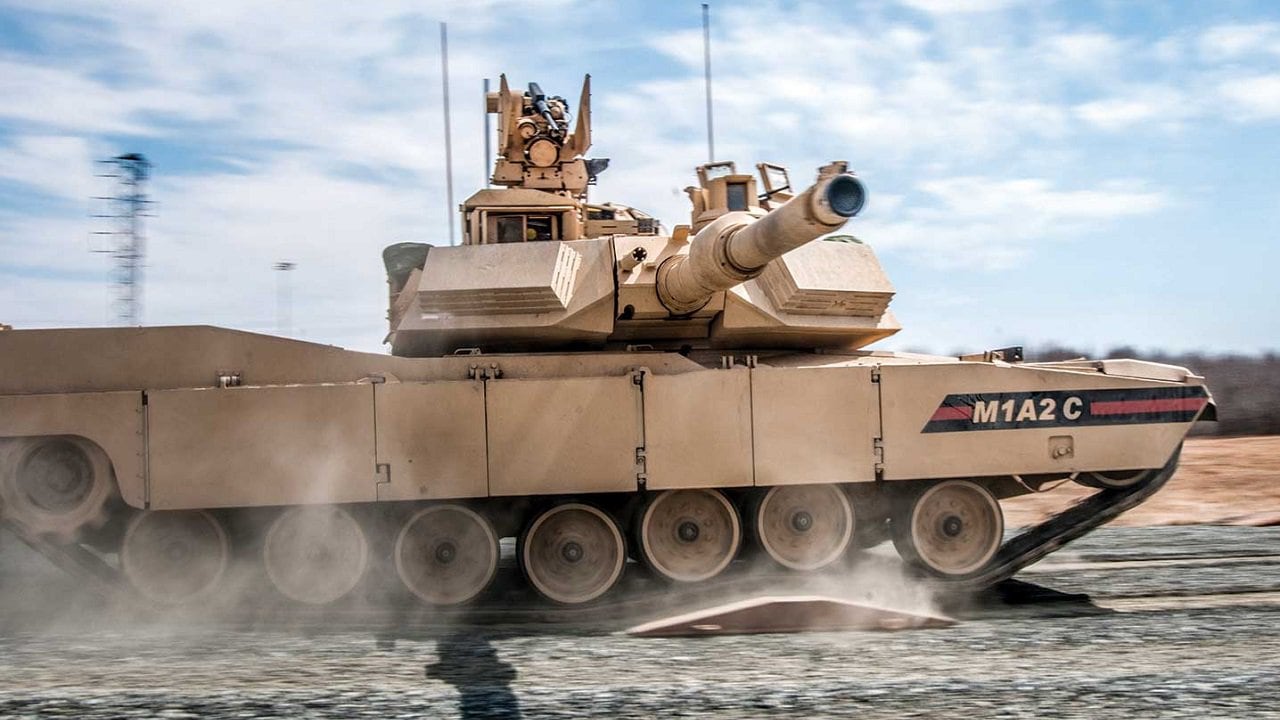
Key Points and Summary – Australia’s M1A1 Abrams tanks have now reached Ukraine’s front lines, effectively becoming the remaining Abrams backbone as earlier U.S.-supplied tanks were heavily attrited.
-America initially urged Canberra to delay the transfer, warning the tanks would impose a demanding sustainment burden—training, parts, recovery, and maintenance—especially with U.S. aid policy volatility in 2025.
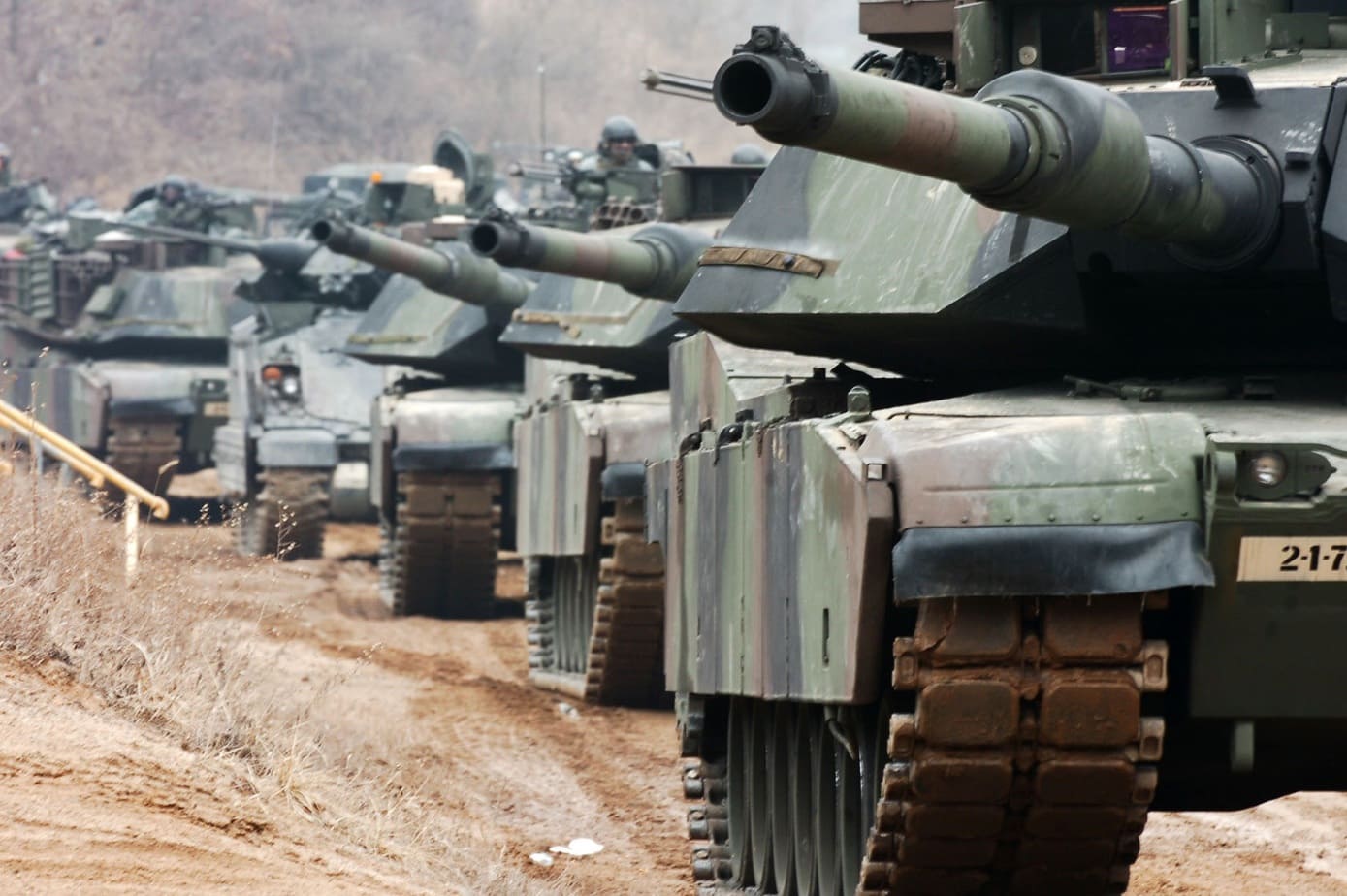
VLC1 – M1A1 Abrams from 1-72nd Armor Regiment line up in preparation to assault a town during Warrior Focus, a training exercise involving the entire 1st HBCT, Feb. 10 at the Combined Arms Collective Training Facility at Rodriguez Live Fire Complex.
-Ukraine has tried to keep the Abrams viable by using improvised counter-drone cages and adding ERA, but the battlefield remains hostile to heavy armor without reliable combined-arms support and air cover.
-More Abrams may help tactically, but they are unlikely to change the war’s trajectory.
Why the U.S. Didn’t Want Australia Sending M1A1 Abrams Tanks to Ukraine
In 2023, US President Joe Biden announced the intention to deliver American-made M1A1 Abrams tanks to Ukraine to help bolster the nation’s fledgling tank force.
Soon after, Australia announced that it too would provide Abrams tanks to Ukraine, pledging around 80 units.
With most of the American-delivered Abrams already wiped out by Russia, Australian Abrams tanks have recently been delivered to the front lines, likely to meet a similar fate. Despite the Americans’ eagerness to supply Abrams tanks, Washington initially opposed Australia’s decision to supply them to Ukraine.
Now, Australia’s tanks are the only Abrams tanks that Ukraine possesses as Russia continues to advance in key areas of Ukraine.
More M1A1 Abrams Tanks For Ukraine
Earlier this year, the first batch of 49 Australian Abrams tanks arrived in Ukraine.
The last batch was delivered earlier in December 2025, completing Australia’s pledge to Ukraine.
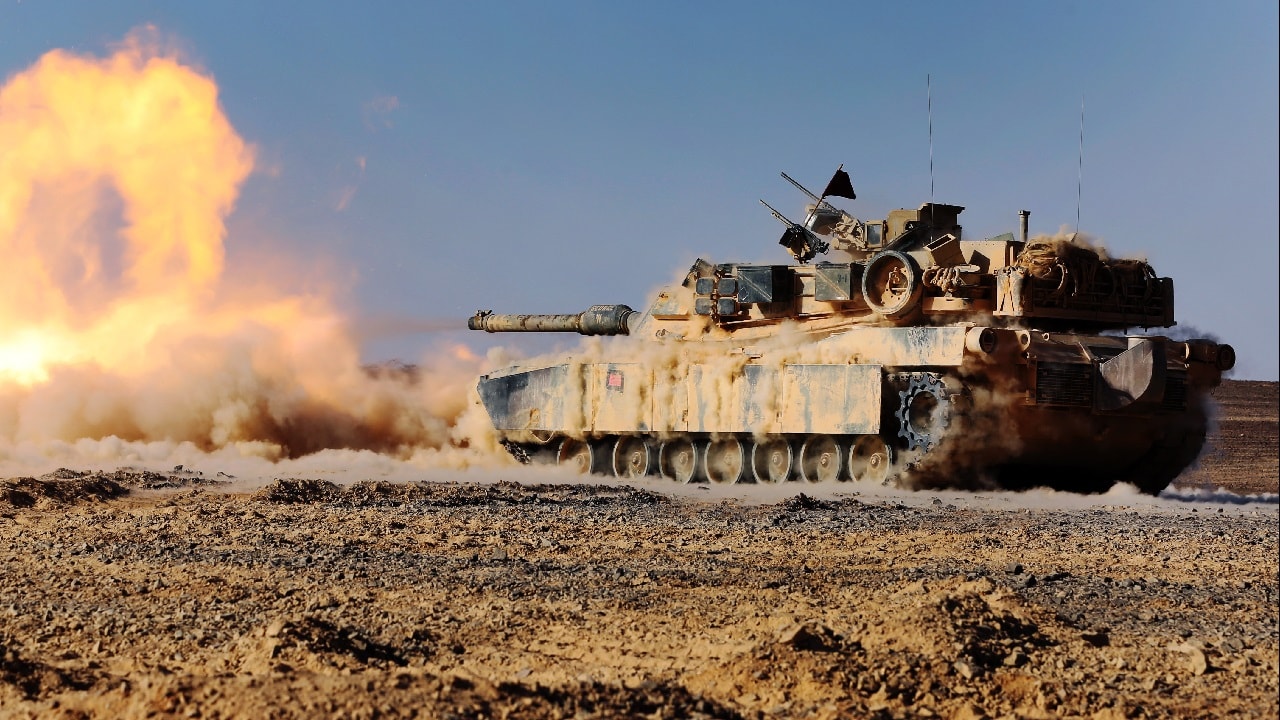
(U.S. Marine Corps photo by Sgt. Devin Nichols/Released)
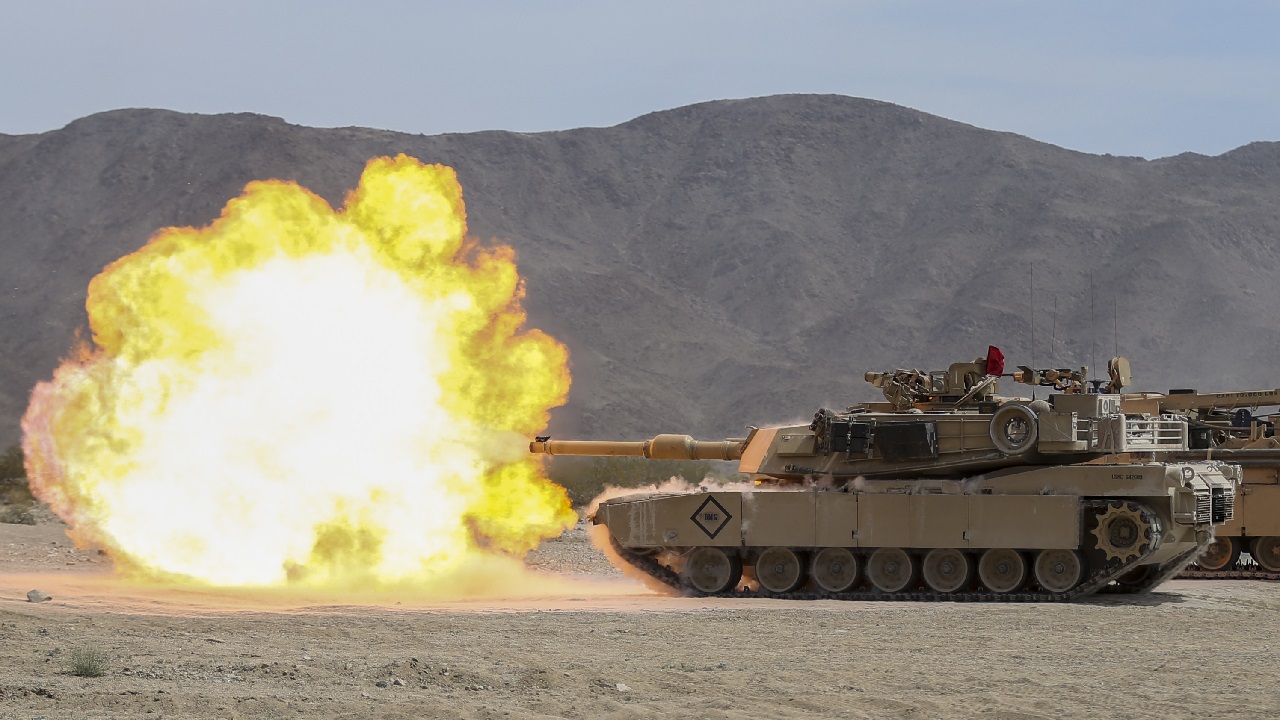
An M1A1 Abrams Tank fires off a round as a demonstration during 1st Tank Battalion’s Jane Wayne Spouse Appreciation Day aboard the Marine Corps Air Ground Combat Center, Twentynine Palms, Calif., April 3, 2018. The purpose of the event is to build resiliency in spiritual well being, the will to fight and a strong home life for the 1st Tanks Marines and their families. (U.S. Marine Corps photo by Lance Cpl. Rachel K. Porter)
Commenting on deliveries in July, Australian Deputy Prime Minister Richard Marles reported: “The M1A1 Abrams tanks will make a significant contribution to Ukraine’s ongoing fight against Russia’s illegal and immoral invasion… Australia remains steadfast in our support for Ukraine and seeing a just and lasting peace.”
In exchange for donating Abrams tanks to Ukraine, Australia procured M1A2 SEPv3 tanks, which are currently the most advanced variants of the Abrams.
Australian-supplied Abrams tanks have recently been spotted at the front lines with new improvised protection measures added by the Ukrainians.
The turret and side armor have been reinforced with Kontakt-1 ERA, and external anti-drone nets and cages have also been mounted on the tanks to counter the persistent drone threat that has decimated the armored forces of both sides.
These measures are more akin to band-aid solutions than comprehensive ones, as Russia has been able to knock out several Abrams tanks with improvised protection added on.
Why the US Protested Australia’s Decision to Send Tanks to Ukraine
The US sent around 31 of its own tanks to Ukraine.
With Australia’s contribution, Ukraine has now received around 111 M1A1 tanks.
While the US was more than willing to send its own Abrams tanks, it was less than enthusiastic about Australia sending large numbers of tanks to Ukraine. According to reports, the US advised Australia in 2024 to hold off on sending the tanks.
While Washington eventually approved the delivery, officials privately expressed concerns about the deal, arguing that the tanks would be a logistical burden for Ukraine and would be difficult to maintain.
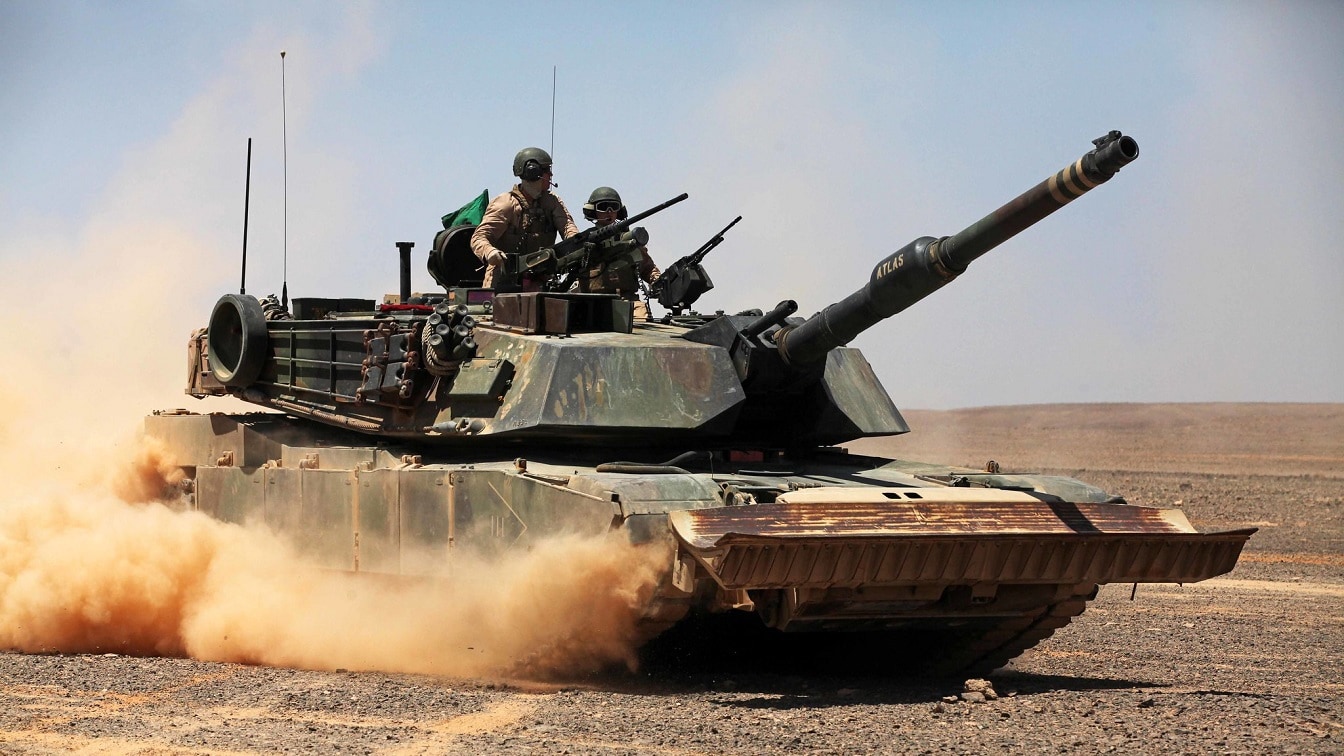
JABAL PETRA, Jordan – An M1A1 Abrams tank with Tank Platoon, Weapons Company, Battalion Landing Team 1st Battalion, 2nd Marine Regiment, 24th Marine Expeditionary Unit, is repositioned here, May 7, 2012, during bilateral tank training with the Royal Jordanian Army as part of Exercise Eager Lion 12. More than 1,000 Marines and Sailors from the 24th MEU are scheduled to participate in various events throughout Jordan to maximize multilateral training opportunities and continue to build relationships with partners throughout the region. Eager Lion 12 is the second major exercise for the 24th MEU and Iwo Jima Amphibious Ready Group after deploying in March to serve as a forward-deployed crisis-response force. (Official Marine Corps Photo by Sgt. Richard Blumenstein)
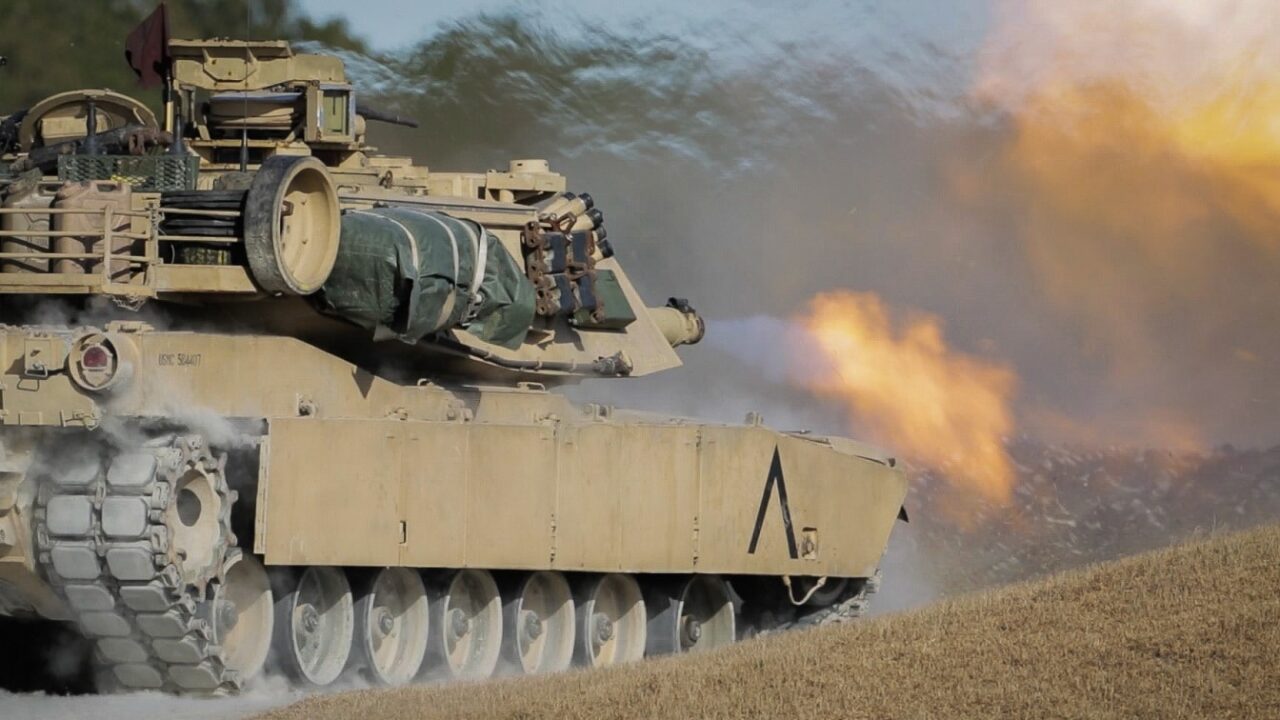
U.S. Marines assigned to 2nd Tank Battalion, 2nd Marine Division, fire a 120mm smoothbore main gun from an M1A1 Abrams main battle tank during a course of fire at Camp Lejeune, N.C., Jan. 30, 2019. The unit conducted marksmanship qualifications as a part of a biannual training exercise to certify tank crews on the M1A1 Abrams main battle tank. (U.S. Marine Corps photo by Cpl. Abrey Liggins)
“Last year, even before Donald Trump returned as president, we warned the Australians that sending these Abrams tanks would be complicated, and once they finally get to the battlefield, the Ukrainians will find them difficult to sustain,” an American official told the Australian Broadcasting Corporation, speaking on the condition of anonymity.
Things were complicated further when President Trump temporarily halted all military aid to Ukraine upon assuming his second term in 2025.
These actions cast doubts on Ukraine’s ability to sustain these tanks without US support. The ban on military aid was later lifted, and deliveries continued as usual.
The M1 Abrams in Ukraine: What Went Wrong?
The M1 Abrams, like other Western tanks, has struggled in Ukraine despite being widely considered one of the best tanks in the world. Were experts wrong about the Abrams’ capabilities, or is there another explanation? There are a few reasons why the Abrams has performed as poorly as it has. First, the West underestimated Russia’s anti-tank capabilities.
Much has been written about Russia’s use of FPV drones, but drones are one of many tools in its vast anti-tank arsenal. When the Abrams was first introduced on the battlefield, several tanks were knocked out by anti-tank missiles, particularly the 9M133 Kornet. Mines have also been used extensively to disable tanks and render them easy targets for drones and missiles.
The Russians have also used laser-guided artillery to deliver precision strikes against Abrams tanks. Given the tanks’ large profile and distinctive shape, spotting them is not difficult for Russian reconnaissance drones.
Another factor contributing to the Abrams’ poor performance is its lack of support. The M1 was not designed to operate in a vacuum; it was intended to operate as part of a broader combined-arms operation with other military assets.
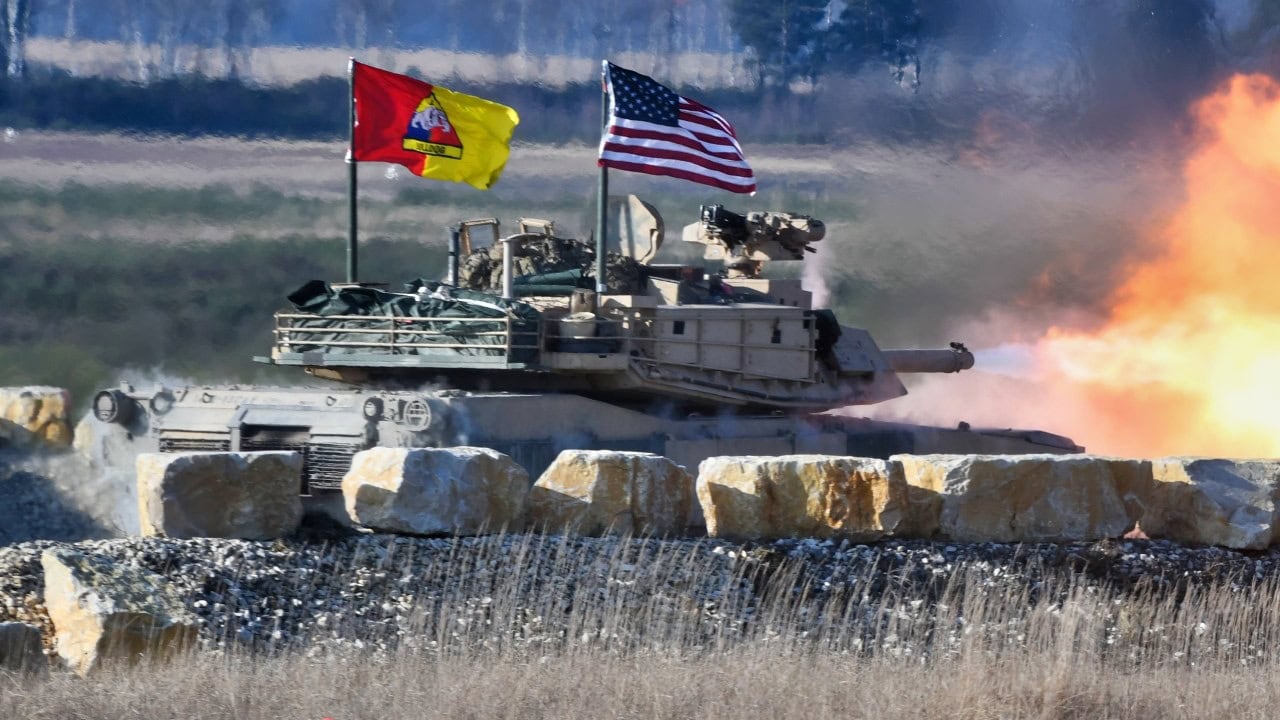
A U.S. M1 Abrams engages a target during the final event on Feb. 17, 2025 as part of the U.S. Army Europe and Africa International Tank Challenge at 7th Army Training Command’s Grafenwoehr Training Area, Germany. The USAREUR- AF International Tank Challenge builds tactical skills and enhances esprit de corps across the 11 teams from five participating allied and partner for peace nations. (U.S. Army photo by Sgt. Collin Mackall)
The US designed the Abrams with the assumption of air superiority and infantry support, as they operated during Desert Storm. The Ukrainians have not been able to gain air superiority (neither have the Russians, to be fair), and in many cases, the Abrams has been sent out on combat operations by itself without infantry or air support. In this environment, it is no wonder that the Abrams has been easy pickings—it is operating outside its intended environment.
While Ukraine is using older variants of the M1 Abrams, the tank is not obsolete by any means. The problem is that it is operating outside its doctrinal comfort zone against an enemy that is more than capable of destroying it.
While Australian tanks are sure to support Ukraine’s war efforts, simply sending in more tanks does not address the core issues the Abrams has encountered during the conflict—namely, sustainment and a lack of air superiority.
Ukraine’s Abrams tanks will make headlines, and they may even win a tank duel or two, but they are unlikely to turn the tide of the war and drive the Russians out.
About the Author: Isaac Seitz
Isaac Seitz, a Defense Columnist, graduated from Patrick Henry College’s Strategic Intelligence and National Security program. He has also studied Russian at Middlebury Language Schools and has worked as an intelligence Analyst in the private sector.