
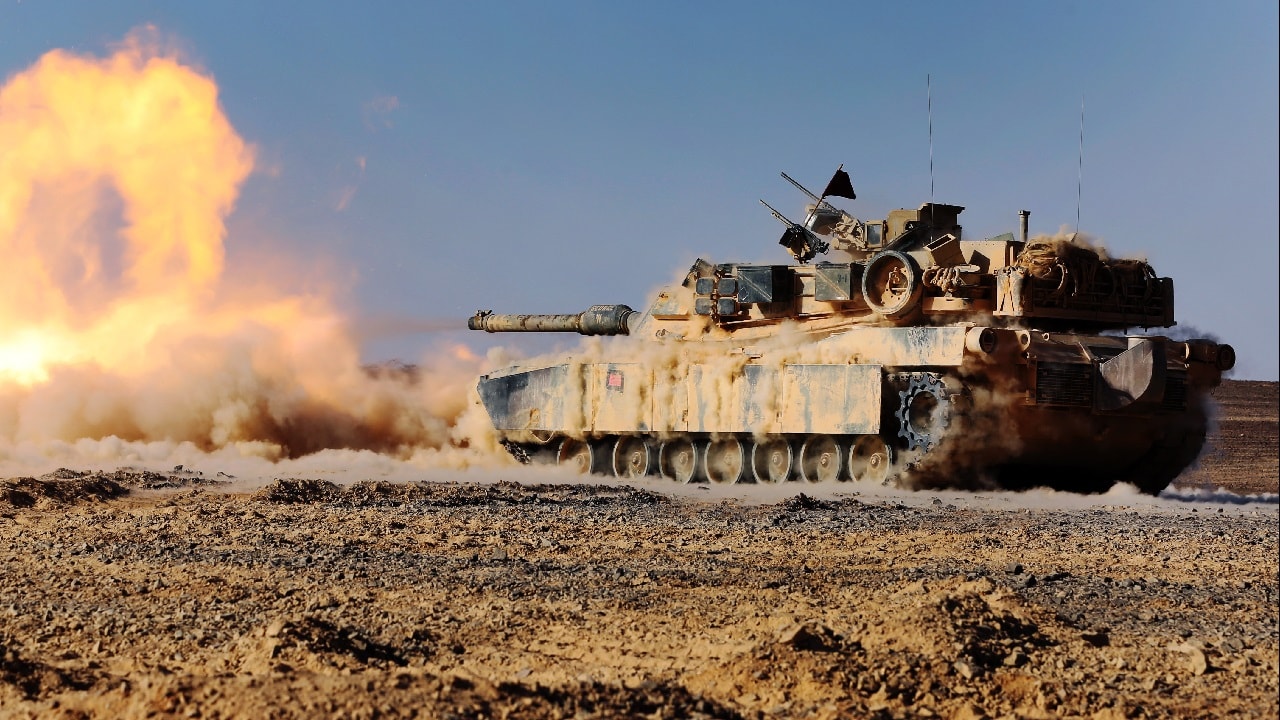
Synopsis: Australia says it has delivered the final tranche of 49 retired M1A1 Abrams tanks to Ukraine as part of a broader $1.5 billion support package.
-The tanks arrive with spares and support gear and are described as modified for Ukrainian requirements, including diesel fuel compatibility and upgraded thermal sights and electronics.
-On the battlefield, survivability will hinge less on raw armor than on tactics and adaptation to pervasive drones—reactive armor, rooftop cages, and electronic countermeasures—plus combined-arms integration to avoid isolated tank employment.
-The addition strengthens defenses, but won’t decide the war alone.
49 M1A1 Abrams, Diesel Mods, And Drone Cages: Ukraine’s New Armor Boost
Australia has fulfilled its pledge to send 49 U.S.-built M1A1 Abrams tanks to Kyiv to support its fight against the Russian invasion, according to the Australian Defense Ministry in Canberra.
The Australian government announced that Kyiv had received the final tranche of the 49 M1A1 tanks it had pledged. The delivery is part of a broader $1.5 billion assistance package Australia has committed to Ukraine since the Russian invasion began in 2022.
Australian soldiers, along with a contingent of ADF tank specialists, logisticians, mechanics, and support staff, were waiting for the arrival of the tanks, including Lieutenant Mitchell ‘Tex’ Walker, who was proud to be part of the operation to aid Ukraine’s fight for freedom.
“It has been inspirational to see Ukraine defend itself, and we look forward to opportunities, like this, where we can make a meaningful contribution to defend what’s right.
“I’m so proud of my team and the work they are doing to get the tanks ready for battle – it’s an honour to be able to help the Armed Forces of Ukraine in their fight against Russia,” Lieutenant Walker said.
“In fact, tank number 51 – one of the Abrams we will be giving to the AFU in the next few days – is the one I finished my Tank Officers Course on last year. I know this tank is going to do its job well.”
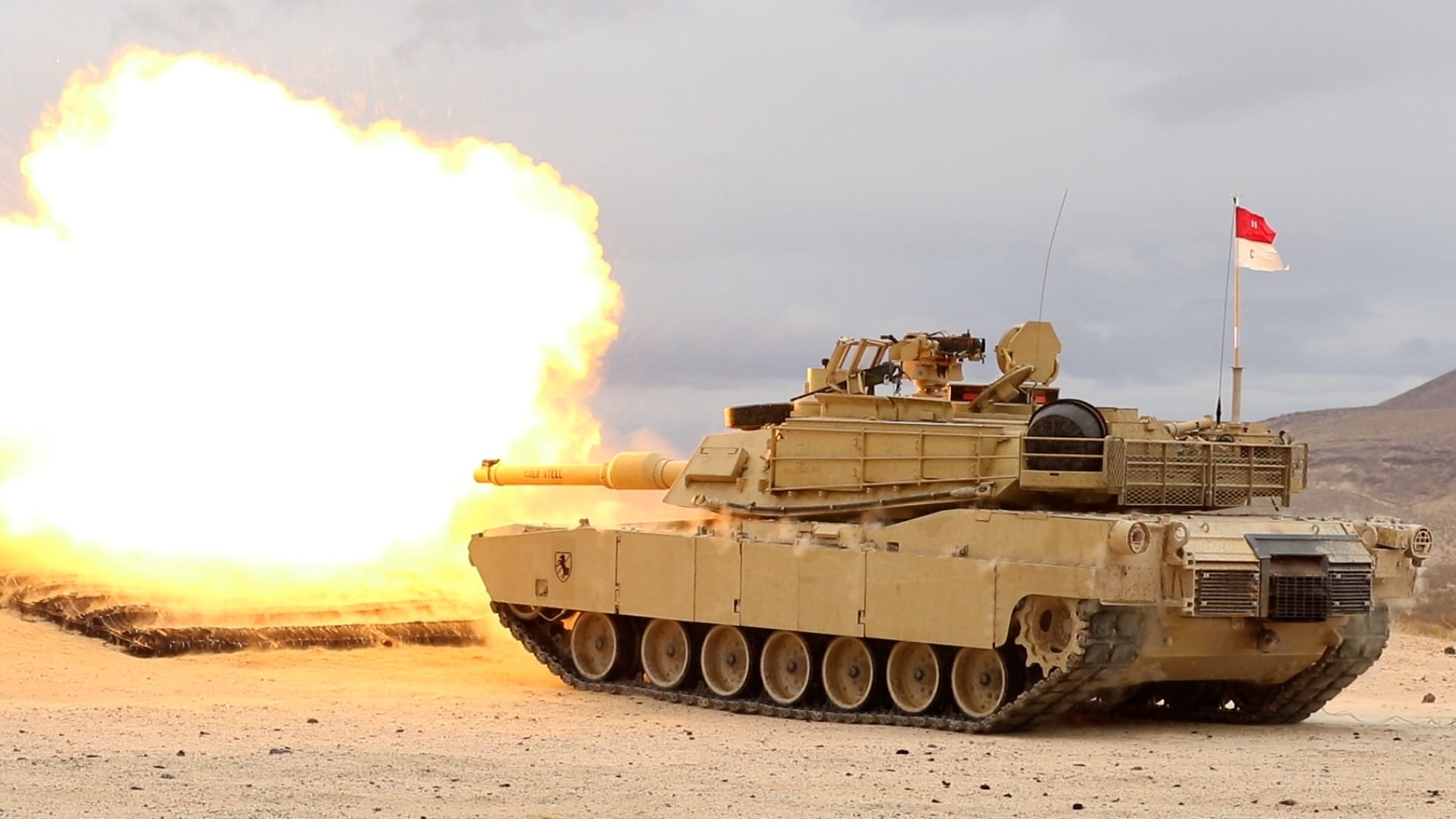
An M1A2 Abrams SEP V2 main battle tank, assigned to Cold Steel Troop, 1st Squadron, 11th Armored Cavalry Regiment, fires a M865 target practice cone stabilized discarding sabot with tracer on December 9, 2021, at the National Training Center and Fort Irwin training area.
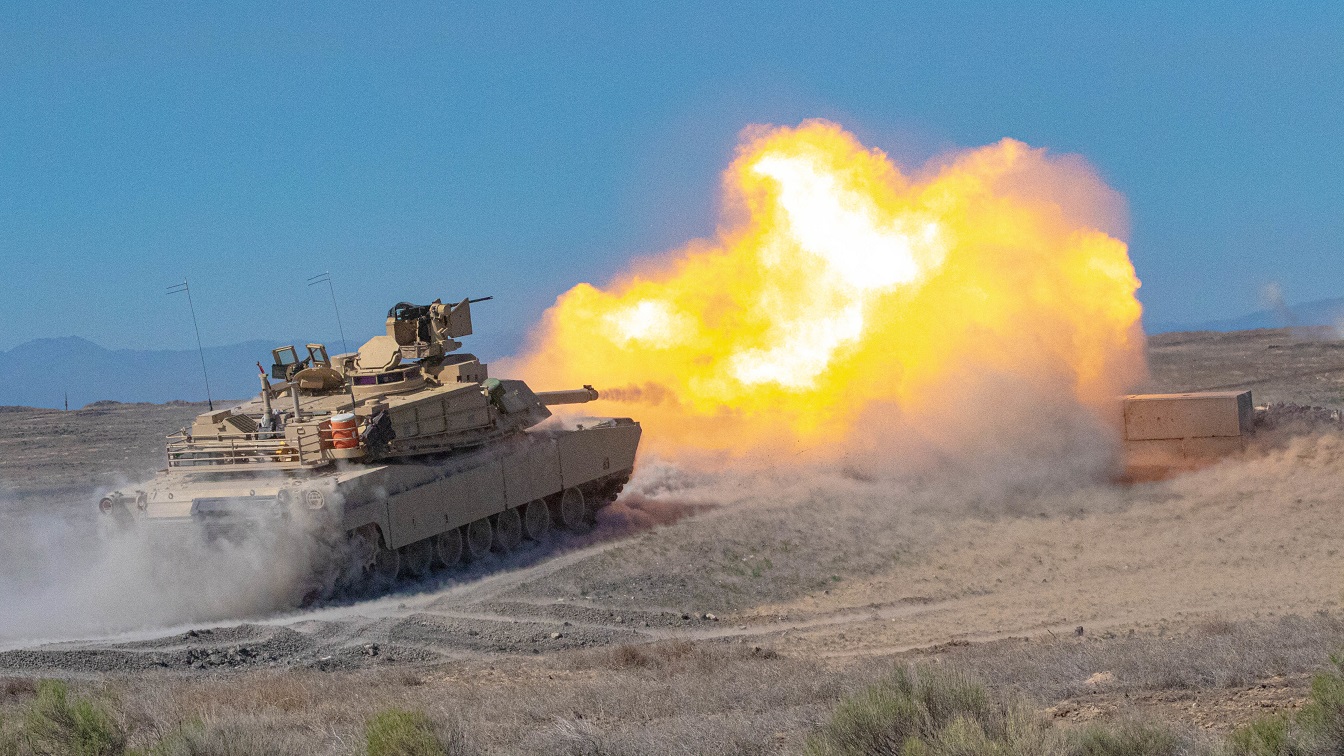
Oregon Army National Guard M1A2 Abrams battle tank with Alpha Troop, 3rd Squadron, 116th Cavalry Regiment, engages a target at a firing range during annual training at the Orchard Combat Tranining Center near Boise, ID, June 19, 2021. Soldiers trained in their military occupational specialties during annual training. (National Guard photo by Spc. Dominic Trujillo, 115th Mobile Public Affairs Detachment)
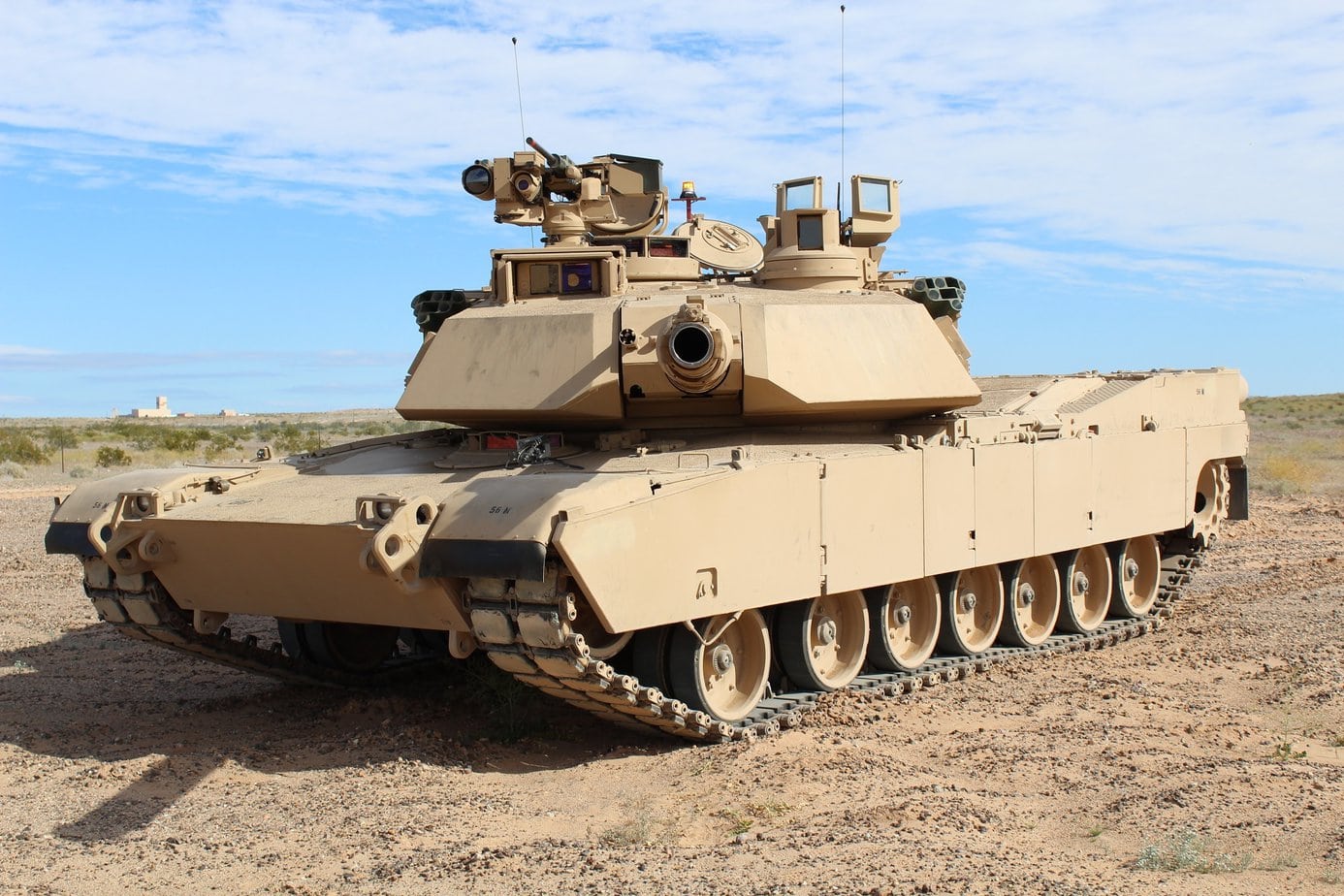
M1A2 SEPv3. Image Credit: Creative Commons.
Diesel Engines and Thermal Sights Simplify Logistics:
The M1A1 tanks were modified for Ukrainian needs (like running on diesel) and deployed to the frontlines, though facing challenges from modern drone warfare. In exchange for these tanks, Australia is acquiring newer M1A2 SEPv3 Abrams, enhancing its own armored capabilities.
The tanks are M1A1 AIM SA models, which are retired and have been replaced by newer M1A2s in Australia. They have been upgraded with features like thermal sights and a reconfigured diesel engine to simplify logistics.
The aid package also includes spare parts and support equipment. The tanks’ diesel-engine modification simplifies logistics for Ukraine, as its armored fleet already uses diesel fuel.
But after a rough start by American M1 tanks in Ukraine, the big question remains, “How will the Australian tanks perform against Russia?”
Australian M1A1 Tanks Are In The Thick Of the Fighting:
The War Zone reported late last summer that a Ukrainian assault regiment said that it is now using donated Australian M-1 Abrams tanks. This would be the second Ukrainian unit to have received the tanks since they first started arriving in the country two years ago.
“The 425th Assault Regiment Skala announced the arrival of the tanks on its Facebook page. Until now, the 47th Mechanized Brigade Magura was the only Ukrainian unit operating these tanks. Skala, deployed to the Pokrovsk region of eastern Ukraine, is fighting some of the toughest battles of the war.”
The influx of 49 M1A1 Abrams tanks is a huge boost to the Ukrainian military as the attacks by Russia continue. This aid package, valued at $160 million, was made possible due to the Australian Army receiving 75 new M1A2 Abrams in the highly capable SEPv3 variant.
The Australian variants provided to Ukraine “slightly differ from the baseline vehicles,” the Ukrainian Militarnyi reported.
“They have been upgraded to the M1A1 AIM SA version and received a number of regional modifications to meet customer requirements.”
“These vehicles have a new armor package without depleted uranium. The AIM SA electronics package includes a digital fire control system, thermal imaging, and communications equipment better than that of the basic M1A1, as well as a satellite navigation system.”
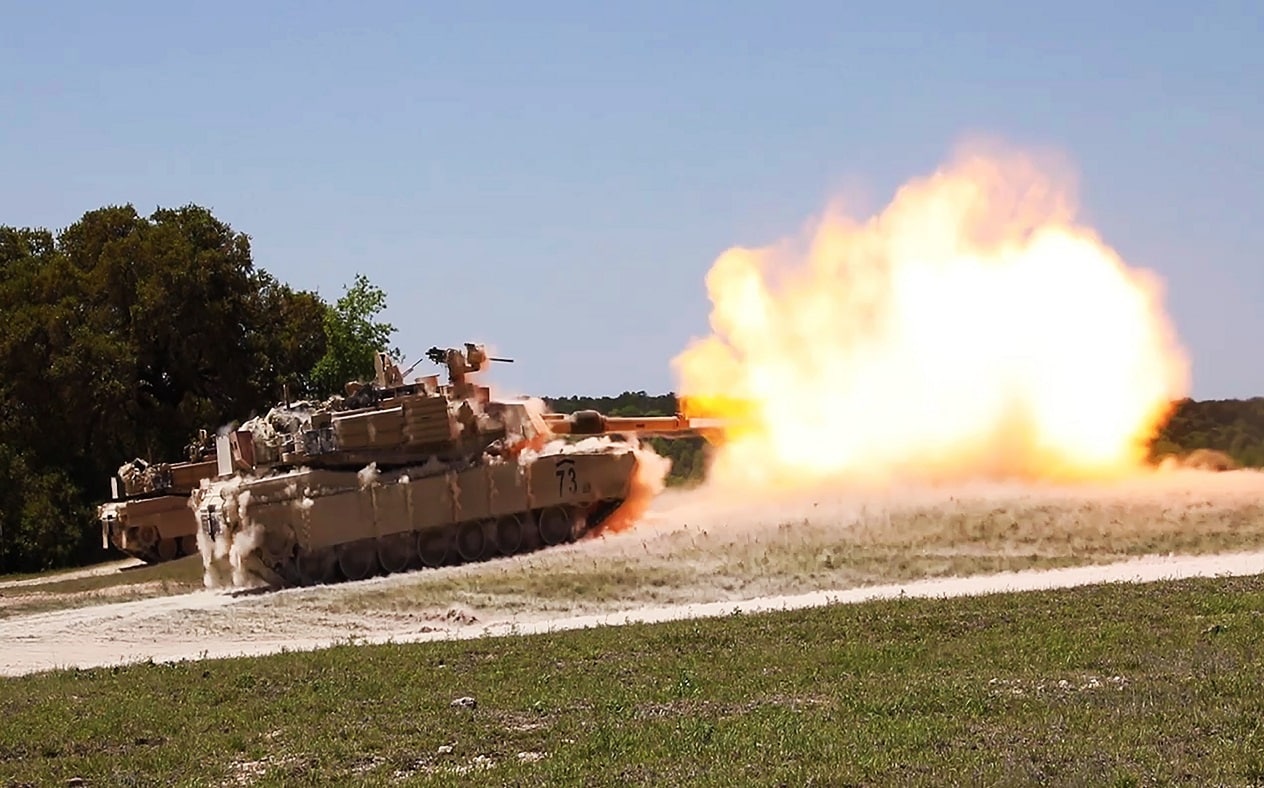
A M1A2 SEPV3 Abrams Tank fires at multiple range targets during a range warfighter exercise, April 11, 2021, Fort Hood, Texas. The visit with foreign allies allows the U.S. Army to boost interoperability of staff members and warfighting capabilities with the M1A2 SEPv3 Abrams Tank. (U.S. Army photo by Sgt. Melissa N. Lessard)
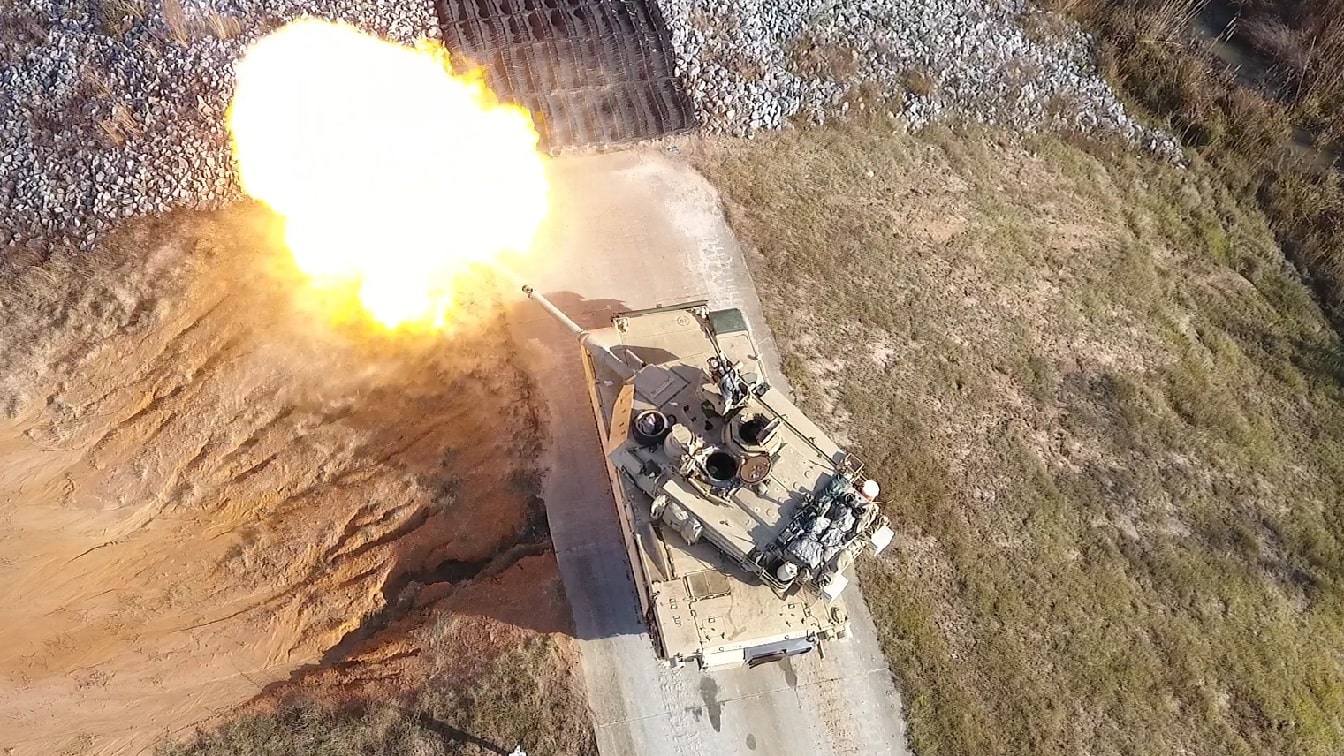
Aerial drone image of an M1A2 Abrams Main Battle Tank crew, from the 1st Armor Brigade Combat Team, 3rd Infantry Division, conducting Table VI Gunnery at Fort Stewart, Ga. December 6, 2016.
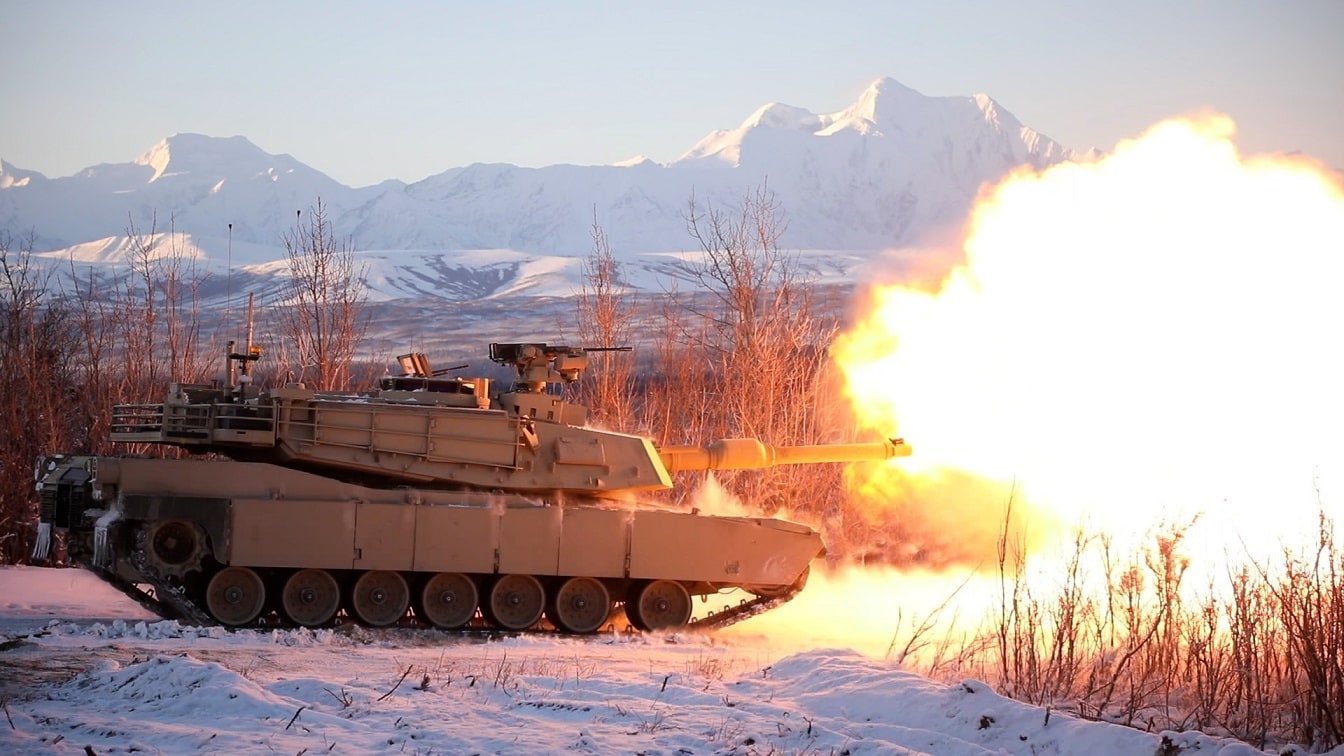
Since testing at U.S. Army Cold Regions Test Center, the Department of Defense’s lone extreme cold natural environment testing facility, began in January 2020, the M1A2 System Enhancement Package version 3 main battle tank was driven more than 2,000 miles in rugged conditions across three seasons of sub-Arctic weather, fired hundreds of rounds for accuracy in extreme cold, and underwent testing of its auxiliary power unit.
Though the platform was extensively tested at U.S. Army Yuma Test Center prior to being put through its paces in Alaska, the sub-zero temperatures brought forth glitches that would have been unimaginable in the desert.
But the transfer of Abrams tanks to Ukraine hasn’t been smooth.
M1A1’s Ukrainian Struggles, More About Tactics Than The Tank:
The first M1A1 Abrams tanks delivered to Ukraine took a beating. But this was not because of any shortcomings of the tank; it was due to tactics. The Ukrainians didn’t really understand the way the Americans fight and use their armor.
The Abrams was designed to work within U.S. combined-arms doctrine, which dictates close cooperation among mechanized forces, infantry, artillery, and air power. Because Ukraine didn’t operate that way, Russian anti-tank missiles and drones took an unnecessary toll.
Due to manpower and equipment shortages, Ukrainian Abrams tanks often entered combat alone, without the support of infantry or other armor. Abrams tanks or any other ones are easy pickings for Russian anti-tank crews in these disadvantageous conditions.
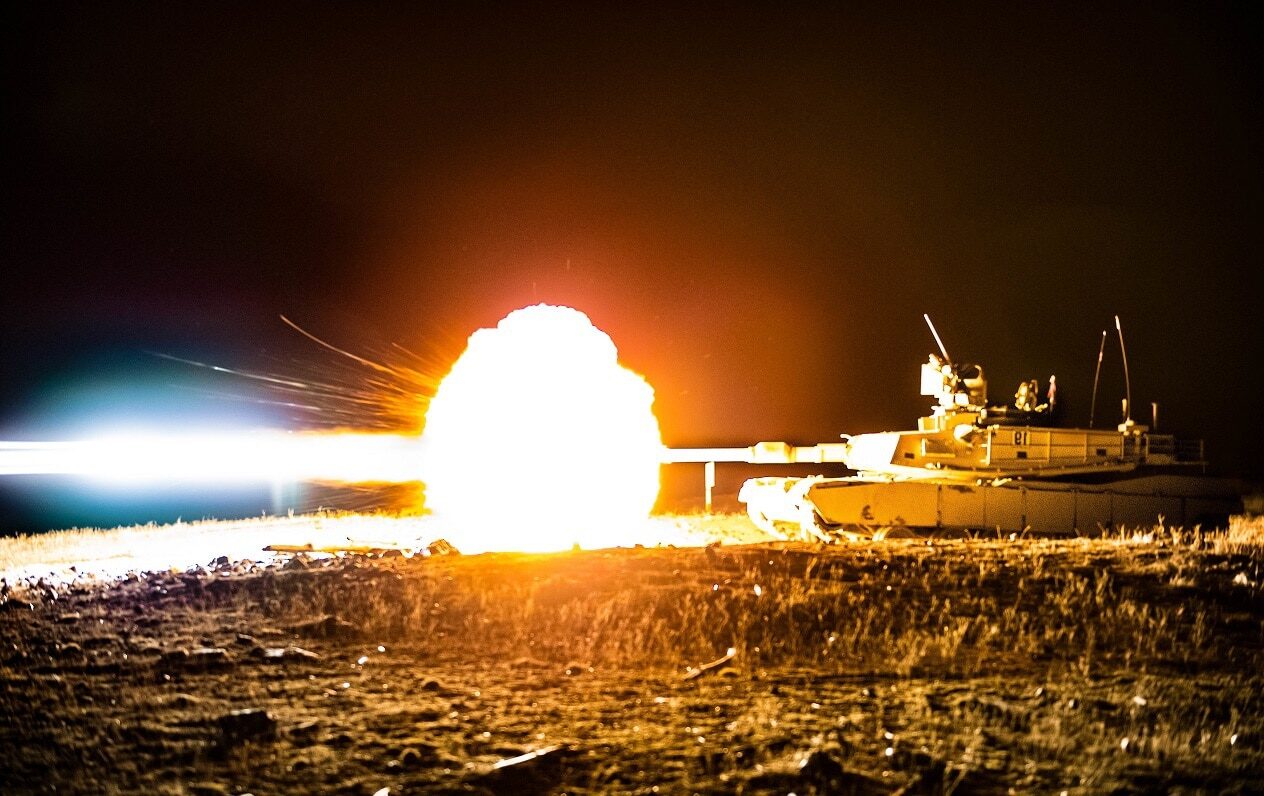
Bravo Company, 2nd Battalion, 116th Cavalry Regiment, conducts platoon live-fire gunnery qualification Feb.14, 2019, at the Orchard Combat Training Center.The Idaho Army National Guard Soldiers are preparing for the 116th Cavalry Brigade Combat Team’s upcoming rotation at the National Training Center, Fort Irwin, Calif., later this year.
The Ukrainians didn’t take to the Abrams’ 120mm main gun, stating that it is not effective against buildings. Ukrainian tankers claimed they fired 17 rounds into a building without destroying it, however, that has been disputed.
“That’s BS,” Lieutenant General (Ret.) Mark Hertling said to CNN last summer. “I know for a fact, having fired these vehicles and having been a tanker all my life, that this is a crew that is not either selecting the right weapon system or isn’t maintaining their tanks very well.”
US Didn’t Want Australian M1A1s Going To Ukraine:
The delivery of the M1A1 Abrams to Kyiv follows reported delays due to initial U.S. resistance to the American vehicles. Washington had warned Canberra against sending the tanks, and President Trump’s decision to pause military aid earlier this year may also have added to complications, according to the Australian outlet ABC.
Privately, American officials have expressed concern that Ukraine will struggle to sustain the complex and gas-guzzling Abrams tanks.
“Last year, even before Donald Trump returned as president, we warned the Australians that sending these Abrams tanks would be complicated, and once they finally get to the battlefield, the Ukrainians will find them difficult to sustain,” an American official told the Australian Broadcasting Corporation, speaking on the condition of anonymity.
The U.S.-built Abrams tanks, still painted in their AusCam camouflage scheme, were loaded onto a commercial cargo ship in Geelong, Australia, in early May before departing for Ukraine.
Accompanied by Australian tank crew members, the M1A1 tanks arrived at an unidentified port in Europe, likely Poland, for servicing before being delivered to Ukraine. The service modified the tanks to meet Ukrainian requirements before shipping.
Minister for Defence Industry Pat Conroy noted that “ Australia stands shoulder-to-shoulder with Ukraine…these modified M1A1 Abrams tanks will deliver more firepower and more mobility to the Ukrainian Armed Forces. They meet a direct request from the Ukrainian Government and form part of Australia’s unwavering commitment to protect the global rules-based order.”
Ukraine Modifying M1A1s To Survive Drone Combat:
Ukrainian technicians have modified Australian M1A1 Abrams main battle tanks with reactive armor blocks, frontal armor plating, and rooftop steel cages in a series of upgrades for the modern Ukrainian battlefield.
Modified M1A1 Abrams have been seen with additional turret mesh-style and frontal plate-style armor in recent social media posts from Ukraine’s 47th Mechanized Brigade, in a manner similar to how the Ukrainians have modified other vehicles.
Ukrainian technicians have also previously fitted other armored vehicles with electronic warfare equipment, anti-drone “cages” on tank roofs and engine compartments, as well as reactive armor elements such as Soviet-era Kontakt-1 explosive reactive armour (ERA) blocks. Thermal imaging is a priority setting on the Ukrainian battlefield.
Western nations that have supplied Ukraine with armored vehicles are closely monitoring how combat is unfolding there.
Ukrainian forces have the most up-to-date battlefield experience with advanced main battle tanks in modern combat.
These changes to armored vehicles seen in Ukraine can help in the event that Russia continues its aggressive actions against other nations in Europe.
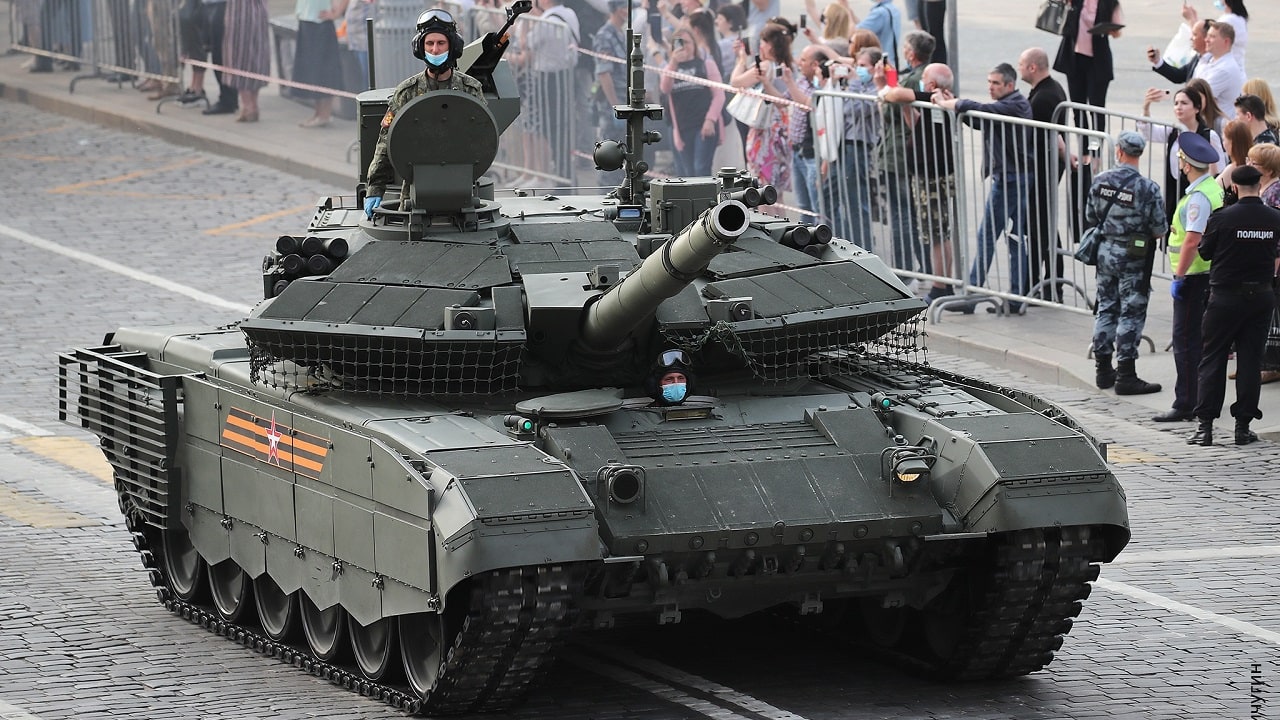
Russian Military T-90 Tank. Image Credit: Creative Commons.
Australia’s M1A1s Provide Ukraine With A Battalion Of Needed Armor:
Australia’s M1A1 Abrams tanks significantly boost Ukraine’s ground forces with a battalion-sized unit with powerful firepower, advanced armor, and precision targeting.
However, they still face challenges from Russia’s pervasive drone warfare, requiring constant adaptation with added anti-drone defenses like cages, though some losses and high-value targeting remain issues.
These tanks, especially the M1A1 AIM SA models with diesel engines for easier sustainment, provide crucial mobile fire support but demand integrated drone defense and tactics to counter drone threats, making them potent but vulnerable assets in the ongoing high-attrition conflict.
Viktor Kevliuk, a Ukrainian retired military officer and analyst with the Center for Defense Strategies, said that, in addition to reactive armor tiles, Ukrainians have been kitting out their Abrams tanks with cages or steel netting, a common low-tech solution used by both sides to protect against drones.
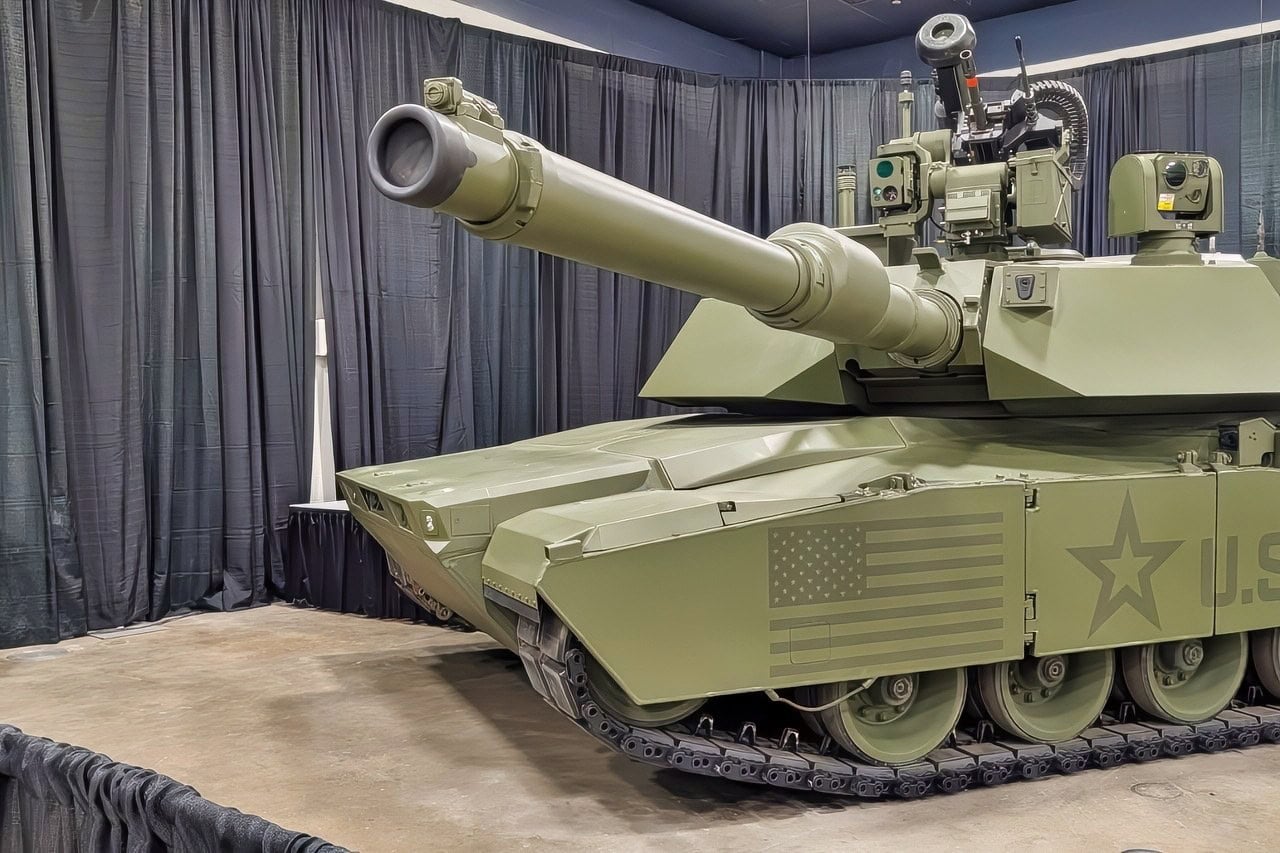
M1E3 Tank at the Detroit Auto Show. Image Credit: 19FortyFive.com
“These add 2-3 tons but don’t overload the chassis, and they’ve proven effective — one crew endured 4-6 direct FPV hits (including fiber-optic guided ones immune to jamming) with no casualties, thanks to the Abrams’ compartmentalized design,” Kevliuk said.
Will Australia’s Abrams tanks turn the tide of the war? Unfortunately not. There aren’t enough of them, nor enough Ukrainian troops to push the Russians back across the border.
However, the influx of a battalion-sized unit with modern Abrams tanks will definitely bolster their defenses. And with a better appreciation of how to use the tanks, it will further harden the front lines.
Ukraine needs more logistical help, especially air power, to turn the tide.
About the Author: Military Expert Steve Balestrieri
Steve Balestrieri is a National Security Columnist. He served as a US Army Special Forces NCO and Warrant Officer. In addition to writing on defense, he covers the NFL for PatsFans.com and is a member of the Pro Football Writers of America (PFWA). His work was regularly featured in many military publications.