
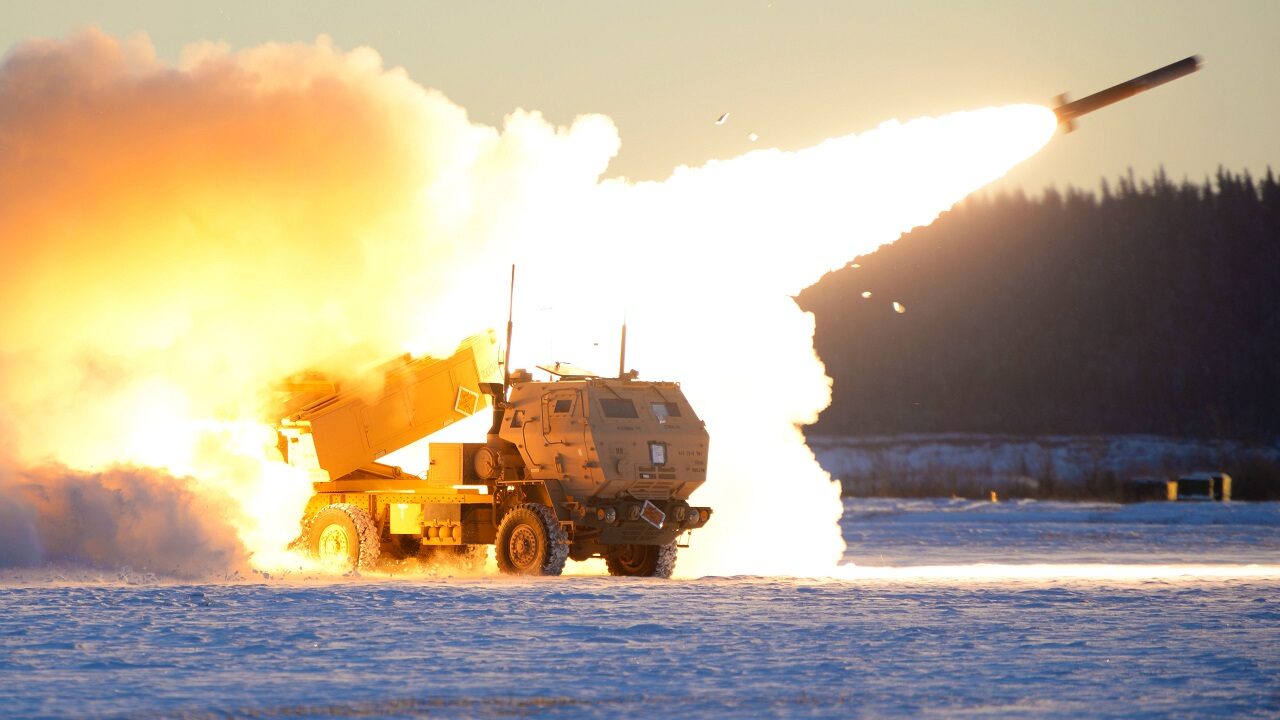
From a $4 Million Patriot Missile to a $3.50 Laser Shot: How the Iran War Is Forcing the Pentagon, Ukraine, and Israel to Reinvent Drone Defense
The recent air war over Iran, Israel, and the Gulf States has seen the US and our allies using multi-million dollar missiles to shoot down cheap drones. The Army is now looking at a much more economical way, and one that already exists in the inventory, to take on this threat.
The Army’s Capability Program Executive for ammunition and energetics is looking at the service’s ammunition to better suit shooting down smaller drones, according to a recent post at Defense One by Meghann Myers.
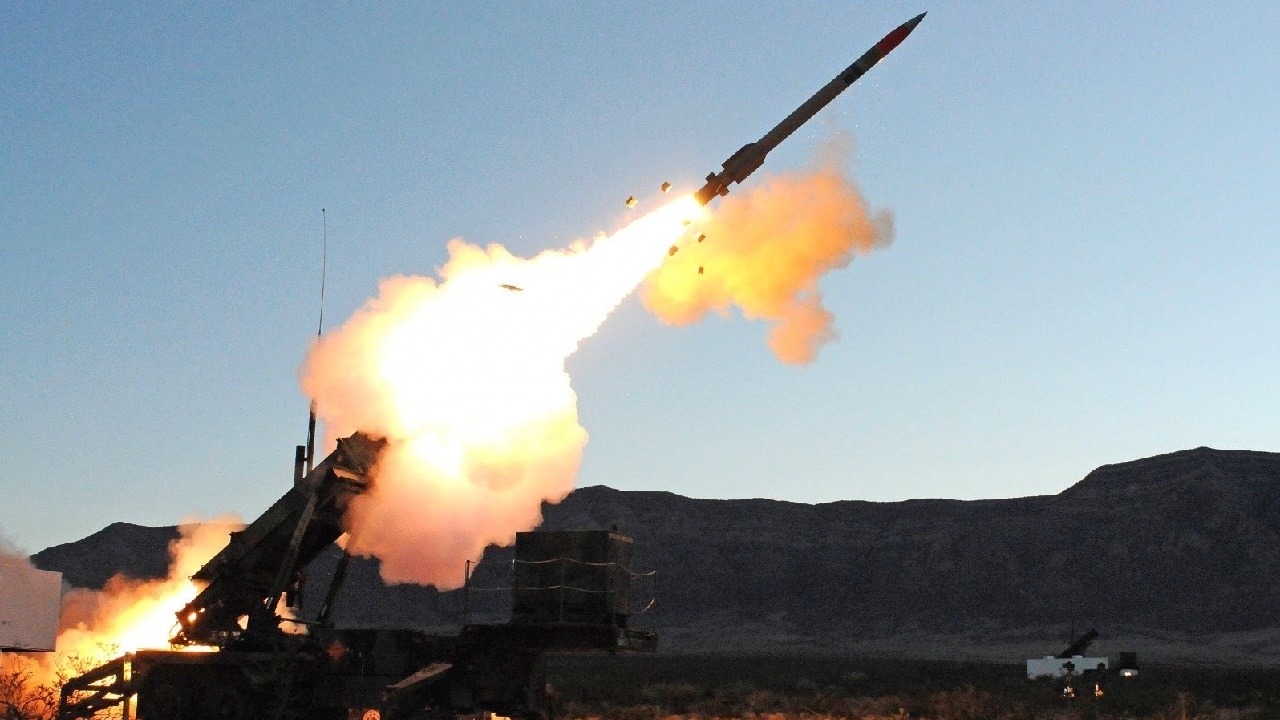
Patriot Missile. Image Credit: Creative Commons.
Capability Program Executives (CPEs) are newly established U.S. Army senior leadership positions (one-star officers or Senior Executive Service civilians) designed to accelerate acquisition by transforming traditional Program Executive Offices (PEOs).
They manage specialized capability portfolios—such as Intelligence & Spectrum Warfare, Munitions, and CBRN defense—to deliver technological advantages to soldiers more quickly. The CPE Ammunition & Energetics (A&E) was established at Picatinny Arsenal to develop, procure, and field lethal armaments and ammunition, providing Joint Warfighters and Allied Partners with overmatch capabilities.
Missiles Are Engaging In Overkill, The Army Wants Smaller Solutions:
“We all know how important missiles are to the fight. We see it in the news. But there’s also a point where missiles can’t get after every munition, every threat, so we need to supplement that with something that we already have within our formations,” Kaitlyn Tani, deputy project manager at Maneuver Ammunition Systems, said Wednesday at the AUSA Global Force Symposium.
Tani, in speaking to the crowd, said that many of the different types of ammunition are already in the US inventory, and specifically mentioned the XM121 High Explosive Proximity round, a 30mm round that will blast a drone once it gets near the target.
According to its manufacturer, Northrop Grumman, the XM1211 is a 30mm x 113mm round designed for short-range air defense against small unmanned aerial systems. It is equipped with a proximity sensor that detonates when close enough to a target, sending fragmentation to neutralize the threat.
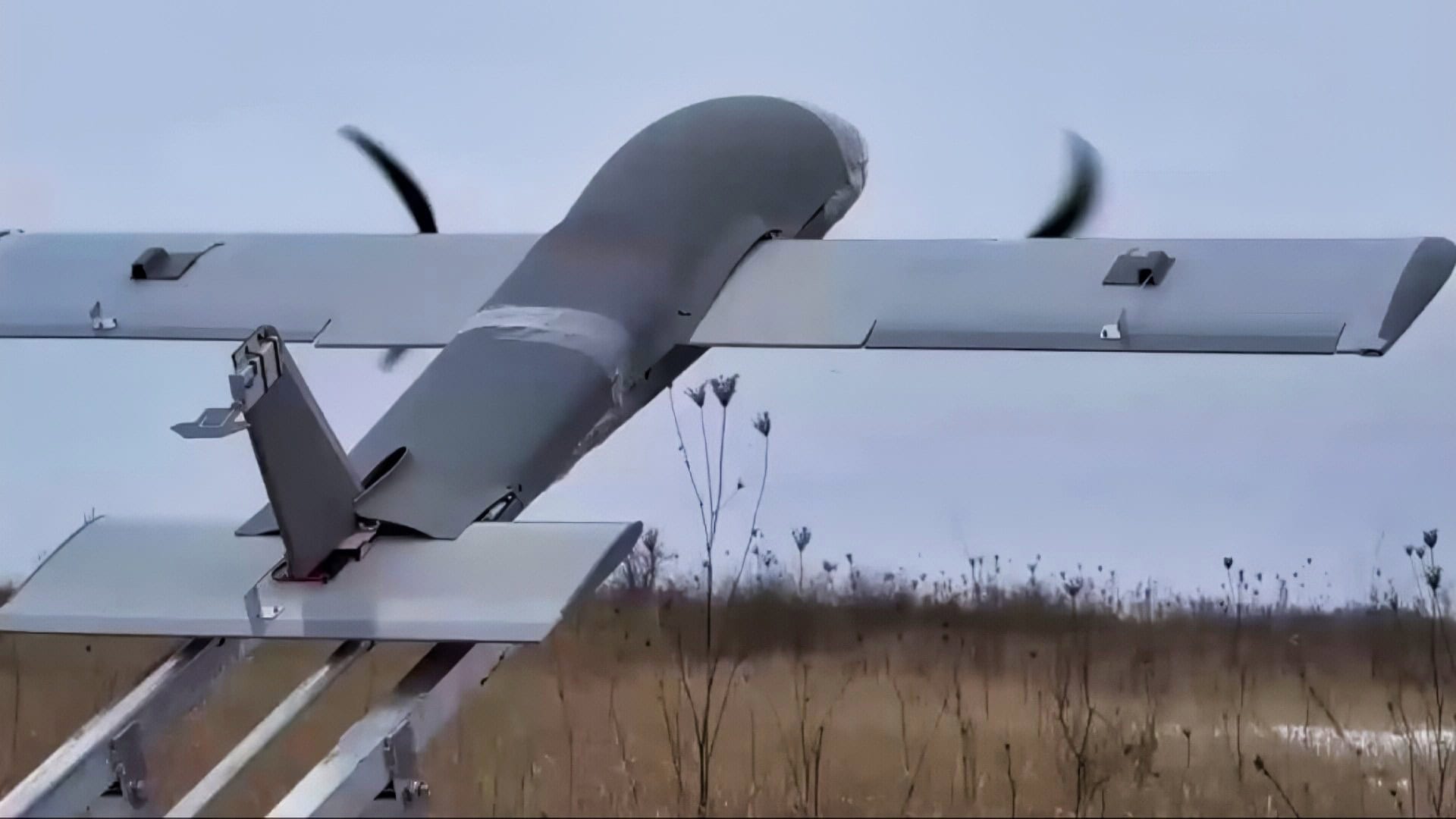
Russian Molniya Drone. Screenshot from Russian Military Video.
The short-range round is compatible with Northrop Grumman’s XM914 and M230LF Bushmaster Chain Guns. The ammunition was developed in collaboration with the Army Joint Program Executive Office for Armaments & Ammunition.
“We’re taking your Bradley fighting vehicle and [making it] counter-UAS capable by using the armament that is already on the system,” Tani said. “We’re taking the infantry soldiers who already have Mk-19s within their squad and providing them with counter-UAS capability.”
Ukraine Has Incorporated Small Arms As Anti-Drone Defenses:
The Ukrainian Armed Forces have been among the first in the world to incorporate shotguns into organized counter-drone defense. They have been inundated by drones from Russia during the ongoing war. And they have proven that they are among the world’s leaders in combating drones.
The Ukrainians have proved that a shotgun’s spread pattern increases the chances of hitting a small, fast-moving drone, particularly in the final seconds before impact.
Ukraine has established an anti-drone training program for shotgun use, incorporating not only traditional skeet-shooting techniques but also training the troops on the unpredictable maneuverability of drones.
The 413th Separate Raid Battalion, now the 413th Unmanned Systems Regiment (“Raid”) of the Armed Forces of Ukraine, is a specialized drone unit formed on August 5, 2024, focusing on long-range, high-value target destruction.
In mid-2025, Ukraine rolled out a 5.56mm NATO round nicknamed “Horoshok”, Ukrainian for “little pea.” It looks like standard 5.56mm ammunition, fits in a standard magazine, and fires from any NATO 5.56 rifle a Ukrainian soldier already carries, including the M4 and CZ Bren.
The ammunition doesn’t require any new optics or battery packs. However, once the ammunition is fired, the projectile breaks apart into five smaller, separate projectiles, forming into a shotgun-like spread to take out smaller FPV drones.
Israeli Weapon Industries (IWI) Unveils A 5.56mm Drone Round:
The IWI and Arbel Industries have developed their own anti-drone ammunition. Arbel integrated their ammunition, which will fire with any standard M16/M4, and IWI’s own ARAD assault rifles and Negev machine guns.
Like Ukrainian ammunition, it requires no special optics and is effective out to 450 meters.
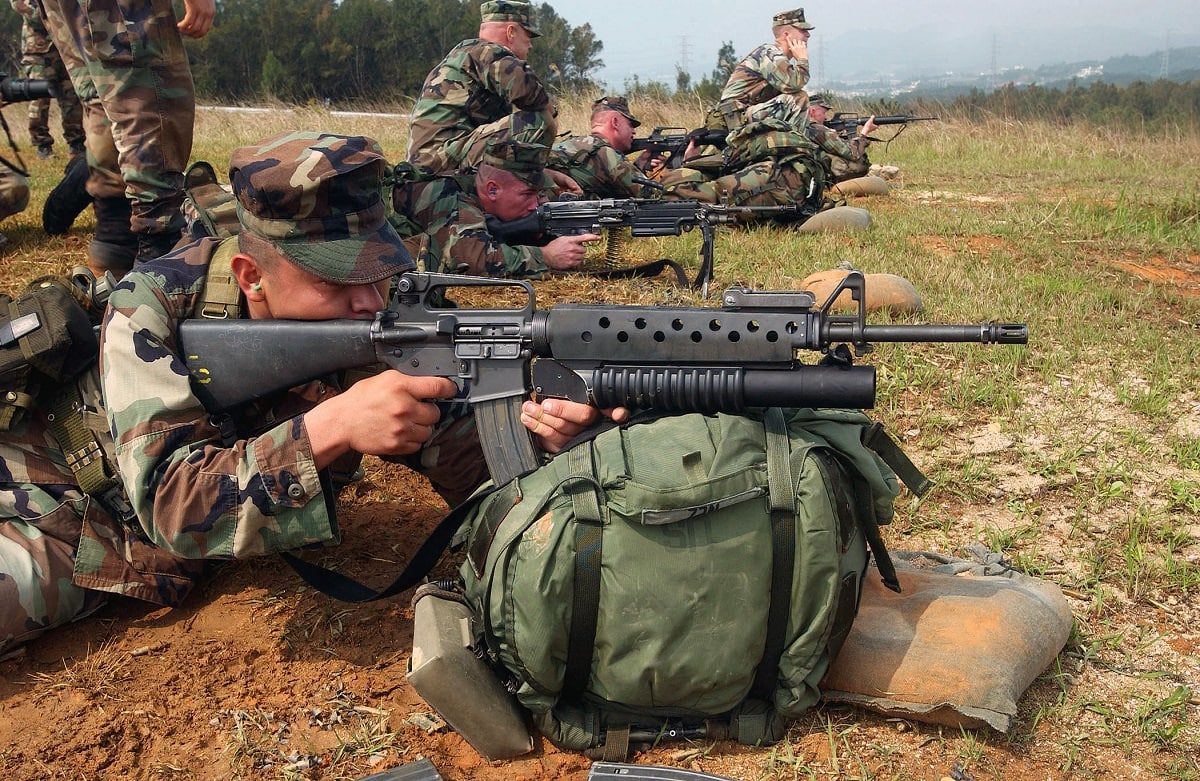
US Marine Corps (USMC) members from L Company, 3rd Battalion, 3rd Marine Regiment, 3rd Marine Division, perform a biathlon on the Camp Hansen ranges, firing a Colt 5.56mm M16A2 Assault Rifle.
“As far as you can see, aim and track the target, Arbel will work,” Semion, Director for Europe of IWI and SK Group, told Defense & Tech by The Jerusalem Post. “Anyone who can shoot can use it. The system allows the soldier to stop thinking about firing. As long as you keep your finger on the trigger, the bullets will keep coming out.”
“Ukrainians have proved to the entire world how new technologies can be used on the battlefield,” he said, adding that “Eastern European and Baltic states think that they are next and they are getting ready for a hybrid war. They are looking for anti-drone systems.”
“We embedded a computer inside the rifle, making it a game-changer,” Semion added.
The US Army has a lot of options, not the least of which are directed energy weapons. Israel’s Iron Beam laser system, which saw its first confirmed combat intercepts during anti-drone operations in early 2026, costs roughly $3.50 per shot.
Iron Beam (“Eitan”) is Israel’s groundbreaking 100 kW-class ground-based laser defense system, developed by Rafael Advanced Defense Systems and Elbit Systems, to neutralize threats such as rockets, mortars, and UAVs at the speed of light.
It offers a low-cost, near-zero per-interception expense ($3.50 per shot) to complement the Iron Dome and is planned for full operational deployment to bolster Israel’s multi-layered defenses.
About the Author: Steve Balestrieri
Steve Balestrieri is a National Security Columnist. He served as a US Army Special Forces NCO and Warrant Officer. In addition to writing on defense, he covers the NFL for PatsFans.com and is a member of the Pro Football Writers of America (PFWA). His work was regularly featured in many military publications.