
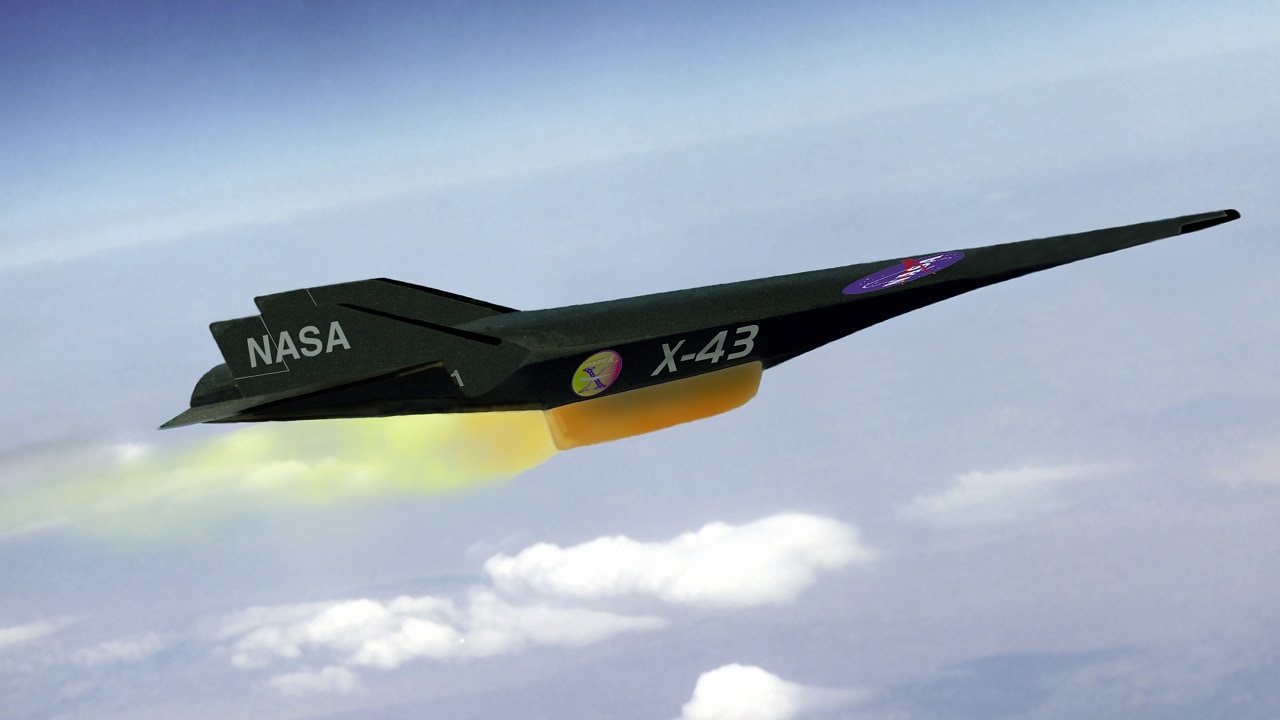
NASA’s X-43D was designed to run a hydrogen-fueled scramjet for 30 seconds at Mach 15. The proposed aircraft was not a bomber, missile, or passenger vehicle. It was a 20-foot, 5,700-pound expendable research machine intended to collect data in a flight environment that engineers said was difficult, and in some areas impossible, to reproduce on the ground.
A joint NASA and Boeing conceptual design and feasibility study completed in 2004 found the mission technically feasible. The notional program included three flights. Had work begun at the start of fiscal 2005, the first launch would have occurred about four years later, followed by one flight in each of the next two years.
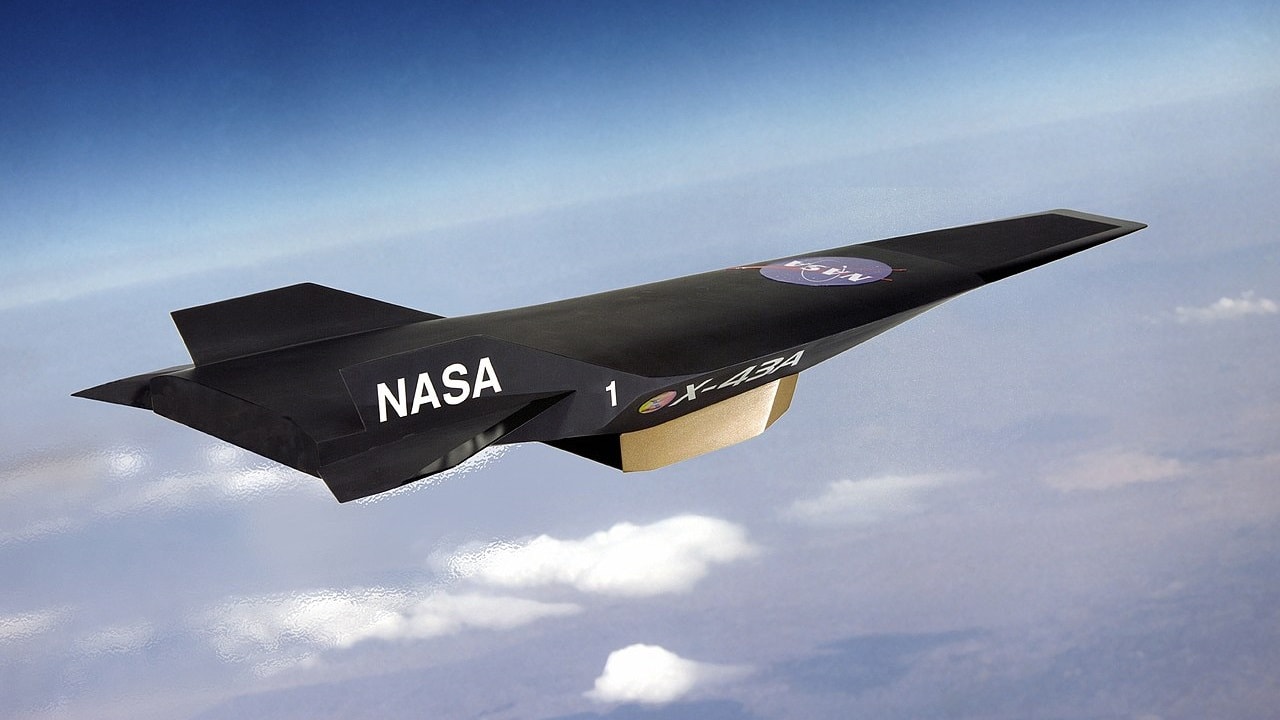
An artist’s conception of the X-43A Hypersonic Experimental Vehicle, or “Hyper-X” in flight. The X-43A was developed to flight test a dual-mode ramjet/scramjet propulsion system at speeds from Mach 7 up to Mach 10 (7 to 10 times the speed of sound, which varies with temperature and altitude).
The mission profile was closer to a space launch than an aircraft test. A three-stage Peacekeeper rocket would leave Vandenberg Air Force Base, release the X-43D near 200,000 feet at about Mach 16.5, and send it into a controlled descent. The vehicle would slow to Mach 15 near 120,000 feet, ignite its scramjet, run the experiment, and fall into the Pacific roughly 1,300 nautical miles downrange.
That short burn would have addressed a missing part of the American hypersonic roadmap. The X-43A had proved an airframe-integrated scramjet at Mach 6.8 and Mach 9.68. X-43D was meant to move the experiment into the Mach 12-to-15 regime, where heating, airflow chemistry, communications, and vehicle control become harder to predict.
X-43D Would Have Pushed Beyond the X-43A’s Record
The X-43A flew successfully twice in 2004, with each powered segment lasting about 10 seconds. Those flights confirmed hydrogen combustion in supersonic airflow while the engine, inlet and airframe operated as one system. They also established the air-breathing speed record that still defines the program.
X-43D would have been larger and far heavier than the 12-foot X-43A. Its baseline design carried three scramjet flow paths, liquid hydrogen, helium pressurant, water for active cooling, flight controls, and extensive instrumentation. The experiment was designed to determine whether the vehicle generated enough thrust to accelerate during the 30-second test rather than merely hold speed against drag.
Mach 15 Turned Heat Management Into a Central Experiment
The nose and engine leading edges required active cooling. Water would begin circulating after separation from the booster, while thermal-protection tiles shielded the aluminum-lithium structure. Engineers warned that some predicted tile temperatures would approach or exceed the material’s operating limit.
Airflow created another tradeoff. A mostly laminar boundary layer reduced drag and heating, but the scramjet benefited from turbulent air entering the inlet because it improved fuel mixing. The X-43D would have provided flight measurements of that interaction at speeds beyond the X-43A test points. Computer models and wind tunnels narrowed parts of the problem without duplicating the entire Mach 15 environment.
The X-43D Would Have Reduced Risk, Not Produced a Weapon
The project was part of a NASA-Pentagon roadmap for reusable hypersonic access to space. Its data also held military value for high-speed reconnaissance and strike research, especially in propulsion-airframe integration, thermal protection, guidance, and communications through an ionized flow field. That value should not be confused with an operational design.
Hydrogen offered excellent combustion performance but required bulky cryogenic storage. The X-43D also needed a 202,000-pound launch stack to reach its starting condition and had no landing system. A successful flight would have removed uncertainty from the hardest end of the speed range; it would not have delivered a fieldable Mach 15 aircraft.
NASA’s 2004 Budget Shift Ended the Flight Path
The feasibility team identified funding as the program’s largest risk. President George W. Bush’s 2004 Vision for Space Exploration redirected NASA resources toward returning astronauts to the Moon and preparing for a mission to Mars. The study said most hypersonic projects under review had already been eliminated. The Government Accountability Office later confirmed that NASA canceled Hyper-X funding in fiscal 2004.
X-43D therefore did not suffer a failed flight or a prototype accident. It never became an approved development program. NASA’s current hypersonics history says substantial design work supported the X-43B, X-43C, and X-43D, but none reached flight before the broader effort ended.
The X-51 Chose Longer Flight at a Lower Speed
The United States continued scramjet research along a more operationally useful path. In 2013, the Air Force’s X-51A flew under scramjet power for 210 seconds at Mach 5.1 using dense JP-7 hydrocarbon fuel. That program emphasized endurance and practical fuel rather than the extreme-speed test X-43D represented.
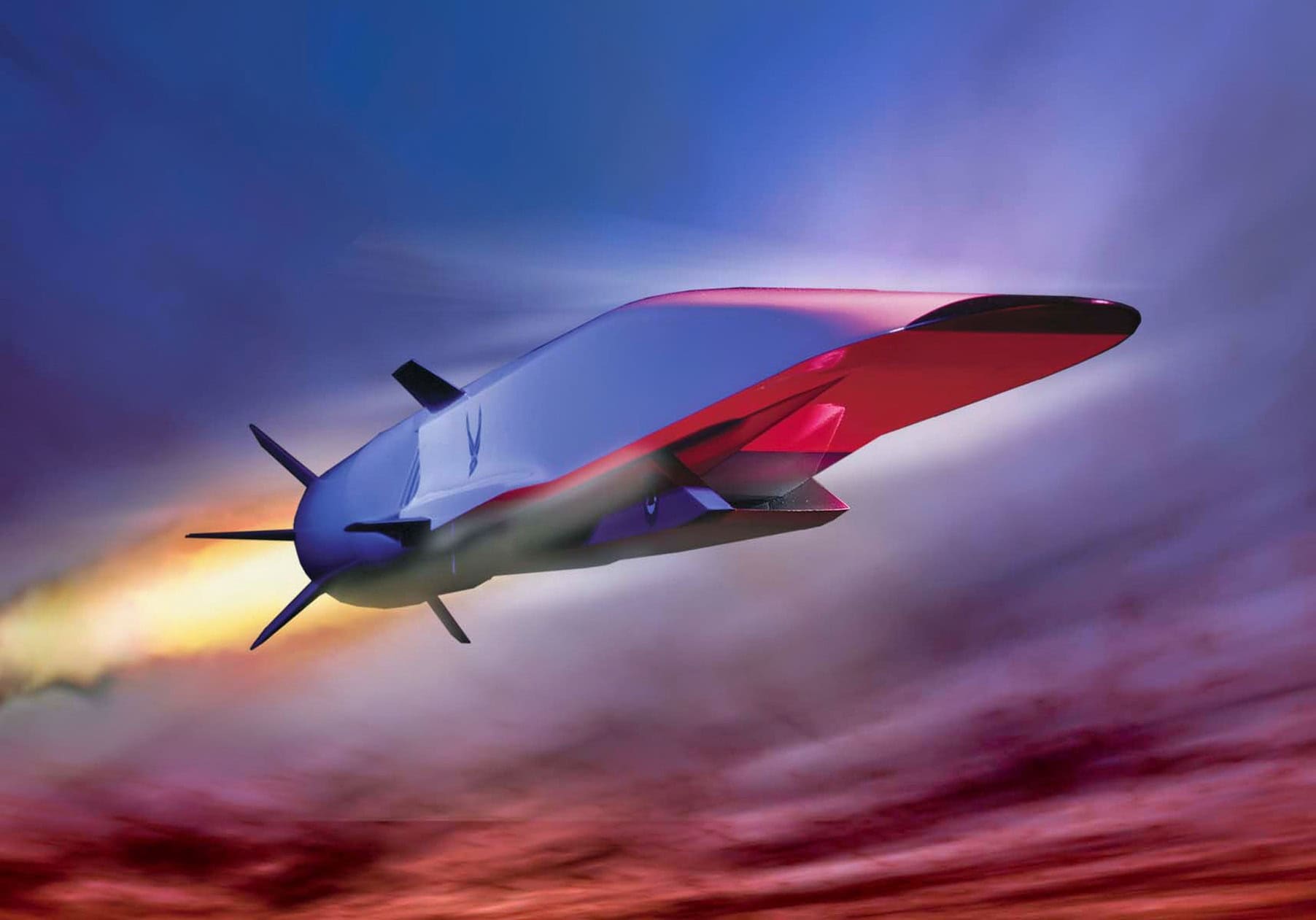
The X-51A Waverider is set to demonstrate hypersonic flight. Powered by a Pratt Whitney Rocketdyne SJY61 scramjet engine, it is designed to ride on its own shockwavem and accelerate to about Mach 6. (U.S. Air Force graphic)
NASA and the Air Force later used HIFiRE Flight 2 to study hydrocarbon-fueled operation and the transition from dual-mode ramjet combustion to full scramjet operation between Mach 6 and Mach 8. Those tests advanced weapon-relevant propulsion and extended powered flight far beyond what Hyper-X achieved. They did not create the Mach 12-to-15 data set that the X-43D was designed to collect.
The notional schedule placed the first X-43D flight on September 30, 2008. No vehicle reached Vandenberg, and the three Peacekeeper launches shown in the study’s program plan were never funded.
About the Author: Harry J. Kazianis
Harry J. Kazianis (@Grecianformula) was the former Senior Director of National Security Affairs at the Center for the National Interest (CFTNI), a foreign policy think tank founded by Richard Nixon based in Washington, DC. Harry has over a decade of experience in think tanks and national security publishing. His ideas have been published in the NY Times, The Washington Post, The Wall Street Journal, CNN, and many other outlets worldwide. He has held positions at CSIS, the Heritage Foundation, the University of Nottingham, and several other institutions related to national security research and studies. He is the former Executive Editor of the National Interest and the Diplomat. He holds a Master’s degree focusing on international affairs from Harvard University.