
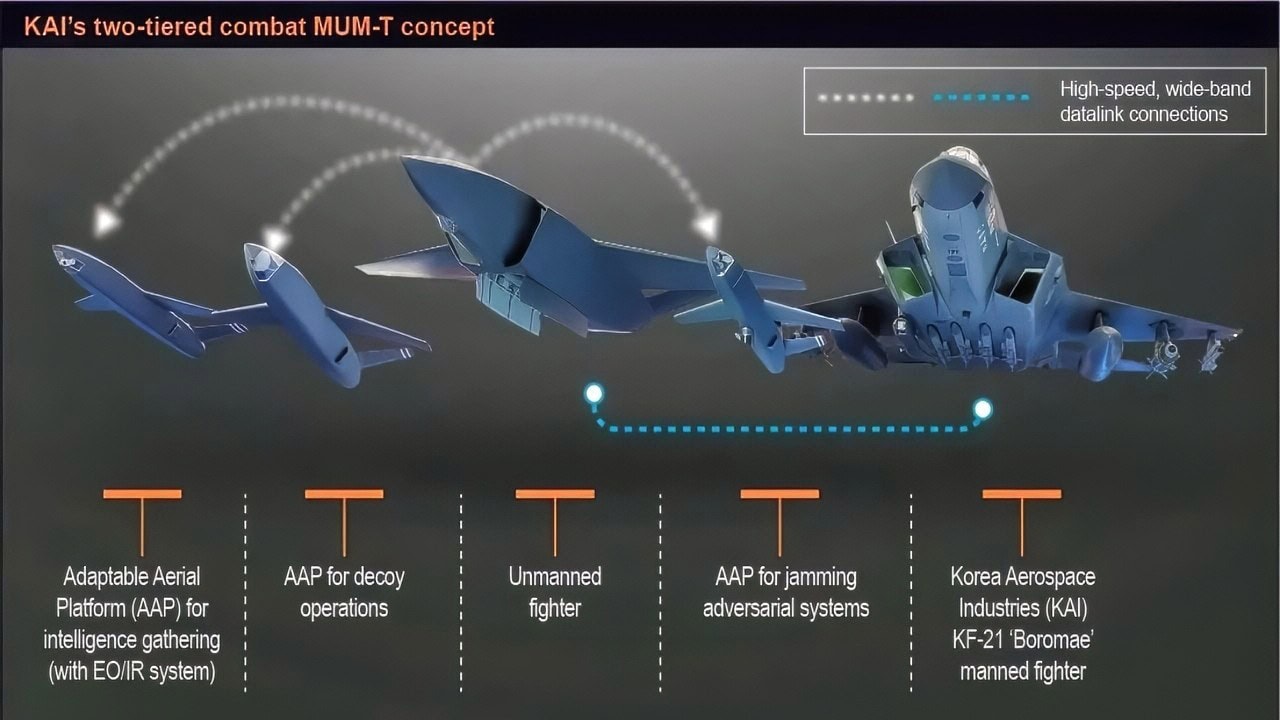
The KF-21’s Cheap-Fighter Pitch Is Colliding With a $125 Million Export Price: South Korea’s KF-21 Boramae was supposed to occupy a valuable space in the fighter market: more advanced than an F-16, cheaper than a Rafale or Eurofighter and easier to acquire than an F-35. A reported offer of 16 KF-21 Block II fighters to Indonesia for about $2 billion now places that argument under pressure.
The arithmetic produces roughly $125 million per aircraft. The figure reported by Defense Express is not a signed unit price, and the proposal’s contents remain undisclosed. It is unclear whether the $2 billion includes engines, spares, training, weapons, ground equipment or long-term support.
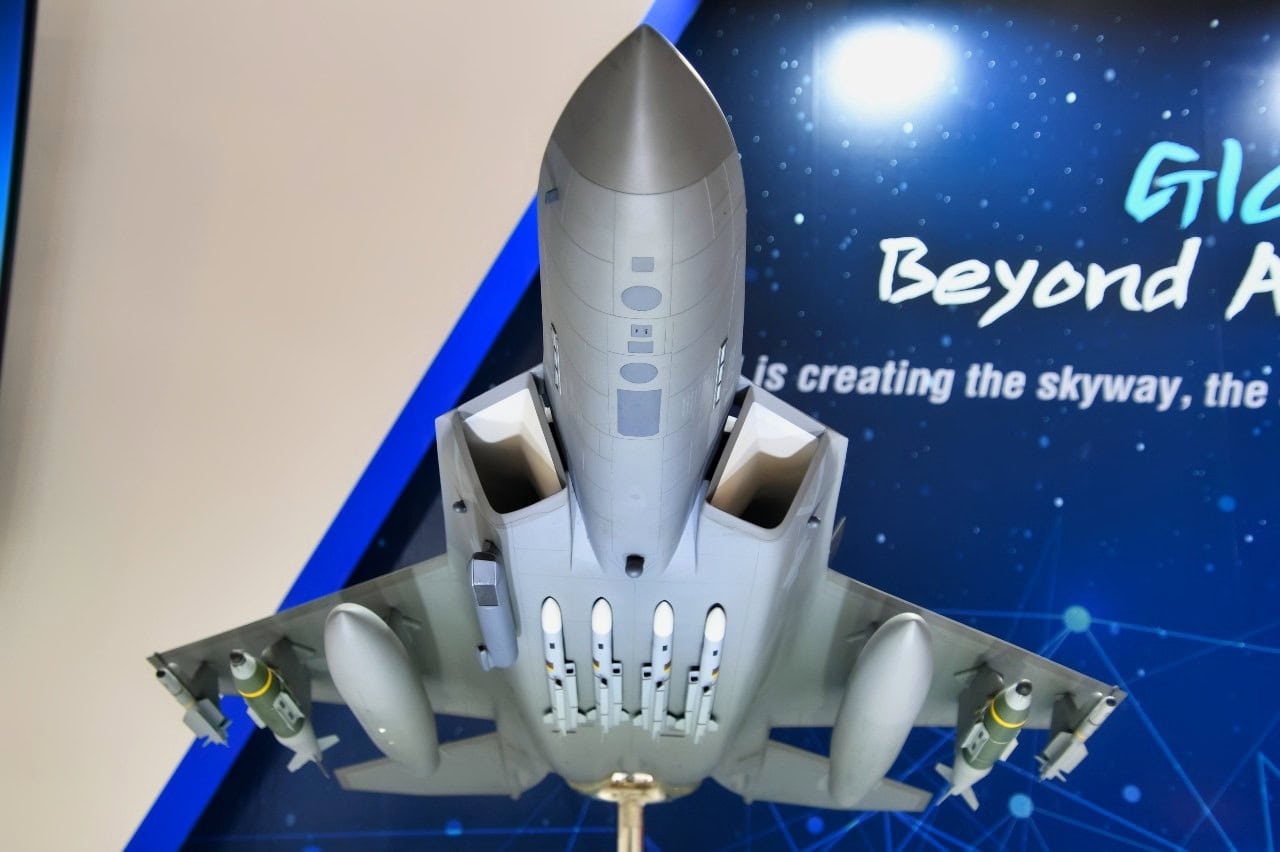
South Korea’s KF-21 Boramae is entering mass production, positioning KAI as a global defense leader. With Poland and other buyers interested, can it challenge the F-35 in export markets?
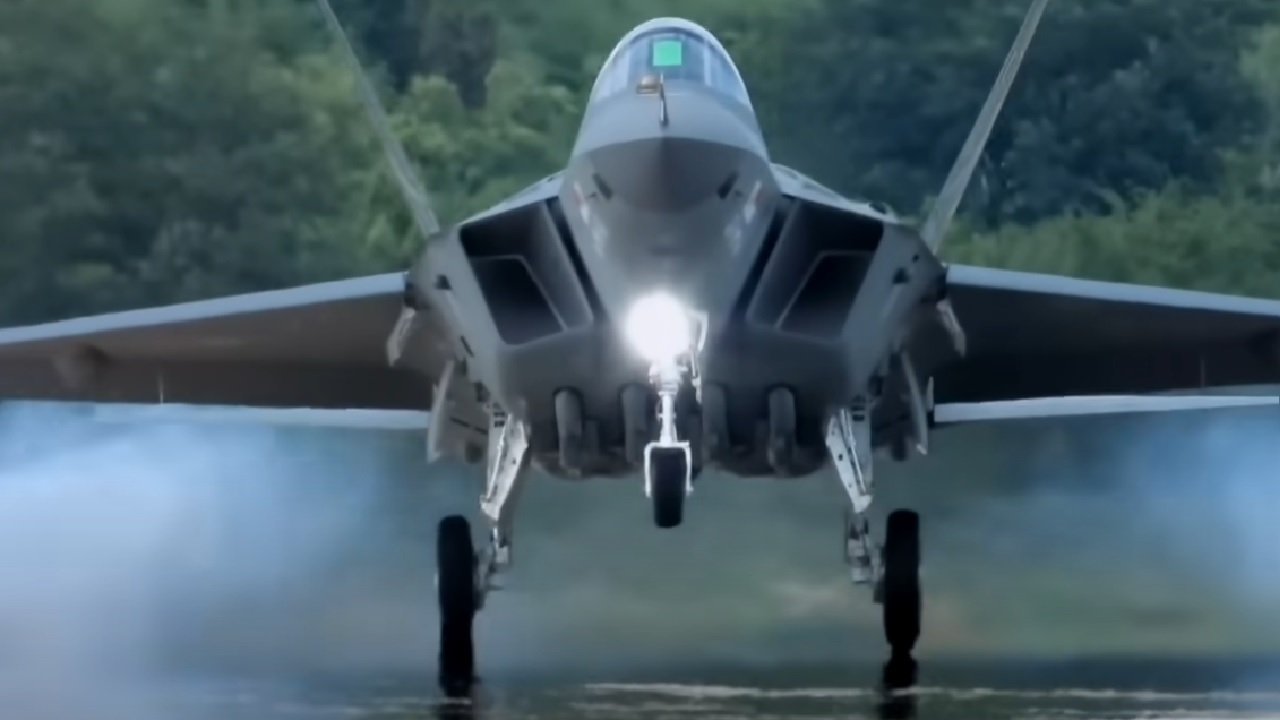
KF-21 screenshot from first flight. Image Credit: YouTube Screenshot.
Janes reported in January that discussions covered 16 Block II airframes and possible financing through the Export-Import Bank of Korea. It found no public credit terms or confirmation that Indonesia’s earlier plan for 48 aircraft had been formally replaced.
The ambiguity does not erase the cost problem. A South Korean procurement document released in May projected that production of 80 Block II aircraft would cost 18.44 trillion won, or about $12.5 billion. That was 29.5 percent above the estimate prepared in August 2024.
The KF-21’s Original Price Left Out Major Contracts
The fighter’s bargain reputation grew from South Korea’s first domestic order. KAI received 1.96 trillion won, then worth $1.41 billion, to build 20 Block I aircraft. Dividing the contract produced a headline price of $70.5 million per jet.
That contract did not contain the full bill. South Korea separately awarded 110 billion won for 20 AESA radars and contracted for more than 40 GE F414 engines and spare modules at a cost of 556 billion won. Combining those contracts produces a rough average near $94 million per aircraft at the exchange rate used when the order was announced, before weapons, training and export support.
The KF-21 was never a direct F-35 equivalent. The current aircraft is a twin-engine, 4.5-generation fighter with reduced-signature shaping and external weapons. Its appeal rests on modern sensors, strong performance, easier weapons integration and greater national control, while a later KF-21EX is intended to move closer to fifth-generation stealth.
Block II Adds Capability While Inflation Raises the Bill
Block II turns the air-superiority-focused aircraft into a multirole fighter by adding air-to-ground weapons, long-range strike options and the testing needed to certify them. South Korea has already accelerated part of the weapons-integration schedule, with initial ground-attack capabilities expected from 2027.
DAPA attributed the larger production estimate to inflation, a weaker won and global supply-chain disruption. KAI initially targeted 65 percent domestic content, leaving imported components and two American-designed engines exposed to exchange rates and foreign supplier costs. South Korea’s sovereign-fighter project still relies on a powerplant built under a U.S. license.
Dividing the new Block II estimate by 80 produces more than $156 million in program spending per planned aircraft. That is not a flyaway price because the total includes broader production expenses. It still shows why the KF-21 price comparison with the F-35 is misleading unless both figures contain the same equipment and support. Lockheed Martin’s frequently cited $82.5 million F-35A figure is a flyaway cost rather than a complete national acquisition package.
Indonesia’s Retreat Removed the Scale Behind the Promise
Indonesia originally agreed to cover about 20 percent of development costs, or 1.6 trillion won, in exchange for technology transfer and domestic production of 48 aircraft. Payment disputes reduced that contribution to 600 billion won. Jakarta then abandoned local co-production and shifted toward purchasing completed aircraft.
A 16-aircraft order has different economics from a 48-aircraft industrial partnership. KAI would have to establish training, support and spare-parts systems across a smaller fleet, while South Korean export financing adds another layer. Indonesia is also buying Rafales and financing Turkey’s KAAN, giving Jakarta leverage to demand better terms.
KAI needs an early export customer, but a heavily subsidized sale would create a price that future buyers expect Seoul to match. The KF-21’s export case now depends less on being a bargain alternative to the F-35 and more on delivery speed, weapons flexibility, operating costs, and the political freedom it offers outside the American program.
South Korea Still Has a Viable Program
South Korea plans to buy 40 Block I and 80 Block II aircraft, and the first production jet is scheduled to enter operational service in September 2026. A domestic fleet of 120 gives KAI a production base even without immediate exports.
The cost increase still threatens the schedule. DAPA has discussed delaying the first 40 aircraft by a year and the Block II force by two or three years. The agency expects to settle the Block II production budget before the end of 2026. Indonesia has not signed the proposed 16-aircraft order, and neither government has released its equipment list.
About the Author: Harry J. Kazianis
Harry J. Kazianis (@Grecianformula) was the former Senior Director of National Security Affairs at the Center for the National Interest (CFTNI), a foreign policy think tank founded by Richard Nixon based in Washington, DC. Harry has over a decade of experience in think tanks and national security publishing. His ideas have been published in the NY Times, The Washington Post, The Wall Street Journal, CNN, and many other outlets worldwide. He has held positions at CSIS, the Heritage Foundation, the University of Nottingham, and several other institutions related to national security research and studies. He is the former Executive Editor of the National Interest and the Diplomat. He holds a Master’s degree focusing on international affairs from Harvard University.

