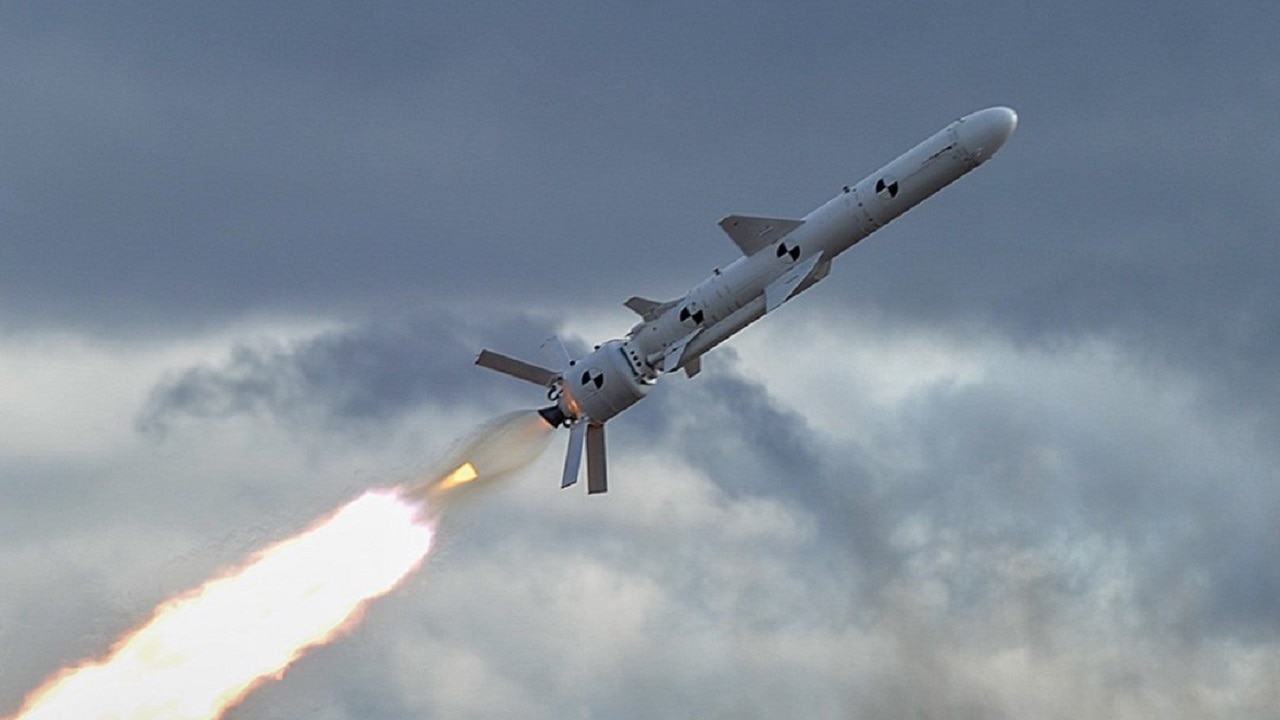
Summary and Key Points: Ukraine is building its own ballistic missiles for the first time since the Soviet Union collapsed. The company is Fire Point, already known for the FP-5 Flamingo cruise missile, and it is developing two weapons with very different jobs. The FP-7 is the short-range one — around 200 kilometers — carrying a 150-kilogram warhead, built for targets close to the front: Russian command posts, ammunition dumps, air-defense radars and batteries. The FP-9 is the long-range weapon, with a substantially larger payload and greater range, and it is the one that changes the map.
Ukraine’s Ballistic Missile Program Could Be a Game Changer
While FPV, or first-person drones, have been one of the defining features of the ongoing war in Ukraine, leveraged by both Russia and Ukraine to attack men and machines and destroy war materiel, a new phase in the war is unfolding — one defined by ballistic missiles.
Ballistic missiles are nothing new to this war, and have been used by Russia hundreds of times to bombard Ukrainian towns, cities, some military sites, as well as civilian infrastructure.
And while Ukraine possesses some stocks of ballistic missiles, many provided or purchased from international donors, a new crop of ballistic missiles is appearing on the horizon.
Unlike the missiles Ukraine has used previously, however, these are home-grown, designed and built in Ukraine.
The domestic missile production effort, if successful, promises to close the missile gap with Russia, an area in which Ukrainian capacity is far outstripped by Russian industrial might.
Though the missiles are still in their embryonic stages, one firm, Ukraine’s Fire Point, hopes that its FP-7 short-range and FP-9 long-range ballistic missiles could soon enter mass production and give Kyiv’s forces an edge in the air.
Ballistic Missiles: a Primer
Ballistic missiles are, in essence, rockets that accelerate briefly then coast toward Earth along a largely unpowered arc.
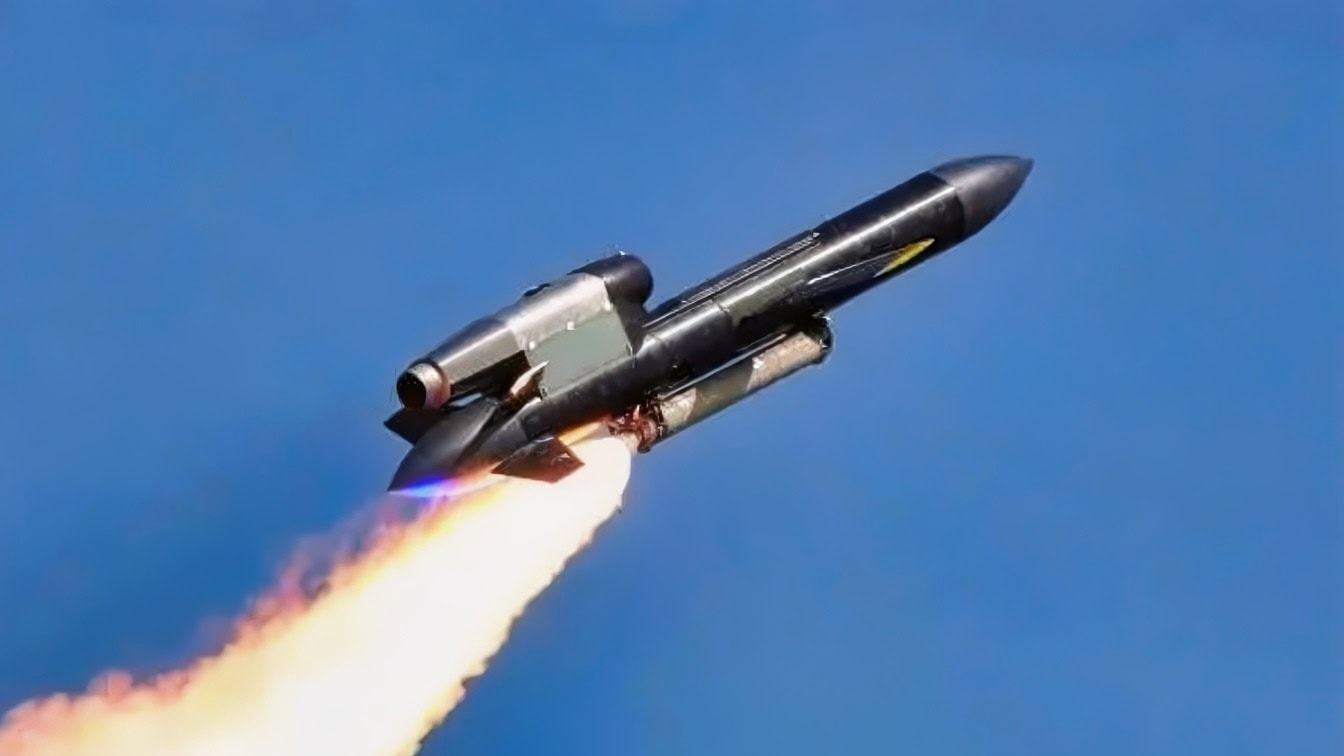
FP-5 Flamingo Cruise Missile. Creative Commons Image.
FP-5 Flamingo Cruise Missile. Creative Commons Image.
They are a diverse category of munitions, with relatively modest high-explosive payloads as well as city-destroying nuclear warheads.
Like the power of their explosion, ballistic missile ranges can vary too, from just a few dozen kilometers for smaller missiles to continent-crossing ranges for the kinds of nuclear-tipped behemoths in service with the world’s handful of nuclear powers.
The idea of rocketry in warfare is ancient, pioneered by Chinese armies in the 13th century.
But ballistic missiles in the modern sense were born via Nazi Germany’s V-2 program during the Second World War.
The rockets were first tested in 1942 and applied to targets primarily in Britain, and in continental Europe from 1944.
Though the V-2 rocket effected little change on the battlefield, it was nonetheless pioneering and proved that a weapon could cross vast, international distances much more quickly than manned machines—and, importantly, much quicker than defenders could react.
During the Cold War, ballistic missiles were a central pillar of the nuclear deterrence policy of the United States and the Soviet Union, and they manufactured a variety of short-range missiles, submarine-launched variants, and intercontinental ballistic missiles.
Today’s crop of missiles is much more accurate, mobile, and significantly more survivable than Cold War-era predecessors, despite sharing similar pedigrees.
Today’s solid-fueled rockets allow much faster launches and simpler, longer storage than their liquid-fueled predecessors.
Guidance systems have also become more robust and eschew the mechanical gyroscopes of early iterations in favor of inertial, satellite, and celestial guidance systems, which have boosted precision significantly since the V-2’s battlefield debut, while maneuverable reentry vehicles and decoy warheads make defending against them complicated.
Warning time — a narrow window measured from missile detection to the last moment of possible interception — is often measured in minutes, as ballistic missiles can travel at several kilometers per second.
The defense must detect and hit an extremely fast, relatively small object with precious little room for error.
During the ongoing war in Ukraine, Russia has made extensive use of Iskander-M short-range ballistic missiles, air-launched Kinzhal weapons, and S-300 and S-400 missiles fired in a modified surface-attack role.
Beginning in late 2023, the Kremlin’s forces began to leverage KN-23 and KN-24 missiles sourced from North Korea.
Additionally, Russia has fired Oreshnik missiles, an intermediate-range munition, against targets in Ukraine.
The Patriot air-defense interceptor systems that Ukraine uses are generally the only weapons it has capable of intercepting these munitions.
Ukraine has used American-made ATACMS missiles, initially restricted to targets in occupied territory, and later, once launch permission was secured, against targets within Russia itself.
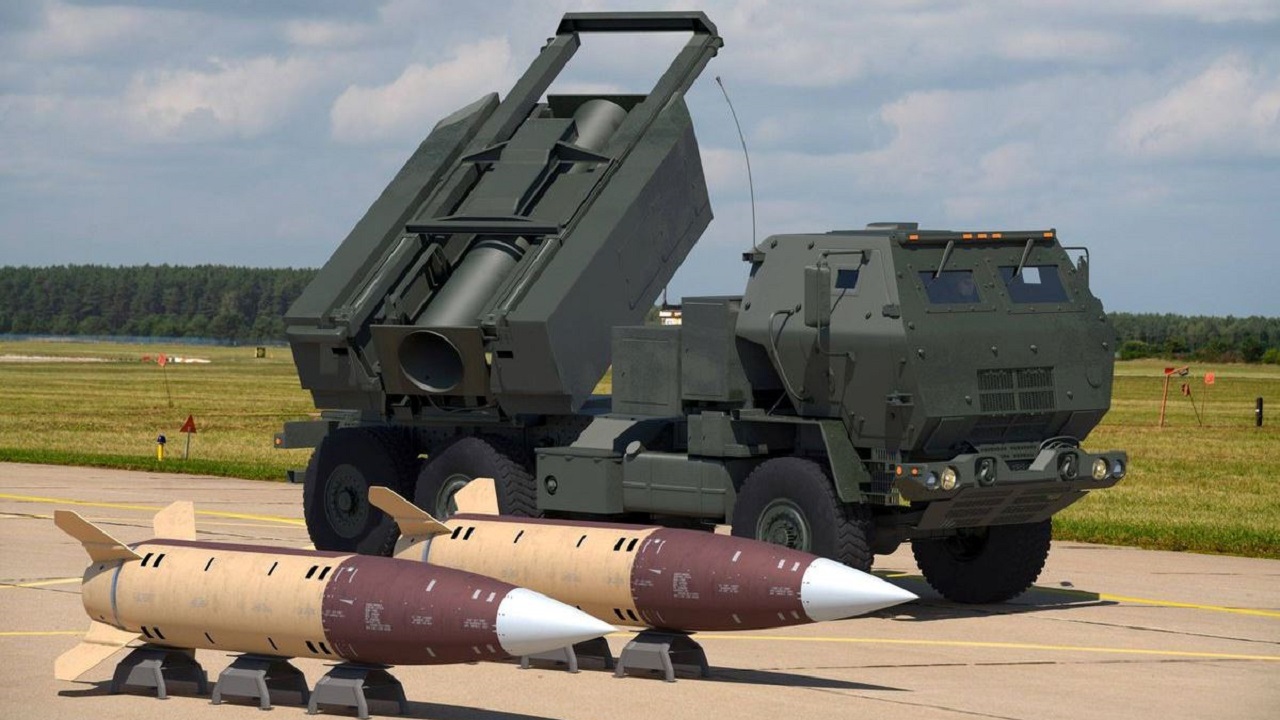
ATACMS missiles Ukraine wants. Image Credit: Creative Commons.
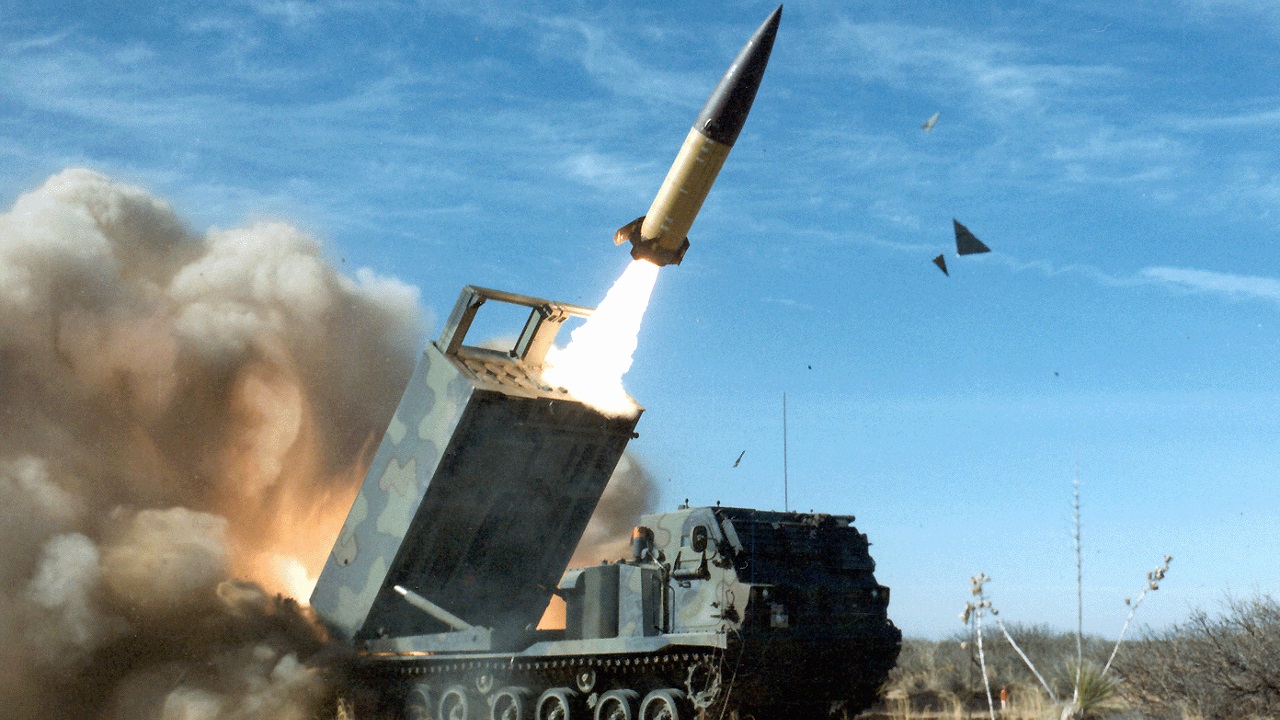
ATACMS firing back in 2006. Image Credit: U.S. Army.
There, they have targeted high-value nodes, including command posts, ammunition depots, radars, and air bases.
Ukraine’s Ballistic Missile Prospects
Speaking to the Kyiv Independent, Fabian Hoffmann, a senior research fellow at the Norwegian Institute for Defence Studies, explained that “Ukraine’s new ballistic missiles could have a significant impact on the outcome of the war,” but to do so, they would have to “enter service in meaningful numbers.” And in a war that has become an attritional conflict, numbers matter hugely.
In an address to the NATO-Ukraine Council in Kyiv earlier this summer, Ukrainian President Volodymyr Zelensky said that the Russian defense industry can produce “about 120 ballistic missiles per month,” a rate that equates to nearly 1,500 ballistic missiles per year.
Lockheed Martin, the American defense prime that manufactures the Patriot interceptors Ukraine needs to defend itself from the Russian missile threat, manufactures only about 650 of the interceptors each year.
And while the company hopes to boost output to 2,000 per year, it likely won’t reach that level until 2033.
HUR, Ukraine’s military intelligence agency, estimated that Russia’s stockpiles of various missile types included 50 Kinzhal missiles, 120 Zircon missiles, 400 RM-48U ballistic missiles used by the S-400 system, 130 Iskander ballistic missiles, and around 50 North Korean missiles.
These numbers contrast sharply with Ukraine’s own stockpiles of missiles, which are almost entirely foreign-sourced and much more limited in number.
Take the ATACMS missile, for example, first received by Ukrainian forces in the fall of 2023.
While the exact number of ATACMS missiles Ukraine has fired or has in reserve is naturally not publicly known, Kyiv is thought to have a more limited stockpile than its adversary.
Earlier last month, Ukraine secured a deal with NATO member Turkey for 70 ATACMS missiles and 12 M270 multiple-launch rocket systems as part of a larger $280 million arms deal — certainly badly needed by Kyiv’s forces, but hardly enough to alter the trajectory of this attritional war decisively. More importantly, however, is that while Russia can produce its own missiles for the Russian military, Ukraine has a much more limited missile production capacity.
In May, President Zelensky wrote to his counterpart in the White House, American President Donald Trump, about the situation on the battlefield. “As long as Putin still has even one meaningful advantage in conventional weapons, he will avoid conventional diplomacy.
Today, his ballistic missiles remain exactly that — his last major advantage on the battlefield.”
Air-defense interceptors are a vital part of offsetting Russia’s ballistic-missile advantage.
But alongside that goal is building out Ukraine’s own domestic ballistic missile capacity. Though now much atrophied, Ukraine was once one of the world’s leading centers of missile production.
Ukraine’s Missile History
Ukraine was a central component of Moscow’s missile and space program during the Soviet era.
Its central industrial hub was Dnipropetrovsk, now known as Dnipro, where the Yuzhnoye design bureau worked with the Yuzhmash production plant to design and build a number of missiles for the Soviet military.
At the time, Ukraine was absolutely indispensable to the Soviet Union’s strategic missile arsenal, and Ukrainian engineers and factories designed and manufactured some of the USSR’s heaviest missiles — those that were to deter, and if necessary, obliterate, the United States and its NATO allies should the Cold War ever have turned hot.
Fire Point hopes to replicate that legacy, albeit on a scaled-down, non-nuclear basis.
The New Crop of Ballistic Missile Hopefuls
Fire Point’s FP-7 and FP-9 would, thanks to their differing ranges and payloads, be applied to different target sets.
Given its anticipated 200-kilometer range and 150-kilogram payload, the FP-7 would be more likely to target areas near the front in Ukraine, including Russian command posts, ammunition dumps, air defense radars and batteries, as well as other military infrastructure.
The FP-9, on the other hand, will have a significantly larger payload and range.
If that missile can be mass-manufactured by Fire Point, it would not be hard to imagine Russian industrial sites, including weapons manufacturing hubs and military plants — and even Moscow itself.
“If Ukraine is able to mass-produce around 50 FP-9 missiles per month, and if they’re reasonably accurate so they can go after high-value military assets, as well as larger infrastructure targets, then it’s going to get much more uncomfortable for the Russians,” Mr. Hoffmann said in an interview with the Kyiv Independent. “That would be really significant, I would say, but we have to get there first.”
While Ukraine has managed some astounding long-range strikes with explosive-laden drones, and to a lesser extent Fire Point’s FP-5 Flamingo missiles, the FP-9 missile would fly much faster — giving Russian air defenses less time to react while also presenting them with a more difficult target to engage than the slower FP-5 Flamingo missile.
“Within minutes you could strike 600, 700, 800 kilometers deep into Russia,” Mr. Hoffmann explains to the Kyiv Independent, “which could make ballistic missile launcher hunting or air defense suppression and destruction a lot more successful.”
About the Author: Caleb Larson
Caleb Larson is an American multiformat journalist based in Berlin, Germany. His work covers the intersection of conflict and society, focusing on American foreign policy and European security. He has reported from Germany, Russia, and the United States. Most recently, he covered the war in Ukraine, reporting extensively on the war’s shifting battle lines from Donbas and writing on the war’s civilian and humanitarian toll. Previously, he worked as a Defense Reporter for POLITICO Europe. You can follow his latest work on X.