
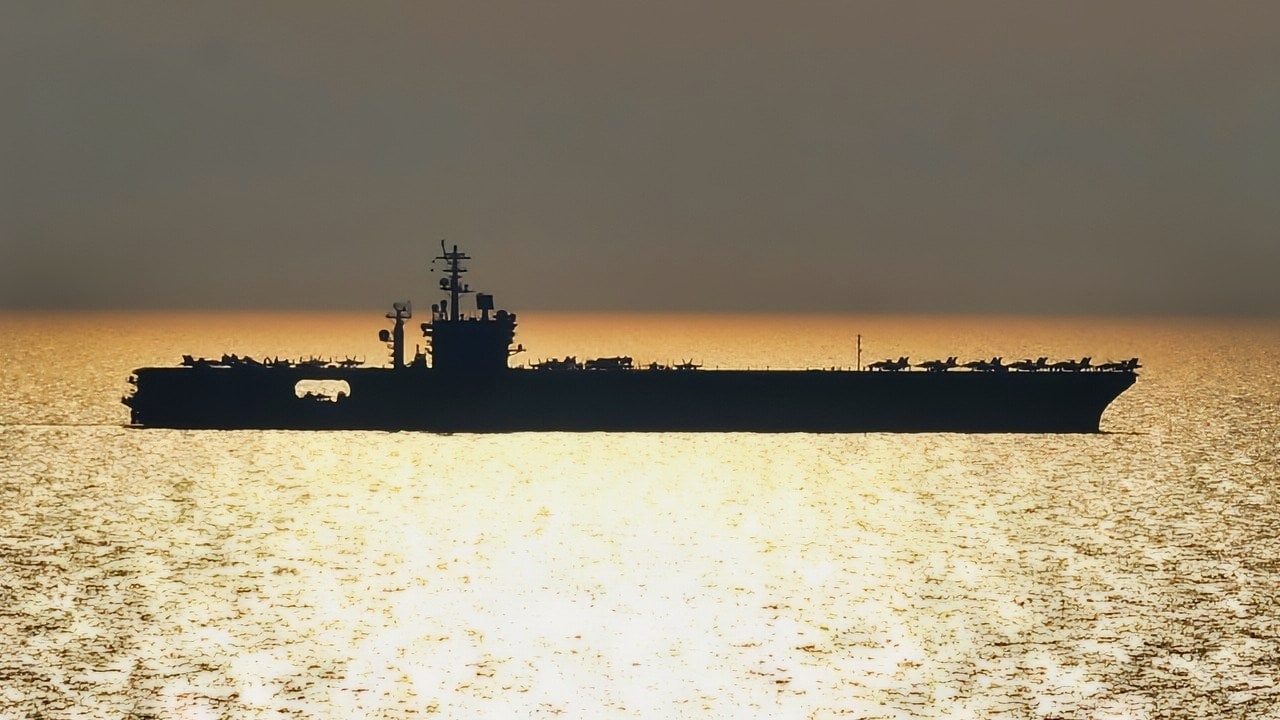
The Ford Class Aircraft Carrier Was Worth Building. The Way the Navy Built It Was Not: The Gerald R. Ford class retains the size, nuclear propulsion, and mission of the Nimitz class while replacing machinery that launches aircraft, stops them, moves weapons, and powers the ship. Both classes are built for roughly 50 years of service with one midlife refueling, but Ford shifts major flight-deck and support functions from steam and hydraulics to electricity.
The physical changes are substantial. An official Naval Sea Systems Command comparison gives Ford a five-acre flight deck against 4.5 acres for Nimitz, a smaller crew, and a design target of 160 sustained sorties per day rather than 120. Ford also has 11 heavier-weapons elevators and a much shorter route for moving ordnance to the flight deck.

PHILIPPINE SEA (Feb. 24, 2024) A U.S. Air Force B-52 Stratofortress, attached to the 5th Bomb Wing, and aircraft attached to Carrier Air Wing (CVW) 11, fly in formation over the Nimitz-class aircraft carrier USS Theodore Roosevelt (CVN 71), Feb. 24, 2024. Theodore Roosevelt, flagship of Carrier Strike Group Nine, is underway conducting routine operations in the U.S. 7th Fleet area of operations. U.S. 7th Fleet is the U.S. Navy’s largest forward-deployed numbered fleet, and routinely interacts and operates with allies and partners in preserving a free and open Indo-Pacific region. (U.S. Navy photo by Mass Communication Specialist 1st Class Thomas Gooley)
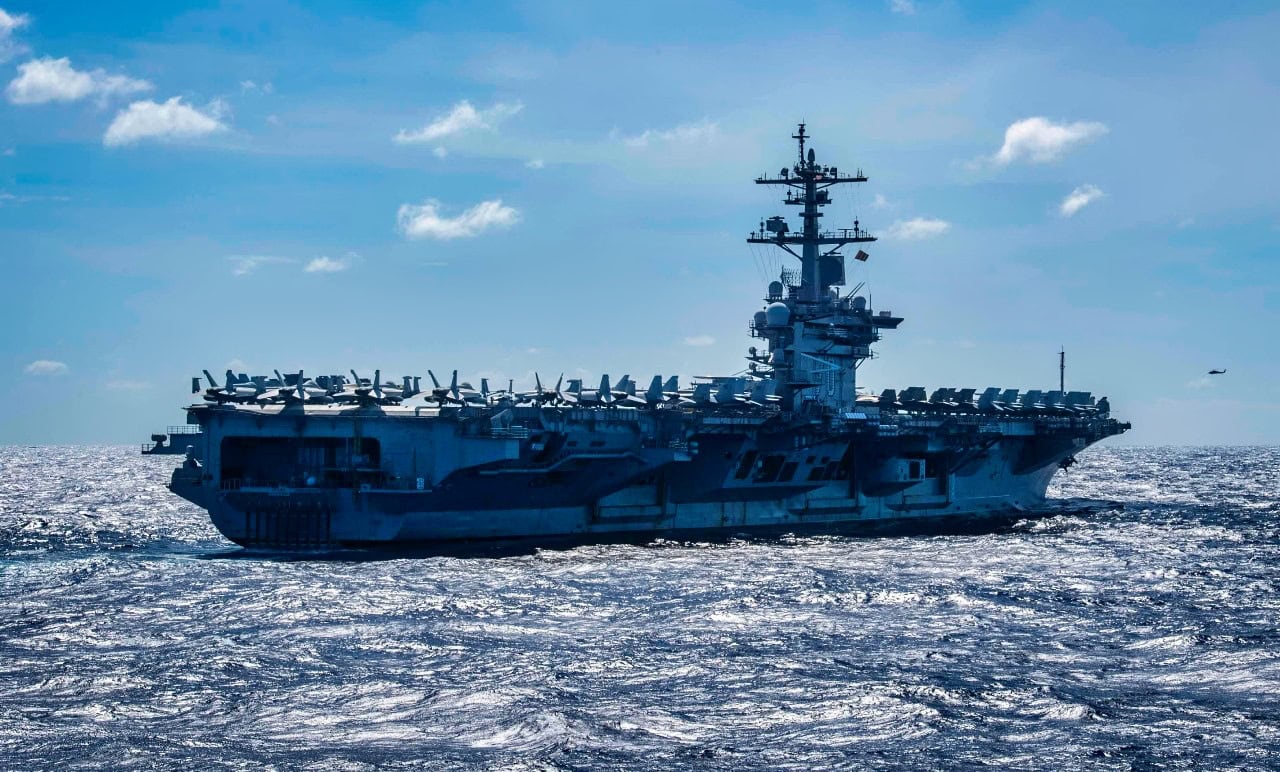
The Nimitz-class aircraft carrier USS Carl Vinson (CVN 70) transits the South China Sea during a Maritime Cooperative Activity with the Philippine Navy, Jan. 17, 2025. The U.S. and Philippines work together as allies, enhancing the interoperability of maritime forces and supporting their shared goal of a free and open Indo-Pacific. Carrier Strike Group ONE, is underway conducting routine operations in the U.S. 7th Fleet area of operations. (U.S. Navy photo by Mass Communication Specialist 3rd Class Brianna Walker)
Those gains arrived with an acquisition failure that shaped the class’s reputation. The Government Accountability Office found that the lead ship’s cost had grown nearly 23 percent by 2017 as technology development, design, and construction problems collided. The Navy accepted the USS Gerald R. Ford that year before several critical systems were ready for fleet use.
The evidence supports a divided judgment. Ford’s power plant, deck layout, aircraft compatibility, and reduced manpower address real limits in the Nimitz design. The Navy still imposed avoidable costs and delays by placing too many immature technologies aboard the lead ship.
Ford’s New Reactors Created Far More Electrical Margin
The clearest break with Nimitz is the amount of electrical power available. NAVSEA says Ford has nearly three times the electric-plant capacity of the preceding class, along with restored weight and stability margins. Both classes use reactor heat to make steam for propulsion. Ford’s two A1B reactors also support a much larger electric plant for ship systems.
That margin supplies the launch system, arresting gear, sensors, weapons elevators, and computing equipment. A 50-year carrier must accept aircraft and electronics that have not yet been designed. The capacity leaves room for more demanding radars, electronic warfare equipment, and potential directed-energy defenses. That margin is the strongest reason the Ford investment retains long-term value.
EMALS and AAG Expanded the Aircraft Envelope
Nimitz-class carriers launch aircraft with four steam catapults and recover them with the proven Mk 7 arresting system. Ford replaced both. The Electromagnetic Aircraft Launch System delivers more precise acceleration, reduces stress on aircraft, and supports platforms ranging from light unmanned aircraft to heavy strike fighters. The Advanced Arresting Gear adjusts stopping force for aircraft of different weights.
The wider envelope matters as carrier air wings add the F-35C, MQ-25 tanker, and later unmanned aircraft. Steam catapults remain dependable, but their maintenance demands reflect another era. EMALS and AAG promised lower manpower and greater flexibility. Their reliability at sea took far longer to establish than expected.
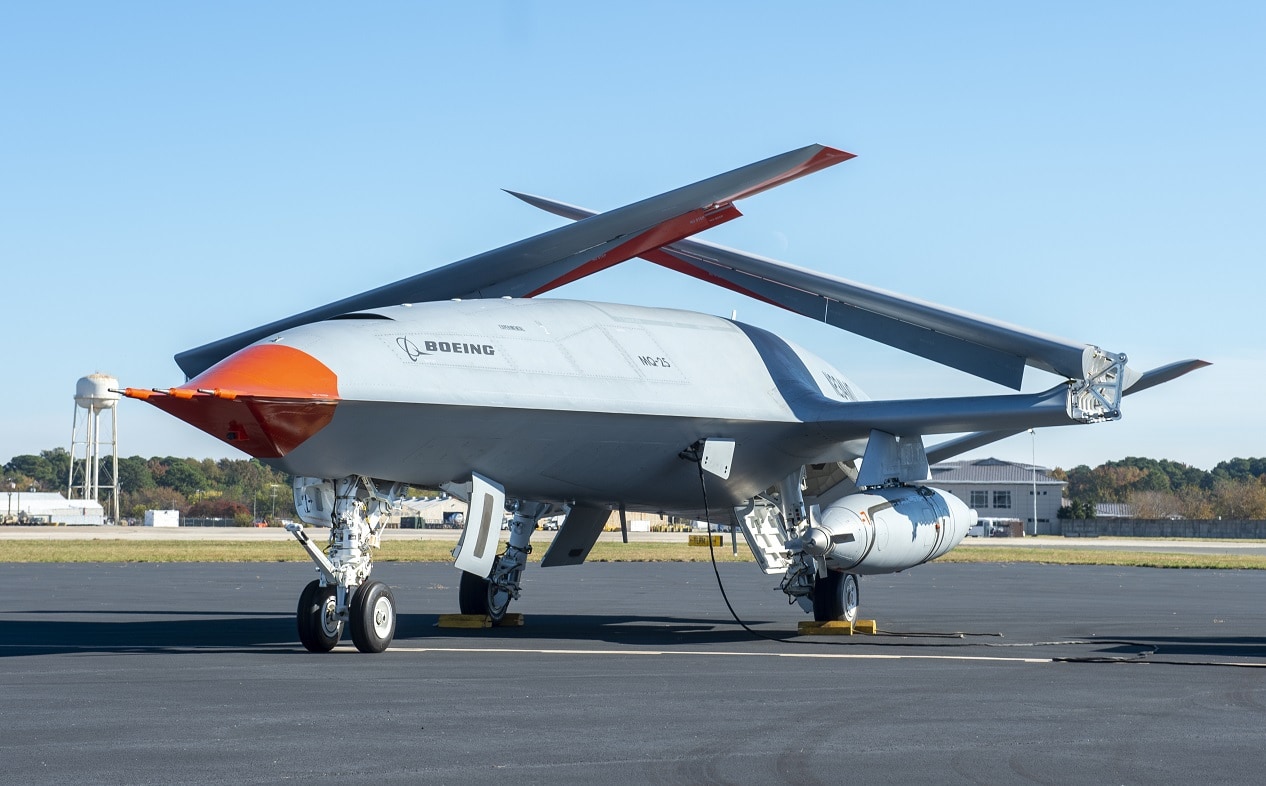
The U.S. Navy and Boeing conducted ground testing of the MQ-25 Stingray at Chambers Field onboard Naval Station Norfolk, Virginia. The MQ-25 Stingray is an unmanned aerial refueling aircraft. (U.S. Navy photo by Mass Communication Specialist 2nd Class Sam Jenkins)
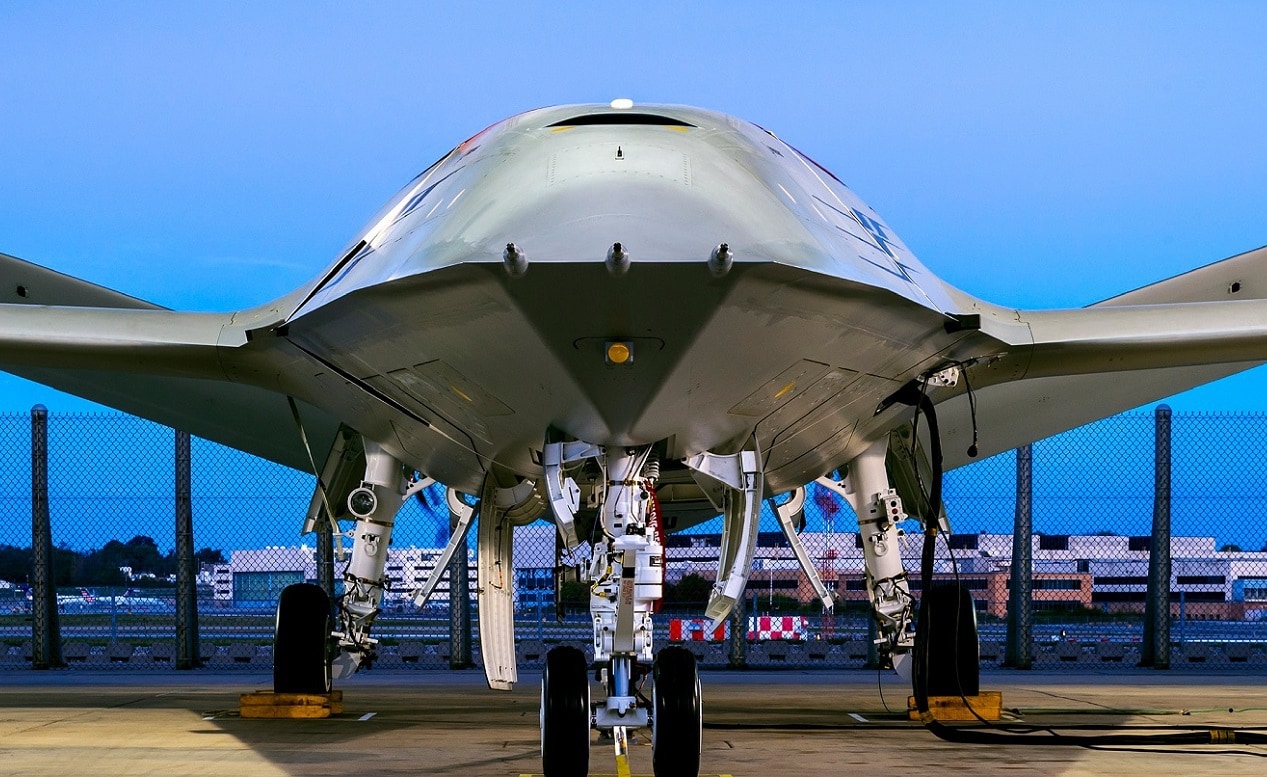
MQ-25. Image Credit – Creative Commons.

Image: Creative Commons.
Ford Redesigned the Flight Deck Around Faster Movement
The smaller island sits farther aft, opening usable deck space and reducing interference with aircraft handling. Ford also has more fueling stations and a weapons arrangement intended to keep armed aircraft, maintenance crews, and moving ordnance from crossing the same areas as often. The result is a different flight-deck workflow, not merely a newer catapult.
Nimitz has nine weapons elevators rated at 10,500 pounds. Ford has 11 rated at 24,000 pounds, while horizontal weapons movement falls from roughly 1,500 feet to 390. Sortie generation depends on fueling, arming, spotting, launching, recovering, and repairing aircraft as one continuous process. The 160-sortie target comes from improving that full cycle.
Fewer Sailors Were Supposed to Lower 50-Year Costs
Ford was designed to reduce required manning by roughly 15 percent through automation, electrical auxiliaries, and less labor-intensive maintenance. In 2019, NAVSEA projected a 17 percent reduction in operations and support costs, worth about $4 billion over each ship’s life compared with Nimitz.
Automation creates a different dependence. Sailors perform less repetitive mechanical work, while specialized electronics, software, and diagnostics become more important. The latest operational-test report says Ford crews still rely on off-ship technical support for EMALS, AAG, and weapons-elevator problems. It also identified a potential 159-bed shortfall at full manning, complicating the promised manpower advantage.
The Lead Ship Paid for Too Much Technology at Once
The Ford class introduced 23 new technologies, including a new reactor plant, catapults, arresting gear, elevators, and radar. That concurrency placed development problems inside a carrier already under construction. The eleventh and final weapons elevator was not turned over until December 2021, more than four years after delivery. The original Dual Band Radar became a unique support burden and is scheduled for replacement by SPY-6(V)3.
The Pentagon’s operational-test office reported that EMALS and AAG reliability still affected flight operations during fiscal 2025. Ford had not demonstrated weapons movement at its design-reference rate, and the sustained sortie test slipped into fiscal 2026. A fourth arresting-gear engine alternative is targeted for installation in fiscal 2029.
The consequences extend beyond the lead ship. The Congressional Budget Office says Nimitz-class carriers took seven to eight years to build, while current Ford schedules require 10 to 11 years. Today’s weaker industrial base explains part of the difference, but complexity added work. The systems needed to mature before the Navy tied them to one delivery date, a mistake that nearly overwhelmed the program.
Ford’s 2026 Deployment Supports a Qualified Yes
Gerald R. Ford is no longer a pier-side technology project. It returned to Norfolk on May 16, 2026, after a 326-day deployment covering 57,713 nautical miles. Carrier Air Wing 8 recorded 12,200 launches and more than 5,760 flight hours. The Navy says preliminary data show the systems and deck design producing higher sortie rates than Nimitz.
DOT&E remains more cautious. The observed operations met commanders’ tasking but did not reproduce the aircraft mix and tempo required for the formal design mission. Important testing remains incomplete. Nimitz retains an advantage no specification table captures: decades of known reliability, trained maintainers, and established support.
The Ford upgrades were worth pursuing because extending a 1960s electrical and flight-deck architecture for another half-century would have restricted future air wings. The acquisition strategy deserves a harsher verdict. Land-based testing should have matured the launch, recovery, and weapons systems before the Navy placed its combined risk on the first ship.
The future USS John F. Kennedy completed builder’s sea trials on February 4, 2026. Newport News resumed completion work and corrections after the ship returned, while NAVSEA kept the date for acceptance trials under review.
MORE – The US Navy’s War on Toilets
About the Author: Harry J. Kazianis
Harry J. Kazianis (@Grecianformula) was the former Senior Director of National Security Affairs at the Center for the National Interest (CFTNI), a foreign policy think tank founded by Richard Nixon based in Washington, DC. Harry has over a decade of experience in think tanks and national security publishing. His ideas have been published in the NY Times, The Washington Post, The Wall Street Journal, CNN, and many other outlets worldwide. He has held positions at CSIS, the Heritage Foundation, the University of Nottingham, and several other institutions related to national security research and studies. He is the former Executive Editor of the National Interest and the Diplomat. He holds a Master’s degree focusing on international affairs from Harvard University.

