
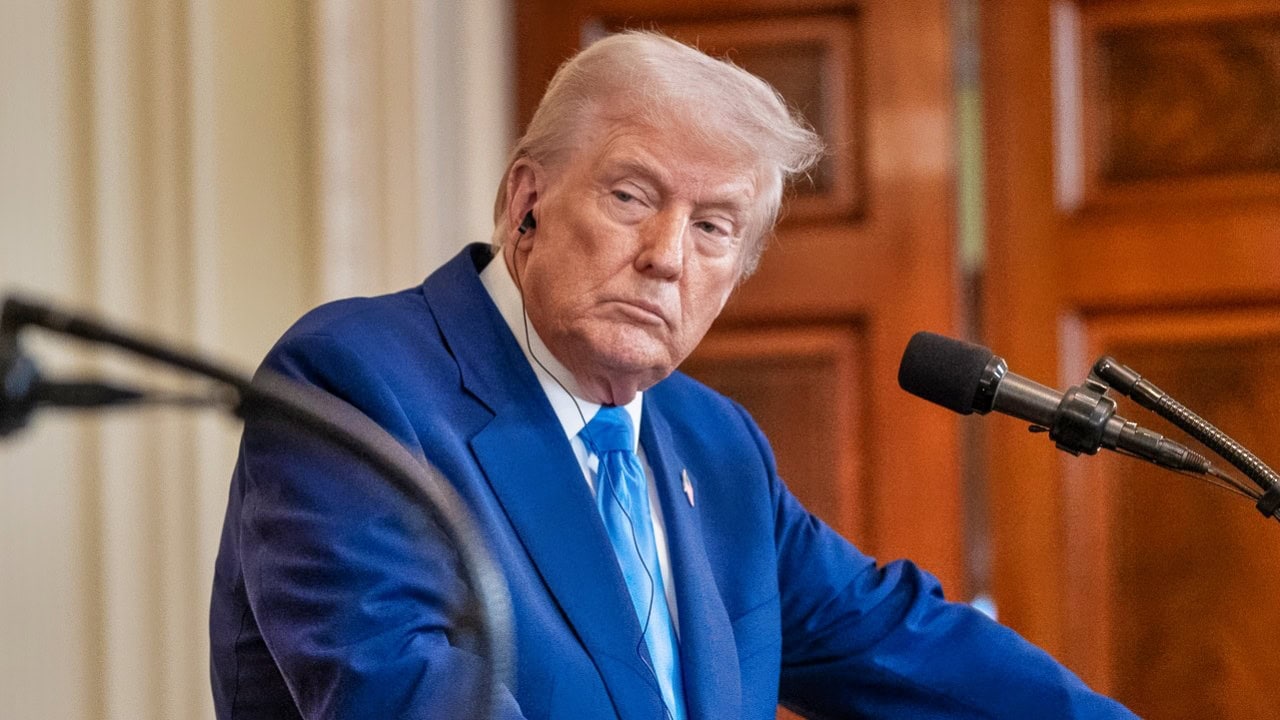
In recent weeks, Syria and Iraq have positioned themselves to be key players in a new Middle Eastern order. Iraqi Prime Minister Ali al-Zaidi was in Washington to meet U.S. President Donald Trump in mid-July. In addition, Syria’s President Ahmad al-Sharaa met Donald Trump on the sidelines of the NATO Summit in Turkey. These two meetings are crucial as the U.S. develops a policy and for partners in these important countries.
These developments have added significance because of the new tensions with Iran that spilled over on July 6th and 7th with Iran’s attacks on oil tankers in the Gulf. The U.S. responded to those attacks by striking Iranian infrastructure throughout the middle of July. What that means is that, while the United States is still dealing with Iran, it needs strong partners and allies in the rest of the region.
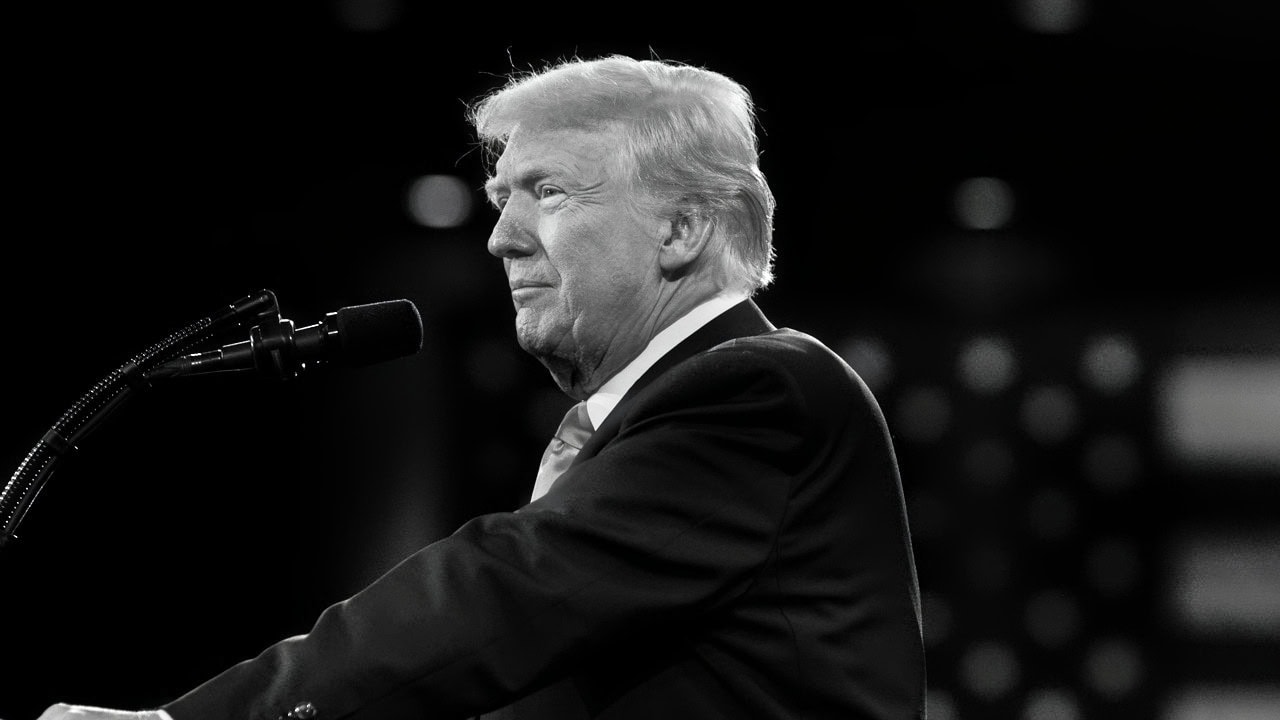
President Donald Trump speaks at the Conservative Political Action Conference at the Gaylord National Resort & Convention Center in Oxon Hill, Maryland, on Saturday, February 22, 2025. (Official White House Photo by Molly Riley
President Donald Trump has made important inroads in both Syria and Iraq since coming to office. In Syria, he has made it a point to engage with the new president. This happened early in his new term, with a meeting with the Syrian president in Saudi Arabia. This was followed up with another meeting later in 2025 at the White House. Each of these meetings has built on the others as the United States has worked to end sanctions on Syria and begin tentative steps to renew investment in Damascus.
What that means is that American oil and energy companies can begin to invest in the dilapidated and damaged infrastructure that exists in Syria. This is important because having American companies invest, such as Chevron or others, will tie Syria into the U.S. economy. In addition, it means that Syria will be well positioned to take advantage of working with other U.S. partners and allies, such as Saudi Arabia or the Gulf states, to help them export oil amidst the Iran conflict.
With the Iranian crisis growing in 2026, many of these countries are seeking new ways to export, with the Strait of Hormuz closed. That is why we are now seeing Iraq and Syria move to rehabilitate and revive pipelines and other transit points for energy and oil supplies. For instance, the Iraqis have been moving oil over land by truck through the Tanf Crossing, which is near the Iraq-Syria-Jordan border. In the past, the US helped train a Syrian rebel group based in Tanf. When the US wrapped up operations there, the group integrated with the Syrian security forces. This illustrates how American foresight during the war against ISIS may help secure a key strategic border crossing today.
This plugs into the U.S. policy that is being crafted through America’s ambassador to Turkey, Tom Barrack. Ambassador Barrack is also the U.S. Envoy to Syria and Iraq. The White House is signaling that it would like to work with these two countries and unify policy under one key diplomat. Washington’s policy here flows out of the Pentagon’s work at defeating ISIS in Iraq and Syria between 2014 and 2020. As such, the emerging view of Iraq and Syria and turning over a new leaf in partnership is an outgrowth of the successful war on ISIS. US forces are expected to leave Iraq in September 2026, transitioning to a new US-Iraq relationship. In Syria, a similar transition occurred with the beginning of integrating the US-backed Syrian Democratic Forces into the new security forces.
The new Iraqi Prime Minister, Ali al-Zaidi, came to power in part due to American pressure to keep the former Iraqi Prime Minister, Nouri al-Maliki, out of the Prime Minister’s office. With Zaidi secure in power by June 2026, he was able to make plans to go to the United States. He has now wrapped up more than a week of meetings in the United States, in which he met with President Trump, members of Congress, and many business people.
The big question in terms of Iraq and Syria and U.S. policy is: what comes next? In many ways, it makes sense from a historic point of view to see Iraq and Syria as deeply related. They are key countries that are part of the Levant. Both were important in the wake of the fall of the Ottoman Empire. Syria was a French mandate territory, while Iraq was a British mandate territory. Both countries are diverse, with Kurdish populations, Christians, Yazidis, and other groups such as Alawites and Druze. In many ways, they represent an important heartland of the Middle East, with Baghdad and Damascus having historically played a central role not only in Islamic civilization but in previous eras of the region.
For U.S. policymakers, there is a logic to viewing both countries as more than the sum of their parts. At the end of the colonial era, both of these countries had Baathist dictatorships in the form of Saddam Hussein and the Assad regime. Saddam Hussein invaded Kuwait in 1990, sparking the 1991 Gulf War, which brought the United States more deeply into the region. The fall of Saddam in 2003 led to some chaos in Iraq, and that also contributed to instability in Syria. Later, the Arab Spring set off a rebellion in Syria.
The U.S. for many years had a difficult challenge on its hands with both Iraq and Syria. Syria was a state closely aligned with the Soviet Union. Iraq also partnered with the Soviet Union. Therefore, the United States struggled, at least in the Cold War decades, to bring those countries into some sort of relationship with Washington. Outreach to Iraq in the 1980s, for instance, didn’t prevent the Kuwait invasion. The attempt to work with Syria during what was thought to be a thaw after the death of Hafez al-Assad and the rise of Bashar al-Assad came to nought. It is therefore very fortuitous that there are now leaders in both countries who are relatively young and who are open to working closely with the White House.
What comes next with U.S. policy in Iraq and Syria will largely be determined by several major factors. One of the questions is the role of Turkey and Iran. These are two large, powerful non-Arab states. Turkey is a NATO ally of the United States, while Iran is not only an adversary, but the United States is now at war with Iran. This will potentially set in motion many years of shifting policy in the region. That could include the collapse of the Iranian regime, various deals, or some sort of on-again, off-again conflict.
With that uncertainty, it’s important to keep Iraq and Syria stable. This will mean working with the Kurdistan region of northern Iraq, an autonomous region that is a close U.S. partner. It will also mean looking carefully at what happens when U.S. troops leave Iraq in September. Iranian-backed militias in Iraq will need to be disarmed and reined in by Baghdad. The new Iraqi prime minister has indicated that he’s willing to curtail the militias, but the United States will need to take efforts to keep the pressure on Baghdad to disarm the militias. The militias are the biggest threat to Iraq at the moment, including threats to the Kurdistan region and to U.S. diplomatic personnel, journalists, and Iraqis.
In Syria, the big question will be whether extremist groups like ISIS can be kept in check, and whether the Syrian government can work to reconcile with the Druze region of Suwayda and also potentially find some working relationship with Israel. The United States can play a key role in that.
About the Author: Seth J. Frantzman
Seth J. Frantzman is the author of The October 7 War: Israel’s Battle for Security in Gaza (2024) and an adjunct fellow at The Foundation for Defense of Democracies. He is a Senior Middle East Analyst for The Jerusalem Post. He was born in Maine and holds a PhD from The Hebrew University of Jerusalem. He is also the author of Drone Wars: Pioneers, Killing Machines, Artificial Intelligence, and the Battle for the Future. Seth is now a 19FortyFive Contributing Editor. Follow him on X @Sfrantzman.