
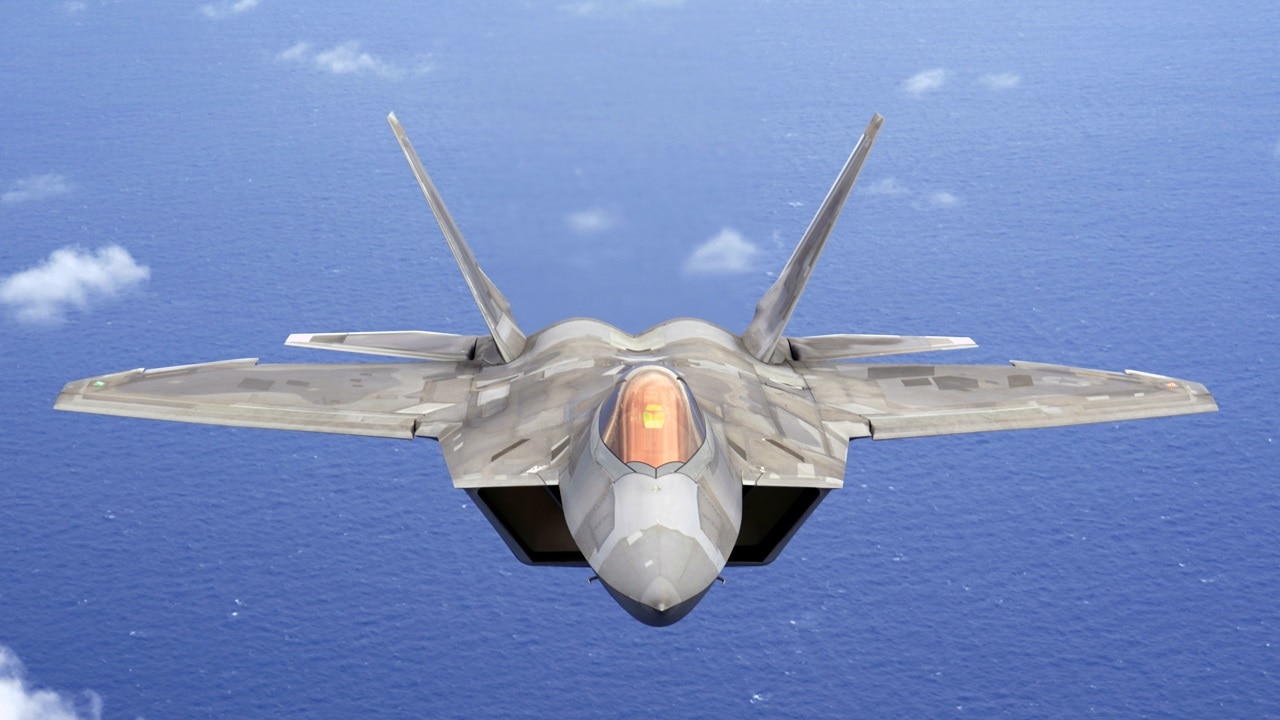
The US Air Force F-22 Raptor, arguably the most capable air-to-air fighter ever produced, had its production run capped at just 187 operational aircraft.
Yet the F-22 has still been barred from export, even to America’s closest allies. Japan, Australia, and Israel have all shown interest in acquiring the F-22, but Washington repeatedly said no.
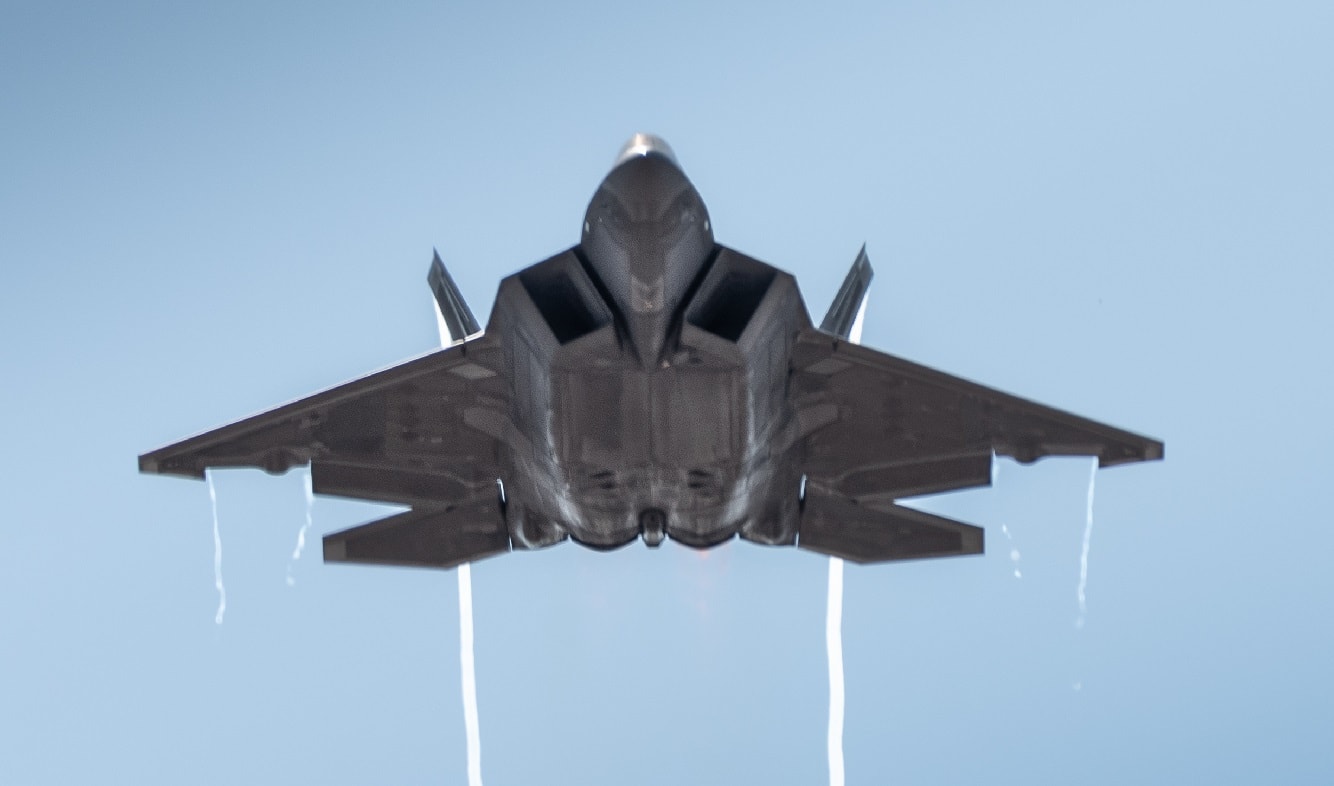
U.S. Air Force Maj. Paul Lopez, F-22 Demo Team commander, performs a high speed pass maneuver during the Fort Worth Alliance air show in Fort Worth, Texas, Oct. 19, 2019. Representing the U.S. Air Force and Air Combat Command, the F-22 Demo Team travels to 25 air shows a season to showcase the performance and capabilities of the world’s premier 5th-generation fighter. (U.S. Air Force photo by 2nd Lt. Sam Eckholm)
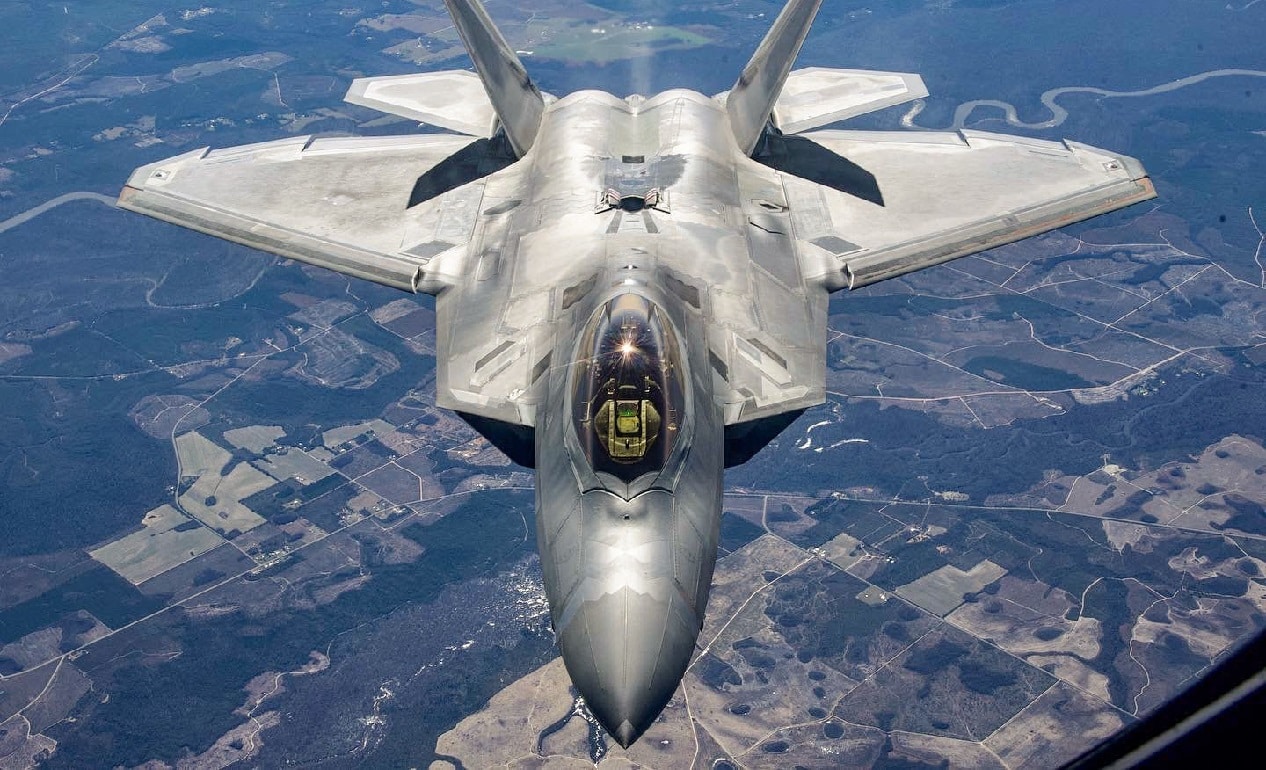
A U.S. Air Force KC-135 Stratotanker with the 434th Air Refueling Wing, Indiana, which had an aircrew with the 63rd Air Refueling Squadron, Florida, refuels a F-22 Raptor with the 325th Fighter Wing, Florida on February 23, 2021. The Stratotanker was on loan to MacDill Air Force Base. (U.S. Air Force photo by Senior Airman Tiffany A. Emery)
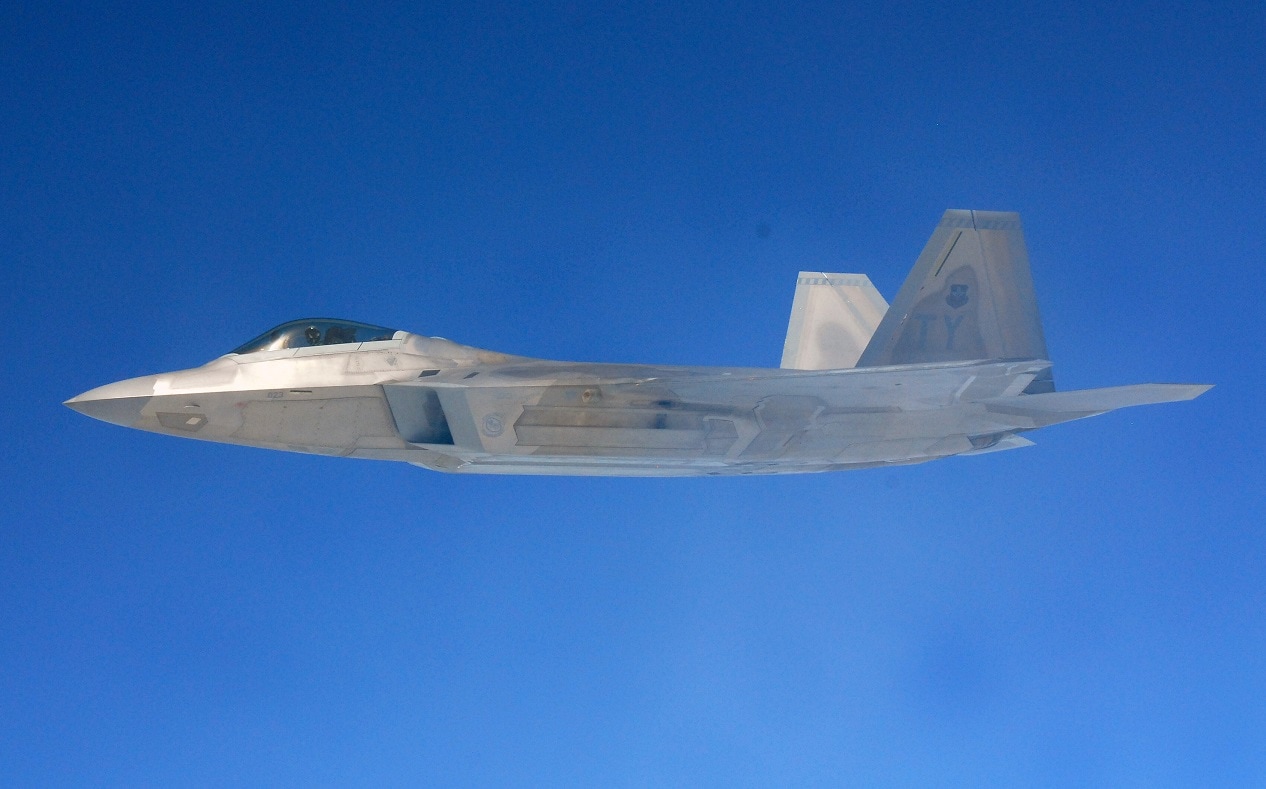
An F-22 Raptor from the 95th Fighter Squadron, Tyndall AFB, Florida, prepares to refuel mid-flight from a KC-135R Stratotanker from the 134th Air Refueling Wing, Tennessee.
And then Washington shut the production line down.
While this may seem like a paradox, there’s no real contradiction.
The cancellation was about cost, force structure, and the threat environment in a post-Soviet world.
The export prohibition was about guarding the technology that granted America the world’s best air superiority platform.
That America decided it only needed 187 F-22s doesn’t negate the fact that America didn’t want anyone else to have a single F-22.
A Sensitive Platform
The F-22 was treated with reverence and sensitivity.
Why? Because the F-22 represented a generational leap over the next best fighters, i.e., the F-15. And it’s not just that the F-22 was better; it’s that the F-22 was better at something that was essentially zero-sum: air dominance.
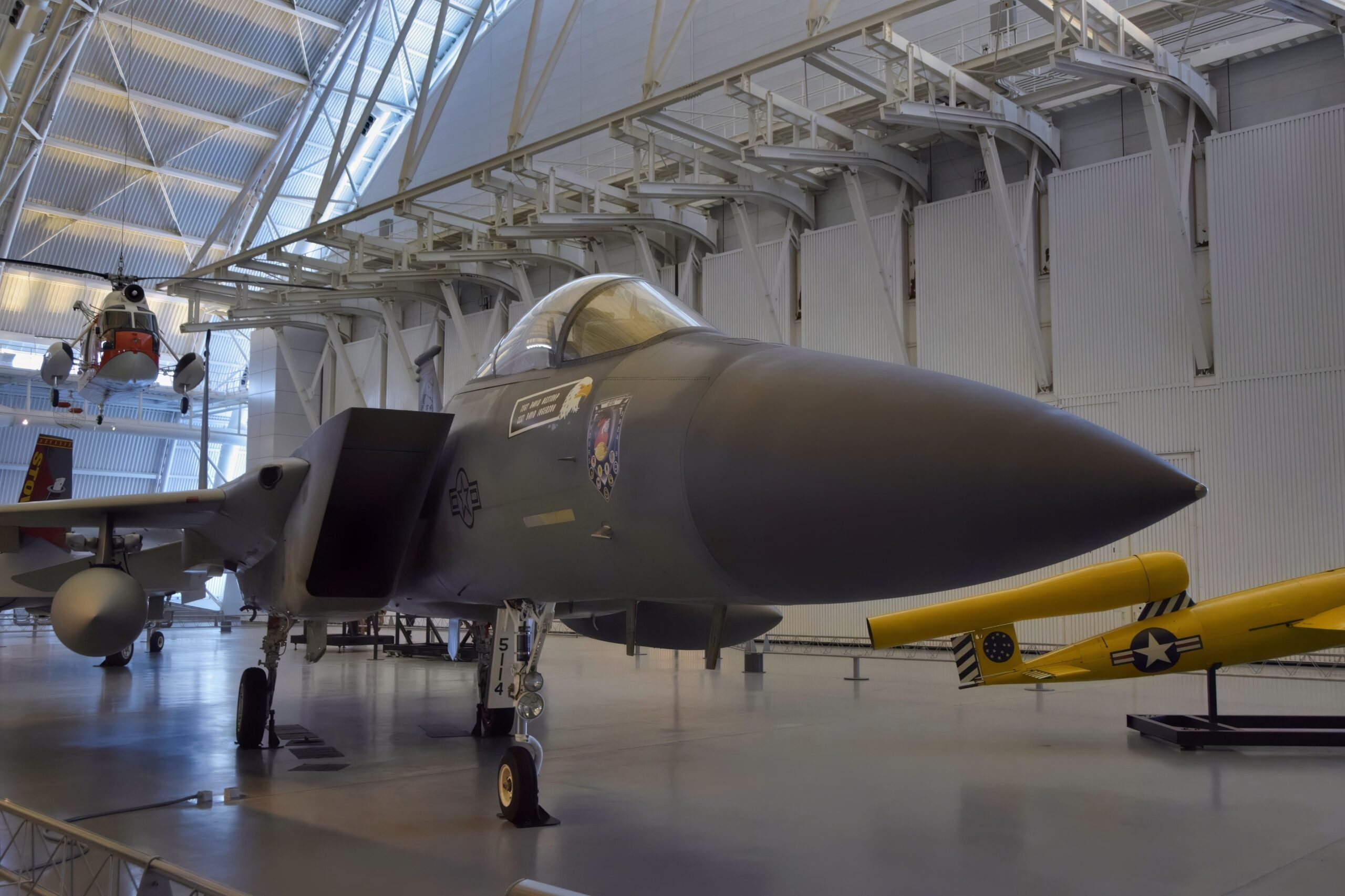
F-15C at the Smithsonian. 19FortyFive.com Image.
It would be one thing for a nation to be rivaled in ground-strike capabilities—two nations can both have superlative ground strike without canceling one another out.
But air superiority is head-to-head and zero-sum, so the F-22’s technology had to stay ahead of Soviet and Chinese tech.
The specific features that made the F-22 so special were a combination of technologies including extremely low radar cross-section, radar-absorbent materials and manufacturing techniques, internal weapons carriage, AN/APG-77 AESA radar, sophisticated electronic warfare, sensor fusion, secure communications, supercruise, and thrust vectoring.
The F-22 was stealthy and kinetically dominant. It could detect at range, engage, and kill an opponent before the opponent detected it.
The Pentagon didn’t want these capabilities outside of the US because technology tends to proliferate.
Seemingly innocent exposures can cascade: maintenance personnel see the aircraft, contractors gain access, software and technical documentation get out, and intelligence services target foreign operators.
Every additional country operating the F-22 would have created a unique opportunity for Russia or China to learn something about the technology.
Congress Said No
In 1998, Congress enacted the “Obey amendment,” which prohibited the Defense Department from approving or licensing F-22 exports.
This made the F-22 unusual—even among America’s most sophisticated weapons. Washington would eventually export F-15s, F-16s, and even F-35s.
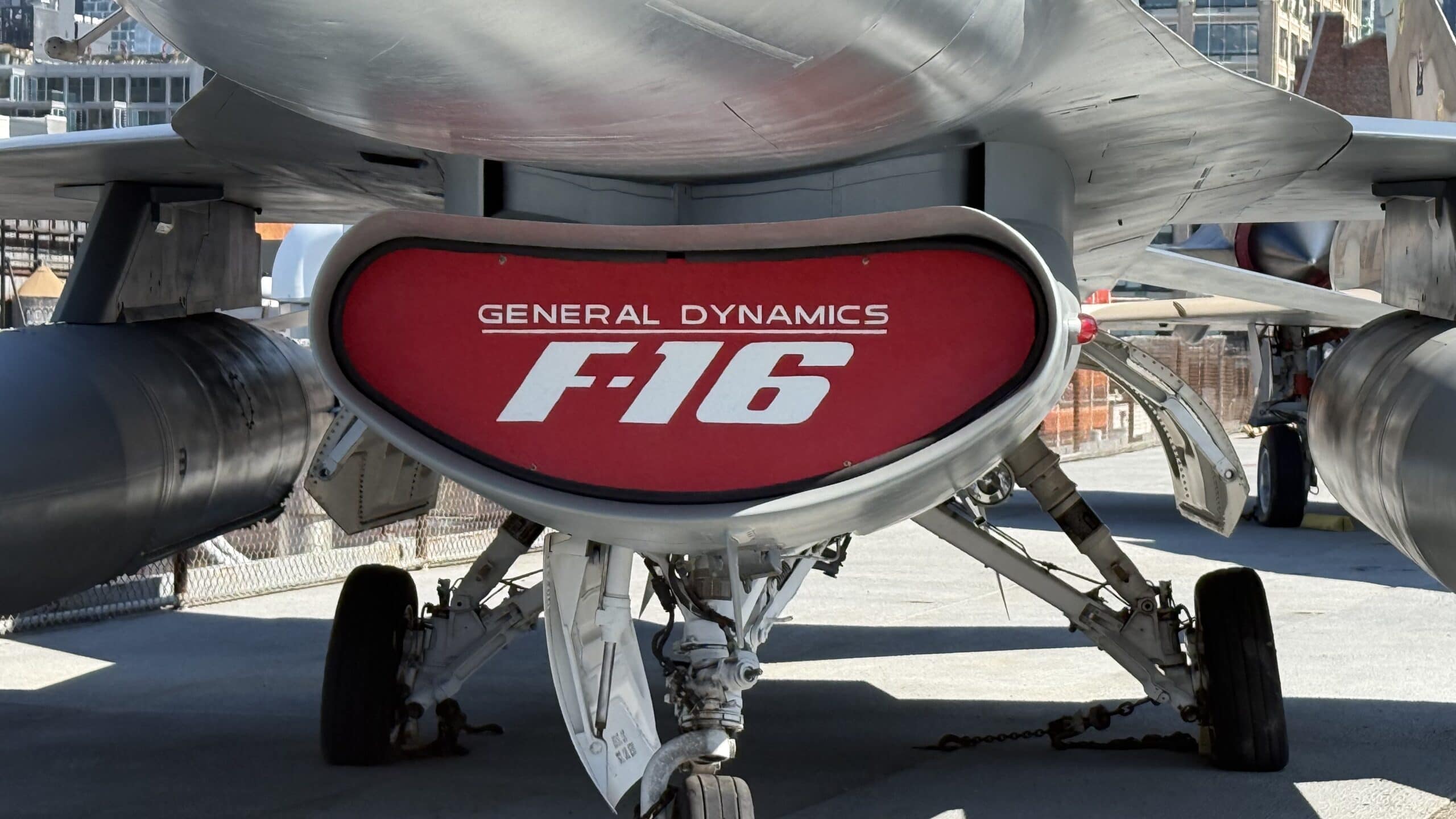
F-16 On Flight Deck of USS Intrepid. 19FortyFive.com Image.
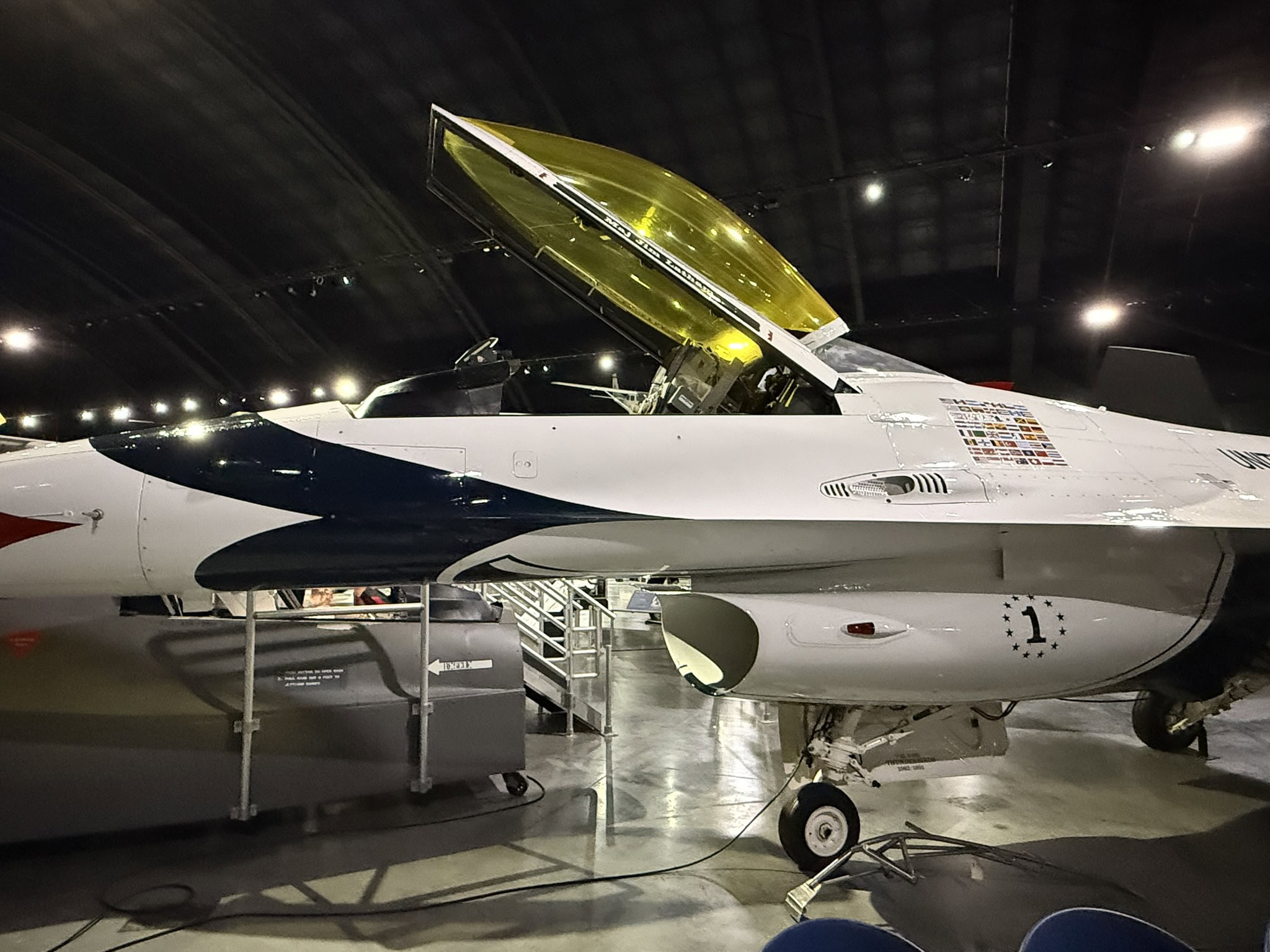
F-16 Fighter. 19FortyFive.com Image from the National Museum of the U.S. Air Force.
But never a single Raptor. Japan was especially interested because the F-22 seemed almost perfectly suited to Japan’s requirement for a long-range, high-performance air-superiority fighter facing China and Russia.
The US even considered an export model, potentially with sensitive systems removed or modified.
But developing an export-safe F-22 would have itself cost billions, because you couldn’t just remove a simple component and ship the jet to Tokyo.
No, the aircraft’s sensitive technology was interwoven, baked in, and fundamental to the platform.
Killing the Raptor
Despite the F-22’s impressive performance profile, the platform was incongruous with the post-Soviet threat environment.
The aircraft had been conceived for high-end air war against the Soviet Union. Instead, by the 2000s, America was embroiled in Middle Eastern wars.
Neither Iraq nor Afghanistan had the luxury of high-end fighters or integrated air-defense networks.
The Raptor was severely overmatched for the environment.
And because F-22 procurement was so expensive, while the Pentagon’s needs had shifted towards ISR, helicopters, drones, etc., F-22 production became something of a burden.
Defense Secretary Robert Gates opposed continued Raptor production, and the Obama administration ultimately capped procurement in 2009. The final F-22 was delivered in 2012.
But even by 2012, the planned quantities had already collapsed dramatically. The original plan called for 750 aircraft.
That target kept diminishing through the 1990s and 2000s. Ultimately, only 195 production F-22s, including test aircraft, were built.
Only 187 ever became operational. The Pentagon had already shifted its fifth-generation hopes to the more scalable F-35.
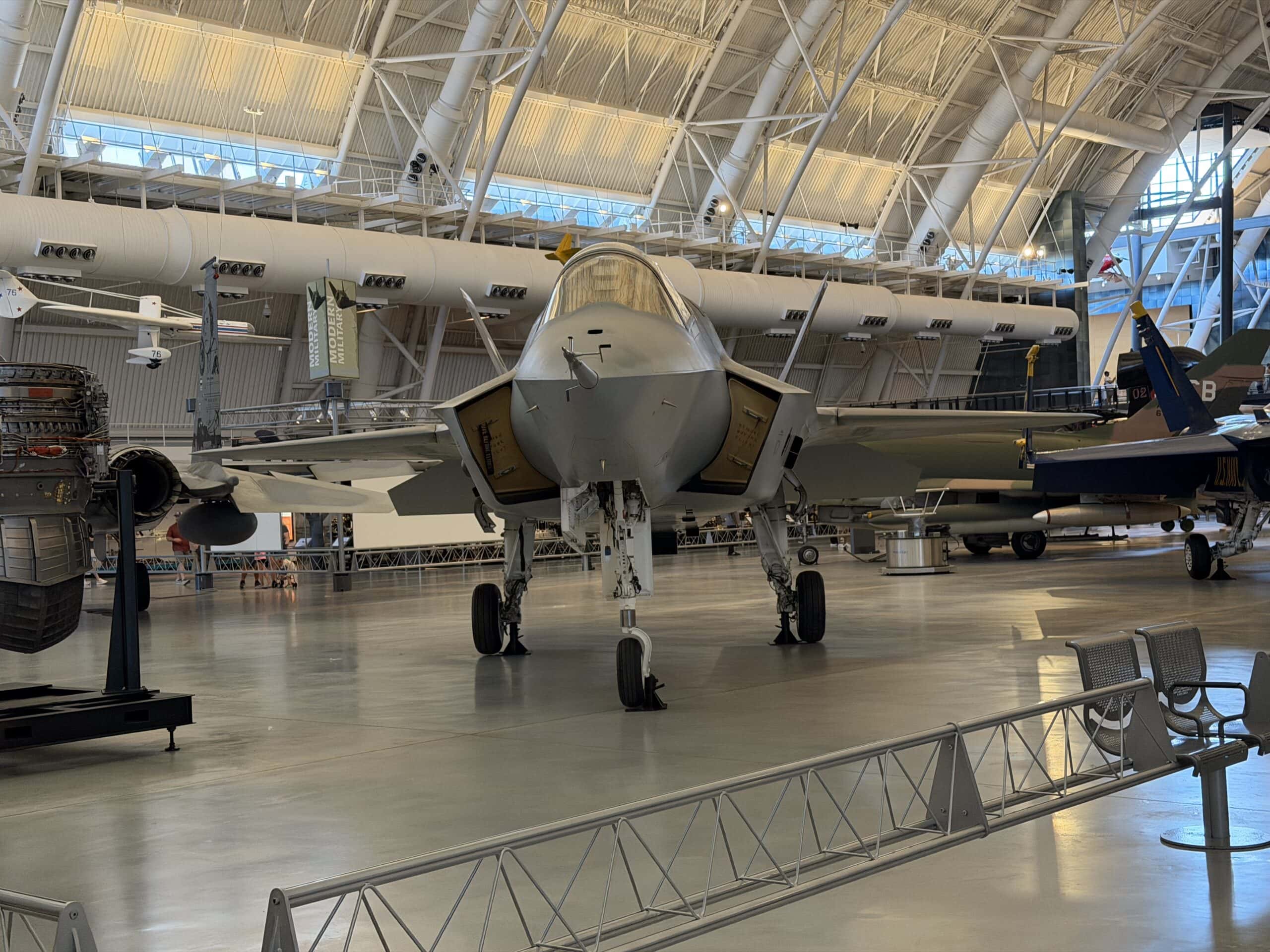
F-35 at the Smithsonian 19FortyFive Photo
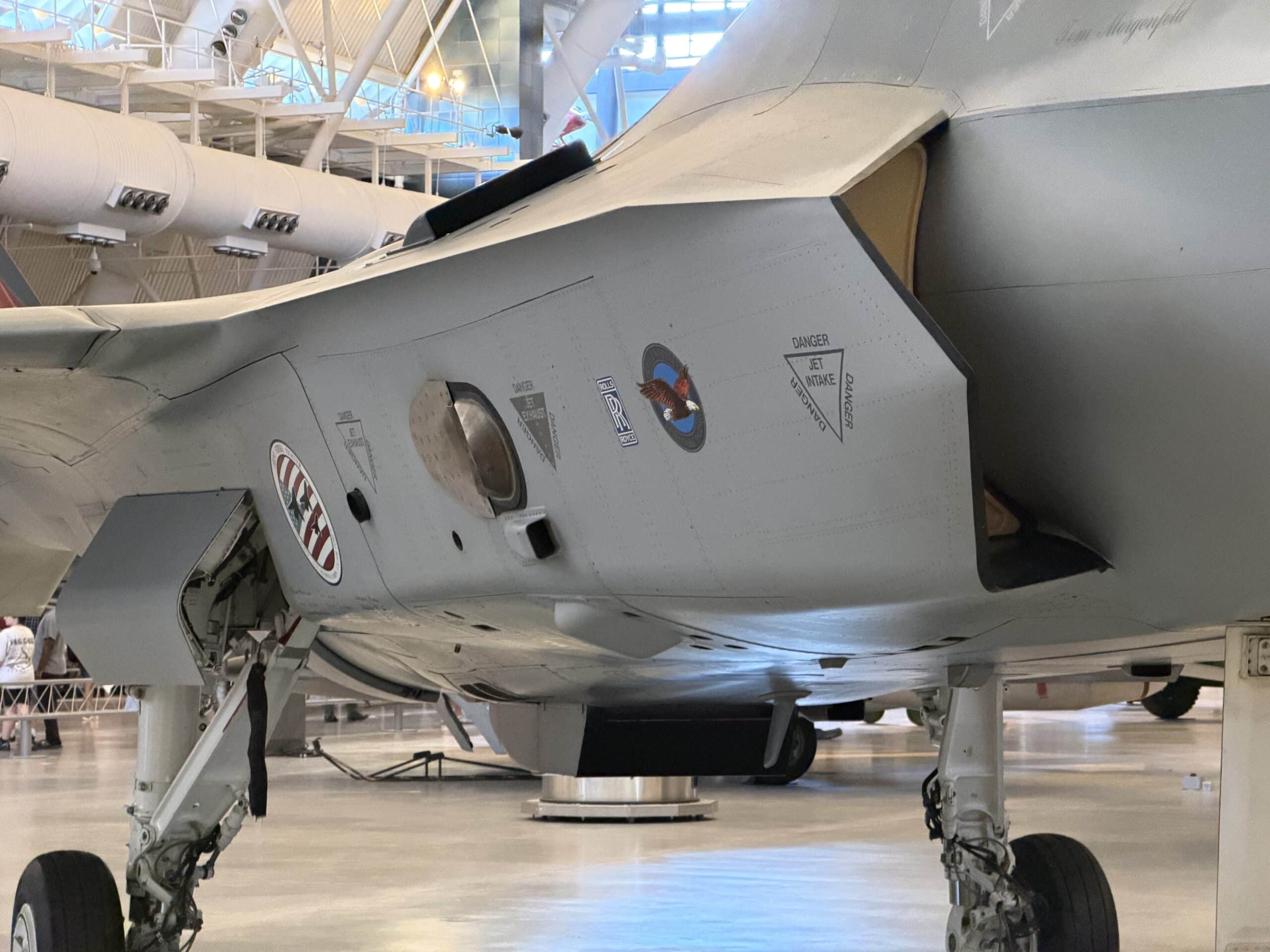
F-35 at the Smithsonian. Image taken on 7/8/2026 by 19FortyFive Staff.
Of course, the decision looks different now; China’s military modernization has accelerated since 2012, with the J-20 stealth fighter emerging. Russia has introduced increasingly capable aircraft, including the Su-57. In short, great power competition is returning, which is exactly the game for which the Raptor was built.
About the Author: Harrison Kass
Harrison Kass is a writer and attorney focused on national security, technology, and political culture. His work has appeared in Tablet, City Journal, The Hill, The Spectator, and The Cipher Brief. He holds a JD from the University of Oregon and a master’s in Global & Joint Program Studies from NYU. More at harrisonkass.com.