
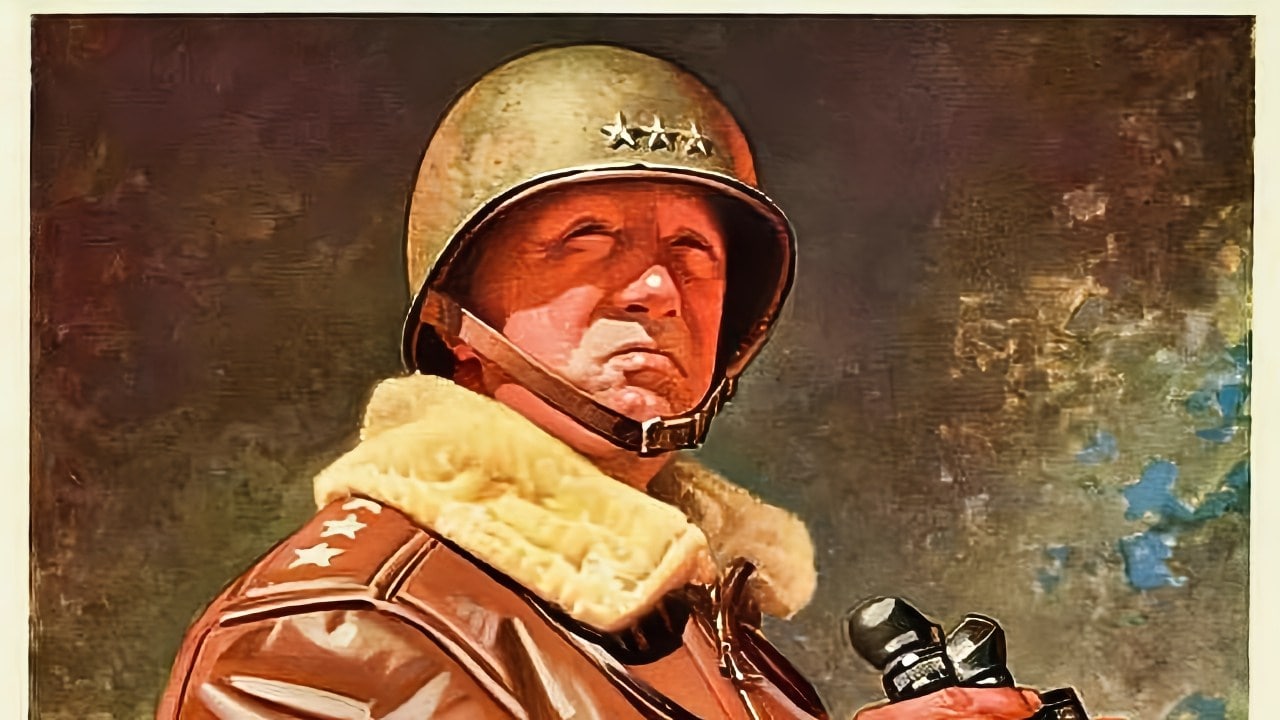
Army Quote of the Day by General George Patton: ‘A Good Plan, Violently Executed Now, Is Better Than a Perfect Plan Next Week’: George S. Patton never saw the book that made him immortal. He died in December 1945, days after a road accident in occupied Germany, and in 1947, his widow, Beatrice, shepherded his wartime writings into print as War As I Knew It.
Buried in its reflections are fourteen words of doctrine that I say is the best armed forces quote around – and it gets missed far too often: “A good plan violently executed now is better than a perfect plan next week.”
The internet has spent decades garbling the line, adding words the book never printed, but the original is sharper than the imitations, and so is the sentence that follows it, where Patton names war’s determining characteristics as “self-confidence, speed, and audacity.”
Those fourteen words are not a slogan.
They are the operating system of the most feared field commander America produced in the Second World War, and one December week in 1944 proved them true before the whole world.
The Doctrine Before the Proof
Let’s start with this: understand what the sentence rejects. Every army contains officers who mistake preparation for progress, who polish plans while opportunities die of old age.
Patton’s insight was that time is a weapon that only fires once: an imperfect blow delivered while the enemy is off balance beats a masterpiece delivered after he has recovered, because the enemy is a moving target and the perfect plan describes a battlefield that no longer exists.
He had spent a career loading that gun, for sure.
He rebuilt the shattered II Corps in North Africa in days after Kasserine Pass and had it winning within a month; in Sicily, he turned a supporting role into a race, taking Palermo and then Messina at a pace that embarrassed allies and enemies alike.
France at 150 Miles a Day
The doctrine got its laboratory on August 1, 1944, when the Third Army activated in Normandy as the German front cracked open.
Where other commanders consolidated, Patton poured armor through the gap and kept pouring, bypassing strongpoints, using fighter-bombers as his flank guard, and treating supply officers’ despair as evidence of success.
His columns at one point covered 150 miles in 19 hours; the army that had waited two months in the hedgerows crossed France in four weeks. It was a violent execution as an operating tempo, and the Germans, whose doctrine had invented the concept, recognized exactly what was being done to them and feared him for it.
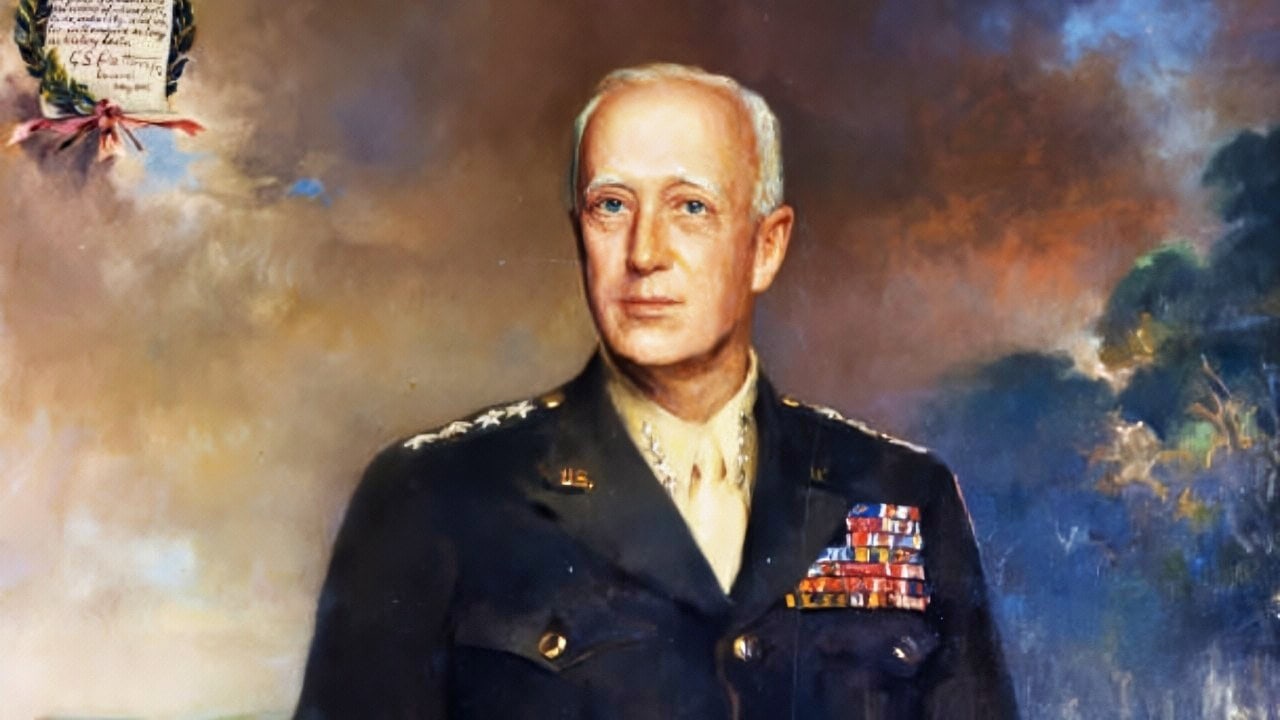
Portrait of Army General Patton. Image Credit: Creative Commons.
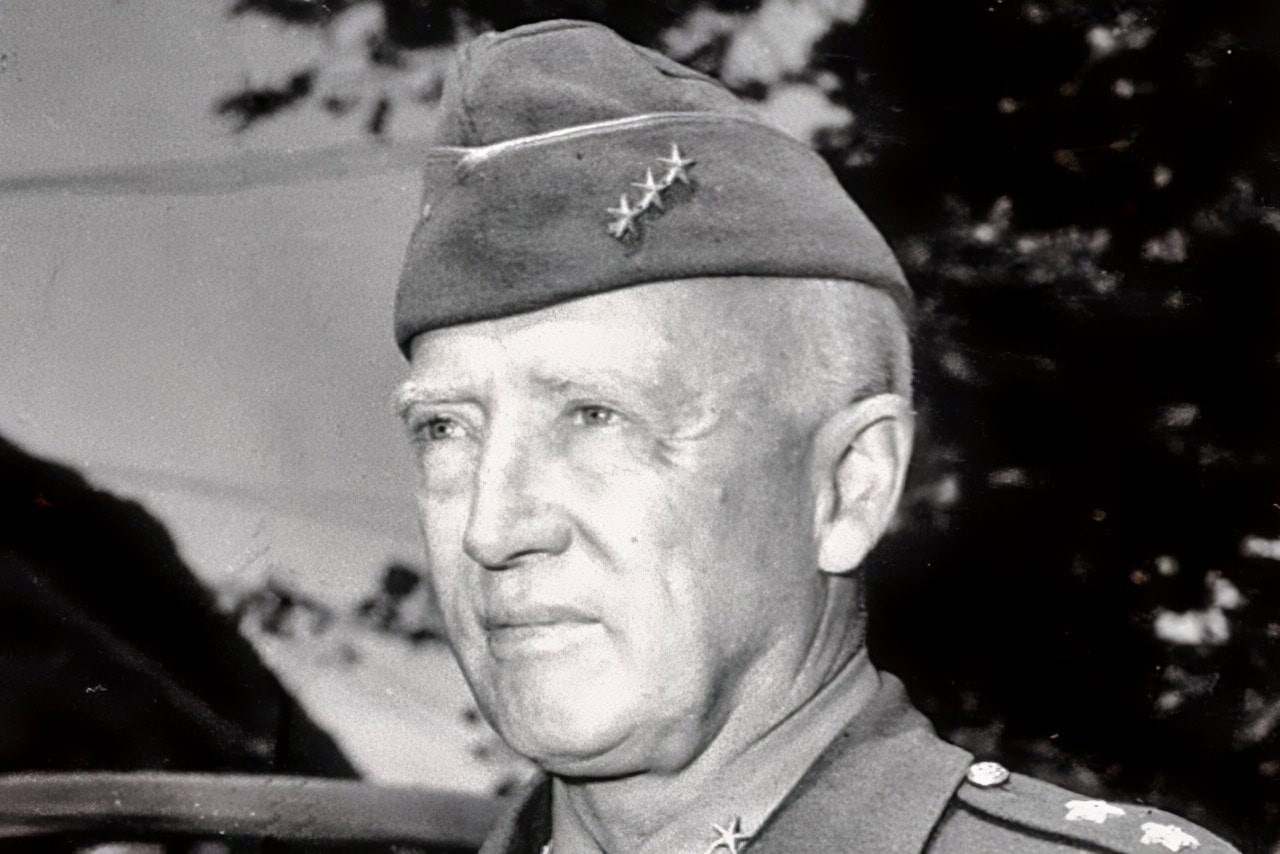
George S. Patton Quote of the Day. Creative Commons Image.
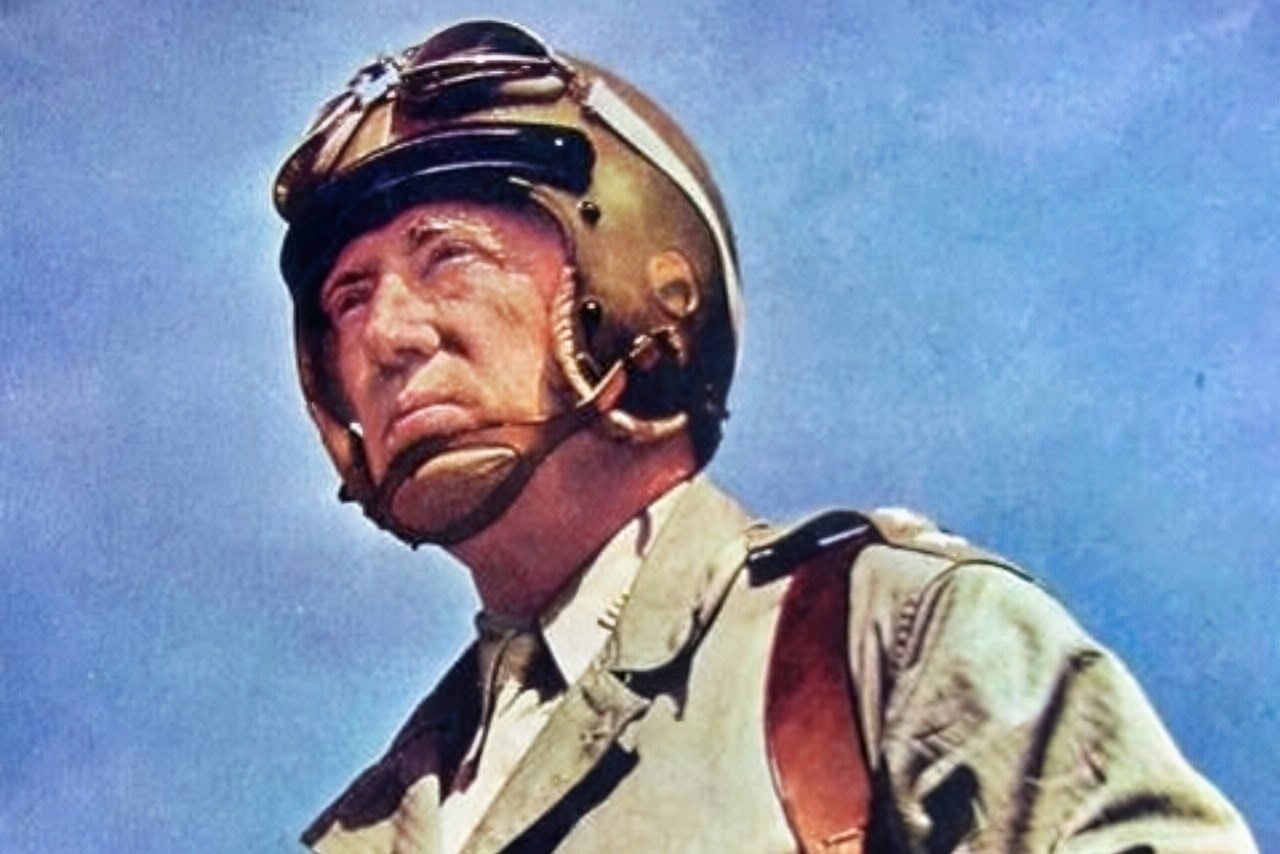
General George Patton of the U.S. Army. Image Credit: Creative Commons.
Forty-Eight Hours in December
Then came the proof that settled the argument permanently. On December 16, 1944, Hitler’s last great offensive tore through the Ardennes, swallowing whole American divisions and surrounding the 101st Airborne at Bastogne.
On December 19, Eisenhower summoned his commanders to Verdun and asked when anyone could counterattack. Patton answered that he could attack with three divisions in forty-eight hours, a claim so outrageous the room reportedly laughed. It was not bravado; it was the quote in action.
Anticipating the crisis, Patton had come to the conference with three attack options already planned, each reduced to a code word, so that executing the chosen one required a single phone call.
What followed was the finest operational feat of the American war: roughly a quarter-million men and their guns, fuel, and hospitals disengaged from an eastward battle in the Saar, pivoted ninety degrees, and attacked north through the worst winter in fifty years, on schedule, on December 22.
Four days later, the 4th Armored Division punched through at Assenois into Bastogne, and by January 16, the Third Army had helped seal the Bulge shut. A perfect plan for that maneuver would have taken weeks that the trapped paratroopers did not have. The good plan, violently executed now, arrived in time.
Patton the Man
Genius is not sainthood, and the record says both. In 1943, Patton had struck two hospitalized soldiers in Sicily, disgracing himself, and he spent months sidelined as a decoy commander whose mere presence pinned German attention, which is its own strange tribute.
Restored to command, he repaid the second chance across France, through the Ardennes, and over the Rhine, which his troops crossed by stealth at Oppenheim in March 1945, a day ahead of the elaborately prepared crossing to the north, a timing Patton did not consider coincidental.
Nine months later, he was dead at sixty, and two years later, the book appeared, fixing the doctrine in print precisely as the officers who would fight the next several wars were forming their ideas.
The sentence has since escaped the military entirely in some respects, quoted in boardrooms and locker rooms by people who have never heard of Assenois.
But it’s proof remains that December week: three divisions, forty-eight hours, ninety degrees, and a battered airborne division that got its good plan now instead of a perfect one the following week, by which time there would have been nothing left to save.
MORE: How the Iowa-Class Battleship Made the Ultimate Comeback
About the Author: Harry J. Kazianis
Harry J. Kazianis (@Grecianformula) was the former Senior Director of National Security Affairs at the Center for the National Interest (CFTNI), a foreign policy think tank founded by Richard Nixon based in Washington, DC. Harry has over a decade of experience in think tanks and national security publishing. His ideas have been published in the NY Times, The Washington Post, The Wall Street Journal, CNN, and many other outlets. He has held positions at CSIS, the Heritage Foundation, the University of Nottingham, and several other institutions related to national security research and studies. He is the former Executive Editor of the National Interest and the Diplomat. He holds a Master’s degree focusing on international affairs from Harvard University.

