
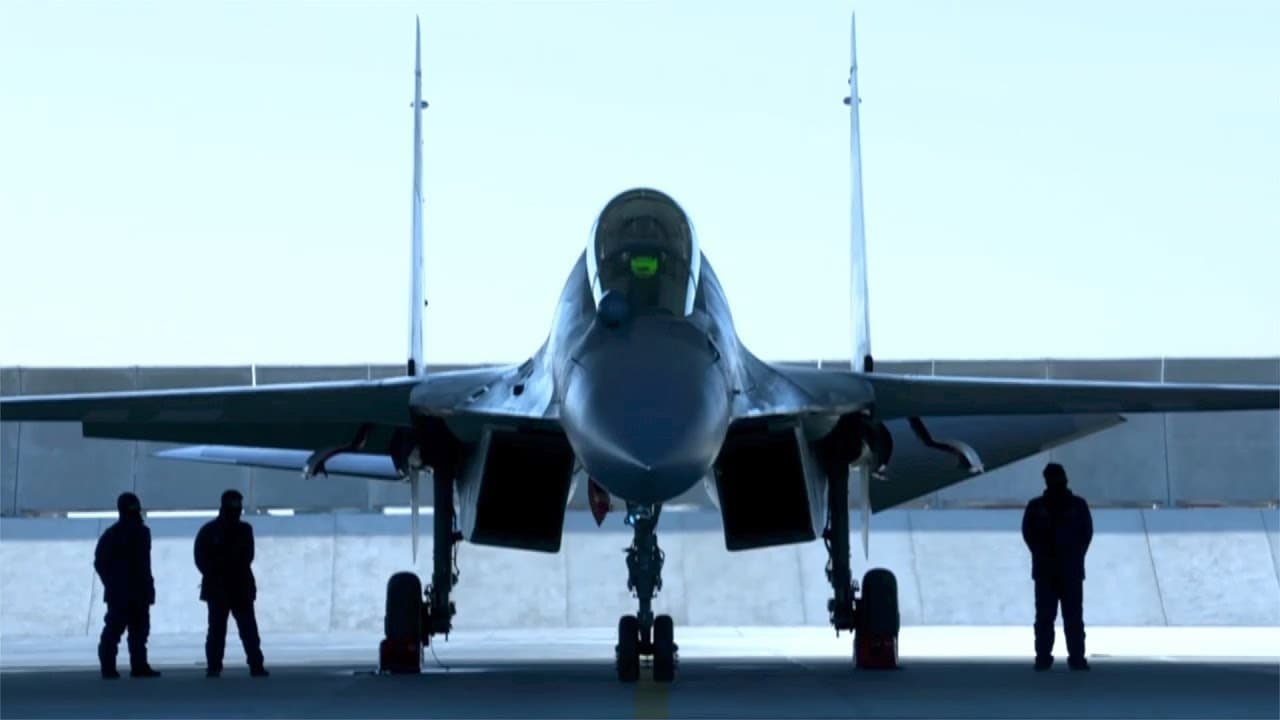
During the 2019 Shaheen joint exercises in Pakistan, PLAAF J-16 fighters reportedly achieved 51 simulated air-to-air kills against five different fighters, including the J-10C, J-11B, JF-17, J-7, and Mirage III. That the J-16 dominated against Pakistan’s aging Mirage III and J-7 fleets isn’t particularly surprising. What’s more notable is how effective the J-16 was against the J-11B and J-10C, which are much more modern Chinese fighters. Of course, exercise kill ratios are not a direct equivalent to combat kill ratios. Exercises impose specific rules, starting positions, objectives, and information-sharing protocols that may differ significantly from combat situations.
Regardless, the exercise results demonstrate confidence in the J-16’s performance capabilities, suggesting China was wise to invest so heavily in the platform.
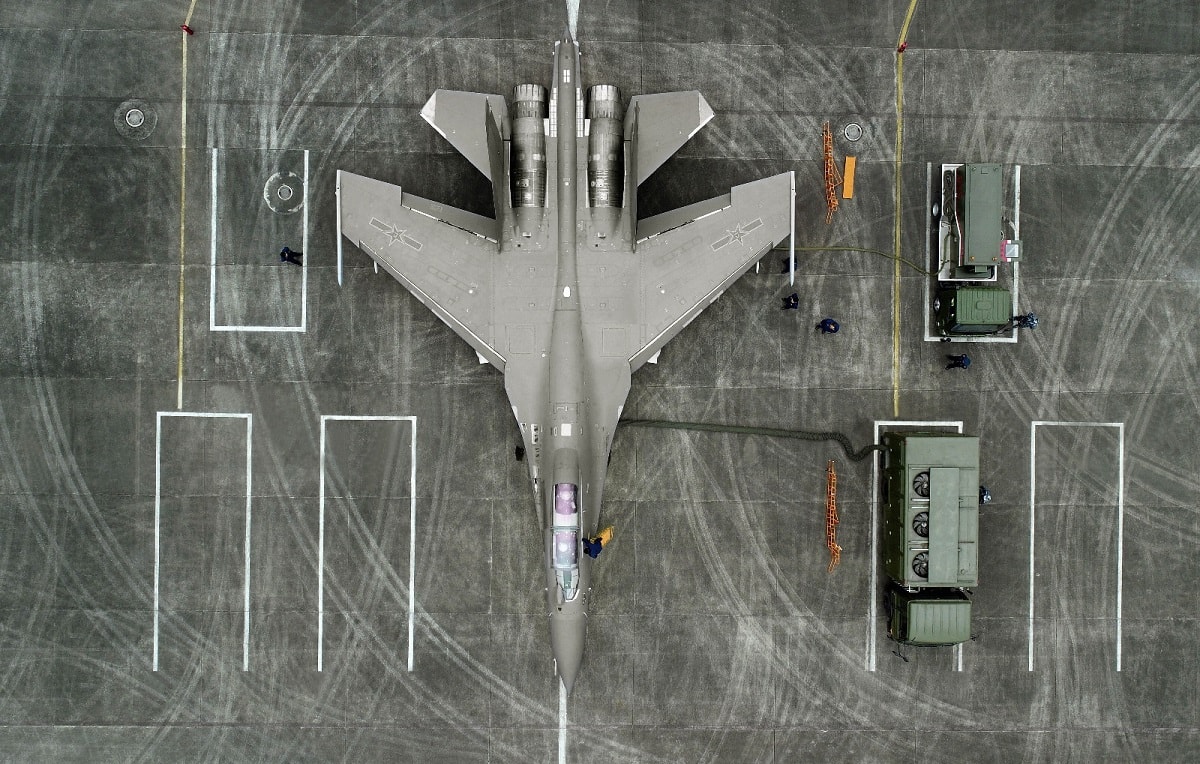
J-16 fighter. Image: Creative Commons.
What is the J-16?
The J-16 is a large, twin-engine, two-seat multirole fighter, descended from the Soviet Su-27 Flanker family. On sight, the J-16 looks like another Flanker. But from a technological perspective, the J-16 is more advanced, as it was developed alongside China’s J-20 fifth-generation program and incorporates insights gained from that program.
Specifically, the J-16 is believed to have incorporated extensive use of composite materials, a reduced radar signature relative to earlier Flankers, modern digital avionics, a powerful AESA radar, sophisticated electronic warfare systems, and modern Chinese air-to-air missiles.
The end result is believed to resemble the F-15E, that is, a large aircraft with enormous range, payload, and electrical capacity.
Bigger and Better
Modern fighter combat is rarely about WVR dogfighting; who turns tighter is no longer a relevant consideration. So aircraft often benefit from being larger; the fact that they can’t maneuver as tightly isn’t necessarily an operational downside.
The J-16 was crafted accordingly, with a large nose that provides room for a much larger radar aperture than a lightweight fighter could accommodate.
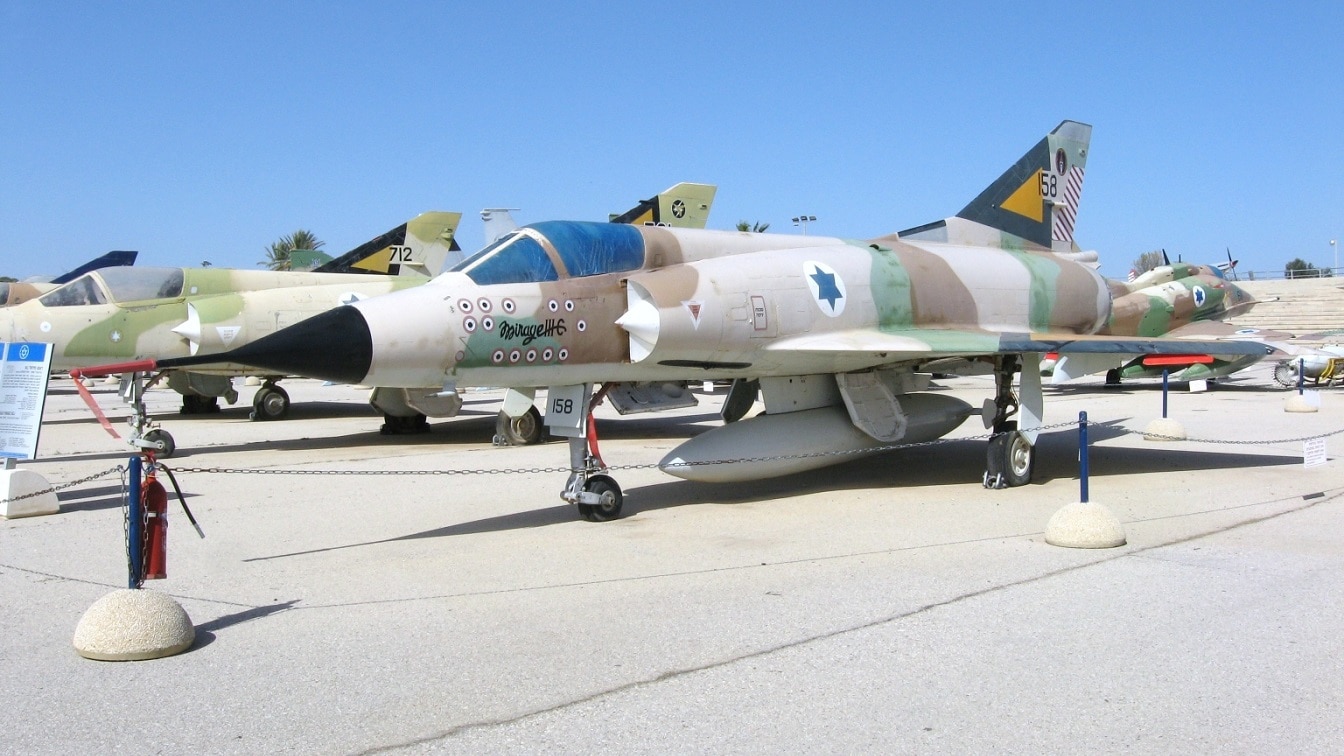
Israeli Air Force Mirage IIICJ 158 at the Israeli Air Force Museum in Hatzerim. Bears 13 kills markings and the colours of 101 Squadron.
The onboard AESA radar is much more effective than a mechanically steered antenna, offering advantages such as rapid beam steering, simultaneous tracking of multiple targets, enhanced reliability, greater resistance to electronic attack, and potential electronic warfare applications.
Bigger aircraft also provide more electrical generation, cooling capacity, and physical volume for EW equipment, fuel, and weapon payloads. During the 2019 Shaheen exercise, these capacities were reportedly leveraged, with the J-16 jamming the radar of opposing fighters.
Adding the PL-15
The J-16 can carry China’s modern PL-15 beyond-visual-range missile alongside short-range PL-10s. The typical loadout appears to consist of eight PL-15s and two PL-10s.
This heavy payload creates another advantage over lightweight fighters: the ability to keep fighting persistently. A fighter carrying only four BVR weapons can exhaust its stores quickly, becoming irrelevant in the process. If the J-16 can carry eight BVR weapons, the jet can potentially engage multiple targets, launch missiles in salvos, and remain in the fight.
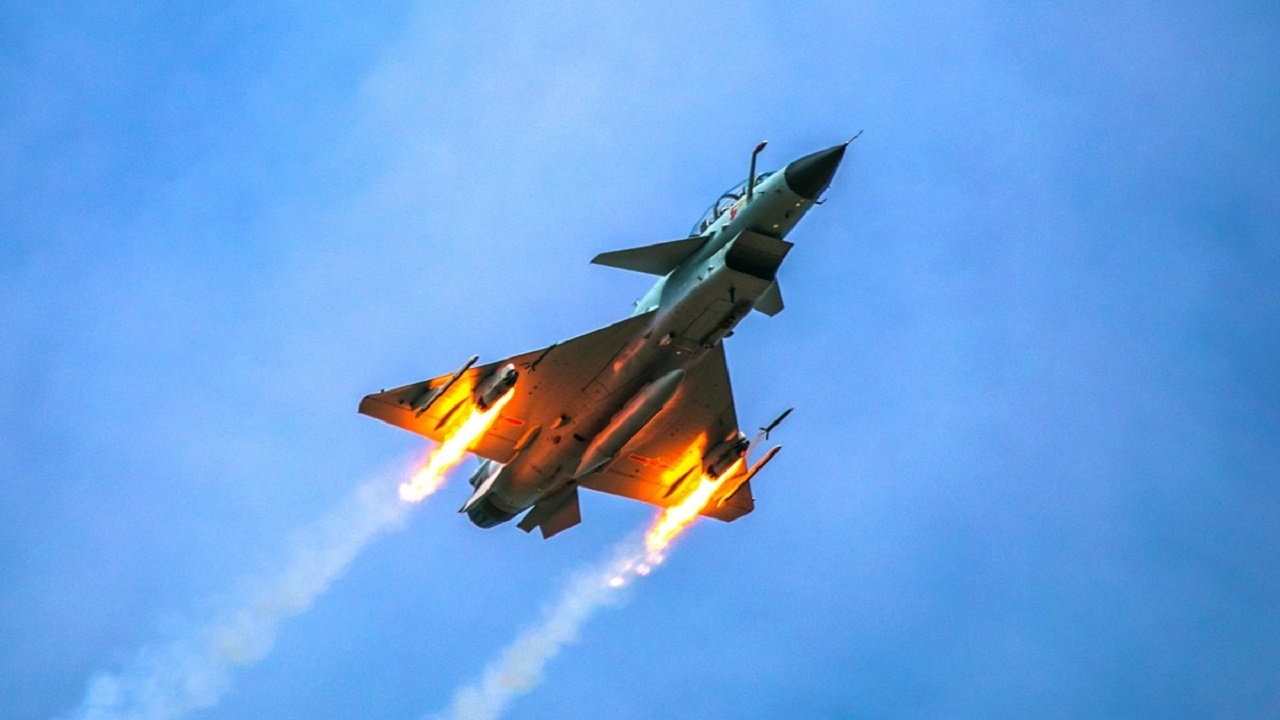
J-10 Fighter. Image Credit: Creative Commons.
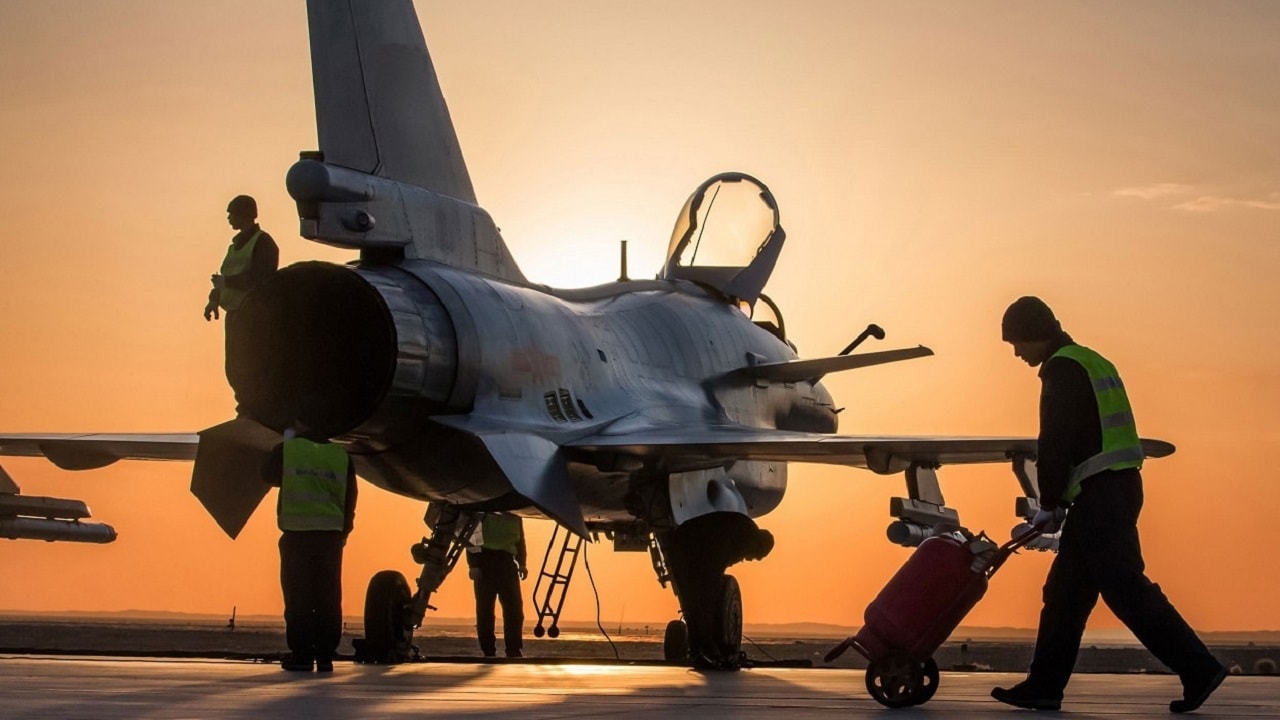
Chinese J-10 fighter. Image Credit: Creative Commons.
The two-person cockpit (again, a benefit of larger size) allows for a divided workload; the pilot concentrates on flying, while the back-seater manages sensors, EW, weapons, and the wider battlespace. And as warfare evolves, becoming more about information management than actual dogfighting, the back-seater becomes more relevant.
Beating the J-10C
The most interesting matchup from Shaheen, arguably, was with the J-10C, which shares overlapping technology with the J-16, including AESA radar, the PL-15, and modern avionics and EW.
But the J-10C is a lighter, single-engine fighter built to be affordable. The J-16, meanwhile, offers a large radar, twin engines, greater range, more weapons, and a second crew member.
That doesn’t mean the J-16 is outright better from a strategic perspective; the J-10C is meant to complement the J-16, because China can buy larger numbers of the cheaper J-10C affordably, while using the J-16 where range, payload, and EW are more important.
Looking Ahead
The J-16 appears to be a competent aircraft, well-suited for China’s maritime theater, including Taiwan, the East China Sea, and potentially the Philippine Sea. This theater rewards long range, heavy missile loads, and just general endurance.
The J-16 offers these capabilities. And when paired with the J-20, which can exploit its stealth performance to penetrate and detect targets, the J-16 can follow, providing a much larger magazine (while the J-10C provides combat mass).
In unison, these aircraft suggest a layered approach to Chinese air combat, tailored to the specific needs of its geographically expansive environment.
About the Author: Harrison Kass
Harrison Kass is a writer and attorney focused on national security, technology, and political culture. His work has appeared in Tablet, City Journal, The Hill, The Spectator, and The Cipher Brief. He holds a JD from the University of Oregon and a master’s in Global & Joint Program Studies from NYU. More at harrisonkass.com.