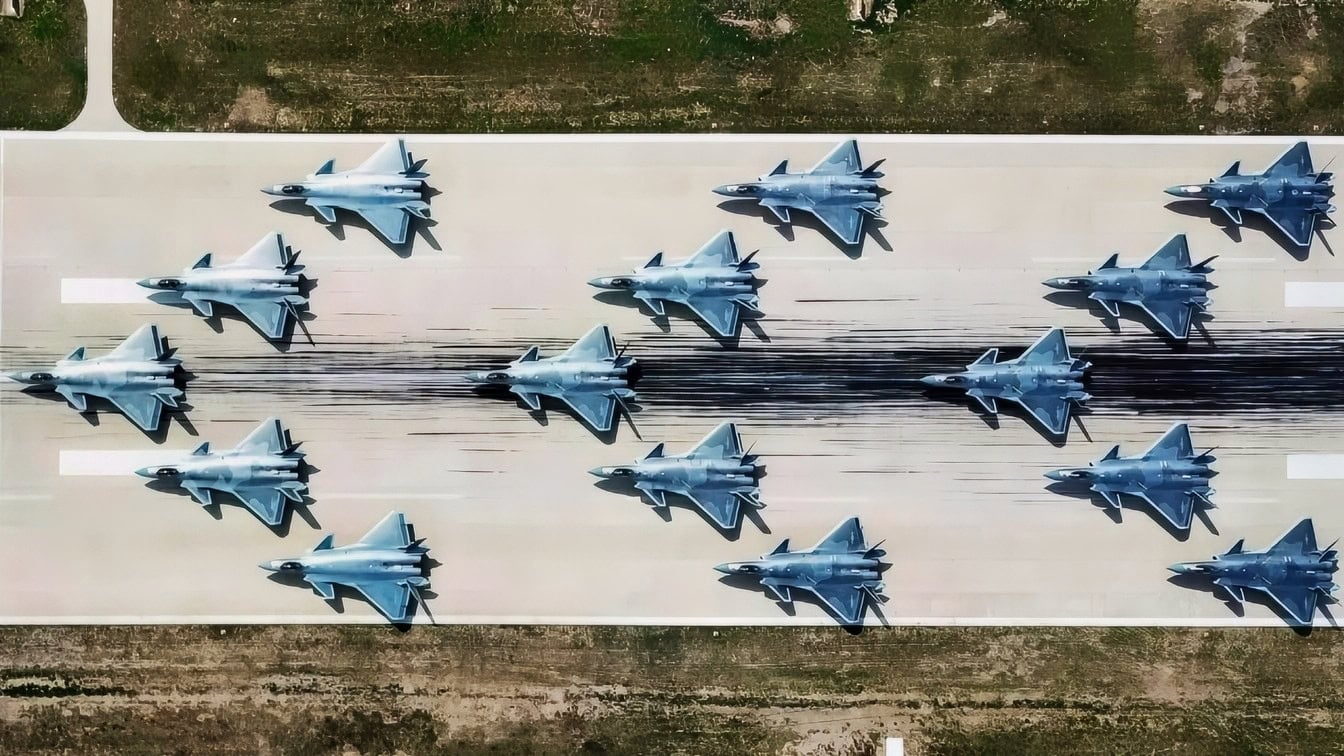
A June 2026 live-fire exercise conducted by the People’s Liberation Army (PLA) 84th Army Aviation Brigade has understandably worried some American analysts.
Those live-fire exercises apparently included attacks on mockups of Humvees and Patriot PAC-3 missile launchers used by the United States Army.
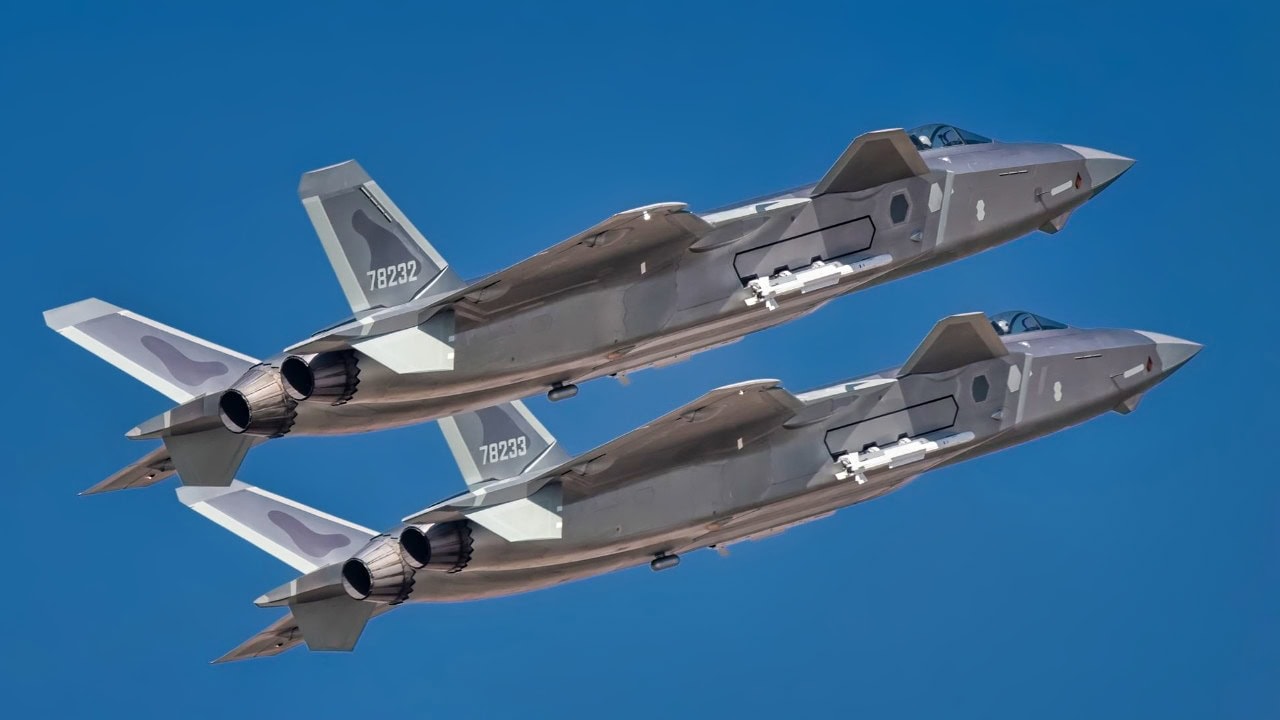
J-20 Mighty Dragon. Image Credit: Creative Commons
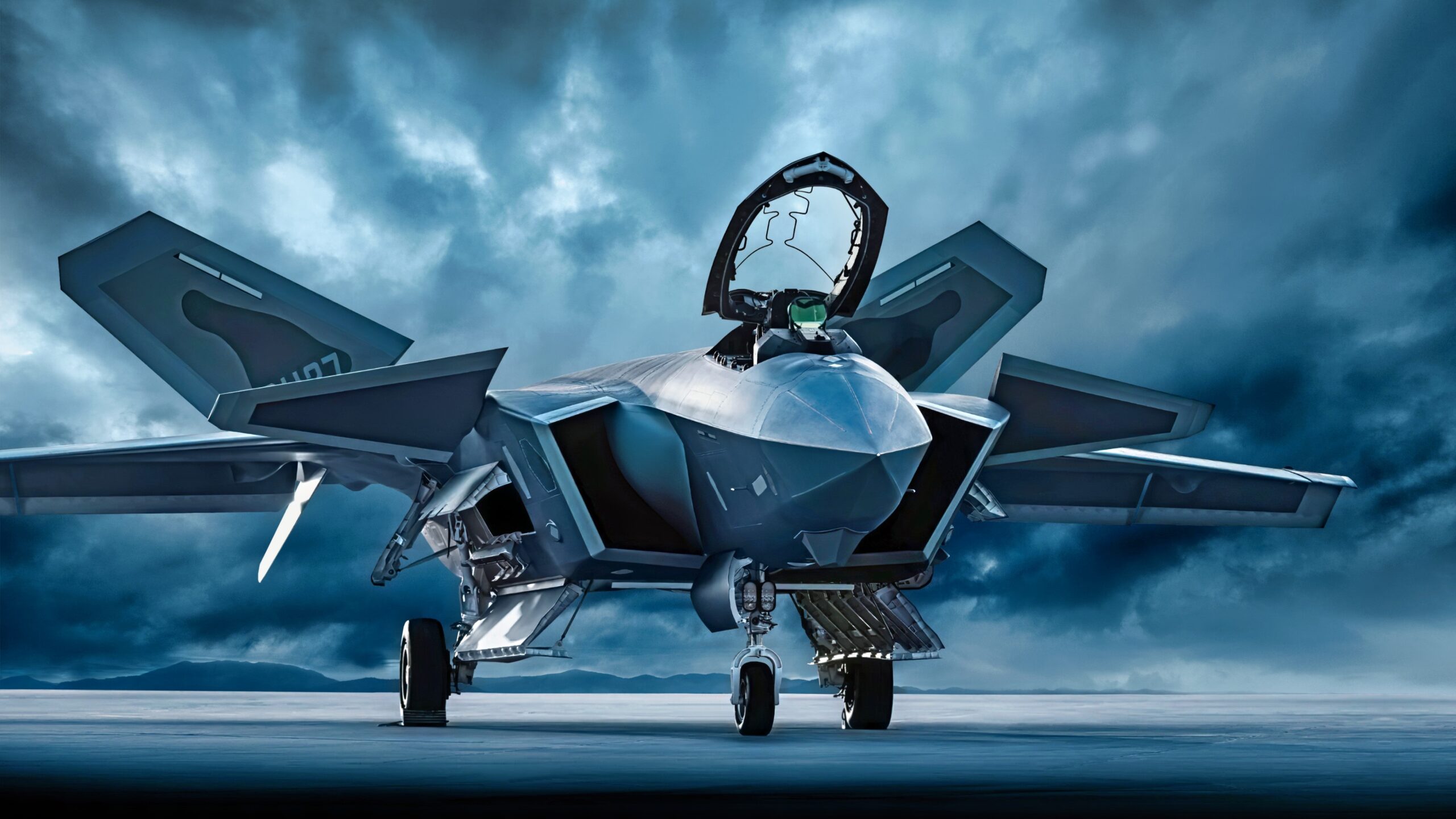
J-20 Fighter 2025 Artist Rendition. Image Credit: Creative Commons.
China deployed Z-10 attack helicopters, Z-20T assault choppers, and at least one KVD-002 unmanned aerial vehicle.
The Significance of the Exercise
The importance of this exercise was underscored by the PLA’s integration of drones, helicopters, precision weapons, and other advanced technologies and tactics, which clearly constitute a contingency plan for conflict with the United States (or a US-supported regional power, such as Taiwan).
Chinese forces also practiced mission sets involving the Suppression of Enemy Air Defenses (SEAD) and Destruction of Enemy Air Defenses (DEAD).
In both cases, these mission sets are critical for modern warfare. In any attempt by the PLA to take neighboring Taiwan by force, SEAD and DEAD missions would be crucial, especially at the outset of the campaign, as the Chinese would need to destroy Taiwanese air defenses to achieve air dominance.
Today, Taiwan possesses a sophisticated (and growing) integrated air-defense network that includes US-made Patriot systems and domestically developed Sky Bow missile systems. China must suppress and/or destroy not only the missile batteries but the radar networks and the command-and-control (C2) nodes to ensure air dominance.
That June exercise gave American intelligence analysts insight into how Chinese planners intended to accomplish the mission.
During the exercises, the KVD-002 drone provided intelligence, surveillance, and reconnaissance (ISR) while coordinating with helicopters.
The aircraft could share targeting information during the operation.
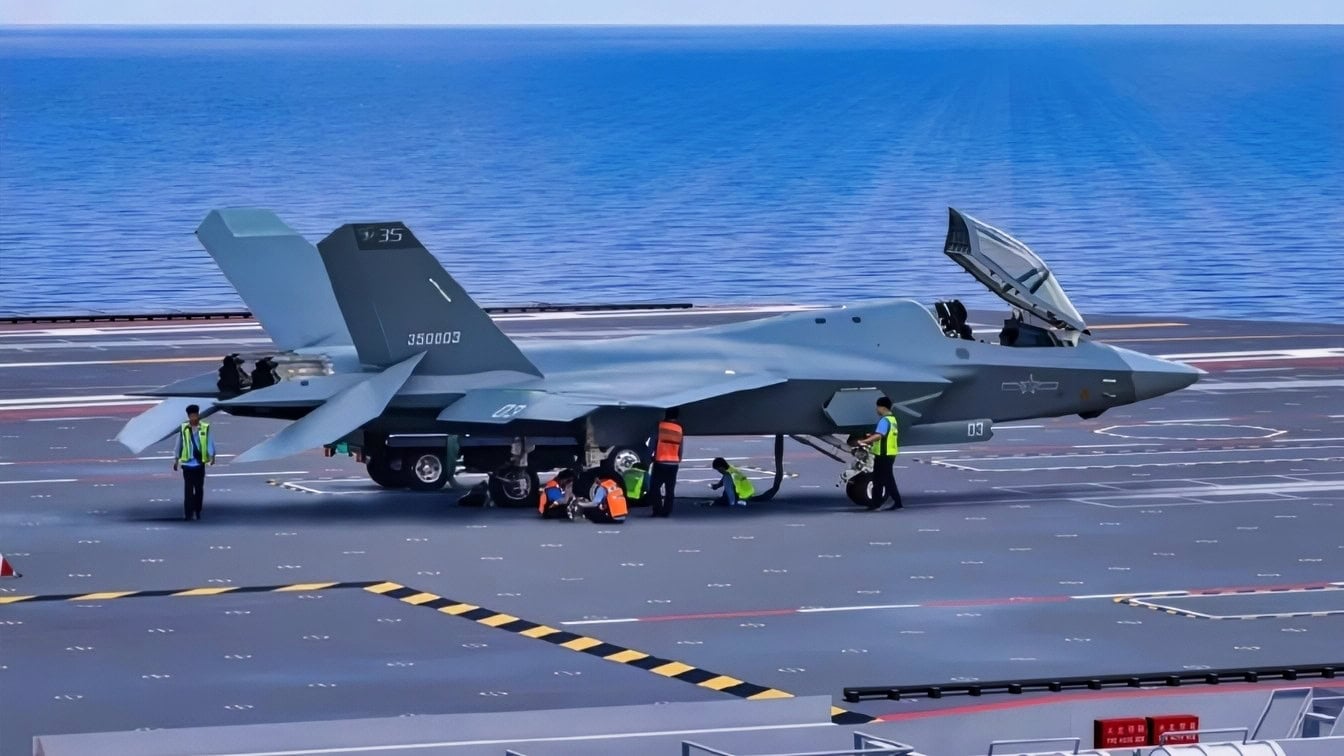
China J-35 Blue Shark Stealth Fighter
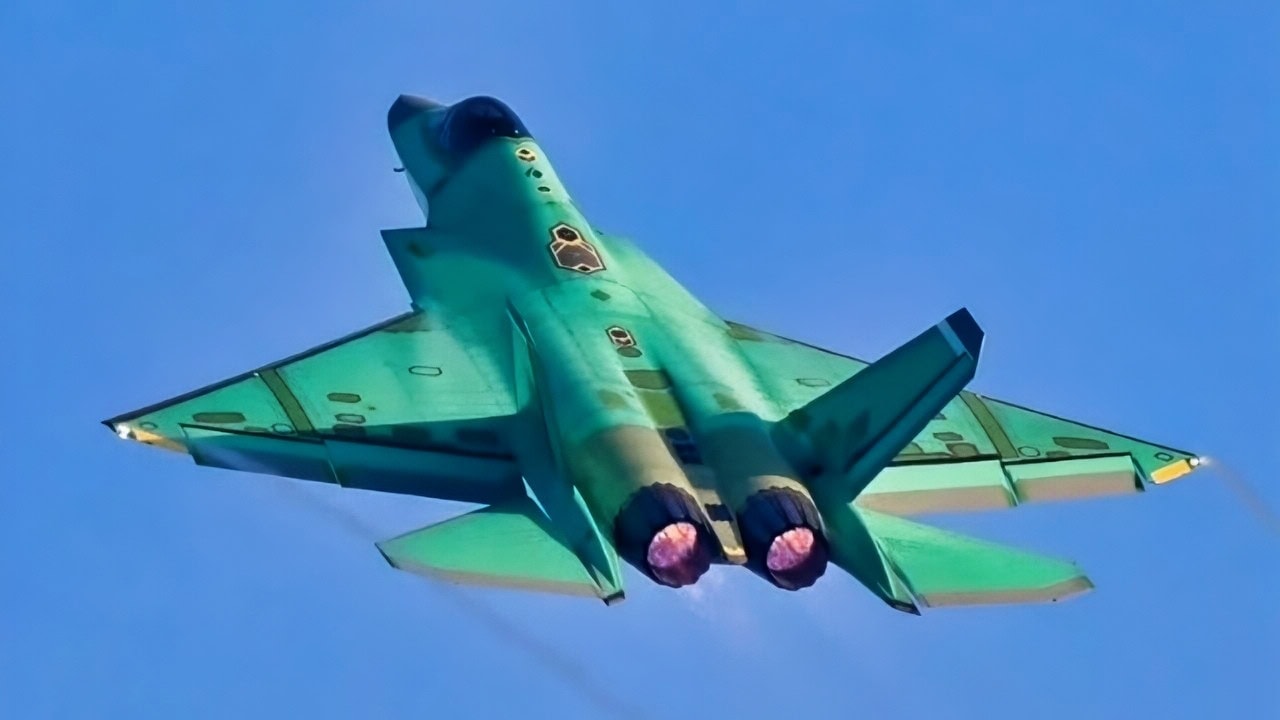
J-35A Stealth Fighter. Image Credit: Social Media Screenshot.
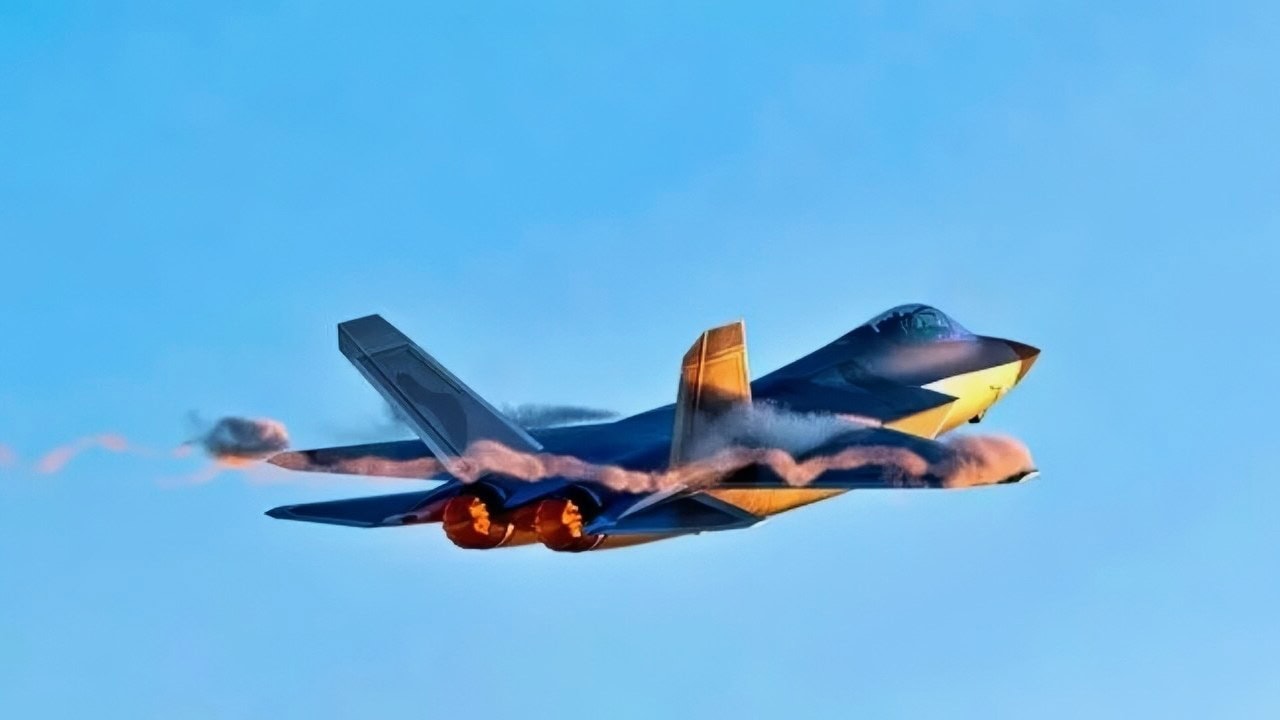
J-35A Fighter from China PLAAF. Image Credit: Creative Commons.
That capability increased both situational awareness and the lethality of Chinese forces. Essentially, this information-sharing capability lets one platform locate or designate a target while another attacks it.
Those helicopters practiced low-altitude operations intended to reduce their exposure to radar.
Attack helicopters operating close to terrain can use hills, buildings, and other features to mask their approach before briefly exposing themselves to launch weapons.
The mission also used the KD-9 laser-guided missile. When combined with unmanned reconnaissance aircraft, the KD-9 missile gives aviation units another way to strike small targets (such as missile launchers).
China Prepares to Conduct a Desert Storm-Like War on Taiwan
Bill Gertz at The Washington Times reported that the PLA likened its practice to “Task Force Normandy” during the opening hours of Operation Desert Storm in January 1991.
During that mission, US forces consisting of eight AH-64 Apache attack helicopters accompanied four Air Force MH-53J Pave Low helicopters to attack a pair of Iraqi early-warning radar stations.
Task Force Normandy destroyed those Iraqi targets before the wider coalition air campaign started, creating a 20-mile-wide corridor through Iraqi radar coverage.
The idea was to destroy part of the enemy’s air-defense network so that larger numbers of aircraft could penetrate afterward.
That is precisely what Beijing intends to do in Taiwan. Of course, modern air defenses–especially the kind that Taiwan employs–are substantially more advanced than were the air defenses that Saddam’s forces utilized in 1991.
Modern air-defense networks, for instance, specifically use short-range weapons meant to protect those higher-value targets from enemy aircraft–including helicopters, drones, and cruise missiles.
So, Chinese aircraft conducting a Task Force Normandy-style attack on Taiwan in the near future would face grave risks.
Nevertheless, the exercise demonstrates that PLA aviation units are working through the problem with real-time practice.
What’s more, it fits a larger pattern in PLA training that should disturb Western defense experts.
Over the years, Beijing’s forces have constructed elaborate target ranges with replicas or representations of US or other enemy equipment.
Satellite imagery has shown that the Chinese were building mockups of US Navy aircraft carriers and Arleigh Burke-class guided-missile destroyers in the deserts of Western China.
China has also built exact replicas of high-value targets in Taiwan, like the presidential palace, where Chinese forces have practiced raiding.
Patriot Missiles Are the Priority
But the replicas of the US-made Patriot missile batteries are the most concerning. These defensive systems are among the best air-defense batteries the US makes.
More dangerously, between the Ukraine War and the Iran War, the Americans have dangerously depleted the arsenals of the Patriot missile interceptors.
Taiwan, like most American allies, and the US military itself, have placed the Patriot missile battery at the heart of its air defense network.
The survivability of those Patriot missiles is essential for any protracted defense of Taiwan under the pressure of a Chinese military campaign.
China’s recent exercises highlight the importance that Beijing places on being able to knock out the Taiwanese defenses at the start of any potential war with Taiwan.
Under the Chinese protocols, like the US experience 35 years ago in Iraq, one Chinese aircraft finds the target in Taiwan, another designates that target, and a third system delivers the kill shot.
When the US military defeated Saddam Hussein’s army in Kuwait during Desert Storm, it is said that China’s military planners were stunned by the ferocity and speed of the US attack.
For 30 years, the Chinese military has striven to modernize its forces not only to prevent a similar rout at the hands of the Americans, but also to replicate such speedy victories. It looks like China thinks it’s ready to do that.
About the Author: Brandon J. Weichert
Brandon J. Weichert is the Senior National Security Editor at 19FortyFive.com. He also manages The Weichert Brief on Substack. Weichert also hosts “National Security Talk” on Rumble. He is the author of four bestselling national security books, the most recent of which is A Disaster of Our Own Making: How the West Lost Ukraine (Encounter Books). Follow him via Twitter/X @WeTheBrandon.