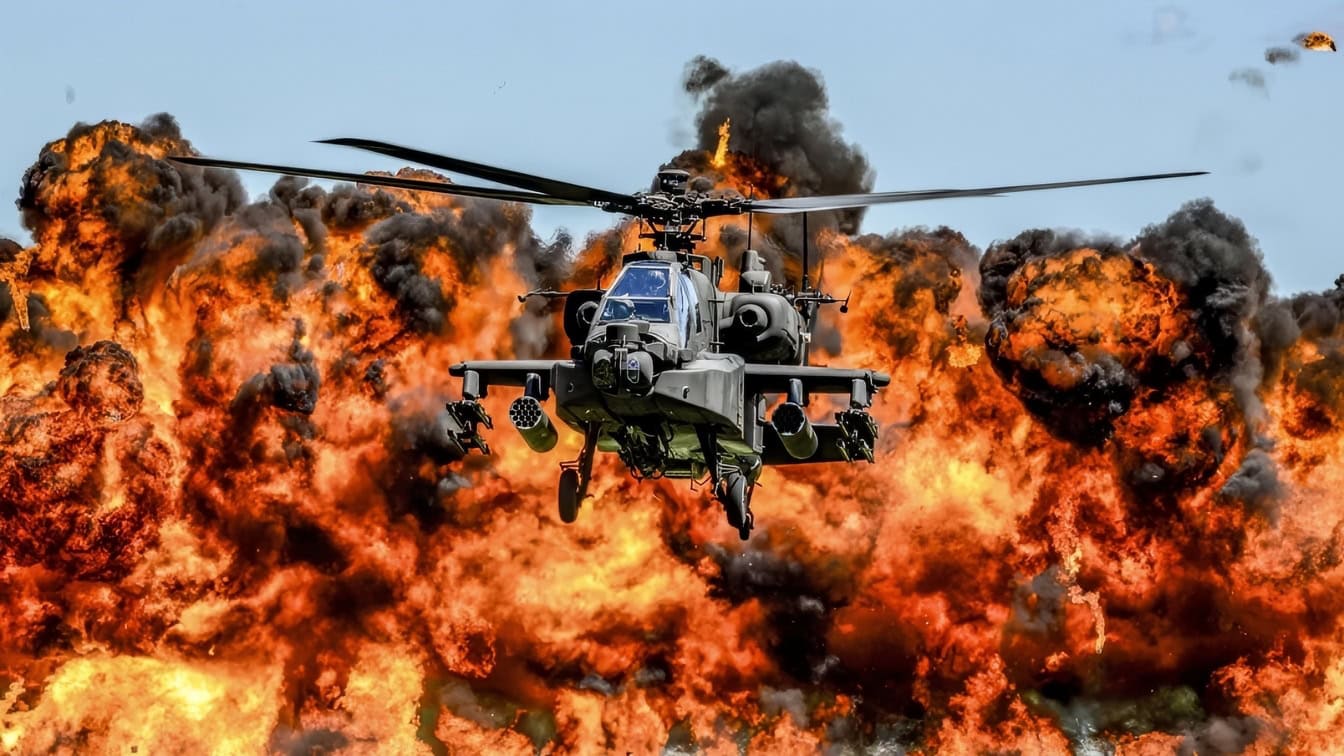
As the age of drones continues to accelerate, conventional platforms struggle to overcome the persistent, pervasive threat they pose. One thing the United States Army is doing is making its new-generation AH-64E Apache attack helicopters more durable in the age of drones and increasingly long-range weapons.
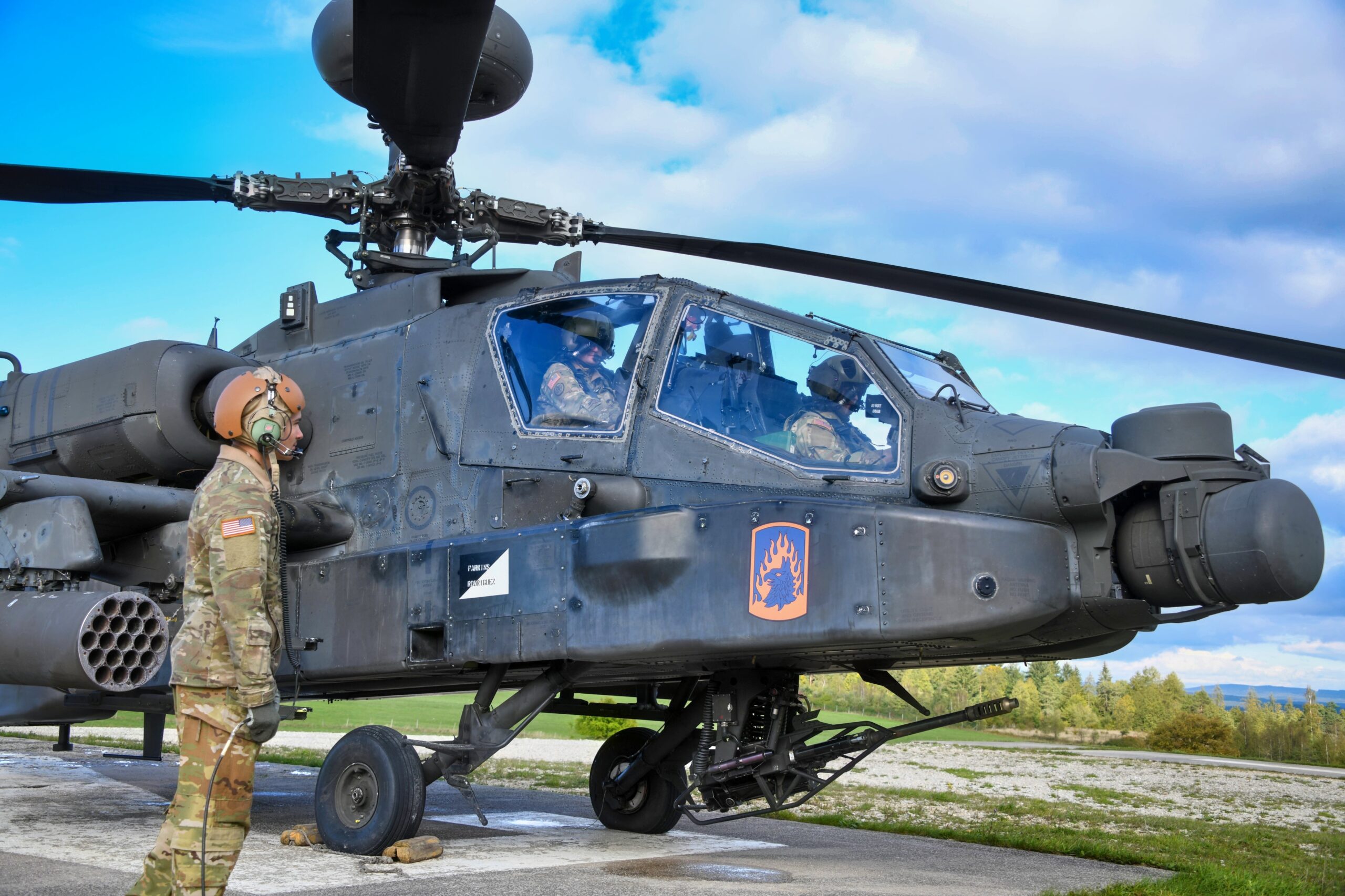
U.S. Soldiers assigned to 12th Combat Aviation Brigade conduct pre-flight checks on an AH-64D Apache longbow helicopter at the Grafenwoehr Training Area, Germany, Sept. 28, 2022. 12th CAB is among other units assigned to V Corps, America’s Forward Deployed Corps in Europe. They work alongside NATO Allies and regional security partners to provide combat-ready forces, execute joint and multinational training exercises, and retain command and control for all rotational and assigned units in the European Theater. (U.S. Army photo by Sgt. Randis Monroe)
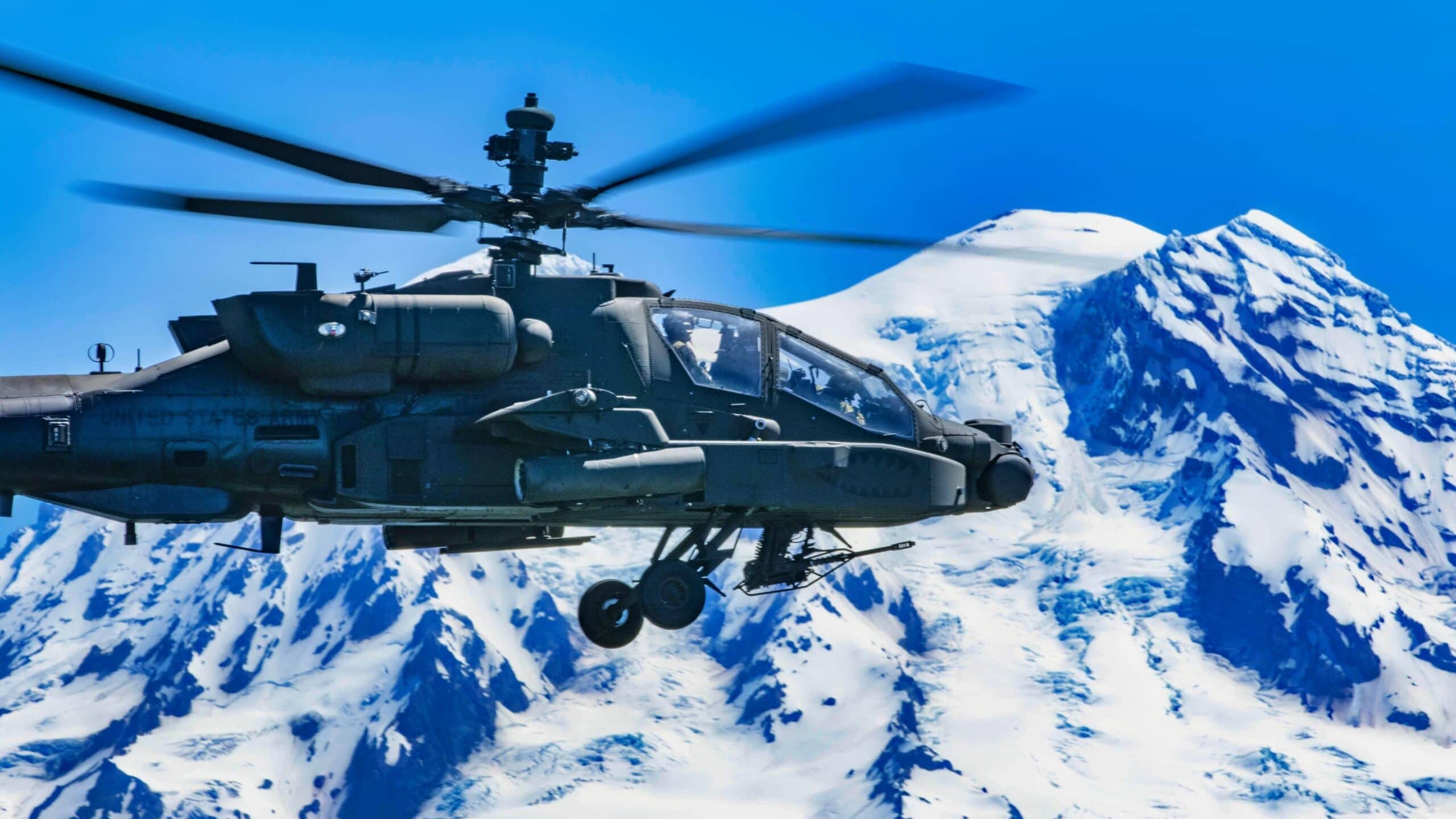
Apache Helicopter U.S. Army. Image Credit: Creative Commons.
Known as the AH-64E Apache Version 6.5, this upgraded Apache features enhanced software and networking capabilities designed to integrate new weapons and sensors better as they come online.
Boeing, the maker of the Apache, is currently completing the development and verification work required to begin fielding the upgrade.
Version 6.5 of the Apache AH-64E is not a new helicopter. It is truly only an upgrade.
Important Upgrades
The basic airframe, weapons, and performance that have made the Apache such a potent attack helicopter remain generally unchanged.
The AH-64E exceeds 150 knots and can operate up to 20,000 feet. These helos can carry up to 16 Hellfire missiles or 76 2.75-inch rockets. An M230 30mm chain gun carries up to 1,200 rounds and is located on the nose of the Apache AH-64E.
The new version of the AH-64E gets interesting in how it handles information.
The upgrade introduces a new common software baseline across the Army’s AH-64E fleet and an Open Systems Interface meant to make adding new capabilities even easier.
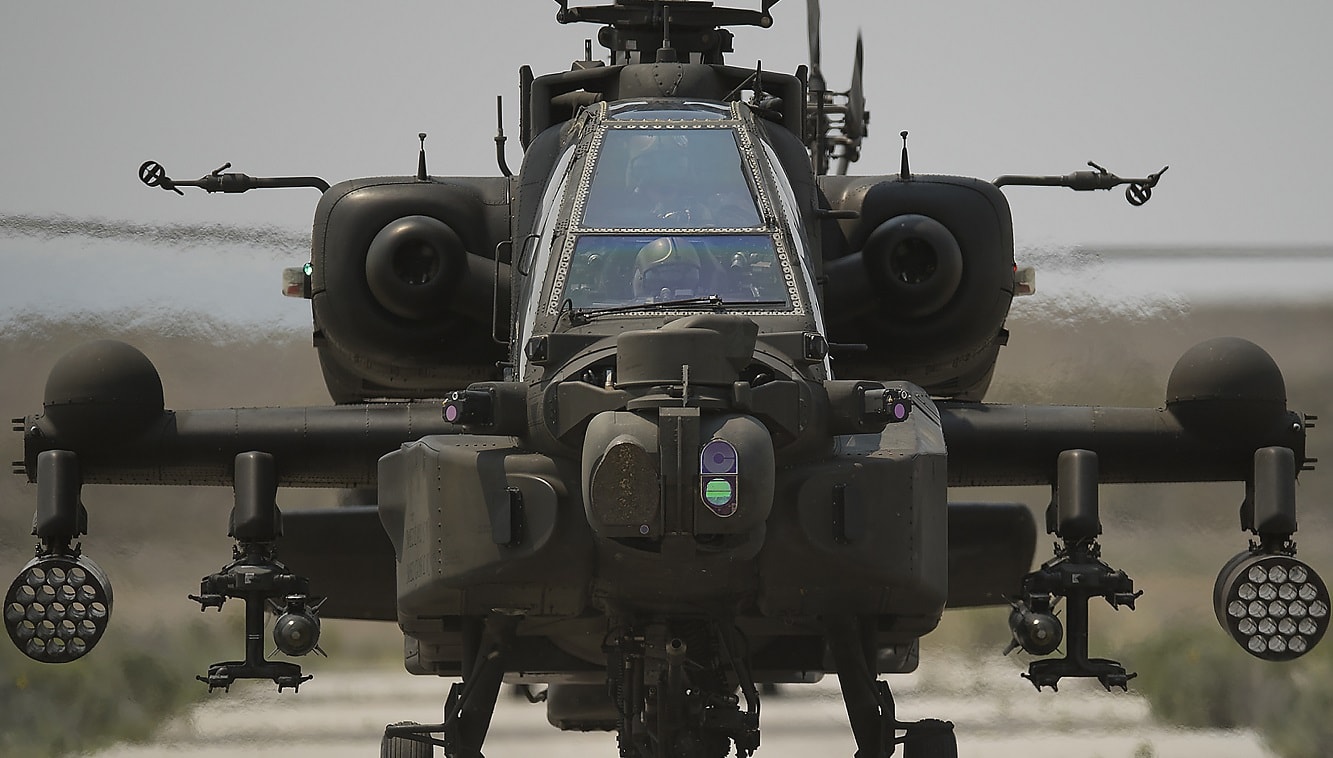
The second AH-64 Apache rolls onto the taxiway and to the takeoff pad.
The Idaho Army National Guard’s Orchard Combat Training Center was host to elements of the Republic of Singapore Air Force during July. Based in Arizona, The Singapore contingent operates eight AH-64 Apache Helicopters as part of the Peace Vanguard Task Force.
The Apache is an attack helicopter with a tandem cockpit for a crew of two. It features a nose-mounted sensor for target acquisition and night vision systems. It is armed with a 30 mm M230 chain gun. It also features four hardpoints mounted on stub-wing pylons for carrying armament, typically a mixture of AGM-114 Hellfire missiles and Hydra 70 rocket pods. The Apache’s first flight took place in 1975 and was formally introduced into the U.S. Army in 1986.
By creating standardized interfaces for future upgrades, the Army is working to ensure that the new Apaches remain relevant to the changing needs of the battlefield for years to come.
Version 6 of the Apache brought Link 16 connectivity, enabling crews to exchange targeting and battlefield information with other aircraft and forces.
Version 6.5 upgrades that capability while expanding the helicopter’s ability to participate in manned-unmanned teaming (MUMT), which is quickly becoming an important feature in modern combat.
That’s an especially important element of the new iteration of the Apache. The Army and Boeing call this “Launched Effects.” Unmanned aircraft can travel ahead of the helicopter, identify targets, and attack enemy positions while the manned helo stays safely outside contested, well-defended enemy airspace.
Plus, the ability to launch drones could drastically extend the Apache’s attack range.
Boeing and the Army intend to test the Apache-MUMT beyond the laboratory this year.
Relatedly, the Army launched an ALTIUS 700 unmanned aircraft directly from an AH-64E during testing at Yuma Proving Ground in Arizona.
The Army has been pleased with how quickly that program has moved from requirement to demonstration in less than six months.
Beyond the current software and MUMT capabilities, Boeing plans for Version 6.5 of the Apache to employ counter-drone systems and Long-Range Precision Munitions.
The open architecture is intended to allow those capabilities to be integrated without requiring another wholesale redesign of the aircraft’s mission systems.
In keeping with the general focus on software, Apache’s new cockpit is evolving significantly.
Boeing wants the new software and interface improvements to reduce crew workload as pilots manage increasing amounts of sensor, communications, and unmanned-aircraft data.
Boeing is separately developing an Advanced Crew Station concept featuring large full-color touchscreen displays and advanced flight controls.
However, those features represent further modernization rather than the basic Version 6.5 configuration.
Version 6.5 remains in development and verification while Boeing supports the Army through the remaining documentation and verification steps needed to field it.
Something More Than Just Another Attack Helicopter
If the changes to Version 6.5 proceed as planned, the Apache will be more than just a gunship.
The AH-64E Version 6.5 will serve as another battlefield sensor within a larger network during combat. The new Apache upgrade does not necessarily add new levels of firepower (other than potential drone integration).
But it does enhance the Apache’s already considerable firepower through various software and sensor upgrades.
These proposed upgrades become all the more relevant, as the United States Army has already experienced the loss of an Apache while conducting patrols in the hotly contested Strait of Hormuz (SoH). President Donald Trump implied that the Apache was downed over the SoH by Iranian drones.
If that was the case, the inclusion of counter-drone systems in the updated Apache Version 6.5 makes even more sense.
Drones will increasingly be used to meddle in the safe operation of US attack helicopters, and helicopter crews will need both the ability to detect drones and defend their birds against attack from drones.
About the Author: Brandon J. Weichert
Brandon J. Weichert is the Senior National Security Editor at 19FortyFive.com. He also manages The Weichert Brief on Substack. Weichert also hosts “National Security Talk” on Rumble. He is the author of four bestselling national security books, the most recent of which is A Disaster of Our Own Making: How the West Lost Ukraine (Encounter Books). Follow him via Twitter/X @WeTheBrandon.