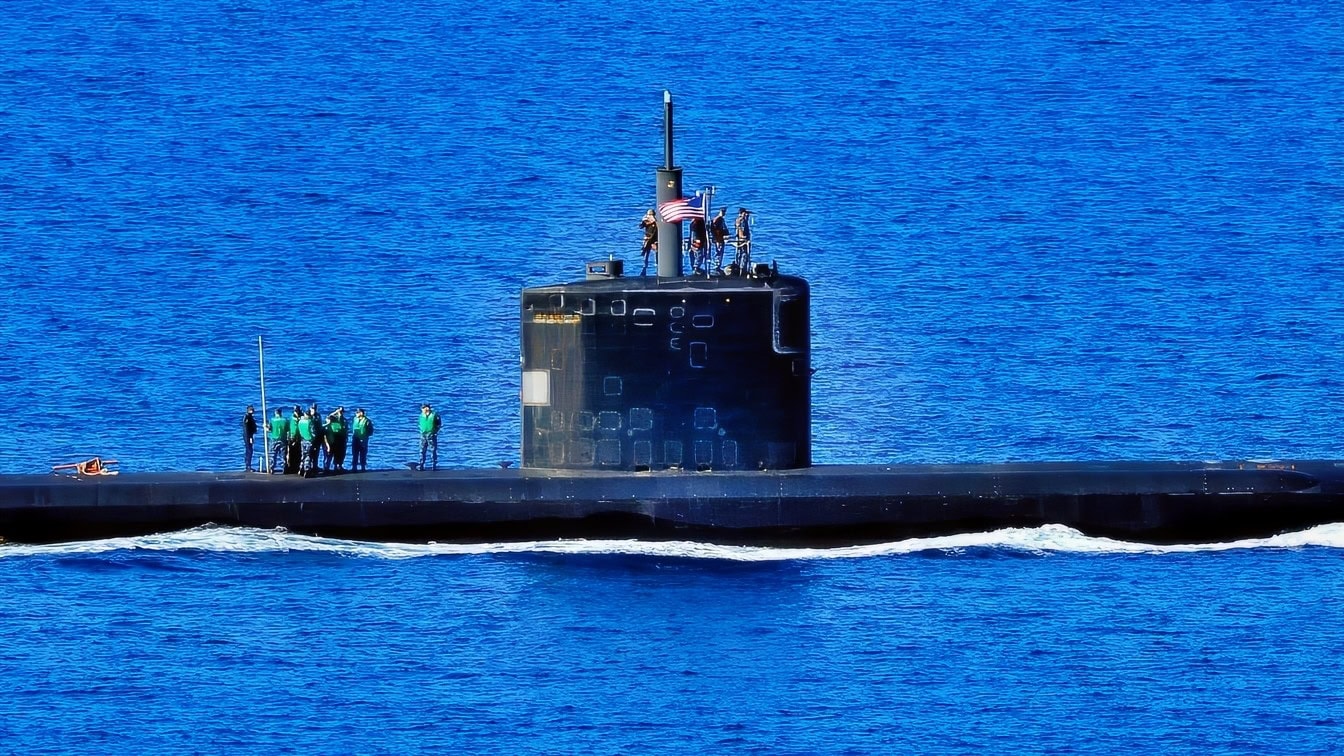
The Los Angeles-class attack submarine is one of the United States Navy’s most iconic submarines. It has been so popular that the Navy built multiple iterations of the boat.
In fact, over the last several decades, potential successors to this iconic sub have struggled to match the greatness of the Los Angeles-class attack submarine.
The Seawolf-class was never fully realized because of the exorbitant cost of those advanced submarines, and the Virginia-class has not reached the numbers needed to fully replace the Los Angeles-class attack boats because of the cost and industrial bottlenecks plaguing America’s naval shipyards.
Understanding the 688I
The most recent iteration of the Los Angeles-class attack submarine, the 688I, represented the culmination of hard lessons learned during the Cold War and helped ensure the Los Angeles-class submarine’s status as the greatest of all twentieth-century attack submarines.
Between fiscal years 1970 and 1990, the Navy acquired 62 Los Angeles-class attack submarines, making this submarine class one of the largest nuclear-powered submarine programs the United States ever undertook.
America’s final Los Angeles-class boats, numbering 23 in total, were of the upgraded 688I variant of the class. The first of those 23 upgraded 688Is was USS San Juan (SSN-751), and the last was USS Cheyenne (SSN-773).

PACIFIC OCEAN (Dec. 17, 2025) – Los Angeles-class fast-attack submarine USS Annapolis (SSN 760) steams forward off the coast of Guam during a photo exercise, Dec. 17, 2025. Assigned to Commander, Submarine Squadron 15 at Polaris Point, Naval Base Guam, Annapolis is one of five fast-attack submarines forward-deployed in the Pacific. Renowned for their unparalleled speed, endurance, stealth, and mobility, fast-attack submarines serve as the backbone of the Navy’s submarine force, ensuring readiness and agility in safeguarding maritime interests around the world. (U.S. Navy photo by Lt. James Caliva)
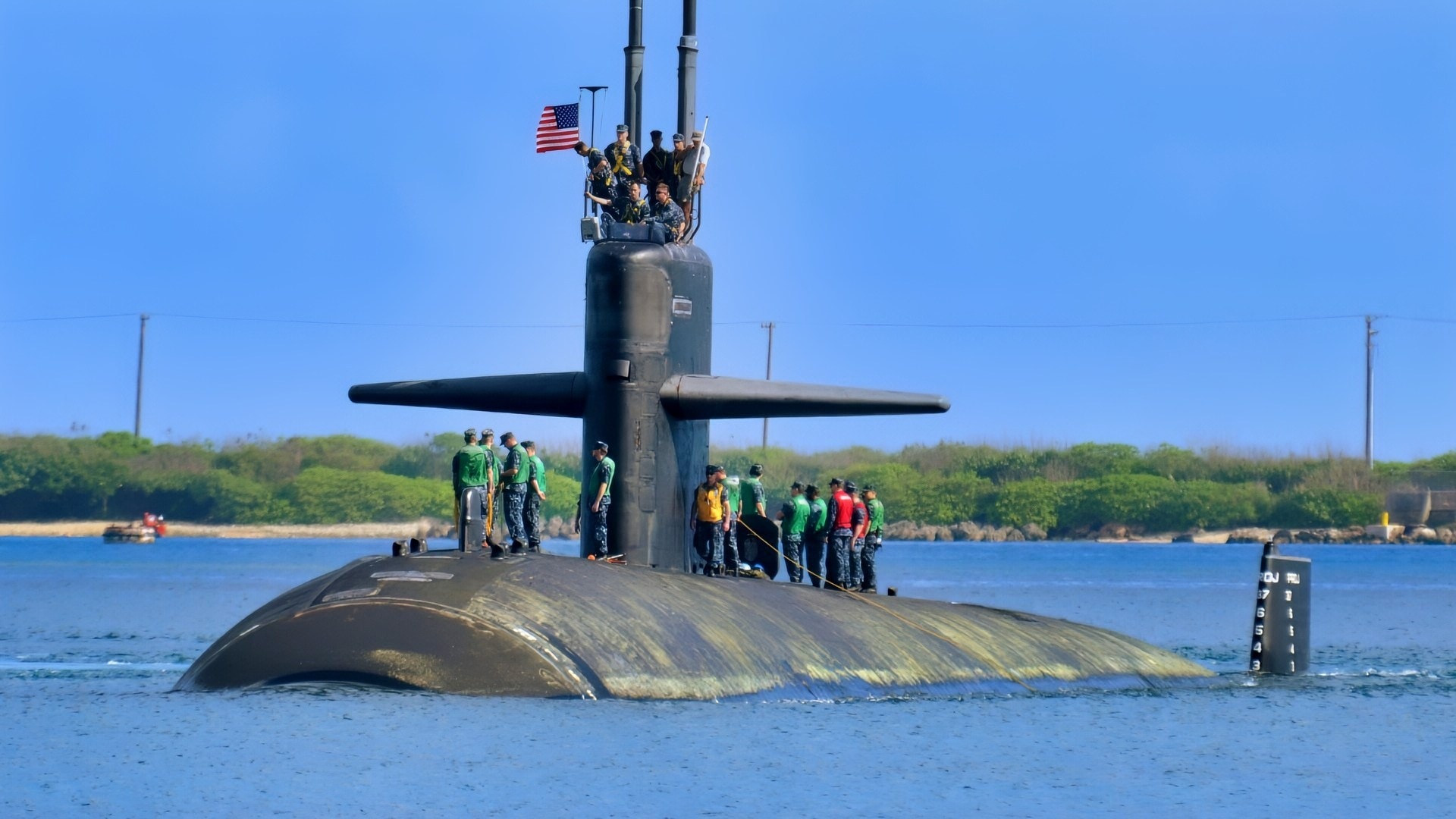
130507-N-LS794-045
POLARIS POINT, Guam (May 7, 2013) The Los Angeles-class attack submarine USS Albuquerque (SSN 706) arrives in Apra Harbor, Guam, to conduct maintenance and liberty. Albuquerque is conducting operations in the U.S. 7th Fleet area of responsibility. (U.S. Navy photo by Mass Communication Specialist 1st Class Jeffrey Jay Price/Released)
These upgrades reflected the constantly changing nature of the Soviet naval threat, which required similar advances from American submarine designers.
For instance, by the 1980s, Soviet attack subs became quieter.
The US could no longer assume that its longstanding acoustic advantages would remain.
So, the Navy improved the Los Angeles-class design rather than wait for its far more advanced Seawolf-class replacement (that ultimately never came because of the implosion of the Soviet Union and the end of the Cold War).
Not Just An Upgrade
Of course, the 688I retained the basic Los Angeles-class design.
It measured 360 feet long, had a 33-foot beam, and could displace around 6,900 tons once submerged.
Its nuclear power gave the submarine long endurance and allowed it to accompany US aircraft carrier battle groups.
What’s more, these submarines were exceptionally tailored for mercilessly hunting Soviet submarines in the depths of the ocean.
Because of the advances in acoustic technology at the time, the 688Is were especially quiet. Real holes in the water, as submariners might say.
The Pentagon also installed AN/BSY-1 integrated combat systems into the submarines.
For the 688I, unlike the other older variants of the Los Angeles-class, designers moved the diving planes from the sail to the bow and made them retractable.
What’s more, the Navy enhanced the sail itself so that it could punch through the Arctic ice.
One of the best features of all Los Angeles-class variants was its weapons suite.
These iconic submarines carried 21-inch torpedo tubes with 26 weapons in the tubes (and internal magazine). Another nice addition to the class was the incorporation of Tomahawk cruise missiles that could be fired from the torpedo tubes.
Eventually, though, the Navy built its latest variants with vertical-launch tubes for Tomahawks.
The 688I also had vertical-launch tubes for Tomahawk cruise missiles.
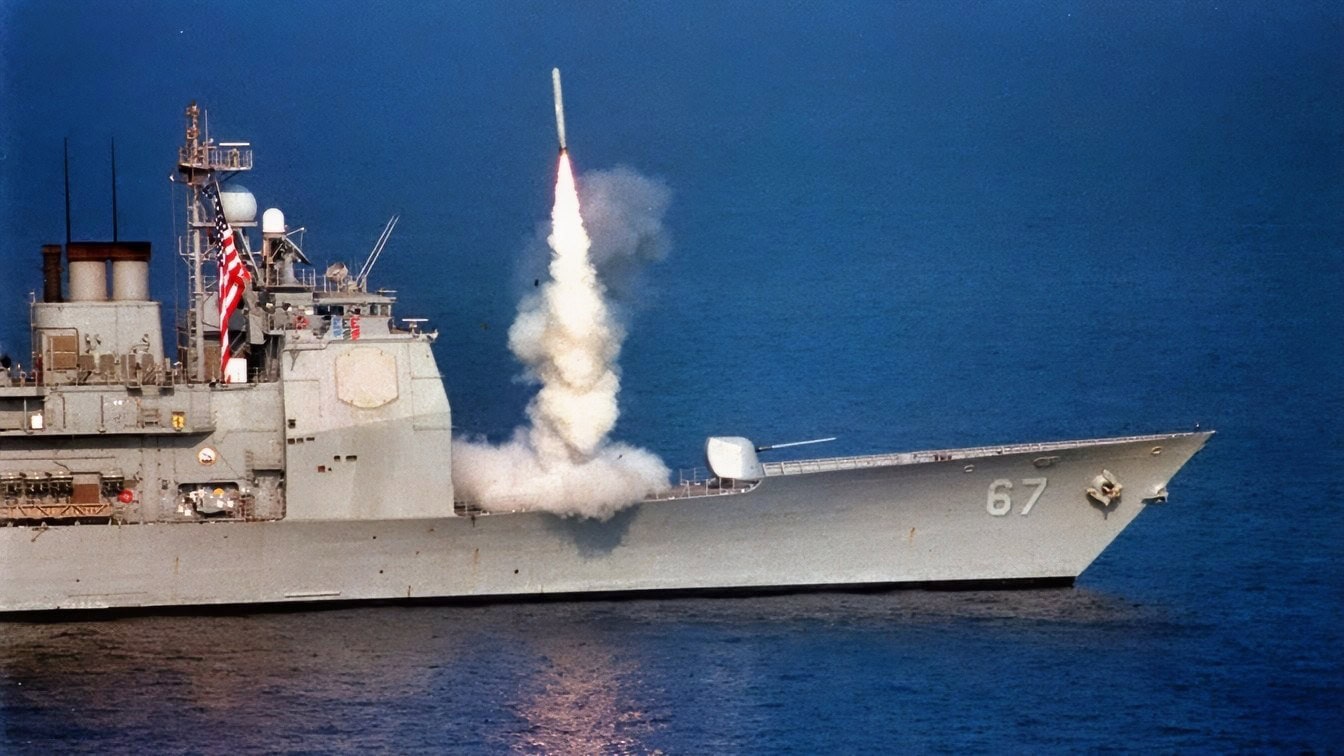
A Tomahawk cruise missile launches from the forward vertical launch system of the USS Shiloh (CG 67) to attack selected air defense targets south of the 33rd parallel in Iraq on Sept. 3, 1996, as part of Operation Desert Strike. The attacks are designed to reduce risks to the pilots who will enforce the expanded no-fly zone. President Clinton announced an expanded no-fly zone in response to an Iraqi attack against a Kurdish faction. The larger no-fly zone in Southern Iraq will make it easier for U.S. and coalition partners to contain Saddam Hussein’s aggression. The U.S. Navy Ticonderoga Class cruiser launched the missiles as it operated in the Persian Gulf.
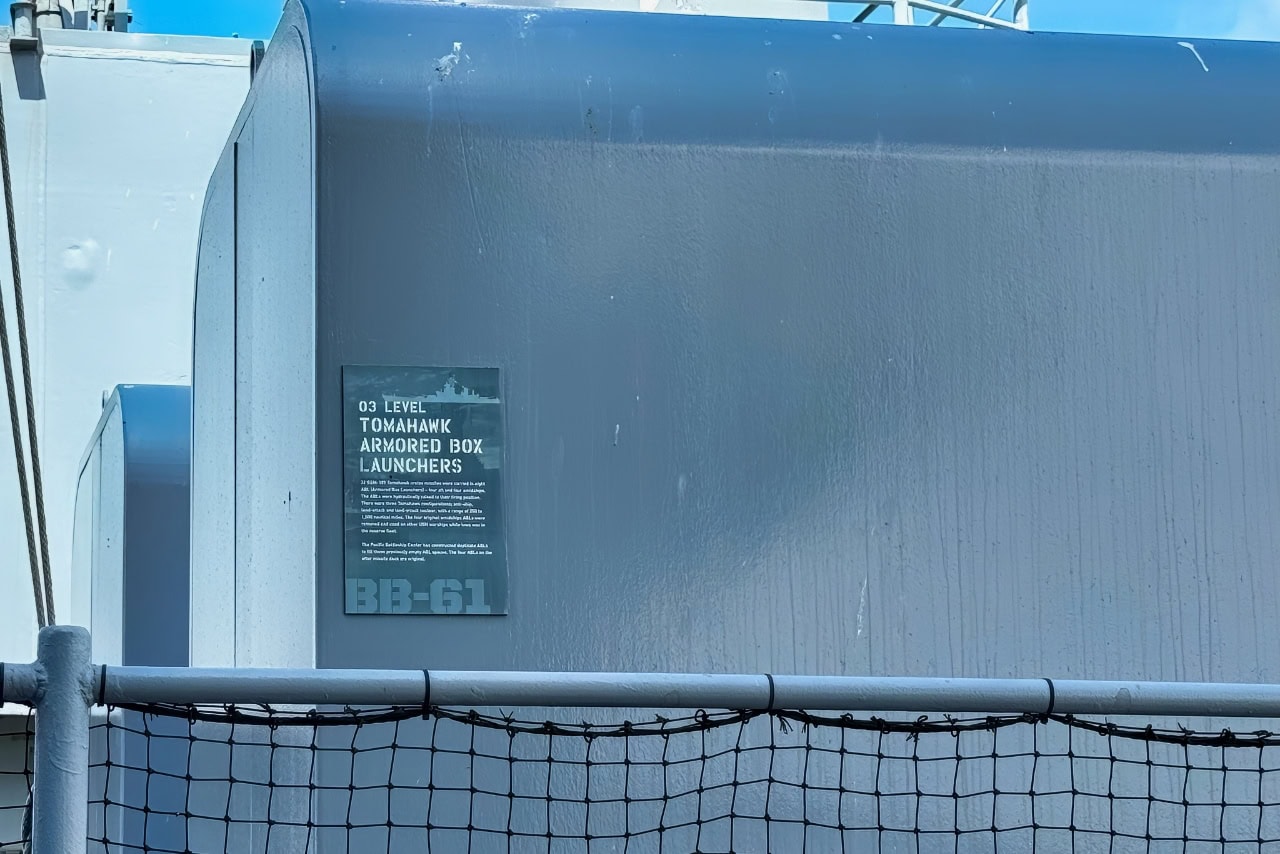
USS Iowa 19FortyFive image of Tomahawk Missiles on USS Iowa.
A 688I could load 12 Tomahawks in its bow launchers while retaining its torpedo-tube weapons.
The attack submarine was no longer just a hunter of enemy submarines and surface ships.
It evolved into a land-attack platform that would prove decisive in the post-Cold War era, when the United States lacked a near-peer rival at sea.
In fact, these improved Los Angeles-class subs, once meant to compete against Soviet submarines and hunt Soviet Navy surface ships, found themselves waging new kinds of post-Cold War-era conflicts.
These subs were key players in US military operations in the Balkans, the Middle East, and Afghanistan.
Informing the Virginia-Class
The 688I heavily influenced the Virginia-class attack submarine program as it came online in the post-Cold War era. Notions like an extraordinarily quiet attack submarine.
A submarine that could conduct anti-submarine and anti-surface warfare whilst supporting intelligence and special operations missions–as well as land-attack capabilities–was an idea that underpinned the Virginia-class attack submarine design and mission.
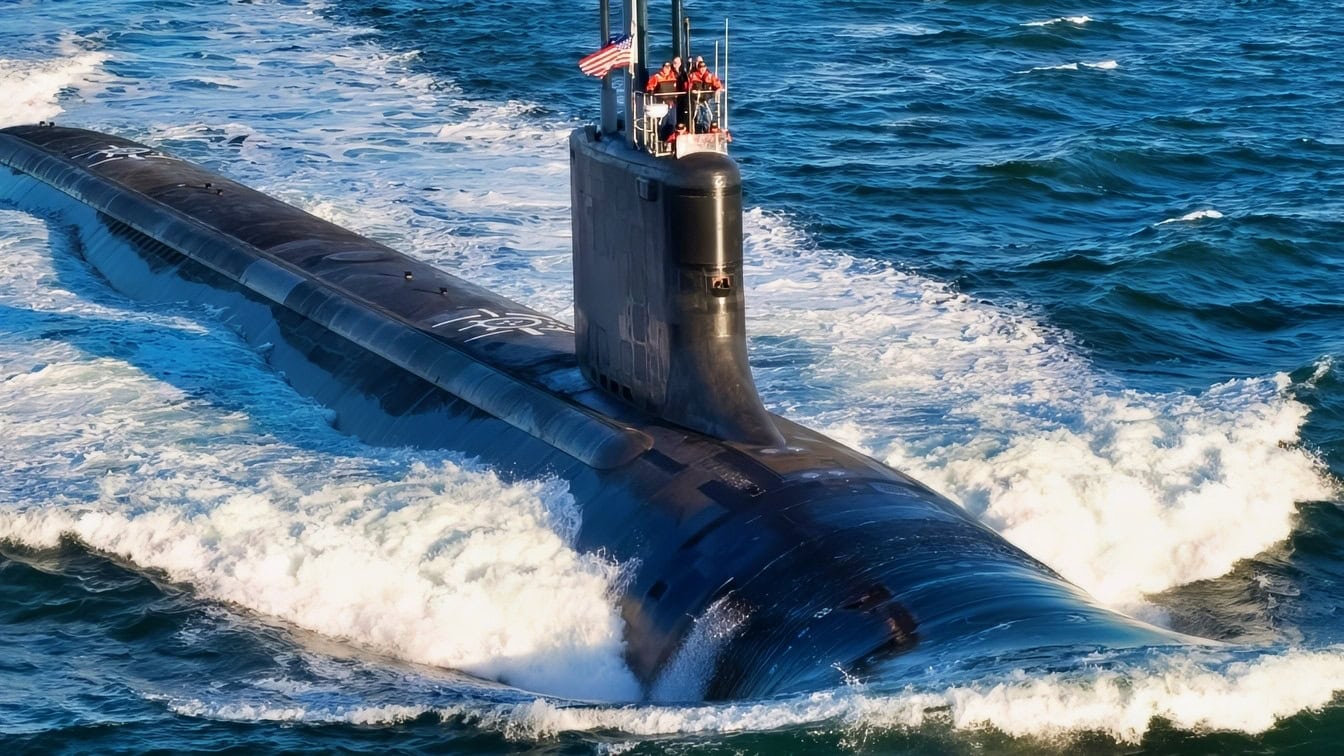
Virginia-Class Submarine SSN Creative Commons
Forty-two of the 62 Los Angeles-class attack submarines have been retired by the start of 2026.
The 688I’s legacy lies in how it adapted to the post-Cold War era and directly influenced the development and doctrine of its successor, the Virginia-class.
Think of the 688I less as another, more advanced Los Angeles-class submarine and more as a bridge linking the mid-Cold War-era attack submarines with the post-Cold War-era boats that are coming online today.
Its influence will be felt for many decades to come — long after even the 688Is are retired.
About the Author: Brandon J. Weichert
Brandon J. Weichert is the Senior National Security Editor at 19FortyFive.com. He also manages The Weichert Brief on Substack. Weichert also hosts “National Security Talk” on Rumble. He is the author of four bestselling national security books, the most recent of which is A Disaster of Our Own Making: How the West Lost Ukraine (Encounter Books). Follow him via Twitter/X @WeTheBrandon.