
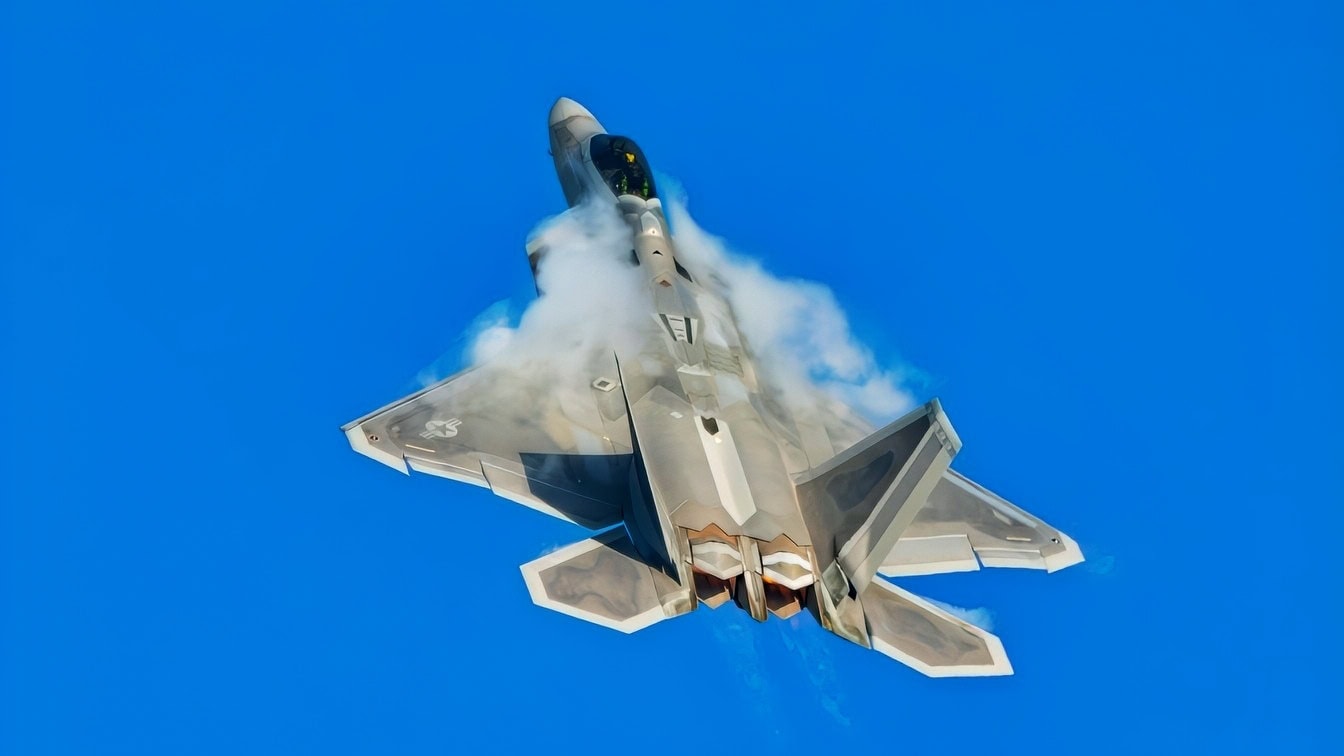
The F-22 Was Built for the Soviet Union and Canceled During the War on Terror: Back in April, I got really close to the F-22 Raptor stealth fighter at the Sun & Fun Air Show in Lakeland, Florida. And, honestly, I can’t sleep some nights knowing we made the mistake of stopping building these stealth fighters so soon.
But, at the time, it made sense. The decisive F-22 vote came on July 21, 2009. The Senate voted 58-40 to remove $1.75 billion for seven additional aircraft after President Barack Obama threatened a veto. The operational production run would stop at 187 fighters.
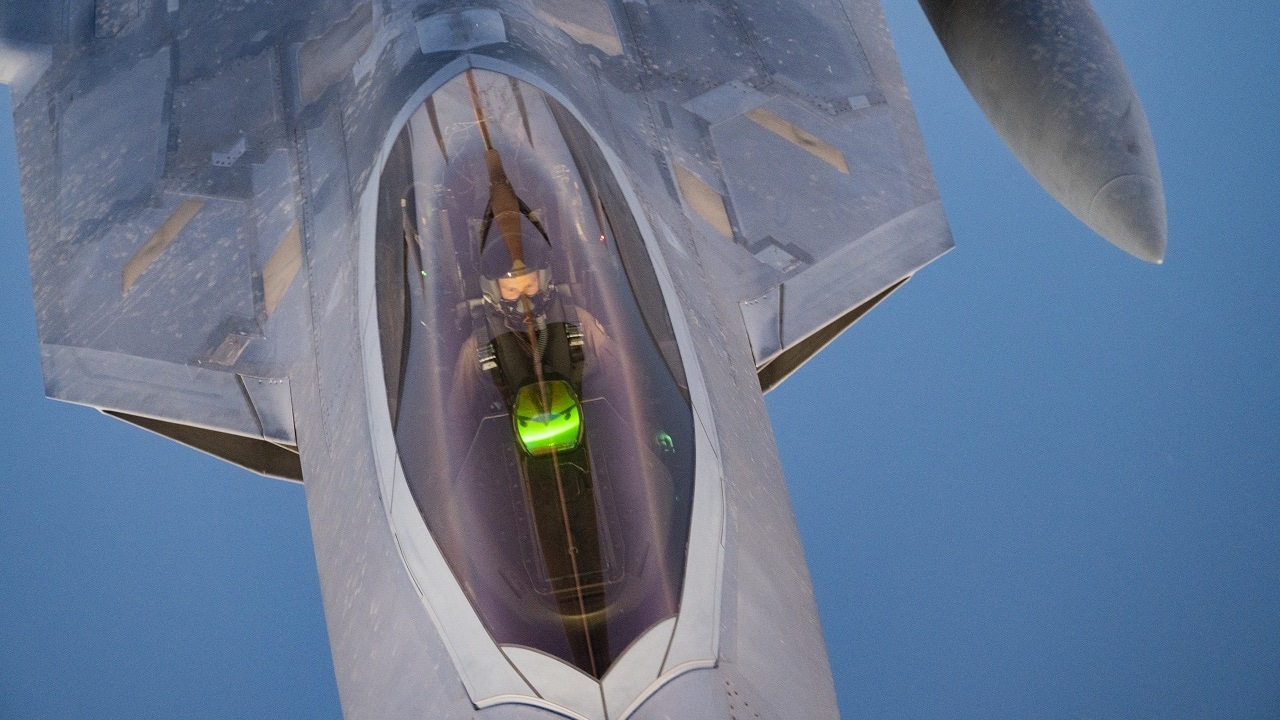
A U.S. Air Force F-22 Raptor receives fuel from a U.S. Air Force KC-135 Stratotanker assigned to the 340th Expeditionary Air Refueling Squadron, above the U.S. Central Command area of responsibility, March 14, 2022. The F-22 Raptor is a fifth-generation aircraft that combines stealth, supercruise, maneuverability, integrated avionics, and is designed to project air dominance, rapidly and at great distances, and deter regional aggressors while deployed in the USCENTCOM AOR. (U.S. Air Force photo by Staff Sgt. Frank Rohrig)
That vote completed an 18-year contraction. The Air Force entered full-scale development in 1991, expecting 750 Raptors. The total had already fallen to 648 that year, 442 in 1993, 339 in 1997, and 276 in 2003.
Three pressures drove the retreat: the Soviet Union collapsed before production began; cost and schedule troubles weakened the program in Congress; and two ground wars redirected money toward equipment needed immediately. Cost alone would not have ended the buy if the original threat and wartime demand had remained.
The Air Force still preferred 381 aircraft. Defense leaders and the White House judged 187 sufficient when combined with F-15s, the coming F-35, and other American capabilities. That gap between the military requirement and the funded force fuels the argument that Washington made a major strategic mistake.
The 750-Fighter Plan Belonged to the Cold War
The Advanced Tactical Fighter was conceived to defeat Soviet Su-27s, MiG-29s, interceptors, and massed attack formations. Stealth, supercruise, advanced sensors, and maneuverability were designed to overcome the Soviet Union’s superior numbers.
Lockheed’s YF-22 won in April 1991. The Soviet Union ceased to exist eight months later. The Air Force preserved the program built for that threat, but the original quantity became indefensible. An Air University history found that defense spending fell 38 percent from its 1985 peak by fiscal 1997, while procurement funding dropped by two-thirds in constant dollars.
The 1993 Bottom-Up Review cut the Raptor plan to 442. The 1997 Quadrennial Defense Review reduced it to 339, citing greater capability than the F-15 and affordability concerns. The program survived every review while losing more of the production run meant to absorb its fixed costs.
Cost Caps Kept the F-22 Alive and Limited Its Size
Development required repeated restructurings as technical problems pushed schedules and estimates upward. Research, development, testing and evaluation reached about $30.4 billion by 2007.
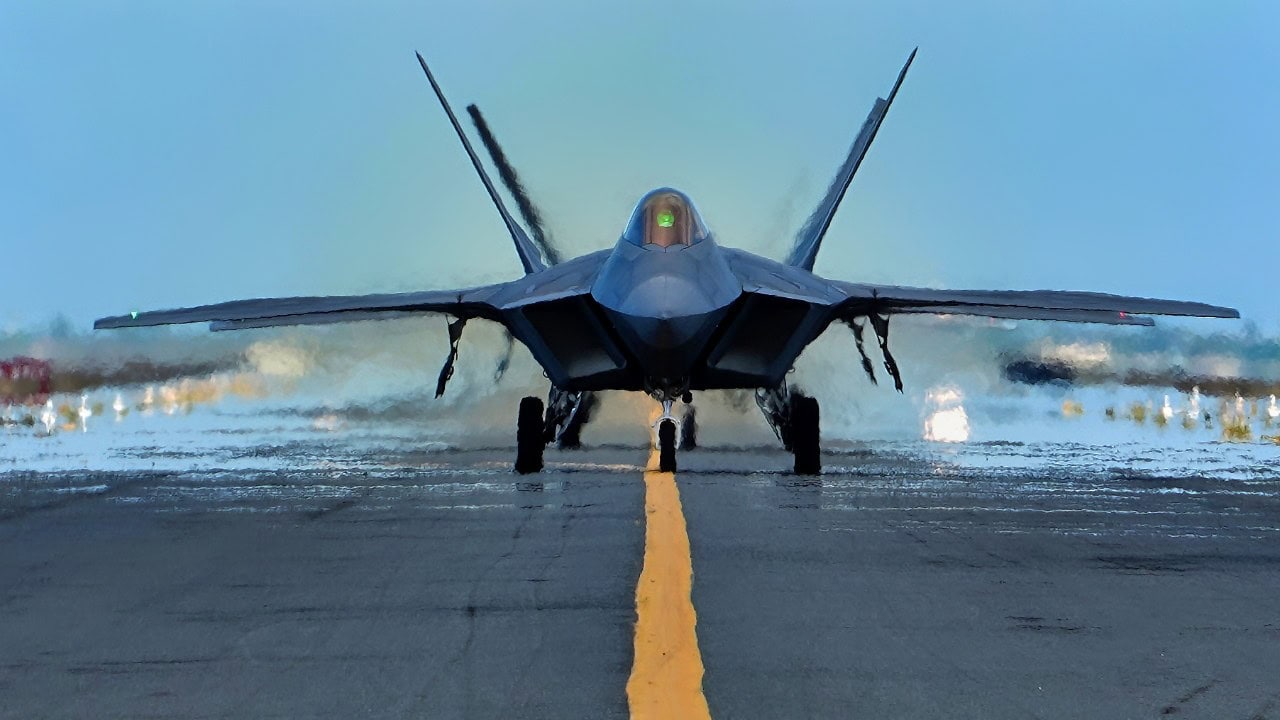
A U.S. Air Force F-22 Raptor taxis on the runway during a routine training schedule April 21, 2020, at Honolulu International Airport, Hawaii. Given the low traffic at the airport due to COVID-19 mitigation efforts, the active-duty 15th Wing and the Hawaii Air National Guard’s 154th Wing seized an opportunity to document the operation which showcases readiness and their unique Total Force Integration construct. The units of Team Hickam work together seamlessly to deliver combat airpower, tanker fuel, and humanitarian support and disaster relief across the Indo-Pacific. (U.S. Air Force photo by Airman 1st Class Erin Baxter)
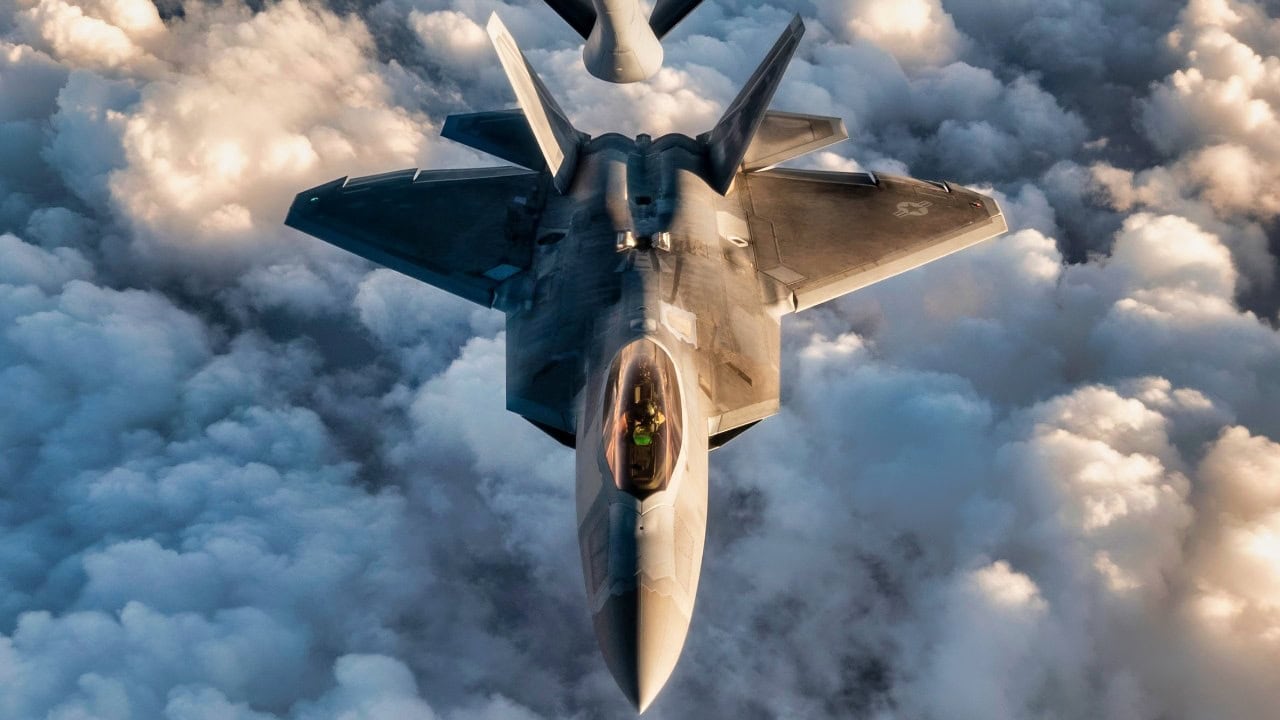
A U.S. Air Force F-22 Raptor departs after being refueled by a KC-135 Stratotanker over the U.S. Central Command area of responsibility November 5, 2024. Raptors provide air dominance and conduct missions delivering airpower within the region. (U.S. Air Force photo)
Production of 179 aircraft funded outside the early development fleet was estimated at $34.1 billion as the line wound down. Average production cost reached $191.6 million per jet, 56 percent above the estimate made when engineering and manufacturing development began. Congressional caps meant later overruns translated into fewer aircraft instead of a larger production account.
Congress controlled the total bill by reducing quantity. The cuts then made each Raptor appear more expensive because development, software, testing and tooling were divided among fewer aircraft. Cost mattered, though the aircraft’s narrow mission became equally damaging.
Iraq and Afghanistan Decided the 2009 Budget Fight
The F-22 reached initial operational capability in December 2005. Iraq no longer presented an air-to-air threat, and Afghanistan had no fighter force. F-15Es, F-16s, A-10s, bombers, helicopters and remotely piloted aircraft carried the daily combat burden. The Raptor’s best attributes were not the capabilities most frequently requested between 2001 and 2009.
Defense Secretary Robert Gates’s 2009 program emphasized helicopters, intelligence and surveillance, special operations forces, protective gear and armored vehicles. He argued that parts of the Pentagon remained organized for a Soviet war in Europe while American troops fought insurgents. The White House opposed seven more Raptors and said senior military leaders considered 187 adequate.
Planners expected thousands of multirole F-35s to join the smaller F-22 force while upgraded F-15s remained available. The decision accepted a narrow Raptor fleet in exchange for current-war needs and a broader fighter recapitalization program.
The Air Force’s 381-Aircraft Requirement Drove the Regret
GAO warned in 2005 that fewer than 180 Raptors would leave about 110 available for operational units after training, testing, maintenance, and reserves. That supported four or five standard squadrons rather than the 10 the Air Force had expected. Homeland defense, overseas rotations, and test work still had to come from the same small inventory.
The shortage gained importance as China expanded its advanced aircraft and air defenses, and U.S. planning shifted back toward peer conflict. Washington had stopped purchasing F-22s and allowed suppliers, facilities, and skilled labor to disperse, creating an industrial barrier to correcting the decision.
Congress responded in 2016. Citing adversaries closing the technology gap, the House Armed Services Committee ordered a study of another 194 aircraft, the number needed to reach 381. The final production Raptor had been delivered four years earlier.
The Restart Study Put the Bill Above $50 Billion
The Air Force’s 2017 assessment estimated that it would cost more than $50.3 billion in 2016 dollars to restart production and buy 194 Raptors. About $9.9 billion covered nonrecurring work, including supplier requalification, workforce rebuilding, facility preparation, and redesign of four subsystems whose components were no longer available.
Initial aircraft were projected at nearly $216 million each, declining to $206 million later. Preserved tooling did not preserve factories, certified vendors, or experienced workers. Congress never funded the restart, and the line remained closed.
On March 21, 2025, the Air Force awarded Boeing the engineering and manufacturing development contract for the F-47, with test aircraft and low-rate production options. No current budget request restores F-22 manufacturing.
About the Author: Harry J. Kazianis
Harry J. Kazianis (@Grecianformula) was the former Senior Director of National Security Affairs at the Center for the National Interest (CFTNI), a foreign policy think tank founded by Richard Nixon based in Washington, DC. Harry has over a decade of experience in think tanks and national security publishing. His ideas have been published in the NY Times, The Washington Post, The Wall Street Journal, CNN, and many other outlets worldwide. He has held positions at CSIS, the Heritage Foundation, the University of Nottingham, and several other institutions related to national security research and studies. He is the former Executive Editor of the National Interest and the Diplomat. He holds a Master’s degree focusing on international affairs from Harvard University.

