
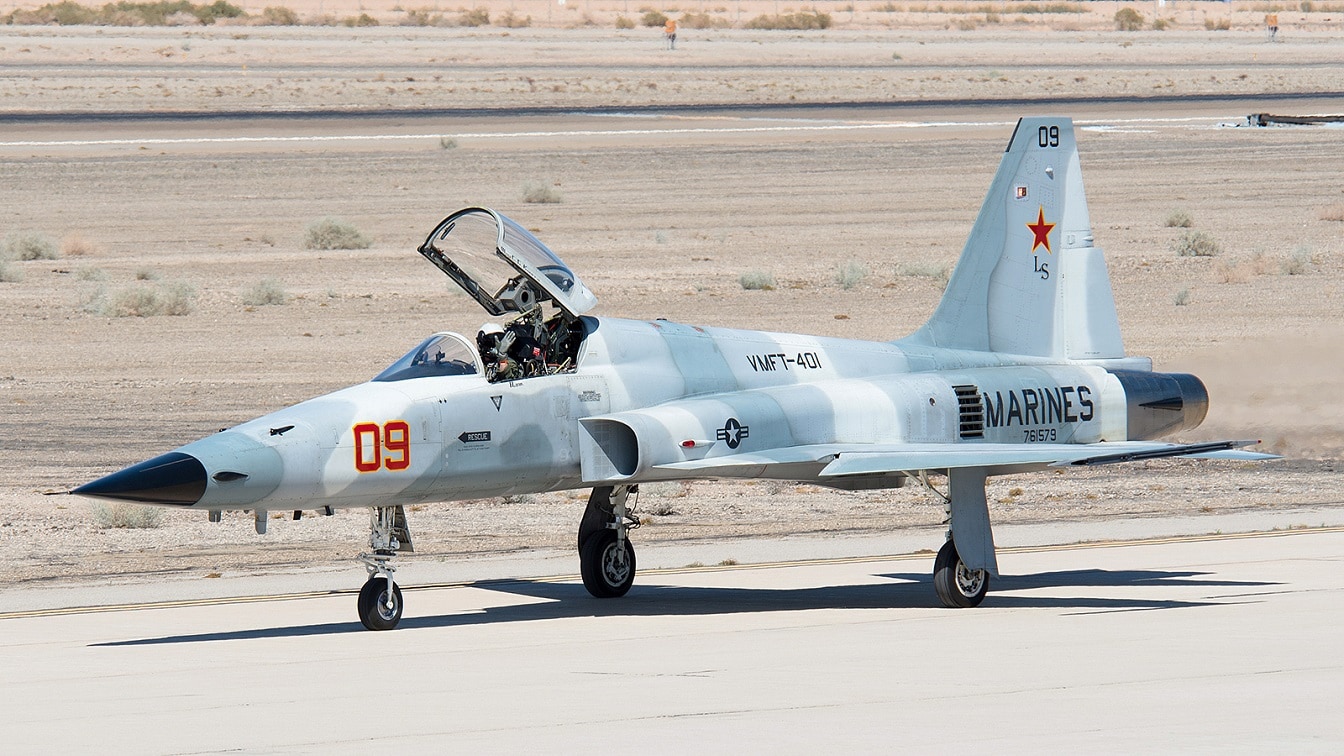
Iran Bought Its First F-5s in 1965. The Tiger II Still Went to War in 2026 – An Iranian F-5 Tiger reportedly bombed Camp Buehring in Kuwait during the opening phase of the 2026 U.S.-Iran war. NBC News attributed the account to American officials, while Iranian pilots later described an extremely low-level mission against the base. The Pentagon has not released a public mission report confirming the aircraft, weapon load, or damage.
The sortie, if accurately identified, gave a fighter delivered to Iran during the 1960s an extraordinary final chapter. The Shah began receiving F-5As and F-5Bs in early 1965. By 1972, Iran had acquired 104 F-5As and 23 two-seat F-5Bs for strike, training, and local air defense.
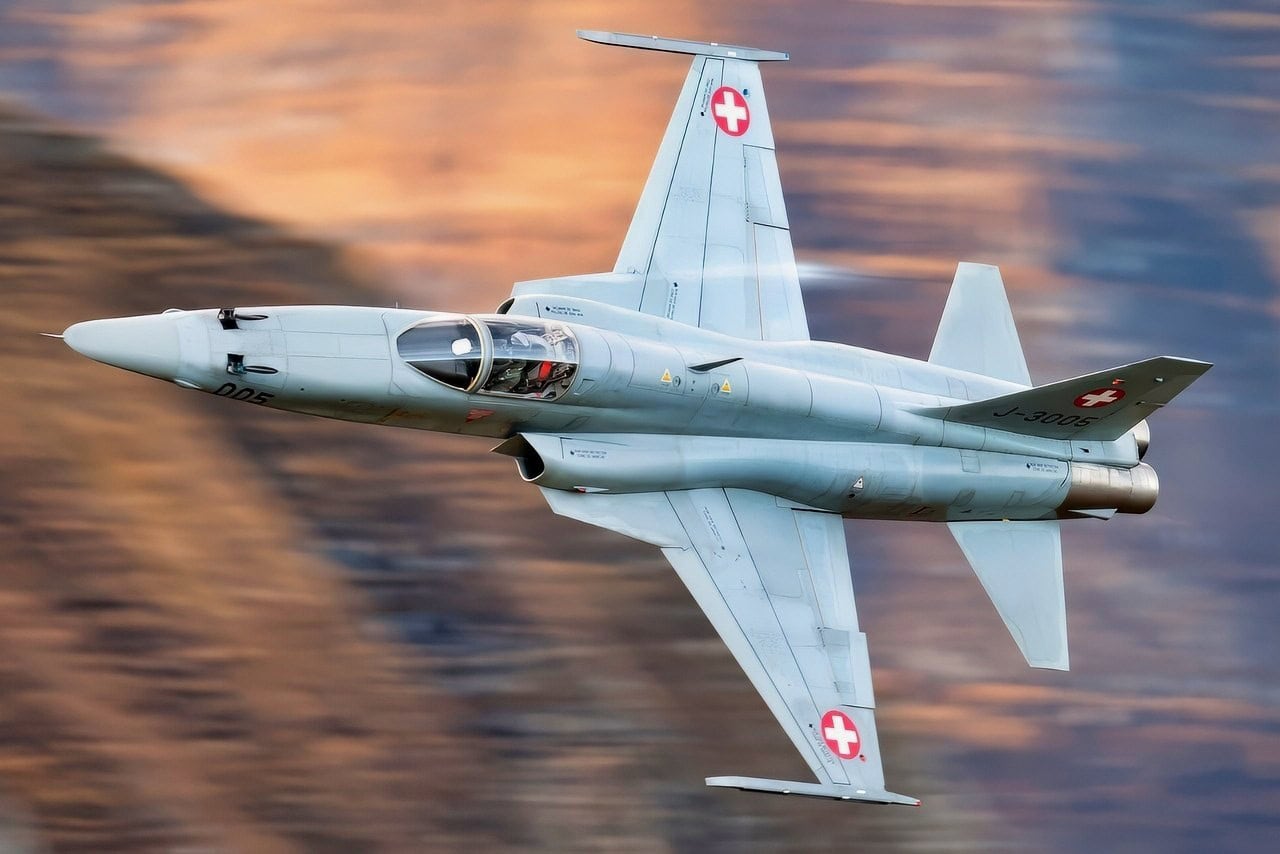
F-5E Tiger II Fighter. Image Credit: Creative Commons.
Iran then became the first foreign operator of the improved F-5E Tiger II. A 1973 State Department record said Tehran would receive the first production aircraft delivered anywhere and activate the first squadron.
The United States accelerated the schedule by seven months, delivering 32 F-5Es to Iran by March 1974. Specialist histories place later F-5E/F deliveries at 166 aircraft between 1974 and 1976.
The F-5E was small, fast, and easier to support than Iran’s F-4 Phantom or F-14 Tomcat. Two J85-GE-21 engines pushed the fighter to roughly Mach 1.6. The single-seat model carried two 20 mm cannons, Sidewinder missiles, bombs, and rockets.
Its radar, fuel capacity, and air-to-air performance improved substantially over the earlier F-5A.
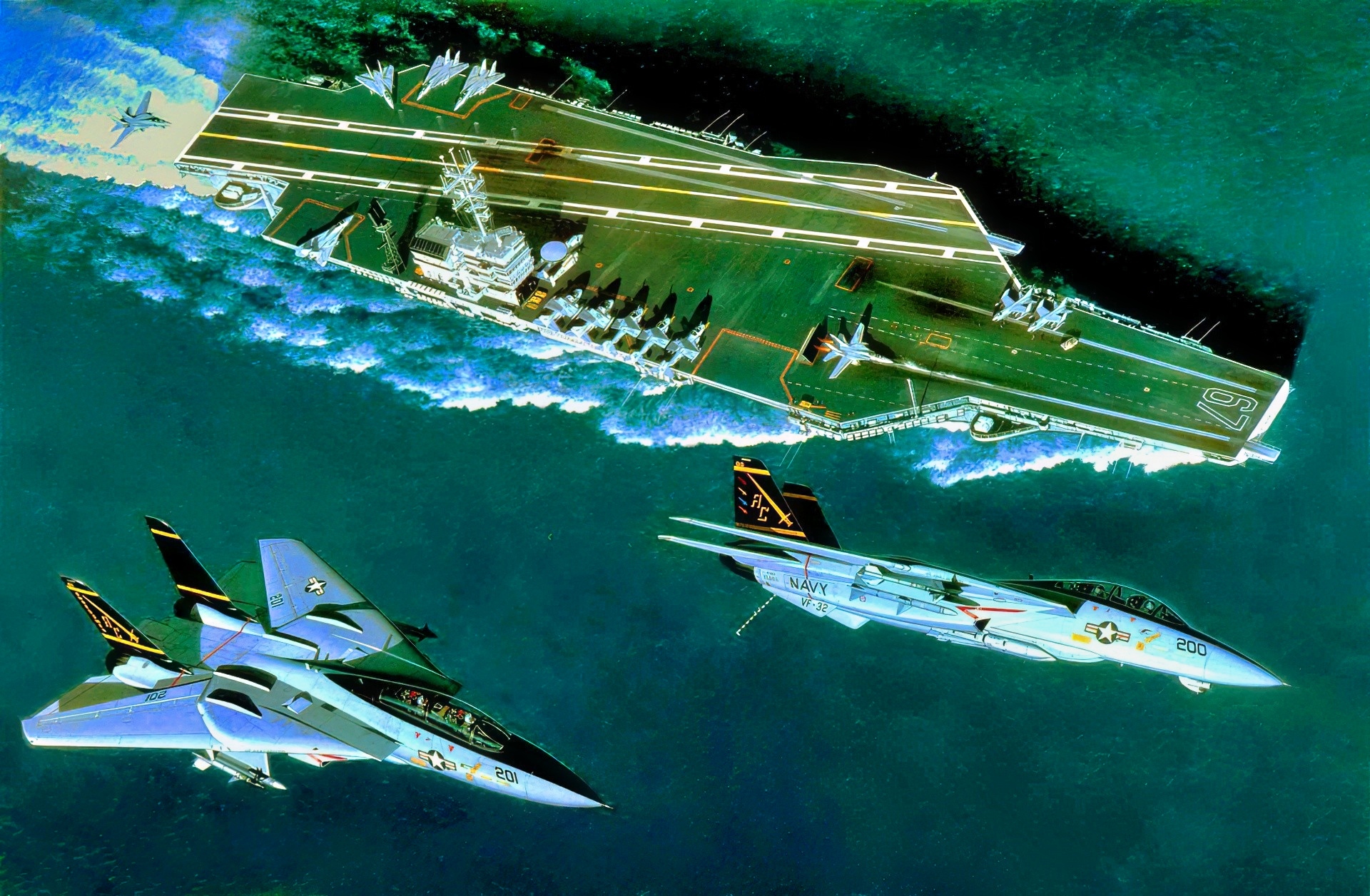
F-14 Tomcat. Image Credit: Creative Commons.
The Shah Built the F-5 Force for Strike and Air Defense
The first Freedom Fighters replaced F-84 Thunderjets in the strike role. The later Tiger IIs equipped about eight squadrons and gave Iran a fighter suited to battlefield attack, interception, and pilot conversion. Iranian aircraft received a relatively advanced fit that included a Litton inertial-navigation system and a weapons and ballistic computer.
The Shah also wanted a domestic support system. A 1974 Government Accountability Office review found that Iran was building facilities to manufacture spare parts and overhaul F-4 and F-5 aircraft. Hundreds of American personnel were helping Iranian forces develop maintenance and logistics skills. That preparation later became essential to keeping the F-5 fleet alive under sanctions.
American Support Ended After the Shah Fell
American support remained extensive through the Shah’s final years. The break came after the monarchy collapsed in 1979, U.S. contractors departed, and Washington halted military deliveries. Revolutionary purges also removed experienced officers and technicians from an air force built around American training and supply chains.
Iran adapted through cannibalization, locally manufactured components, depot overhauls, and purchases routed through third countries. The F-5’s relative simplicity helped. It required fewer specialized systems than the F-14, while its small engines and straightforward airframe were within reach of Iranian repair facilities.
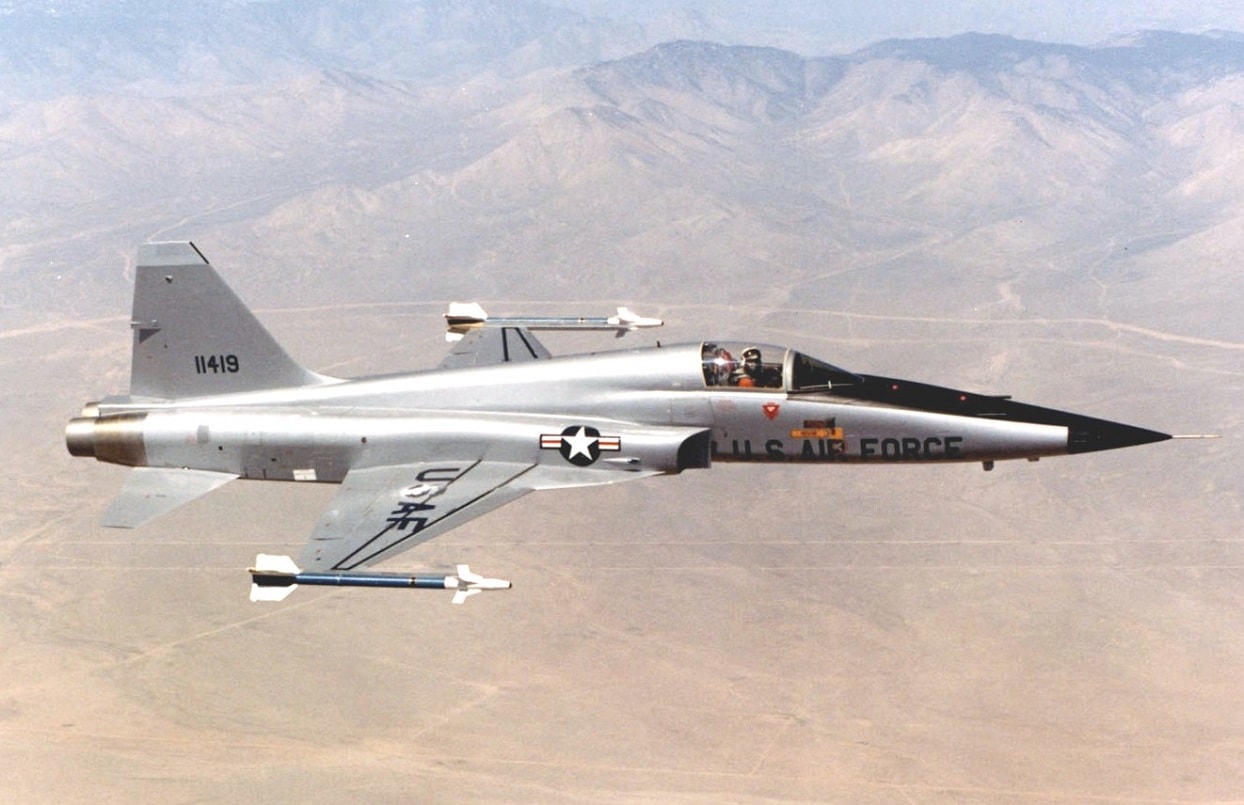
F-5: Image: Creative Commons.
Iran’s F-5s Fought Iraq From the Opening Days
Iraq invaded Iran on September 22, 1980, expecting the revolution-damaged military to collapse. Iranian F-5s joined the immediate counterattack against Iraqi airfields and later flew close air support, battlefield interdiction, reconnaissance, and air-defense missions.
The fighting around Dezful showed the cost. Iranian pilots used available F-5s against Iraqi columns and bridges near the Karkheh River. An Atlantic Council history reported 378 sorties in one day and five F-5s lost to enemy fire. The attacks helped stop Iraqi forces from crossing the river and cutting deeper into Khuzestan.
Three F-5s later attacked an Iraqi base near Kirkuk as a diversion during the 1981 H-3 raid by Iranian F-4s. Other Tigers fought Iraqi MiG-21s, MiG-23s and strike aircraft. Exact air-to-air victory totals remain disputed because Iranian and Iraqi records are incomplete, but the type carried a large share of Iran’s tactical workload throughout the eight-year war.
Iran Turned the F-5 Into a Domestic Aircraft Program
The survival effort eventually produced several Iranian derivatives. Azarakhsh appeared during the 1990s. Saeqeh added twin vertical tails. In 2018, Tehran announced production of the Kowsar, describing it as an indigenous fighter with new avionics and a fire-control system for short-range support missions.
Reuters noted that outside specialists viewed Kowsar as an F-5 copy rather than a clean-sheet aircraft. Public evidence confirms Iran’s ability to rebuild airframes, install some new cockpit equipment and manufacture selected components. It does not establish a large production run of completely new fighters, the distinction behind Iran’s claims about its F-5-derived aircraft.
The F-5’s lightweight export design gave Iranian engineers a practical base for those experiments. New displays, navigation equipment and warning systems made old jets more useful for training or light attack. They did not provide the stealth, radar reach or networked weapons of modern fighters. The design’s durability explains why the simple F-5E remained useful for decades, while its limits help explain Iran’s pursuit of the Russian Su-35.
The F-5 Reappeared in the 2025 and 2026 Wars
During Israel’s June 2025 campaign, the Israeli military said it struck two Iranian F-5s at Dezful Airport. No independently verified public record shows an F-5 flying a combat sortie against Israel during that war. The aircraft were more vulnerable on the ground than Israeli fighters were in the air, part of the gap between Iran’s aging fleet and the F-35I Adir.
The 2026 war produced stronger evidence of operational use. On March 1, Israel struck an F-5 and an F-4 on the runway at Tabriz as the aircraft were reportedly preparing to take off. CENTCOM footage later showed another F-5 destroyed at Ahvaz.
The most unusual episode came at Camp Buehring. NBC News reported that an Iranian F-5 penetrated the base’s defenses and dropped bombs during the opening days of the war. Iranian pilots later claimed they flew below 50 feet. The route, bomb load, damage and safe return have not been reconstructed independently. Even so, the report showed that an old light fighter could still exploit low altitude and surprise, the focus of the Camp Buehring strike account.
Replacing the losses will require stored airframes, additional Kowsar conversions or foreign aircraft, a larger challenge after the damage inflicted on Iran’s military aviation.
As of August 12, 2026, Tehran had not published how many F-5E/Fs remained flightworthy after the strikes at Dezful, Tabriz and Ahvaz.
About the Author: Harry J. Kazianis
Harry J. Kazianis (@Grecianformula) was the former Senior Director of National Security Affairs at the Center for the National Interest (CFTNI), a foreign policy think tank founded by Richard Nixon based in Washington, DC. Harry has over a decade of experience in think tanks and national security publishing. His ideas have been published in the NY Times, The Washington Post, The Wall Street Journal, CNN, and many other outlets worldwide. He has held positions at CSIS, the Heritage Foundation, the University of Nottingham, and several other institutions related to national security research and studies. He is the former Executive Editor of the National Interest and the Diplomat. He holds a Master’s degree focusing on international affairs from Harvard University.

