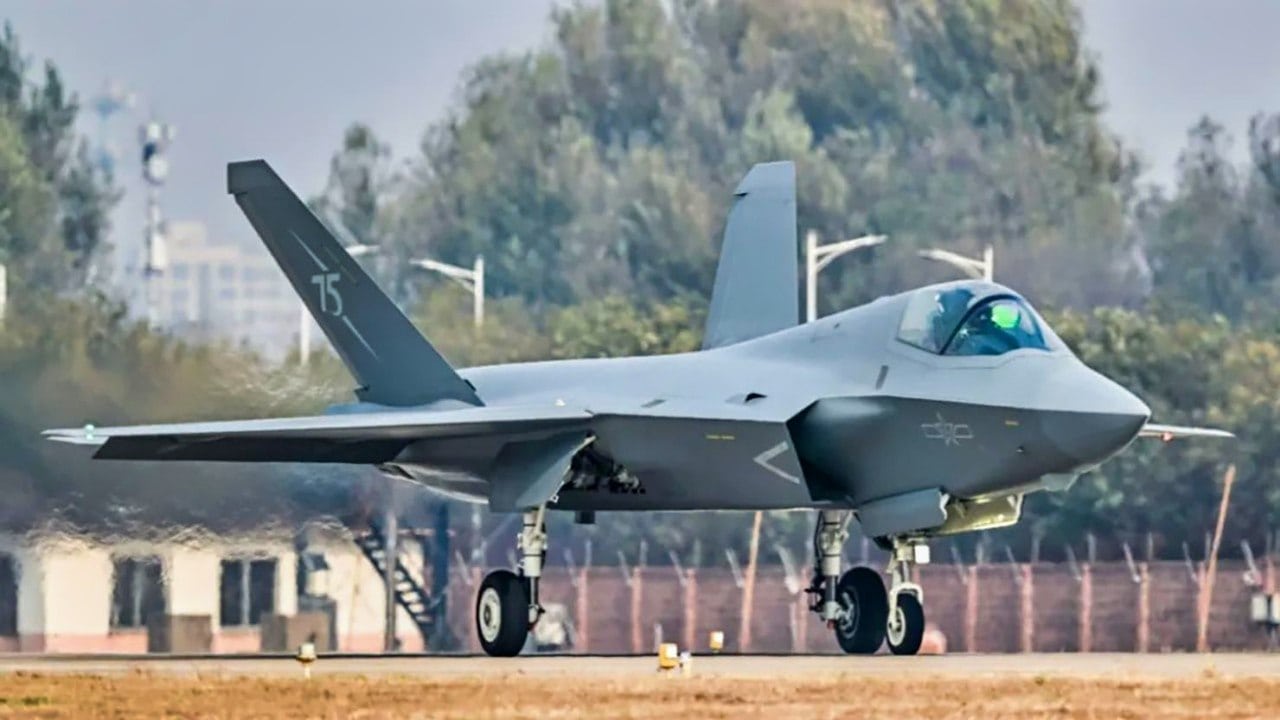
If Given a Decade, Could Iran Rearm and Rebuild its Military? What Will Beijing Do?
U.S. and Israeli strikes have reportedly seriously degraded the military capabilities of Iran. Losses are so extensive that Tehran would need to undertake a comprehensive rebuilding effort to arm and modernize its military and achieve a moderate level of capabilities across all domains.
Two major conflicts have erased considerable assets from Iran’s inventory. The first was the 12-day war in June 2025 that reportedly erased years’ worth of efforts expanding Iran’s conventional and nuclear programs. The short war “simultaneously exposed glaring weaknesses in its air defense and command structure,” according to some of the immediate after-action assessments from 2025.
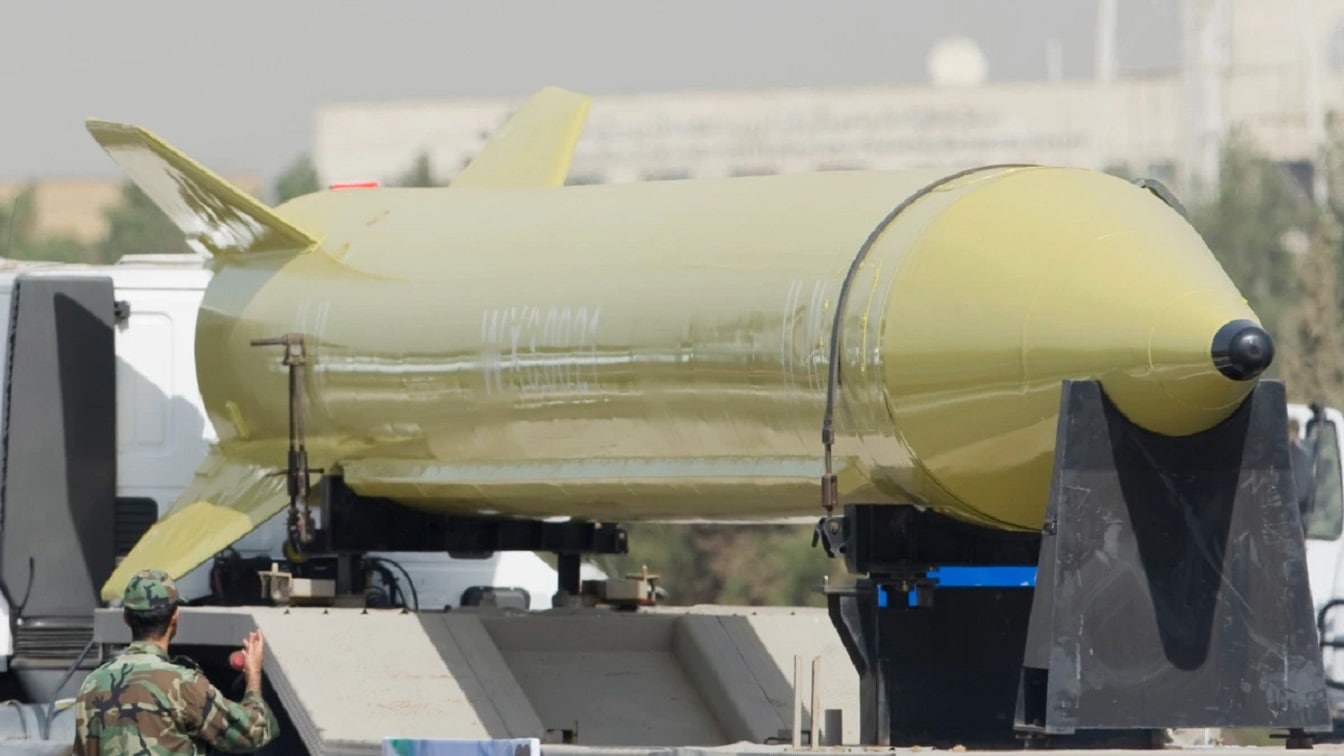
Iranian Ballistic Missile. Image Credit: Creative Commons.
There are actually two Iranian military establishments. One is the regular Iranian conventional armed forces, commonly known as Artesh. This mainline, traditional military defends the nation’s borders and national interests.
Separate from the Artesh is the Islamic Revolutionary Guard Corps (IRGC). Although its personnel number less than half that of the Artesh, it has more influence in the regime. It is also one of the most powerful, feared, and sometimes hated organizations in all of Iran.
According to a January 2026 profile of the organization from the Council on Foreign Relations, the IRGC plays “central roles in the country’s projection of power, internal security, and economy. It has also drawn mounting scrutiny and condemnation from world powers like the United States and European Union, most recently for taking part in a bloody suppression of mass protests in early 2026.”
CFR continues:
“Following the 1979 revolution, Iran’s clerical leaders created the IRGC outside—and as a counterweight to—the country’s traditional armed services, which they distrusted. Today, it reports directly to Supreme Leader Ali Khamenei, and its size and powers have expanded immensely.
“Among its many prominent military duties, the corps operates Iran’s formidable ballistic missile arsenal and oversees the Quds Force, an expeditionary arm that partners with Iran’s various regional affiliates, including Hamas and Hezbollah.”
At the beginning of the current war, Israel was still engaged in hostilities with both of these militant groups in the Gaza Strip and Lebanon. Some of the latest reports state that the Iranian ayatollahs and their entourages planned to flee Iran for exile in Russia—or have done so already—and leave the IRGC to run the country.
The military in Iran is now more powerful politically than it has been since the 1979 revolution, but its physical assets have been significantly degraded. Rebuilding capabilities will require substantial investments, and new acquisitions of tanks, aircraft, missile launchers, and other weapons will require tremendous sums of money. This is, of course, all music to the ears of the middlemen who would be involved in these procurements.
The Regime’s Likely Suppliers
The United Nations Security Council has consistently renewed its embargo on arms sales to Iran. The latest renewal was in September 2025. When he was U.S. Secretary of State in Donald Trump’s first term as president, Mike Pompeo deliberately took a hard line to ensure the arms embargo would remain in place ad infinitum.
Pompeo once famously tweeted that should this embargo be permitted to expire, “Iran will be able to buy new fighter aircraft like Russia’s Su-30SM and China’s J-10. With these highly lethal aircraft, Europe and Asia could be in Iran’s crosshairs. The US will never let this happen.”
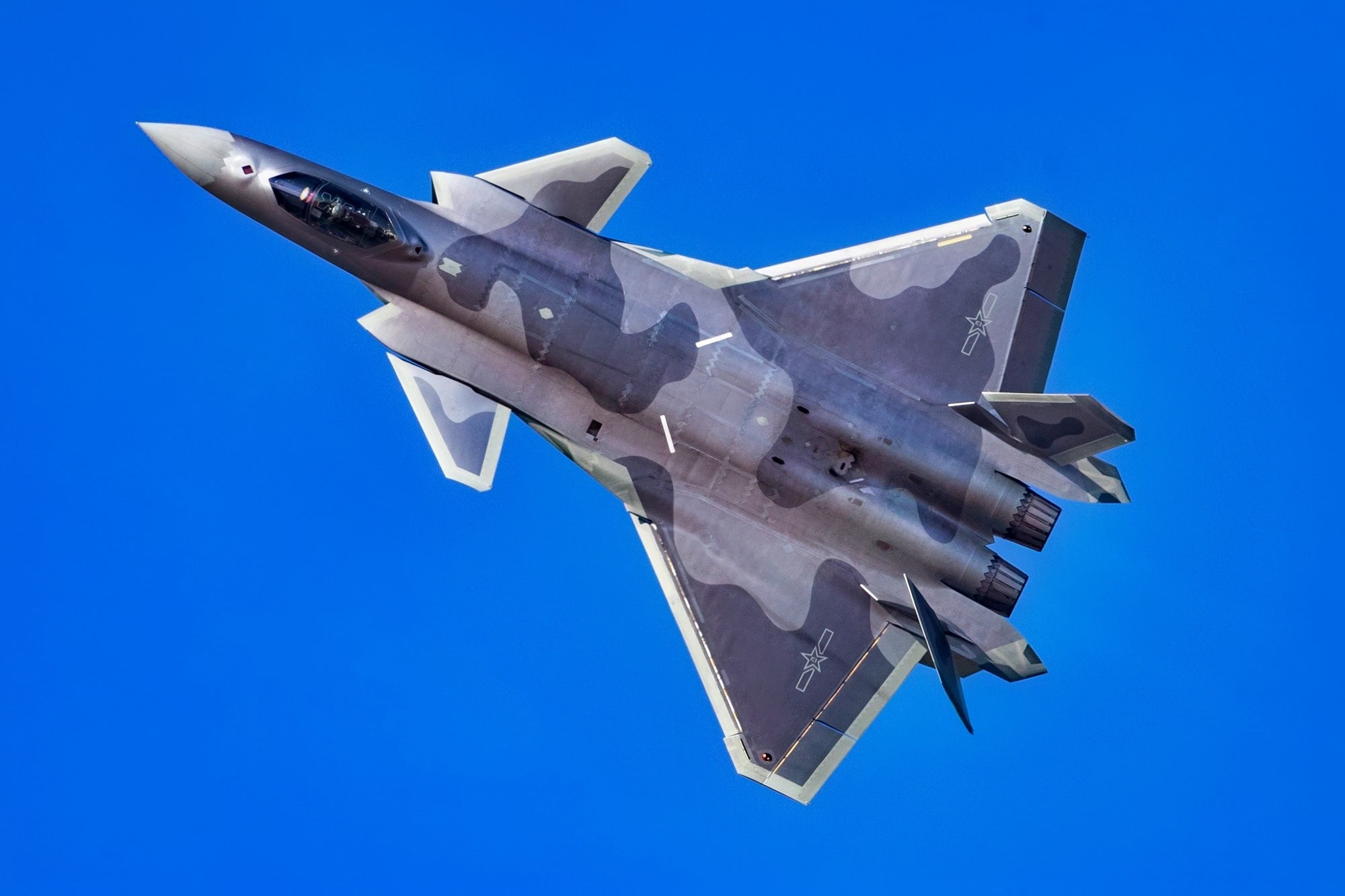
J-20 Fighter from China. Image Credit: Creative Commons.
But in the present day, there are nations salivating at the thought of making massive sales of military hardware to Iran: Russia, China, and North Korea—and they are not likely to be bothered by UN embargos at this point.
Iran acquiring weapons from the Russian and Chinese arsenals could make for some seriously unhappy follow-on effects. The U.S. Navy, for example, worries Iran will develop the means to sink a U.S. aircraft carrier.
For three decades, the Navy has been among the entities most concerned about Iran acquiring the latest Russian and Chinese technology. If Iran acquires long-range, supersonic anti-ship missiles (ASMs), the Navy could not safely operate in waters close to Iran. This would achieve the goals of Russia and its allies to create an anti-access/area denial capacity against the Navy’s carrier fleet.
But Russia is ot the only potential supplier. Since the early 2000s, another country has been quietly involved in a partnership with Tehran to develop ASMs with varying ranges and flight profiles. That country is the People’s Republic of China.
The goal of Iran and its Chinese partners is to create a layered defense of multiple threats against U.S. Navy carriers and other capital ships. The missiles in question can be launched from land, sea, and air, and the two nations have spent more than 20 years in a defense industrial partnership to achieve this capability.
These missiles are all originally of Chinese design, but when produced in Iran, they are officially built by what is officially the “Cruise Missile Systems Industries Group,” part of the Iranian Aerospace Industries Organisation (AIO). The AIO is one of several major industrial groupings that fall within Iran’s state-owned arms design and manufacturing base.
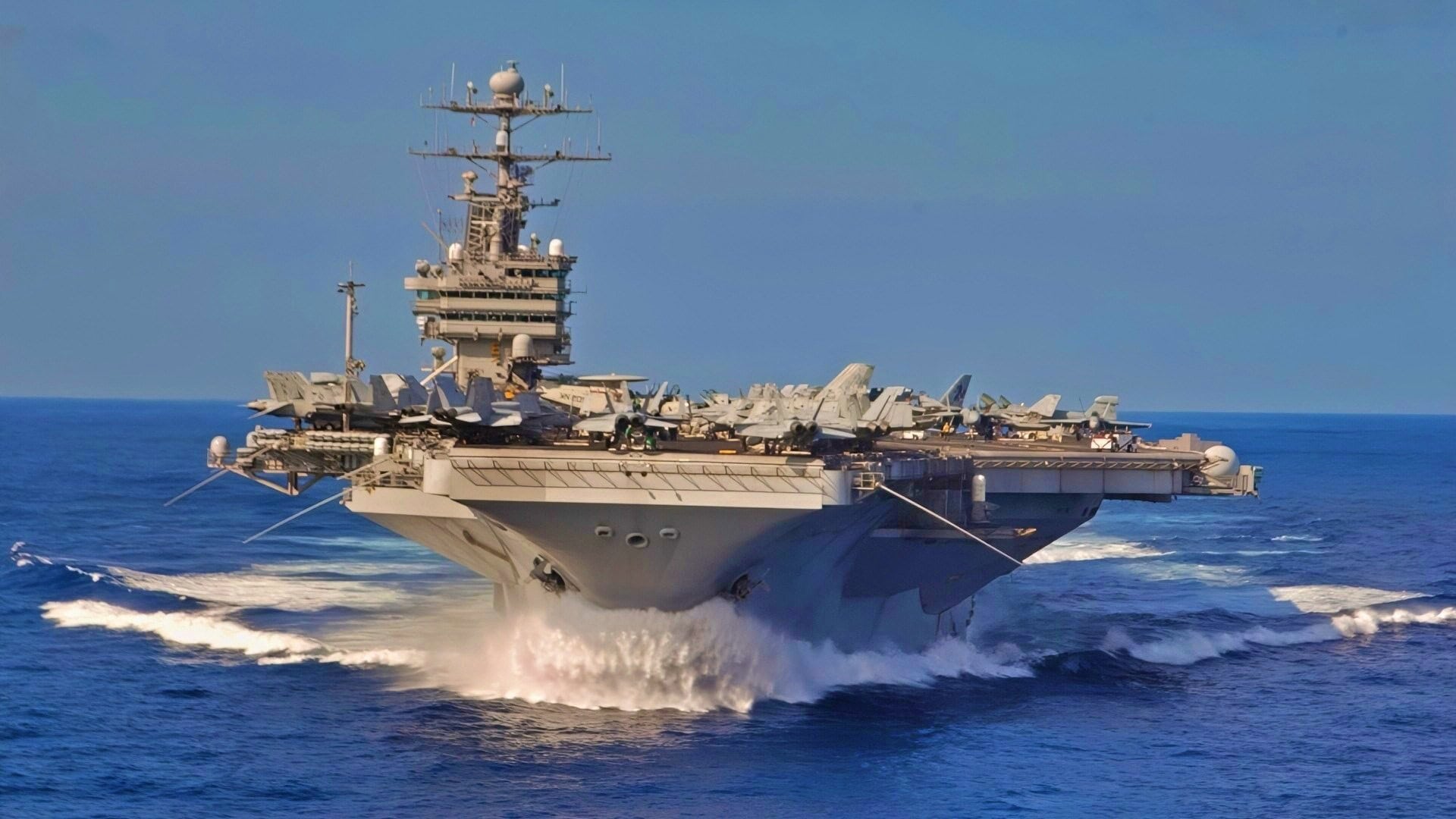
The aircraft carrier USS John C. Stennis (CVN 74) picks up speed as she steams through the western Pacific Ocean on Aug. 25, 2004. Stennis and her embarked Carrier Air Wing 14 are conducting exercises at sea on a regularly scheduled deployment.
(DoD photo by Airman Randi R. Brown, U.S. Navy. (Released))
Designs originated with China’s Hongdu Aviation enterprise. The missiles were first seen in November 2002 at the Air Show China, held in Zhuhai, Guangdong Province.
However, they were presented without any mention that they had been designed initially not for China’s People’s Liberation Army Navy, but for Iran as the primary customer.
|
Iranian Designator |
Chinese Designator |
|
Kosar-1 |
C701T |
|
Kosar-3 |
C701R |
|
Noor |
C801/802 |
|
Kosar |
JJ/KJ/TL-10 (derivative of older FL-8 programme) |
|
Nasr |
JJ/TL-6 (identical to what was once FL-9)/C704 |
The Iranians sow confusion by using different designators than the original Chinese model names; the Chinese themselves also use multiple different model series names for these missiles. The labelling used depends on which country has them in inventory, as shown above.
The physical placement of these missiles and their launchers telegraphs the function for which they were designed. Their deployment and target set are described as Coastal Defense Cruise Missiles, and their ability to hit targets in the Persian Gulf is shown in this graphic from the U.S. Defense Intelligence Agency’s 2019 report, Iran Military Power.
Continuing Alliances
Despite embargos, cooperation between China and Iran has steadily expanded since 2019. The level to which Iran continues to depend on its Chinese and Russian defense industrial partners has come to light over the past two weeks.
Iran is being aided in several respects by both Russia and China in its efforts against Israel and the United States. This includes the two nations providing “military cooperation,” according to the Iranian Foreign Minister Abbas Araghchi, who called Russia and China “strategic partners” of Tehran in an interview with broadcaster MS NOW on March 14.
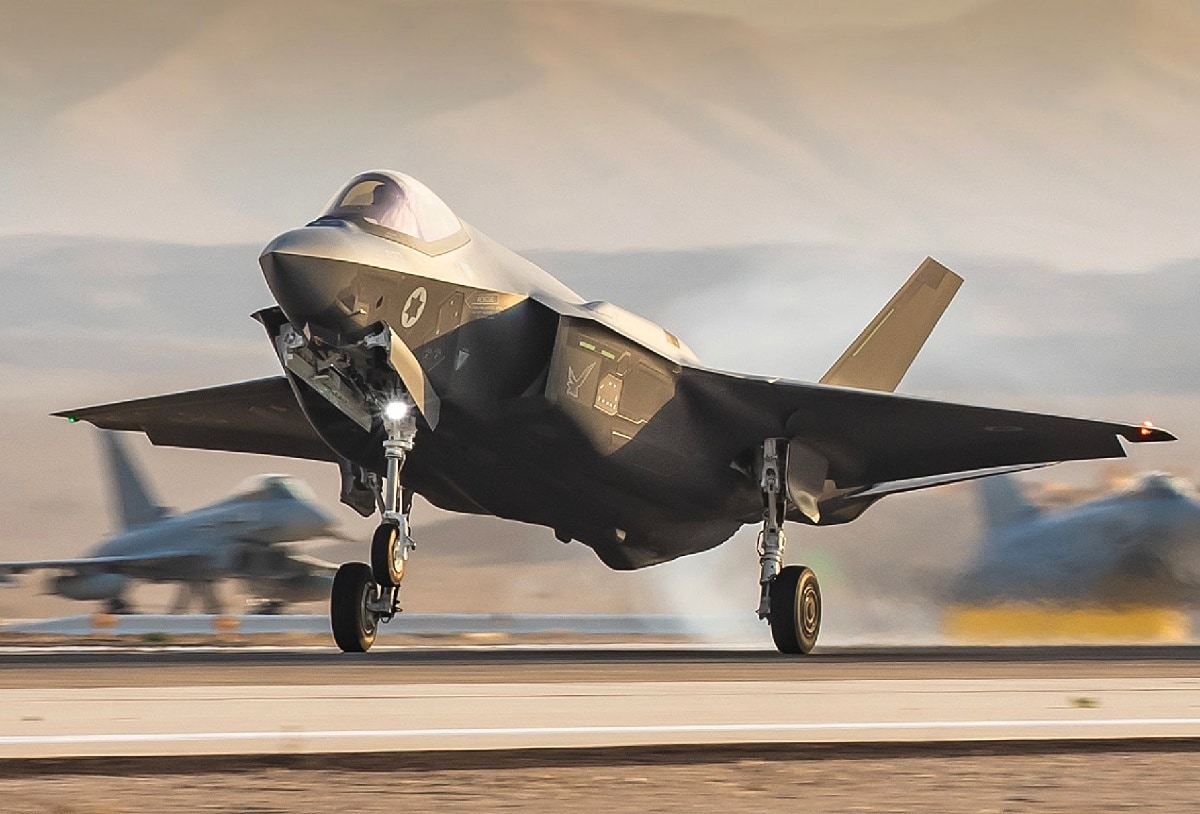
F-35I Adir. Image Credit: Creative Commons.
“We have had close cooperation in the past, which still continues, and that includes military cooperation as well,” said the foreign minister. Iran has had “good cooperation with these countries: politically, economically, even militarily,” he added.
Ties between Russia and Iran have included cooperative programs with both of Tehran’s military establishments. The Artesh operates many Russian-made weapons platforms, including the Mikoyan MiG-29 fighter aircraft and the Sukhoi Su-24 fighter-bomber. Defense-industrial cooperation between Iran, Russia, and China has also involved a steady increase in the number of made-in-Iran variants of weapon systems developed independently of those procured from partners.
For example, for more than a decade, Iran has been producing the Bavar 373, a localized version of the Russian Almaz-Antei S-300 air and missile defense system. There is also a long side story to the 2015 sale of the S-300 to Iran that the then-Obama Administration did not sanction Moscow over the sale—namely that the former president not only did not condemn the sale but shocked many Israeli analysts by saying he was surprised the embargo held on for as long as it did.
In late February 2026, the Iranian and Russian armed forces conducted joint exercises with the IRGC, primarily in the Strait of Hormuz, the Gulf of Oman, and the northern Indian Ocean. These exercises have been conducted annually since they first began in 2019 and are known as the Maritime Security Belt. In prior years, elements of the PLA also participated, though Beijing’s military was not observed in this year’s drills.
China and Russia, for some time now, have also engaged in programs to bolster Iran’s intelligence, surveillance, and reconnaissance (ISR) capabilities. The two nations have provided Iran with critical, real-time targeting information used in its attacks on U.S. assets and its partner nations in the Gulf.
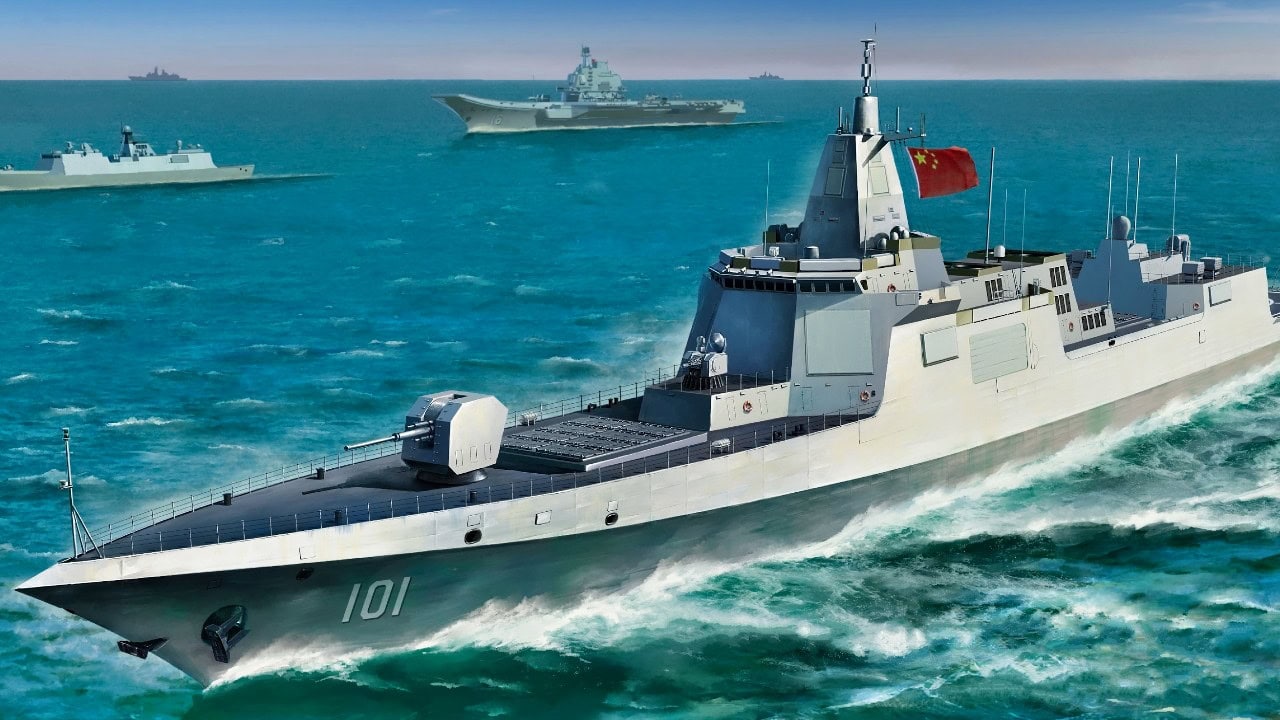
Chinese Navy Warship Created by Artist. Image Credit: Creative Commons.
More recently, they have been providing additional intelligence data to aid Iran’s air defense network. To do so, China has provided data from its spy satellites and given Iran access to its BeiDou space-based navigation system.
Both China and Russia have also provided the Iranians with surveillance capabilities, including through a space-based satellite surveillance system that joins the Russian Khayyam satellite network, the Rezonans-NE radar system, and the Chinese YLC-8B radar—which is reported to be designed to track stealth aircraft.
Is It Possible for Iran to Rebuild Its Military?
Iran’s rebuilding depends heavily on two key factors. One is what kind of government will eventually take control over the nation.
A new nation-state led by allies of the exiled crown prince, Reza Pahlavi, would likely exclude the support of Russia, China, and North Korea.
Support for Pahlavi as the next leader has been estimated as high as 80 per cent among the Iranian population.
According to Mohsen Behzad Karimi, an Iranian analyst based in Brussels who spoke to Mezha, an independent anti-corruption and news service, “Reza Pahlavi is widely regarded as a unifying national figure, not as a party leader. He positions himself not as a ruler, but as a guarantor of the transition.”
He additionally commented that in the eyes of many Iranians, the deceased Shah’s son embodies what a large majority of the population has wanted for years: the continuity of the era of statehood, restoration of national dignity, non-Islamic and non-sharia secular governance, and rebuilding of Iran’s international respect that was destroyed by the 1979 Revolution.
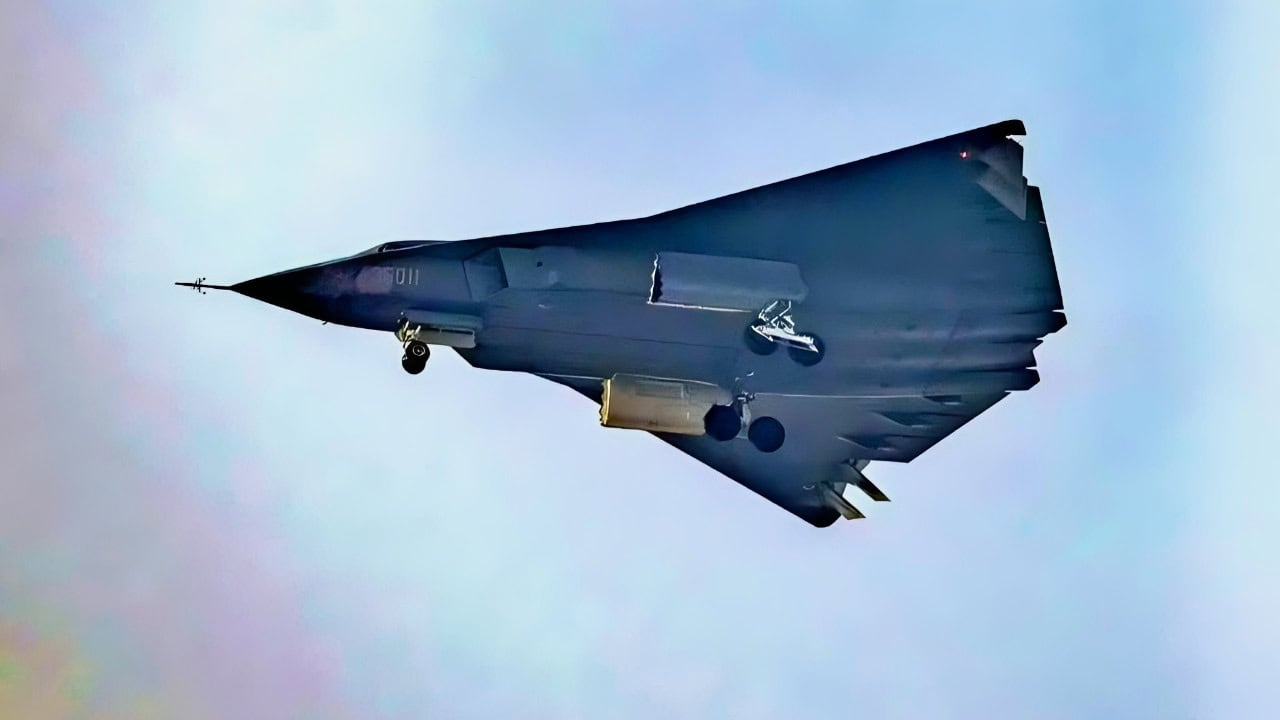
J-36 Fighter from China. Image Credit: X Screenshot.
Karimi stated that a majority of today’s Iranian society can be divided into three groups:
- A small minority that remains loyal to the Islamic Republic—a demographic which is shrinking today.
- An increasingly majority bloc that supports Reza Pahlavi as a transitional and unifying figure, but does not see him as a permanent head of state.
- A small, aging group with Marxist ideals or ties to the Islamic Republic.
A Pahlavi government would immediately cultivate ties with the West, making the role of rogue states arming the nation largely untenable.
However, should the Ayatollahs’ regime survive, China, Russia, and North Korea could redouble their efforts to replace what the U.S. and Israeli armed forces have destroyed.
The only fly in the ointment is where the money would come from. Decades of embargos and sanctions imposed on Iran have taken a crushing toll on the nation.
After the many strikes on Iran’s economy in this war, and as Russian President Vladimir Putin bankrupts his own nation with a more than four-year war in Ukraine, there are no deep pockets anywhere for Tehran to pick. This week it was confirmed that Russia has lost 40 percent of its capacity to export oil, because of Ukrainian drone strikes; oil is the nation’s only source of significant revenue.
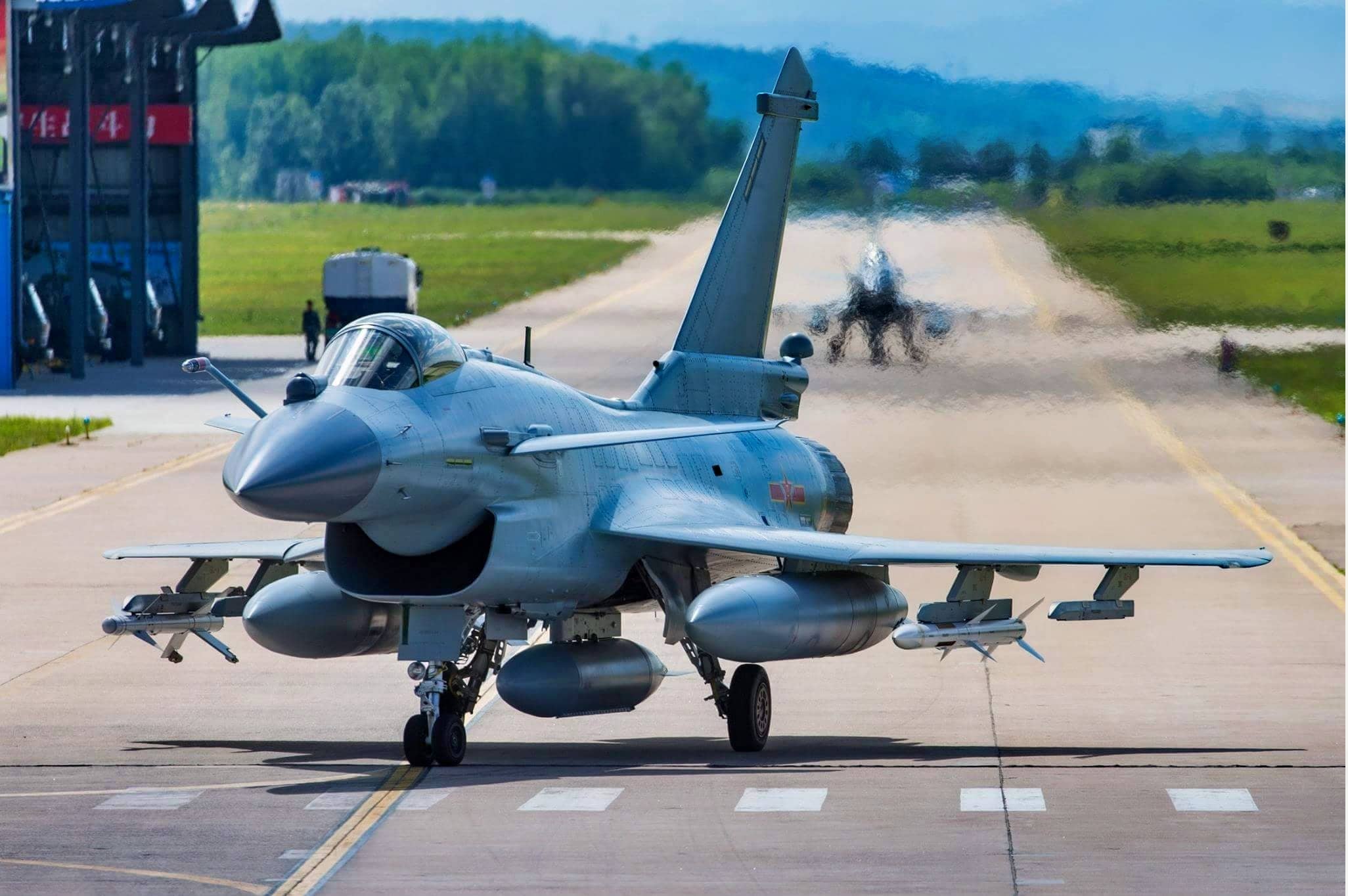
J-10C Fighter from China. Image Credit: Creative Commons.
North Korea is in no condition to provide any advanced arms technology without receiving something of equal or greater value, which Iran also cannot provide. That leaves China as the only possible suitor.
But as a commentary this week in The Hill points out, Beijing “wants stability in global energy markets, not a regional meltdown that sends oil prices into the stratosphere.”
“Beijing will buy Iranian oil and provide navigation support, but it won’t take steps that risk a direct confrontation with Washington. Its priority is protecting its own economic interests, not rescuing Iran from the consequences of the war,” reads the 25 March assessment.
So, will Iran arm itself to the teeth if the current regime somehow survives? At present that seems very hard to see. The military might of this regime most likely has seen its zenith. Its secular rulers will be fortunate if they even still have their lives, after the collapse of the regime—all that Russia or China could do for them s offer safety in exile.
MORE – Russia Has Built 30 Su-57 Stealth Fighters: The F-35 is 1,300 Strong and Adding More by the Day
MORE – The U.S. Navy’s New $15,000,000,000 Columbia-Class Nuclear Submarine Is Way Behind Schedule
About the Author:
Reuben F. Johnson has thirty-six years of experience analyzing and reporting on foreign weapons systems, defense technologies, and international arms export policy. Johnson is the Director of Research at the Casimir Pulaski Foundation. He is also a survivor of the Russian invasion of Ukraine in February 2022. He worked for years in the American defense industry as a foreign technology analyst and later as a consultant for the U.S. Department of Defense, the Departments of the Navy and Air Force, and the governments of the United Kingdom and Australia. In 2022-2023, he won two awards in a row for his defense reporting. He holds a bachelor’s degree from DePauw University and a master’s degree from Miami University in Ohio, specializing in Soviet and Russian studies. He lives in Warsaw.