
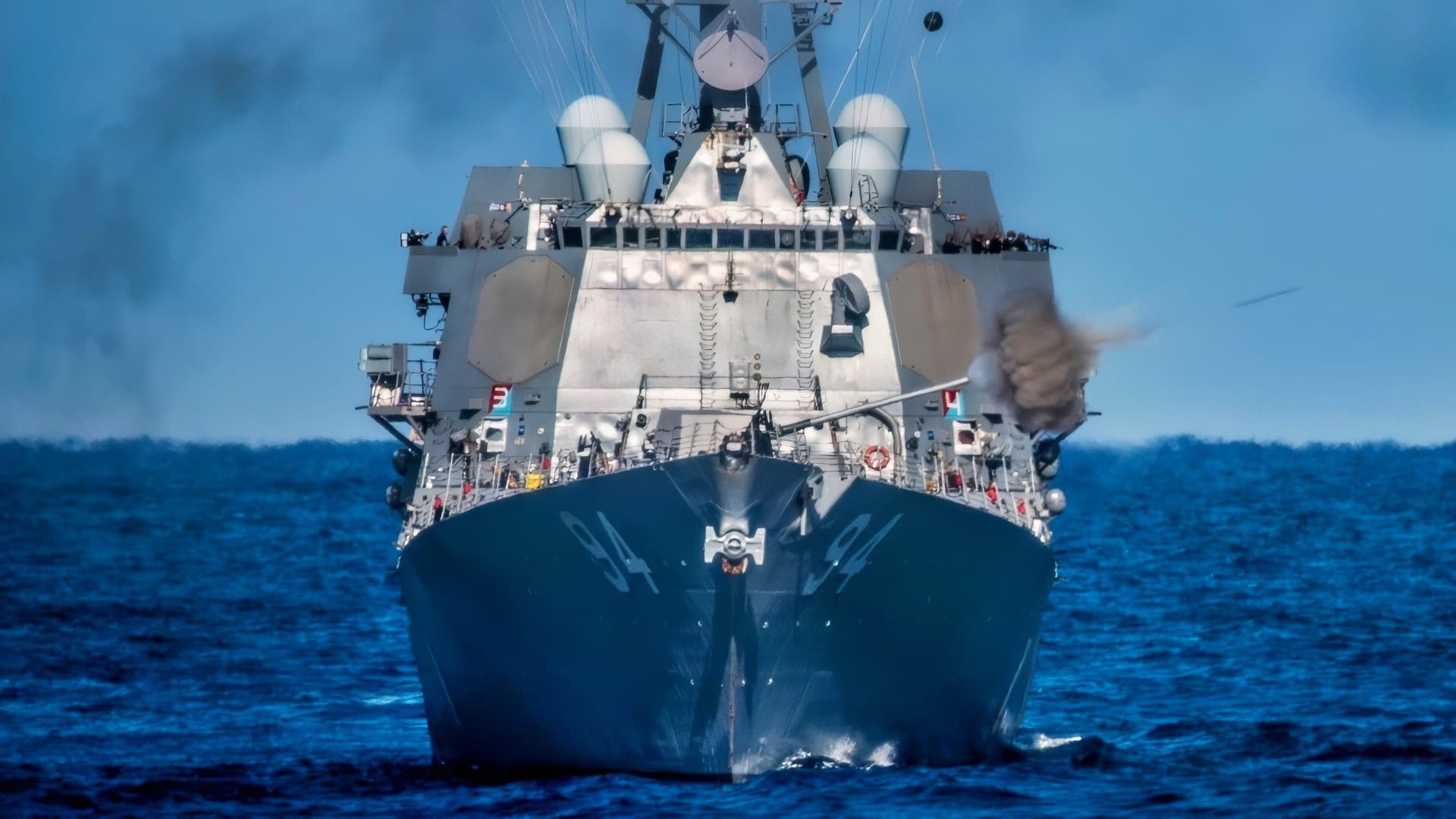
The U.S. Says It Destroyed 90 Percent of Iran’s Sea Mines. Hormuz Is Still Not Clear – U.S. Central Command said in May that American forces had eliminated more than 90 percent of Iran’s prewar inventory of over 8,000 naval mines through more than 700 strikes on mine-related targets. The claim describes an immense campaign against mine stocks, production infrastructure, and laying vessels. It does not establish that the Strait of Hormuz is clear.
On August 11, Iran said the waterway would remain closed unless Washington accepted its conditions for ending the war. Reuters counted only six vessel transits on August 10, compared with 130 to 140 ships on a normal prewar day. Shipping companies still lacked a publicly certified mine-free route.
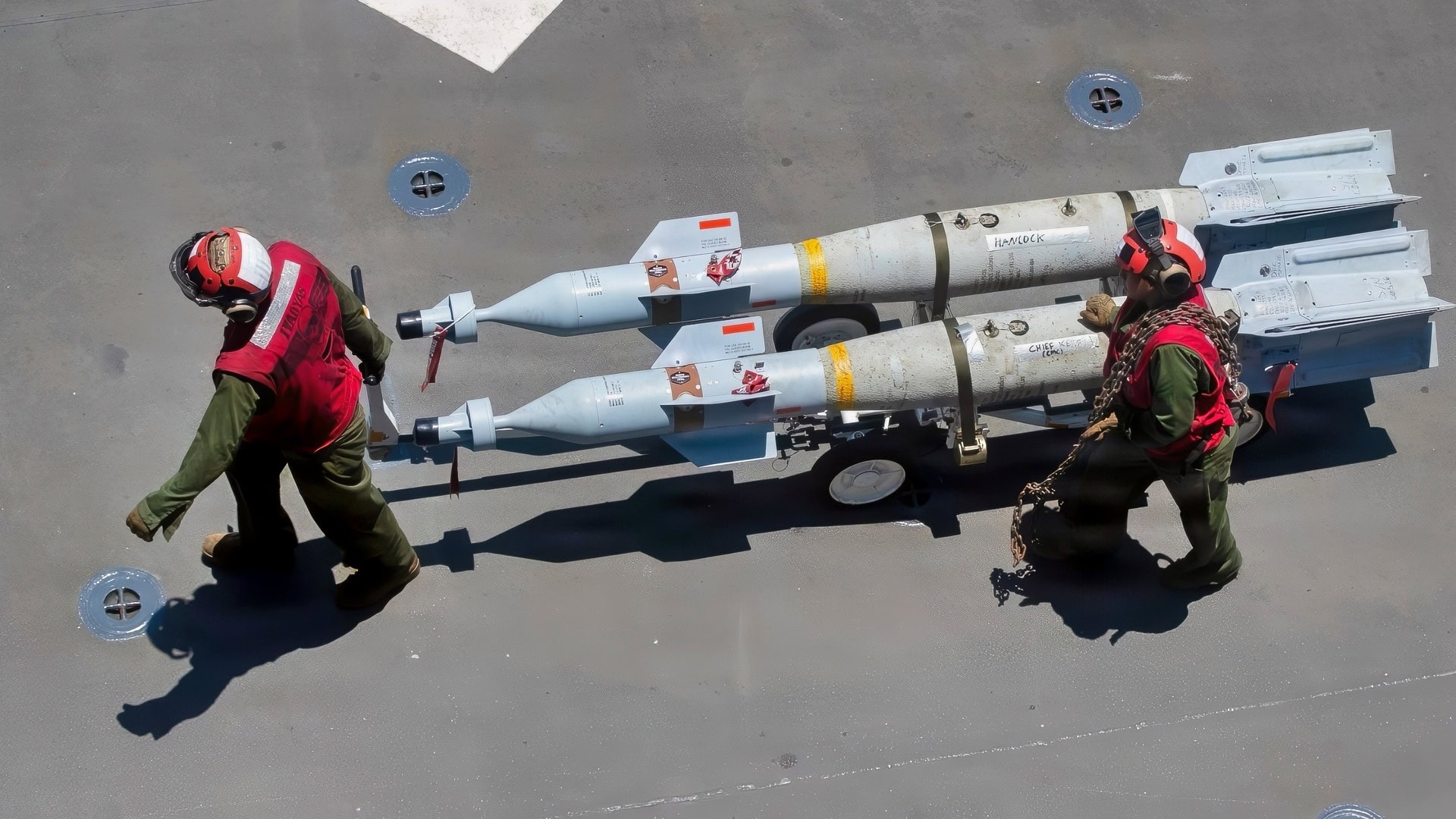
U.S. Marines, with the 31st Marine Expeditionary Unit (MEU), transport ordinance on the flight deck of America-class amphibious assault ship USS Tripoli (LHA 7), Mar. 20, 2026. Tripoli is currently underway conducting routine operations in the U.S. 7th Fleet area of operations. U.S. 7th Fleet, is the U.S. Navy’s largest forward-deployed numbered fleet, routinely interacts and operates with allies and partners in preserving a free and open Indo-Pacific. (U.S. Navy photo by Mass Communication Specialist Seaman Apprentice Reese Mitchell Taylor)
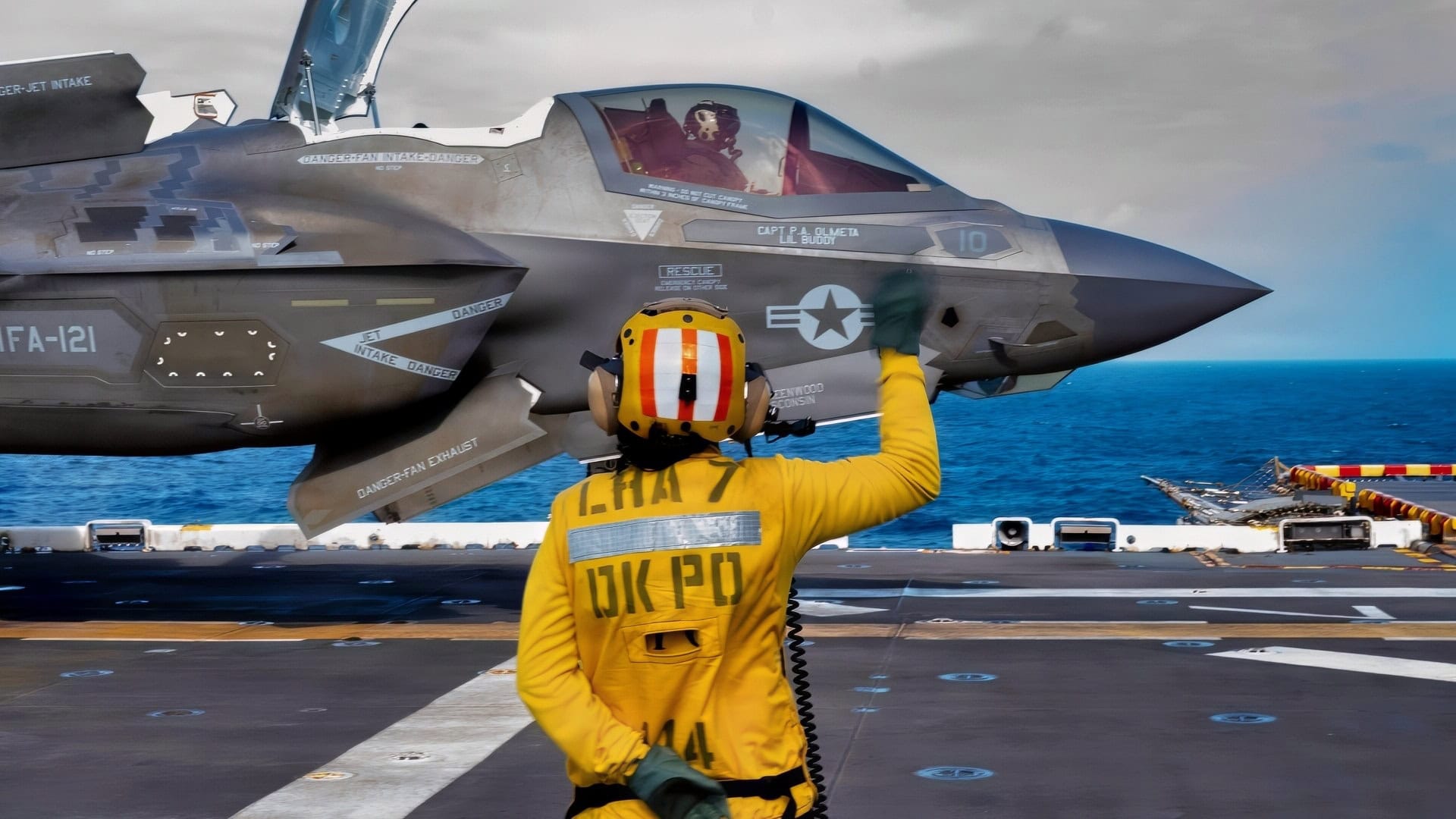
Aviation Boatswain’s Mate (Aircraft Handling) 3rd Class Anika Ramos directs the launch of an F-35B Lighting II, attached to Marine Fighter Attack Squadron 242 during flight operations on the flight deck of the America-class amphibious assault ship USS Tripoli (LHA 7) in the South China Sea, Dec. 11, 2025.
The current standoff is the latest stage of an Iranian capability built after the 1979 revolution.
A 1984 CIA assessment estimated that Iran held between 200 and 500 sea mines, including 200 purchased from North Korea. By 2026, open-source estimates had risen into the thousands, while CENTCOM later used a figure above 8,000.
The mine threat works through uncertainty as much as physical damage.
A mine does not need to sink a carrier or tanker to change behavior.
One explosion forces navies to search a wide area, shipowners to reconsider routes, and insurers to price every voyage as a possible casualty.
The Iran-Iraq War Turned Mines Into a Core Iranian Weapon
Iraq’s 1980 invasion pushed the Islamic Republic toward weapons that could offset a stronger conventional opponent.
Iran’s regular navy retained responsibility for larger ships and submarines, while the Revolutionary Guard developed an irregular force built around small boats, coastal weapons, and mining. That combination became central during the Tanker War.
Iran initially relied on simple moored contact mines.
The best-known example was the M-08, a spherical weapon tethered below the surface and triggered when a ship struck one of its horns. It lacked modern sensors, but it was cheap, easy to move, and difficult to spot before contact.
The first U.S.-protected convoy under Operation Earnest Will entered the Gulf in July 1987. On July 24, the reflagged Kuwaiti supertanker Bridgeton struck an Iranian M-08 near Farsi Island.
The tanker suffered heavy damage yet completed its voyage under its own power. U.S. warships followed in Bridgeton’s wake because the tanker had become the convoy’s safest improvised minesweeper.
USS Samuel B. Roberts Nearly Became Iran’s First Warship Kill
On September 21, 1987, U.S. helicopters observed the converted landing craft Iran Ajr placing mines near Bahrain.
Navy SEALs later boarded the vessel, recovered mines and documents, and then scuttled it.
The episode gave Washington direct evidence linking Iran to the campaign.
The greater shock came on April 14, 1988. USS Samuel B. Roberts entered a recently laid minefield and detonated an Iranian mine beneath the engine room. The blast tore open the hull, broke the keel, and severely injured 10 sailors. The crew controlled fires and flooding long enough to save the frigate.
Four days later, the United States launched Operation Praying Mantis, destroying two Iranian oil platforms and sinking or crippling several vessels. Iran has never achieved a confirmed mine sinking of a U.S. warship. Samuel B. Roberts showed how close a simple weapon could come.
The 1991 mine strikes against USS Tripoli and USS Princeton are often folded into the same Gulf history, but those were Iraqi mines laid during the Persian Gulf War.
Iran Added Influence Mines, Bottom Mines, and Rising Weapons
After the war, Tehran expanded beyond the M-08. It acquired or pursued Russian, Chinese, and North Korean designs while building domestic families. Modern influence mines detonate after sensing a ship’s magnetic field, machinery noise, water pressure, or a combination of those signatures. Some include ship counters that let several vessels pass before activation.
Iran’s displayed Maham family illustrates the progression. The Maham-1 is a conventional contact mine. The Maham-3 is a moored influence weapon with acoustic sensing and a reported 120-kilogram explosive charge. Maham-2 and Maham-6 designs rest on the seabed, where low profiles and acoustic or magnetic fuses make them harder to find.
The Maham-2 reportedly carries a 320-kilogram warhead and can use a delayed arming mechanism or ship counter. That allows the mine to ignore early traffic before attacking a later vessel, frustrating efforts to declare a route safe after several ships pass without incident.
Iran has also been linked to Russia’s MDM series and China’s EM-52 rising mine. The EM-52 sits on the seabed, detects a target overhead, then launches a rocket-propelled warhead upward. Public evidence does not establish how many Iranians were affected by or survived the 2026 strikes.
Fast boats can carry a few mines into a shipping channel. Merchant vessels or fishing craft offer concealment. Helicopters, submarines, and combat divers provide other delivery routes. This variety lets Iran choose between rapid visible mining and slower covert placement.
The 2025 War Showed Iran Was Prepared to Mine Hormuz
Iran did not place mines in the strait during the June 2025 Israel-Iran war, according to the available evidence. It came close enough to alarm Washington. U.S. officials told Reuters that Iranian forces loaded naval mines onto vessels after Israeli strikes began. The weapons were not deployed, but the movement showed that closing Hormuz was part of Tehran’s contingency planning.
Iran did not need to defeat the U.S. Fifth Fleet in a surface battle. It needed to make the world’s most important energy chokepoint dangerous enough that commercial captains, crews, and insurers refused to enter. That logic shaped Iran’s 2025 preparations and the 2026 campaign that followed.
The 2026 War Created a Live Mine-Clearing Crisis
U.S. reporting in March and April 2026 indicated that Iran had laid mines in and around the strait. Reuters cited about a dozen devices in one assessment. Secretary of State Marco Rubio later told senators that Iran had mined “large segments” of international waters. Iran denied laying mines, while Germany’s navy said reported locations at four sites could not be verified independently.
CENTCOM responded by striking mine stocks, production sites, and small vessels capable of laying them. Its May posture statement claimed that more than 90 percent of an inventory above 8,000 had been eliminated. The number remains a U.S. military assessment, not an independently audited count. Reuters reported in June that specialists still estimated Iran might retain as many as 1,000 mines.
A residual inventory of that size is enough to matter. A few fast boats can distribute contact or influence mines in hours. Once the boats leave, the minefield no longer requires continuous Iranian control. This is why one inexpensive mine can threaten a multibillion-dollar warship, even after the navy that laid it has suffered severe losses.
Mine countermeasure forces must detect possible objects, classify them, identify actual mines, and neutralize each weapon. Crewed minesweepers, helicopters, and unmanned systems also have to operate close to Iranian missiles, drones, and small boats. The Navy’s reduced dedicated mine-clearing force made the 2026 problem more difficult.
MH-60S helicopters, sonar-equipped unmanned vehicles, the Knifefish undersea system, and expendable neutralizers keep sailors farther from the explosive. They still require launch ships, secure operating areas, and time—the constraints behind the Navy’s expanding unmanned mine-hunting effort.
Hormuz Does Not Need Thousands of Mines to Become Unusable
The Strait of Hormuz is 21 miles wide at its narrowest point, but each established shipping lane is only two miles wide, separated by a two-mile buffer. About 20 million barrels of oil per day were processed in 2024, accounting for roughly 20 percent of global petroleum liquids consumption. About one-fifth of the global LNG trade uses the same route.
Iran’s mines form one layer alongside shore-based missiles, drones, fast attack craft, and submarines. The water is shallow, busy, and acoustically difficult. A mine-clearing ship moving slowly through a suspected field becomes easier to target from the coast, one reason the geography works against a clean military solution.
The mine threat has achieved strategic effects without a verified sinking of a 2026 warship. Iran only needs to keep passage uncertain. One suspected mine, an unverified explosion, or a missing chart can keep a $300 million tanker and its crew at anchor.
About the Author: Harry J. Kazianis
Harry J. Kazianis (@Grecianformula) was the former Senior Director of National Security Affairs at the Center for the National Interest (CFTNI), a foreign policy think tank founded by Richard Nixon based in Washington, DC. Harry has over a decade of experience in think tanks and national security publishing. His ideas have been published in the NY Times, The Washington Post, The Wall Street Journal, CNN, and many other outlets worldwide. He has held positions at CSIS, the Heritage Foundation, the University of Nottingham, and several other institutions related to national security research and studies. He is the former Executive Editor of the National Interest and the Diplomat. He holds a Master’s degree focusing on international affairs from Harvard University.

