
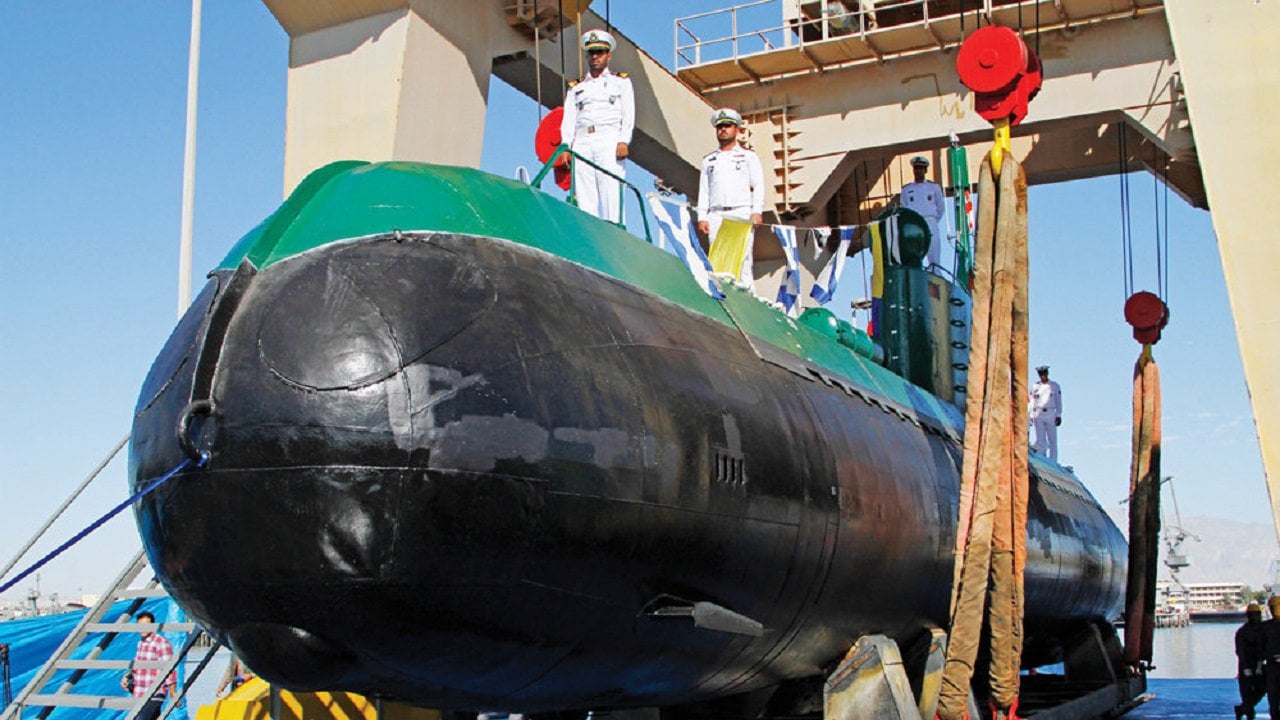
Iran Was Estimated to Have 24 Mini-Submarines. The U.S. Has Not Proved They Are All Gone – Defense Secretary Pete Hegseth declared Iran’s submarine force gone on March 19, 2026. He said Tehran once had 11 submarines, then stated that all were gone after U.S. strikes damaged or sank more than 120 Iranian naval vessels. The White House later claimed that every Iranian submarine had been sunk.
The public inventory before the war was much larger. A September 2025 Nuclear Threat Initiative assessment estimated 28 to 30 Iranian submarines, including 23 Ghadir-class mini-submarines plus one Nahang. Other estimates placed the Ghadir force closer to 14, 16, or 20 boats, reflecting secrecy, uneven readiness, possible earlier losses, and reserve hulls.
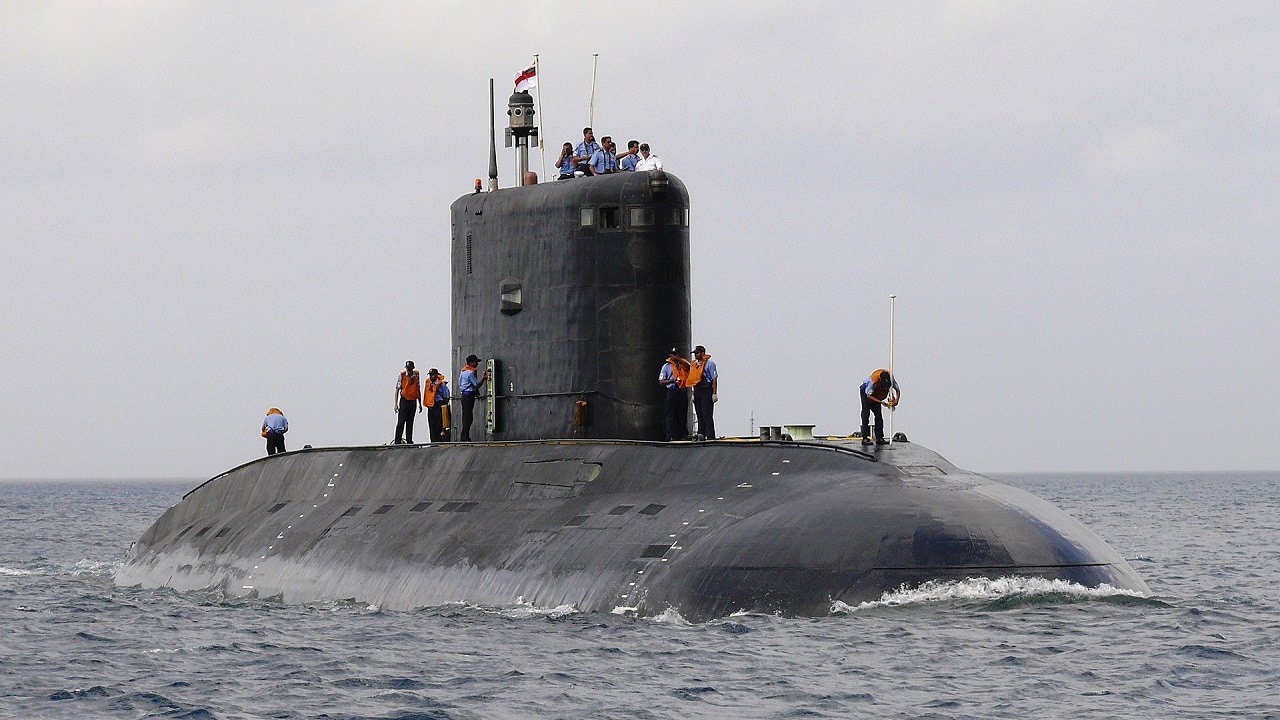
Kilo-Class Submarine.
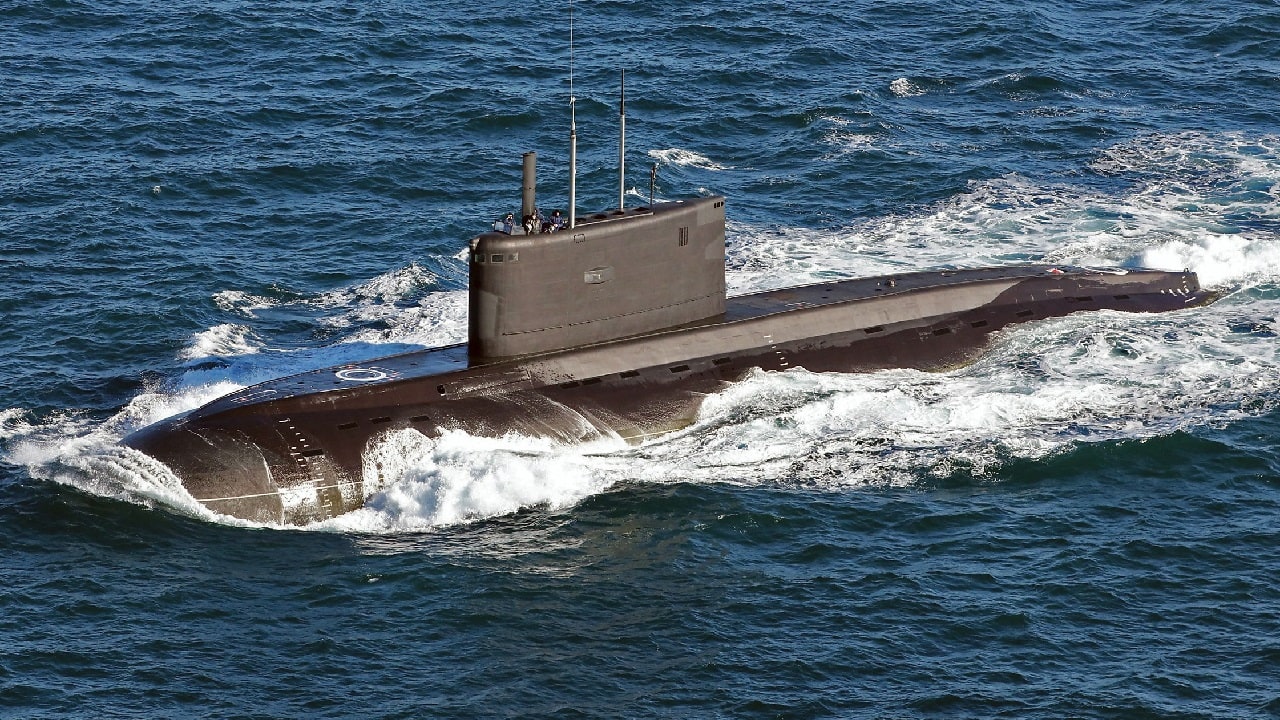
Pictured is a Kilo-Class Russian Submarine in the English Channel. The image was taken from Royal Navy Wildcat HMA2 Helicopter of 815 Naval Air Squadron. Kilo class is the NATO reporting name for the diesel-electric attack submarine.
American forces clearly hit Iranian submarine targets. CENTCOM released footage in July showing three one-way attack surface drones striking a submarine maintenance facility at Bandar Abbas. USNI News identified the raised vessel visible on the gantry as a Ghadir. The official video stopped before showing the post-strike damage.
The most defensible judgment as of today is narrower than the administration’s language. Iran’s conventional navy suffered catastrophic losses. Submarine bases, maintenance facilities, and command systems were badly degraded. No public hull-by-hull accounting proves that every Ghadir was destroyed or establishes how many surviving boats remain able to fight.
The Ghadir Fleet Came From North Korean Technology
Iran’s midget-submarine program grew from North Korean technology.
Pyongyang reportedly supplied at least one Yono-class submarine in 2004. Tehran subsequently produced a local derivative called the Ghadir.
NTI says North Korea may have built the first one or two Iranian boats, though the exact division of design work remains unknown.
Production shifted into Iran’s domestic defense industry. Shahid Darvishi Industries, a subsidiary of the Defense Ministry’s Marine Industries Organization, became the principal organization for submarine design, construction, and maintenance.
The first Iranian-built Ghadir entered service in 2007, followed by repeated commissioning ceremonies as Tehran expanded its shallow-water submarine force.
The North Korean connection carried a warning. An international investigation concluded that a North Korean torpedo sank the South Korean corvette Cheonan in 2010, killing 46 sailors. Analysts suspected a Yono-class boat launched the weapon. Iran’s Ghadirs have no independently verified combat kills, but the Cheonan case demonstrated what a small submarine armed with heavyweight torpedoes could do.
About 125 Tons Support Two Heavyweight Torpedo Tubes
A Ghadir measures roughly 29 meters long, displaces about 117 tons surfaced or 125 tons submerged, and uses diesel-electric propulsion.
Open-source U.S. Army specifications list a crew of seven, a surface speed near 10 knots, and a submerged speed around eight knots. Two bow-mounted 533mm torpedo tubes provide the principal armament.
Those numbers describe a coastal ambush weapon rather than a miniature attack submarine. A Ghadir lacks the endurance, speed, sensor reach, or reload capacity of Iran’s Russian-built Kilo class. Its small hull fits the shallow Persian Gulf, where larger submarines face depth limits. It can wait near a shipping lane, rest close to the seabed, launch a torpedo, place mines, or deliver special-operations personnel.
Iran has also tested a submarine-launched cruise missile associated with the Jask-2 program. State footage from a 2019 exercise showed a Ghadir firing from beneath the surface at a maritime target.
Public information does not establish the missile’s operational range, inventory, or reliability. The test still gave the Iranian submarine threat a possible standoff component beyond a close torpedo attack.
Exercises and Patrols Produced No Verified Combat Kill
The clearest documented Ghadir missions involved patrols, training, weapons trials, and foreign engagement. Ghadir 953 entered the northern Indian Ocean in 2014, visited Karachi, participated in activity with the Pakistan Navy.
Iranian exercises later displayed torpedo launches, submerged missile firing, and coordinated operations near the Strait of Hormuz.
Iran claimed another Strait deployment in May 2026, nearly two months after Hegseth said the submarine fleet was gone. Bloomberg reported that the International Institute for Strategic Studies counted at least 16 Ghadirs. Iranian officials described the boats as hidden guardians of the waterway. Tehran released no serial numbers, patrol locations, or evidence establishing how many were operational.
No independently verified report ties a Ghadir to a successful torpedo, missile, or mine attack during the 2026 war. Shipping came under attack from drones, missiles, mines, small craft, and unidentified projectiles. The boats might have conducted surveillance, deterrent patrols, or mine-laying, but public evidence does not attribute a specific wartime strike to any of them.
U.S. Strikes Hit the Boats and Their Support System
The opening campaign targeted naval headquarters, ports, surface ships, and submarines. U.S. footage released in March appeared to show at least one Ghadir under attack.
Washington never published a complete list of submarine hull numbers, strike locations, or final damage assessments.
The July 12 Bandar Abbas operation deepened the accounting problem. CENTCOM said three Corsair sea drones struck a submarine plus a ship-maintenance facility, marking the first American combat use of one-way attack surface craft. USNI News identified the vessel suspended above the water as a Ghadir. The attack occurred almost four months after Hegseth said all 11 submarines were gone.
The target could have been an already disabled hull, a reserve boat, or a submarine excluded from the Pentagon’s earlier count. It might also have been undergoing repair when the first campaign began.
No official statement reconciled the March declaration with the July strike, a discrepancy noted in public accounting of Iran’s missing mini-submarines.
“Iran’s Navy Is Destroyed” Describes Capability Better Than Inventory
The phrase “navy destroyed” has a defensible operational meaning. Iran lost major surface combatants, command facilities, and repair capacity. U.S. strikes also hit submarine targets. A navy unable to organize patrols, maintain vessels, or protect bases can cease to matter as a conventional fleet even when scattered hulls remain.
It becomes less reliable when treated as a literal inventory statement. Hegseth cited 11 submarines. NTI counted 24 mini-submarines alone before adding three Kilos plus Fateh-class boats. The Pentagon has not explained whether its figure covered only operational hulls, vessels located at the start of the war, or submarines confirmed through classified intelligence.
A surviving Ghadir would not restore Iran’s fleet. It would preserve one element of the country’s asymmetric maritime system. Small submarines, shore-based missiles, drones, fast craft, and sea mines impose search costs on a stronger navy.
Iran’s estimated mine inventory remains especially relevant because Ghadirs were built for shallow-water operations where mining can disrupt shipping without a fleet battle.
A Surviving Hull May Still Be Unable to Fight
Hull survival is not the same as combat readiness. A Ghadir needs a trained crew, charged batteries, working sonar, usable weapons, secure communications, and shore support. Strikes in Bandar Abbas could have removed cranes, workshops, electrical service, and spares needed to keep several boats active. A submarine sitting on a gantry proves the existence of a hull, not a deployable weapon.
The opposite mistake is to assume that a crippled naval organization leaves the coastline undefended. One unlocated submarine forces patrol aircraft, helicopters, and surface escorts to search. Merchant operators or insurers also respond to uncertainty. That effect helps explain why Iran’s midget-submarine force mattered before the war despite its limited speed or payload.
As of August 11, the Pentagon had not released a serial-number list for the 11 submarines it said were gone. Iran had not published the names, locations, or readiness status of the Ghadirs it claimed to deploy after that declaration.
About the Author: Harry J. Kazianis
Harry J. Kazianis (@Grecianformula) was the former Senior Director of National Security Affairs at the Center for the National Interest (CFTNI), a foreign policy think tank founded by Richard Nixon based in Washington, DC. Harry has over a decade of experience in think tanks and national security publishing. His ideas have been published in the NY Times, The Washington Post, The Wall Street Journal, CNN, and many other outlets worldwide. He has held positions at CSIS, the Heritage Foundation, the University of Nottingham, and several other institutions related to national security research and studies. He is the former Executive Editor of the National Interest and the Diplomat. He holds a Master’s degree focusing on international affairs from Harvard University.

