
Iran has reportedly launched another attack on an oil tanker near the Strait of Hormuz, with unverified reports describing strikes on a vessel traveling through the U.S.-backed southern shipping corridor as Tehran intensifies its pressure campaign and the United States “low-keys it.”
Reports began circulating late on Sunday, August 9, claiming that anti-ship cruise missiles were fired from Sirik in southern Iran toward a tanker off the coast of Oman, setting the ship on fire.
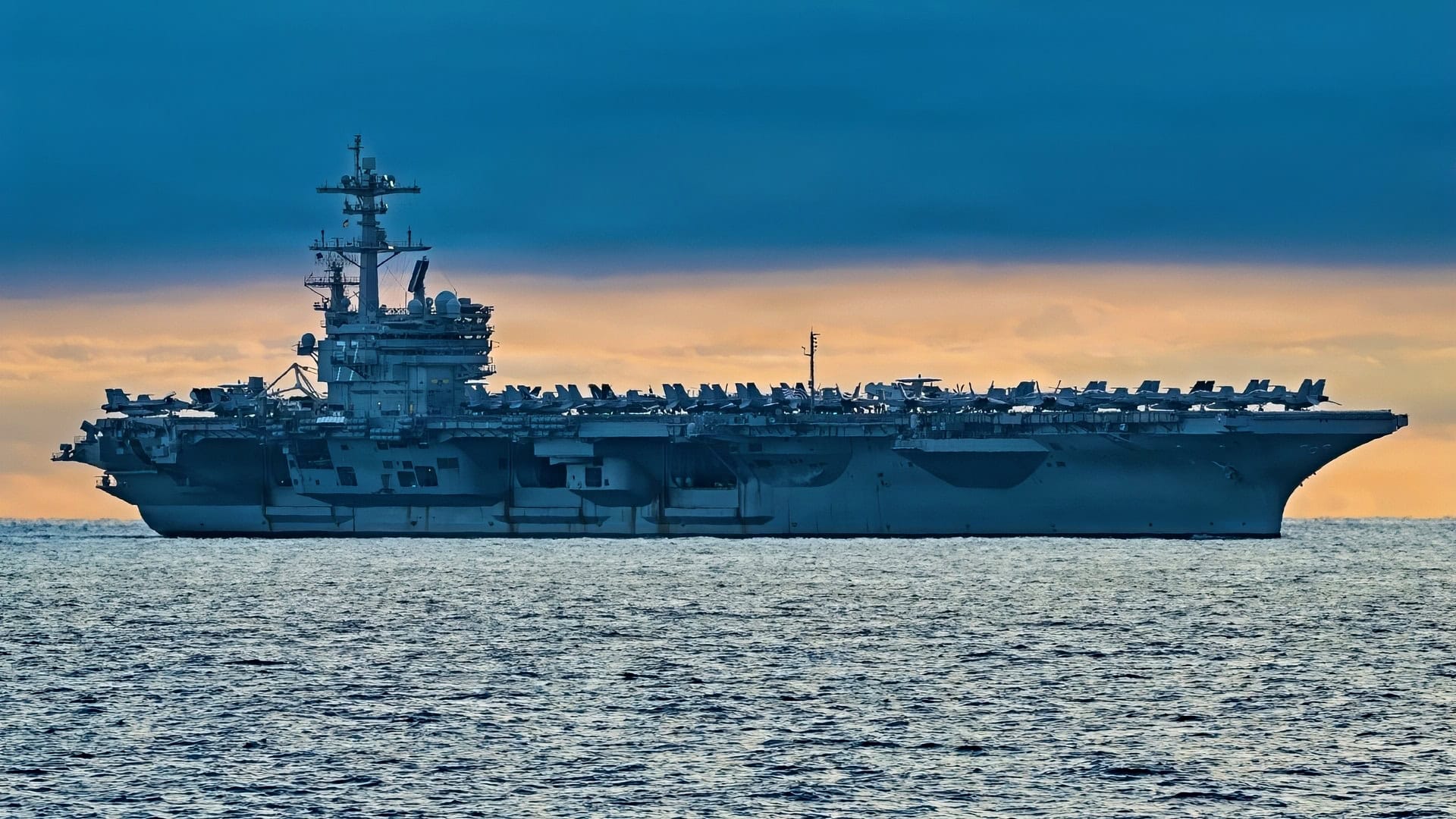
The Nimitz-class aircraft carrier USS George H.W. Bush (CVN 77) sails in formation while underway in the Atlantic Ocean, Dec. 10, 2025. The George H. W. Bush Carrier Strike Group is underway for Group Sail, its first integrated at-sea training phase. This event is designed to increase the Strike Group’s tactical proficiency and lethality across all domains, meeting Navy and Joint warfighting requirements. (U.S. Navy photo by Mass Communication Specialist Seaman Mark Peña)
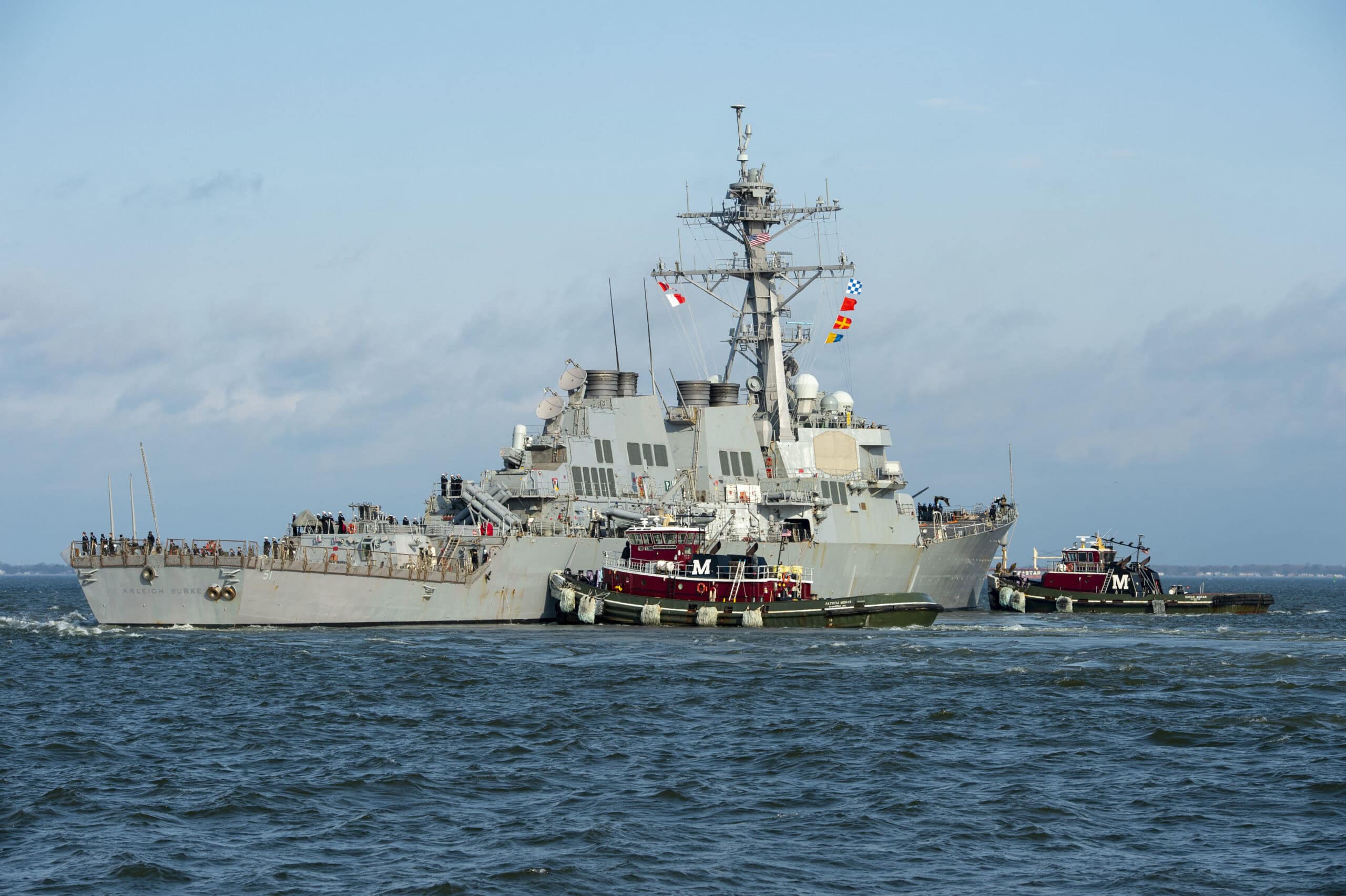
NORFOLK (Mar. 26, 2021) – A tugboat assists the guided-missile destroyer USS Arleigh Burke (DDG 51) in getting underway Mar. 26. Arleigh Burke will replace USS Donald Cook (DDG 75) as one of four forward deployed naval forces (FDNF) located in Spain. Arleigh Burke will join USS Ross (DDG 71), USS Roosevelt (DDG 80), and USS Porter (DDG 78) as the newest member of FDNF Rota. (U.S. Navy photo by Mass Communication Specialist 2nd Class Kris R. Lindstrom)
The claim was published by the Hormuz Letter account on X and was subsequently reported by other outlets.
As of Monday afternoon, however, the incident had not been confirmed by U.S. Central Command, the United Kingdom Maritime Trade Operations (UKMTO) agency, Oman or Iran – and the vessel’s identity, ownership, cargo, or even crew status remain unknown.
Reports describe the attack as unverified, but it comes as Iran continues to launch attacks on vessels passing through the Gulf even after U.S. President Donald Trump warned of major consequences if they continue.
Southern Corridor Under Pressure
The latest claim follows several confirmed or reported attacks around the Strait of Hormuz.
On July 14, Iranian cruise missiles struck the Emirati tankers Mombasa B and Al Bahyah in Omani waters, according to the UAE Ministry of Defense. One Indian sailor was reportedly killed and eight others wounded, while fires also damaged both vessels.
On August 1, UKMTO reported that another tanker had been struck by an unknown projectile around 11 nautical miles northeast of Limah, Oman, causing damage to its engine room.
There were no casualties reported in that incident, and authorities did not publicly attribute the incident to Iran.
Then, on August 8, the UAE directly accused Iran of firing missiles at another ADNOC-linked vessel passing through the Strait of Hormuz. ADNOC said last week that 15 of its vessels had been attacked while passing through the Strait of Hormuz since the conflict began, with one crew member killed and another 20 injured.
Trump Threatened A Bridge for Every Ship
Iran continues its strike campaign against commercial shipping in the Strait of Hormuz and insists that it will refrain from any new negotiations with Washington until the end of President Donald Trump’s term in 2029, even after Trump warned that every strike would be met with retaliation against Iranian infrastructure.
On July 22, the president said that the United States would blow up an Iranian bridge or power plant for every vessel struck in the waterway.
“From this point forward, any time the Islamic Republic of Iran shoots at a ship in the Strait of Hormuz, whether it be by Missile, Rocket, Drone, or any other device or weapon, the United States will bomb and destroy ONE BRIDGE OR POWER PLANT,” the president said on Truth Social.
The post suggested that the U.S. would respond to any strike, whether Iranian forces used missiles, rockets, drones, or any other kind of weapon.
Iran then responded by warning that infrastructure across countries hosting U.S. forces would be struck in the event of further U.S. strikes.
The August 8 attack was, therefore, an important test of Trump’s threat.
The UAE publicly blamed Iran for striking the ADNOV-linked vessel, but Washington did not announce its intention to destroy any Iranian bridge or power plant – and Trump’s recent suggestion that the U.S. will not engage in any more military strikes for the time being indicates that Iran could keep getting away with it.
Oil Markets Stay Panicked
While the Trump administration insists that the Strait of Hormuz remains open and that U.S. naval vessels are protecting ships passing through the waterway, the oil markets suggest otherwise.
Brent crude jumped more than 4% Monday to around $87 a barrel, while West Texas Intermediate climbed above $81 as traders reassessed expectations for a rapid reopening of Hormuz.
Both benchmarks fell more than 7% in the previous week amid optimism that Iran and Oman were nearing an agreement.
America’s Oil Cushion Is Disappearing
The longer the disruption continues, the more difficult Washington’s position becomes.
New federal data released Monday showed the U.S. Strategic Petroleum Reserve falling below 300 million barrels after another roughly 6 million-barrel weekly draw, leaving emergency stocks at their lowest level since 1983.
The Trump administration began releasing oil from the reserve in March as the Iran war disrupted Hormuz, with the U.S. committing 172 million barrels as part of a wider international effort to contain prices.
That gives Tehran yet another reason to maintain the pressure for as long as it can.
Every week that shipping remains restricted drains the emergency cushion Washington has used to protect consumers from the crisis.
Iran can therefore calculate that those rising prices and shrinking reserves will eventually make a renegotiated reopening difficult, or impossible, for Trump to avoid.
About the Author: Jack Buckby
Jack Buckby is a British researcher and analyst specializing in defense and national security, based in New York. His work focuses on military capability, procurement, and strategic competition, producing and editing analysis for policy and defense audiences. He brings extensive editorial experience, with a career output spanning over 1,000 articles at 19FortyFive and National Security Journal, and has previously authored books and papers on extremism and deradicalization.