
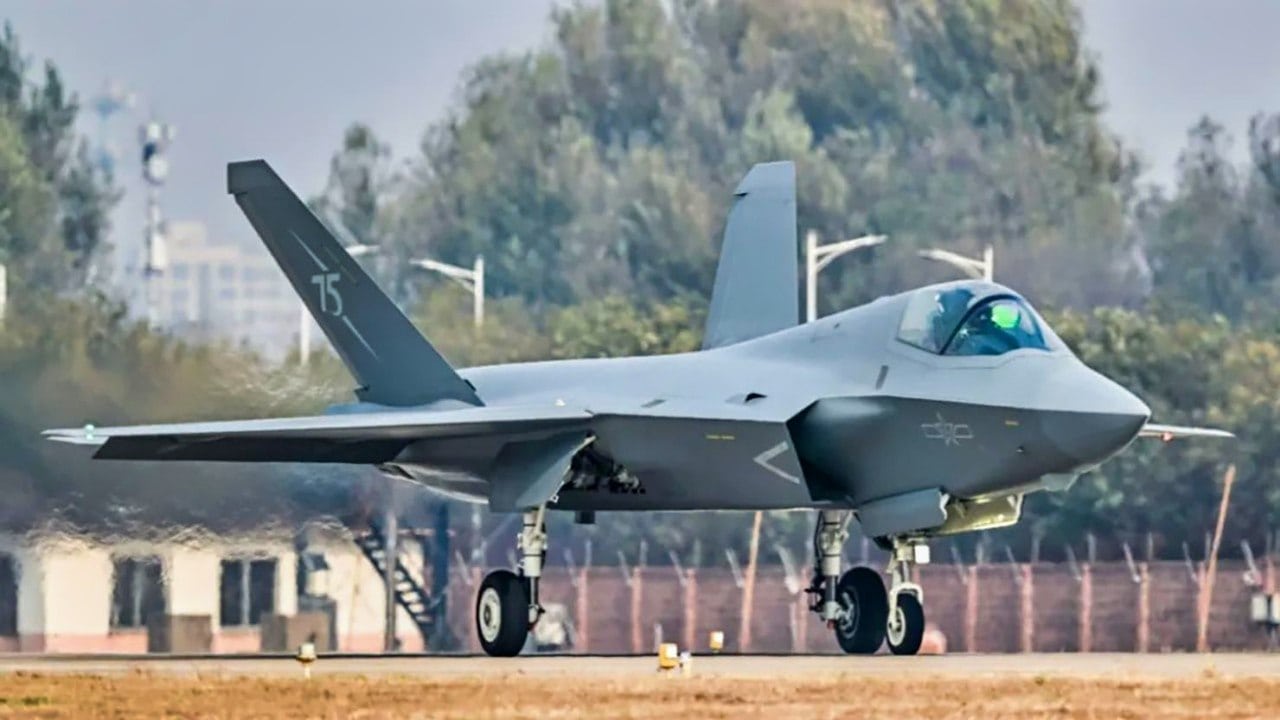
The Fighter Nobody Would Buy Became China’s F-35: The J-35A Through Its Numbers as of August 2026 – As of August 26, 2026, China is doing something only the United States has ever done: building two different stealth fighters at once, and the second one is the bigger story. The Shenyang J-35A and its carrier-going sibling exist to be the F-35 of the Chinese system, the medium fighter bought in numbers, flown from ships, and sold abroad, and this year it crossed three lines at nearly the same moment: into PLAAF service, onto a catapult at sea, and onto the export market with a price tag aimed directly at Lockheed Martin. This is the J-35A through its numbers as they stand in late August 2026, with the honest caveat the subject demands, because more than any fighter flying, this one’s figures are what Beijing chooses to show the world.
From Orphan to Heir: Meet the J-35A
The airplane began as a rejection.
On October 31, 2012, Shenyang Aircraft Corporation flew the FC-31 Gyrfalcon, a privately funded stealth demonstrator built for the export market, and spent a decade failing to sell it; the type gave an underpowered showing at the 2014 Zhuhai show and secured not a single foreign buyer. Salvation came from the sea.
The PLA Navy needed a stealth fighter for the electromagnetic catapults of its new aircraft carrier Fujian, and the navalized J-35 flew in October 2021 with folding wings, launch bar, and tailhook; the land-based J-35A for the air force followed, flying in 2023 by the most detailed open accounts and debuting publicly at Zhuhai in November 2024, in near-production form with redesigned nozzles.
By late 2025, both variants wore military markings, the J-35A was entering PLAAF service, and in September 2025 the naval jet did something no stealth fighter of any nation had done: it launched from and recovered aboard a carrier at sea by electromagnetic catapult, aboard Fujian, a genuine world first.
The family has continued to branch since: a larger J-31B derivative shown in 2024, the carrier variant now often designated J-35B, with its distinctive twin-wheel nose gear, and a J-35AE export model unveiled in May 2026.
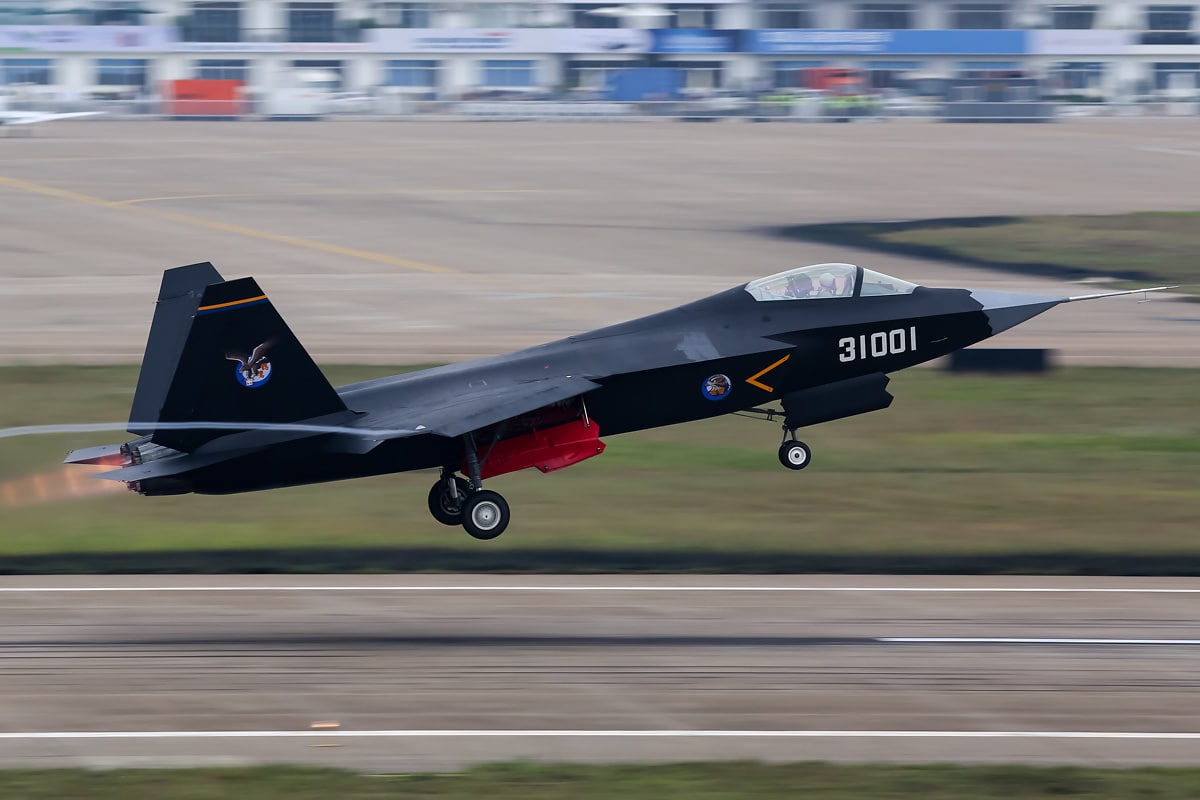
FC-31, a prior version of the new J-35 Fighter.
The engines remain the honest asterisk, and the site’s own reporting keeps the ladder straight: early jets on Russian-derived powerplants, then the Chinese WS-13 family, then the WS-21 that trade reporting treats as the mature engine in current airframes, while the intended WS-19 remains unconfirmed in production aircraft by any official statement.
Why China Built It
The J-35 exists because the J-20 answers only half of the American model.
The heavy Chengdu jet is the F-22 analog, the long-range air-superiority machine; what China lacked was the F-35 analog, the affordable-in-Chinese-terms multirole stealth fighter that fills squadrons, operates from carriers, and earns export revenue, and the J-35 family is precisely that answer, mirroring the American hi-lo pairing airframe for airframe.

F-22 Raptor Model. Image Credit: 19FortyFive.com
The fighters it competes against are therefore explicit: the F-35A ashore, the F-35C at sea, and every Western fourth-generation jet on the export market.
The resemblance is not accidental in Western eyes; the design emerged in the years after Chinese hackers penetrated the F-35 program, and by widespread assessment, including this publication’s own reporting, the J-35 was shaped with the help of stolen F-35 design data, a claim Beijing rejects and the airframe’s twin canted tails and blended fuselage do little to discourage, though the J-35’s twin engines mark the one loud departure from its American template.
Doctrinally, the jet serves the same anti-access strategy as its big brother: a networked, carrier-capable sensor-shooter for the fights inside the first island chain, the strike escort the J-20’s air-to-air specialization leaves unfilled, and, in the assessments of the site’s own reporting, the type most likely to be massed against Taiwan’s F-16s if that day comes.
The Numbers on the J-35A
Cost:
Approximately $50 million per aircraft, the figure attached to the export campaign launched at the Singapore Airshow this February, roughly $ 30 million for an F-35A, and best treated as an advertised price rather than an audited one, since no foreign contract has yet tested it and Chinese domestic program costs are unpublished.
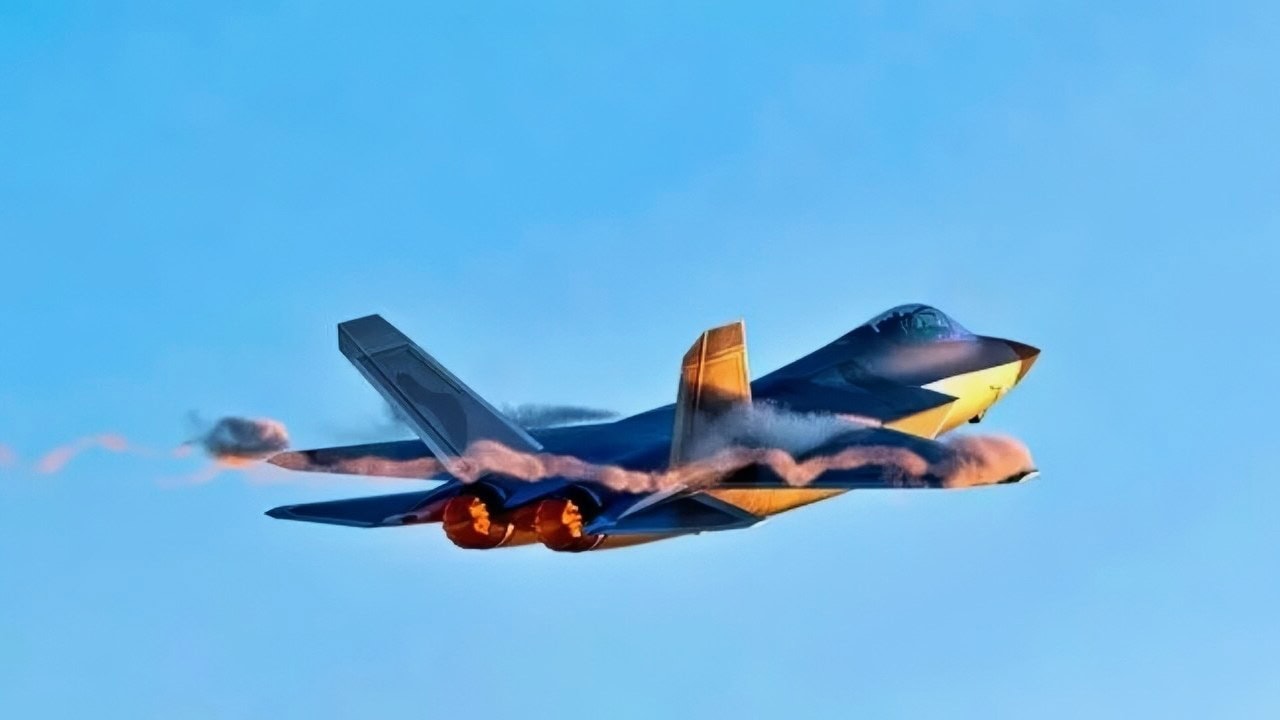
J-35A Fighter from China PLAAF. Image Credit: Creative Commons.
Speed:
Mach 1.8 to 2 by the open estimates, around 1,900 kilometers per hour, on the twin-engine layout that distinguishes it from the single-engined F-35. Size and reach: a medium fighter of roughly 28,000 kilograms maximum takeoff weight, a service ceiling near 16,000 meters, and a combat radius around 1,200 kilometers.
Weapons:
Four PL-15-class missiles internally, by the most detailed open assessments, with some accounts crediting six, plus roughly six external stations that lift the war load toward a dozen weapons when stealth is worth trading, all cued by an AESA radar, electro-optical apertures, and fused displays on the American pattern.
Built:
At least 57 airframes across variants by early 2026, according to open-source counts, with serial production formally beginning this year.
Rate:
Here, the honest answer is that the J-35 has intent, whereas the J-20 has a track record.
Shenyang has structurally completed a new assembly complex backed by 8.6 billion yuan, announced plans to roughly double warplane output within three to five years toward an aerospace campus the size of Hong Kong Island, and outside projections run to 300 or more J-35s by 2030, with some estimates reaching 350; none of that is yet a measured delivery rate, and the fleet today remains a fraction of the J-20’s.
The export ledger is equally unsettled:
Pakistan announced acquisition plans in June 2025, and a 40-jet deal has been widely reported, but viral claims this March that six aircraft had been delivered were categorically denied by Pakistani officials, who put the earliest realistic delivery at 2027, and as of this writing, no stealth fighter has ever been exported by any nation except the United States.
Against the Best in the West
Jet against jet, the comparison the J-35 invites is the one it cannot yet win.
The F-35 it resembles has more than a thousand airframes flying with twenty air forces, a combat record, the deepest sensor-fusion and data architecture in aviation, and a global sustainment system; the J-35 has 57-odd airframes, no combat history, no published availability or training data, and stealth properties that, as even sympathetic assessments concede, cannot be judged from photographs.
Against the F-35C specifically, the naval J-35 holds one genuine first: electromagnetic catapult validation at sea, while trailing in everything else a decade of carrier deployments teaches.
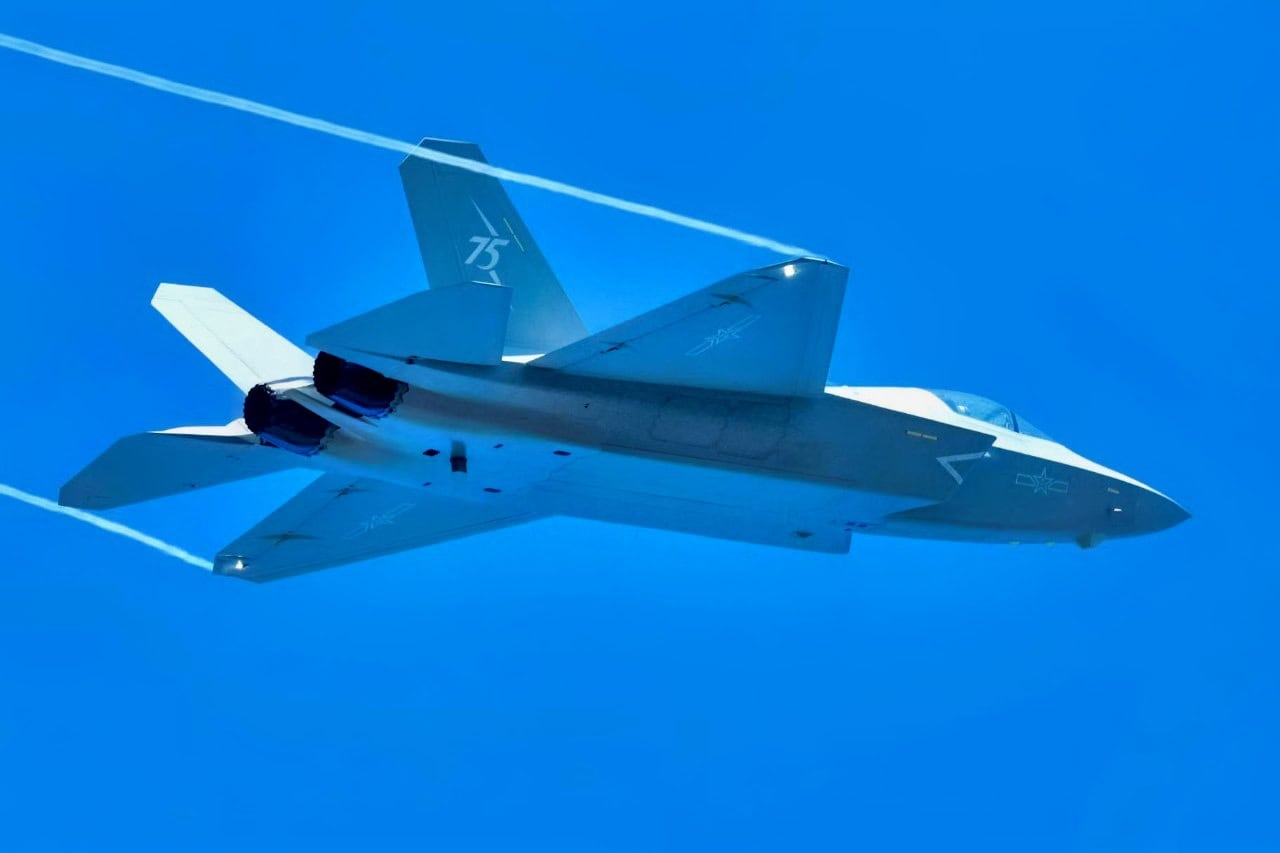
J-35 Fighter. Image Credit: Chinese State Media.
And yet the West’s edge sits atop an uncomfortable trend line, because the F-35’s production advantage, about 156 deliveries a year worldwide, is the one lead China has shown it can erase, having done so once already with the J-20.
The J-35 is the second stealth fighter of a nation that built its first one faster than anyone predicted, made by a factory complex still under construction, priced for customers Washington refuses to serve, and pointed at the only market and the only ocean where the F-35 currently flies unopposed.
The numbers above are small today.
The infrastructure behind them is not.
About the Author: Harry J. Kazianis
Harry J. Kazianis (@Grecianformula) was the former Senior Director of National Security Affairs at the Center for the National Interest (CFTNI), a foreign policy think tank founded by Richard Nixon based in Washington, DC. Harry has over a decade of experience in think tanks and national security publishing. His ideas have been published in the NY Times, The Washington Post, The Wall Street Journal, CNN, and many other outlets. He has held positions at CSIS, the Heritage Foundation, the University of Nottingham, and several other institutions related to national security research and studies. He is the former Executive Editor of the National Interest and the Diplomat. He holds a Master’s degree focusing on international affairs from Harvard University.

