
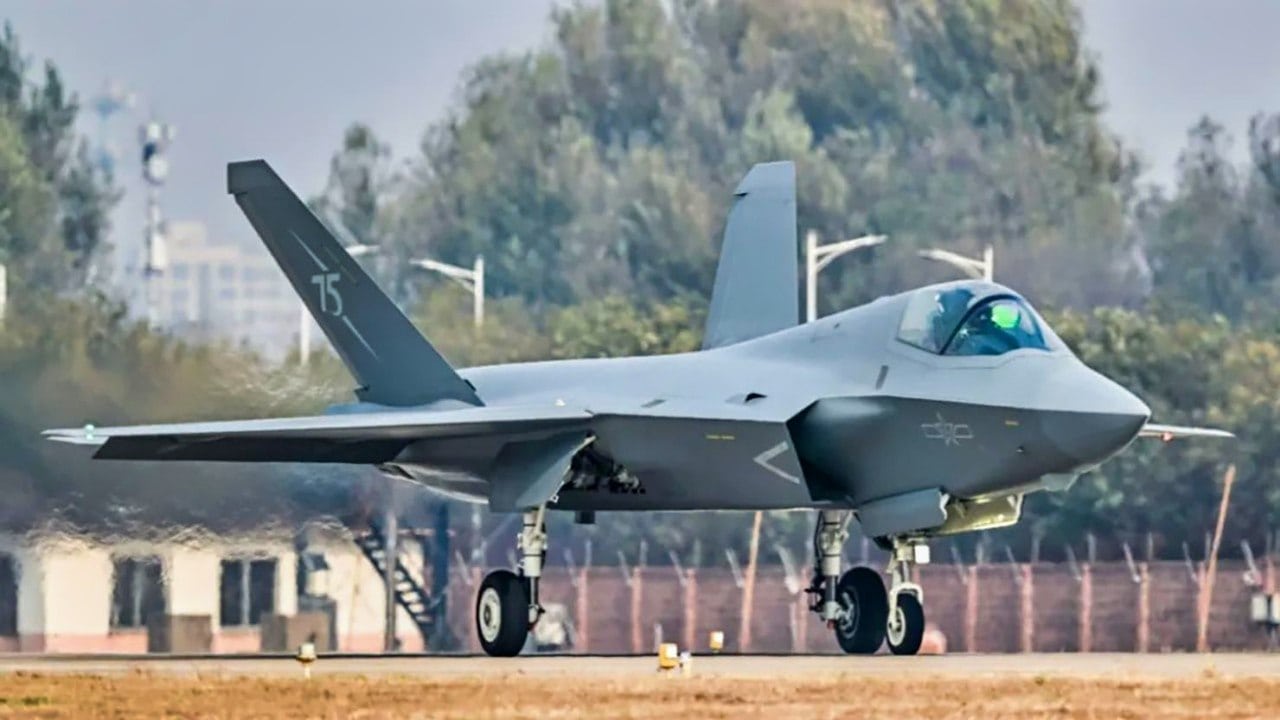
China Now Has a Second Stealth Fighter. The J-35 Is the One Built to Fill Squadrons and Fly From Carriers: For most of the last decade, China’s stealth-fighter story was one airplane: the Chengdu J-20, a large, long-range jet for the air force. That is no longer the whole story. Shenyang’s J-35 is a smaller, twin-engine stealth fighter built in two versions — one for land bases, one for aircraft carriers — and by late 2025, both had appeared in public with military markings. State media said the first batch of air-force jets had been delivered. Navy footage showed a J-35 launching from the new carrier Fujian via an electromagnetic catapult, the same basic idea as the U.S. Ford-class: a linear motor propels the aircraft off the bow instead of steam.
A stealth fighter is an airplane shaped and coated to make it harder for enemy radars to detect. The United States has had two in service for years: the F-22 and the F-35. After those J-35A deliveries, China Daily said China had become the second country with two families of stealth fighters on active duty. That is political language. The hardware underneath it is real enough. A second Chinese stealth type is no longer an air-show mock-up.
The J-35 will not decide a Pacific war by being a perfect copy of the F-35. It does not have to. The J-20 is the heavy jet. The J-35 is the medium one meant to be bought in numbers, put on a carrier, and still be on the ramp in 2050 if China treats it the way air forces treat fighters they actually keep. What follows is what can be said as of August 17, 2026 — and what still cannot.
J-35 Fighter Beginnings
The airplane began as something else. On October 31, 2012, Shenyang Aircraft Corporation, part of the state aviation group AVIC, flew a company demonstrator later sold as the FC-31. Reuters covered the flight at the time. Western writers often called it the J-31. That was never an official name in the Chinese military.
It was a private-venture pitch: a medium stealth jet China might export, at a time when the air force had already chosen the larger J-20. The early jets used Russian-related engines and looked unfinished because they were. A revised airframe flew in 2016. The Navy took a carrier version first. The air force came back later for a land jet.
Two Versions, Two Services
Chinese official language now splits the family in a simple way. The J-35 is the Navy jet. The J-35A is an Air Force jet. Some English-language reports have used J-35B for the catapult version. Treat that letter as reporting, not as a confirmed Chinese designation. The navy jet has folding wings, a tailhook, a launch bar, a larger wing, and a twin-wheel nose gear built to take a catapult shot. The air-force jet has a smaller wing and a single nosewheel. It does not need the extra structure a carrier landing demands.
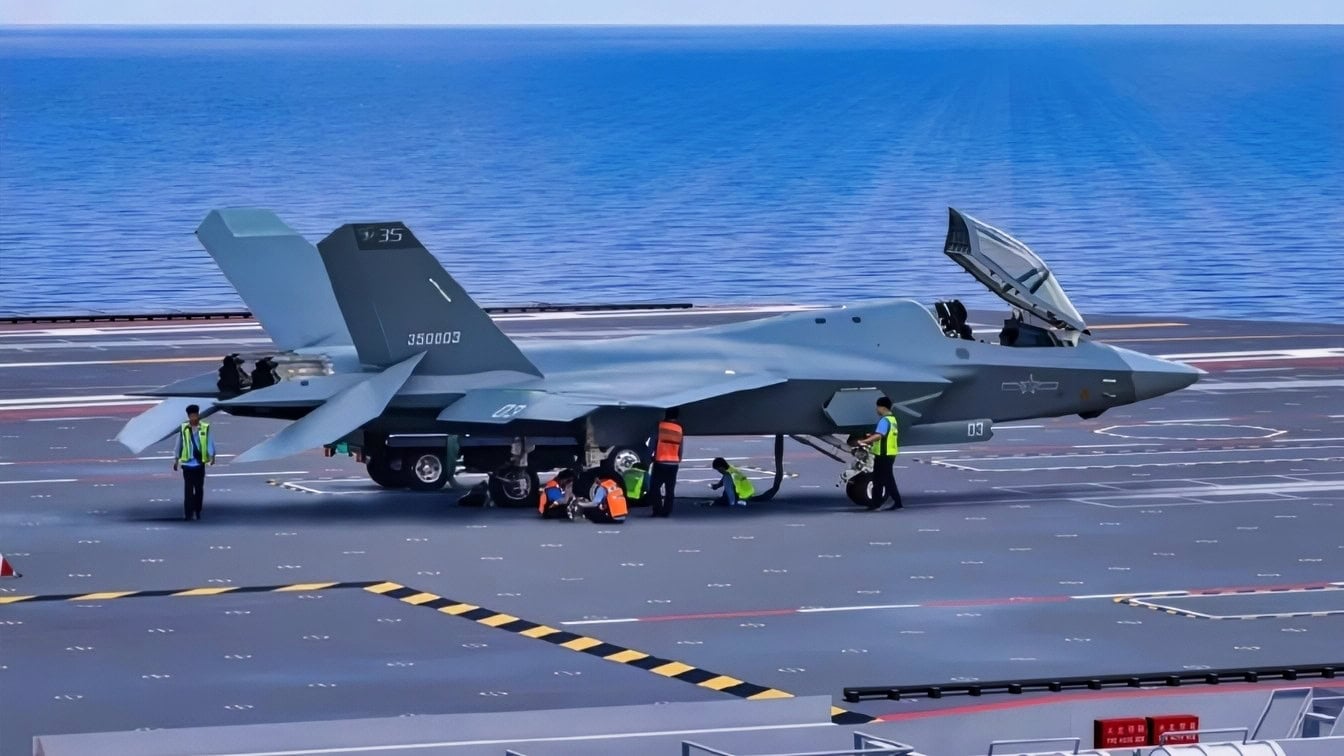
China J-35 Blue Shark Stealth Fighter
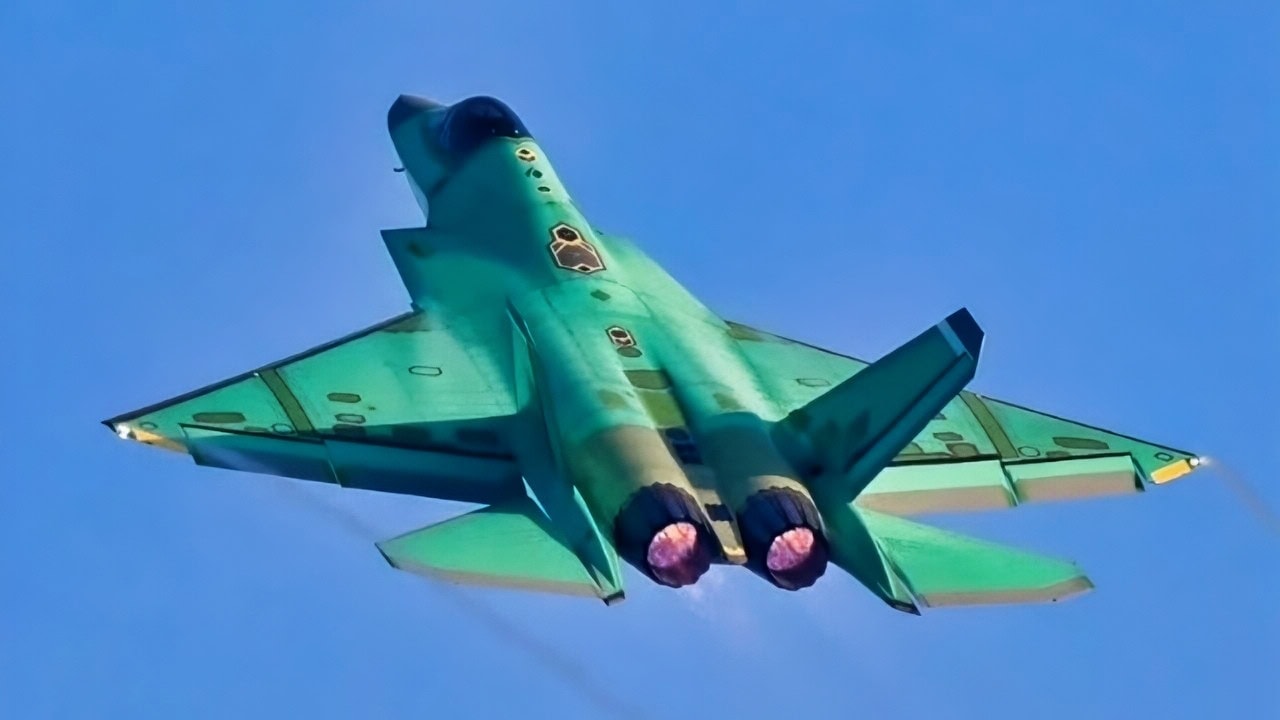
J-35A Stealth Fighter. Image Credit: Social Media Screenshot.
The first photograph of a flying Navy jet appeared in late October 2021. Imagery of a land-looking J-35A dates to about September 2023. The Air Force declassified the J-35A on November 5, 2024, and put it in the air at the Zhuhai show that same month. A spokesman, Col. Niu Wenbo, called it a mid-sized, multi-role stealth combat plane, next to the J-20, which Chinese writing calls “heavy.” He did not say it was already in squadron service.
On September 3, 2025, both the J-35A and the Navy J-35 flew over Tiananmen Square in the Victory Day parade, along with several J-20 versions. Jane’s later identified air-force and navy airframes with service serials — three J-35As and at least one naval J-35 — and judged that both variants had entered service. That is the strongest public evidence. A Western-style initial operational capability date, with a named regiment and a combat-ready checklist, has not been published.
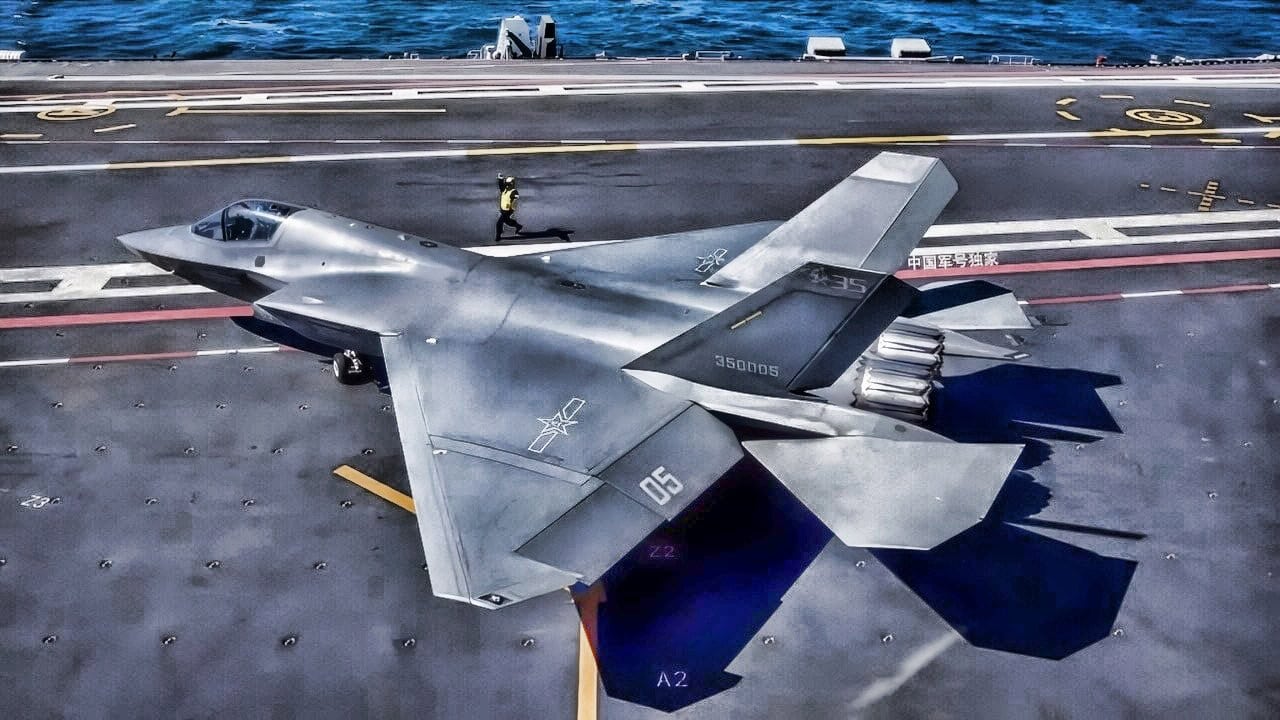
China J-35 Naval Stealth Fighter. Image Credit: PLAN.
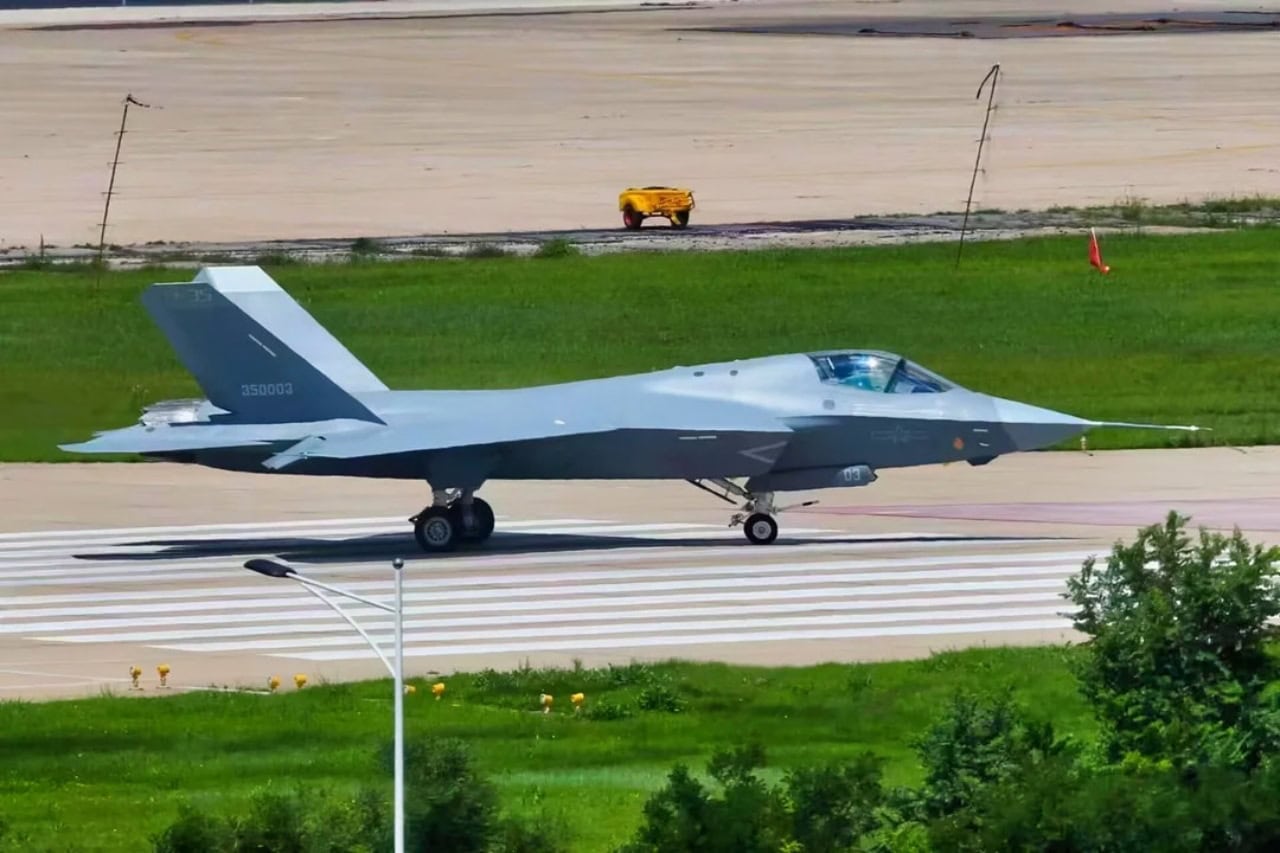
J-35 Fighter. Image Credit: Chinese Internet.
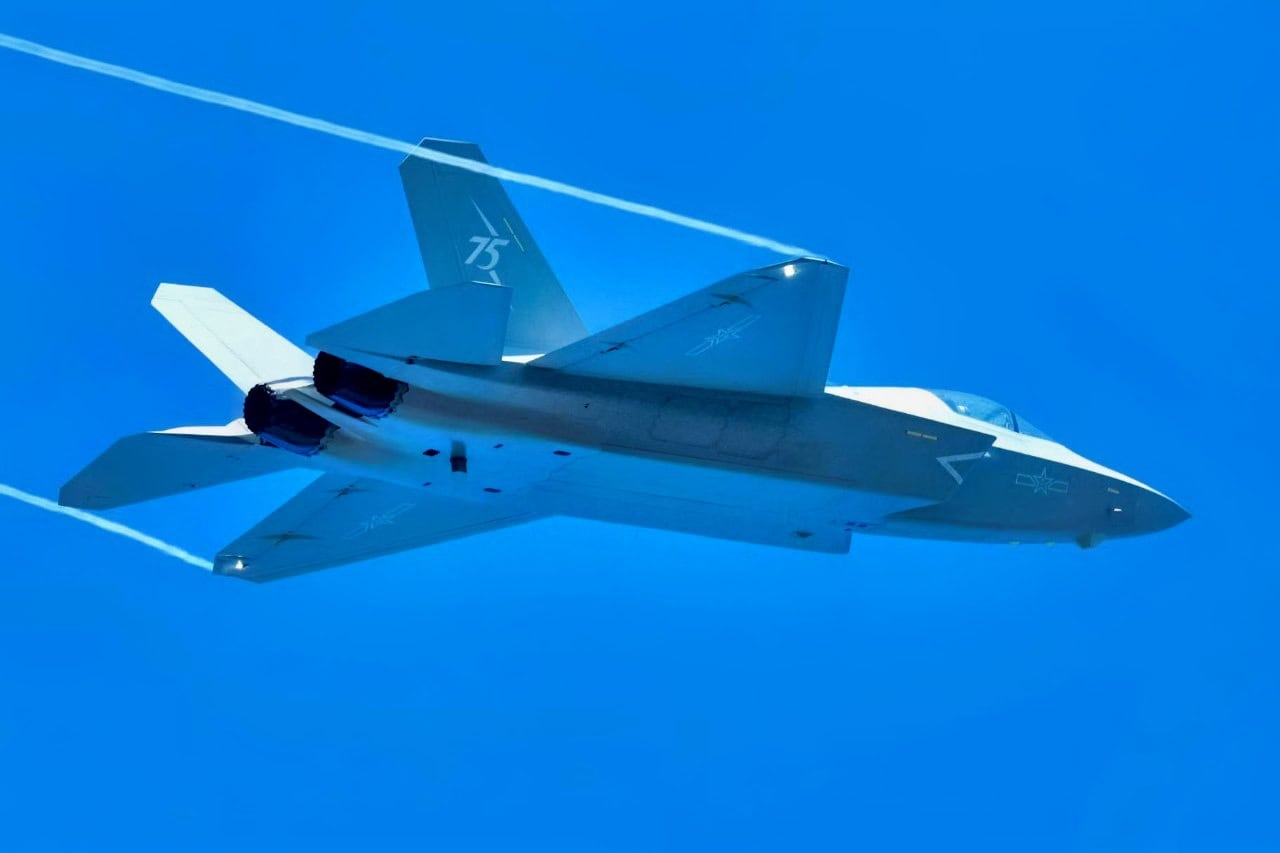
J-35 Fighter. Image Credit: Chinese State Media.
In September 2025, the Navy released a video of Fujian launching and recovering a J-35, a J-15 attack jet, and a KJ-600 early-warning aircraft — the plane that flies high and looks outward so the carrier can see farther. USNI News reported the Navy’s claim that this was a first for that ship. The footage was likely compiled from earlier sea trials. Fujian was commissioned on November 5, 2025, in Sanya, with Xi Jinping present, Reuters and the Associated Press reported. J-35s were on the deck. An air wing that can actually fight from that deck is a longer job than a flag ceremony. Later that month, the ship went to sea with a strike group and kept launching the same mix of jets.
The older Chinese carriers Liaoning and Shandong still use a ski-jump ramp. Chinese state television has said the J-35 is adapted to those ships as well. A mock-up has been photographed on Liaoning. An operational stealth-fighter wing flying combat loads off a ski-jump is a different claim, and it has not been shown. Physics is not optional. A ramp launch costs more fuel and weapons than Fujian’s catapult.
What Is Known About the Airplane — and What Is Not
The J-35 is a twin-engine, single-seat, mid-size stealth fighter with internal weapons bays. Internal bays matter because hanging bombs and missiles on the wings makes any stealth jet much easier to see on radar.
Photographs show a planform in the same general class as the F-35: blended fuselage, canted tails, sawtooth edges on doors and nozzles. It is not a J-20. The J-20 is longer, heavier, and built to go far. The J-35 is built to be the everyday stealth fighter. AVIC once advertised the old FC-31 as about 17.3 meters long with a maximum weight of 28 tons.
Those ‘brochure numbers’ should not be pasted onto the production J-35. The Navy jet is visibly larger in the wing than the Air Force jet, the same logic that makes an F-35C bigger than an F-35A.
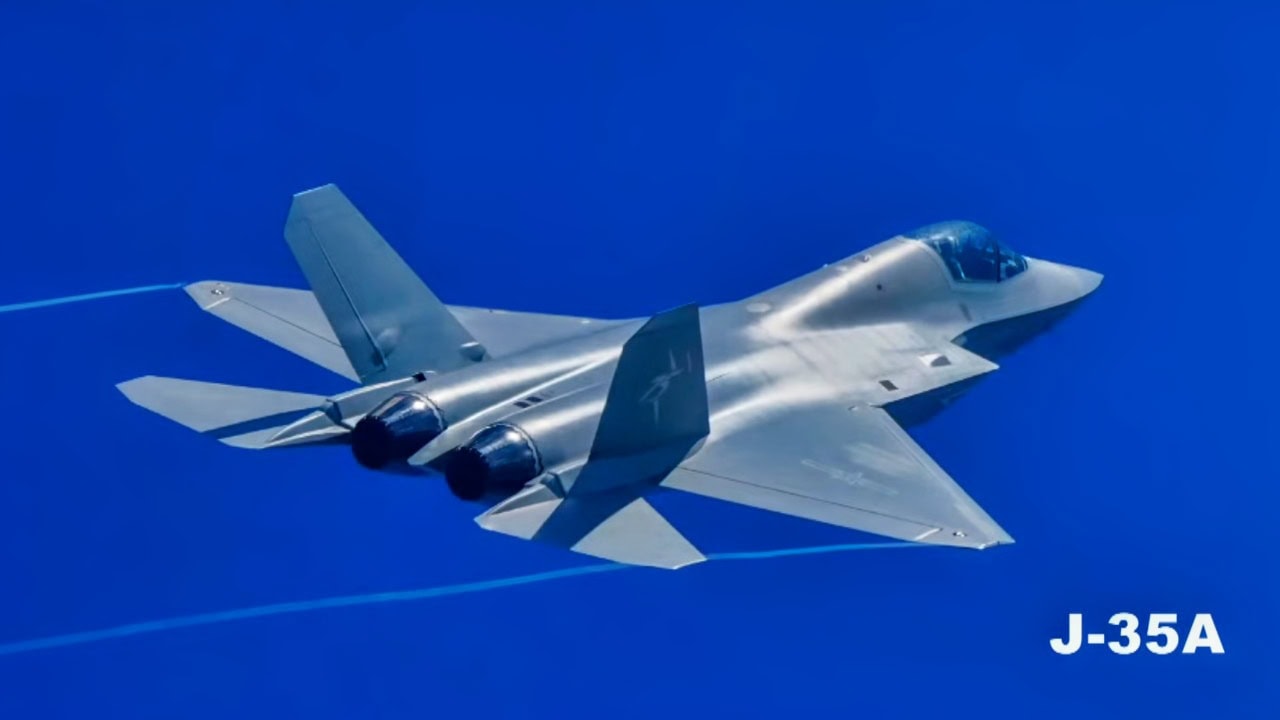
J-35 flying at Zhuhai Airshow 2024.
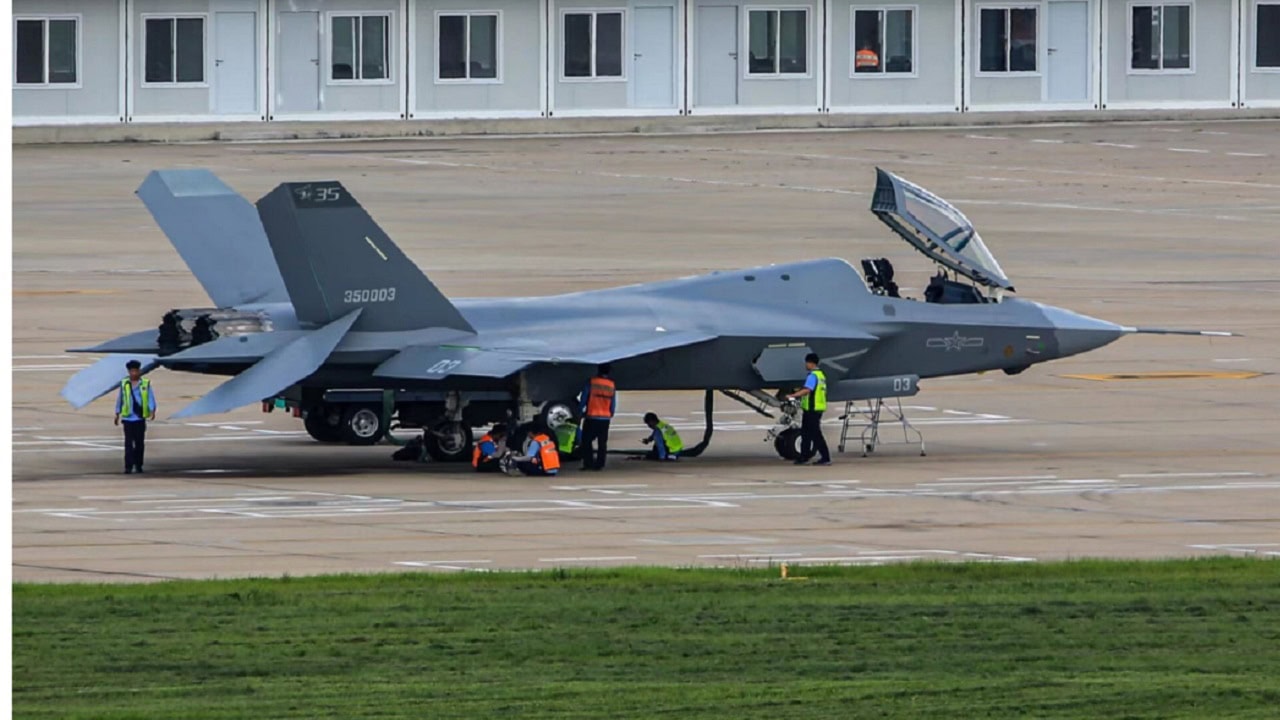
J-35 Stealth Fighter. Image Credit: Chinese Internet.
Engines have been a long-standing problem. Early FC-31s used Russian-related powerplants. Later jets moved onto the Chinese WS-13 family, then the WS-21, which trade reporting treats as the mature engine in current airframes.
The engine Shenyang wants is the newer WS-19. Defense News reported in 2023 that development bottlenecks had eased but the alloy supply chain had not. There is still no official statement that production J-35s are flying on the WS-19. Thrust figures circulating online are estimates. So are top speed, combat radius, and radar type. Anyone quoting a radar-cross-section number for this jet is guessing.
In September 2025, designers told Chinese television the carrier jet can carry six air-to-air missiles inside the bays on folding-fin launchers. The South China Morning Post reported on the briefing. They did not name the missiles. Analysts expect a long-range radar-guided weapon in the PL-15 family and a short-range heat-seeker in the PL-10 family. That is an assessment, not a released load list. External hardpoints are available on days when stealth matters less. Sensor fusion — the F-35’s trick of combining radar, electronic listening, and other jets into one picture — is the piece no parade flyover can prove. The J-35 almost certainly has a modern radar and a helmet display. Whether the jet, the datalinks, and the Chinese kill chain work as one system, as a mature F-35 unit does, is the open operational question.
Cost is the other unknown. There is no official unit price. Fu Qianshao, a retired air-force officer who is a regular Chinese television commentator, told China Daily in November 2024 that the J-20 costs more than the J-35A, so the air force needed a stealth fighter with “relatively good prowess and lower procurement costs.”
He was describing a cheaper, lesser jet, not a bargain F-35. Western blogs that print $50 million or $80 million per copy are not citing a contract. AVIC took a scale model to the 2026 Singapore Airshow and marketed a low-cost alternative to the F-35. That is a sales booth, not a price list.
How It Stacks Up, Without the Fan Fiction
The comparison everyone wants is between the F-35 and the F-35. They are the same idea on paper: a medium stealth fighter for more than one service. The differences that can be stated without invention are still large. The F-35 is a single-engine jet that has flown combat missions, is used by more than a dozen countries, and has had its software and maintenance issues debated publicly for fifteen years.
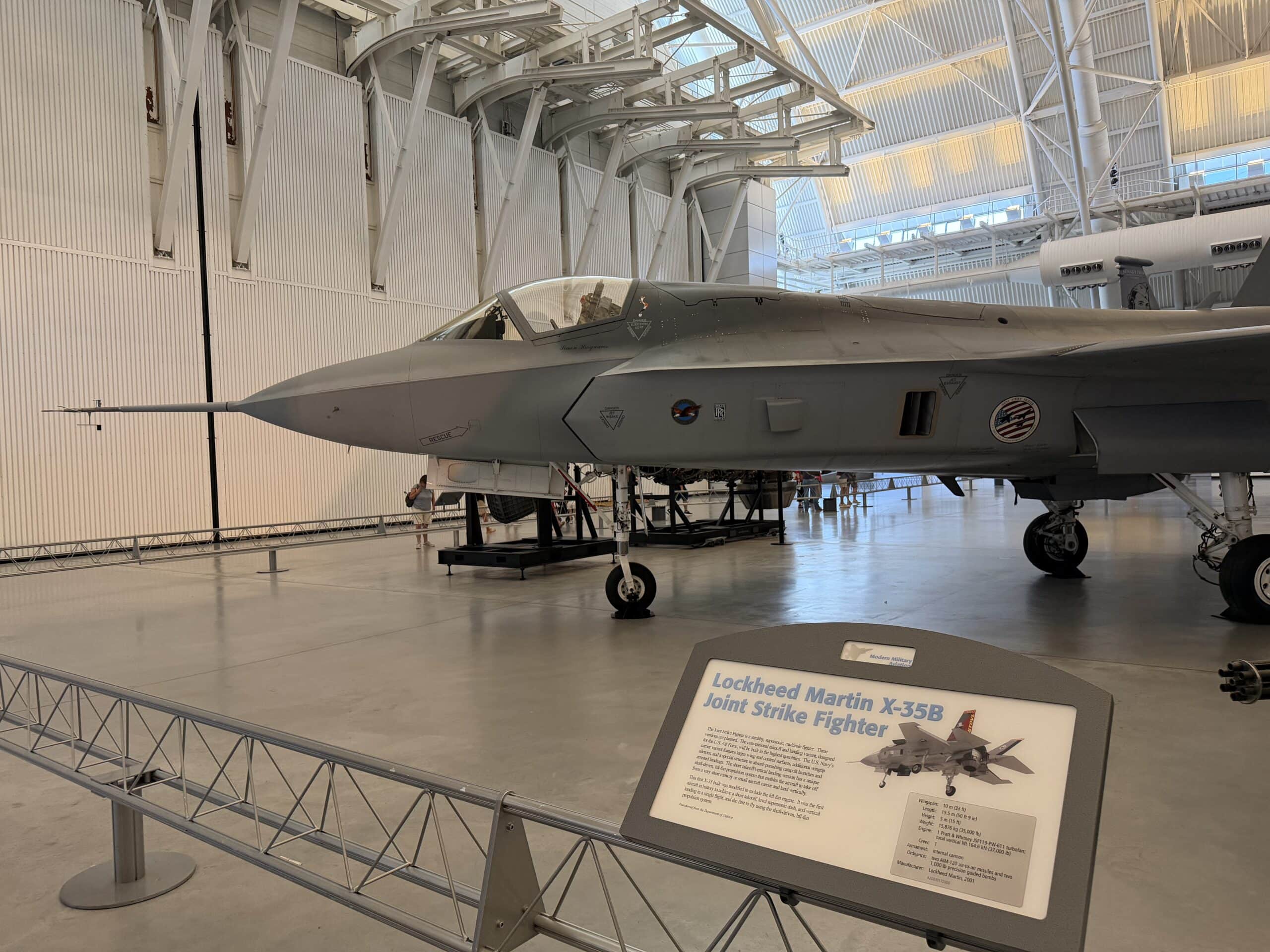
F-35 at the Smithsonian 19FortyFive Photo
Lockheed Martin said it delivered 191 of them in 2025. The J-35 is a twin-engine jet with a first batch in Chinese colors and no combat record. Twin engines give a carrier pilot a spare if one fails over water. They also mean two engines to build, fuel, and fix. The F-35’s advantage is not “American, therefore better.” It is years of fleet use, a working spare-parts system, and a sensor package that their countries have already paid to mature. This site has already walked through the service picture after the parade. The comparison has not gotten any leaner since.
Against the J-20, the J-35 is the complementary jet, not the replacement. The J-20 has been in the Air Force since 2017 and is now being built at a high rate. Analyst J. Michael Dahm, briefing from satellite imagery of the Chengdu and Shenyang plants, has said China is expanding halls so that AVIC could turn out hundreds of fourth- and fifth-generation fighters a year. FlightGlobal reported that assessment in March 2026. Dahm put a new Shenyang complex at roughly four million square feet, still finishing, and probably the J-35 line. Royal United Services Institute figures put J-20 output around 100 to 120 a year. The J-35 is the type that lets Shenyang add a second stealth line instead of asking Chengdu to build every low-observable jet in the country. That is the quantity argument, and it is the honest one.
The F-22 is the wrong yardstick. It is a dedicated air-superiority fighter, out of production, never exported, and built in small numbers. The J-35 was not designed to be an F-22. It was designed to be numerous, multi-role, and, in the navy version, catapult-capable. China does not need it to win a one-versus-one merge with the best American jet. It needs enough of them that U.S. and allied F-35s cannot assume they are the only stealth fighters in the first island chain.
What the Jet Is For
For the air force, the J-35A is the everyday stealth fighter: air defense, escort, and strike that does not require a J-20’s range. It can sit at more bases and, if the engines hold up, fly more hours. It frees the J-20 for the long shots. Whether it eventually replaces older J-10s and J-11s is an analyst inference, not a published Chinese plan.
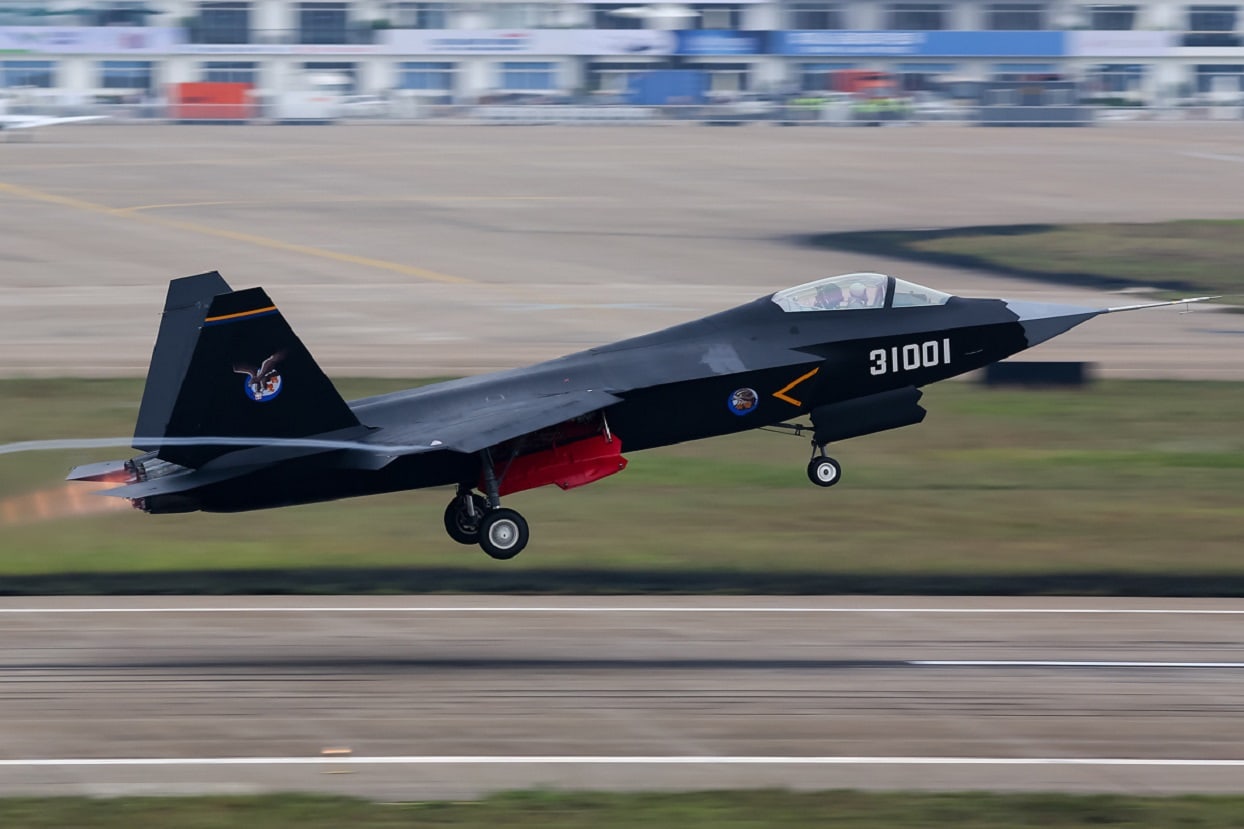
J-35 Fighter. Image: Creative Commons.
For the Navy, the J-35 is the first chance to put a low-observable fighter in front of a Chinese carrier group. A J-15 is a capable Flanker-class jet. It is not stealthy. A J-35 launching from Fujian, with a KJ-600 looking over the horizon, is how Beijing wants to push the air battle out from the ship instead of waiting for land-based J-20s to arrive. The older ski-jump carriers may get the type. They will not get Fujian’s launch weight.
Headed to Pakistan?
Export is the unfinished chapter. In June 2025, Pakistan said China had offered about 40 J-35s, plus an early-warning aircraft and a long-range air-defense system. That was an offer, announced after the May 2025 fighting with India.
The Diplomat wrote in July 2026 that no contract had been signed and no jet delivered. In May 2026, Chinese television showed an airframe marked 0001 with an AVIC logo and a single nosewheel. Commentators called it an export jet. Until there is a signed deal and a tail number in foreign colors, treat every “Pakistan is getting the J-35” headline as intent, not inventory.
China’s J-35 Could Serve to 2050 and Beyond
No Chinese official document in the open press assigns the J-35 a retirement year of 2050. The date is a planning horizon, not a plaque. Fighters who enter service in the mid-2020s and are treated as a core type routinely stay 25 to 30 years. Airframes bought through the late 2020s would still be flying in 2050 if the engines, the structure, and the budget hold. That is how the F-15 and the Su-27 family lasted.
It is how the J-35 becomes a mid-century airplane: not by being the best stealth fighter on earth, but by being the one China can keep building while newer shapes — the tailless prototypes Western writers have labeled J-36 and J-50 — are still prototypes. Those jets, first photographed in late 2024, are a parallel high-end path. They are not a J-35 cancellation.
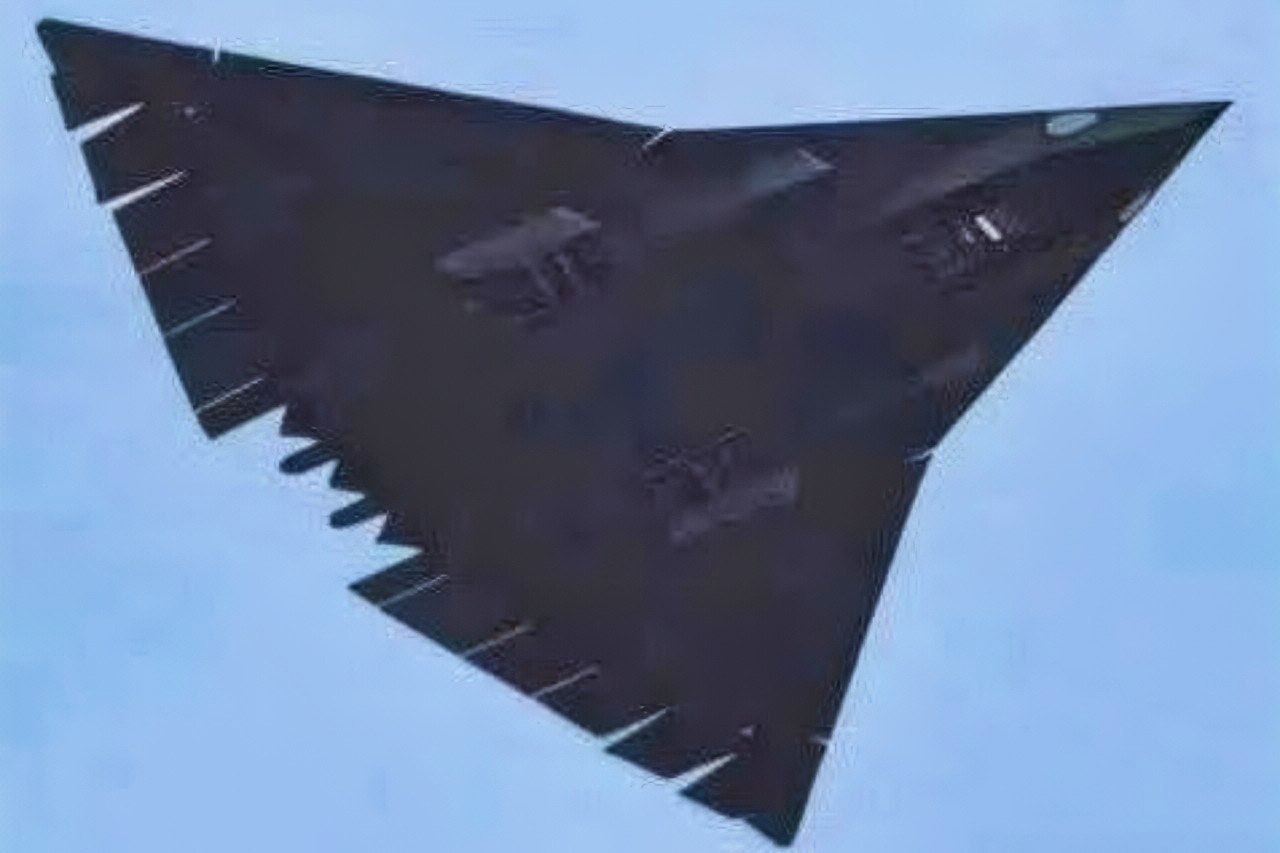
J-36 X Screenshot
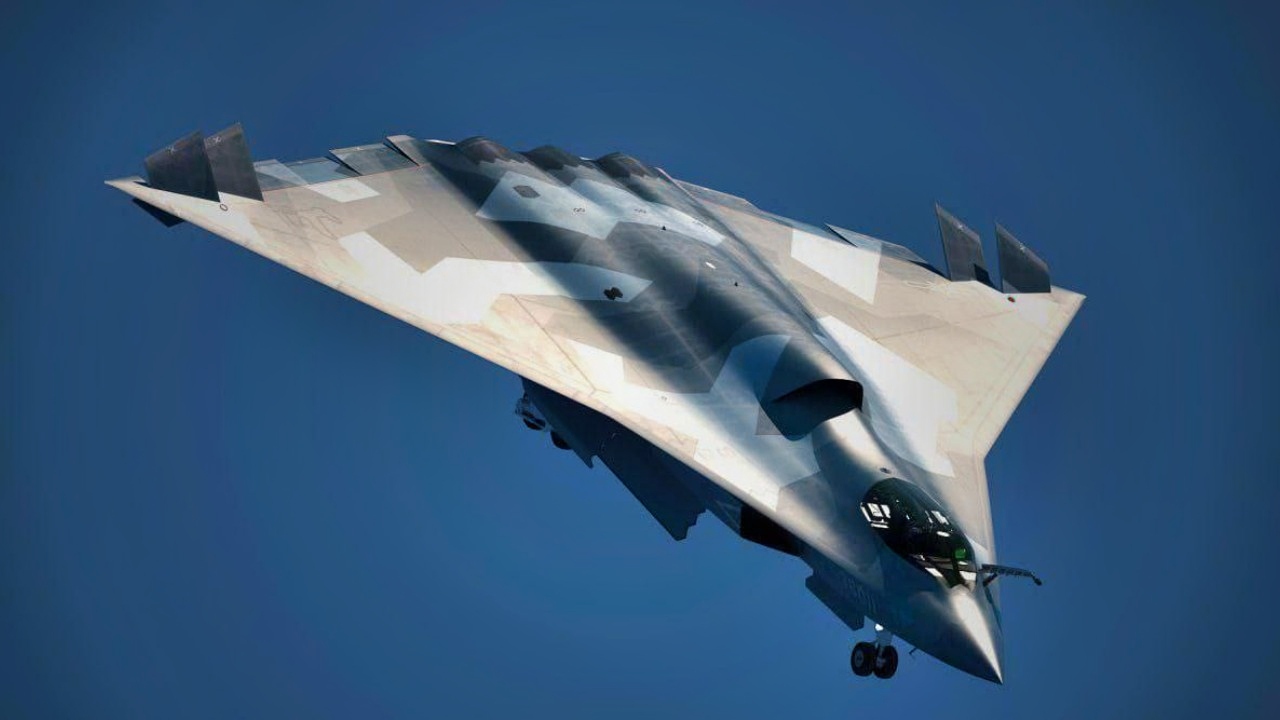
J-36 Fighter Artist Rendition. X Screenshot.
The limits are ordinary. The WS-19 has to work, including at sea, in salt air, on a catapult cycle. Fujian’s air wing has to learn to fight, not just to launch. Shenyang has to turn a first batch into a drumbeat without the quality drop that hits every new fighter line. The United States will still have more combat-experienced stealth pilots and a larger allied F-35 fleet. None of that erases the fact on the calendar.
As of August 2026, China has a medium stealth fighter in air-force colors, a navy stealth fighter that has used Fujian’s catapults, and a factory plan to make more of both. Those are the jets that will still be in the inventory when 2050 stops being a talking point and becomes just another fiscal year.
About the Author: Harry J. Kazianis
Harry J. Kazianis (@Grecianformula) was the former Senior Director of National Security Affairs at the Center for the National Interest (CFTNI), a foreign policy think tank founded by Richard Nixon based in Washington, DC. Harry has over a decade of experience in think tanks and national security publishing. His ideas have been published in the NY Times, The Washington Post, The Wall Street Journal, CNN, and many other outlets worldwide. He has held positions at CSIS, the Heritage Foundation, the University of Nottingham, and several other institutions related to national security research and studies. He is the former Executive Editor of the National Interest and the Diplomat. He holds a Master’s degree focusing on international affairs from Harvard University.

