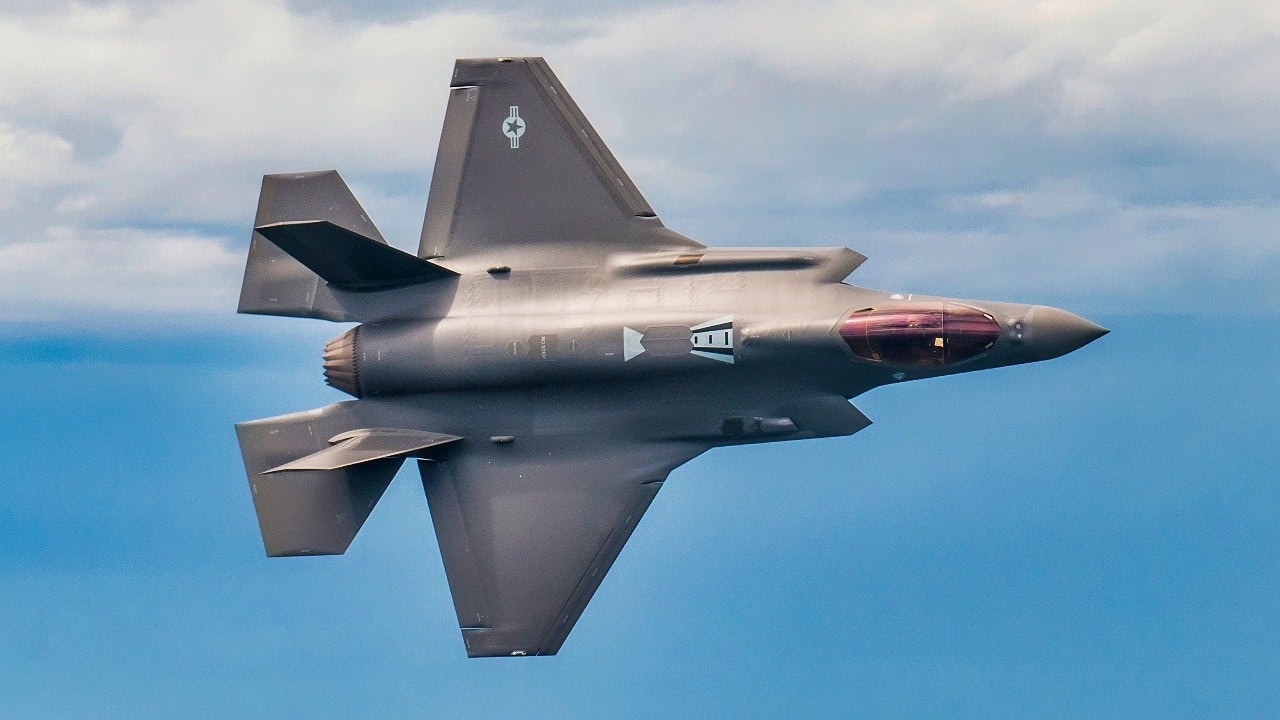
Summary and Key Points: Japan’s 2026 defense overhaul centers on the induction of 105 F-35A and F-35B stealth fighters.
-This reinvigorated “First Island Chain” defense is a direct response to China’s J-20 fleet, which officially crossed the 300-unit milestone in January.
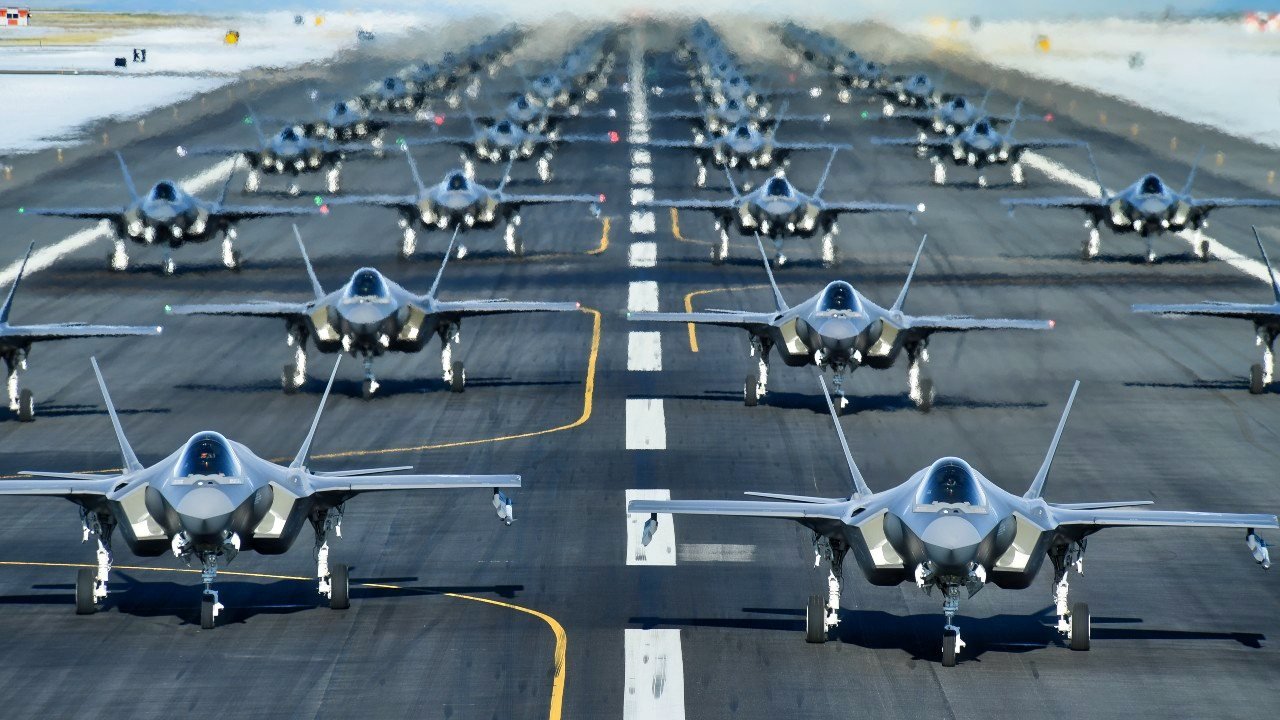
F-35 Elephant Walk. Image Credit: Creative Commons.
-Despite Tokyo’s historic 2% GDP spending hike, the 105 newly ordered F-35As face a “mass vs. math” crisis.
-Beijing’s annual output of 120 stealth jets is currently outstripping the Western industrial base, leaving Japan with a “Sensor King” that may be overwhelmed by China’s sheer quantity.
The “Mighty Dragon” vs. the F-35: Why Japan’s New Stealth Fleet Is Already Outnumbered
Japan is making a historic turn in its national defense policy. After more than 80 years of maintaining a “Peace Constitution” after their decisive defeat in the Second World War, the new Japanese government is clearly making a calculation that remaining ambiguous about their national defense strategy is no longer possible.
The End of Japan’s “Peace Constitution” Illusion
Tokyo fears that the Chinese threat is becoming too great to continue operating under the previous paradigm.
Beyond that, though, Japan’s leaders fear that the United States under President Donald J. Trump is stepping away from its previous commitments to preventing China from dominating the First Island Chain (the region stretching from the Kamchatka Peninsula through Japan and Taiwan down to the Philippines).
Nevertheless, Tokyo still enjoys a military alliance with the United States. As such, the Asian country is set to receive an astonishing 105 F-35A fifth-generation stealth multirole warplanes from the United States. These planes will form the backbone of the newly reinvigorated Japanese Self-Defense Forces.
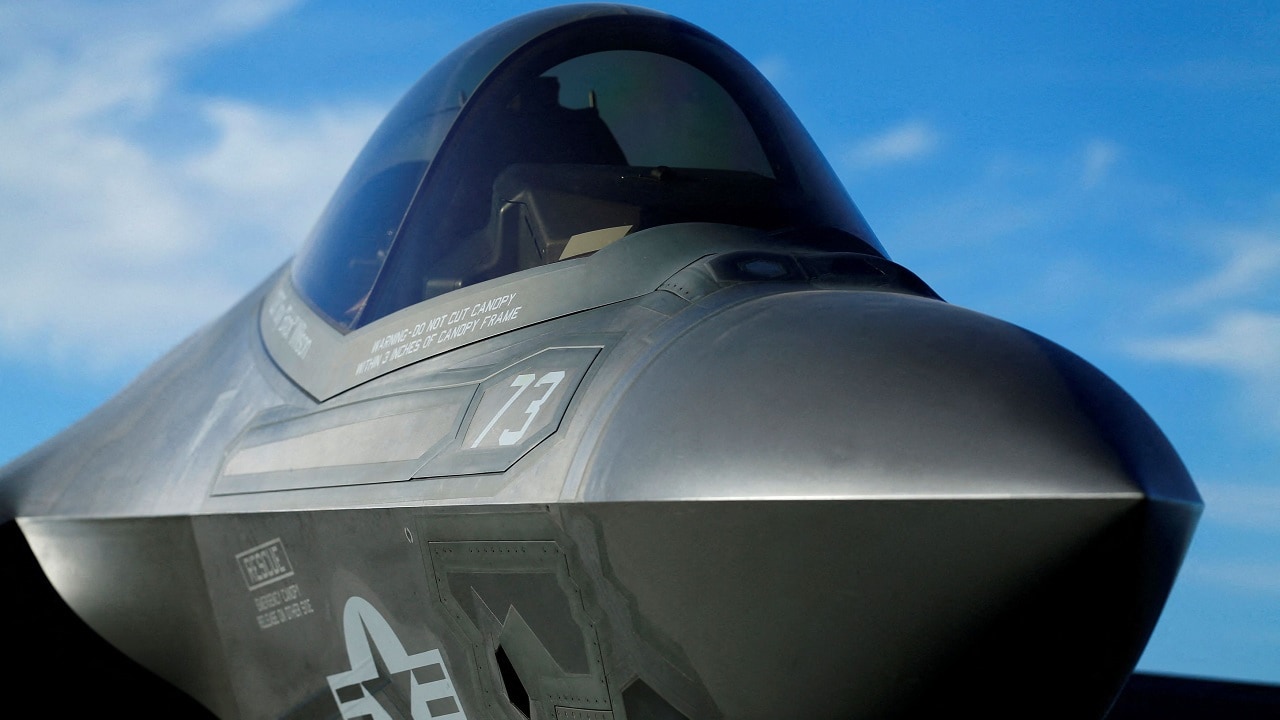
A Lockheed Martin Corp’s F-35C Joint Strike Fighter is shown on the deck of the USS Nimitz aircraft carrier after making the plane’s first ever carrier landing using its tailhook system, off the coast of California, November 3, 2014. REUTERS/Mike Blake (UNITED STATES – Tags: TRANSPORT MILITARY)/File Photo
But how helpful will the F-35As be for Japan?
Numbers Still Matter: China’s Advantage in Mass over F-35A Thanks to J-20
After all, 105 F-35As might sound like a lot. Compared with the productive capabilities of neighboring China, Japan’s F-35 force will be smaller.
And it is not only sheer numbers with which China can outmatch Japan. Beijing’s aerospace firms are developing increasingly advanced, mass—produced warplanes, such as the Chengdu J-20 “Mighty Dragon,” a fifth-generation air superiority fighter.
The J-20 is not China’s only mass-produced advanced warplane that counters the F-35A that Japan is set to receive.
There’s China’s other major fifth-generation warplane, the J-35A, which is seen as a more direct challenger to the F-35 (whereas the J-20 is more of a challenger to the F-22 Raptor). Regardless, these birds are being mass-produced by Chinese military factories at a decisive clip.
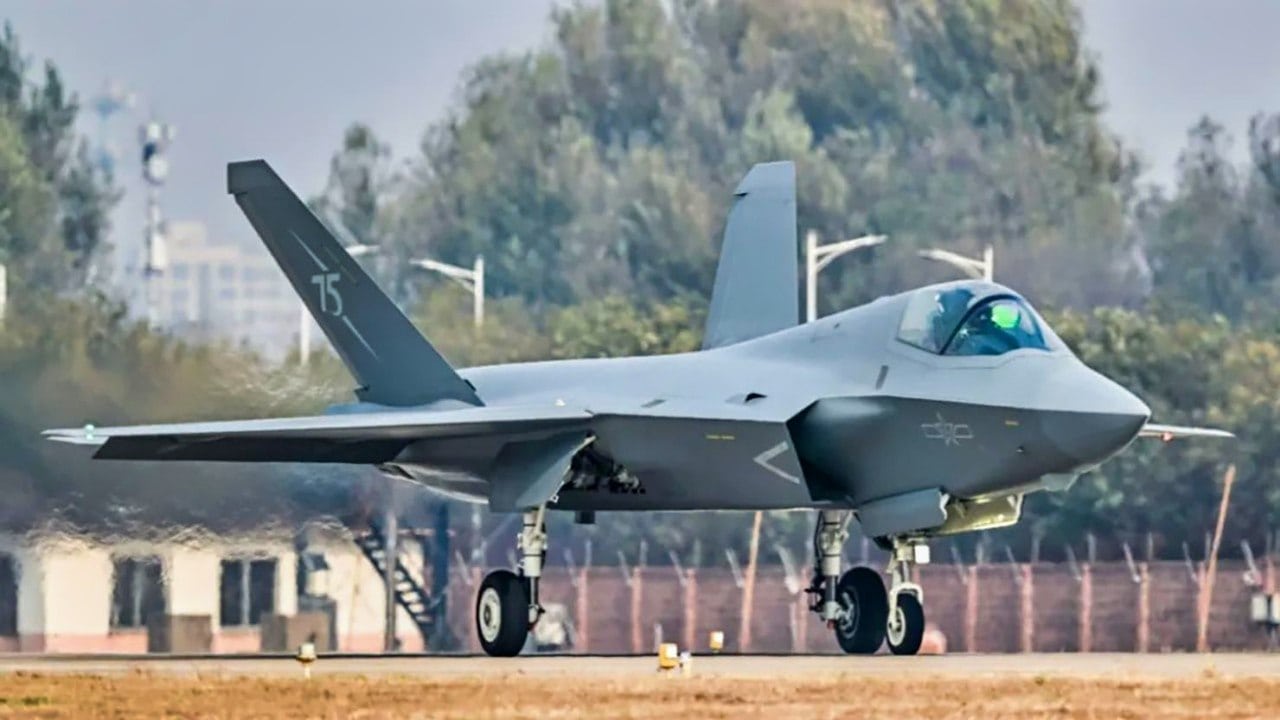
J-35A Fighter from China. Image Credit: Chinese Military
Western analysts will likely argue that Chinese warplanes, such as the J-20 and J-35, are untested compared with the venerable F-35.
Here is where those analysts need to reassess significantly. That’s because, as is so often the case when speaking about China, quantity has a quality of its own.
Then again, China’s J-35 or J-20 is very serious about dominating any air force it must compete with.
Why So Many F-35A Fighters? Japan Has a Problem
Japan is desperate. Not long ago, Japan got itself into a diplomatic dispute with China. Last year, the recently elected Japanese prime minister, Sanae Takaich, declared that the Japanese military would aid Taiwan if it were ever under a blockade or attacked by China. Beijing understandably interpreted that message as originating from the United States.
In the meantime, Prime Minister Takaichi hoped to secure President Trump’s decisive announcement that he would stand by her side. Sadly for Tokyo, that kind of rhetorical support was not forthcoming from Washington.
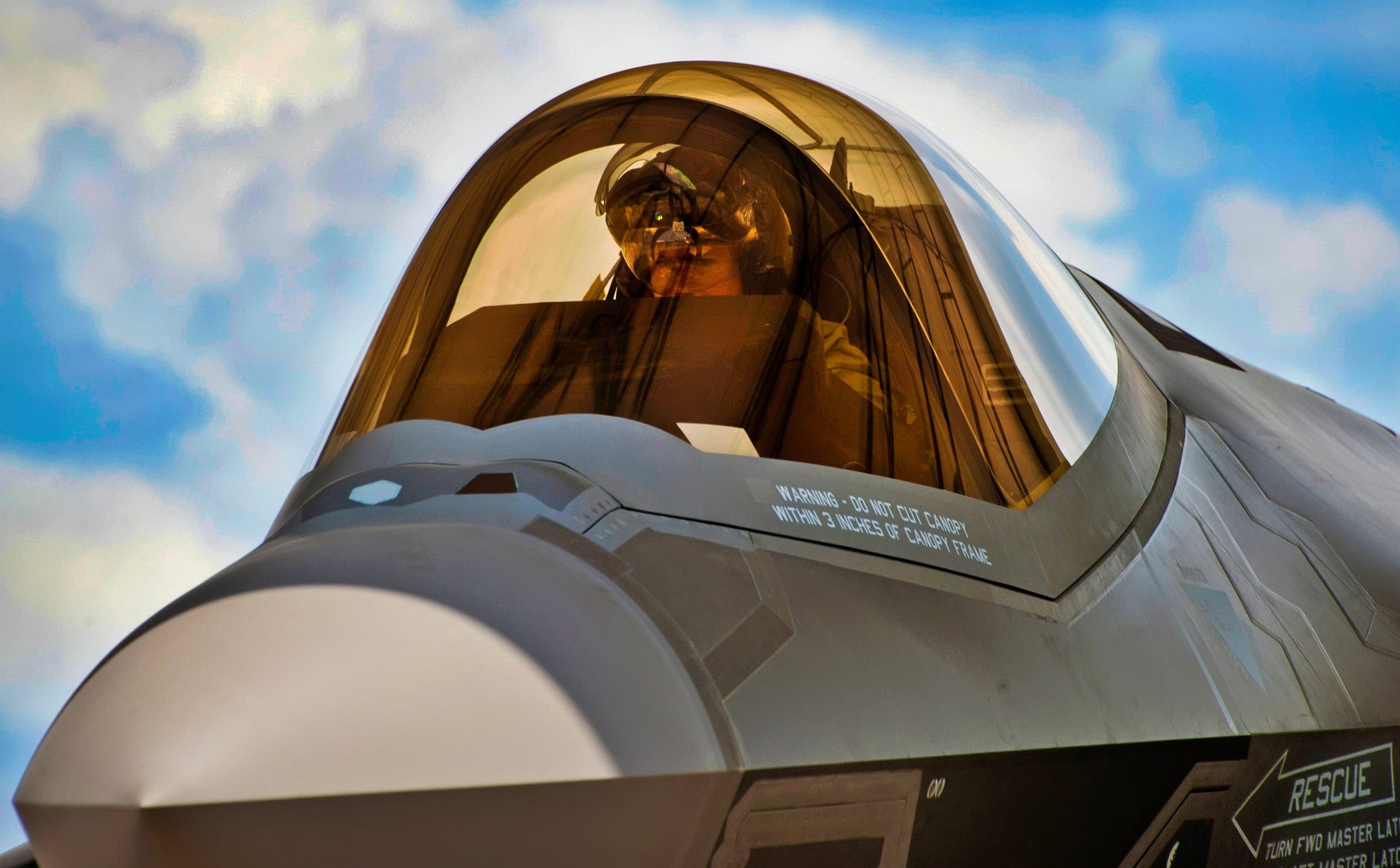
Marine Maj. Joseph Bachmann, of the 33rd Operations Group, executes aircraft shutdown procedures of the second F-35 Lightning II joint strike fighter to arrive at Eglin Air Force Base, Fla., July 20. Bachmann is the first Marine pilot to be JSF certified. Aircraft AF-8 is the flagship for the 58th Fighter Squadron. (U.S. Air Force photo/Samuel King Jr.)
Now, after Takaichi’s political party has enjoyed a resounding success in the recent national elections. One can expect her party to move toward greater future militarism and a hardline stance.
What Does the End Look Like?
Still, there is no serious effort by Japan (or the United States) to address the underlying bottlenecks in the Western defense industrial base.
Until that is done, these 105 F-35As for Japan will not be able to sustain a campaign against China. Any number of F-35s lost in combat with the Chinese will impose a significant capability gap in America’s overall air defense doctrine (as well as Japan’s).
Certainly, 105 F-35A warplanes would improve Japan’s situational awareness and strike capability. They would complicate Chinese planning and raise the costs of aggression by China against Japan.
But these planes will not resolve Japan’s core dilemma, which is it must be truly strategically autonomous in this day and age, otherwise it will be sacrificed by the Americans.
Moments like this are decisive.
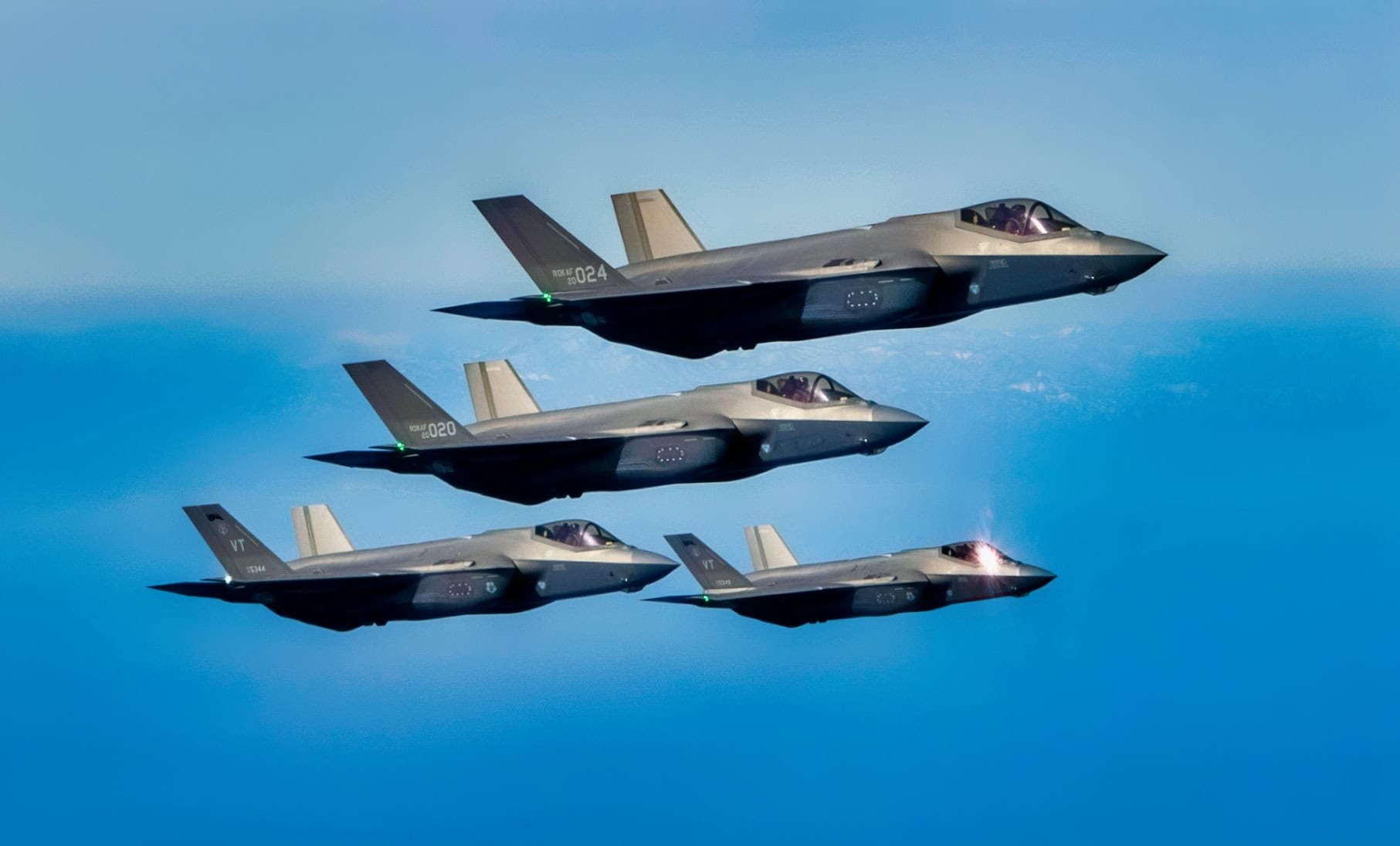
Two U.S. Air Force F-35A Lighting IIs fly in formation with two ROKAF F-35As during Freedom Shield 25, a defense-oriented exercise featuring live, virtual, and field-based training, March 13, 2025. The aircraft participated in dynamic targeting and aerial refueling training, validating the capability of ROK and U.S. Air Forces, to find, fix, and defeat a range of threats. (Photo courtesy of Republic of Korea Air Force)
Japan is rearming not because war is inevitable, but because uncertainty reigns supreme today, making rearmament programs essential. Japanese leaders should be wary, though. The Japanese are desperate to extend their defense perimeter beyond their tiny pocket surrounding the Japanese Home Islands.
About the Author: Brandon J. Weichert
Brandon J. Weichert is the Senior National Security Editor at 19FortyFive.com. He was previously the senior national security editor at The National Interest. Weichert is the host of The National Security Hour on iHeartRadio, where he discusses national security policy every Wednesday at 8pm Eastern. He hosts a companion show on Rumble entitled “National Security Talk.” Weichert consults regularly with various government institutions and private organizations on geopolitical issues. His writings have appeared in numerous publications, among them Popular Mechanics, National Review, MSN, and The American Spectator. And his books include Winning Space: How America Remains a Superpower, Biohacked: China’s Race to Control Life, and The Shadow War: Iran’s Quest for Supremacy. Weichert’s newest book, A Disaster of Our Own Making: How the West Lost Ukraine, is available for purchase wherever books are sold. He can be followed via Twitter/X @WeTheBrandon.