
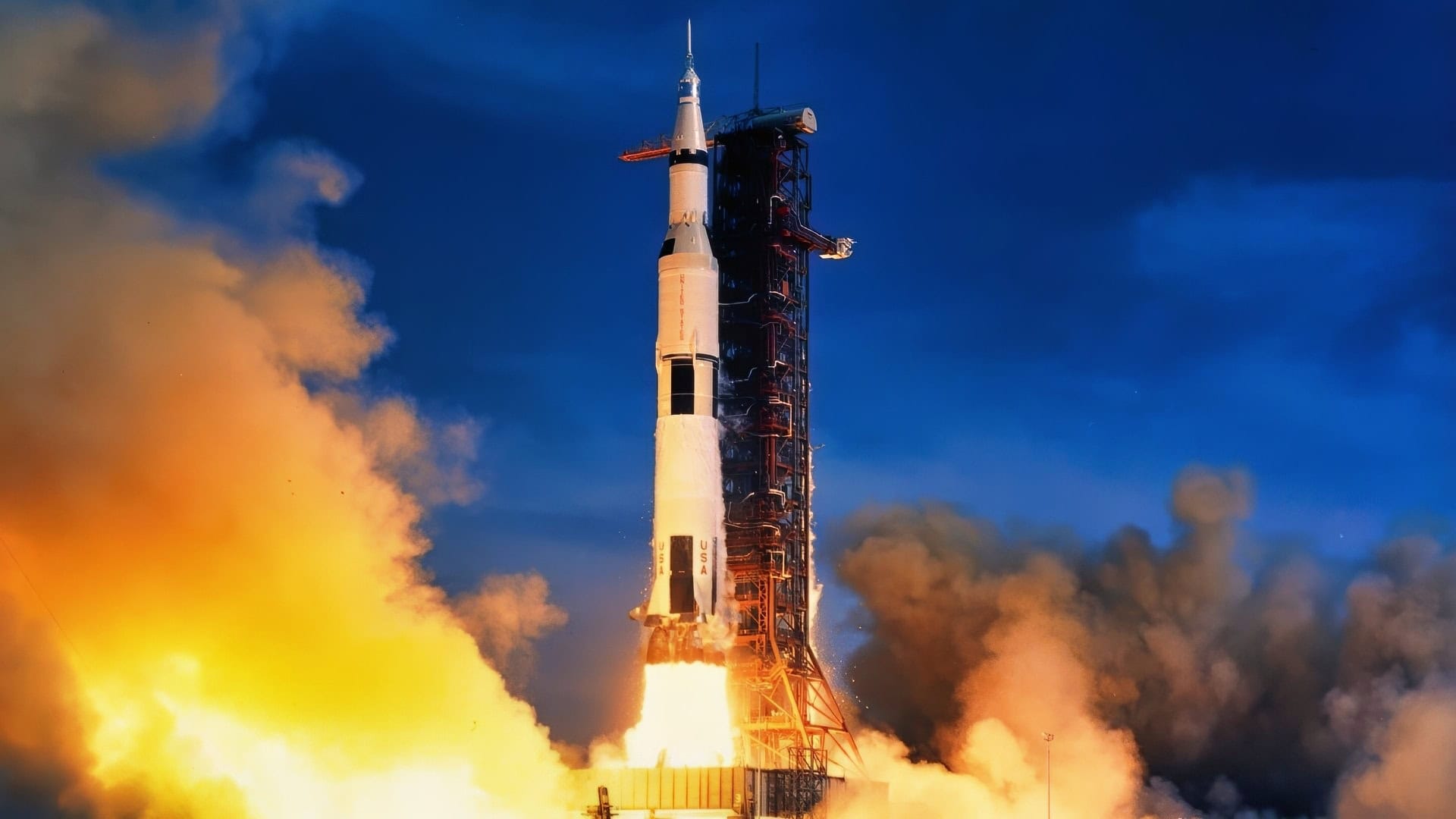
Most people associate Apollo exclusively with the Moon, which makes sense, given that Apollo only ever went there.
But after the lunar landing, NASA seriously studied sending astronauts in the Apollo program far beyond orbit.
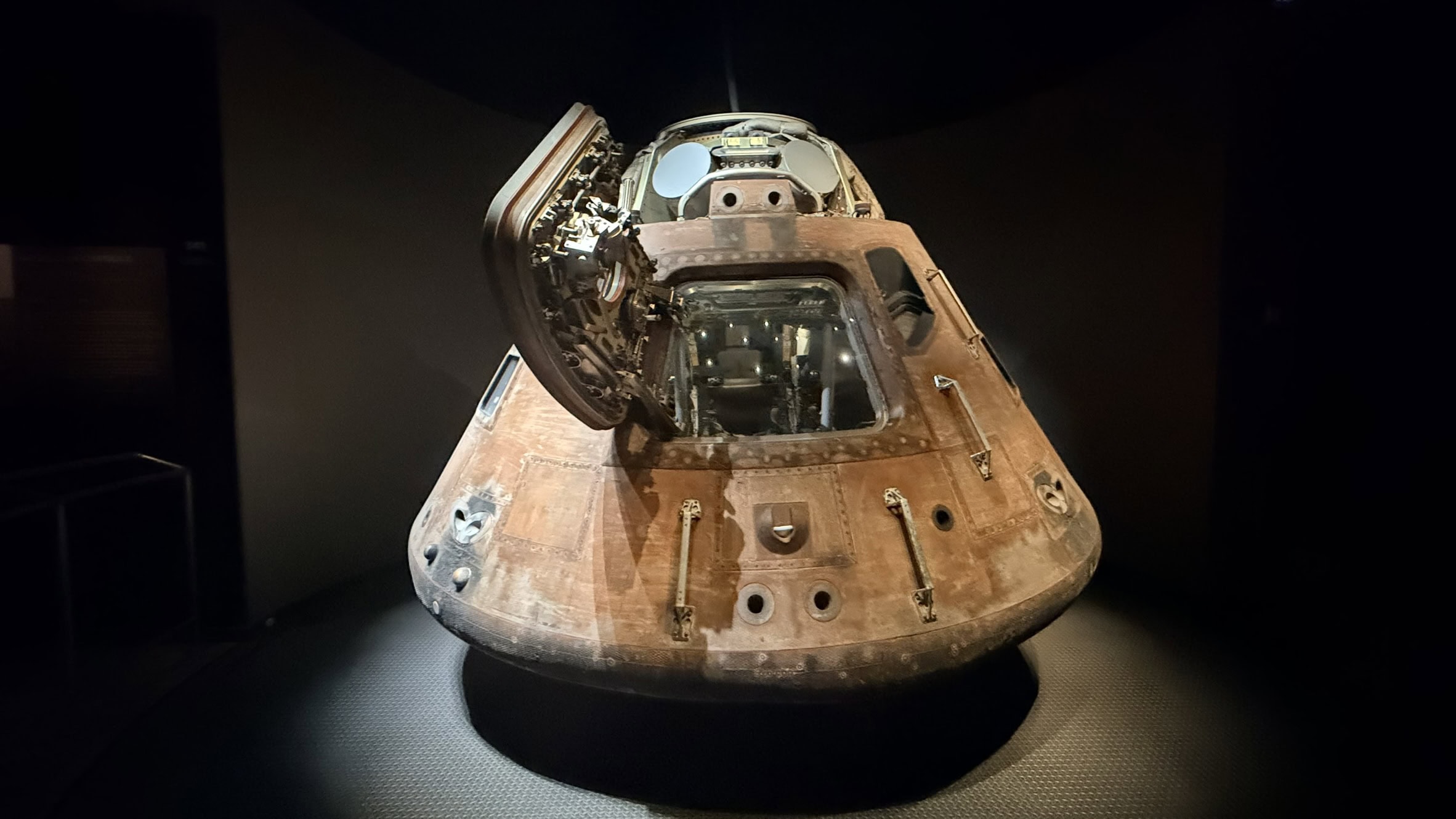
NASA Apollo 11 Exhibit at the Kennedy Space Center Saturn V Hanger. Image Credit 19FortyFive Harry J. Kazianis.
One of the most ambitious proposals envisioned sending three astronauts past Venus on a 396-day mission using modified Apollo hardware and a standard Saturn V rocket.
It sounds like science fiction, yet by 1967, engineers had produced a detailed technical study complete with spacecraft layouts, mission timelines, and operational procedures.
Had the mission flown, it would have been humanity’s first interplanetary crewed mission—more than 50 years before such a voyage is even contemplated today.
Looking Beyond the Moon
The Apollo program achieved stunning early successes, which emboldened NASA to dream ambitiously. NASA launched the Apollo Applications Program (AAP) to find new uses for the Saturn V rockets and Apollo spacecraft.
Engineers envisioned Earth-orbiting laboratories, long-duration missions, Mars expeditions, and planetary flybys. Venus, specifically, represented an achievable intermediate step.
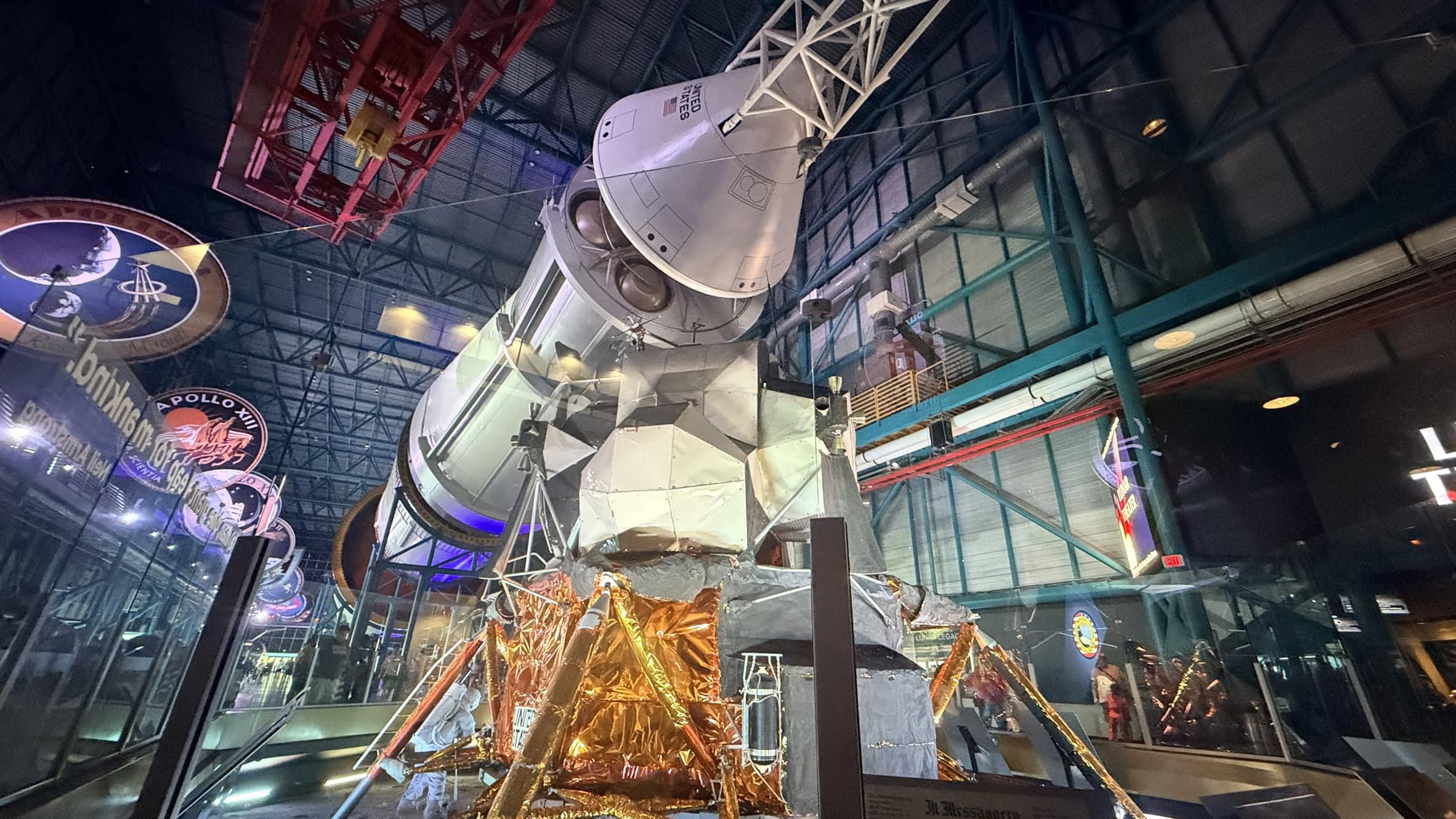
Apollo 11 and Saturn V Exhibit at the Kennedy Space Center. Taken on 6/28/2026 by 19FortyFive.com
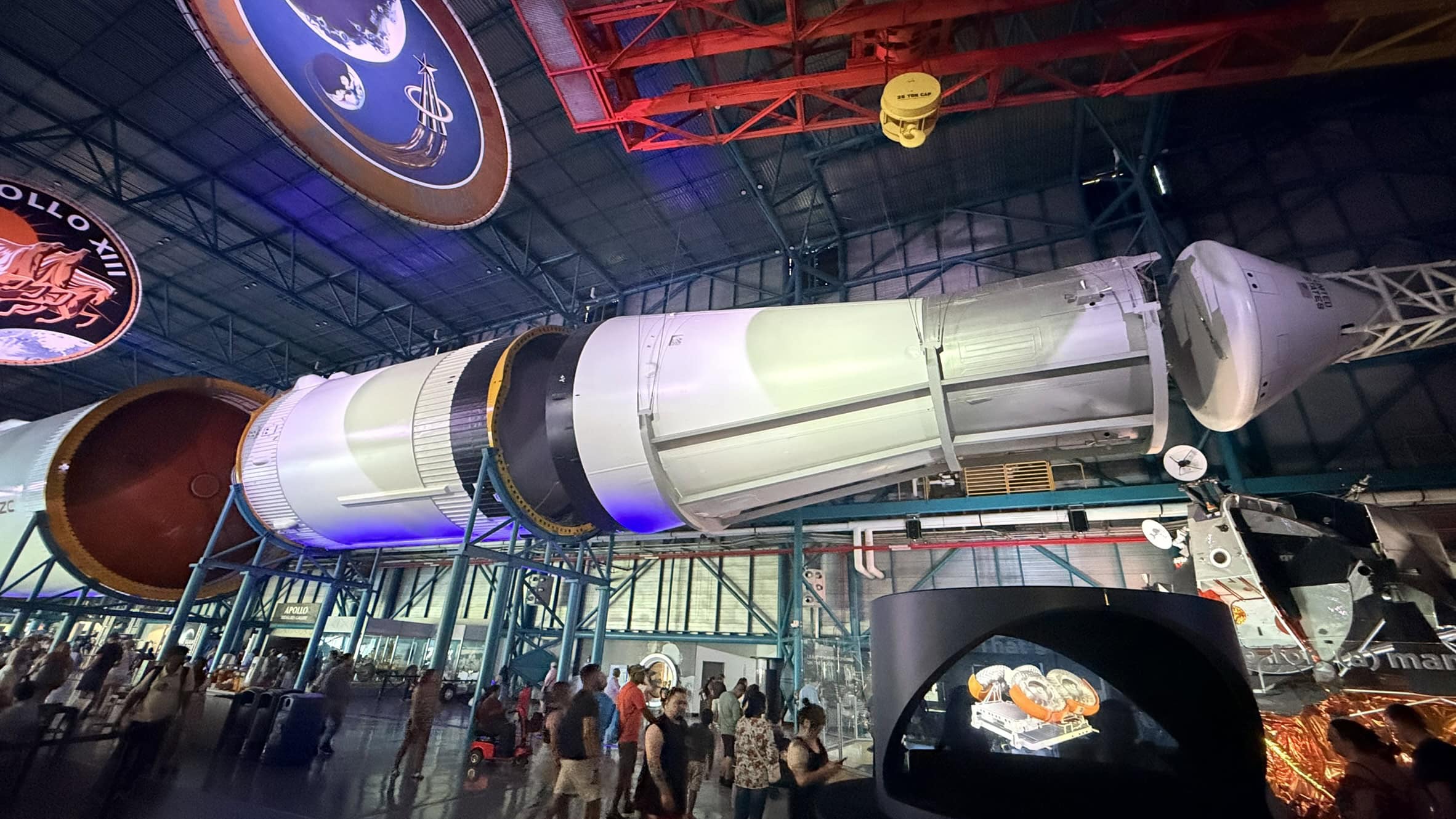
Apollo 11 and Saturn V Exhibit at the Kennedy Space Center. Taken on 6/28/2026 by 19FortyFive.com
Objectives of the envisioned mission included validating year-long human spaceflight, testing life-support systems, studying deep-space operations, and preparing for eventual Mars missions.
The Flight Plan
The planned launch date was October 31, 1973.
In a single Saturn V launch, the outbound cruise would take roughly four months traveling through interplanetary space.
The crew would leave Earth’s gravitational sphere and become the first humans to journey toward another planet.
On the encounter with Venus, the closest approach would be approximately 6,000 km (3,760 miles) above Venus.
This would have been close enough for detailed scientific observations, but far enough to avoid the atmospheric dangers of one of the most inhospitable atmospheres in the solar system.
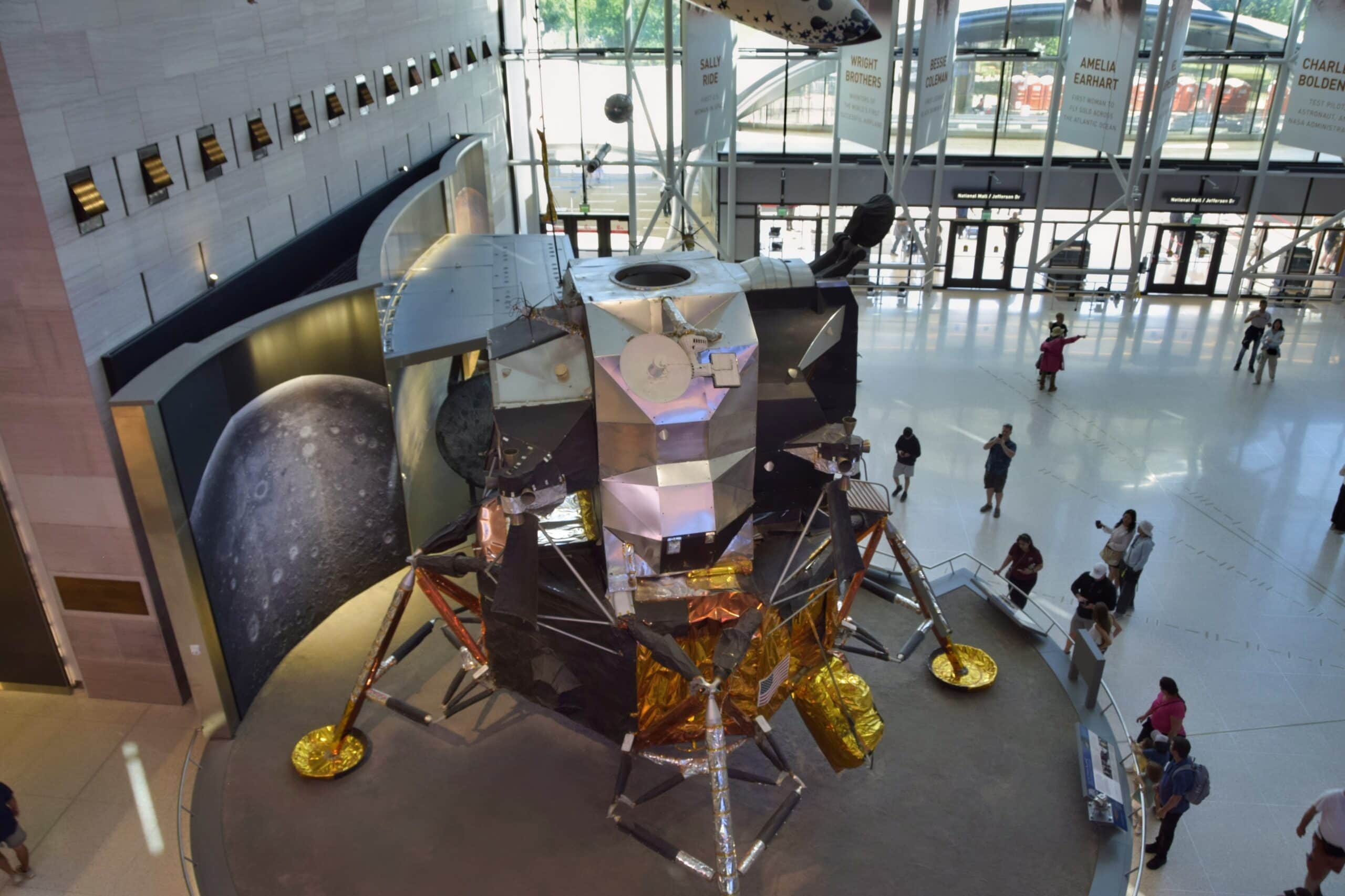
19FortyFive Original Photo of the Apollo 11 Lander at the Smithsonian in Washington, DC. Taken on 6/24/2026.
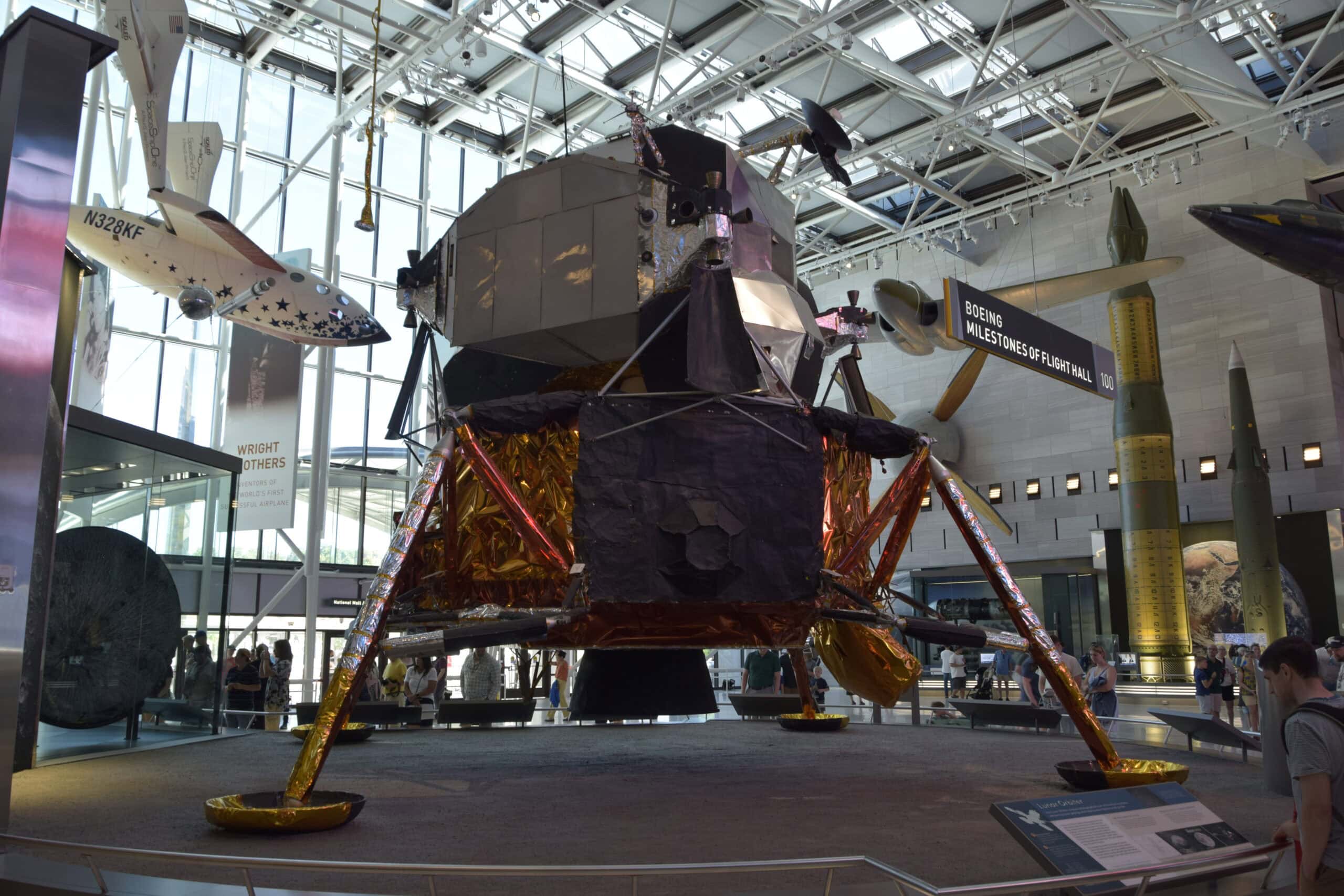
Apollo 11 Lander 19FortyFive Visit to the Smithsonian on 6/24/2026. Original 19FortyFive.com image.
Using the gravity assist, astronauts would return to Earth on a classic return trajectory because Venus’s gravity would naturally bend the spacecraft’s trajectory, requiring almost no additional propulsion.
The spacecraft would automatically head back towards Earth after the flyby. The total mission duration would have taken approximately 396 days, achieving Earth reentry in December 1974.
Transforming Apollo
The standard Moon spacecraft used during the Apollo program simply wasn’t big enough to house three astronauts for a year.
The wet workshop concept considered converting the empty Saturn V S-IVB upper stage into living quarters. After reaching space, the remaining propellants would be vented, and astronauts would enter the emptied fuel tank.
This would create roughly 10,000 cubic feet of habitable volume, including sleeping areas, workspace, exercise equipment, and storage. The concept later directly influenced Skylab, America’s first space station.
The space normally reserved for the lunar module would have been converted into an environmental support module containing oxygen recycling, water systems, electronics, communications, and solar arrays.
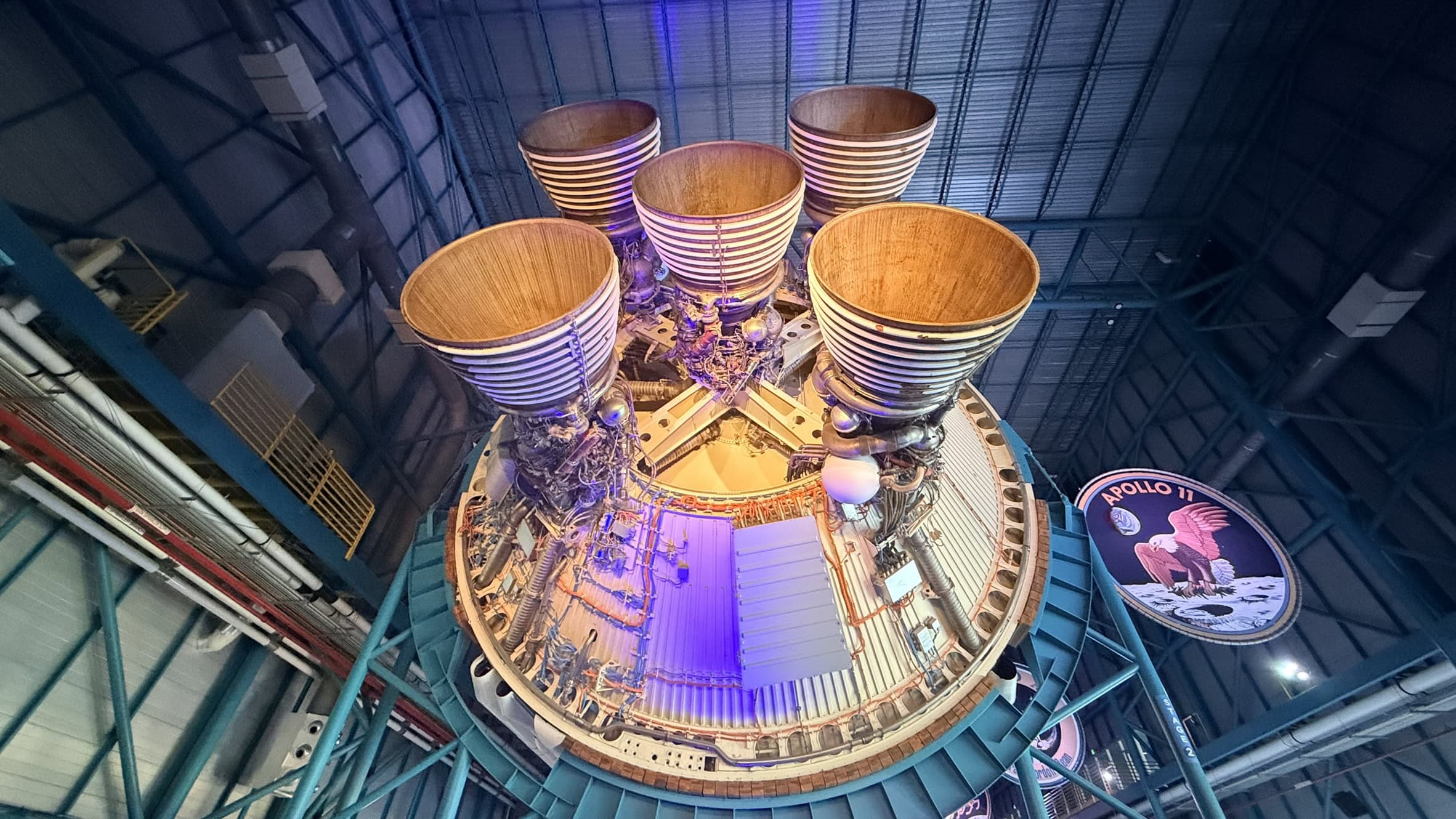
Saturn 5 Rocket. Image from NASA Kennedy Space Center Taken on 6/28/2026. Taken by Harry J. Kazianis for 19FortyFive.com
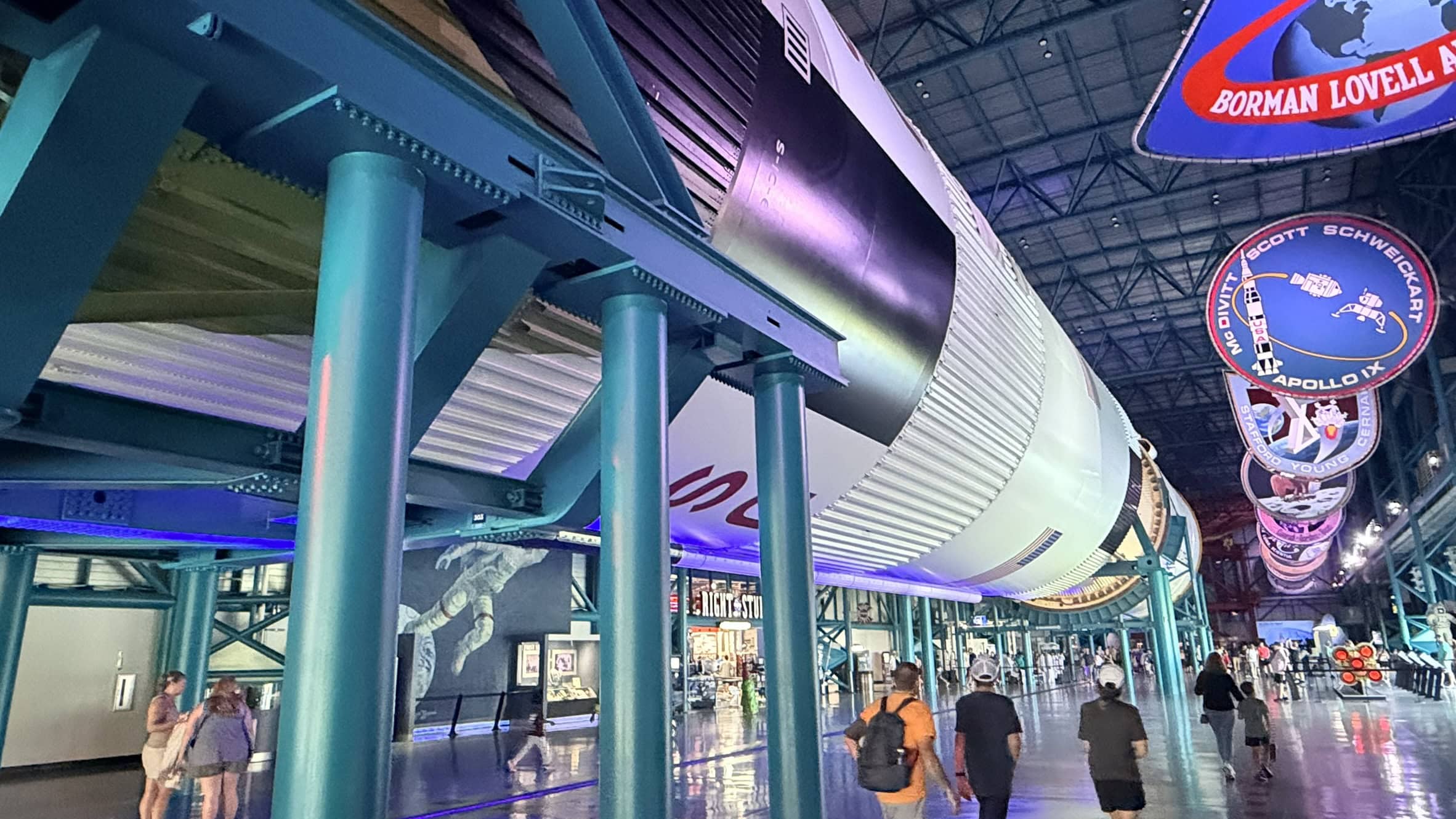
Saturn 5 Rocket. Image from NASA Kennedy Space Center Taken on 6/28/2026. Taken by Harry J. Kazianis for 19FortyFive.com
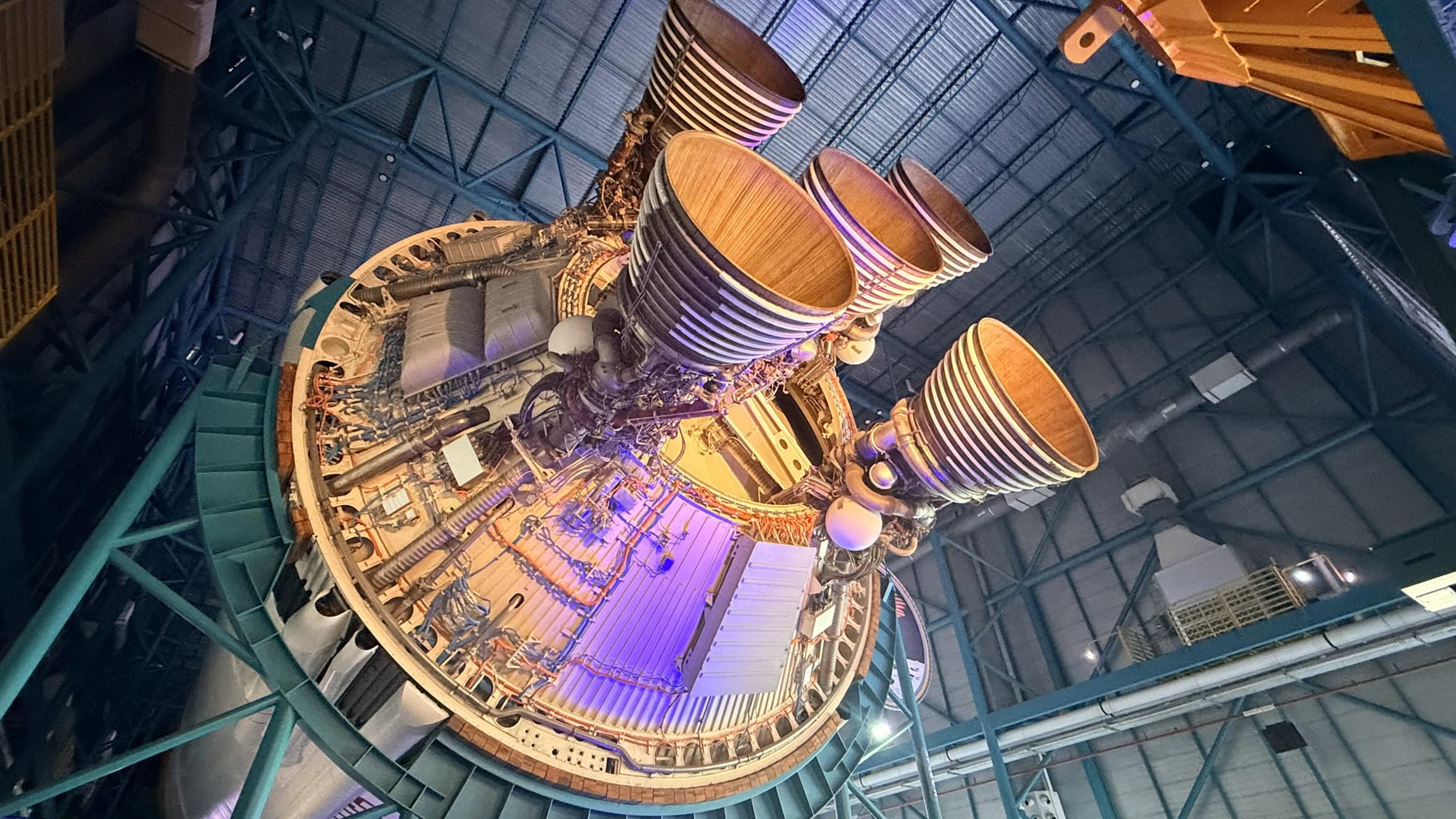
Saturn 5 Rocket. Image from NASA Kennedy Space Center Taken on 6/28/2026. Taken by Harry J. Kazianis for 19FortyFive.com
Engineers even proposed replacing Apollo’s single-service propulsion system engine with two lunar module descent engines.
This would have improved redundancy during the long mission, reflecting the importance of fault tolerance so far from Earth.
The Scientific Yield
The astronauts wouldn’t have simply observed Venus through the windows during the flyby. Rather, the mission would have actively conducted scientific experiments.
Notably, the crew planned of deploy robotic probes during the closest approach, which were designed to descend into Venus’s atmosphere and collect pressure data, temperature, atmospheric chemistry, and cloud composition.
The astronauts would have served as the operators of the probes, as controllers stationed on Earth would have experienced a radio signal lag when controlling the probes.
The astronauts, on the other hand, could have monitored the experiments almost immediately. They could have served as an orbital command center, directing robotic exploration.
Had the mission been pulled off, it would have represented an engineering achievement decades ahead of its time.
The mission was proposed before the Space Shuttle, the International Space Station, or modern life-support technology.
Pulling this off would have required overcoming challenges such as radiation exposure, food storage for a year, waste recycling, psychological isolation, and continuous spacecraft maintenance—many of which anticipate technologies discussed for future Mars missions.
Unfortunately, the mission never happened. Several developments during the project—Apollo, President Kennedy’s moon goal in 1969, and afterward, public enthusiasm for space travel gradually declined.
Meanwhile, the Vietnam War consumed increasing federal resources, and domestic spending priorities shifted accordingly.
Congress steadily reduced NASA’s budget throughout the 1970s. The Apollo Applications Program was dramatically scaled back; only Skylab survived from many of the ambitious post-Apollo proposals.
About the Author: Harrison Kass
Harrison Kass is a writer and attorney focused on national security, technology, and political culture. His work has appeared in Tablet, City Journal, The Hill, The Spectator, and The Cipher Brief. He holds a JD from the University of Oregon and a master’s in Global & Joint Program Studies from NYU. More at harrisonkass.com.