
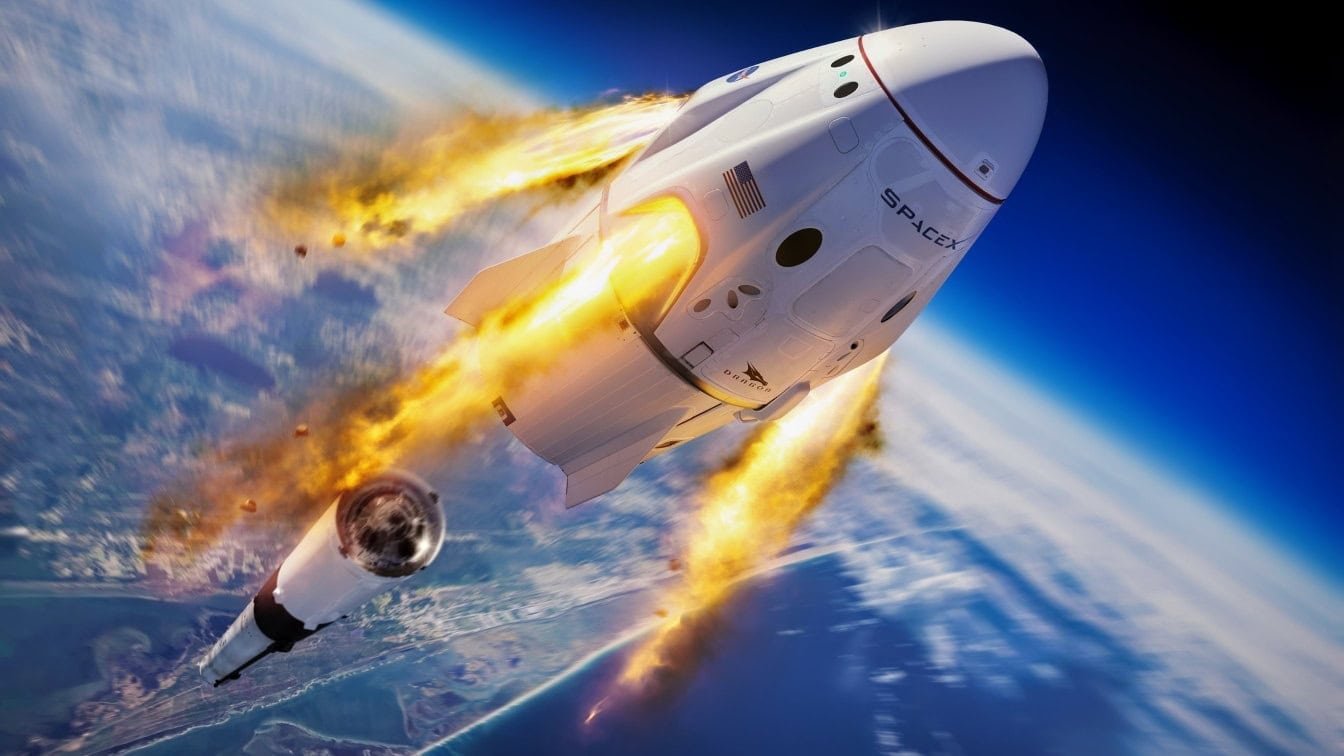
On August 5, 2026, a discarded SpaceX Falcon 9 upper stage is expected to collide with the Moon. Unlike a planned lunar landing, this is an uncontrolled impact involving hardware left over from a 2025 commercial lunar mission.
The event is attracting worldwide attention because it offers both a rare scientific opportunity and a reminder that managing deep-space debris is becoming more difficult.
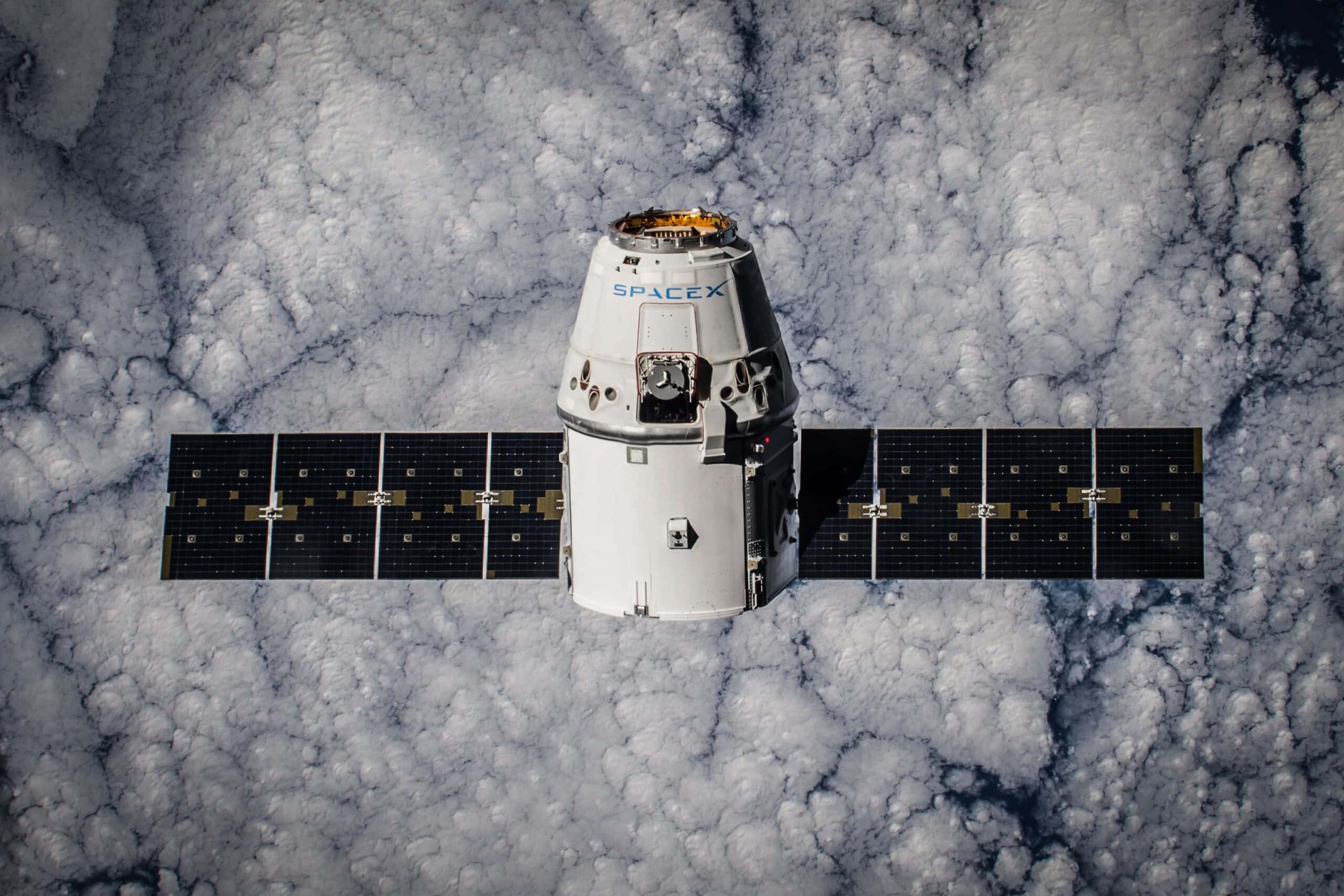
SpaceX Satellite. SpaceX Photo.
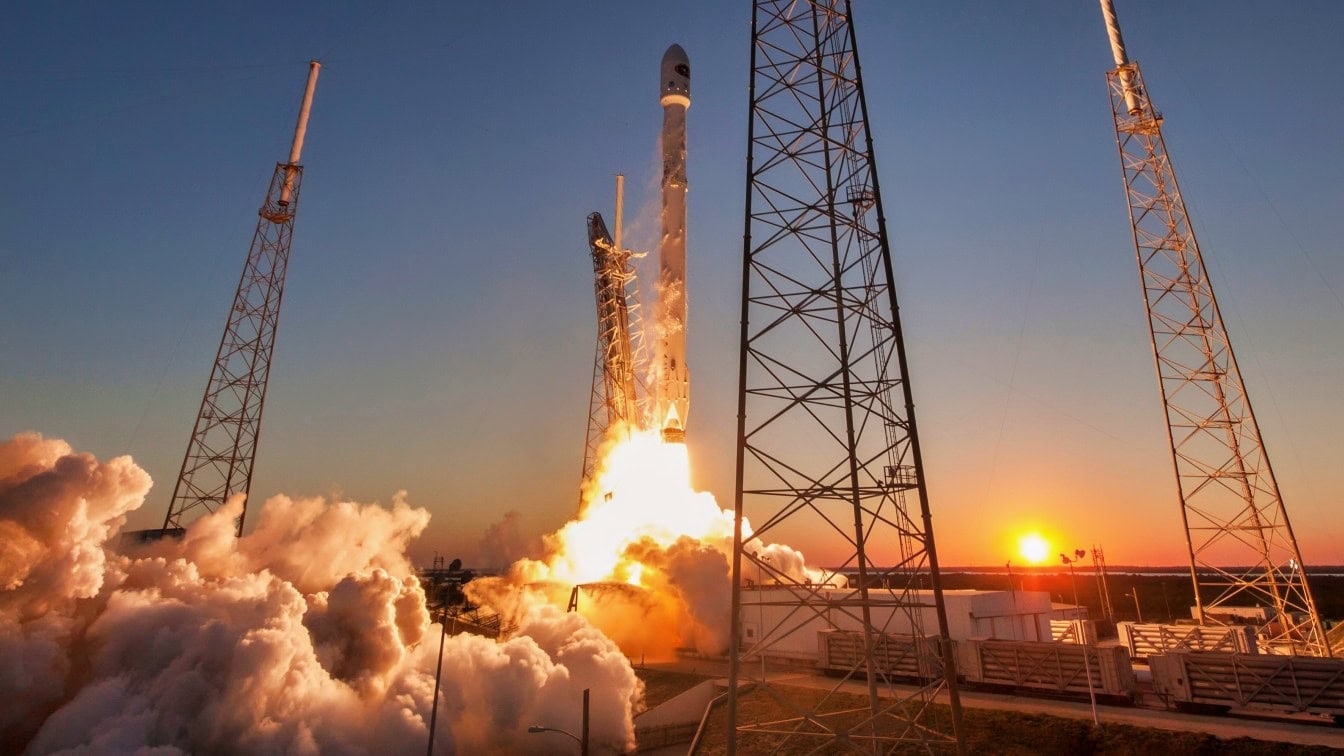
SpaceX Launch. Image Credit: SpaceX.
Although accidental, the Falcon 9 collision will serve as a scientific experiment in lunar geology and impact physics.
Collision Course
The Falcon 9 currently on track to collide with the Moon originated from the January 2025 launch carrying the Firefly Aerospace Blue Ghost lunar lander and the ispace Hakuto-R Resilience mission.
The first stage returned to Earth as planned while the upper stage completed its primary mission and escaped Earth orbit.
But with no remaining propellant for disposal maneuvers, the Falcon 9 became an uncontrolled object in cislunar space.
Over approximately 19 months, Earth’s gravity, the Moon’s gravity, solar perturbations, and solar radiation pressure gradually altered its orbit until a lunar impact became unavoidable.
The Physics of the Collision
The rocket, weighing 8,800 pounds and measuring nearly 45 feet long, will have an impact velocity of roughly 5,400 mph. That’s a large object traveling at a high speed.
The kinetic energy unleashed at the moment of impact will be roughly equivalent to three tons of TNT.
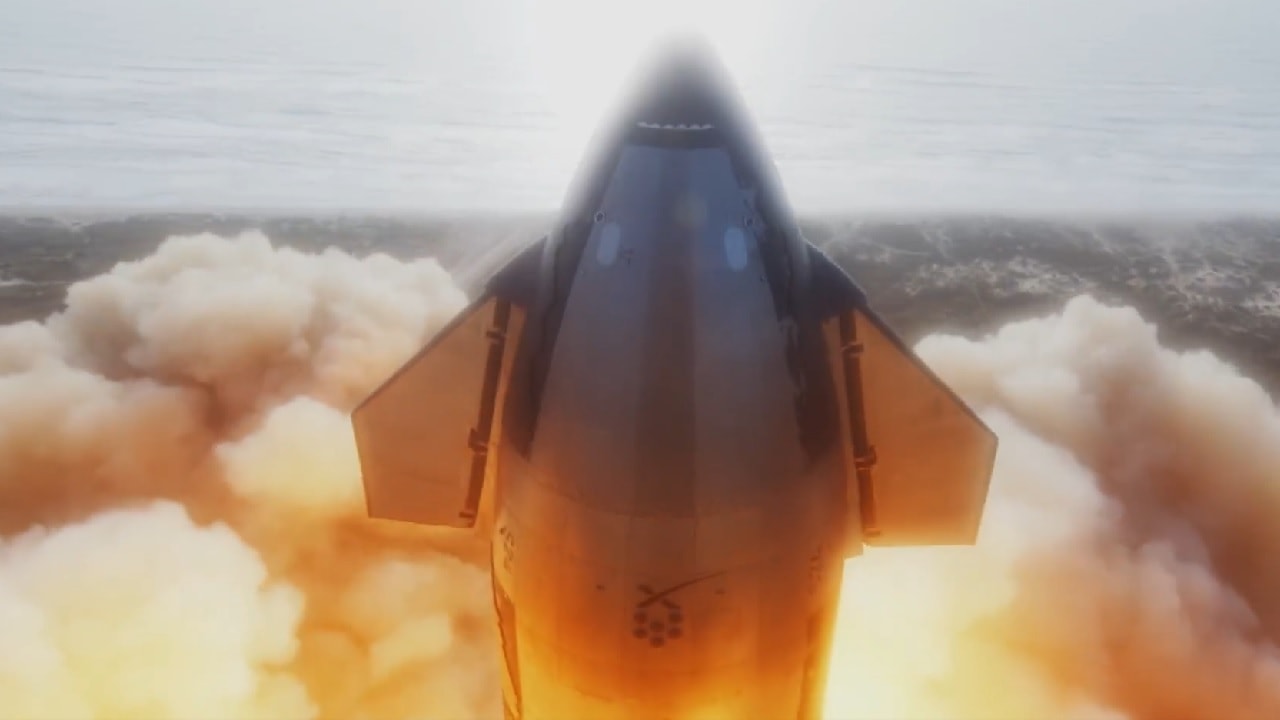
SpaceX Rocket Takeoff. Image Credit: Creative Commons.
And because the Moon has virtually no atmosphere, there will be no aerodynamic heating, no breakup, and no fiery reentry.
So the rocket stage will strike fully intact before being destroyed on impact. The estimated crater will be roughly 20 to 30 meters wide and several meters deep.
A Different Kind of Impact
Natural lunar impacts typically involve dense rock or iron meteorites.
But the Falcon 9 upper stage is naturally very different, with mostly hollow aluminum-lithium tanks and a heavy Merlin Vacuum engine concentrated at one end.
That uneven mass distribution could produce an asymmetric impact signature.
Some researchers have compared it to the unusual crater morphology observed after the 2022 Long March booster impact.
This will provide scientists with another opportunity to study how artificial objects interact with the lunar surface.
A Rare Scientific Opportunity
Impact is expected near the Moon’s western limb. Dust and the ejecta plume may rise tens of kilometers above the surface.
Scientists hope to analyze the freshly excavated regolith, subsurface minerals, and possible volatile compounds.
Multiple spacecraft are expected to observe the aftermath, including South Korea’s Danuri orbiter and NASA’s Lunar Reconnaissance Orbiter.
Fresh crater imagery is expected to reveal ejecta patterns, crater dimensions, and changes to the surrounding terrain.
Not the First Time
NASA has long used impact experiments. Apollo missions deliberately crashed Saturn V upper stages while seismometers recorded the impacts.
This produced the famous observation that the Moon appeared to “ring like a bell.” The LCROSS mission in 2009 intentionally struck the Cabeus Crater, confirming the presence of water ice in permanently shadowed regions.
The Falcon 9 impact will continue within that broader history, albeit unintentionally.
A Growing Problem
Cislunar debris is becoming a relevant problem. Low Earth orbit now has extensive debris tracking, but cislunar space remains comparatively unregulated.
As lunar missions increase from NASA, commercial companies, China, Japan, and Europe, spent upper stages and abandoned hardware are entering lunar trajectories.
At present, few international rules govern the disposal of objects once missions leave Earth orbit.
This raises questions about long-term lunar stewardship, traffic management, and the preservation of future exploration sites.
The Falcon 9 impact underscores both the promise and growing complexity of a new era in lunar exploration. As governments—and, for the first time, commercial firms—accelerate mission frequency, greater care may be needed in the disposal of deep-space hardware.
At the same time, the Falcon 9 impact offers a valuable scientific opportunity.
Fresh impact craters expose pristine lunar material that has remained buried for billions of years, allowing orbiters and Earth-based observatories to study the Moon’s composition in ways that are difficult to replicate.
As activity in cislunar space increases, and as NASA enters the Artemis era, the scientific community may need to begin more closely regulating how spent hardware is handled.
MORE – The B-52 Bomber Is Getting a Reboot
About the Author: Harrison Kass
Harrison Kass is a writer and attorney focused on national security, technology, and political culture. His work has appeared in Tablet, City Journal, The Hill, The Spectator, and The Cipher Brief. He holds a JD from the University of Oregon and a master’s in Global & Joint Program Studies from NYU. More at harrisonkass.com.