
Russia has been increasing bonuses for new military contracts amid reports of declining recruitment numbers in the first half of 2026.
According to reports, more than half of Russia’s regions are now offering cash bonuses to new recruits, with some reaching as high as $22,200, depending on the contract type.
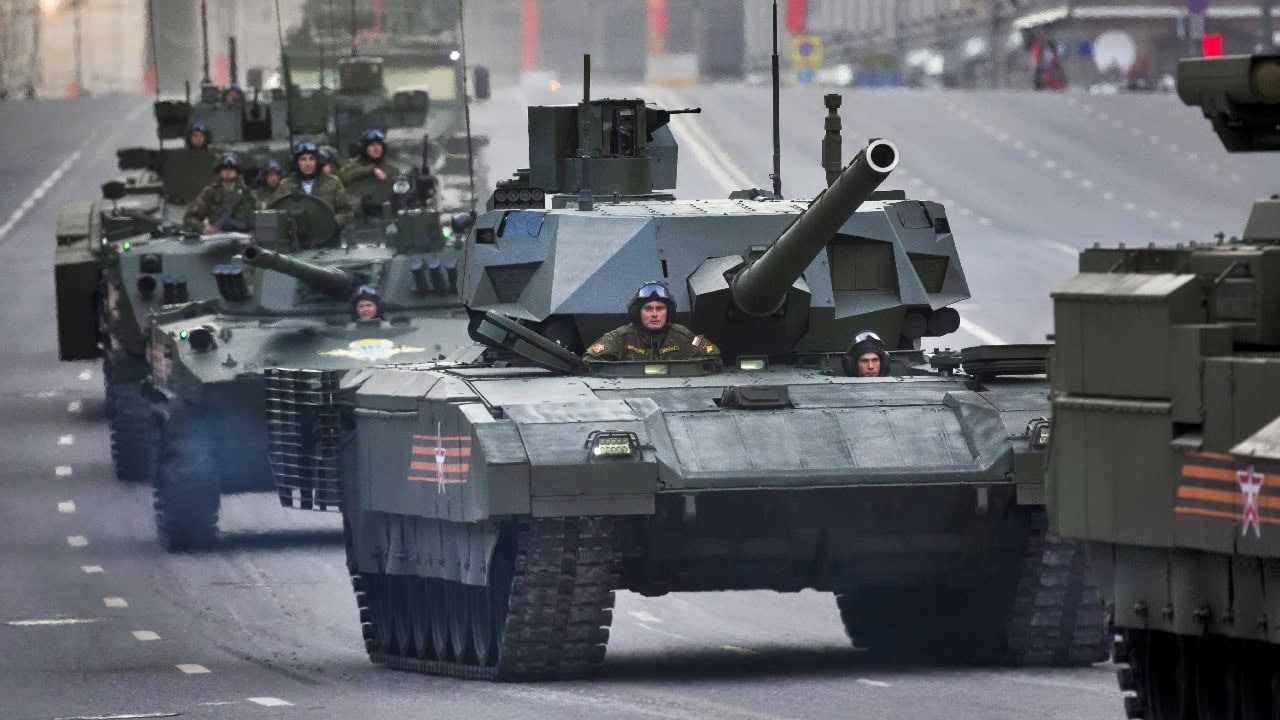
T-14 Armata Tank from Russia. Image Credit: Creative Commons.
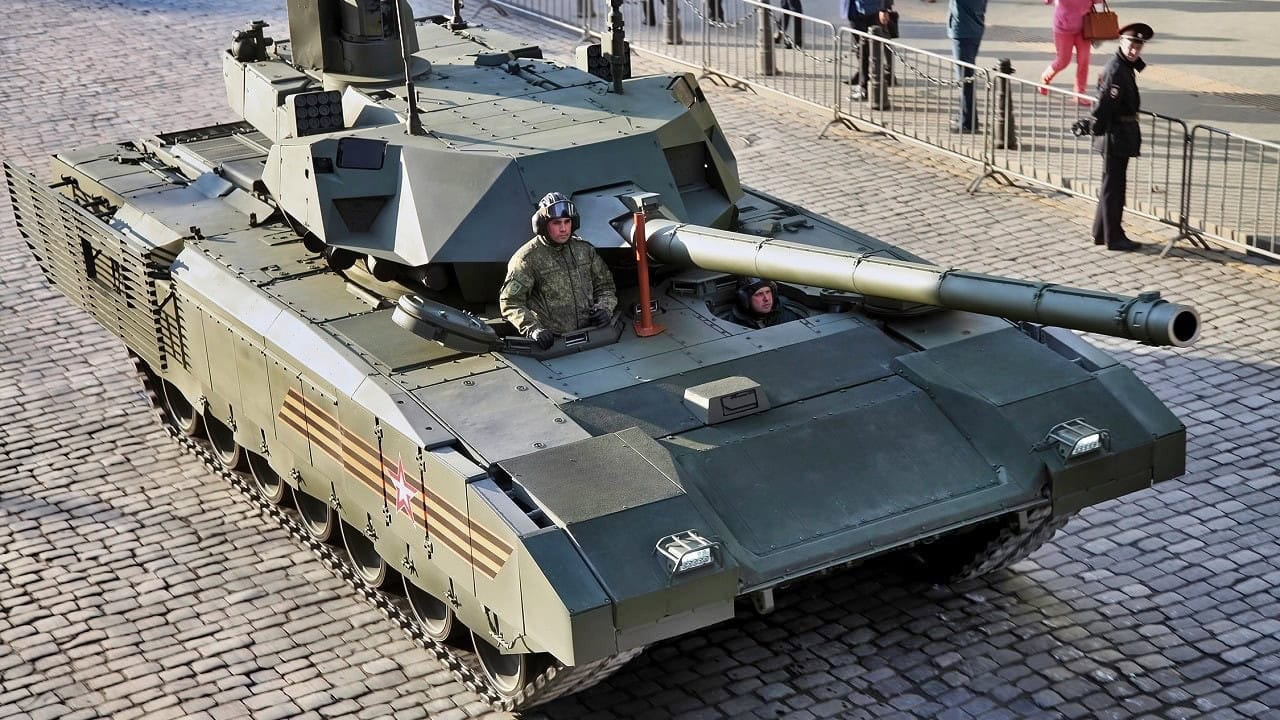
T-14 Armata Tank.
After more than four years of combat, the Russians are looking for new ways to entice young men, both at home and abroad, to volunteer for combat in Ukraine. Recent reports, however, indicate that the Kremlin may be considering ramping up its mobilization efforts if voluntary recruitment continues to decline.
Increasing Financial Incentives to Fight in Ukraine
As of August 2026, 56 of Russia’s 85 regions are offering rewards for signing military enlistment contracts. Around the same time last year, only 31 regions offered such bonuses. According to a report from The Moscow Times, bonuses jumped sharply in the Smolensk region, where they experienced a roughly 20% increase.
In most regions, recruitment bonuses are paid by the local government through governors’ decrees and other government resolutions.
In 2026, several regions increased their sign-on bonuses as overall recruitment efforts declined.
Bonuses vary by region, with regions like Magadan offering bonuses only for employment in the Interior Ministry or National Guard.
Western sources, as usual, interpret these changes in the most negative light possible.
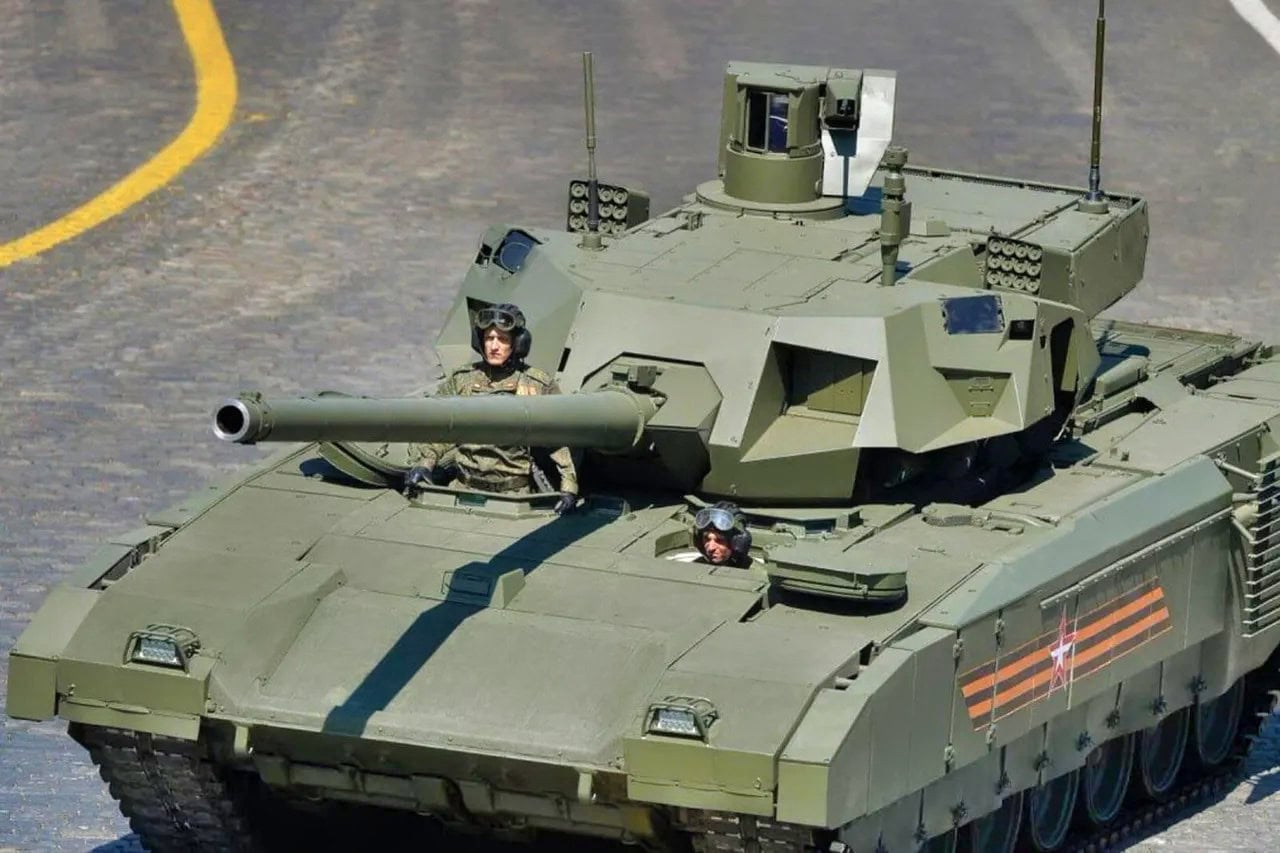
Russian T-14 Armata Tank. Image Credit: Social Media Screenshot.
While recruitment has been dropping across the board, sign-on bonuses are neither new nor are they unique to Russia.
Ukraine, for example, offers a sign-on bonus of around $24,000 for recruitment depending on the position, and around $7,400 to $11,100 for foreign volunteers.
The U.S., however, leads the world in recruitment bonuses. In the Army, new recruits can earn up to $50,000 for enlistment, while the Navy offers up to $140,000 in immediate bonuses for certain positions.
It turns ou that, every nation that relies on voluntary military recruitment offers a significant number of financial incentives.
Compared to the U.S., Russia is actually quite tame in its military benefits, which is perhaps why recruitment has deteriorated recently.
The Threat of Mobilization
Amid rising contract bonuses, reports suggest the Kremlin is preparing for a new ramp-up of its mobilization efforts. According to Sergey Krivenko, the director of the human rights group Citizen. Army. Law, “If recruitment fails, there will be mobilization,” he said. “That is why the regions have been instructed to conduct aggressive recruitment campaigns.” In 2026, reports of full-scale mobilization by Moscow have been circulating online.
In July, President Zelenskyy warned that Russia was preparing to mobilize somewhere between 300,000 and 500,000 people sometime in October, right after the end of Russia’s upcoming State Duma Elections.
The Ukrainian President warned that as casualties in Ukraine mount, the possibility of a new wave of mobilization will increase.
Russian officials have naturally denied any reports that Moscow is preparing for a new wave of mobilizations.
In July, the Deputy Chairman of the Security Council and the former President of Russia, Dmitry Medvedev, dismissed the claims as Ukrainian propaganda. “There’s absolutely no need for mobilization,” Medvedev said. “[Claims] by our enemies are no more than a false provocation.
This is part of propaganda before elections [that try], naturally, to destabilize the situation in Russia.
He also noted that it reached its recruitment goals for the first quarter of 2026, thereby eliminating the need for further mobilization.
It should be noted that prior to the announcement of partial mobilization in 2026, the government had also denied any need for mobilization efforts.
Needless to say, statements from government officials should be taken with a massive grain of salt.
Understanding Russia’s Current Mobilization Framework
There is, however, some confusion in the West on how Russia’s current mobilization actually works. In 2022, Putin announced a “partial mobilization” of military-aged men across the country.
Under this framework, 300,000 recruits were summoned for military service. Partial mobilization, however, never ended.
Draft notices are still routinely handed out around Russia to meet mobilization requirements; it’s just that these summonses occur quietly and infrequently enough that they do not cause any civil unrest.
While the initial decree sets a ceiling of 300,000, the laws are loose enough that Moscow can ramp up current mobilization efforts without needing to make a public speech in 2022 and risk stirring up anxieties.
If Moscow decides to ramp up its mobilization efforts, which is still not 100% guaranteed, Putin will likely do so as quietly as possible.
While Moscow still retains a tight authoritarian grip on Russian society, full-scale mobilization would come at a high political and economic cost to the Kremlin, running counter to Putin’s often-stated goal of restoring stability to Russia.
Some Russian officials, including the Mayor of Moscow, have come out against full-scale civil and economic mobilization, arguing that such decisions would cause more long-term damage to Russia.
Will Putin be swayed by such arguments? It is impossible to know for certain.
About the Author: Isaac Seitz
Isaac Seitz, a Defense Columnist, graduated from Patrick Henry College’s Strategic Intelligence and National Security program. He has also studied Russian at Middlebury Language Schools and has worked as an intelligence Analyst in the private sector.