
Putin May Think America Is Too Depleted to Stop Him – John Ratcliffe flew into Moscow last week the way spies travel when nobody wants headlines: aboard a military transport plane, unannounced, without so much as a State Department readout. Asked about it two days later, Trump told Glenn Beck the trip was “sort of semi-routine.” By Thursday he had gone further, telling reporters flatly that Putin isn’t “going to be attacking a NATO territory.” That same Thursday, multiple news organizations reported a far more urgent picture: warnings the CIA director had carried about a Russian test of NATO’s Baltic flank, about further escalation in Ukraine, and about Iran. Somewhere in the gap between what the White House says in public and what Washington’s own reporters are hearing in private sits the real story.
Ratcliffe’s trip was the first known visit by a sitting CIA director to Moscow since Bill Burns flew there in November 2021 to warn the Kremlin off an invasion Putin launched three months later anyway.
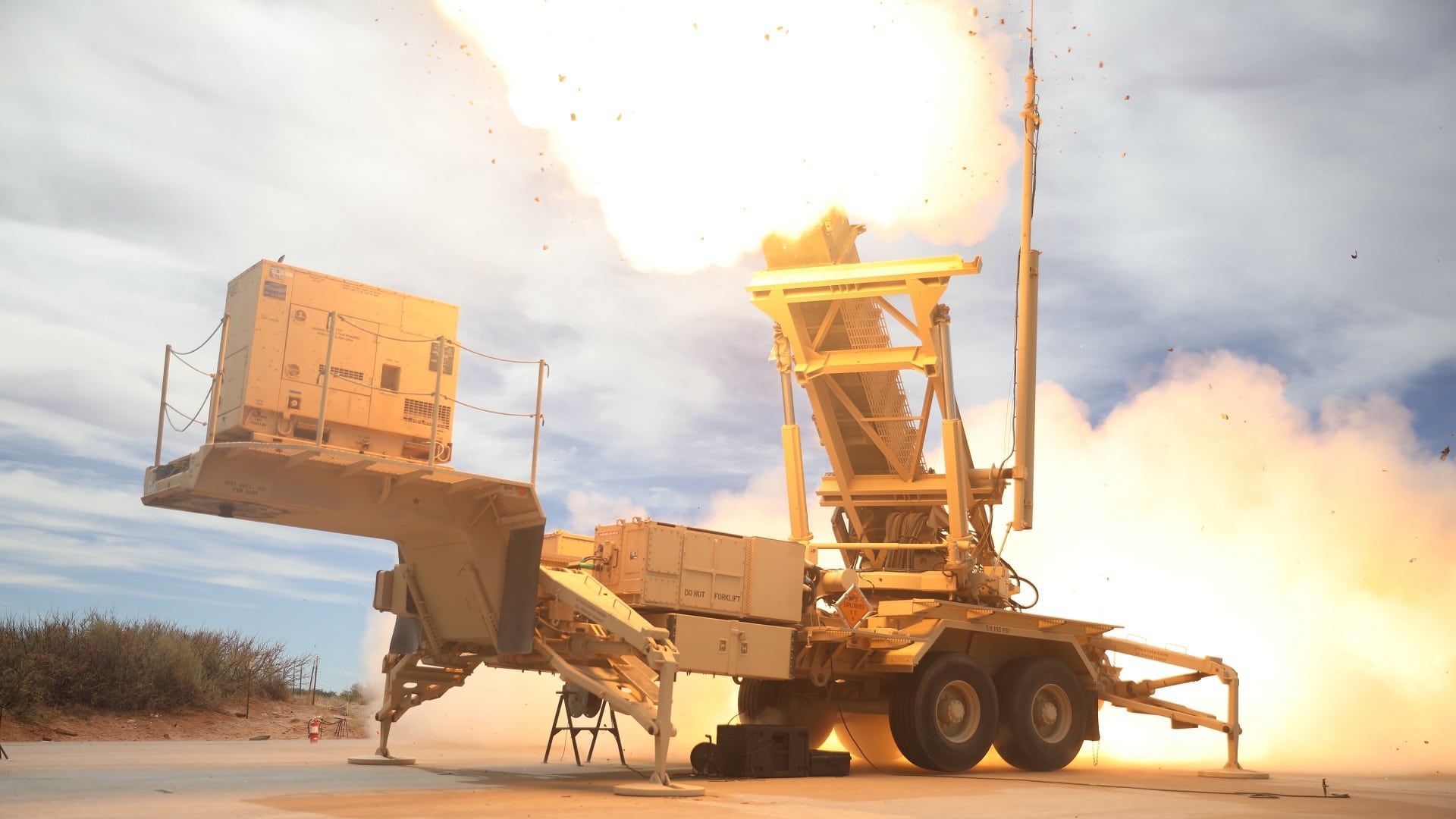
Soldiers from 69th Air Defense Artillery Brigade conducted Patriot Missile live fire training, November 5, at McGregor Range Complex on Fort Bliss. The live fire exercise was conducted jointly with Air Defense counterparts from the Japanese Self-Defense Force. (U.S. Army Photo by Staff Sgt. Ian Vega-Cerezo)
One obvious read on this week’s visit is nuclear. Putin has spent four and a half years rattling that saber, and a stalled offensive paired with Ukrainian strikes now reaching deep into Russian territory is exactly the kind of pressure that makes a cornered leader reach for something drastic. It’s a coherent theory.
But the intelligence that surfaced after Ratcliffe’s visit points to a different danger, and a more interesting one. Putin may not simply be cornered. He may think he just caught a break.
What Washington Appears To Fear
The Washington Post reported Thursday that fresh U.S. intelligence, assembled before Ratcliffe’s trip, indicates Moscow now sees the United States as weakened by the Iran war and views that weakness as an opening to press American interests and allies in Europe. Two people familiar with the assessment described it to the Post. One of them drew the contrast bluntly: Ratcliffe’s mission was “less about Putin being in a corner” over the stalled Ukraine offensive “and more because Russia assesses we are depleted and can’t intervene.”
A cornered Putin is a desperation problem, and the standard prescription for desperation is to leave him a way out, some face-saving off-ramp that lets him stop without looking like he lost. An opportunistic Putin is a different animal. Pressure tests what an adversary is willing to risk. Opportunity tests what he thinks the risk will cost him. Nothing says Putin can’t feel both at once, frustrated in Ukraine and emboldened in Europe, and Washington now has reason to worry about the second as much as the first.
The tactical nuclear question doesn’t disappear here. It just stops being the whole picture and becomes one rung on a ladder Putin might be climbing for reasons unrelated to fear.
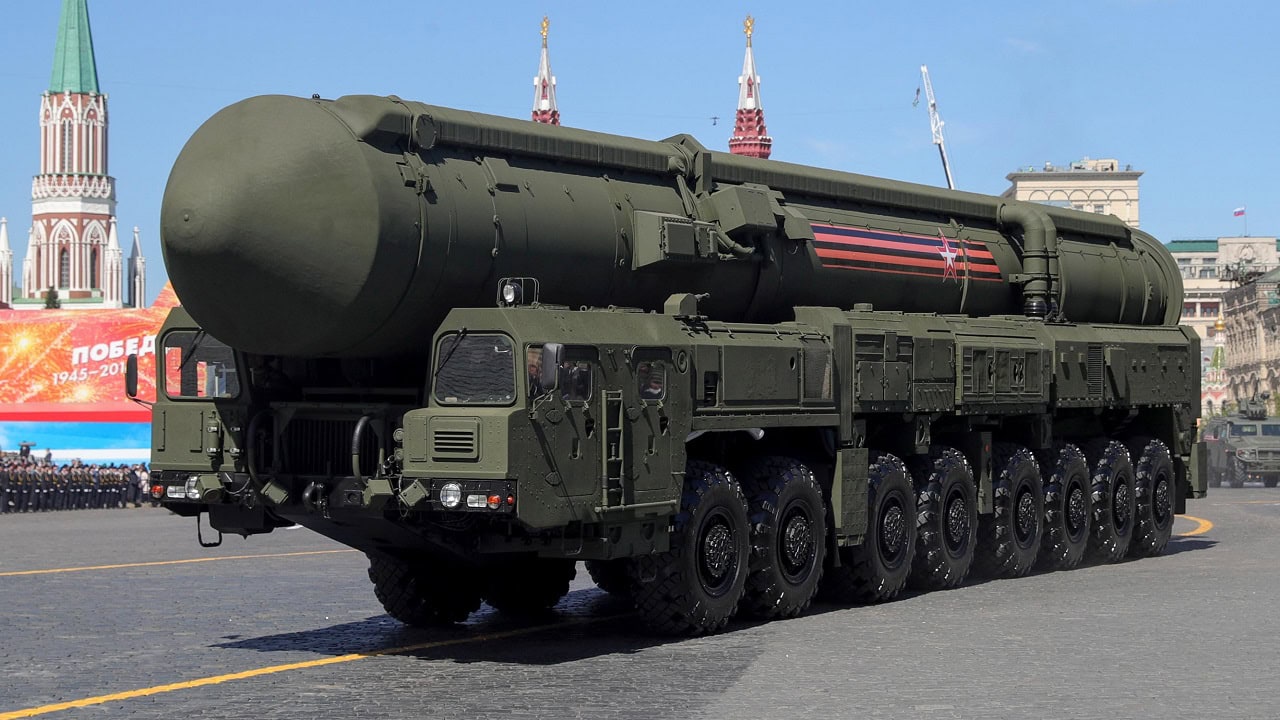
MAY 9, 2018: An RS-24 Yars mobile intercontinental ballistic missile system rolls down Moscow’s Red Square during a Victory Day military parade marking the 73rd anniversary of the victory over Nazi Germany in the 1941-1945 Great Patriotic War, the Eastern Front of World War II. Sergei Bobylev/TASS.
There Really Is Visible American Strain
The unnerving part is that Putin wouldn’t need much imagination to reach that conclusion, because the underlying strain on American military stocks is real and well documented. The Center for Strategic and International Studies estimates that the war with Iran has consumed roughly 1,500 Patriot interceptors, close to 65 percent of the prewar U.S. inventory, which it puts at 2,330. CSIS’s own analysts flag that same drawdown as a near- to medium-term risk to American readiness in a Pacific war with China, meaning the strategic implications of that drawdown extend well beyond Europe.
The Associated Press reported Thursday, citing a U.S. defense official in Europe and a NATO official, that Patriot stocks on the continent have reached what one of them called “beyond critical.” NATO pushed back in the same story. Colonel Martin O’Donnell, a senior alliance spokesman, said that characterization was “simply not the case” and that NATO can “block punches” and still supply Ukraine. The Pentagon’s Sean Parnell called the shortage claims “false” outright.
Whether stocks are beyond critical or merely tight is exactly the kind of thing that stays classified for good reason. Outsiders reading dueling anonymous quotes won’t settle that argument, and they don’t need to.
Why Perception Does The Real Work
Deterrence depends on what an adversary believes about your capability and your resolve, not simply on the true state of your magazines. Actual capability still matters, of course. But until it’s tested, it’s the adversary’s assessment of it that does the work.
Putin has no inspector inside an American missile depot. What he has is expenditure rates, production timelines, weapons shuttling between the Middle East, Ukraine, and Europe, an ally in Kyiv still visibly short of the same interceptors, and a Pentagon publicly insisting everything is fine. From the outside, that is more than enough raw material to build a confident, and possibly wrong, picture of American overstretch. He does not need the number to be accurate. He needs it to feel plausible from Moscow.
U.S. intelligence reportedly believes he has built exactly that picture. Even a mistaken perception of weakness can produce the test that deterrence was supposed to prevent.
Seen in that light, Ratcliffe’s trip makes strategic sense as an attempt to keep a Russian perception of American weakness from hardening into action, before Moscow decides to find out for itself whether the perception is correct.
Nobody outside a small circle knows exactly what he told his Russian counterparts, and we’re not likely to find out soon. We don’t need the transcript to see the shape of the problem.
A Different Kind Of Deterrence Problem
An opportunistic Putin is a different deterrence problem than a desperate one. It isn’t automatically the harder one — a desperate actor facing intolerable losses can be plenty risk-tolerant in his own right. What changes is the fix. An off-ramp can matter when an adversary is taking risks because he sees no acceptable way out. It does much less if he is also taking risks because he thinks he sees an opening. If Moscow believes American overstretch has lowered the cost of escalation, Washington has to convince the Kremlin that opening isn’t really there.
That is a harder message to send than a warning, because a warning is cheap and a demonstrated capability is not. NATO says Europe’s first Patriot production facility opens in Germany this September, with deliveries possibly beginning early next year, a slow start on the kind of visible resupply that would actually change Moscow’s math, not just contest it in a press statement. Whether Ratcliffe carried anything sharper than that into Moscow this week is a question the public will not get an answer to soon.
Washington and NATO can keep arguing in public about how depleted American magazines really are. Moscow has apparently already reached its own conclusion, possibly the wrong one. That’s the real danger sitting underneath this week’s trip: a Russian judgment about American weakness that Washington believes is mistaken, and that Moscow may decide to test anyway.
About the Author: Dr. Andrew Latham
Andrew Latham is a professor of international relations and political theory at Macalester College in Saint Paul, MN. You can follow him on X: @aakatham.