
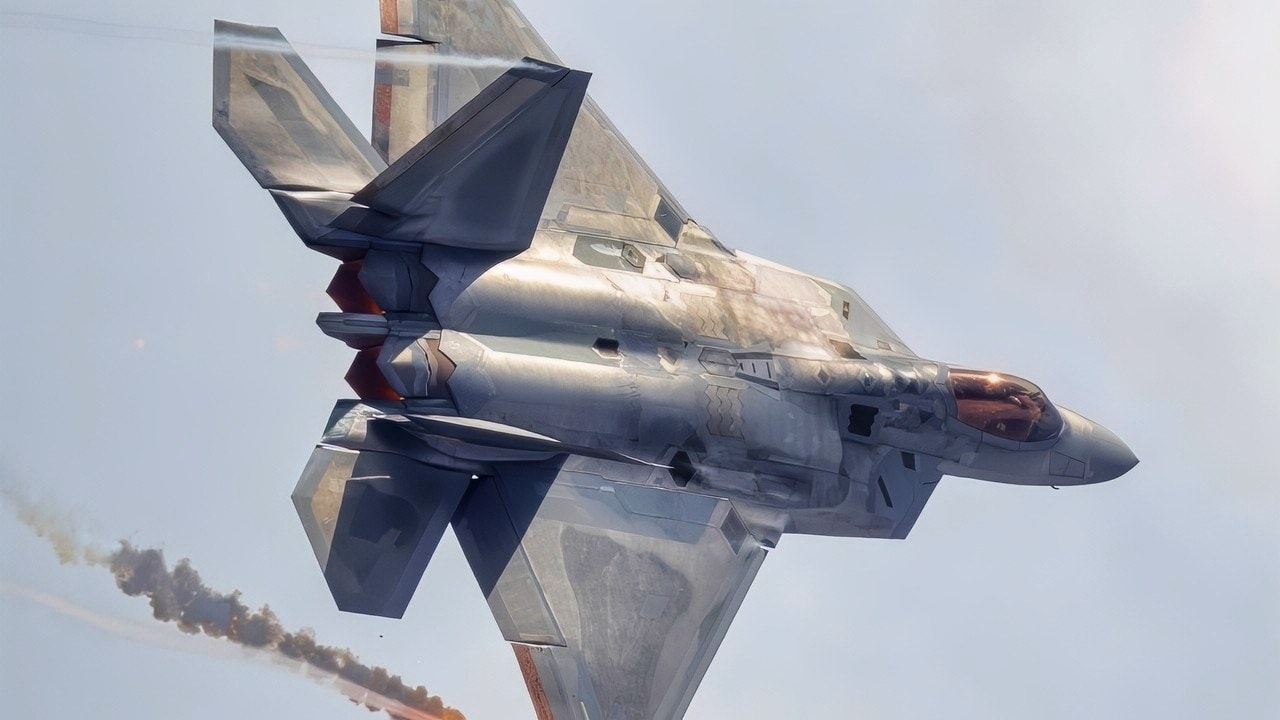
The F-22 Raptor was the first true stealth fighter to take to the skies. Although it was designed during the Cold War, it is still widely considered one of the most advanced aircraft in service worldwide. The Raptor is so advanced, in fact, that after its introduction, it took decades for America’s adversaries to match its capabilities.
The F-22 was created in a unique environment.
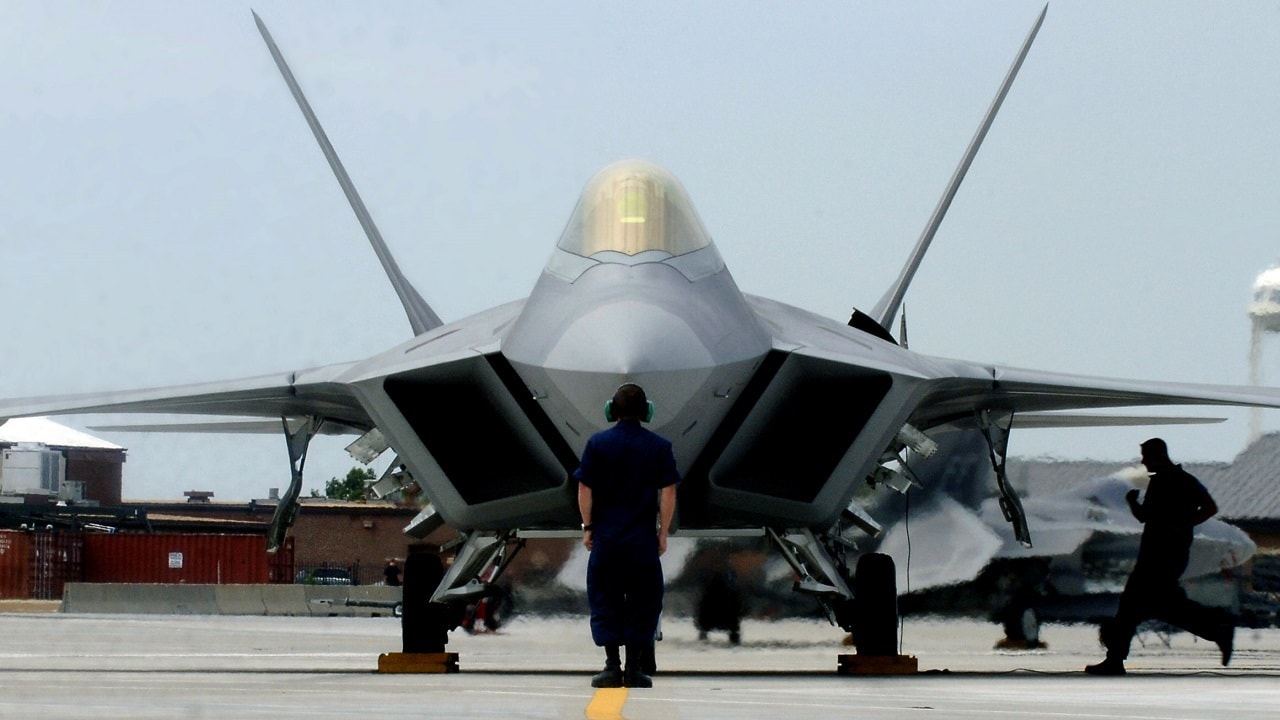
F-22 A Raptor Demonstration Team aircraft maintainers prepare to launch out Maj. Paul “Max” Moga, the first F-22A Raptor demonstration team pilot, July 13. (U.S. Air Force photo/Senior Airman Christopher L. Ingersoll)
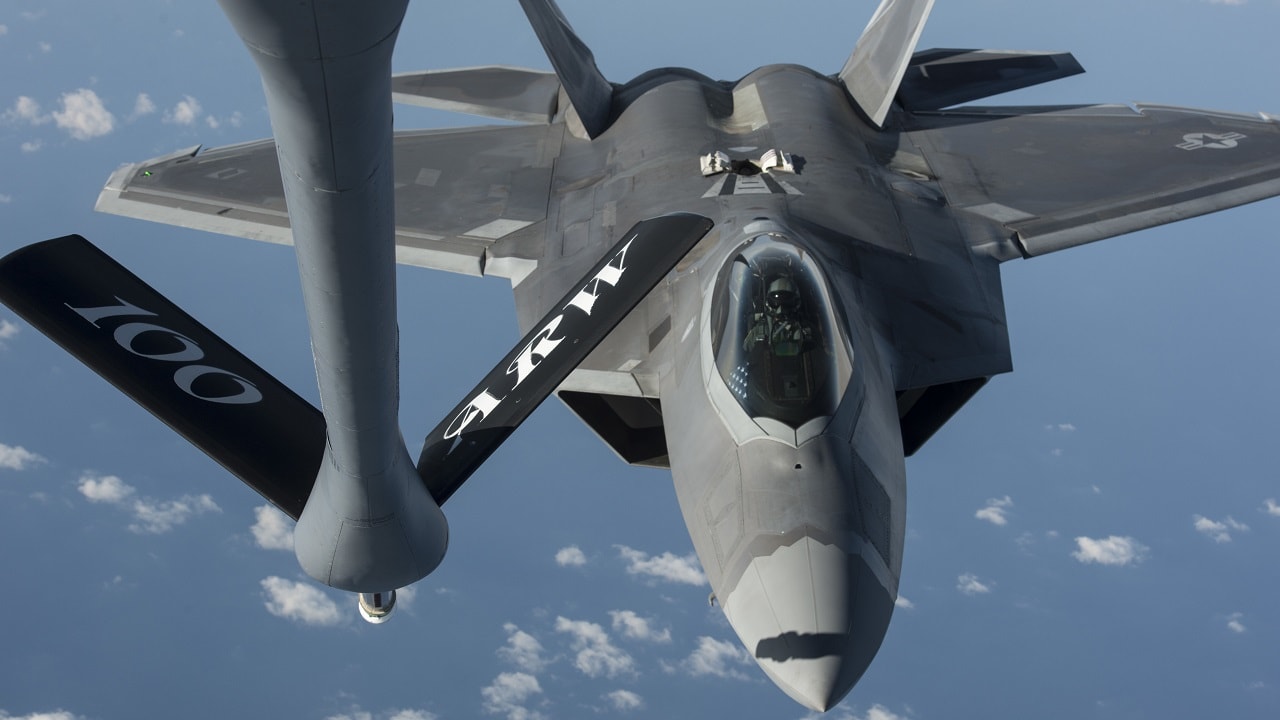
A U.S. Air Force F-22 Raptor from the 95th Fighter Squadron, Tyndall Air Force Base, Fla., moves into position behind a KC-135 Stratotanker from the 100th Air Refueling Wing, RAF Mildenhall Air Base, England, to conduct aerial refueling Sept. 4, 2015, over the Baltic Sea. The U.S. Air Force has deployed four F-22 Raptors, one C-17 Globemaster III, approximately 60 Airmen and associated equipment to Spangdahlem Air Base, Germany. While these aircraft and Airmen are in Europe, they will conduct air training with other Europe-based aircraft. (U.S. Air Force photo by Tech. Sgt. Jason Robertson/Released)
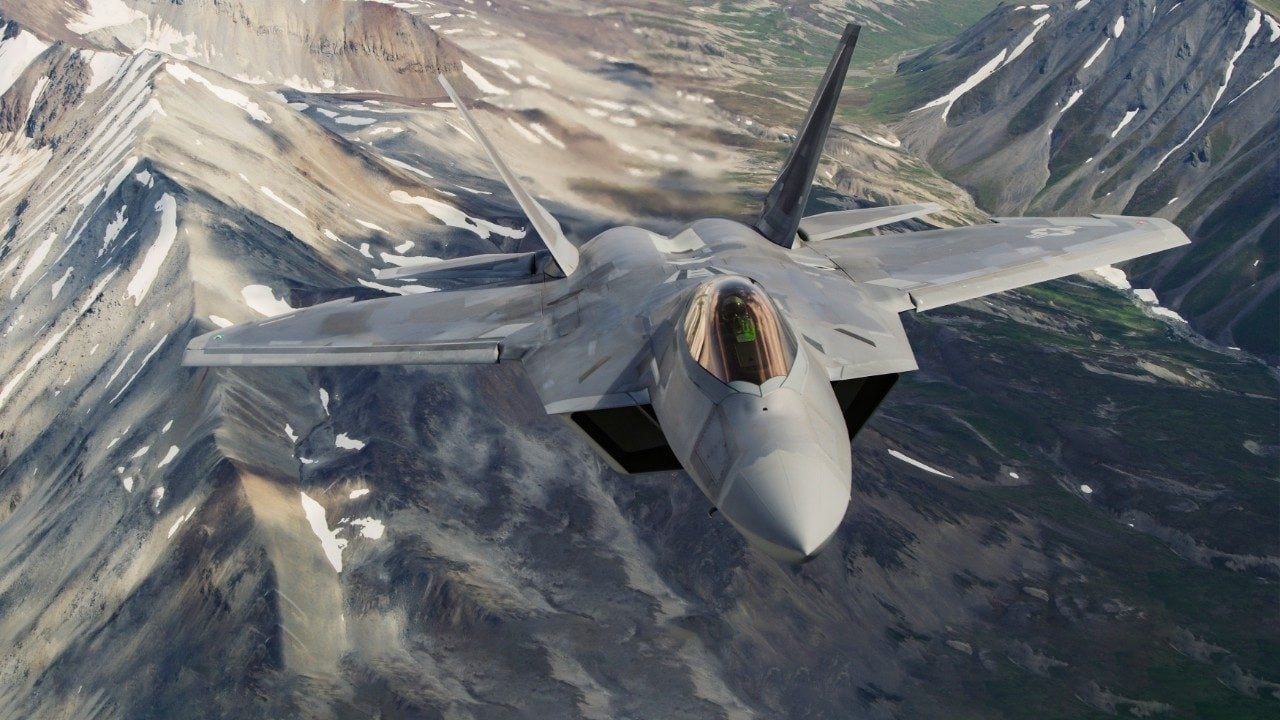
F-22 Raptor. Image Credit: Creative Commons.
With the Cold War still in full swing, the United States sought to achieve technological dominance over the Soviet Union, whose air defenses were growing more advanced.
The Air Force originally sought to secure more than 700 F-22s, but after the Cold War ended, the U.S. defense budget was curtailed, and the Raptor’s production lines were closed.
And that is the problem the Air Force can’t fix: there will never be another F-22 ever built again.
Why the U.S. Needed the F-22
In the 1980s, the Cold War was still in full swing. Although NATO still led in aerospace technology, the USSR was not far behind.
The introduction of the MiG-29 Fulcrum, the Su-27 Flanker, and the Beriev A-50 AWACS all posed a threat to Western fighters at the time.
Moreover, the Soviets were investing heavily in their air defenses.
With the introduction of the S-300 and Buk missile systems, the USSR created a dense, highly integrated network of air defenses that made any air operations in Soviet airspace a nightmare.
In this environment, the F-15 and F-16 were vulnerable. To that end, the U.S. had to pursue new options to ensure air dominance in any near-peer conflict.
The Advanced Tactical Fighter (ATF) program was created to counter these developments. The USAF wanted a fighter that could survive in highly contested environments and secure air superiority to support ground operations.
In 1981, the Air Force released a request for information to several aerospace manufacturers; in 1985, it officially released the ATF program requirements.
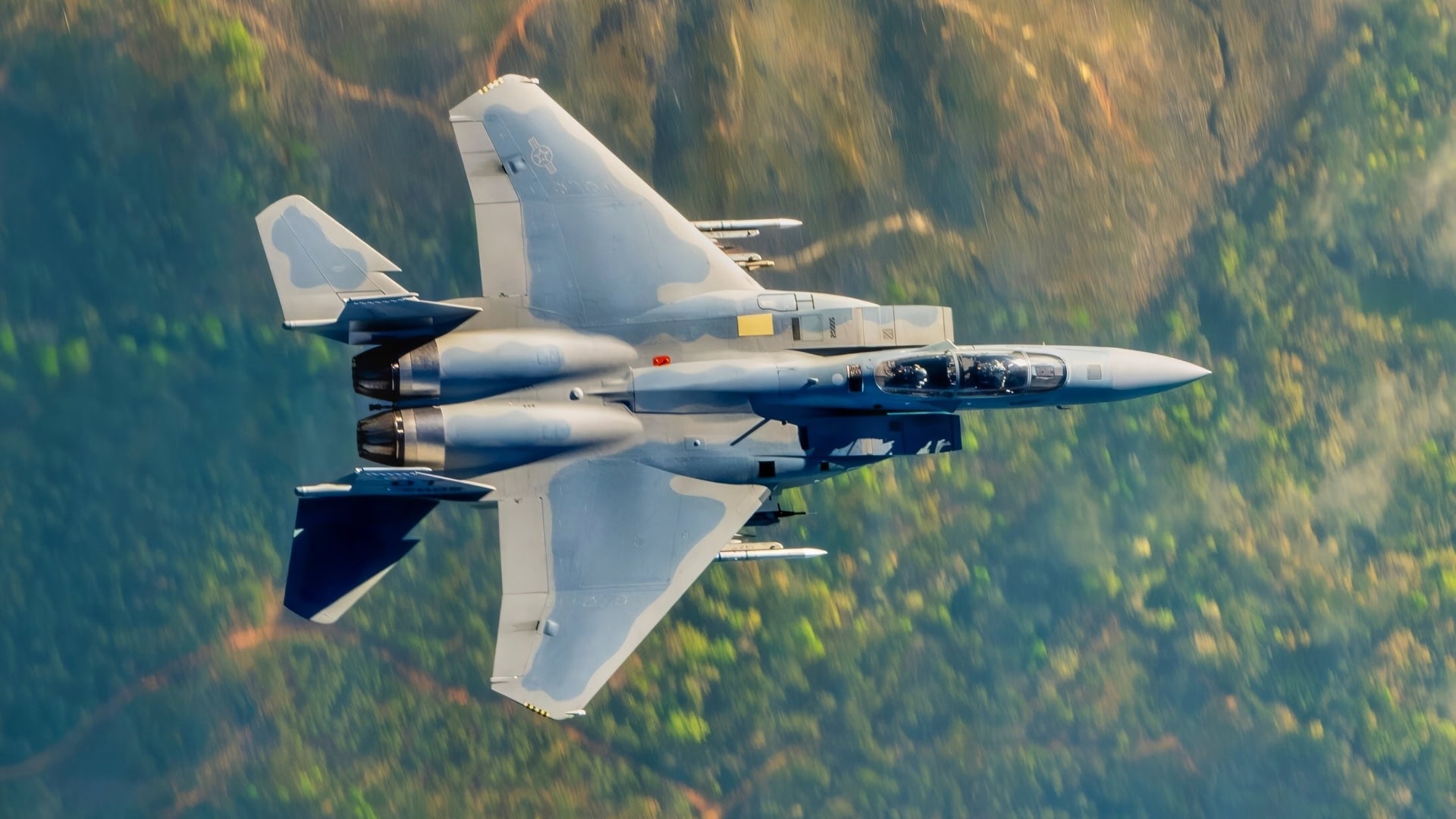
A U.S. Air Force F-15EX Eagle II assigned to Eglin Air Force Base, Florida, flies a training mission over southeast United States, March 23, 2026. The 96th Test Wing and 53rd Wing perform developmental and operational test series on the platform including next-generation survivability, radars, sensors and networking capabilities. (U.S. Air Force photo by Staff Sgt. Blake Wiles)
Two of those requirements, the two most notable, were stealth and supercruise capabilities (the ability to fly at supersonic speeds without engaging afterburners).
Because of the project was so ambitious, manufacturers were encouraged to work in teams to help shoulder the immense costs of developing the new technologies.
Design and Development
Lockheed Martin partnered with Boeing and General Dynamics to develop its entry for the ATF competition, while Northrop Grumen teamed up with McDonnell Douglas.
Over the course of research and development, Lockheed’s design changed.
After receiving feedback from both teams, the Air Force removed several requirements to simplify the program and reduce its cost.
Some of the nixed requirements were short take-off and landing (STOL) capabilities, inclusion of side-looking radars, and dedicated IRST systems.
By 1990, Lockheed and co rolled out the first YF-22 prototype. Subsequent tests validated its supercruise capabilities and its high maneuverability, achieved by 2D thrust-vectoring nozzles.

YF-22. Image Credit: Creative Commons.
While the YF-23 was faster and more stealthy, the YF-22 was deemed safer and more cost-effective, and in 1991, the ATF announced that the YF-22 had won the competition.
After the YF-22 had won the competition, the production F-22 was heavily refined to improve its stealth profile.
The aircraft was also fitted with cutting-edge, highly sophisticated avionics for its time.
The aircraft underwent further research and development, during which several variants were planned, including a twin-seat and a navalized version, though none of these would ever materialize.
The Air Force had originally planned to procure around 750 ATFs, with the total program costing around $44.3 billion.
The F-22 would replace all of the USAF’s F-15A/B/C/Ds and become the new air superiority fighter of choice.
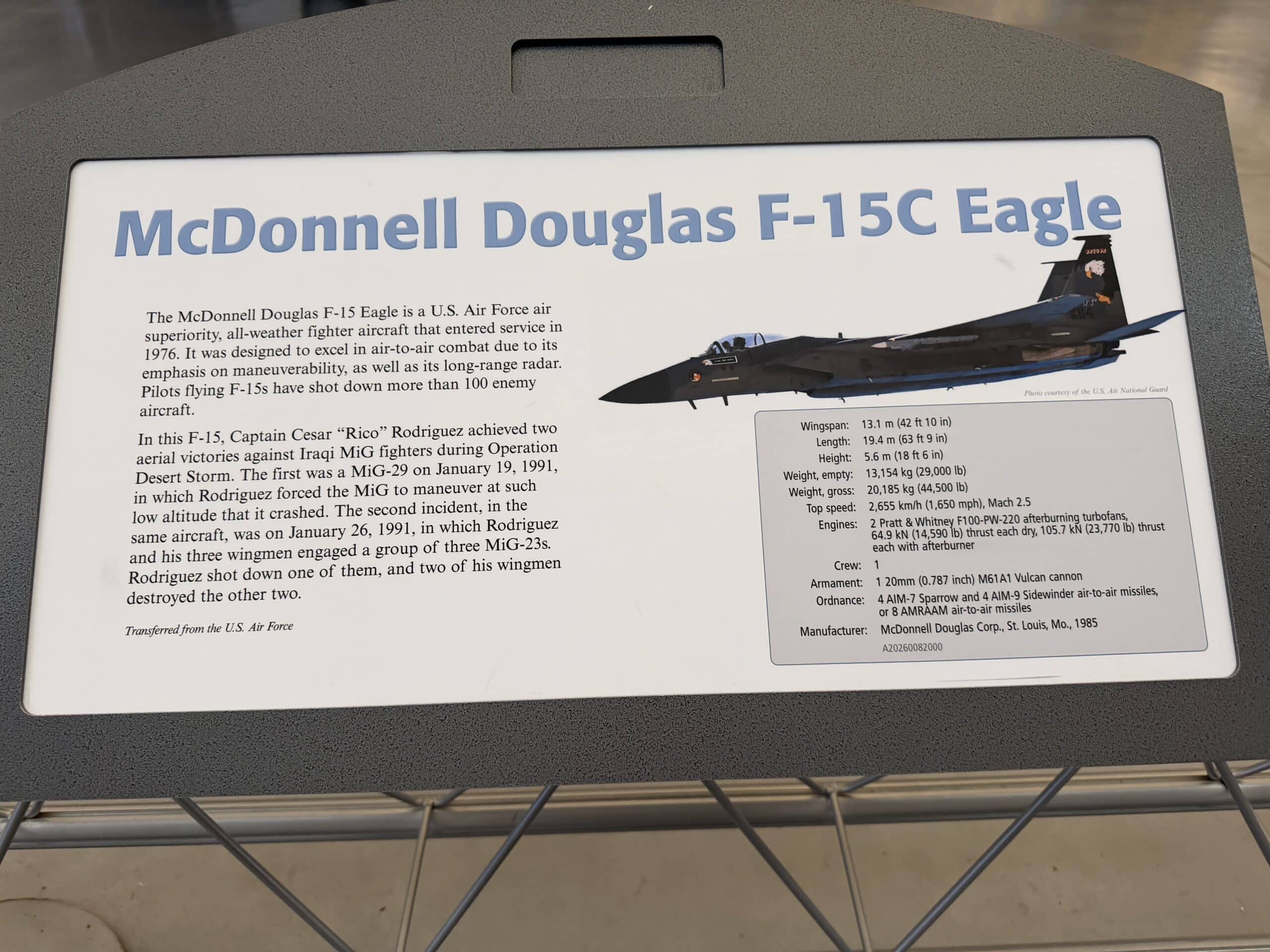
F-15C Smithsonian 19FortyFive Photo
Everyone knew that the aircraft was expensive; however, in the early 90s, before the USSR collapsed, the price was worth it if it meant countering the Soviets.
An Advanced Air Superiority Fighter With Nothing to Do
While the F-22 was still in development, however, the Soviet Union collapsed, and the Cold War had ended. This left the Raptor in a bit of an awkward spot.
The aircraft was designed to counter Soviet aviation and survive against Soviet air defenses.
While the newly formed Russian Federation inherited many aircraft and air defense systems, it dismantled many under disarmament agreements, and Russia became a shadow of its former self.
The threat environment in which the F-22 was designed to operate had vanished in an instant.
At the time, however, the Pentagon still favored the ATF program, and the aircraft continued development until the early 2000s, when it was finally accepted into service.
With the onset of the Global War on Terror, popularity for the F-22 began to wane in the government. The aircraft was incredibly costly and ill-suited for the air-to-ground operations required for the GWOT.
In 2008, the Obama administration called for the termination of the F-22’s production lines, and although there were some concerns about Russian and Chinese developments, these were not taken seriously enough to warrant continuing production of an aircraft as costly as the Raptor.
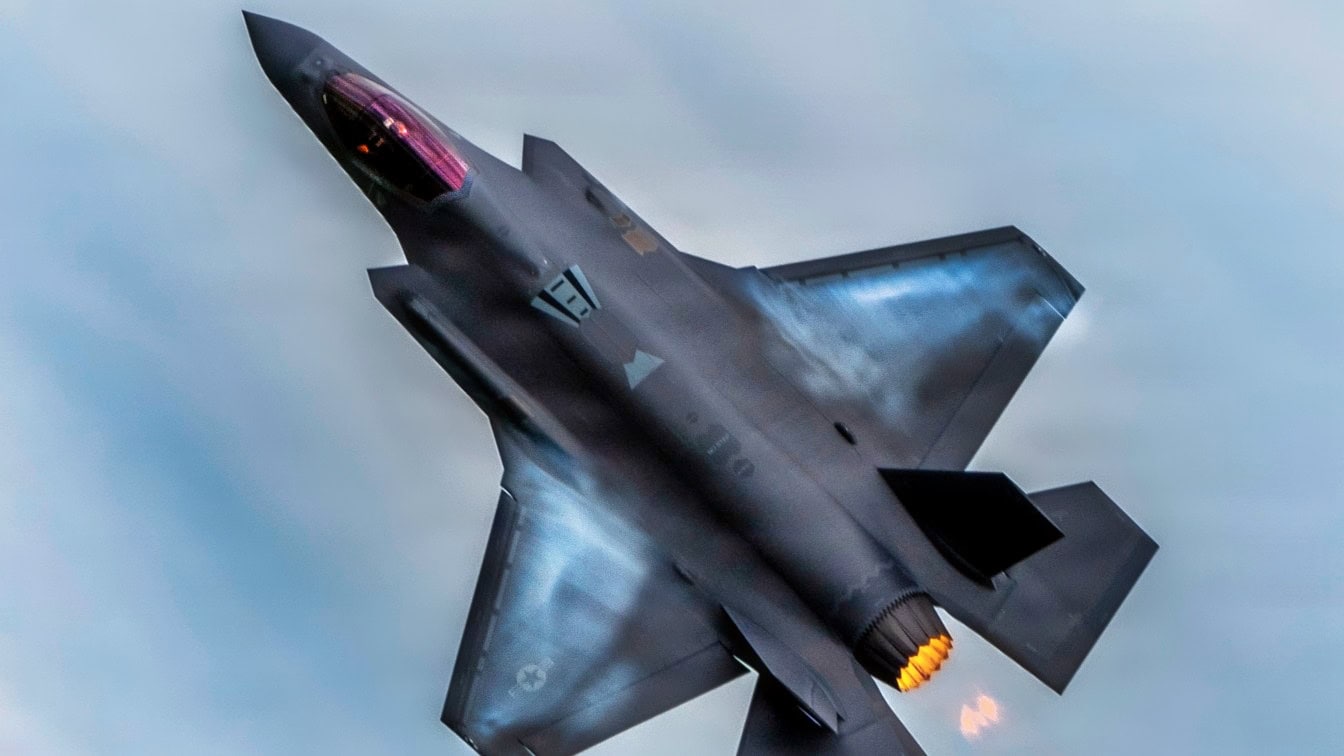
A U.S. Air Force F-35A Lightning II, assigned to the F-35A Lightning II Demonstration Team, performs precision aerial maneuvers during the Columbus Air Show at Rickenbacker Air National Guard Base, Columbus, Ohio, June 21, 2026. The F-35A Demonstration Team showcases the unique aerodynamic capabilities, advanced avionics, and combat readiness of the military’s premier fifth-generation fighter to inspire the next generation of Airmen and demonstrate American air power. (U.S. Air National Guard photo by Airman 1st Class Samir Harris)
In 2012, the 195th and final F-22 was delivered before the production lines were completely shut down. Since then, the aircraft has received several upgrades to enhance its multi-role capabilities, but for the most part, the F-22 has been superseded by the more versatile F-35 Lightning II.
Although the rise of China has breathed some life back into the F-22 program, the U.S. is stuck with fewer than 200 aircraft.
About the Author: Isaac Seitz
Isaac Seitz, a Defense Columnist, graduated from Patrick Henry College’s Strategic Intelligence and National Security program. He has also studied Russian at Middlebury Language Schools and has worked as an intelligence Analyst in the private sector.