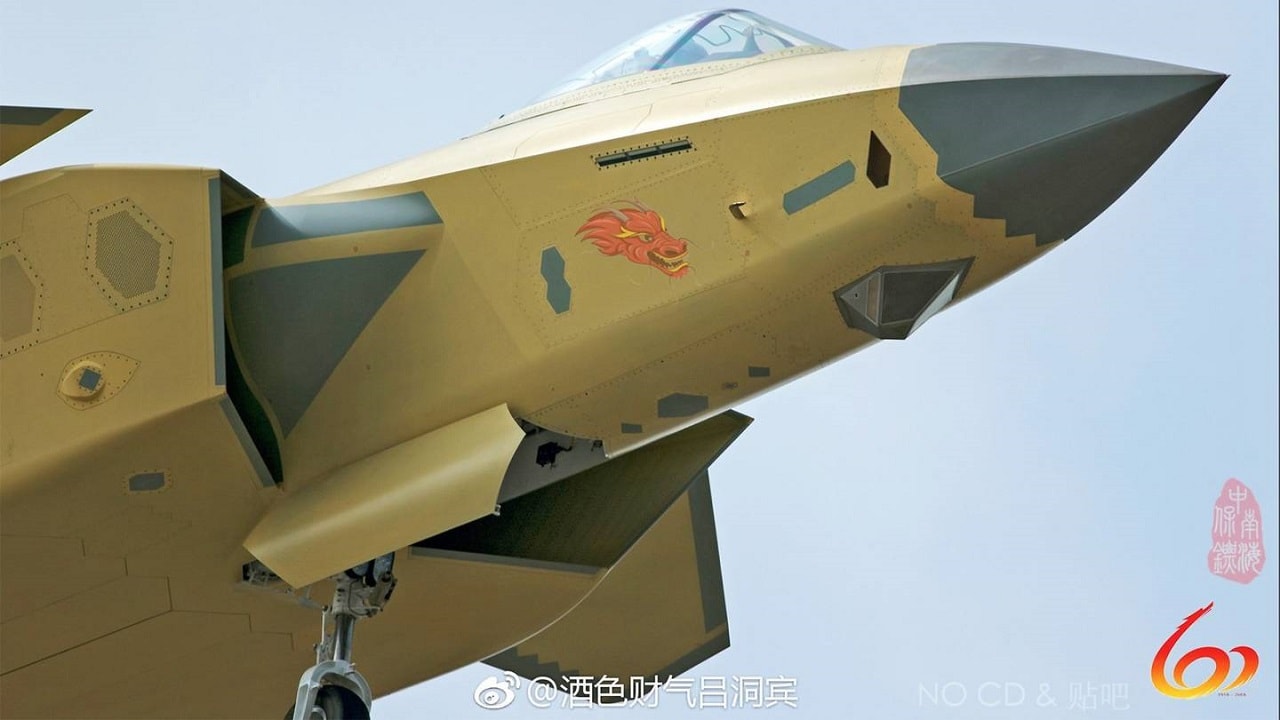
The race for air dominance between the United States and the People’s Republic of China (PRC) keeps intensifying. For many years, the Americans have prided themselves on being the world leaders in stealth warplane technology. The Chinese, however, are catching up.
And they’re not just catching up in quantity.
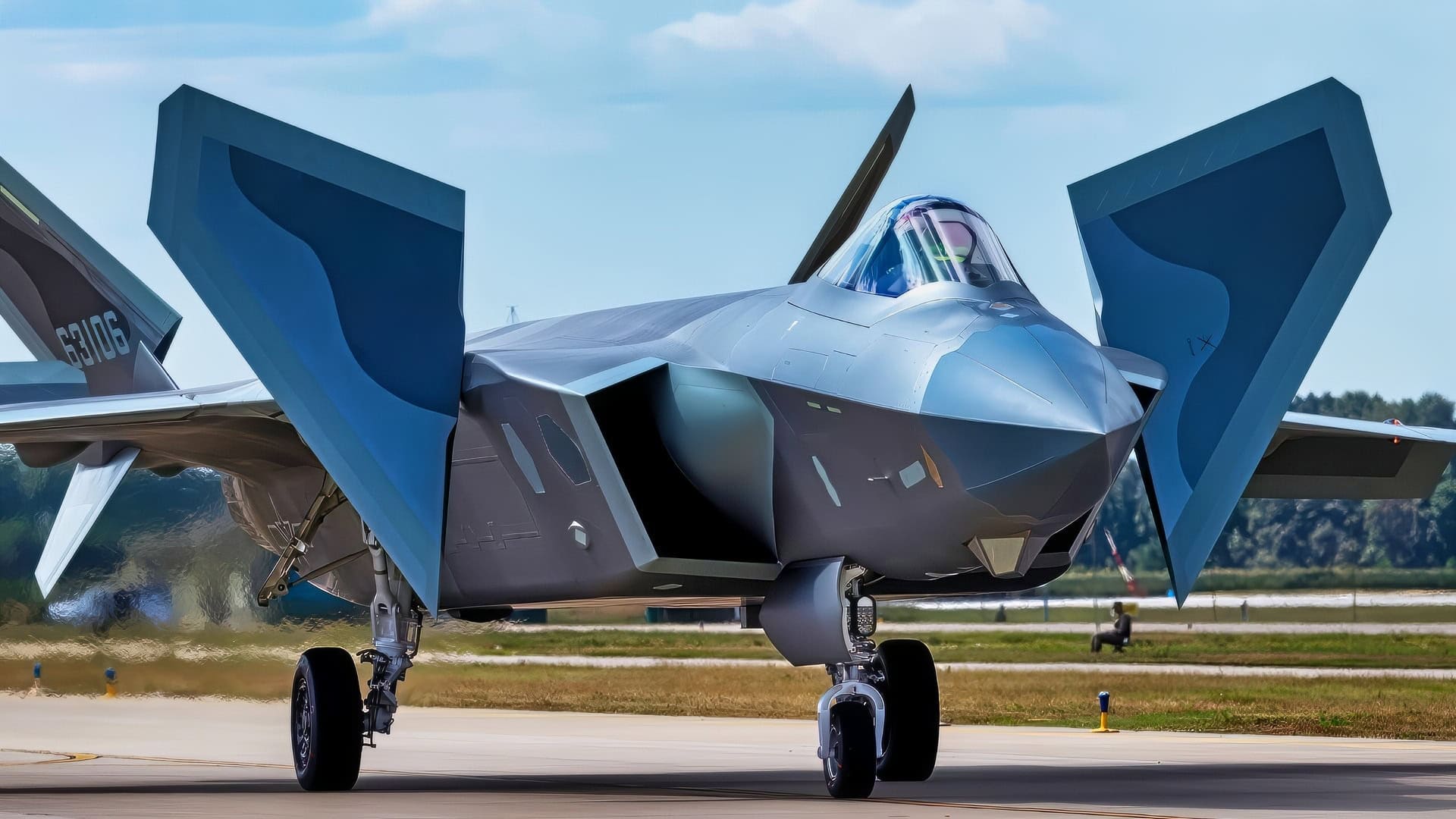
J-20 Fighter 2025 Photo. Image Credit: Creative Commons.
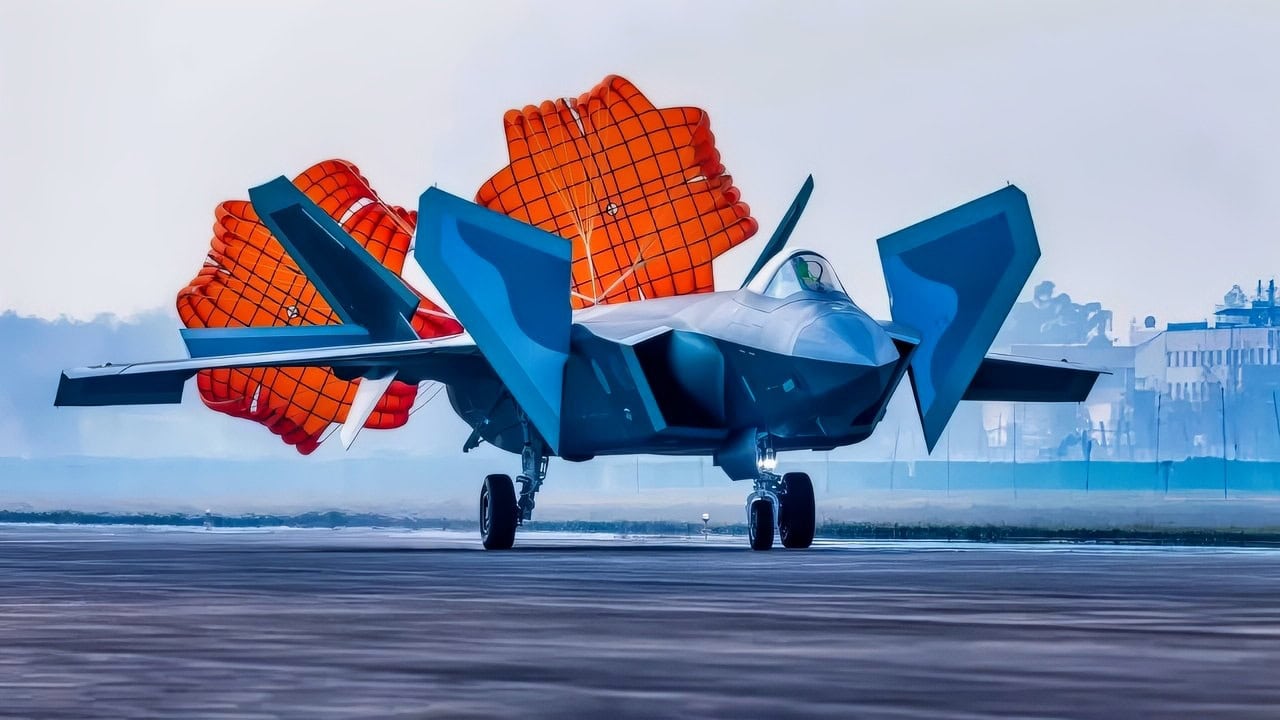
J-20S Fighter from China. Image Credit: Creative Commons.
It looks increasingly like Beijing’s fifth-generation warplane capabilities are catching up in terms of quality with the American fifth-generation stealth warplane fleet as well.
China’s Chengdu J-20 Mighty Dragon fifth-generation stealth air-superiority warplane has demonstrated that, like the American F-35 Lightning II, it can enter what’s known as “beast mode.” That mode is exactly what it sounds like.
The plane trades some of its stealth for a heavier weapons load beyond its internal weapons bay.
The Dueling Beast Modes
In early 2025, a video emerged of the People’s Liberation Army Air Force (PLAAF) demonstrating how the J-20 can carry up to eight PL-15 air-to-air missiles externally.
The weapons were mounted in pairs beneath four underwing pylons, producing the “beast mode” effect.
This capability matches that of the Americans’ F-35s.
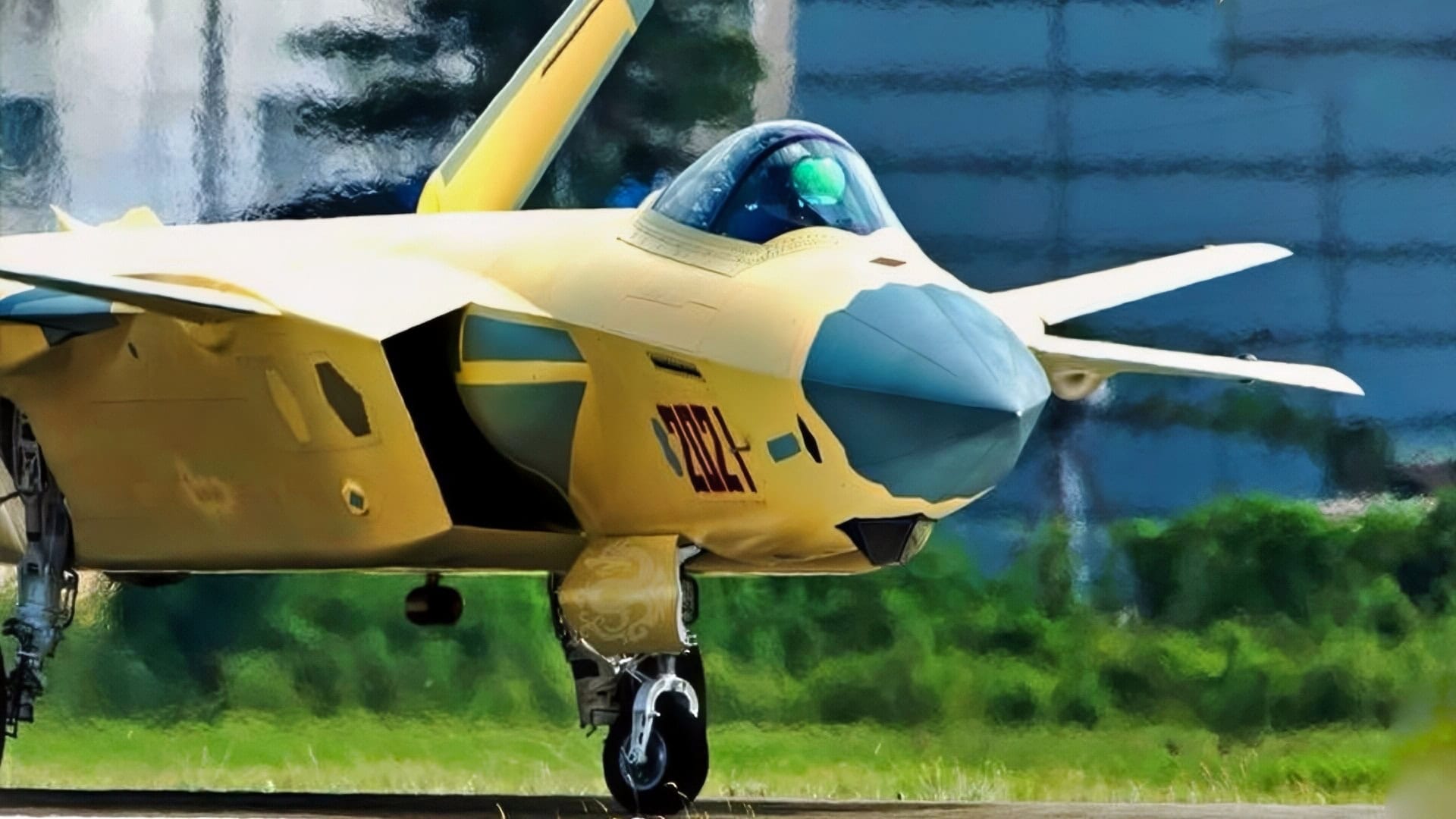
China’s J-20 Mighty Dragon in Yellow. Image Credit: Screenshot.
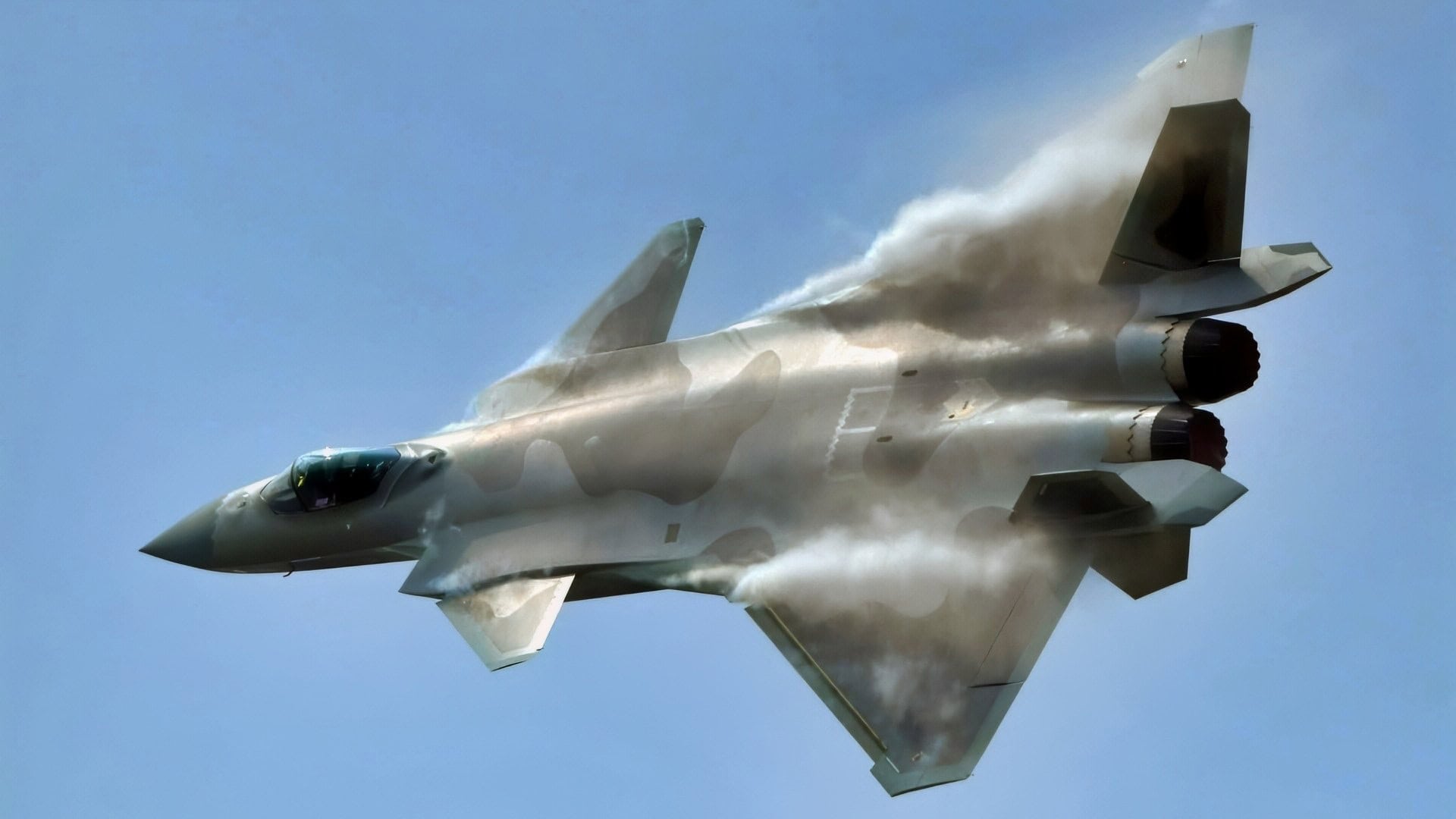
China J-20A Fighter. Image Credit: PLAAF.
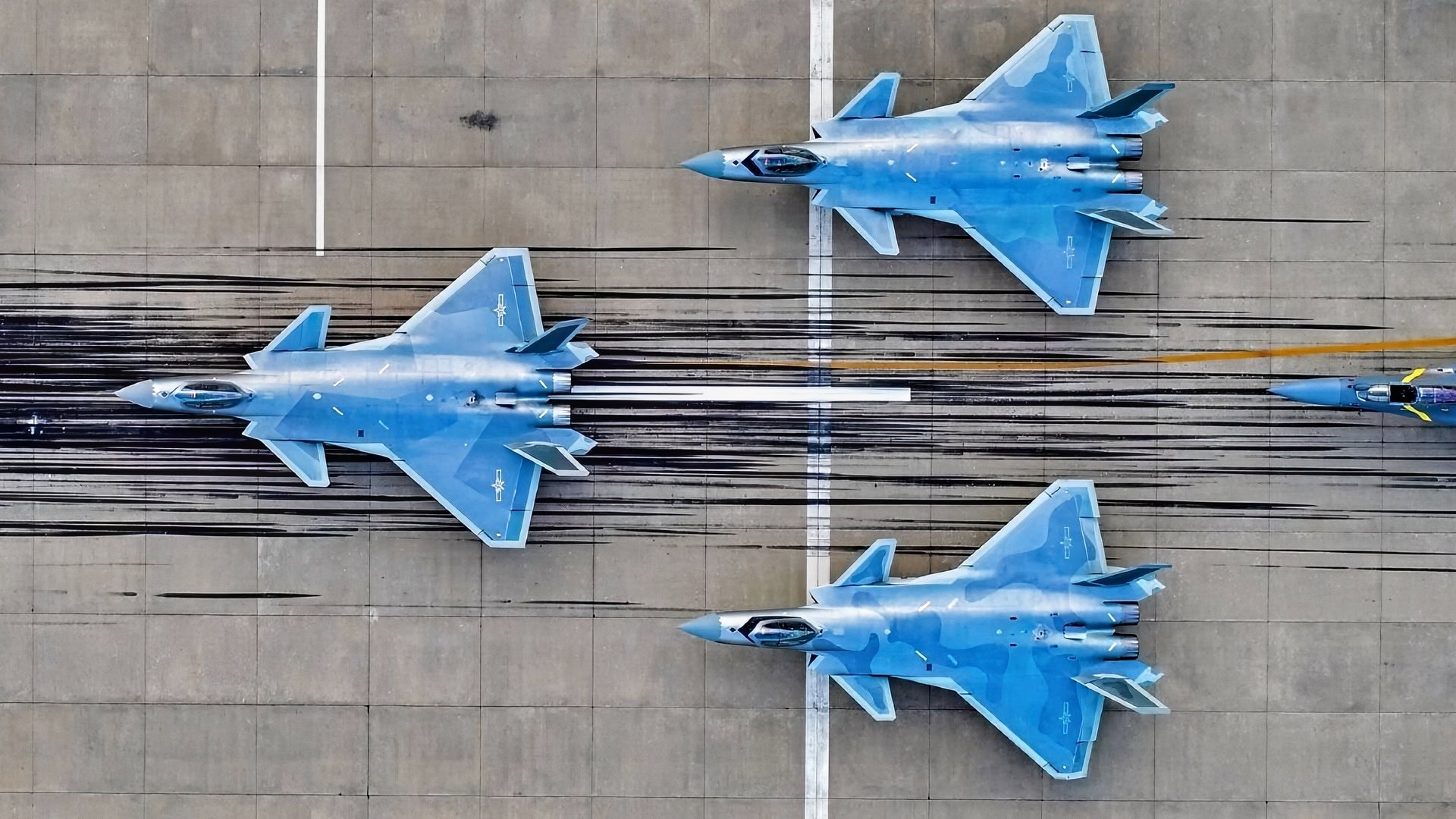
J-20S. Image Credit: Creative Commons.
During the opening phase of any conflict against a peer rival, stealth fighters would be needed to penetrate the enemy’s heavily defended airspace.
Yet once their initial stealth-oriented missions were completed, the fifth-generation warplanes of both China and America would require less stealth than at the outset of the conflict.
After all, enemy radars and air defenses would, in theory, be sufficiently degraded, allowing for the fifth-generation warplanes to shed some of their vaunted stealth in favor of firepower.
One analyst has dubbed this loadout as the “Third Day of War” concept. Now, the J-20 has the same flexibility as the US F-35s.
In its standard stealth configuration, the J-20 carries four PL-15s in its main internal weapons bay along with two shorter-range PL-10 missiles in smaller side bays.
If China wants to shed the stealth, it can add those other missiles to the underside of the J-20’s wings.
However, the Chinese PLAAF designers are trying to redesign some of the newer J-20s with larger internal weapons bays, in a bid to get the J-20 “beast mode” without sacrificing its stealth capabilities.
That project remains very much a work in progress. Obviously, larger weapons bays would require a larger airframe and more fuel, thereby increasing the planes’ cost.
Major Missile Capacity
The additional PL-15s under the J-20’s wings, when combined with a fully internal load, mean that the Mighty Dragon could potentially carry up to 14 air-to-air missiles.
China’s inclusion of the PL-15 is especially important.
That weapon is an active-radar-guided beyond-visual-range (BVR) missile, and it represents one of the most important weapons employed by Chinese fighters today.
Indeed, the PL-15 was successfully demonstrated by the Pakistan Air Force (PAF) in its war last year with India.
What’s more, the external carriage system the Chinese added to the J-20s means that the plane could carry weapons that are otherwise too big for its internal bays.
The PL-17 is a very long-range air-to-air missile that can target high-value support aircraft (such as early-warning planes or aerial tankers).
The PLAAF can load the PL-17 on the outside of the J-20 and go to work on US and allied early-warning and mid-air refueling tankers in any air war.
A Nightmare for US Air War Planners
A J-20 might also operate behind other stealth aircraft in China’s fleet, carrying a large magazine or launching long-range weapons against vulnerable American support aircraft.
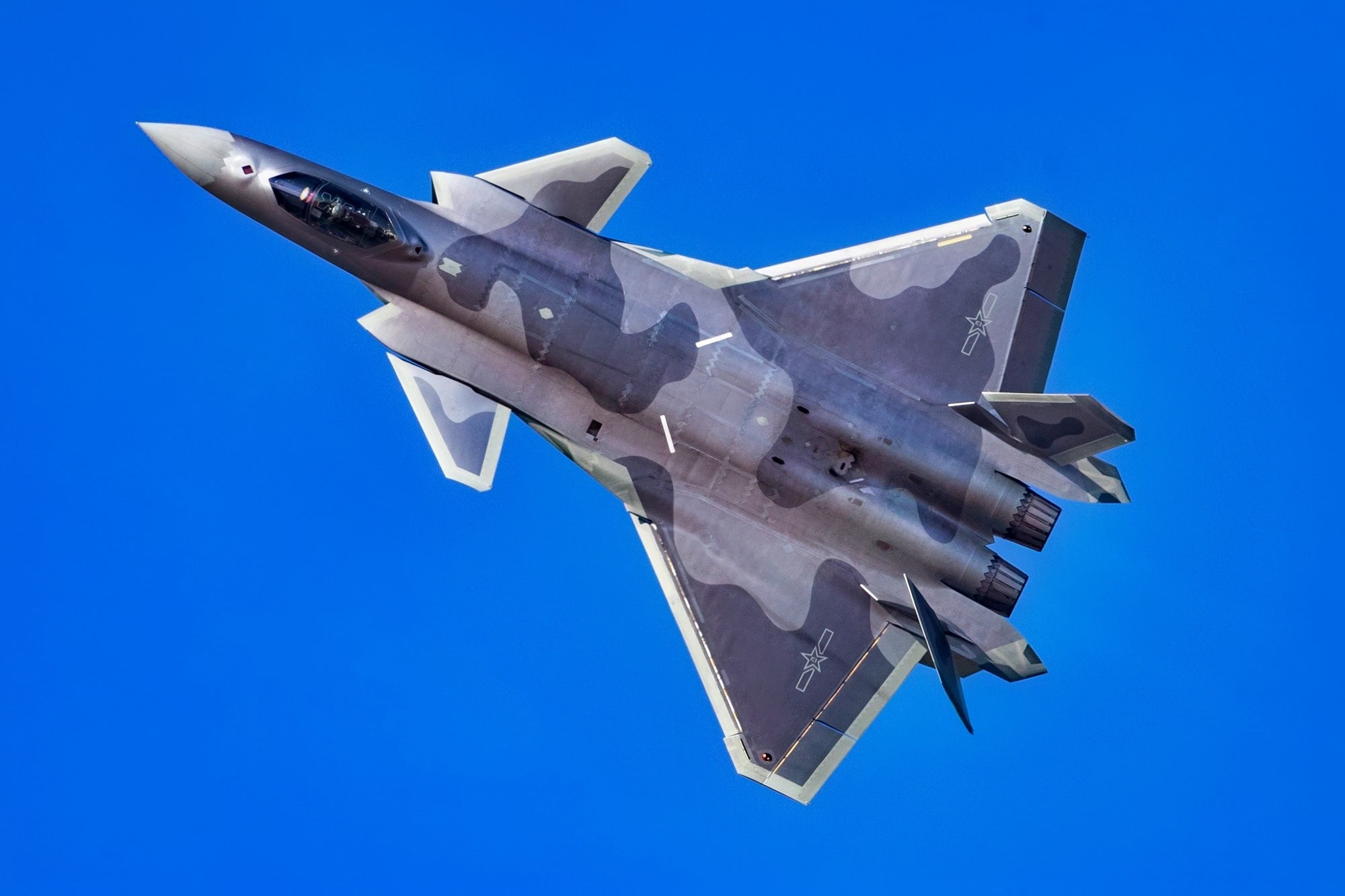
J-20 Fighter from China. Image Credit: Creative Commons.
These roles overlap with missions traditionally associated with China’s heavily armed fourth-generation warplane, the J-16.
Regardless of how these developments turn out for the PLAAF, the Americans cannot rest on their laurels regarding their vaunted stealth capabilities.
The Chinese are catching up in every conceivable way.
It is now only a matter of time to see whether the Chinese J-20 has more lethal missile-carrying capacity or if the F-35’s “beast mode” will be enough to stop whatever air offensives China might try in a potential war.
About the Author: Brandon J. Weichert
Brandon J. Weichert is the Senior National Security Editor at 19FortyFive.com. He also manages The Weichert Brief on Substack. Weichert also hosts “National Security Talk” on Rumble. He is the author of four bestselling national security books, the most recent of which is A Disaster of Our Own Making: How the West Lost Ukraine (Encounter Books). Follow him via Twitter/X @WeTheBrandon.