
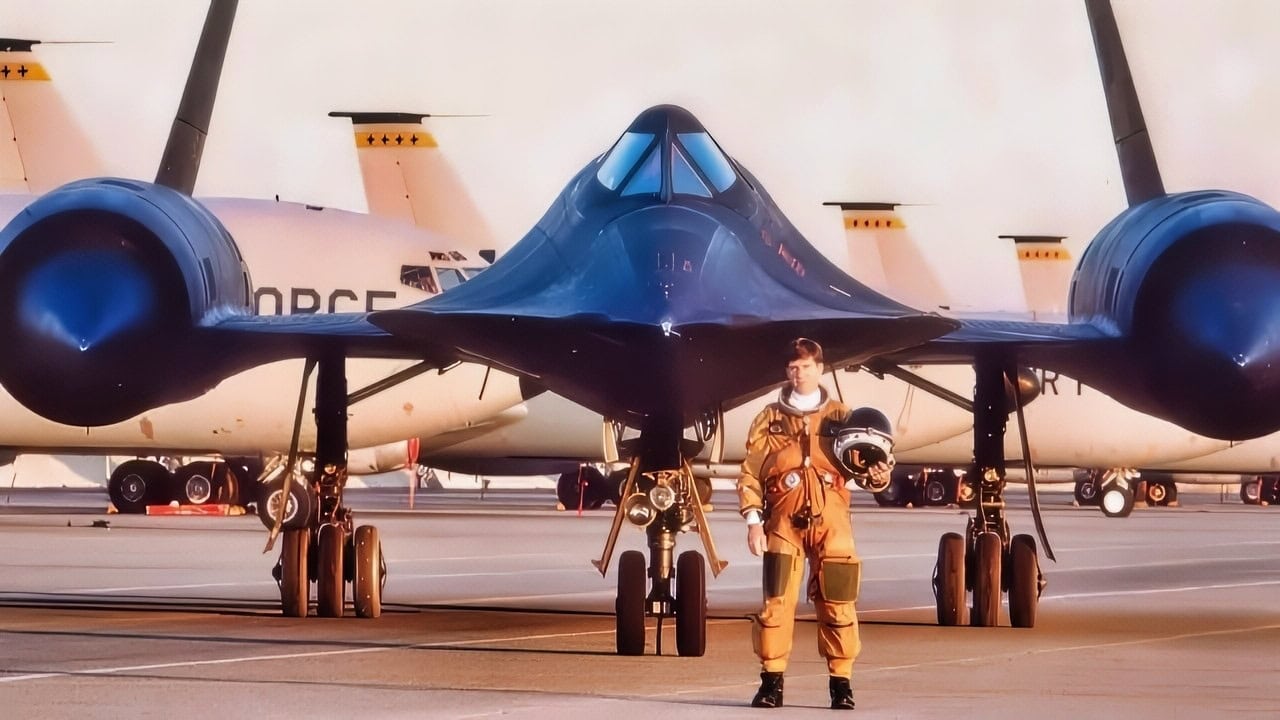
To this day, the SR-71 remains one of the most technologically advanced and distinct aircraft ever flown. After debuting on December 22, 1964, the SR-71 entered operational service at Beale AFB in 1966.
Designed for sustained flight above Mach 3 and 80,000 feet or more, the premise behind the SR-71 was to simply fly faster and higher than Soviet interceptors or surface-to-air missiles.
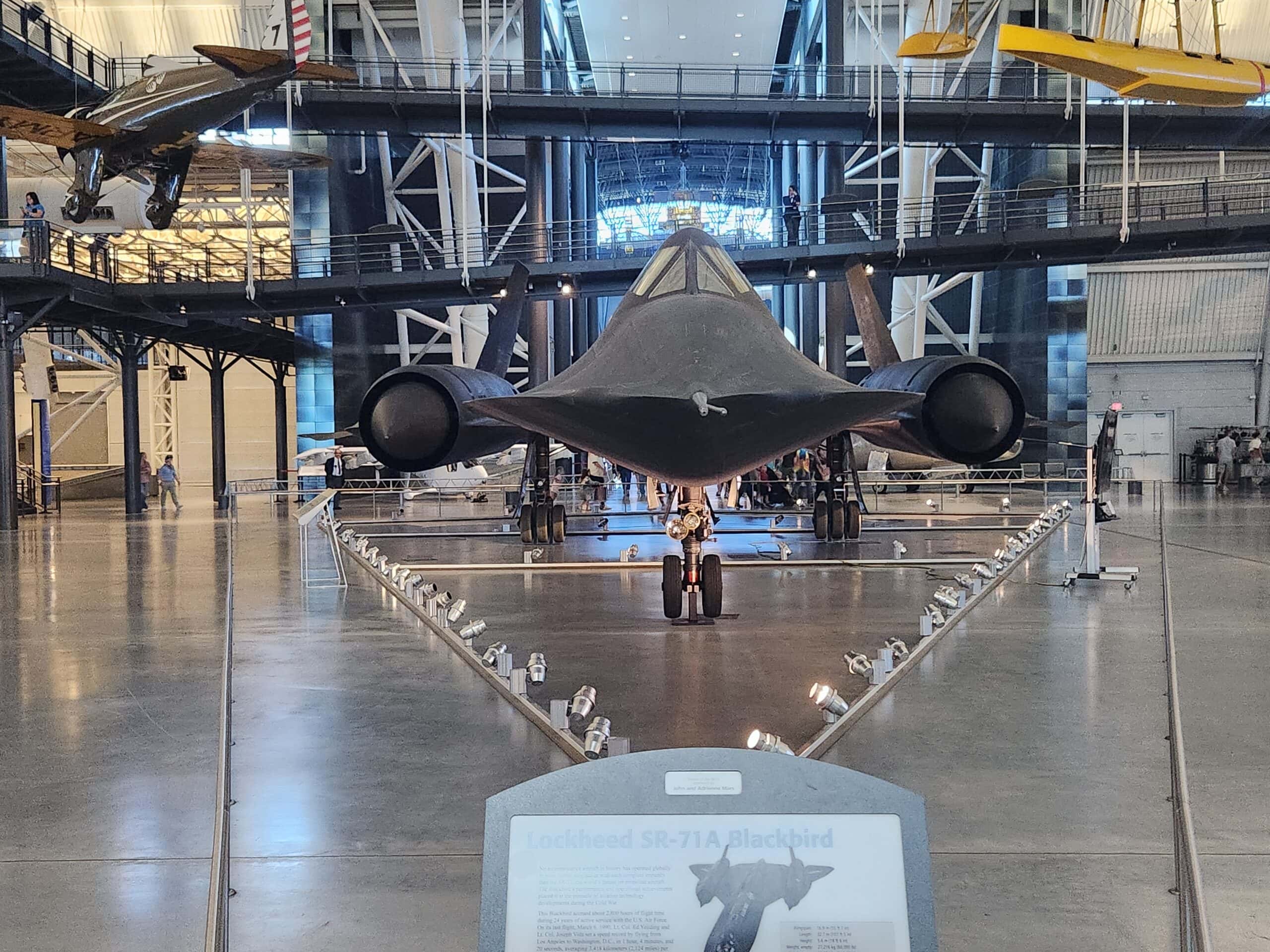
SR-71 Blackbird. 19FortyFive.com original image.
Yet in 1968, during an operational mission over Vietnam, pilot Jerry O’Malley and RSO Ed Payne discovered another impressive (and less publicized) feature of the SR-71: it could be converted into a very heavy, rapidly descending glider.
They learned this after both engines flamed out, earning the derogatory nickname “Lead Sled,” later shortened to the more affectionate “Sled.”
The Mission Over Vietnam
O’Malley and Payne were among the earliest SR-71 crews to fly operational combat reconnaissance sorties.
After taking on aerial refueling, the crew headed north from Saigon and crossed the DMZ into North Vietnam—a typical SR-71 penetration profile.
Near the end of the reconnaissance run, however, the crew received instructions to abort.
The abort came from the top, in a sense, as confusion followed President Lyndon Johnson’s announcement restricting strike aircraft operations north of the 19th parallel.
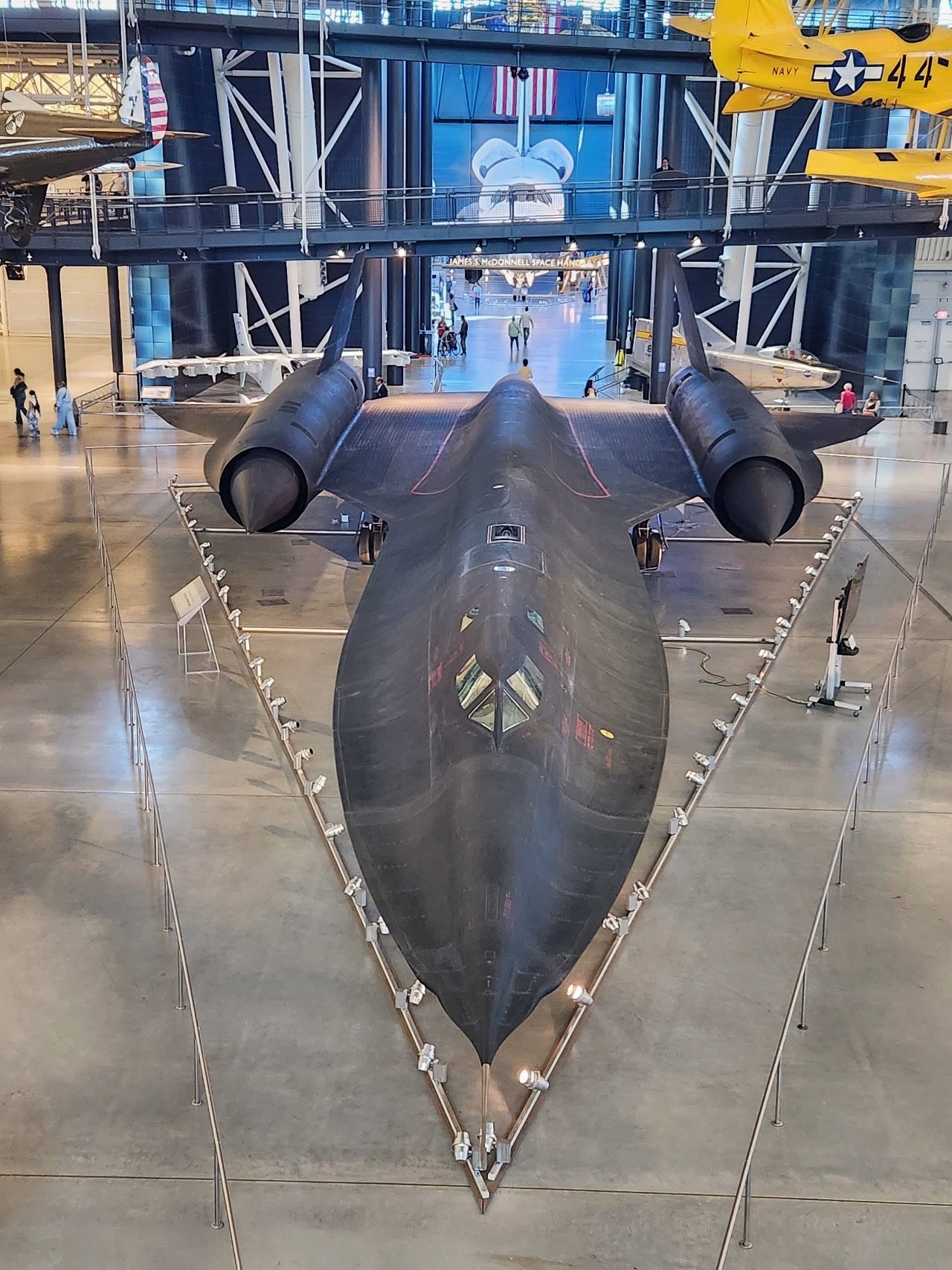
Longshot of SR-71. Image Credit: 19FortyFive.com

SR-71 Blackbird at the Smithsonian 19FortyFive.com Photo
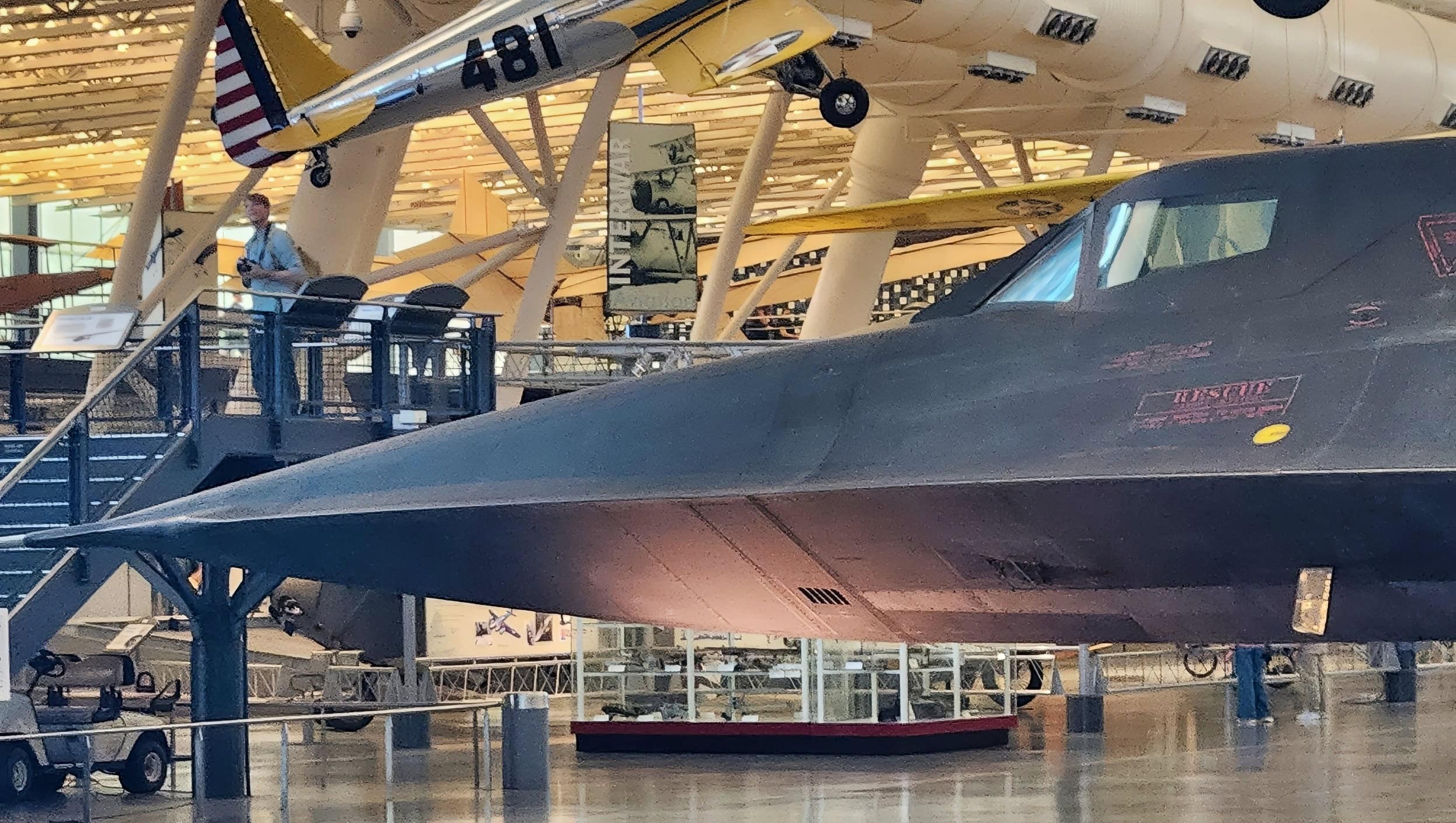
SR-71 Blackbird at Smithsonian. Image Credit: 19FortyFive.com
In response, O’Malley began reducing power when both Pratt & Whitney J58 engines suddenly suffered compression stalls and flamed out.
That’s a tough situation in any aircraft—both engines gone, with enormous altitude and the correspondingly thin atmosphere, leading to a rapid descent over hostile enemy territory.
Flaming Out
The SR-71 propulsion system was far more complex than simply two powerful jet engines.
Each Pratt & Whitney J58 produced roughly 32,500 pounds of thrust with the afterburner engaged, but at speeds in excess of Mach 3, much of the propulsion system consisted of the inlet spike, bypass system, and exhaust working together with the engine.
The SR-71 featured a famous movable inlet spike that translated aft at high Mach numbers to better manage the high-velocity supersonic airflow.
Why?
Because air had to be slowed and compressed before reaching the compressor, which required a different inlet spike position than at cruise.
At cruise, the inlet itself provided much of the compression required for engine operation.
But at higher speeds, if the carefully calibrated airflow rate was disrupted, the compressor could stall. Accordingly, the SR-71 was susceptible to violent “upstarts,” where a shock wave pattern inside an inlet became unstable, and the inlet abruptly stopped swallowing airflow.
Thrust on one side could collapse, causing the aircraft to yaw violently. While this was a problem, it wasn’t the same as a double-engine flameout. That was a more advanced emergency.
60,000-Foot Plunge
O’Malley’s solution relied on simple aerodynamics: he pushed the nose downward.
At extreme altitudes, air density is too low to make restarting a dead turbojet as simple as pushing a button.
Descending, however, allowed the SR-71 to reach denser air, putting the engines back into atmospheric conditions where an air restart became possible.
The crew established hard decision points. The first attempted restart was made around 40,000 feet—unsuccessful. They tried again around 30,000 feet—also unsuccessful.
The crew set a hard limit to abandon the aircraft if they couldn’t get the engines relit by 23,000 feet.
When the jet passed the 26,000-foot mark without an engine, Payne called Mayday. But then one J58 relit.
And by 20,000 feet, the crew had both engines running again.
They headed south and landed safely at Kadena Air Base. It was a narrowly averted ejection.
An Oddity
The story speaks to a contradiction at the heart of the SR-71.
The aircraft could survive against enemy defenses because it flew faster and higher than anyone could reach.
But the same flight regime that made the SR-71 so untouchable also imposed engineering vulnerabilities on the aircraft and crew.
As O’Malley and Payne experienced, the SR-71 could convert from the safest thing in the sky to the most dangerous in an instant.
About the Author: Harrison Kass
Harrison Kass is a writer and attorney focused on national security, technology, and political culture. His work has appeared in Tablet, City Journal, The Hill, The Spectator, and The Cipher Brief. He holds a JD from the University of Oregon and a master’s in Global & Joint Program Studies from NYU. More at harrisonkass.com.