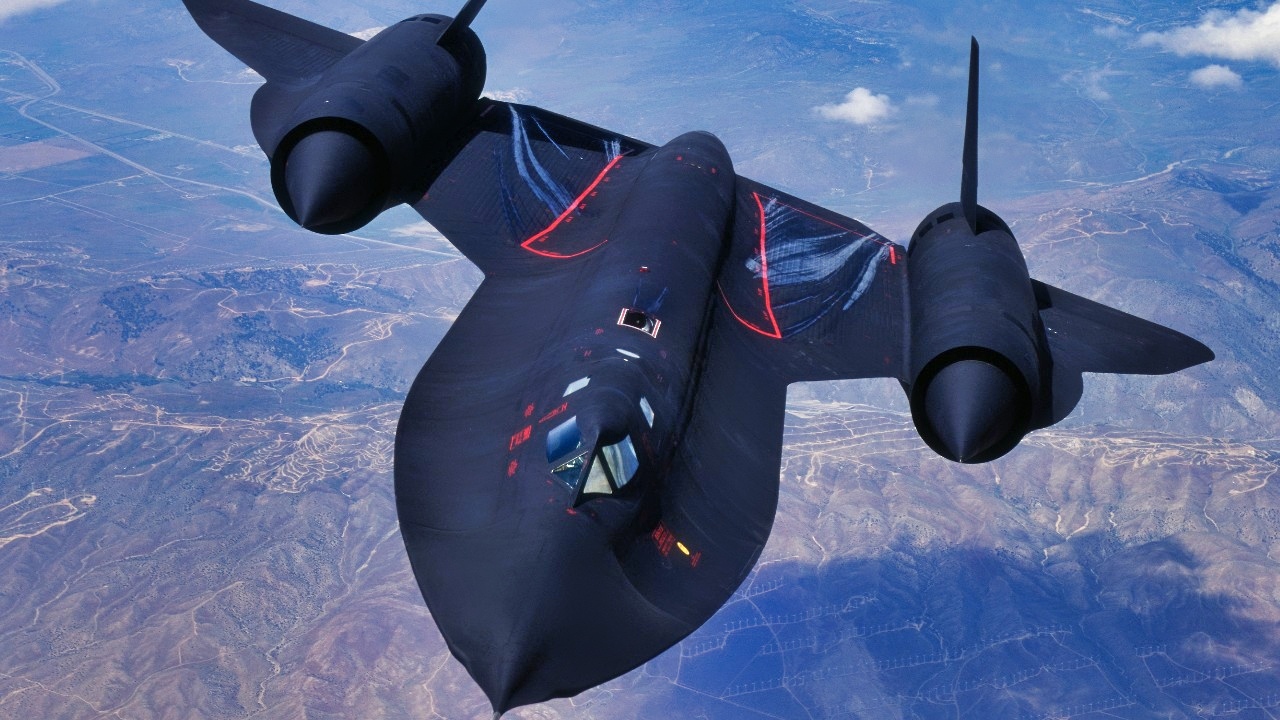
The SR-71 Blackbird was one of the more remarkable aerospace projects of the Cold War. We know, as you can see from our field work below, we visit the SR-71 in museums all over the world and love showing our readers original photos and videos of this spy plane.
Originally envisioned as a high-flying, incredibly fast spy platform, the Blackbird leveraged a pair of high-output engines to rapidly overfly any location in the world within just a few hours of receiving the order and snap photographs of the Soviet Union or hotspots around the world.

SR-71 at National Museum of the Air Force. 19FortyFive image.
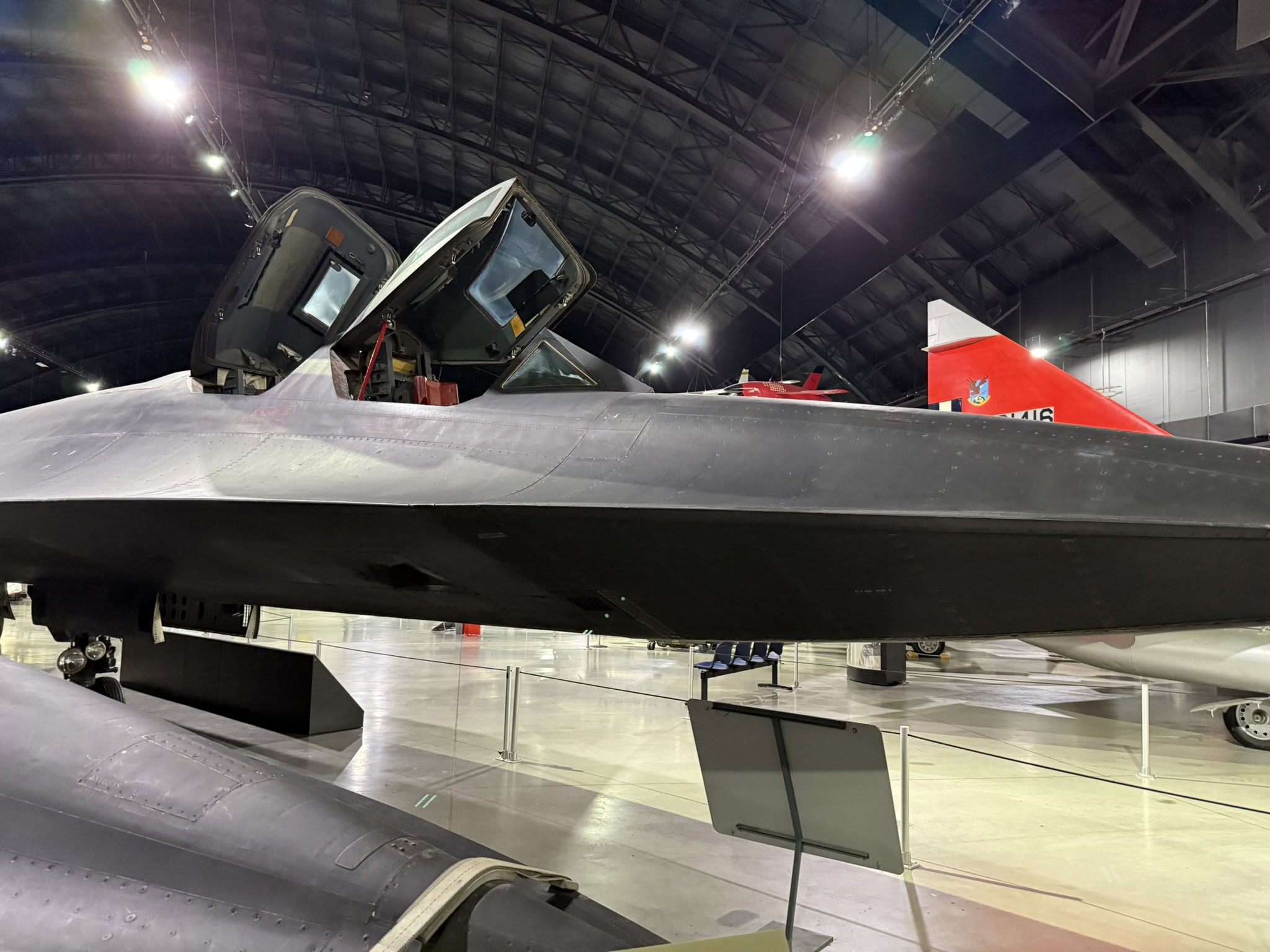
SR-71 at National Museum of the Air Force. 19FortyFive image.
Capable of flying faster than Mach 3, or three times the speed of sound at an altitude of 85,000 feet, the Blackbird was one of the first supersonic jets to make extensive use of titanium and titanium alloys.
Then, a rather exotic metal, the raw materials were, ironically, purchased via shell companies from the Soviet Union.
Despite the difficulties inherent to working with titanium, it was an absolutely necessary material for such a fast aircraft.
Speed is the Key
“With anticipated temperatures on the aircraft’s leading edges exceeding 1,000 degrees Fahrenheit, dealing with the heat raised a host of seemingly insurmountable design and material challenges.
Titanium alloy was the only option for the airframe —providing the strength of stainless steel, a relatively light weight, and durability at the excessive temperatures,” information about the aircraft published by Lockheed Martin explains.
But, Lockheed elaborated, titanium “proved to be a particularly sensitive material from which to build an airplane.
The brittle alloy shattered if mishandled, which meant great frustration on the Skunk Works assembly line, and new training classes for Lockheed’s machinists.
Conventional cadmium-plated steel tools, it was soon learned, embrittled the titanium on contact; so new tools were designed and fabricated—out of titanium.”
Despite the initial teething difficulties in manufacturing the airplane, Lockheed’s efforts were ultimately successful. Though the aircraft’s heyday was as a Cold War spy platform, it also enjoyed some success in training new pilots.
Training a New Crop of Pilots
One of the SR-71’s more interesting chapters was its role as a training platform, used to hone the talents of the Pentagon’s top aviators.
In his book, The Complete Book of the SR-71 Blackbird: The Illustrated Profile of Every Aircraft, Crew, and Breakthrough of the World’s Fastest Stealth Jet, former SR-71 pilot Richard H. Graham explained that the SR-71’s extreme speed was used to train U.S. Navy and Air Force pilots, helping some of the world’s best fighters train with what were at the time, some of the world’s leading air-to-air weapons.
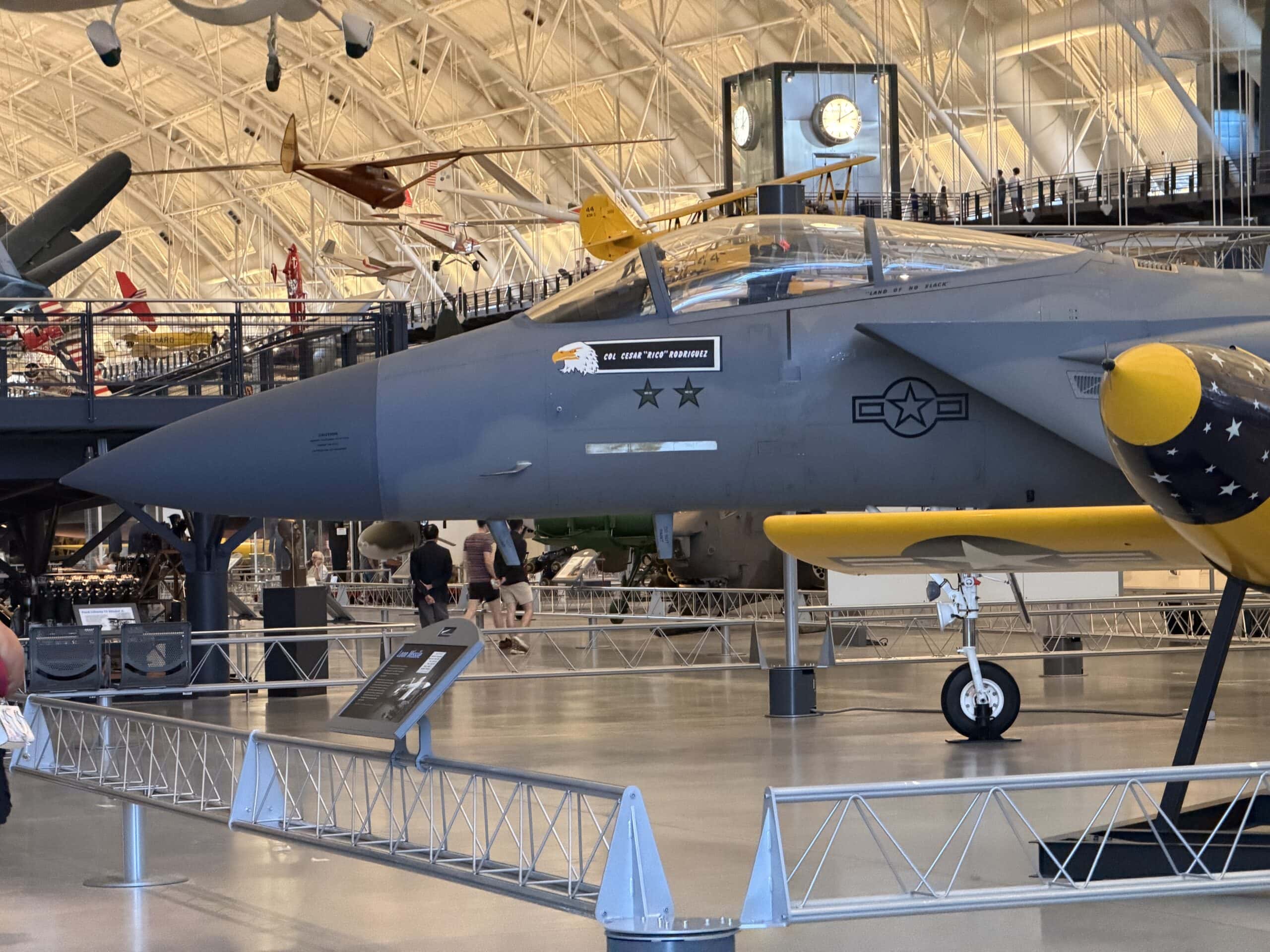
F-15C. Taken at the Smithsonian by 19FortyFive.com staff.
“Don [Don Emmons was Graham Reconnaissance System Officer or RSO, the Blackbird back seater] and I, as well as many other crewmembers, had flown numerous ‘Tomcat Chase’ and ‘Eagle Bait’ sorties against our best fighters – the Navy’s F-14s and the Air Force’s F-15s.
The SR-71, Graham explains, provided new fighter pilots “practice at finding, tracking, locking on, intercepting, and simulated firing of their sophisticated F-14 Phoenix missiles and the F-15’s Sparrow missiles at a high altitude, high speed target. The Tomcat Chase missions were flown over the Pacific Ocean and Eagle Bait missions in the Nellis AFB training area, north of Las Vegas, Nevada.”
For F-15s, however, the SR-71 was effectively invisible, Graham explains. “One of the interesting discoveries from those missions, especially the Eagle Bait, was that they couldn’t even find us when everything was shut down and we told them exactly where we were.”
At first, the reason wasn’t immediately clear.
But eventually, it was “realized that the F-15 had a speed gate on their radar at 1500 kts. We were casually warping along from 1850 to 2000. So, for them, we didn’t exist. We flew them fairly regularly from about ’82, and they kept doing them after I retired in ’86. We flew the Eagle Bait with the F-15s and Tomcat Chase with the F-14s. The 14s could find us, but they couldn’t do anything until we modified and gave them times, route of flight, speed, and altitude beforehand so they could have a pre-planned setup. The 15s didn’t do that well for quite some time.”
An End to the Blackbird
Despite the Blackbird’s initially highly secretive but eventually illustrious career as both a spy platform and a training airplane, the satellite and the end of the Cold War would ultimately end the Blackbird program.
Though the SR-71 was never shot down, sending manned aircraft to areas of the world that might have been replete with powerful air defenses became increasingly risky.
And with the advent of spy satellites — persistent, always-watching, unmanned eyes in the sky — the justification became untenable.
But maintaining the Cold War-era aircraft became expensive too. And after the end of the Cold War and collapse of the Soviet Union, the United States could no longer justify maintaining the aircraft in the face of virtually no geopolitical rivals, let alone peers.
Ultimately, the Pentagon would retire the aircraft, and though a couple SR-71s were sent to NASA for testing, the rest of the surviving platforms would ultimately be destined for aviation museums throughout the United States.
About the Author: Caleb Larson
Caleb Larson is an American multiformat journalist based in Berlin, Germany. His work covers the intersection of conflict and society, focusing on American foreign policy and European security. He has reported from Germany, Russia, and the United States. Most recently, he covered the war in Ukraine, reporting extensively on the war’s shifting battle lines from Donbas and writing on the war’s civilian and humanitarian toll. Previously, he worked as a Defense Reporter for POLITICO Europe. You can follow his latest work on X.