
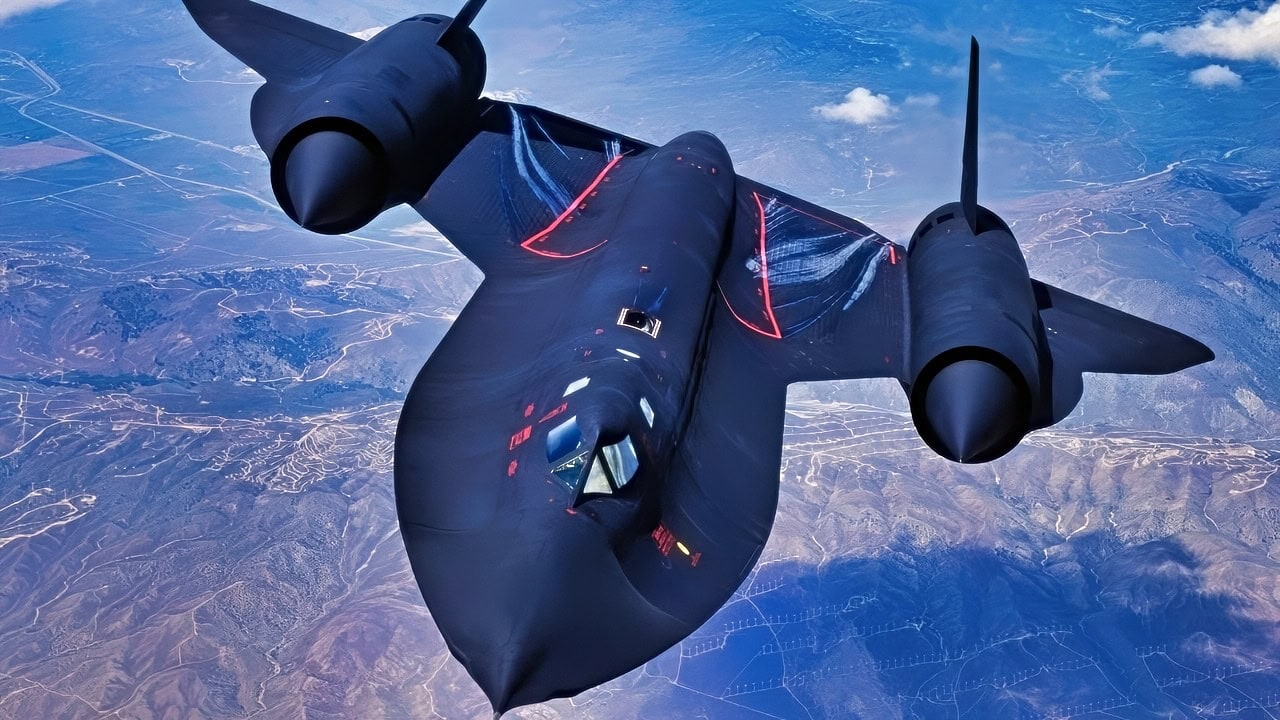
Aerospace Magic: Meet the SR-71 Blackbird – On July 4, 1956, the first U-2 to cross into Soviet airspace and came home untouched. The airplane had been sold to President Eisenhower on the promise that it would cruise above Soviet radar coverage, invisible for years while the technology below caught up. Soviet radar tracked the first flight nearly gate-to-gate, and delivered a formal protest within days. The invisibility lasted zero missions. Every decision that produced the Blackbird flows from that single failed assumption: the U-2 bought time, but the clock was running from day one, and everyone involved knew a missile would eventually reach 70,000 feet.
Project RAINBOW Failed, So Kelly Johnson Started Over With Archangel
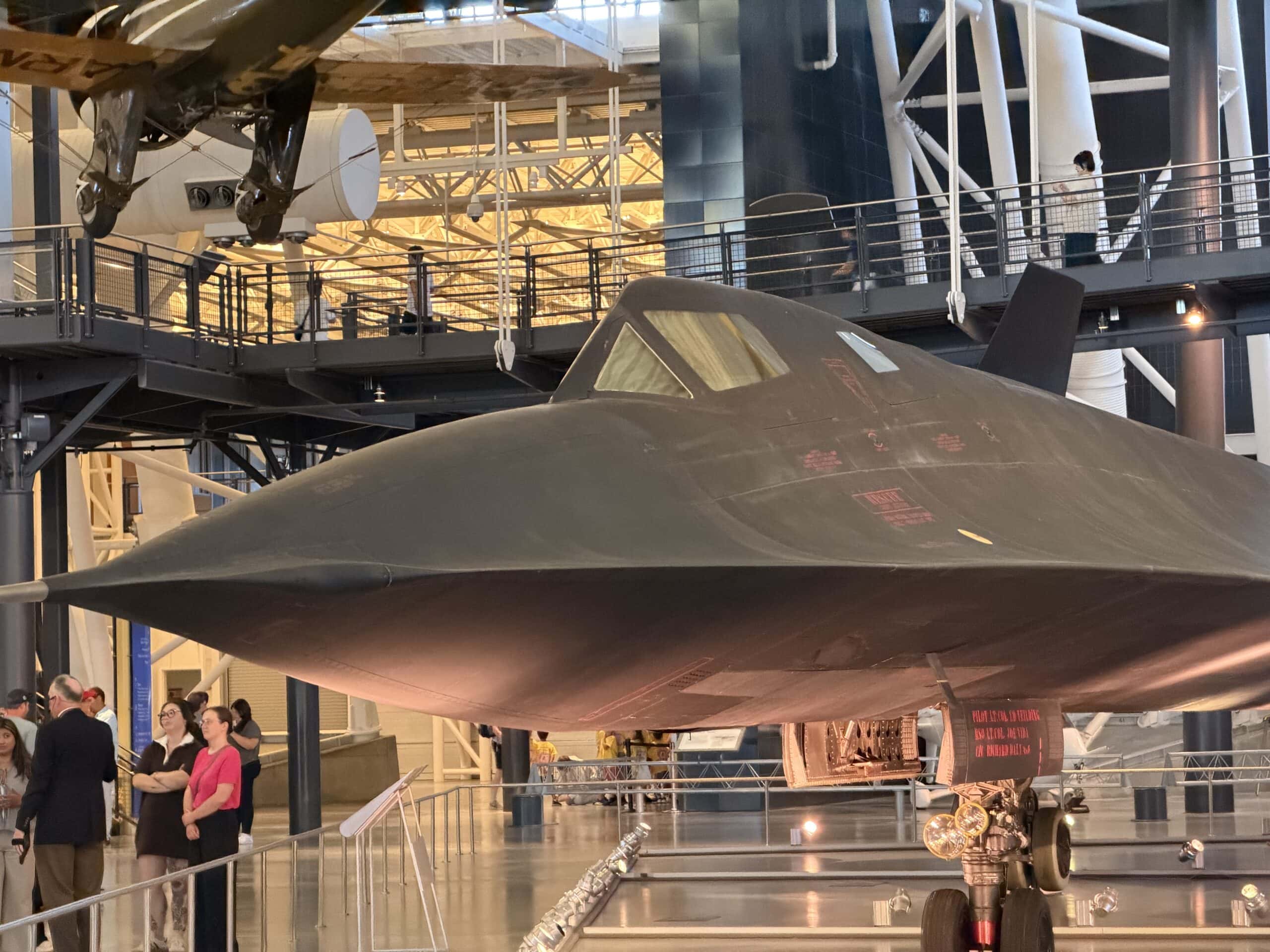
SR-71 Blackbird. Image taken at the Smithsonian on 6/30/2026 by 19FortyFive
The first answer was to fix the U-2 itself. Project RAINBOW coated and draped the airplane with radar-absorbing treatments, and the results were poor: the add-ons cut altitude and range without making the aircraft meaningfully harder to track. By late 1957, Clarence “Kelly” Johnson’s Skunk Works had concluded that the U-2 could not be patched to achieve survivability and began designing a clean-sheet successor under what became known as Project GUSTO.
The U-2 had been known as Angel inside the program, so the new studies took the name Archangel, and the numbered iterations that followed, A-1, A-2, and onward, gave the eventual airplane its designation. Johnson wrote his first notes on a Mach 3 design on April 21, 1958.
The requirement he settled on was a bet that no single protection would be enough. Altitude alone had already failed. The new aircraft would stack three defenses at once: speed above Mach 3, cruising altitude around 90,000 feet, and a shape deliberately designed to return the smallest radar signature the era’s engineering could manage.
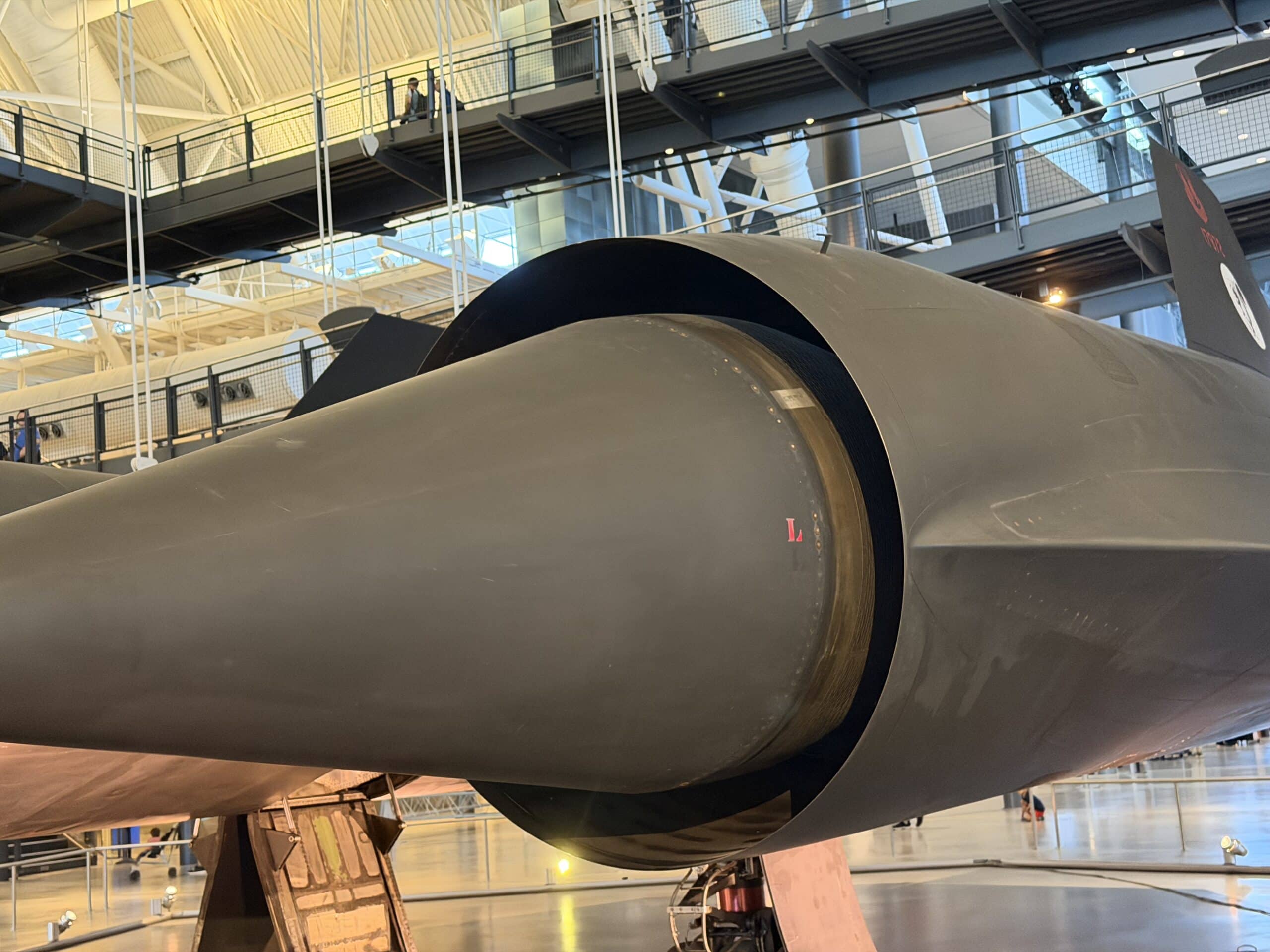
SR-71 Blackbird. Image taken at the Smithsonian on 6/30/2026 by 19FortyFive
Each element shrank the time a defender had to detect, compute, and launch; together, they were meant to make the intercept problem unsolvable. It was the first operational aircraft designed with its radar cross-section as a core requirement rather than an afterthought, and that decision, made two decades before the F-117, is where the stealth lineage begins.
The Land Panel’s Choice: Lockheed’s A-12 Over Convair’s KINGFISH
The CIA did not simply hand Johnson the contract. A scientific panel chaired by Polaroid’s Edwin Land ran a genuine competition between Lockheed and Convair, and it swung back and forth for a year. In November 1958, the panel provisionally favored Convair’s FISH, a ramjet parasite aircraft launched from a B-58. By June 1959, Lockheed’s A-11 led, and both companies were sent away to redesign.
Convair returned with KINGFISH; Lockheed returned with the A-11 reworked into the A-12, its twin fins canted inward and portions of the structure replaced with nonmetallic materials to cut the radar return. In September 1959, the CIA selected the A-12 and Project OXCART began.
The deciding factors, recorded in the CIA’s own declassified history, were not purely aerodynamic. Some of the agency’s representatives actually preferred KINGFISH, which promised a smaller radar cross-section.
The Air Force members of the panel pushed the other way, pointing to Convair’s cost overruns and delays on the B-58 program against Lockheed’s record of delivering the U-2 on time and under budget, inside a Skunk Works facility whose key people already held CIA clearances. On January 26, 1960, the agency ordered 12 aircraft. The Soviet Union had not yet touched a U-2, and its replacement was already under contract.
May 1, 1960: The Shootdown That Proved the Decision Right and Took the Mission Away
Three months later, an SA-2 battery near Sverdlovsk brought down Francis Gary Powers, and the program’s founding logic was vindicated in the worst available way. Eisenhower ended overflights of the Soviet Union, and no American manned aircraft ever crossed Soviet territory on a reconnaissance mission again.
The decision that looked prescient in January now carried an unwelcome corollary: the A-12 was being built for a mission the United States had just sworn off.
That August, the second half of the problem arrived. On August 19, 1960, an Air Force C-119 snagged the descending film capsule of the Discoverer 14 satellite over the Pacific, the first photographic film ever recovered from orbit, and that single CORONA mission covered more of the Soviet Union than every U-2 overflight combined. Between May and August of 1960, policy had removed the Blackbird’s founding mission, and a satellite had replaced it.
The A-12 was still 20 months from its first flight.
Titanium From the Enemy, a Groom Lake First Flight, and the Air Force’s Version
The CIA built it anyway, and the building became its own legend. Sustained Mach 3 cruise meant airframe temperatures beyond 500 degrees Fahrenheit, which ruled out conventional aluminum, so the aircraft was built more than 90 percent from titanium, a metal the American industry had never machined at that scale. The richest ore supply sat inside the Soviet Union, and the agency quietly sourced it through third-country intermediaries and front companies, so the airplane built to spy on Moscow was skinned in metal that began as Soviet ground.
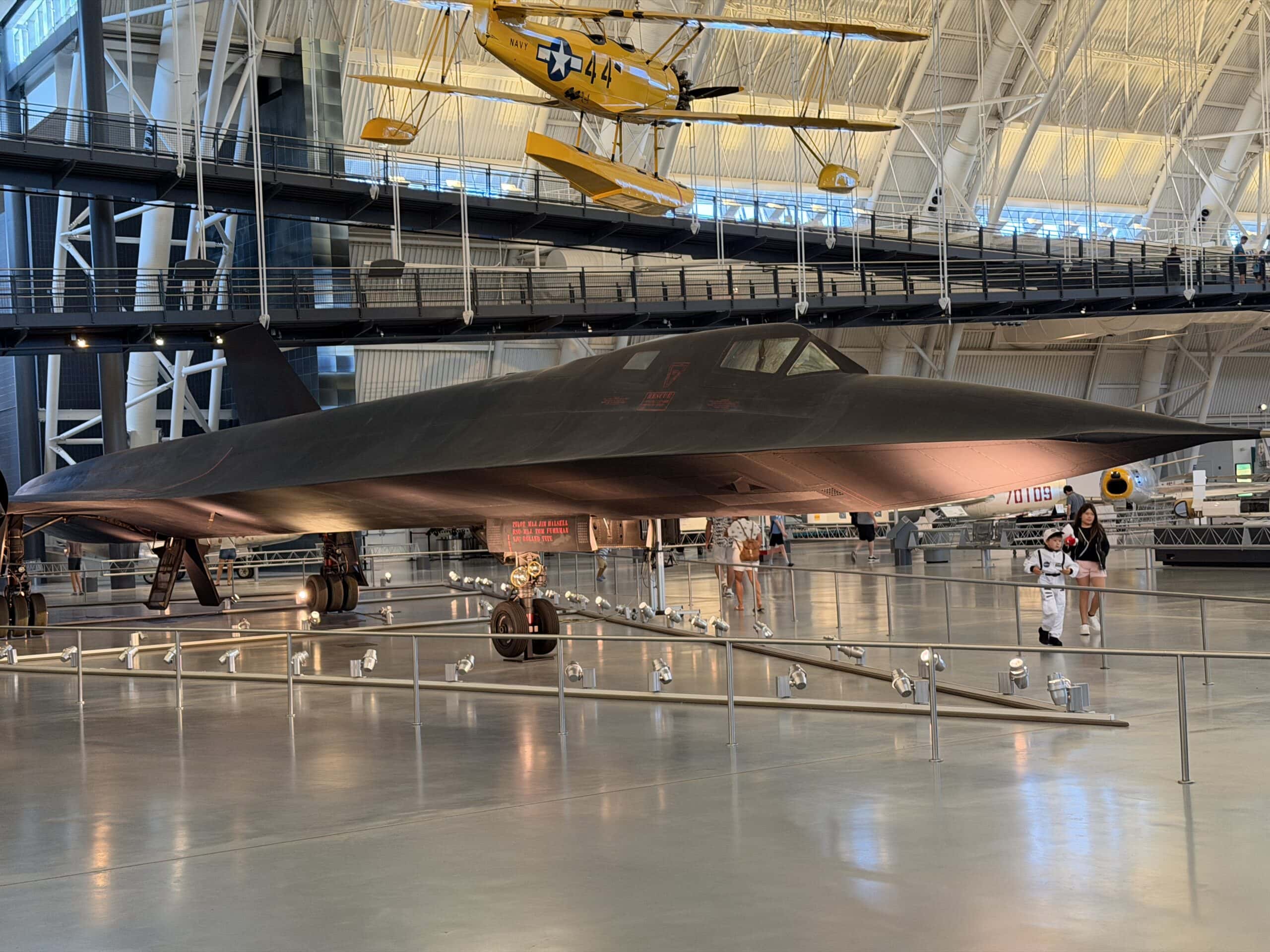
SR-71 Blackbird. Image taken at the Smithsonian on 6/30/2026 by 19FortyFive
The J58 engines lagged the airframe, and the A-12 made its first official flight at Groom Lake on April 30, 1962, on interim J75s, reaching sustained Mach 3.2 at 83,000 feet only in February 1964. In December 1962, the Air Force, watching the CIA’s program, ordered a variant of its own: longer, heavier, two seats, more fuel, and sensors. Lockheed called it the R-12. It would become the SR-71 and outlive the rest of the family.
LBJ, LeMay, and the RS-71 Myth That Got the Story Backward
The public learned of the program in an election year. In February 1964, President Johnson surfaced the “A-11” as cover for the still-secret CIA fleet, and in July 1964, he announced the reconnaissance version, telling reporters of “the successful development of a major new strategic manned aircraft system.” Air Force Chief of Staff Curtis LeMay had preferred the SR designation, for Strategic Reconnaissance, and lobbied before the speech to make it official.
The famous story that followed, repeated for decades, holds that the airplane was supposed to be the RS-71 and that Johnson misread the letters.
Archival research at the LBJ Library, published by The Aviation Geek Club, found the opposite: the speech text read “SR-71” in all three places; the audio confirms Johnson said it correctly; and it was the stenographer’s transcript handed to the press that reversed the letters. The reporters built the myth from the handout. The airplane itself flew on December 22, 1964, and the first SR-71s reached Beale Air Force Base in January 1966.
What followed was 24 years of the mission the Blackbird was never designed for. From Kadena and Mildenhall, A-12s and SR-71s photographed North Vietnam, North Korea, the Middle East, and Libya, and ran the Soviet periphery without ever crossing the line Eisenhower drew in 1960. Twelve of 32 SR-71s were lost to accidents; not one was ever lost to enemy action.
The fleet retired in January 1990, and on March 6 of that year, tail number 61-7972 flew from Los Angeles to Washington in 64 minutes and 20 seconds, where Lt. Cols. Ed Yeilding and Joseph Vida shut it down at Dulles and handed it to the Smithsonian.
It sits today in the Udvar-Hazy Center’s Boeing Aviation Hangar, a few steps from an A-12, the CIA’s original and the Air Force’s successor, parked together: two airplanes built to cross the Soviet Union that never once did. And you guessed, many of the photos in this article are of that famous SR-71 Blackbird.
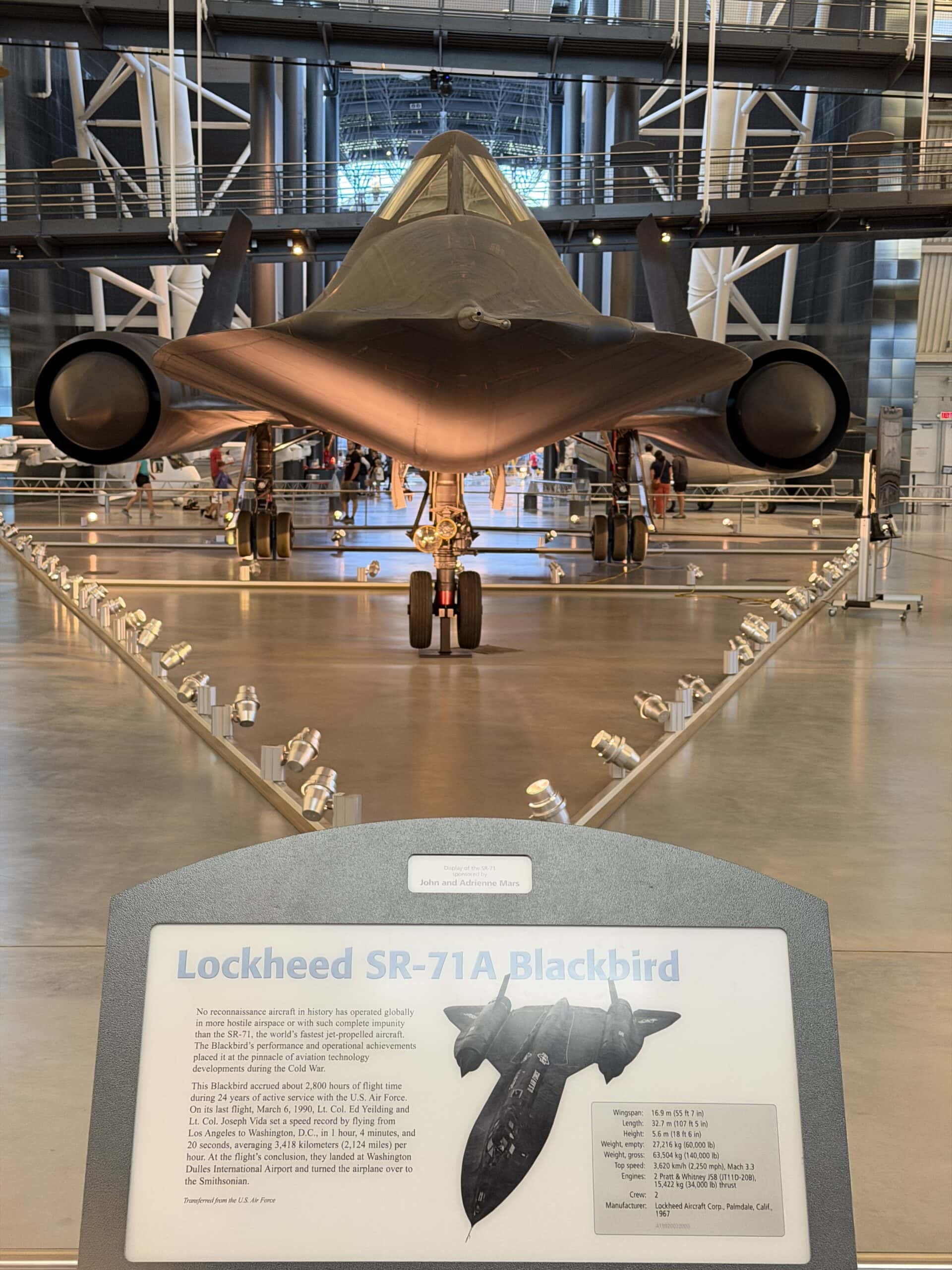
SR-71 Blackbird. Image taken at the Smithsonian on 6/30/2026 by 19FortyFive
About the Author: Harry J. Kazianis
Harry J. Kazianis (@Grecianformula) was the former Senior Director of National Security Affairs at the Center for the National Interest (CFTNI), a foreign policy think tank founded by Richard Nixon based in Washington, DC. Harry has over a decade of experience in think tanks and national security publishing. His ideas have been published in the NY Times, The Washington Post, The Wall Street Journal, CNN, and many other outlets worldwide. He has held positions at CSIS, the Heritage Foundation, the University of Nottingham, and several other institutions related to national security research and studies. He is the former Executive Editor of the National Interest and the Diplomat. He holds a Master’s degree focusing on international affairs from Harvard University.

