
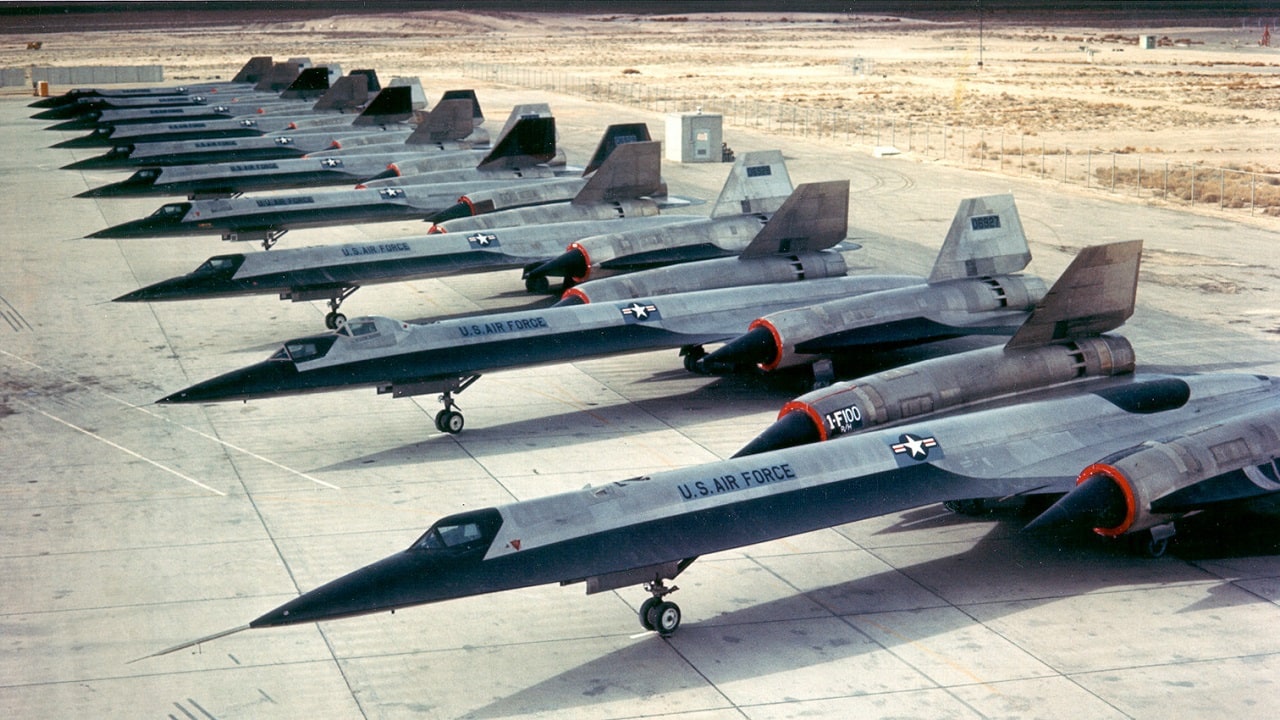
The Enemy Never Touched the SR-71 Blackbird. It Destroyed a Third of Itself: The SR-71’s combat record is the cleanest in aviation history: over more than three decades of reconnaissance flights over the most heavily defended airspace on Earth, no enemy missile or fighter ever brought one down. The full ledger is stranger than the legend. Of the 32 Blackbirds built, 12 were destroyed, every one of them in an accident, and the only thing that ever managed to kill the world’s fastest airplane was flying the world’s fastest airplane. The numbers, and the one death among them, tell the truest story about what Mach 3 actually cost.
The Ledger
We should begin with the two figures because they are verified and startling. Lockheed built 32 SR-71s in all: 29 single-seat A-models, two B-model trainers, and a single hybrid C-model assembled partly from the wreckage of a crashed YF-12 prototype, an airframe crews nicknamed “The Bastard.” The jet was born famous, its existence announced by President Lyndon Johnson at a news conference in July 1964, and it entered service in January 1966. Of those 32, 12 were lost in accidents, none to enemy action, with exactly one fatality across all of them. That is 37 percent of the fleet destroyed, better than one airframe in three, on an aircraft that shrugged off an estimated 4,000 missiles fired at it without a scratch and was never once shot down. The inversion is the story. The most defended airplane ever built was defenseless mainly against itself.
What Killed Them
The loss list reads like a catalog of what living at the edge of physics costs, and almost none of it involves an adversary. The very first Blackbird destroyed never left the ground in anger: the prototype burned on a runway at Edwards in January 1967 during a brake-system test, when blown tires ignited its magnesium wheels and the fire consumed the jet as it ran off the pavement.
One 1969 loss followed an in-flight explosion whose cause was never determined. Several accidents involved the landing drag chute. And the signature killer was the unstart, the violent collapse of the shockwave inside a supersonic inlet that could snuff an engine at 80,000 feet and slew the aircraft sideways in an instant, a phenomenon that stalked the fleet for years.
The great majority of the dozen losses came in the program’s first six years, the period when crews and engineers were still learning, at full price, what an airplane operating at triple the speed of sound would and would not forgive.
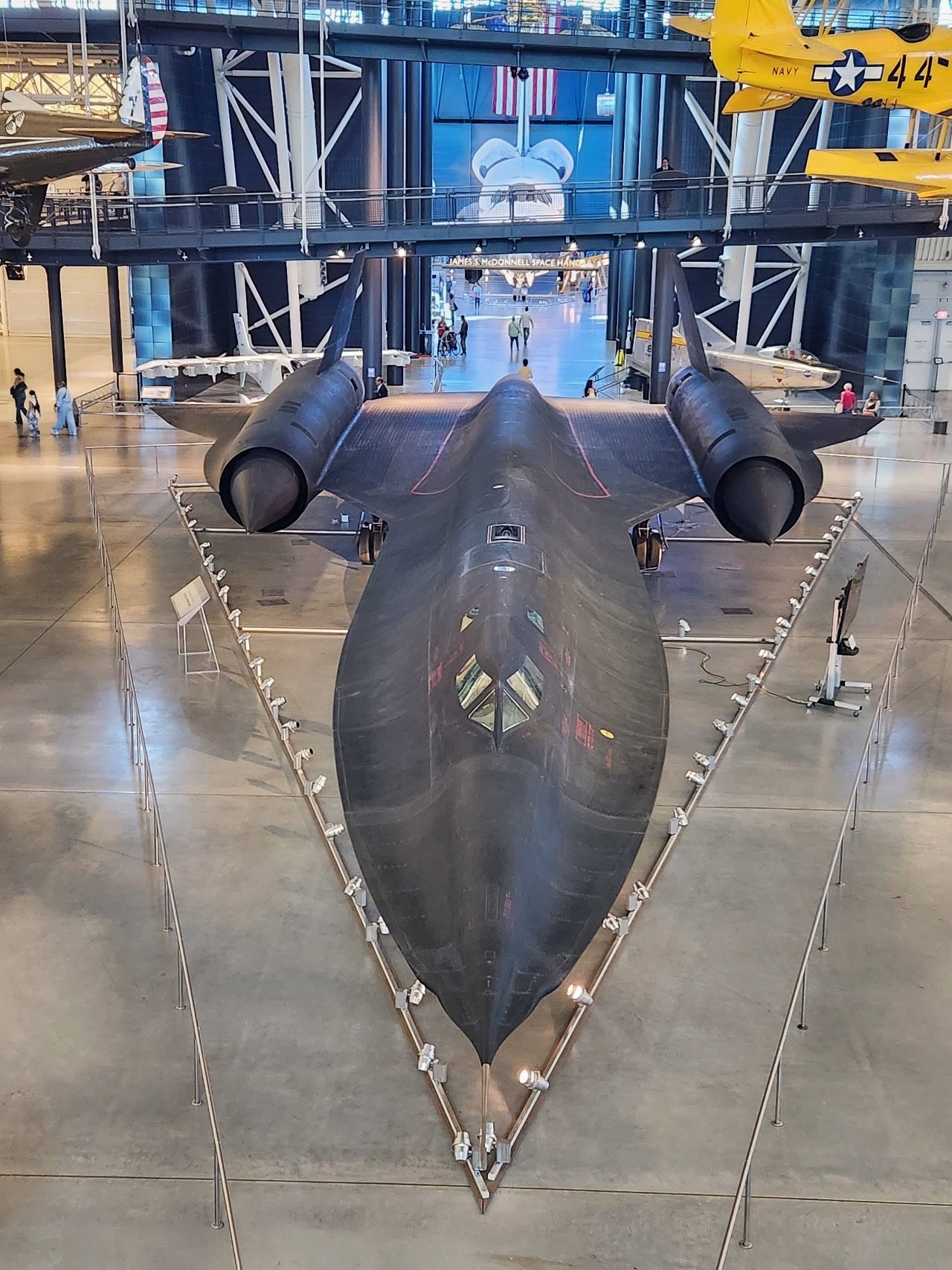
Longshot of SR-71. Image Credit: 19FortyFive.com

SR-71 Blackbird at the Smithsonian 19FortyFive.com Photo
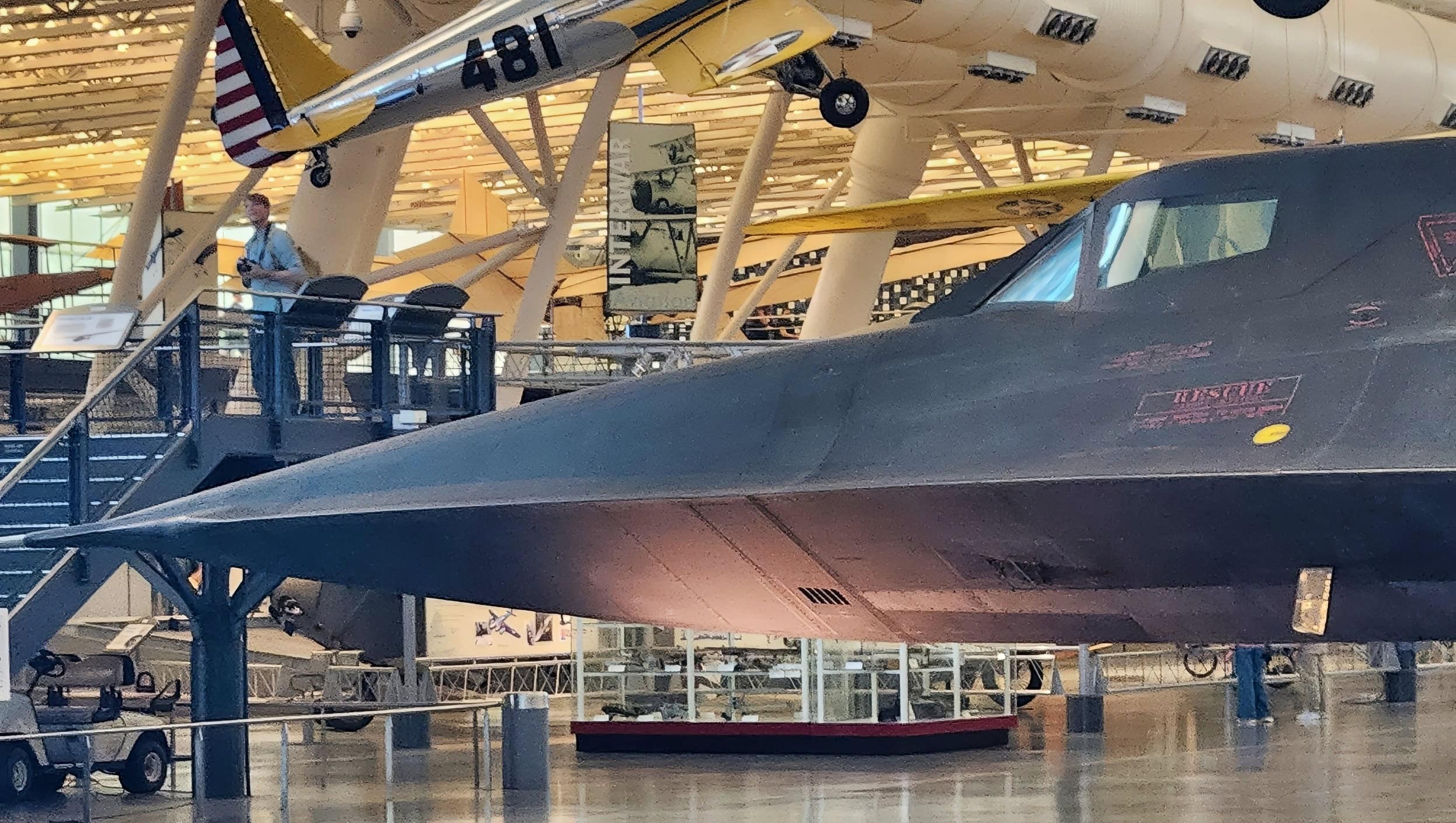
SR-71 Blackbird at Smithsonian. Image Credit: 19FortyFive.com
The One Death, and the Miracle Inside It
The single fatality and the most astonishing survival in aviation history happened in the same instant. On January 25, 1966, Lockheed test pilot Bill Weaver and reconnaissance systems specialist Jim Zwayer were flying a test of aft center-of-gravity handling, cruising at Mach 3.18 around 78,000 feet, when the right inlet unstarted and the aircraft swapped ends faster than any control input could counter. The Blackbird disintegrated around its crew. Weaver never pulled a handle; he was torn out of the breaking airframe while unconscious, and his ejection seat was later found still in the wreckage. His pressure suit inflated and functioned as a personal spacecraft, absorbing the forces of the breakup, while his parachute sequence triggered automatically and opened on schedule at 15,000 feet. He came to under a canopy over New Mexico, drifted down to a ranch, and was struggling with his chute when a rancher named Albert Mitchell Jr. landed a helicopter beside him and asked, “Can I help you?” Zwayer had not survived; his neck was broken in the violence of the breakup itself, before any parachute mattered. He remains the only person ever killed aboard an SR-71, and the Air Force discontinued aft-center-of-gravity testing after the accident. As this site has recounted, the wider Blackbird family was costlier still, with A-12 accidents claiming additional lives before the SR-71 ever reached service.
The Honest Denominator
Told alone, twelve losses sound like an indictment. Told against the flying, it becomes something closer to a wonder. NASA’s own safety office, which studies the Blackbird record as a case history, tallies 53,490 total flight hours for the fleet, 11,675 of them at Mach 3 or above, meaning crews spent the equivalent of 16 solid months of accumulated time at triple the speed of sound, sustained heat and pressure no other operational aircraft has ever routinely endured, and lost one life doing it. Look closer and the record sharpens further: in eleven of the twelve losses, every crew member came home, an outcome the same case study credits to crew skill, superb maintenance, and ejection seats rated to save a man from a standing start on the runway.
The fixes took hold, too: digital inlet controls largely tamed the unstart demon in the later years, and after the Air Force retired the jet in 1989, worsening conditions in the Middle East and North Korea pulled it back, with Lockheed returning three aircraft to service in the 1990s before the type’s final NASA flight in 1999, still the fastest air-breathing crewed aircraft ever placed in service. Both truths belong in the same sentence.
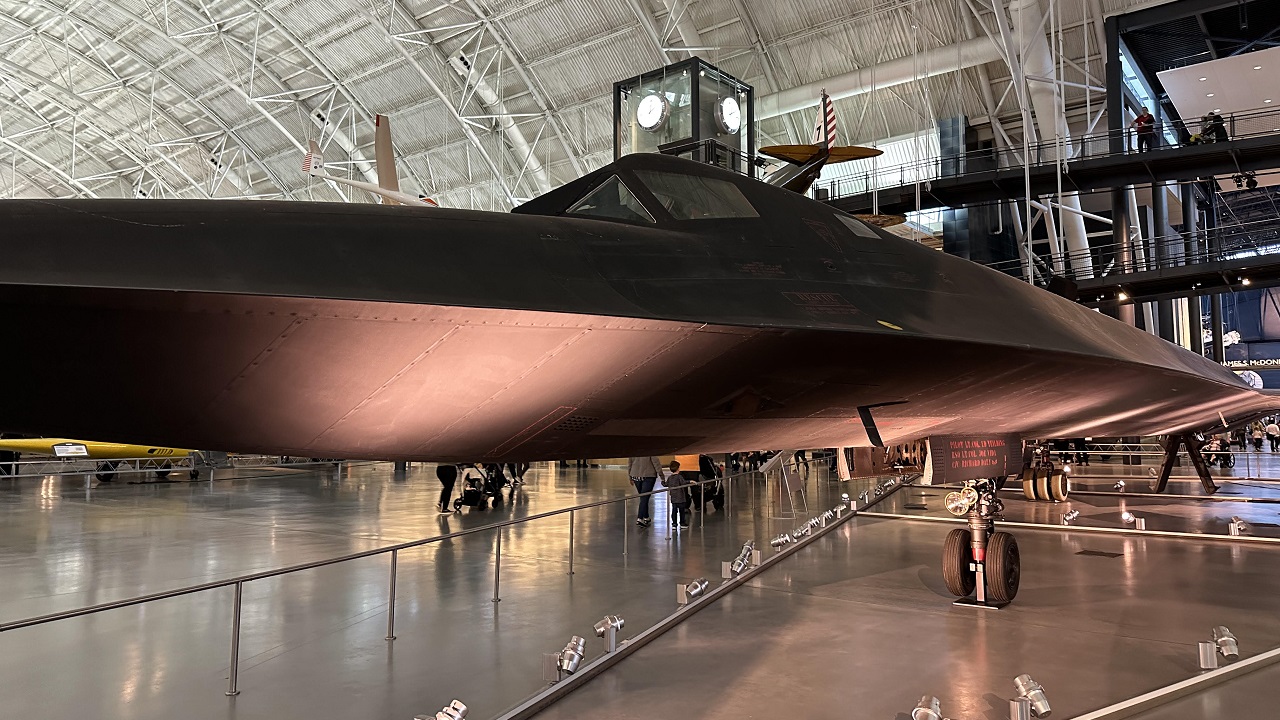
SR-71. SR-71 photo taken at the National Air and Space Museum. Taken by 19FortyFive on 10/1/2022.
No enemy ever touched the SR-71, and the SR-71 destroyed a third of itself, because the same physics that put it beyond every missile put it at the edge of what machines and crews could survive.
The twenty airframes that made it through are nearly all in museums now, and the ledger they left behind is the plainest measure of the price of flying where nothing else could. We know: the photos and video in this essay are from a visit to the SR-71. And she is amazing.
About the Author: Harry J. Kazianis
Harry J. Kazianis (@Grecianformula) was the former Senior Director of National Security Affairs at the Center for the National Interest (CFTNI), a foreign policy think tank founded by Richard Nixon based in Washington, DC. Harry has over a decade of experience in think tanks and national security publishing. His ideas have been published in the NY Times, The Washington Post, The Wall Street Journal, CNN, and many other outlets. He has held positions at CSIS, the Heritage Foundation, the University of Nottingham, and several other institutions related to national security research and studies. He is the former Executive Editor of the National Interest and the Diplomat. He holds a Master’s degree focusing on international affairs from Harvard University.

