
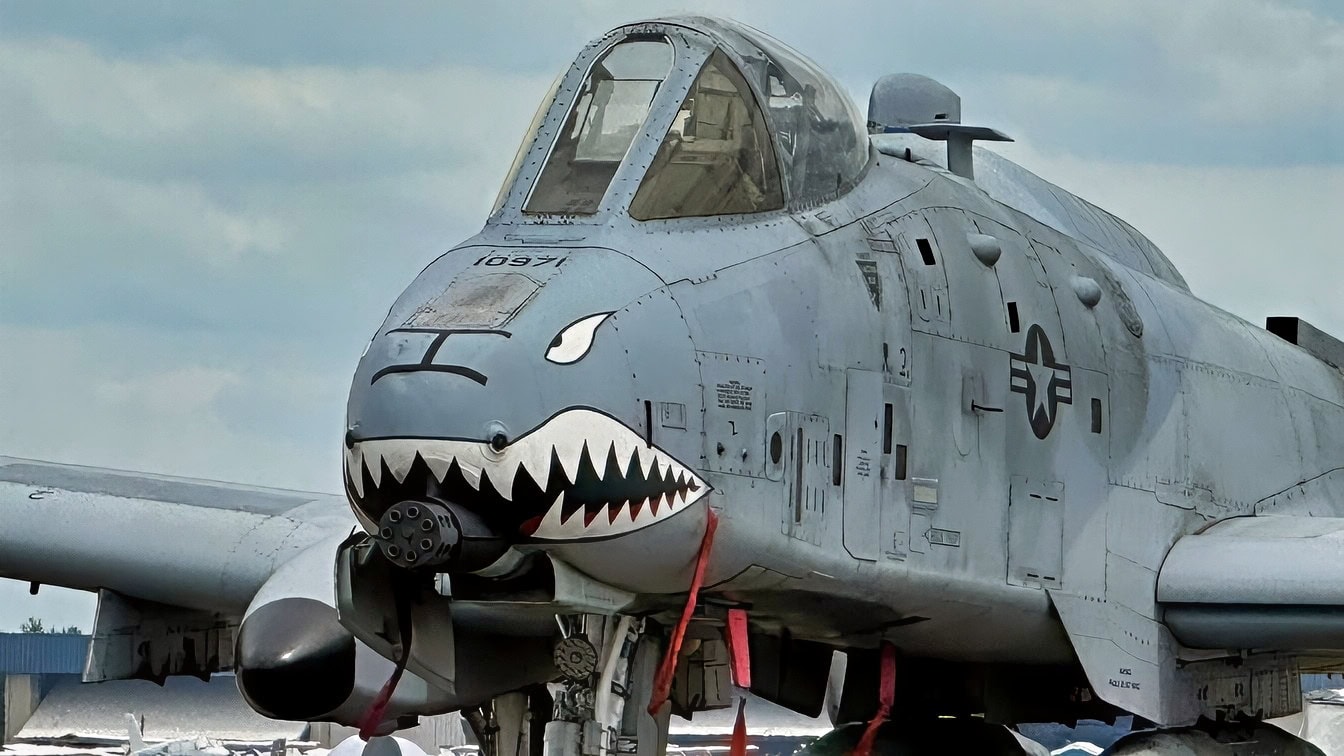
The A-10 Thunderbolt II is the purest conventional warplane America has ever fielded, a titanium bathtub built around a cannon, designed to fly low and slow and kill tanks. It is also a rare frontline American combat jet that was never certified to carry nuclear weapons. But for one brief moment in the mid-1970s, the Air Force put a price on changing that, and the paper trail survives: a memo pricing out exactly what it would cost to hang atomic bombs on 275 Warthogs.
BONUS: All images and video in this article are from our very own visits with A-10 Warthogs across the country over the last 12 months.
The Question Nobody Asked
The story begins with a question about two other airplanes. In December 1975, Secretary of Defense Bill Clements asked the Air Force what it would cost to modify the new F-15 and F-16 fighters to carry atomic weapons. Two months later, the service sent back its answer, and tucked inside was an offer nobody had requested. “For your information, we have also provided similar cost data on the A-10 aircraft,” reads the unclassified memo, obtained from the Air Force Historical Research Agency by reporter Joseph Trevithick and first published at War Is Boring.
The figure attached: $15.9 million to make 275 A-10s nuclear-capable, covering the development, testing, and installation of the equipment needed to carry the B43, B57, and B61, the standard air-delivered nuclear bombs of the day. Adjusted for inflation, the project would run on the order of $86 million in today’s money.
The Air Force never pursued it, and the reporting notes that the record does not explain why the service volunteered the Warthog at all. But for the cost of a single modern fighter, the A-10 could have gone nuclear.
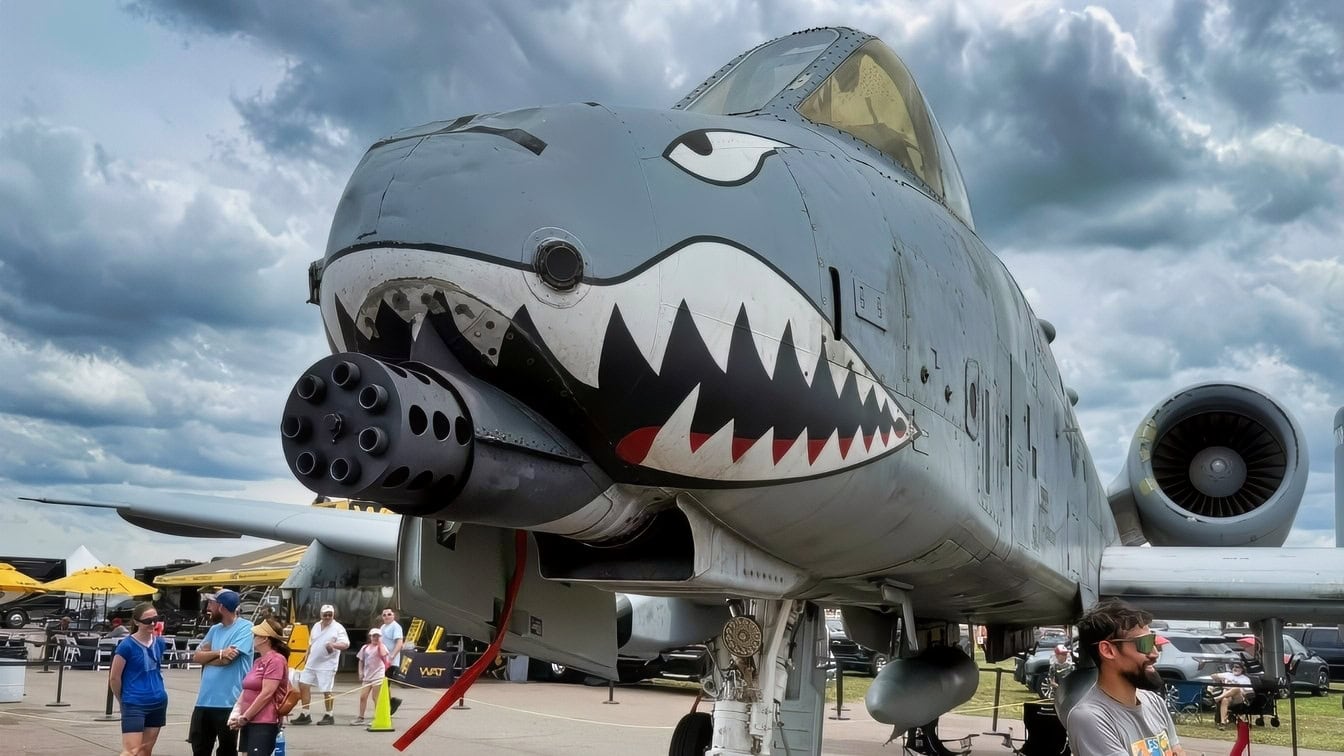
A-10 Warthog. 19FortyFive.com image from Lakeland, Florida airshow on 4/19/2026.
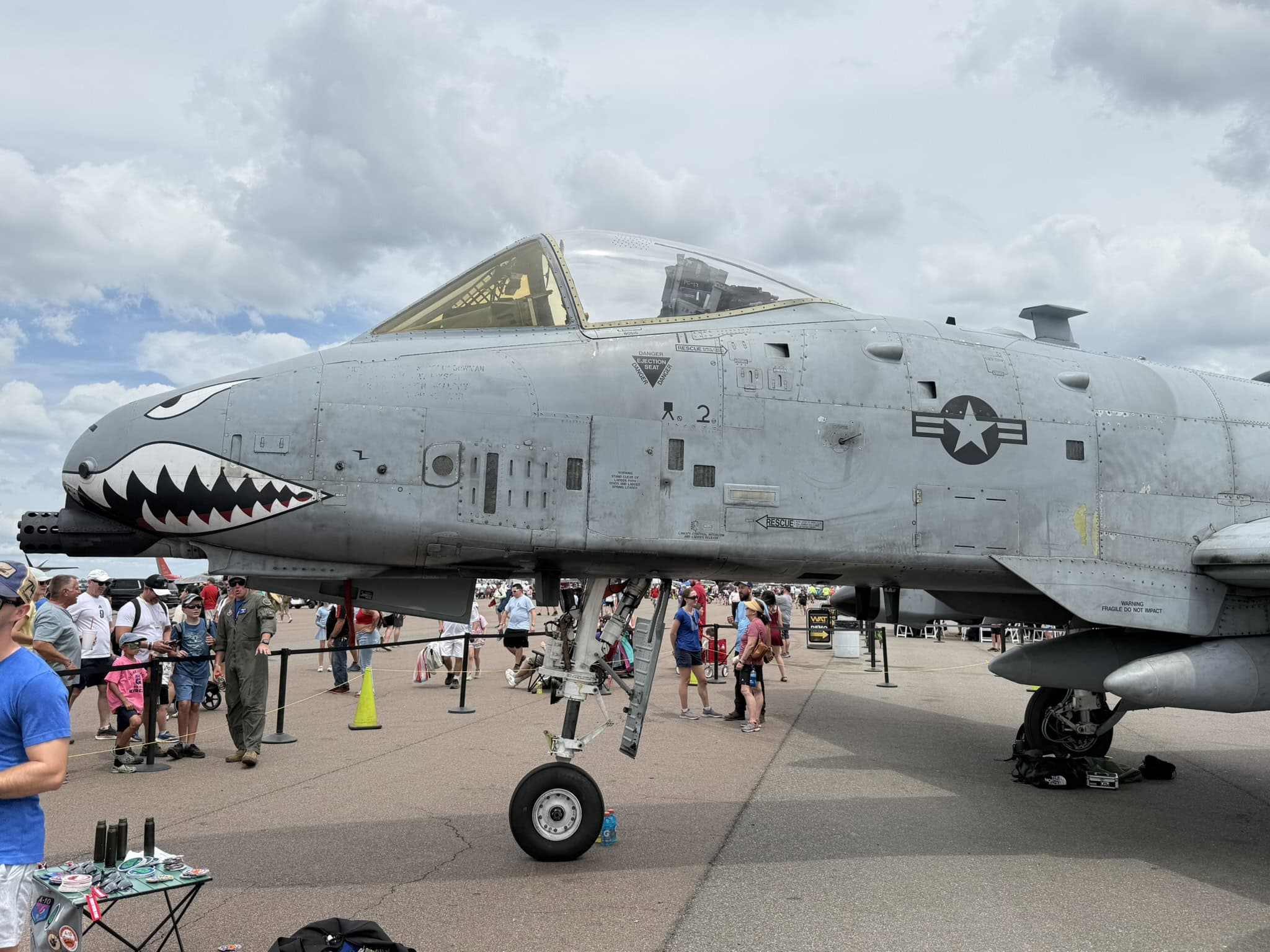
A-10 Warthog. 19FortyFive.com image from Lakeland, Florida airshow on 4/19/2026.
Why It Made a Kind of Sense
Strange as it sounds now, the offer fit its moment. In the mid-1970s, NATO stared across the German border at a Warsaw Pact force that vastly outnumbered it in tanks and armored vehicles, and alliance war planning leaned heavily on tactical nuclear weapons as the equalizer if Soviet armor poured through the Fulda Gap. In a European war, allied air forces would have received access to those same bombs under NATO’s nuclear-sharing arrangements, which is part of why the question kept being asked of every airframe.
Air Force historian Brian Laslie has noted that as new aircraft arrived in that decade, their potential as nuclear delivery platforms would have been assessed almost as a matter of course, because tactical nuclear delivery sat in every serious planning document for a European war. Nearly every jet in the tactical inventory was wired for the mission. The A-10 was brand new, built in numbers, covered in hardpoints, and headed for exactly the battlefield those weapons were meant for. On a staff officer’s spreadsheet, the question answered itself.
Why It Died
In the cockpit, it answered itself the other way. Fighters assigned to nuclear strikes were expected to run in fast, lob their bomb toward the target in a climbing arc from altitude, and dive away at speed before the detonation.
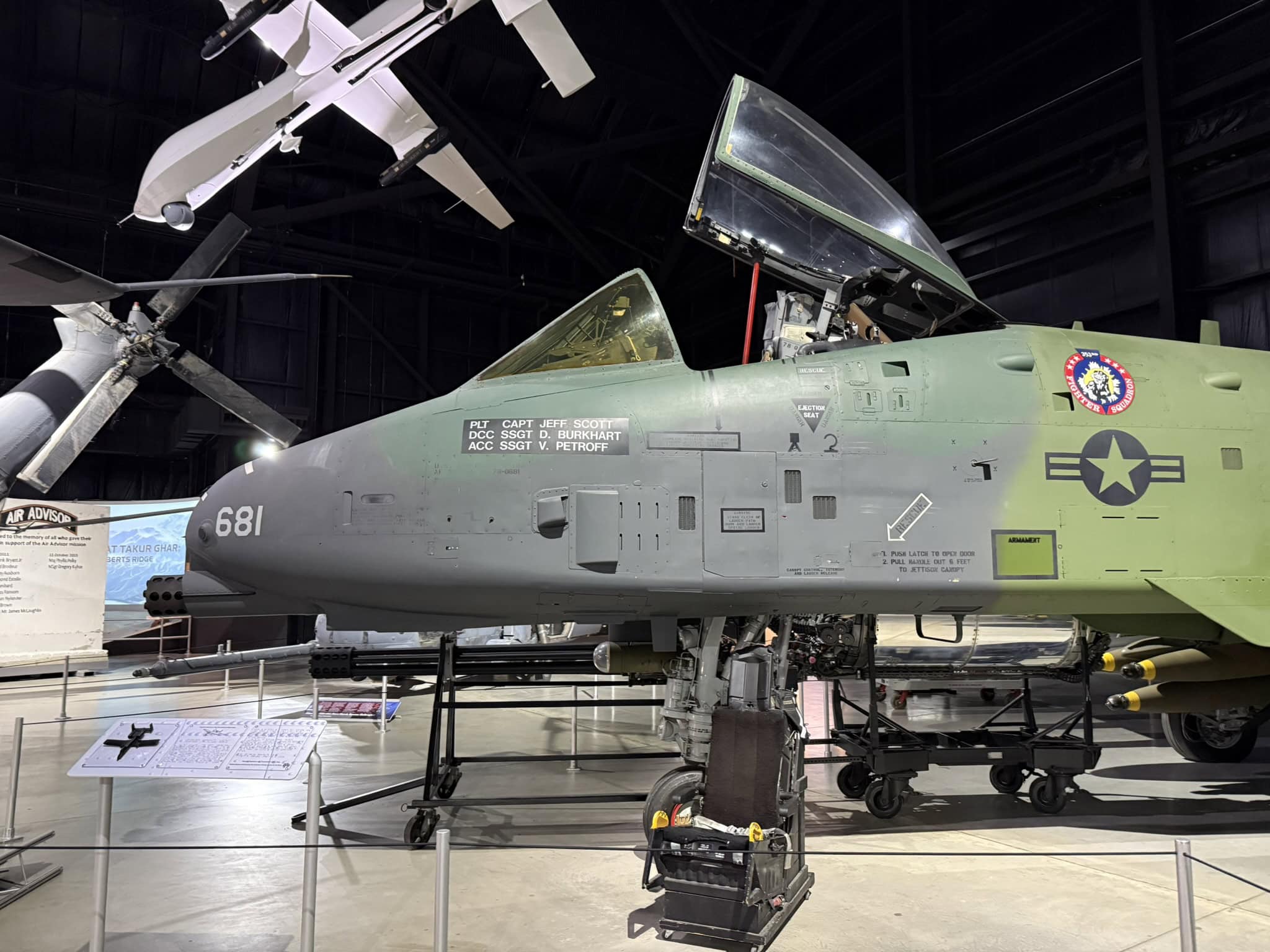
A-10 Warthog. 19FortyFive Image.
The A-10 was designed to be the opposite of every part of that profile: a straight-wing jet built to loiter low and slow over a battlefield, heavy with armor, indifferent to altitude performance. Even a small tactical weapon’s blast would have outrun the Warthog, turning a delivery run into something close to a one-way trip, a point an Air Force weapons planner later made bluntly in assessing the idea: the jet could have carried the bomb, and the pilot likely could not have come home.
Beyond the physics, the A-10 lacked the specialized safety, security, and control systems nuclear aircraft require, and adding them, plus the performance the mission demanded, would have meant reengineering the airplane away from the close-air-support job it was born for. The Air Force let the idea die on the page.
The Only Un-Nuclear Jet
The footnote is what makes the story worth telling, because of what the A-10 became instead. Half a century later, the F-15, F-16, and Tornado all serve as certified carriers of the B61 bomb, with the F-35A now joining them, and roughly 100 B61s stationed at six NATO bases.
The Warthog alone among its generation never received that wiring, and the closest it comes to anything atomic is a common misunderstanding: its famous cannon fires depleted-uranium rounds, which are dense metal penetrators, not nuclear weapons in any sense.
The jet spent the decades since doing precisely what it was built for, so well that the Air Force has spent twenty years failing to retire it, and in 2026, it is flying combat missions against Iran, hunting small boats in the Strait of Hormuz, and has been newly extended in service to at least 2030.
The purest conventional airplane in the American inventory stayed pure.
The only evidence that it almost went the other way is a fifty-year-old memo in an Alabama archive, offering the Pentagon a nuclear Warthog for $15.9 million, an offer nobody took.
About the Author: Harry J. Kazianis
Harry J. Kazianis (@Grecianformula) was the former Senior Director of National Security Affairs at the Center for the National Interest (CFTNI), a foreign policy think tank founded by Richard Nixon based in Washington, DC. Harry has over a decade of experience in think tanks and national security publishing. His ideas have been published in the NY Times, The Washington Post, The Wall Street Journal, CNN, and many other outlets. He has held positions at CSIS, the Heritage Foundation, the University of Nottingham, and several other institutions related to national security research and studies. He is the former Executive Editor of the National Interest and the Diplomat. He holds a Master’s degree focusing on international affairs from Harvard University.

