
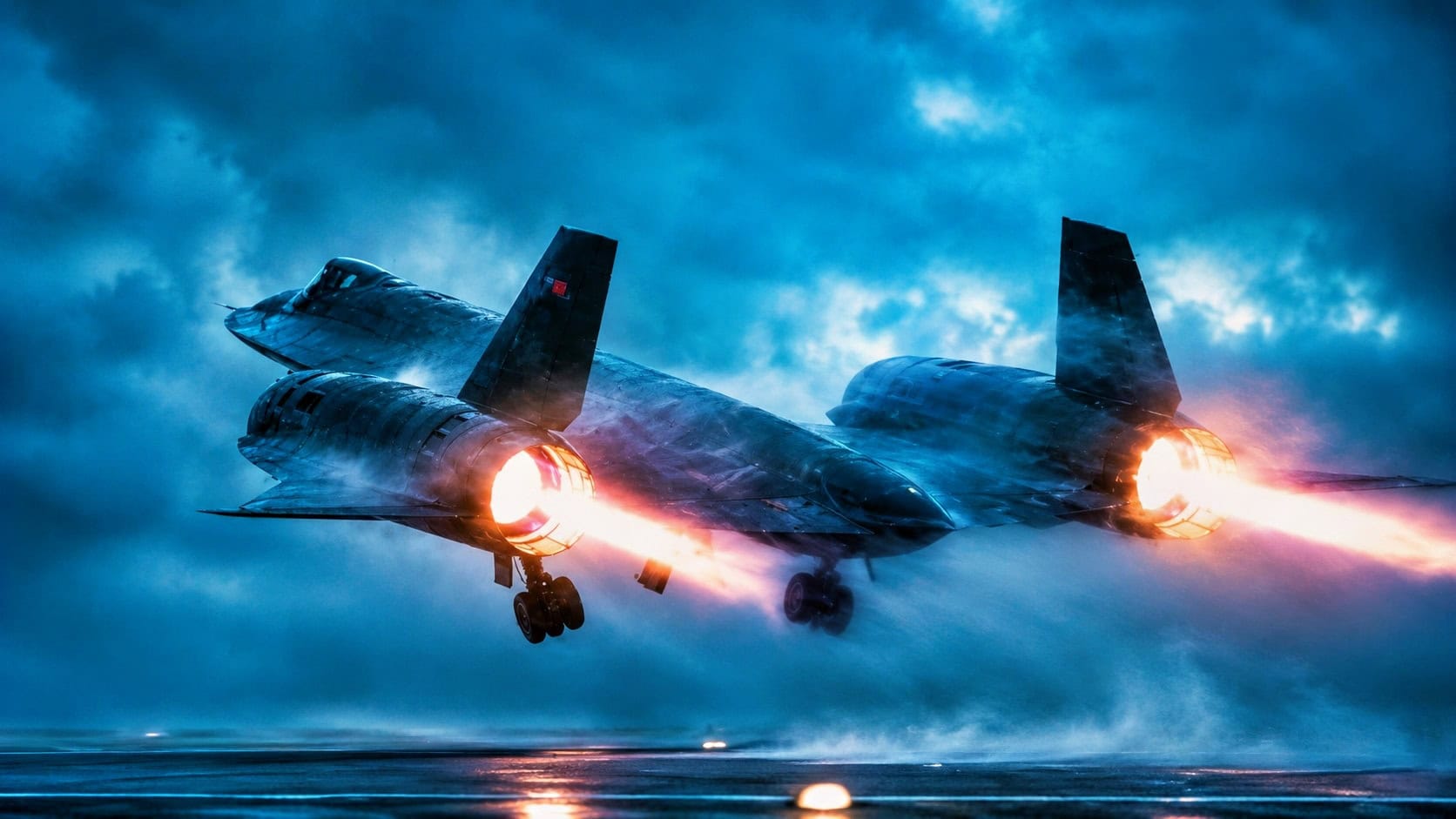
Everyone knows about the SR-71 Blackbird, the Cold War icon that flew at three times the speed of sound.
What many people don’t know, however, is that the now-famous reconnaissance aircraft was planned to be developed into an interceptor for the U.S. Air Force.
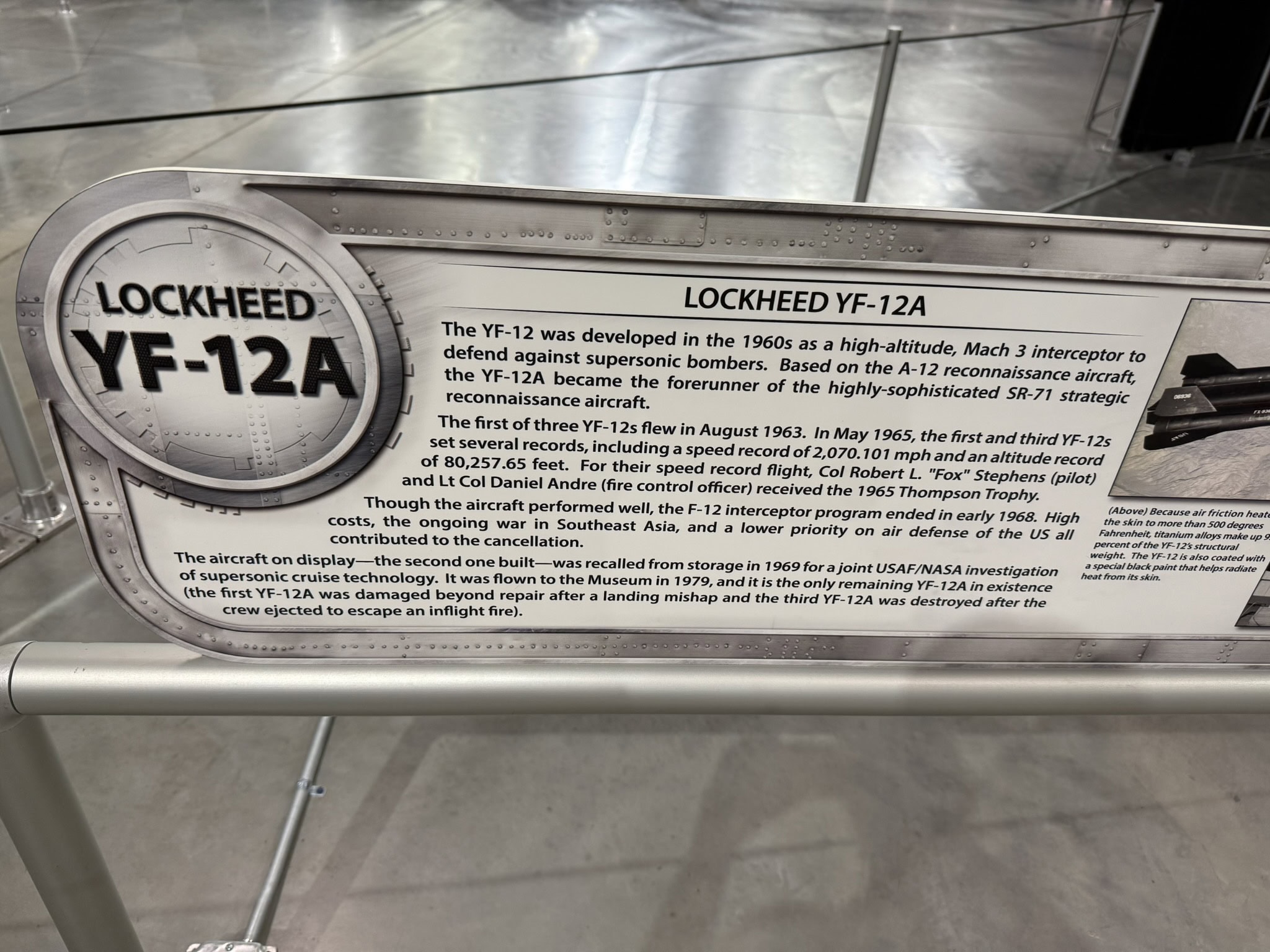
YF-12A. Image taken by Harry J. Kazianis at National Museum of the Air Force for 19FortyFive.com
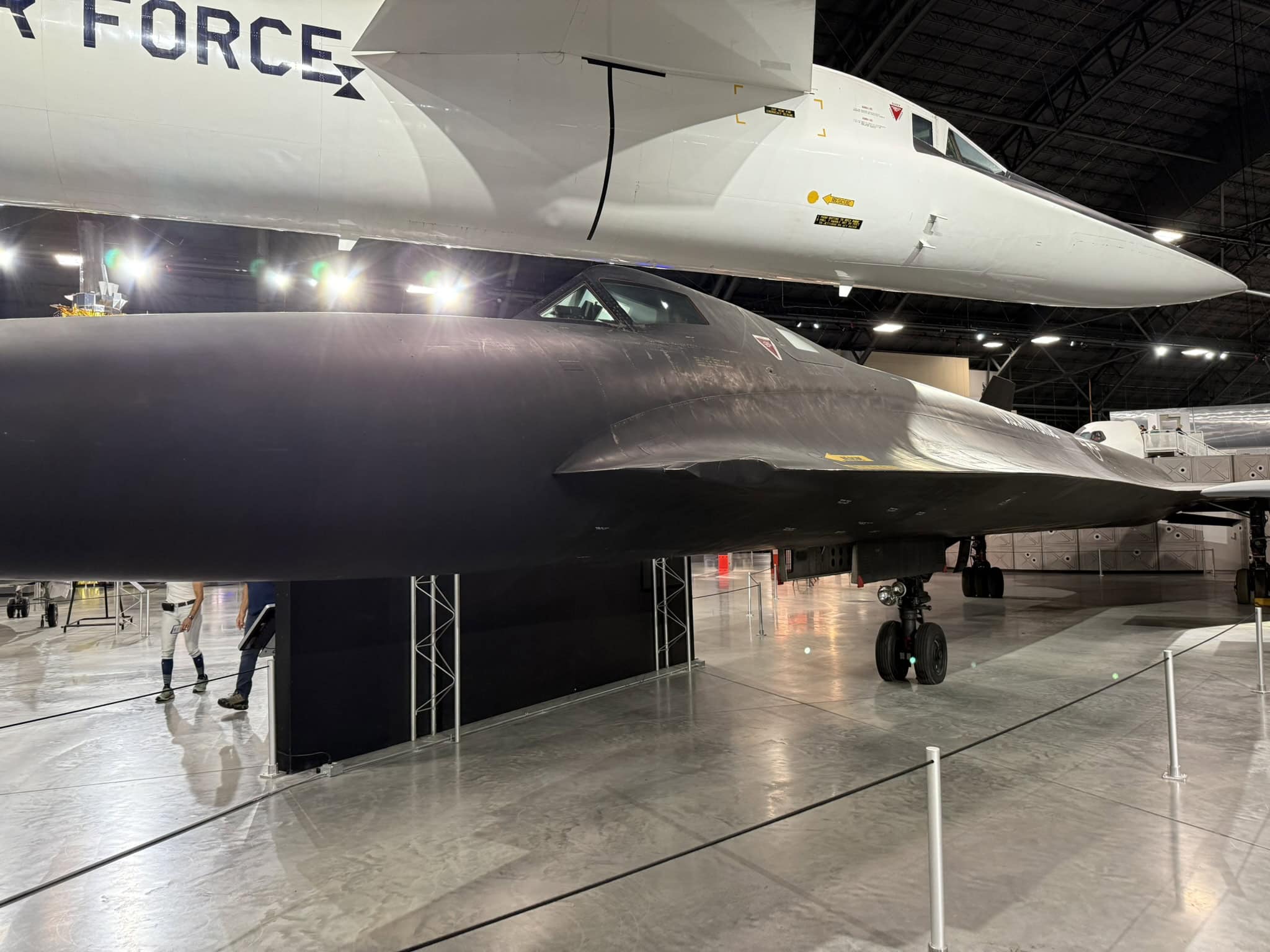
YF-12A. Image taken by Harry J. Kazianis at National Museum of the Air Force for 19FortyFive.com
The YF-12 was a twin-seat version of the A-12 Oxcart, the spy plane that would later become the SR-71, and was fitted with fire-control radar along wth AIM-47 Falcon air-to-air missiles.
Only three prototypes of the aircraft were made, and of those, only one survives. The other two were either scrapped or repurposed after experiencing accidents during test flights.
Two Out of Three YF-12s Gone
The first YF-12 to suffer an accident was an aircraft with the serial number 60-6934. The accident occurred on August 14, 1966, during a landing incident at Edwards Air Force Base.
According to some sources, the aircraft had encountered a systems failure that caused some of the internal systems to overheat.
The rear half of the plane was severely damaged during landing, although both crewmen were thankfully unharmed.
The rear half of the damaged aircraft was later fused to the forward fuselage of a Lockheed static-test airframe to create the sole SR-71C (61-7981), a trainer that first flew on March 14, 1969. Pilots nicknamed it ‘The Bastard’ — not for its patchwork origins so much as because it never flew quite straight: the two mated halves left it with persistent yaw at speed. It remains unique among all Blackbirds in carrying ventral fins under its engine nacelles, a leftover of its YF-12 lineage found on no other SR-71.
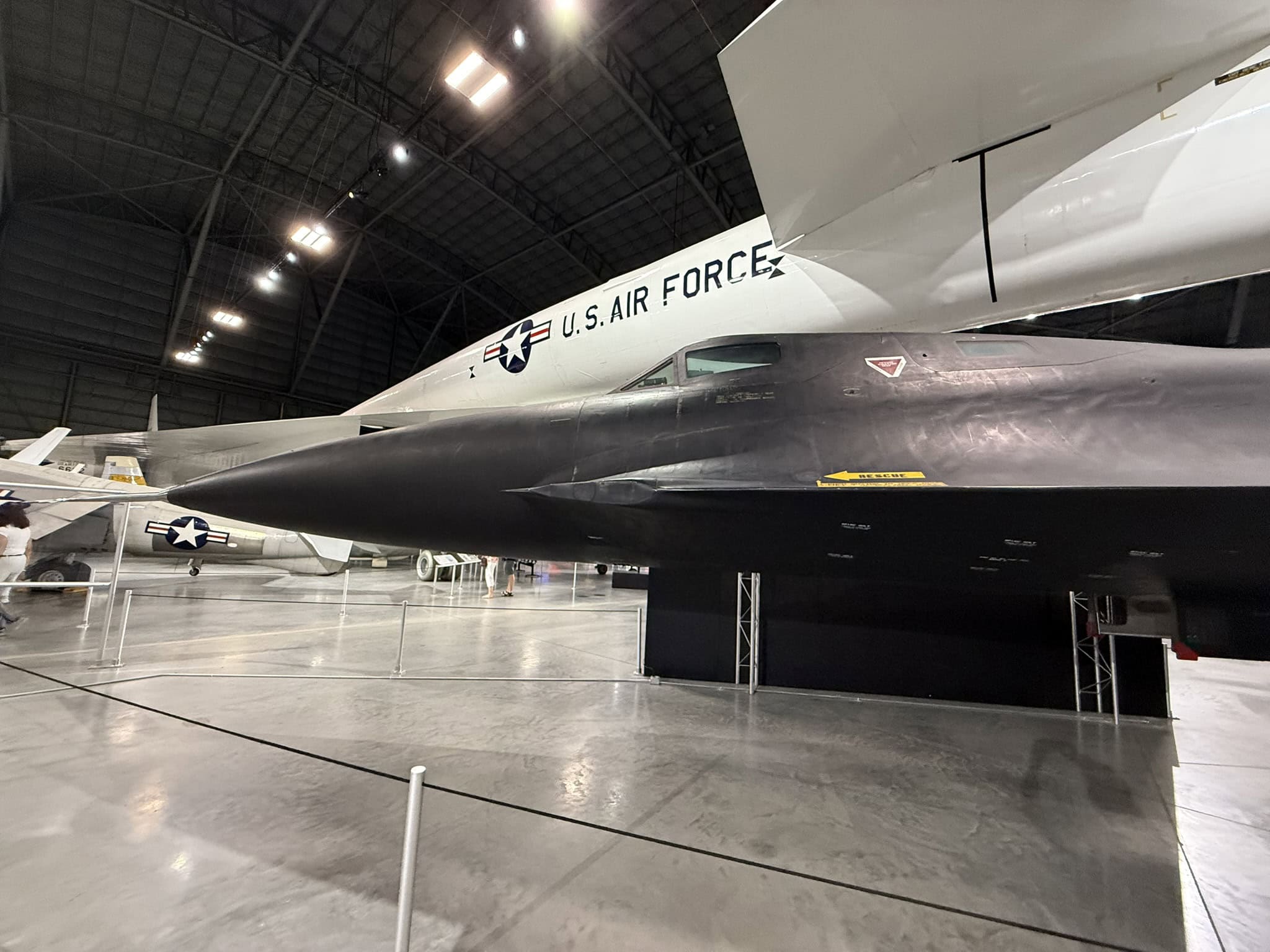
YF-12A. Image taken by Harry J. Kazianis at National Museum of the Air Force for 19FortyFive.com
YF-12A. Image taken by Harry J. Kazianis at National Museum of the Air Force for 19FortyFive.com
The second YF-12 was less fortunate.
This aircraft, serial number 60-6936, was on approach to Edwards on June 24, 1971, when a fuel line fractured from metal fatigue.
Flames quickly engulfed the aircraft, forcing the crew members to eject over Edwards AFB. The crewmen were safe, but the aircraft was completely destroyed.
Unlike the previous incident, this YF-12 was completely unsalvageable. Because of the secretive nature of the YF-12 program, many of the exact details of both crashes remain unknown.
The lone surviving YF-12 was transferred to NASA for testing before being donated to the National Museum of the United States Air Force, where it remains to this day.
An Accident-Prone Aircraft?
The incidents involving the YF-12s were far from isolated.
Other members of the Blackbird family, like the A-12 and the SR-71, experienced numerous crashes that took the lives of several crew members and engineers.
One of the first crashes involved an A-12, which occurred in May 1963 when ice formed on the pitot-static system, which provides airspeed and Mach readings to the pilot.
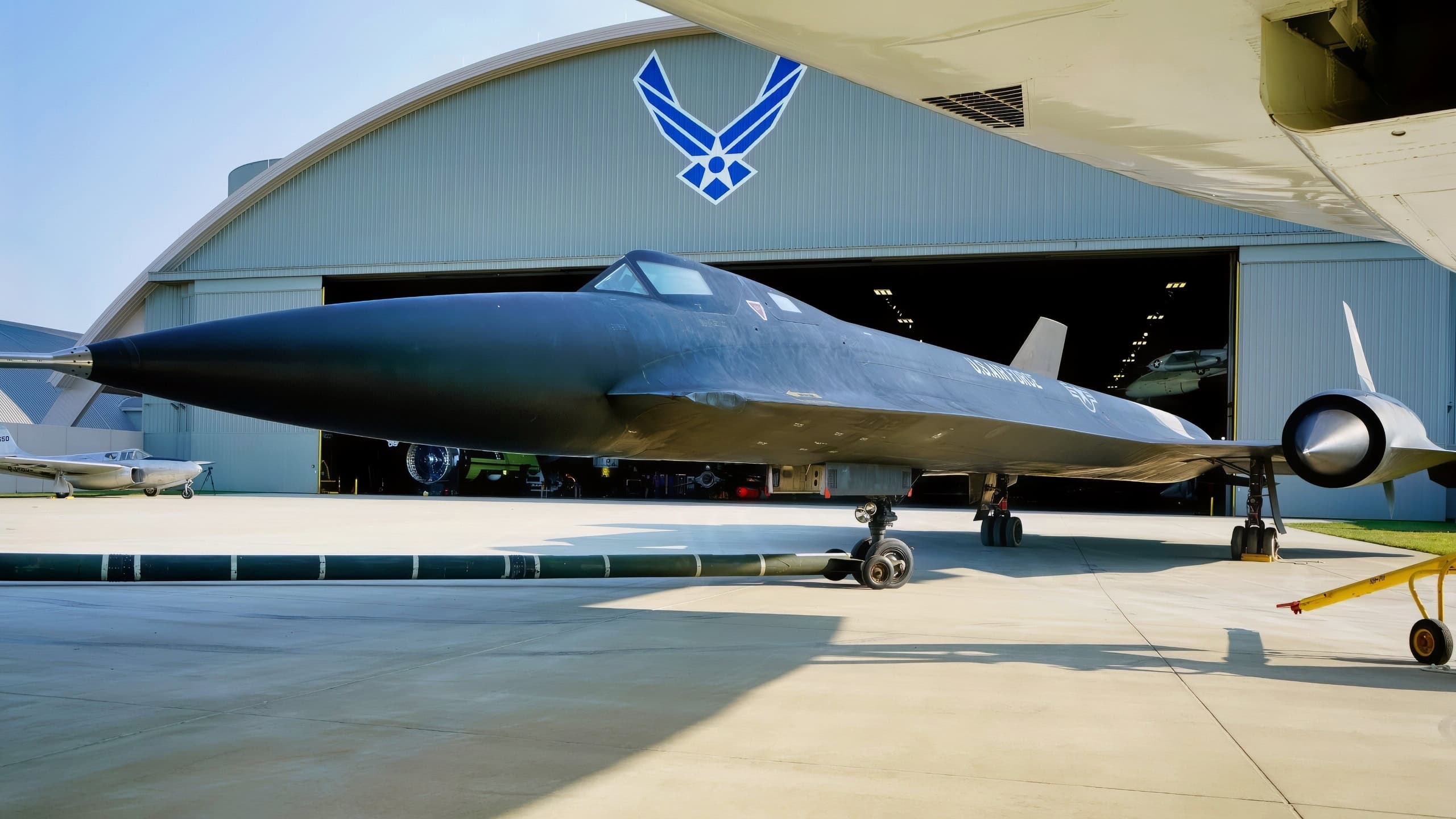
The YF-12 was developed in the 1960s as a high-altitude, Mach 3 interceptor to defend against supersonic bombers. Based on the A-12 reconnaissance aircraft, the YF-12A became the forerunner of the highly-sophisticated SR-71 strategic reconnaissance aircraft. Image Credit: Creative Commons
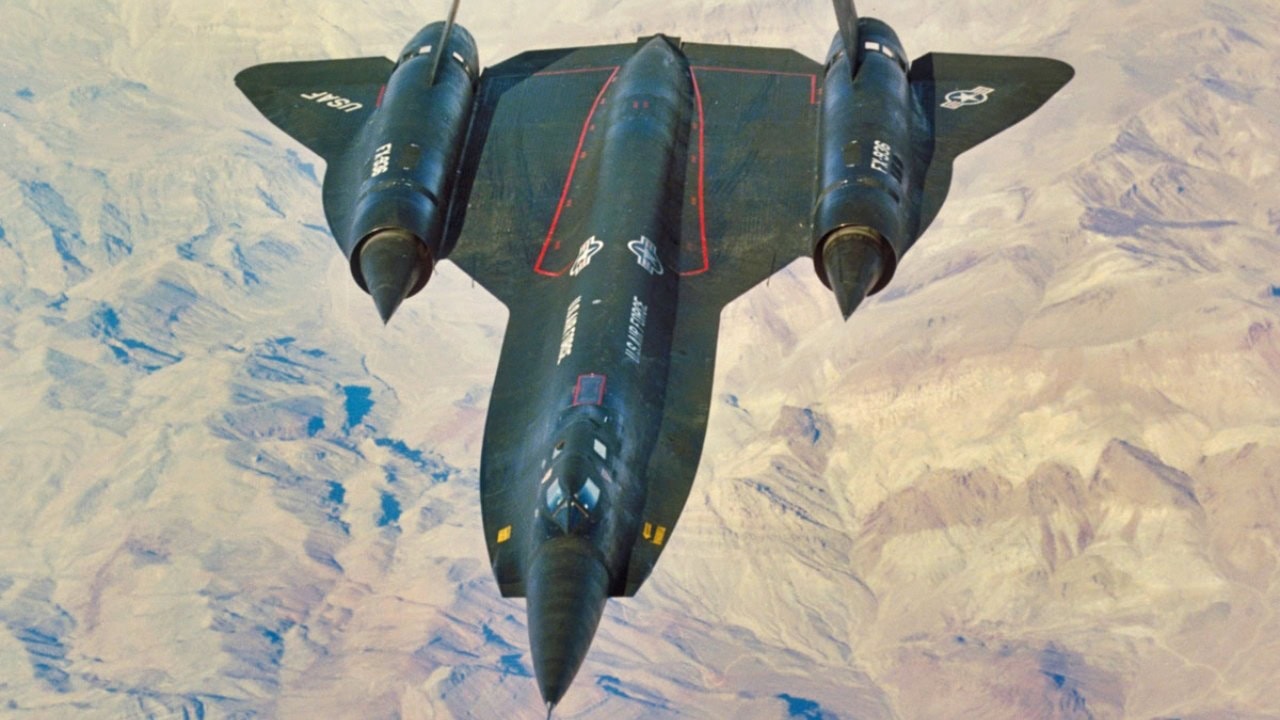
YF-12. Image Credit: Creative Commons.
This blockage caused incorrect instrument readings, misleading the pilot about the aircraft’s speed.
When the ice later cleared, the readings abruptly changed, which confused the pilot, who quickly lost control.
The aircraft entered a stall and then an unrecoverable spin, forcing the pilot to eject.
Another A‑12 loss in July 1964 was caused by a mechanical failure in the flight control system.
A servo valve controlling one of the elevons became stuck in a partially open position, producing uncontrollable aerodynamic forces during approach.
Although the pilot survived by ejecting, the aircraft was destroyed.
Over the course of its service life, six of the 15 A-12s were lost in accidents of varying severity. Some were lost to maintenance errors; others to system or hydraulic failures.
Overall, two pilots and an engineer were killed due to accidents.
SR-71 Blackbird Incidents
Despite being the latest iteration, the SR-71 Blackbird also suffered from numerous mechanical failures and accidents.
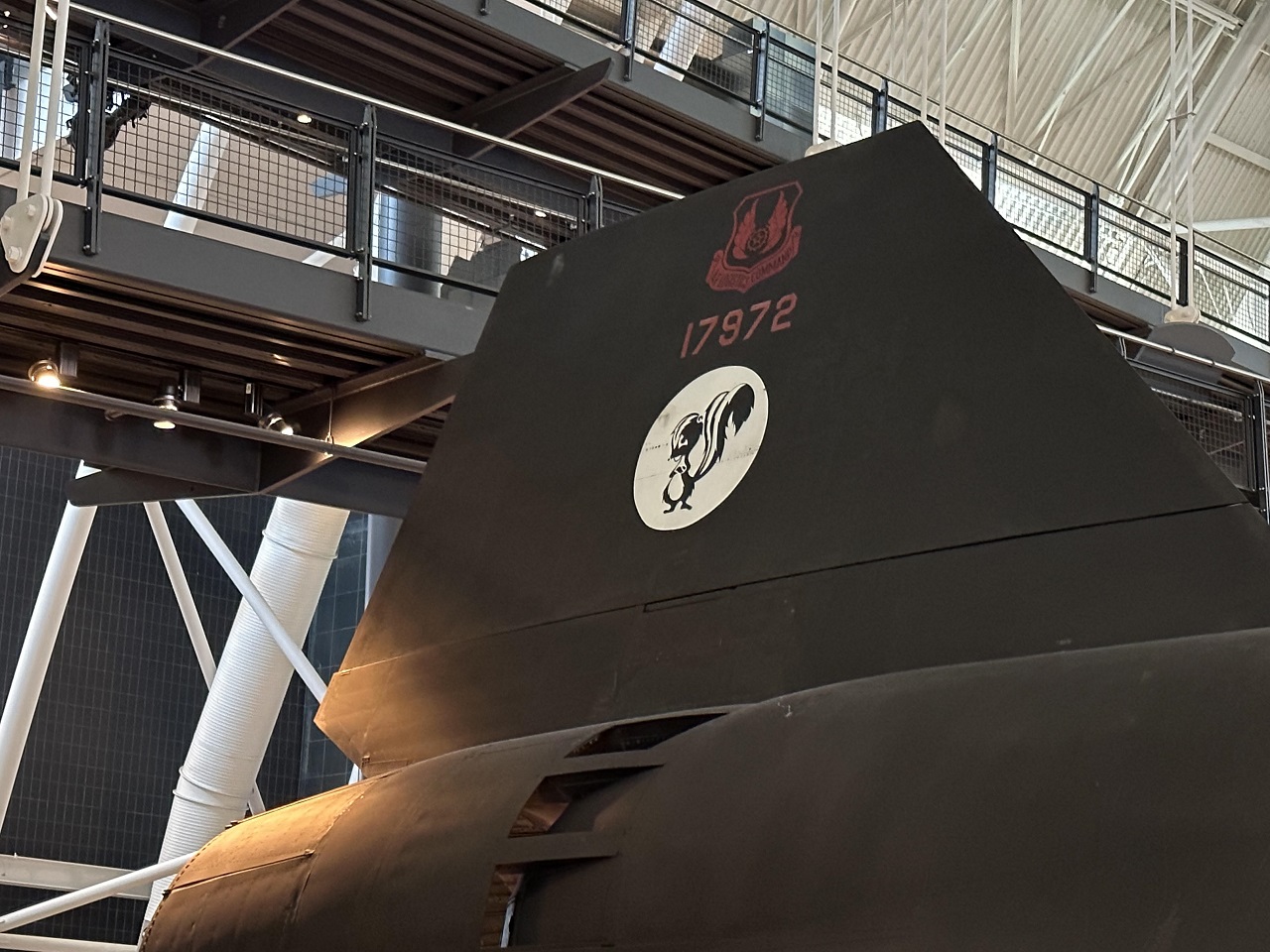
SR-71. SR-71 photo taken at the National Air and Space Museum. Taken by 19FortyFive on 10/1/2022.
One of the most dramatic crashes occurred on January 25, 1966, when an SR‑71 disintegrated in flight during a test mission.
The accident was triggered by an “inlet unstart,” a condition in which airflow into one of the engines becomes unstable. At Mach 3 speeds, such a disturbance caused violent yawing and rolling motions, subjecting the aircraft to immense stresses.
The airframe ultimately broke apart under these forces. The pilot, Bill Weaver, miraculously survived the ejection at Mach 3, while his co-pilot, Jim Zwayer, was unfortunately killed.
Investigations suggested that efforts to maximize performance had reduced stability margins, increasing vulnerability to such events.
Several other SR‑71 incidents were linked to engine failures or aerodynamic issues at high speed. Cases included flameouts caused by fuel starvation or turbulence, high-speed stalls when lift was insufficient, and total electrical failures resulting in the loss of engine power.
In one instance from 1968, a catastrophic engine failure caused major damage to hydraulic systems and forced an emergency descent.
Overall, out of 32 SR-71s built, 12 were lost to accidents — roughly a third of the fleet. Only one of those SR-71 losses was fatal: the 1966 breakup that killed reconnaissance systems officer Jim Zwayer. (The wider Blackbird family was costlier in lives, as noted above, A-12 accidents killed two pilots and an engineer.)
Pushing the Boundary is Always Risky
Do these accidents mean that the Blackbird family was poorly designed? Not necessarily.
Many of the crashes can be chalked up to technological constraints at the time, which made the aircraft’s onboard sensors prone to accidents.
Perhaps the biggest factor behind many of the accidents is that building an aircraft capable of operating at Mach 3 speeds for prolonged periods is a herculean engineering challenge.
At such speeds, the aircraft were subject to extreme thermal conditions and the forces associated with supersonic travel, which could sometimes cause airframe degradation.
Like with submarines, there is an inherent risk in pushing the boundaries of what is possible. Going deeper or faster comes with inherent risks.
The designers at Lockheed were well aware of the risks with the Blackbird family, but during the Cold War, those risks were deemed necessary.
Today, the Blackbird and its predecessors are remembered not as mechanically unreliable pieces of junk, but as pioneers who managed to do that which was once considered impossible
About the Author: Isaac Seitz
Isaac Seitz, a Defense Columnist, graduated from Patrick Henry College’s Strategic Intelligence and National Security program. He has also studied Russian at Middlebury Language Schools and has worked as an intelligence Analyst in the private sector.