
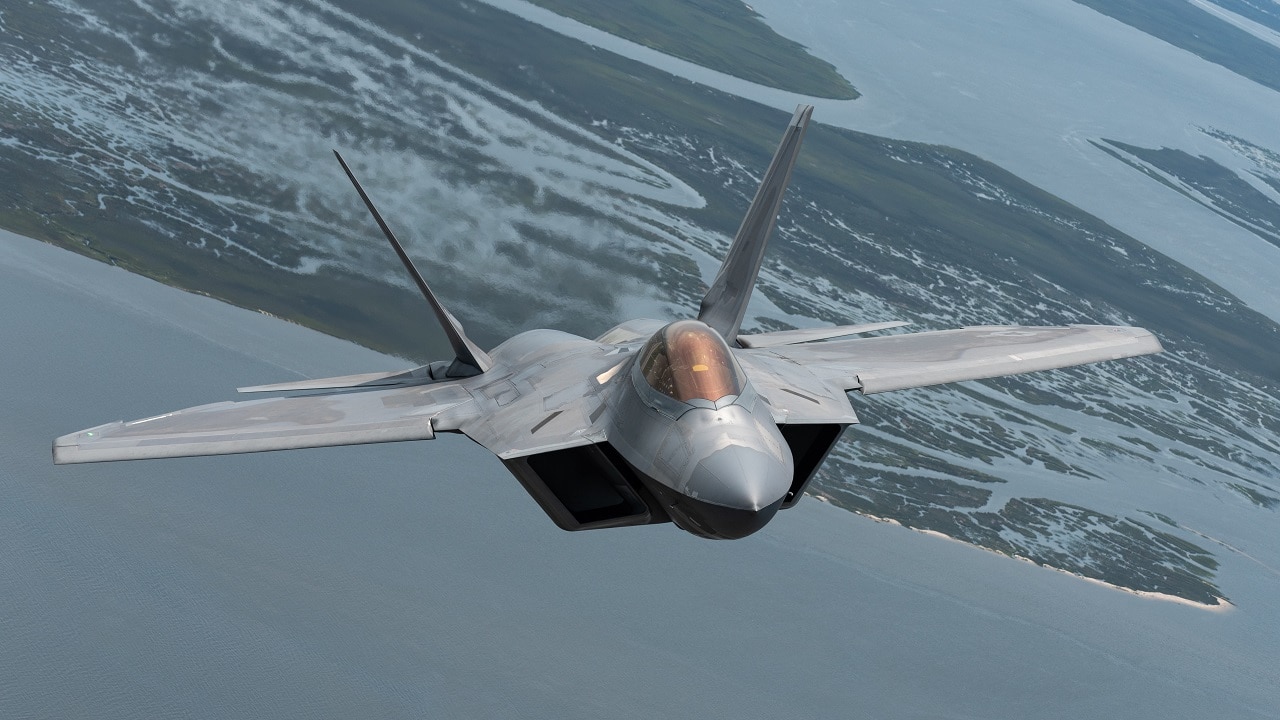
Quite bluntly, the United States of America is engaged in a New Cold War with the People’s Republic of China (PRC) along with China’s former “old” Cold War adversary cum present-day erstwhile ally Russia. Should that New Cold War—heaven forbid—turn into a “hot war,” America’s 5th Generation stealth fighters, namely the F-22 Raptor and the F-35 Lightning II—both of which are proud products of Lockheed Martin’s famed “Skunk Works” division—would be key players in such a conflict.
Even though then-US Secretary of Defense (SECDEF) Bob Gates made the incredibly short-sighted decision in 2009 to kill the Raptor after a measly 49 percent of the originally planned number of airframes had been built, many experts still consider it to be *THE* premiere air superiority fighter in the world, a lofty title that presumably won’t be relinquished until the 6th Generation Boeing F-47 NGAD (Next Generation Air Dominance) fighter comes online.
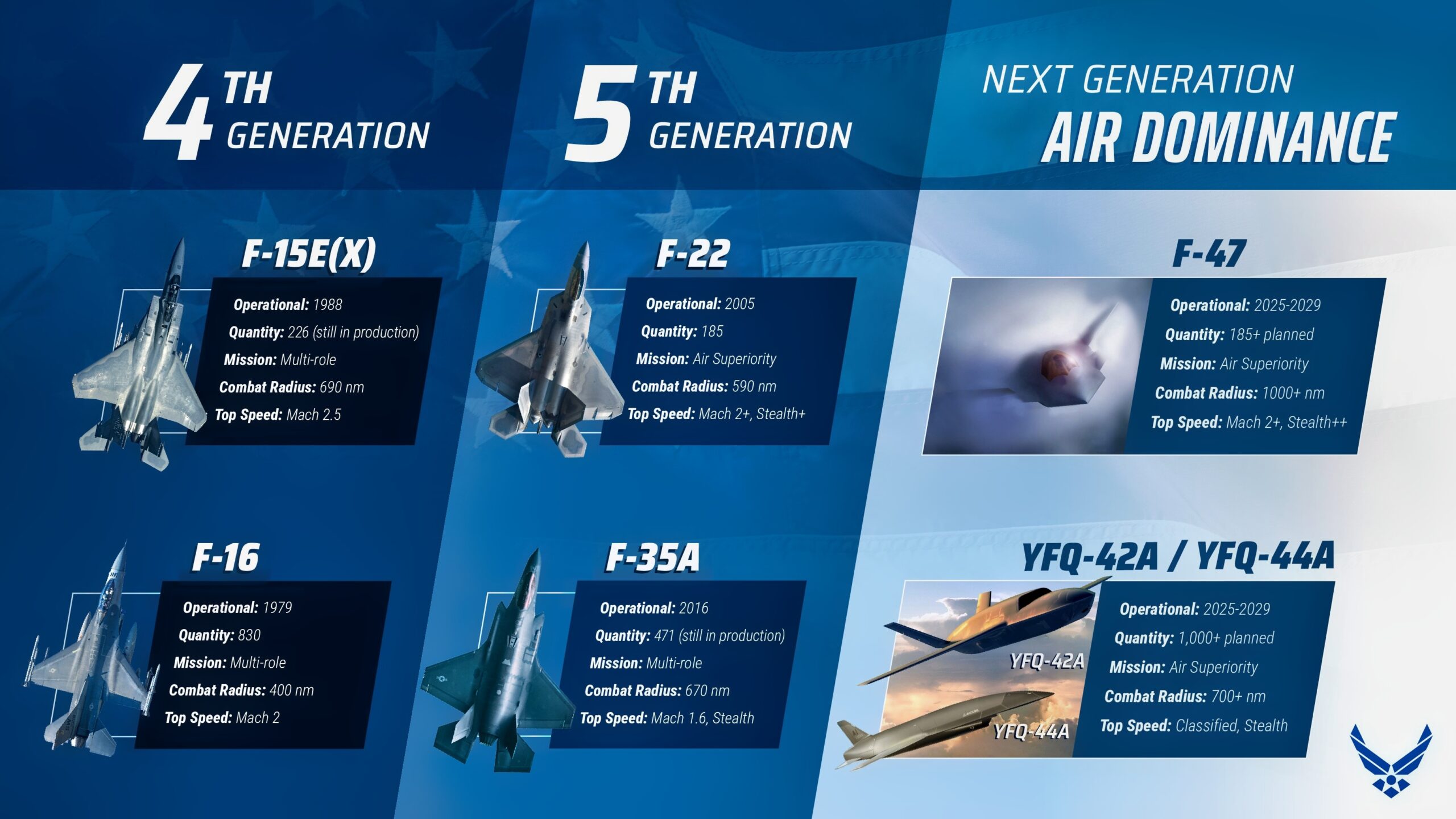
F-47 Infographic. Image Credit: U.S. Air Force
However, in addition to the aforementioned kibosh on production, there’s just one other itty-bitty problem with the F-22: it has an awfully short range, whilst many drones and ballistic missiles out there wielded by our adversaries do not.
Bottom Line Up Front (BLUF): The F-22 Ain’t No Long-Distance Dialer
The officially stated combat radius—defined as the distance the warbird can fly on a mission and return to base using internal fuel—of the Raptor is 410 miles; this statistical figure factors in high-altitude cruise, subsonic combat maneuvering, and return-to-base flight profile, guzzling that aforementioned internal fuel whilst carrying four AIM-120 AMRAAMs (Advanced Medium Range Air-to-Air Missiles; affectionately nicknamed the “Slammer”) air-to-air missiles and additional AIM-9 Sidewinder infrared (IR) missiles.
That combat radius can be more than doubled to 840 miles by using a fuel-efficient cruise mode at subsonic speeds.
The obvious tradeoff is the limitation foisted upon the F-22’s ability to perform high-speed penetration into contested airspace.
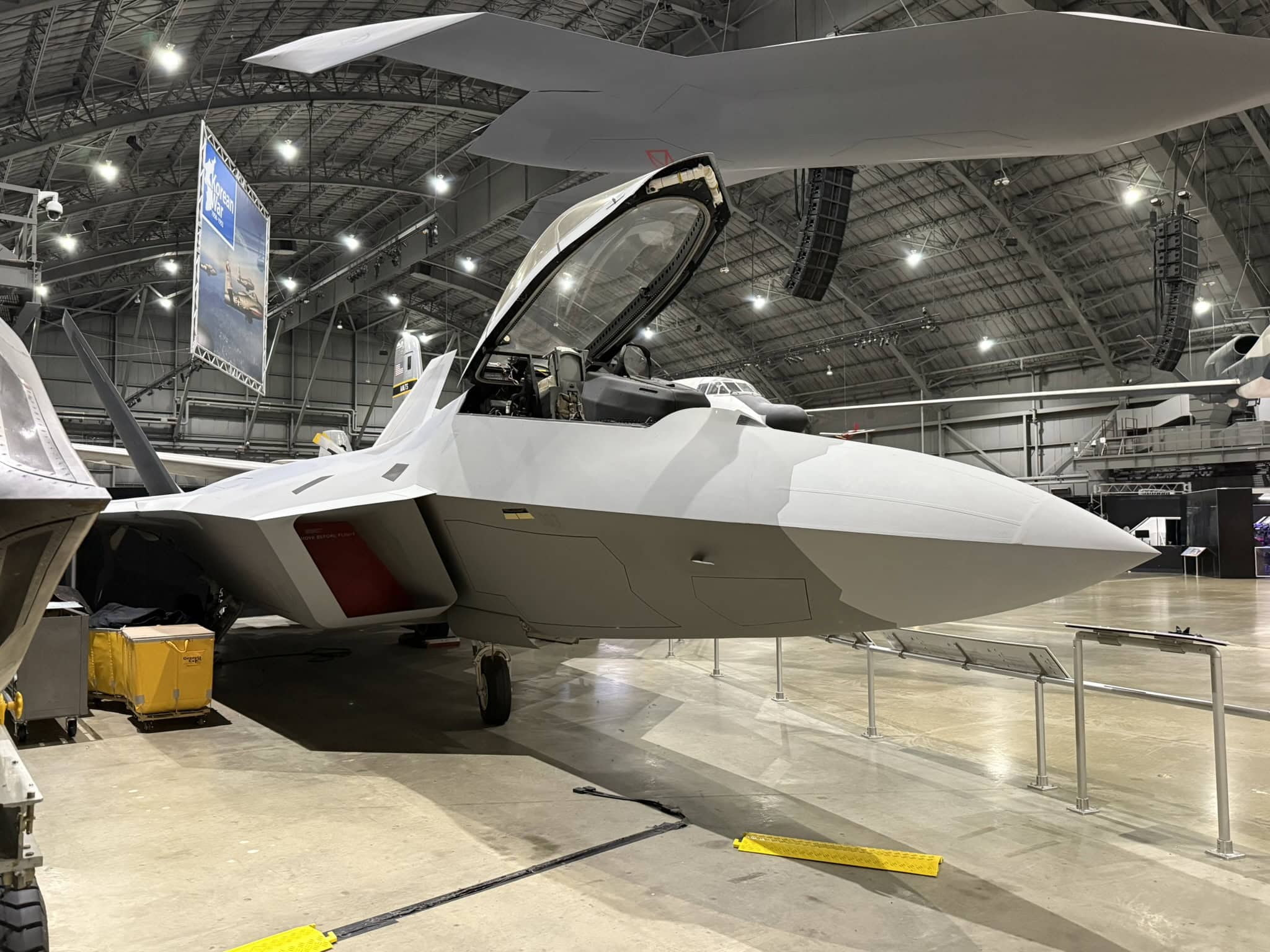
F-22 at the National Museum of the U.S. Air Force in July of 2025. Image Credit: Harry J. Kazianis.
As fighter pilots are fond of saying, “Speed is Life,” or as Maverick famously said in the original 1986 Top Gun film, “I feel the need, the need for speed!”
When it comes to ferry range, i.e., normal, non-combat operating conditions that don’t involve high-speed, high-G-force, high-stress turning & burning inherent to Basic Fighter Maneuvers (BFMs), wherein stealth mode is not employed, and two external fuel tanks are added, the number increases to 1,864 miles.
However, this obviously defeats the whole purpose and raison d’être of a 5th Generation jet: stealth.
So then, how does that compare with “near-peer” adversary missiles and drones?
Threat Vector #1: PRC Ballistic Missiles
—DF-41 (Dong Feng [East Wind]-41, CSS-20): This is the scariest of the bunch, with an operational range of up to 15,000 kilometers (9,320.5 miles), making it Beijing’s longest-range missile. It is a road-mobile/rail-mobile/silo-based intercontinental ballistic missile (ICBM), and is reportedly capable of loading up to ten multiple independently targeted reentry vehicle (MIRV) warheads. Fueled by a three-stage, solid propellant, the DF-41 has a launch weight of 80,000 kilograms (88.18 tons) and a payload of 2,500 kilograms (2,75 tons).
–DF-5 (Dong Feng-5 / CSS-4): The first ICBM that China developed (in service since 1981), a silo-based, two-stage liquid propellant missile with a range of 8,077.8 miles.
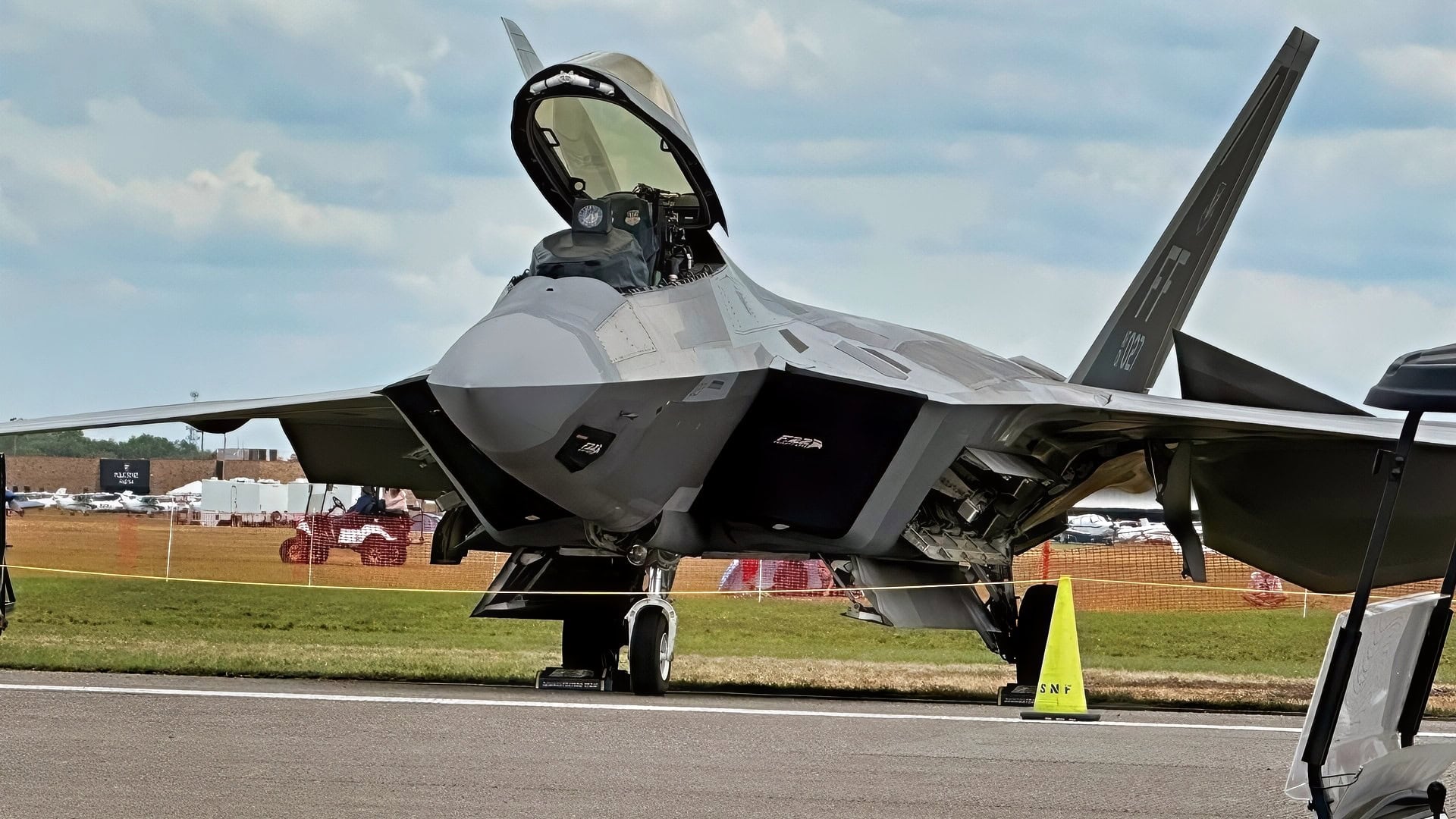
F-22 Raptor Lakeland Florida Airshow. Taken by Harry J. Kazianis on 4/19/2026.
–DF-31 (Dong Feng [East Wind]-31 / CSS-10): A three-stage, solid propellant-fueled, road-mobile ICBM with an estimated range of 74,349.5 – 7,270.0 miles
–DF-4 (Dong Feng-4, CSS-3): A two-stage, transportable, liquid-fueled intermediate to intercontinental ballistic missile (IRBM/ICBM) that entered service in 1980. Although expected to be completely decommissioned by 2005, one brigade remains operational near Lingbao, Henan province. Range is 2,796.1 – 3,417.5 miles.
Threat Vector #2: Russian Drones
The seemingly interminable Russia-Ukraine War has paradoxically become both a bloody, mud-bogged World War I-style trench war as well as a high-tech drone war. Russia’s longest-range attack drones are as follows:
-Sukhoi S-70 Okhotnik-B (Hunter): Built by the same aerospace firm made famous by the Su-27 (NATO reporting name “Flanker”) and Su-57 “Felon” fighters as well as the Su-25 “Frogfoot” ground-attack jet, this is a stealth-capable combat drone with a maximum range of 3,728 miles.
–Kronstadt Grom (Thunder): A stealth combat drone with a combat radius of 434.9 miles
–Ural Civil Aviation Plant (UZGA) Altius-U: A medium altitude long endurance (MALE) drone with an endurance of 48 hours and can carry a combat payload of 2 tons, including a family of Grom 9-A-7759 gliding bombs which can engage targets at a standoff attack distance of 74.5 miles.
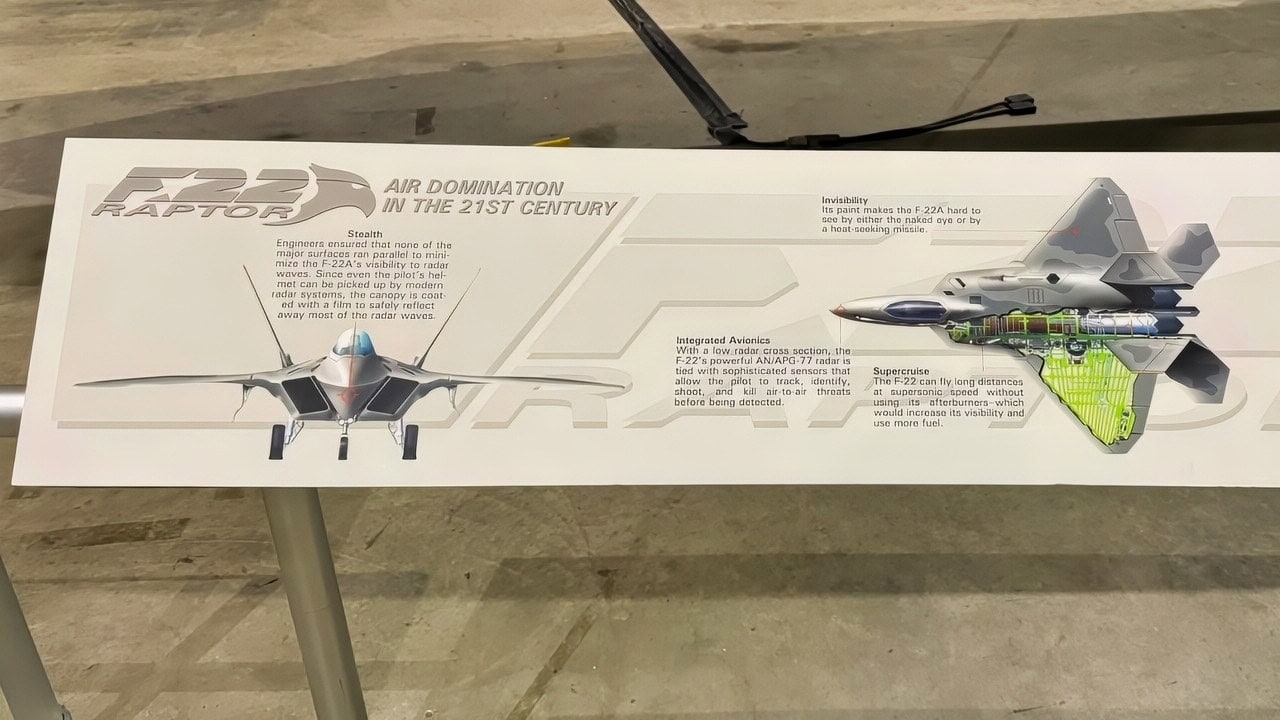
F-22 Raptor Diagram from National Museum of the U.S. Air Force. Image Credit: Harry J. Kazianis.
What It All Means
Does this mean that 5th Generation fighters like the F-22 have already been rendered obsolescent? Hardly; the Raptor’s combat efficacy has been demonstrated in the anti-ISIS campaigns of 2014-2017 as well as the 2023 shootdown of that infamous Chinese spy balloon.
Meanwhile, conflicts such as 2025’s Operation Sindoor show that 4th Generation and 4.5 Generation fighters are also still relevant.
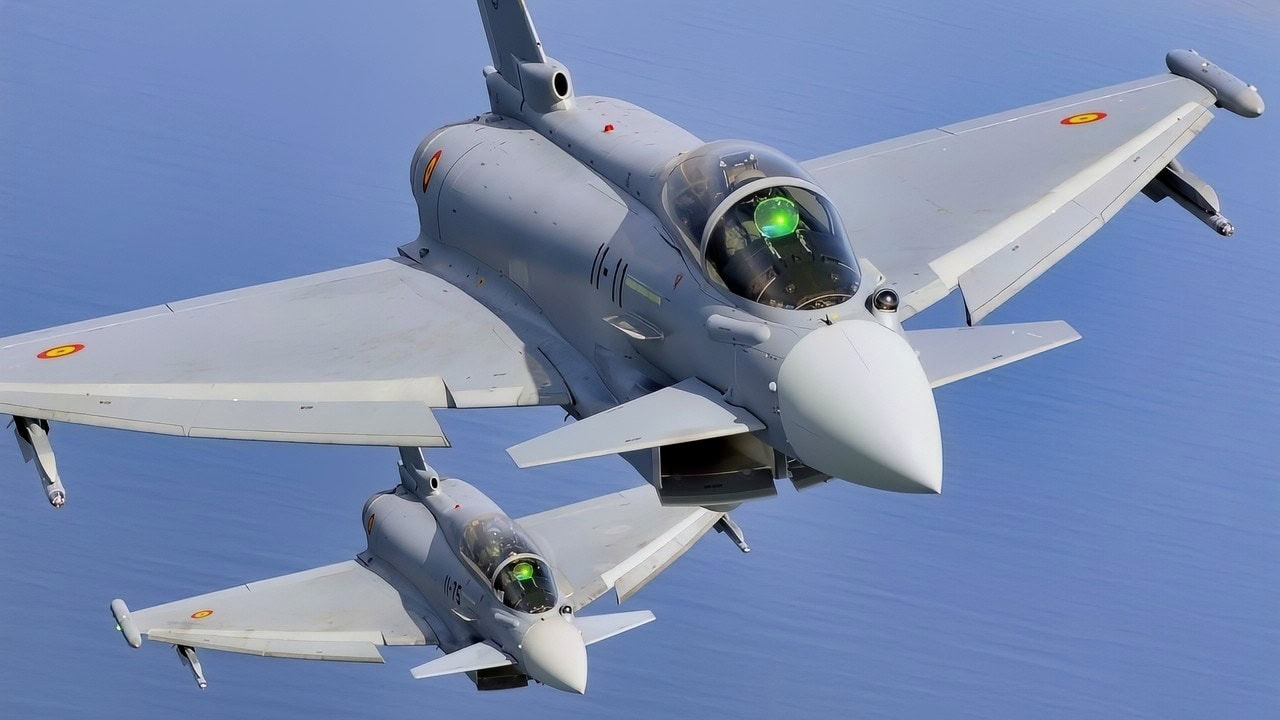
Eurofighter Typhoon Fighter Pair. Image Credit: Creative Commons.
But it does underscore the need to bolster airbase force protection measures against those drones and missiles that are within striking distance, not just for the sake of the F-22s themselves but also the aerial refueling tankers that can and do extend the Raptors’ range.
About the Author: Christian D. Orr
Christian D. Orr is a Senior Defense Editor. He is a former Air Force Security Forces officer, Federal law enforcement officer, and private military contractor (with assignments worked in Iraq, the United Arab Emirates, Kosovo, Japan, Germany, and the Pentagon). Chris holds a B.A. in International Relations from the University of Southern California (USC) and an M.A. in Intelligence Studies (with a concentration in Terrorism Studies) from American Military University (AMU). He is also the author of the book “Five Decades of a Fabulous Firearm: Celebrating the 50th Anniversary of the Beretta 92 Pistol Series,” the second edition of which was recently published.