
One of the most bizarre elements of US foreign policy under the current administration is the effort to re-imagine Canada as an opponent or even enemy of the US. American President Donald Trump has provoked a substantial trade war with Canada and has also questioned Canadian sovereignty with his comments about Canada becoming the ‘fifty-first state.’
Trump’s logic seems to be that he can bully Canada into submission. Secretary of the Treasury Scott Bessent routinely belittles Canada and argues that it cannot withstand US power.
Trump and other MAGA (Make America Great Again) figures have referred to Canada’s prime minister as ‘governor’ (of a US state).
US-Canadian relations today are probably the worst they have been in a century, worse than any time since Canada’s independence from Britain.
This is almost certainly a terrible fight to pick, and it is not even clear what the point is.
Who Picks on Canada?
Perhaps the most outlandish part of this whole kerfuffle is why it is happening at all.
Why is Trump doing this?
What is his goal?
Does Trump genuinely believe that Canada will join the United States?
This would be fantastical.
The US has not acquired a territory as large as Canada since the Louisiana Purchase, and Canada is densely populated.
With a population over 40 million – almost all of whom oppose annexation – the US could only absorb Canada by force.
Assuming the United States does not intend to occupy or invade Canada, none of this has apparent strategic utility.
Having a good relationship with a neighboring country is obviously strategically valuable.
Just look at India and Pakistan today, or Germany and France a century ago.
Squandering that good relationship is a net negative – unless the country ceases to exist via absorption.
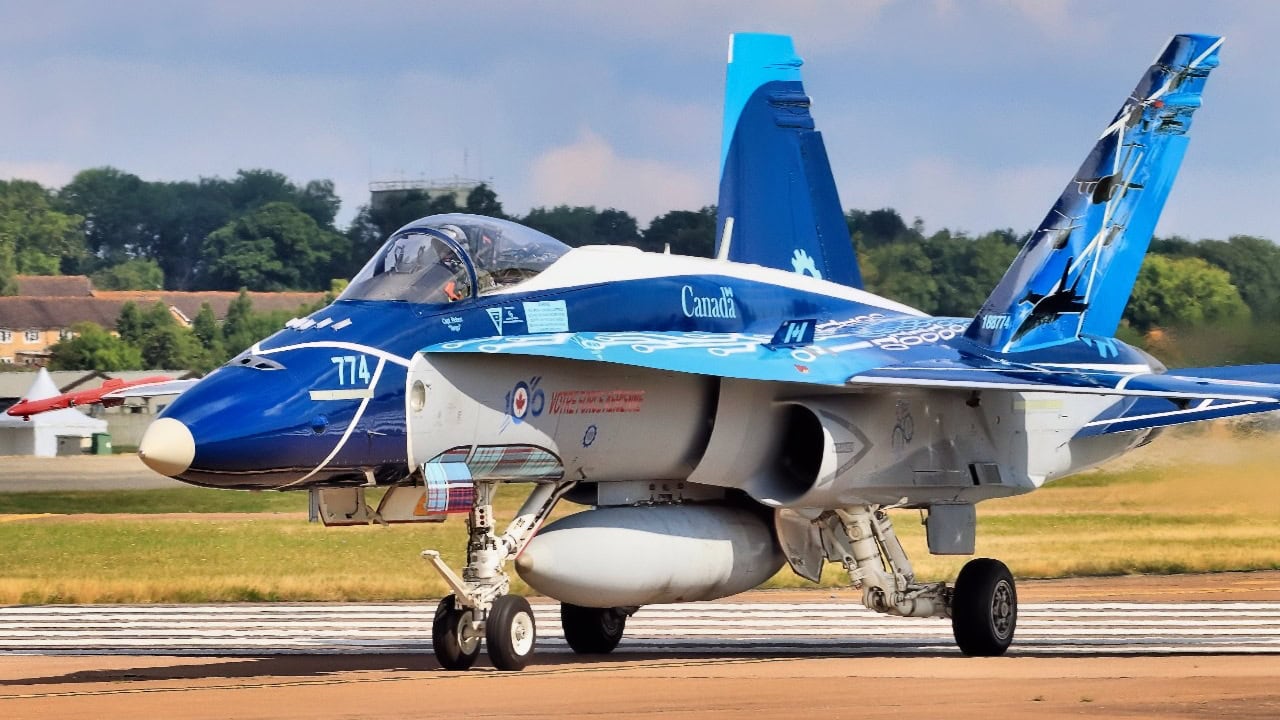
CF-18 Canada Air Force.
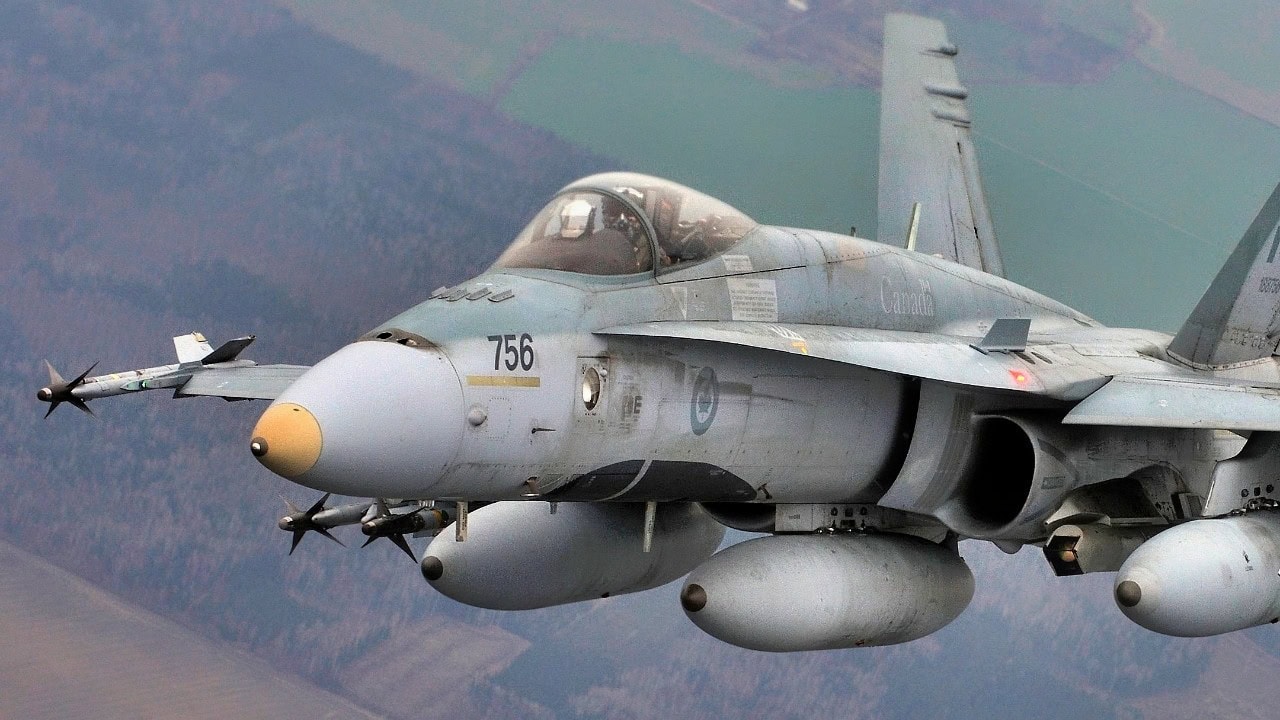
A CF-18 Hornet from the Canadian Air Task Force Lithuania flies over Lithuania on November 20, 2014 for the NATO Baltic Air Policing Block 36 during Operation REASSURANCE.
But Trump could not do without a major ground conflict in North America, which Americans would hugely oppose.
So the upshot of all this is to alienate a neighbor sharing a long land border for no obvious reason.
Trump cannot take Canada at an acceptable cost, so why poison the relationship?
Because there is no discernible strategic logic, we are left with psychological explanations – that Trump enjoys ‘punching down’ – beating up on weak US allies – as a dominance display which thrills his voters.
Perhaps Trump and his coalition do not grasp that this behavior will have genuine negative consequences for the US.
Uncooperative Canada?
One of the most basic behaviors in world politics is countries balancing against threatening others.
Although the US is significantly more powerful than Canada by traditional metrics, Canada has never balanced or hedged against the US in the last century.
It did not perceive US power as a threat. Neither has had war plans against each other since the interwar period.
Instead, Canada has cooperated with the US in its various conflicts since World War II, and even today, Canada and the US cooperate deeply on radar detection and missile defense in North America.
Perhaps most poignantly, Canada helped the US substantially on September 11, 2001.
MAGA disdain for Canada and that tremendous act of friendship is rather shocking given the twenty-fifth anniversary of that tragedy.
More concretely, tight US-Canada alignment helps the US enormously. America need not guard its long northern border.
It need not fear cross-border infiltration or destabilization efforts. Gangs, cartels, smuggling groups, and so on scarcely operate along the northern border as they do along the southern.
The US does not need to deploy military units at home to defend itself against Canada.
Instead, it can deploy them abroad. Security in North America gives the US the homeland security buffer it needs to project power abroad.
An uncooperative Canada – one openly hedging the US and searching for alternative partners – would squander this geopolitical good fortune.
The US would need to deploy military and intelligence assets locally.
It would need to develop a Western Hemispheric regional strategy to address newfound local hostility.
Trump’s threats against Mexico would encourage Canada and Mexico to work together to distance themselves from the US.
It is hard to imagine anything good coming from alienating Canada like this, and the US public agrees. Trump should stop.
Author: Dr. Robert Kelly, Pusan National University
Dr. Robert E. Kelly is a professor of international relations in the Department of Political Science and Diplomacy at Pusan National University in South Korea. His research interests focus on Security in Northeast Asia, U.S. foreign policy, and international financial institutions. He has written for outlets including Foreign Affairs, the European Journal of International Relations, and The Economist, and has appeared on television news services such as the BBC and CCTV. His personal website/blog is here; his Twitter page is here.