
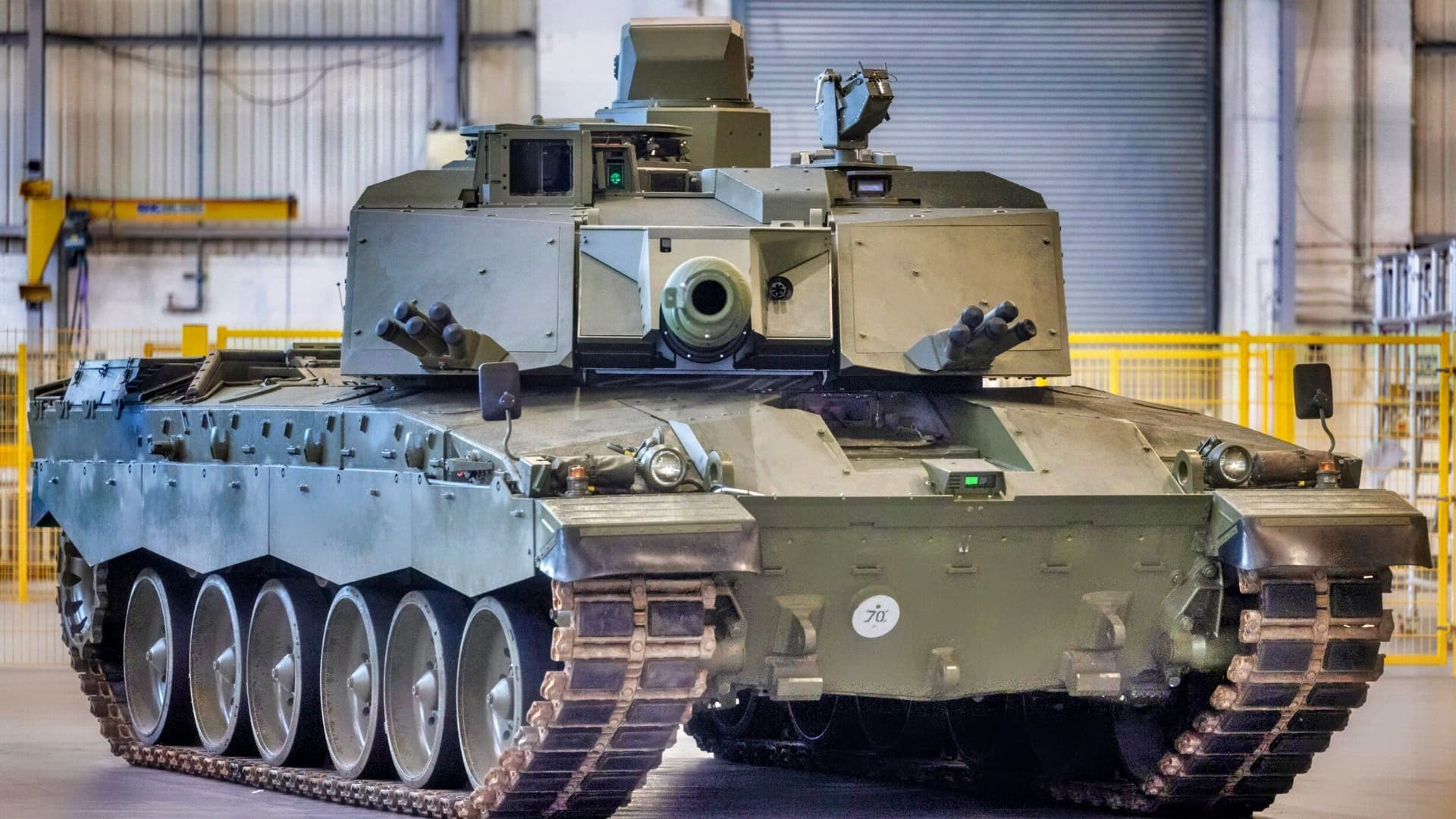
The Challenger 3 is the UK’s next-generation main battle tank (MBT). While looking strong on paper, the program has faced real challenges over the years. The program is intended to completely overhaul the current Challenger 2, which has not received any major upgrades since 1998.
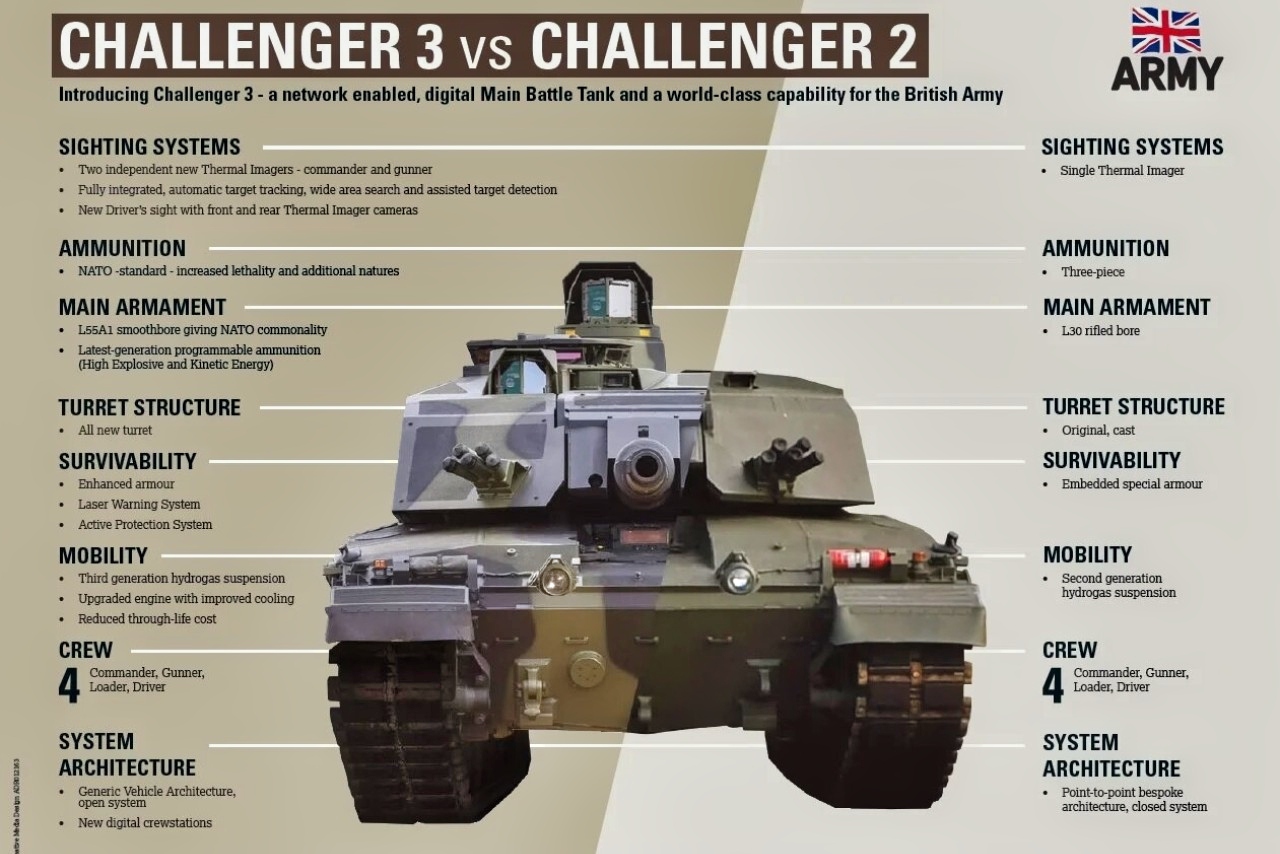
The tank retains the same basic hull and layout as the Challenger 2, but with an entirely new turret, improved suspension, and drastically improved firepower and situational awareness.
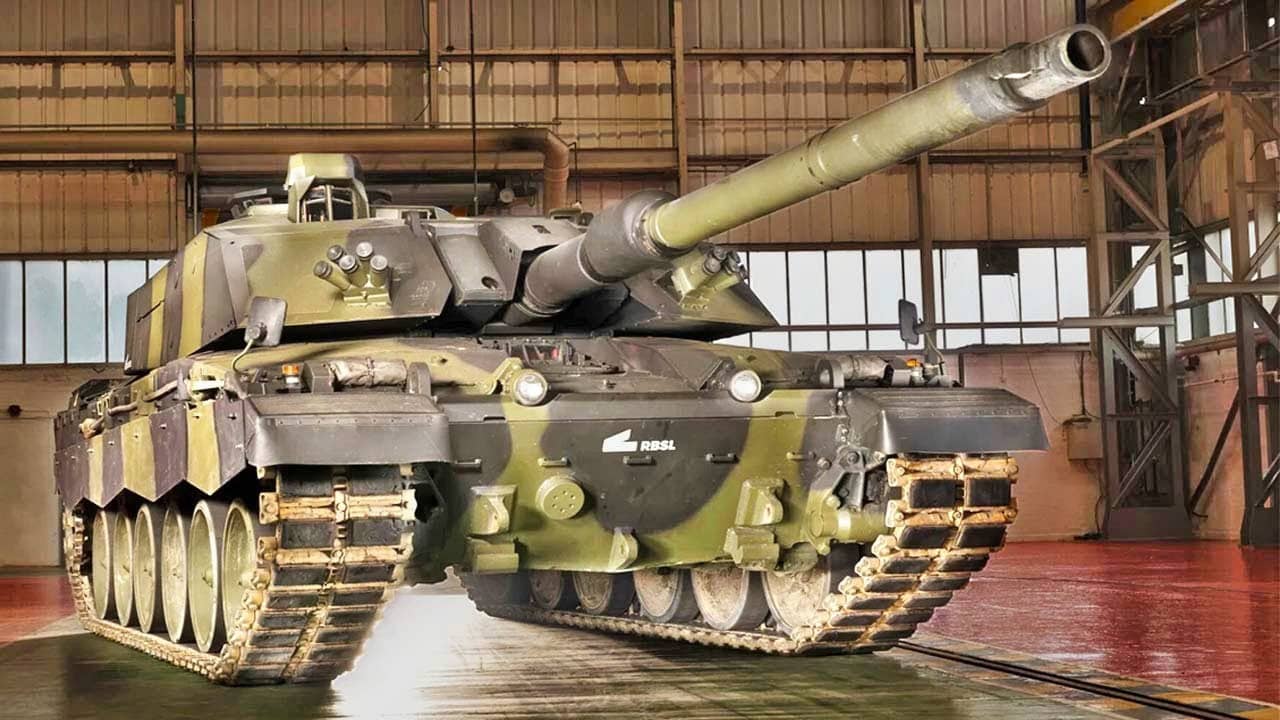
Challenger 3 Tank. Image Credit: Creative Commons.
Challenger 3 Tank. Image Credit: Creative Commons.
With these upgrades, the Challenger line is expected to remain in service until the 2040s.
The tank was originally slated to reach initial operational capability (IOC) by 2027; however, due to newly encountered technical problems, the program may be delayed.
Delays on the Horizon?
According to The Telegraph, the Challenger 3 program has encountered some technical difficulties, particularly with the turret’s new gearbox.
The gearbox, which is responsible for rotating the tank’s turret, is apparently not strong enough.
Rheinmetall BAE Systems Land (RBSL), the consortium responsible for the project, is currently scrambling to fix the issue and has reportedly told some subcontractors to pause their work entirely.
The British Ministry of Defense (MoD) remains confident the issue will be resolved quickly, at no extra cost to the taxpayer, and that the tank is still set to be delivered to the British Army next year.
However, some insiders informed The Telegraph that the technical difficulties could delay the project by as much as two years.
This is not the first time that the program has encountered issues. Last year, UK Defense Procurement Minister Maria Eagle stated that the Challenger 3 had been impacted by “some delays” in the supply chain.
She did not specify what those supply issues were or whether the delays would affect the MoD’s goal of reaching initial operational capacity.
“Additional resources have been directed towards resolving these issues, and the next phase of trials will start in Quarter 2 2025. Progress will be monitored carefully, and any impact on the delivery of initial operating capability will be continually assessed,” Eagle said.
To reach IOC, the MoD needs to receive a full squadron of Challenger 3s, which is somewhere between 12 and 16 tanks.
Assessing the Cost of the Challenger 3
Over the course of the program, the UK MoD has allocated more funds to the Challenger 3 program.
In 2021, the project was allocated an initial budget of “around £1.3 billion” ($1.7 billion).
In 2025, the government disclosed that the program’s Approved Budgetary Level had risen to £1.9 billion ($2.4 billion).
If the program spends its entire budget, the Challenger 3 could cost up to £12.8 million ($17 million) per tank.
For comparison, the U.S. Army pays about $10 to $15 million per tank for the M1 Abrams.
As far as new tank procurements go, the Challenger 3 isn’t doing too badly yet, but the incremental budget increases are never a good sign.
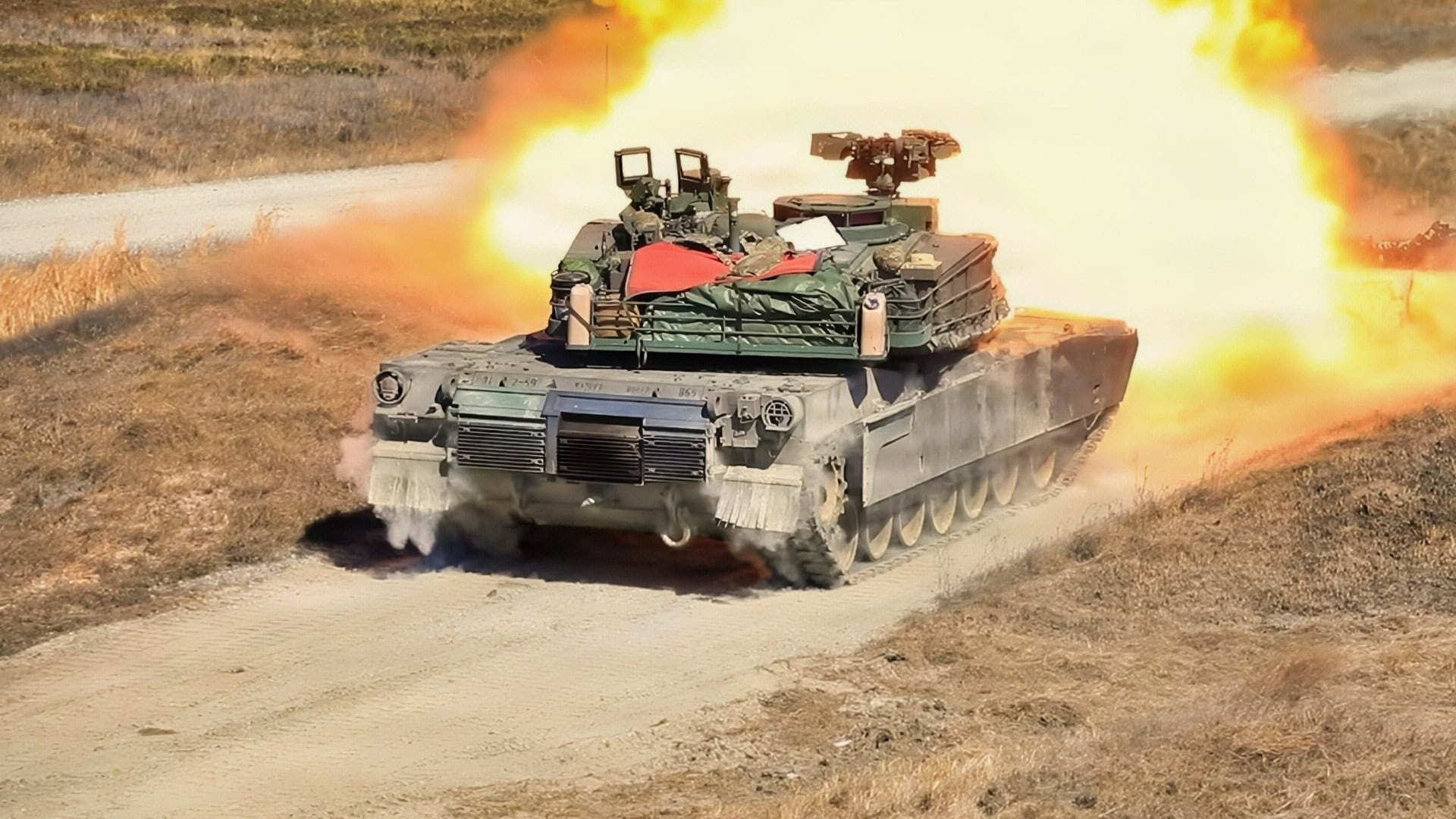
An M1 Abrams tank, operated by U.S. Soldiers assigned to the 2nd Battalion, 69th Armor Regiment, 2nd Armored Brigade Combat Team, 3rd Infantry Division, conduct a Table V live-fire exercise during Spartan Focus at Fort Stewart, Georgia, Feb. 1, 2026. The Marne Division is innovating, experimenting and investing in emerging technologies to dominate the battlefield. (U.S. Army photo by Staff Sgt. Anthony Herrera)
The biggest drawback of the Challenger 3 program is less the tank’s design or the technical delays (yet). Those issues can get ironed out with time.
Rather, the biggest drawback is the small number of tanks the UK plans to field.
Under the current plan, the UK MoD will convert 149 tanks to the new Challenger 3 standard.
For a tank marketed as the UK’s prime deterrent against Putin, this low number of tanks reveals a miscalculation on the part of the MoD if they think it’s anywhere near enough for a full-scale confrontation (more likely, it’s because the UK lacks the funds for more).
For comparison, in Ukraine’s ill-fated Kursk incursion, both sides lost a combined total of 121 tanks, not counting the total number of armor used, and this was just one sector of the vast front line in Ukraine.
One could argue that the UK plans to fight all of its future wars with allied support, which is fair, but should London find itself in a conflict on its own, the Brits are in for a shock.
What Does the Challenger 3 Bring to the Table?
On its own, the Challenger 3 is not a bad tank.
In fact, on paper, it seems like quite a good tank.
Fitted with a brand-new turret, featuring a new generation of advanced composite armor and modular external armor and explosive reactive armor for protection against all kinds of threats.
The tank also features the Rheinmetall 120mm L55A1 smoothbore gun, replacing the older rifled L30A1 gun.
A major goal of the program is to enhance the crew’s situational awareness through new state-of-the-art sensors and communication systems, most of which have not been made public yet.
For mobility, the Challenger 3 receives a Perkins CV12-9A V12 diesel engine and a new hydrogas suspension system.
Overall, the tank’s weight has been reduced to 66 tonnes compared to the 75 tonnes of a current Challenger 2 with armor packages.
The tank is expected to have a better power-to-weight ratio compared to its predecessor. These changes are a welcome improvement on the Challenger 3.
They retain the original platform’s strengths while increasing its firepower, survivability, mobility, and situational awareness.
While some may argue the program isn’t enough to keep the tank relevant in the future, the Challenger 3 arguably has everything it needs to remain a potent force on the battlefield.
About the Author: Isaac Seitz
Isaac Seitz, a Defense Columnist, graduated from Patrick Henry College’s Strategic Intelligence and National Security program. He has also studied Russian at Middlebury Language Schools and has worked as an intelligence Analyst in the private sector.