
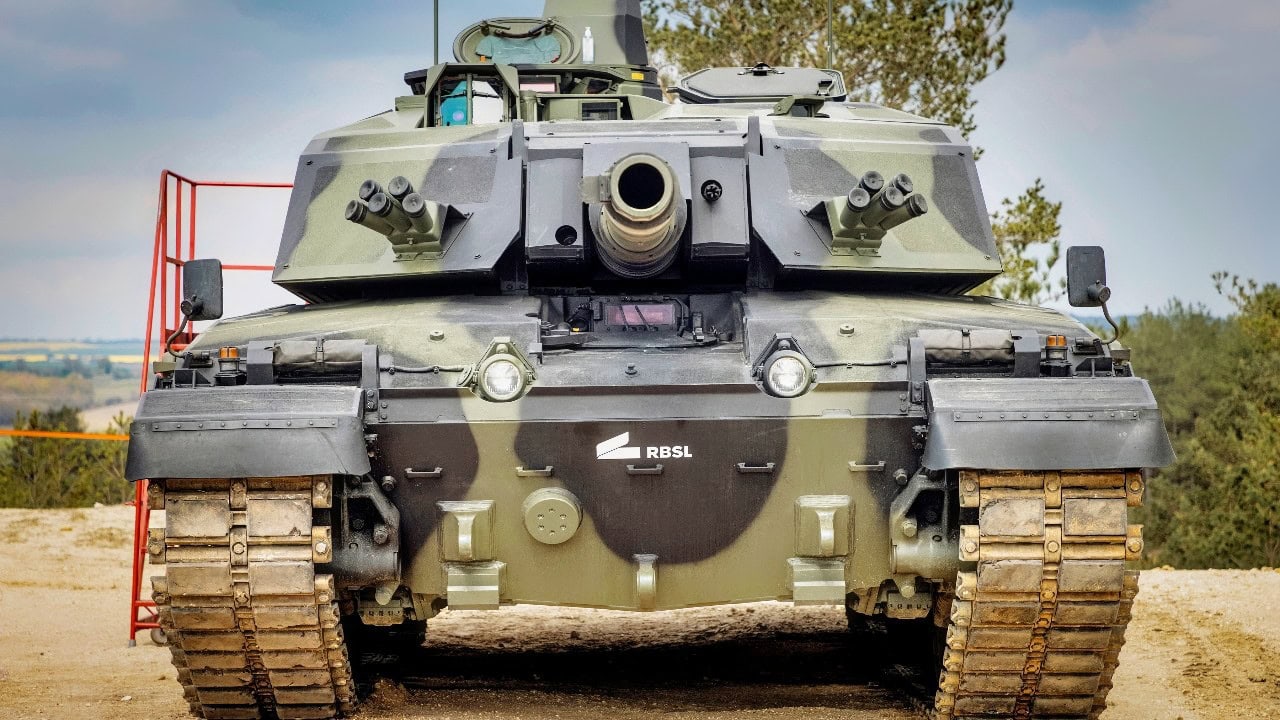
Britain Is Spending £800 Million to Convert 148 Old Challenger 2s Into Challenger 3s — Europe May Need 10 Times That Many Tanks if the U.S. Leaves
The British Army’s next-generation main battle tank cleared one of its most important development milestones in recent months.
In January 2026, the Challenger 3 completed its first crewed live-fire trials in Britain, marking the first time a newly developed British main battle tank has fired its main gun on home soil in more than three decades.
That milestone indicates that the tank is making good progress, but questions about the program have arguably become more urgent since U.S. President Donald Trump indicated in recent days that he is seriously considering withdrawing the United States from its NATO commitments.
Challenger 3 Tank. Image Credit: Creative Commons.
As the UK moves toward building a future fleet of just 148 Challenger 3 tanks, the strategic context around which that decision was made is changing fast.
Not only is Trump considering withdrawing from NATO – a response to Europe’s general lack of interest in supporting U.S.-Israeli operations against Iran – but members of his cabinet are talking about the possibility of withdrawing all U.S. troops and assets from the continent.
As debates unfold about what a Europe-led alliance might look like, the size of Britain’s armored force may now become an issue.
In the event of a U.S. withdrawal, would Britain have enough tanks?
Challenger 3 Tank: A Major Milestone, but the Program Is Still In Progress
The live-fire trials at the beginning of the year are a clear and positive sign that the Challenger 3 program is moving ahead, but they are part of a long development pipeline that is still ongoing.
The firing comes after earlier remotely operated testing and will now be followed by further crewed trials and reliability testing throughout this year.
The program itself is relatively compact, too. Under an £800 million contract, Britain plans to convert 148 Challenger 2 tanks into the Challenger 3 standard, with production handled by Rheinmetall BAE Systems Land (RBSL).
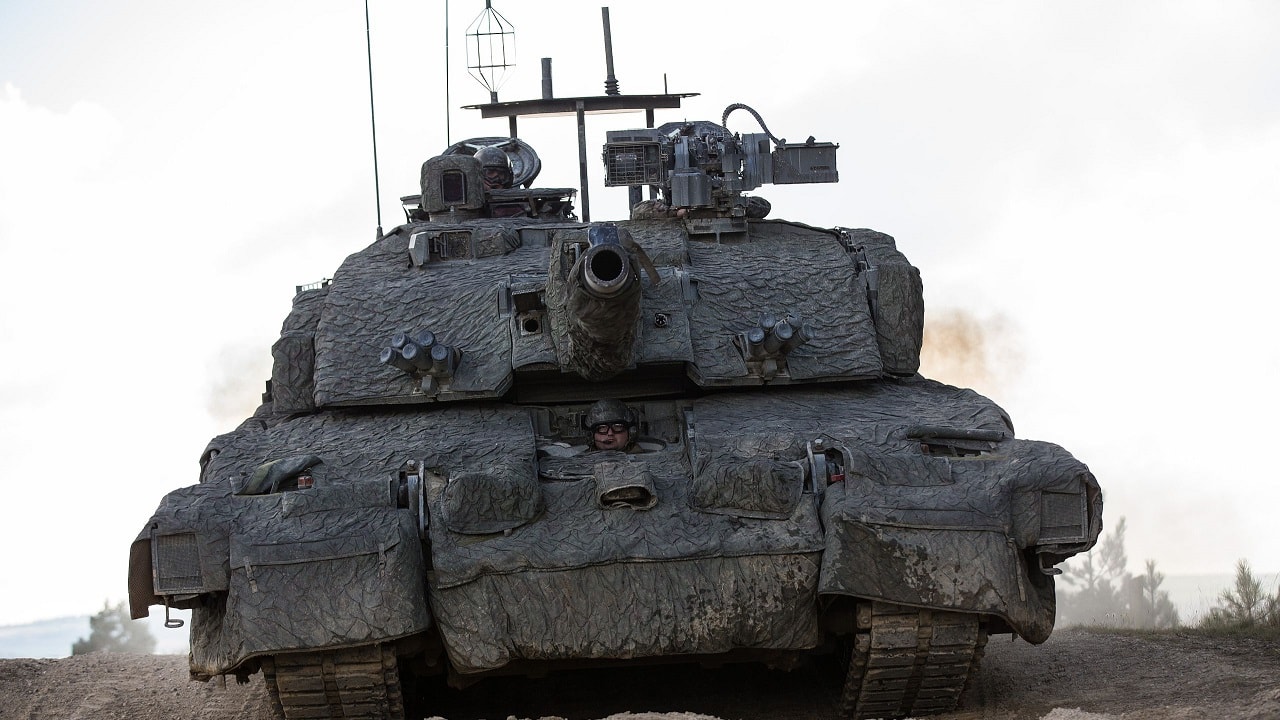
Pictured is the UK Main Battle Tank, Challenger 2 Theatre Entry Standard (CR2 TES) fitted with a Mobile Camouflage System (MCS). The tank is seen driving at high speed toward the camera.
This is not a project to build an entirely new platform, but to expand on an existing, proven system.
The British Army expects Initial Operating Capability in 2027, with full operational capability – meaning all 148 tanks in service – by 2030.
That means the Challenger 3 will be arriving fairly soon, and at a time when many European armies are attempting to rebuild heavy armor capabilities after decades of post-Cold War reductions.
But for Britain, it means spending the rest of the decade mostly reliant on its legacy Challenger 2 fleet while the new tanks are still in trials and early production begins.
What Challenger 3 Brings to the Battlefield
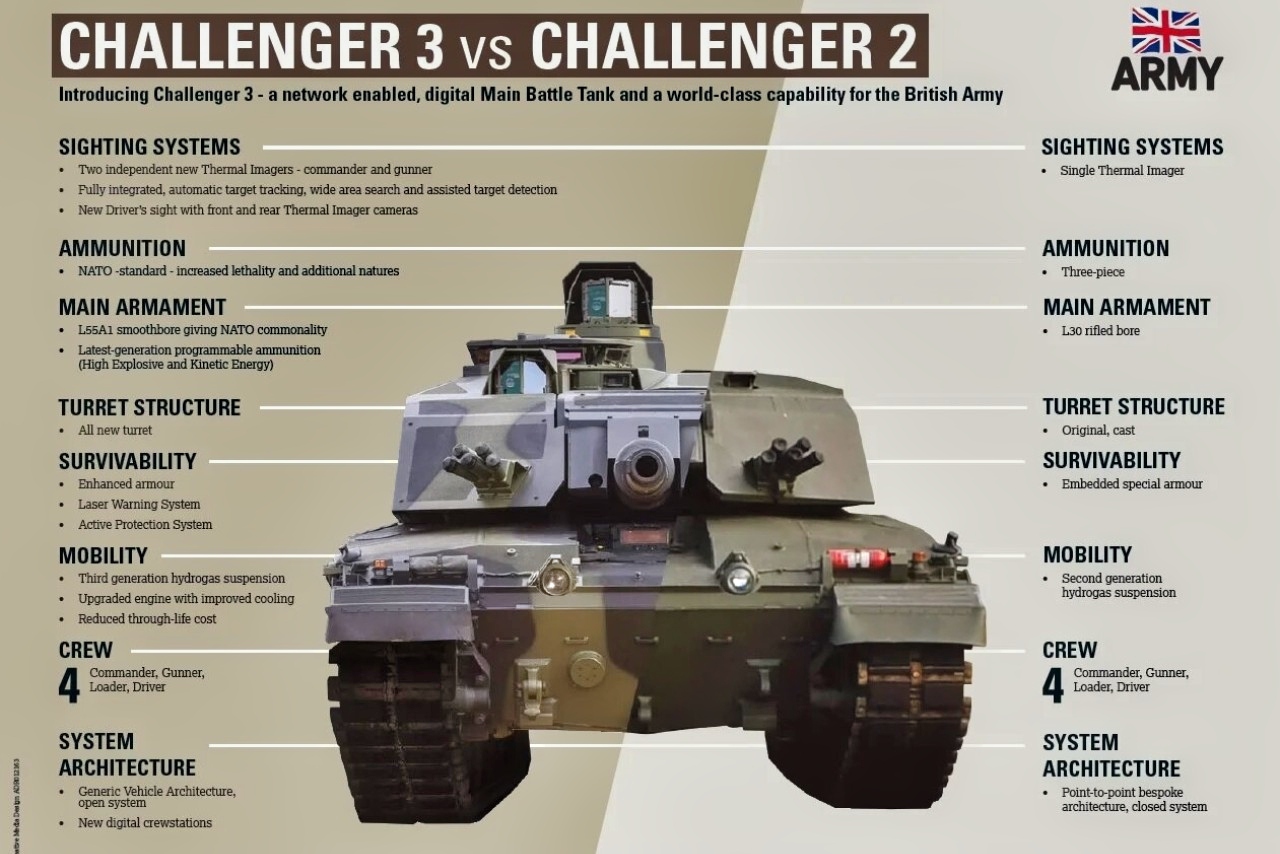
Challenger 3 is not a completely new tank, but rather a comprehensive upgrade featuring a new turret, improved protection, and a modernized digital architecture.
The most significant change is its main armament.
The tank replaces the Challenger 2’s rifled gun with the Rheinmetall 120mm L55A1 smoothbore cannon, aligning it with NATO-standard ammunition and enabling the use of modern kinetic energy penetrators and programmable rounds.
Beyond the gun, the upgrade focuses heavily on survivability and integration.
The tank will feature a new modular armor system, improved thermal sights, digital crew stations, and networked battlefield systems designed for multi-domain operations.
Physically, it also remains a heavy platform at around 66 tonnes, with a four-person crew and a conventional diesel engine, which reflects its continued role as a high-end main battle tank rather than a lighter or more mobile alternative.
Challenger 3 is intended to deliver a “step change” in lethality and digital integration compared to its predecessor, even if it is not an entirely new platform.
But even so, the improvements don’t change the fact that this is still a relatively small fleet by historical standards.
A Smaller British Tank Force in a Changing Europe
The decision to field 148 Challenger 3 tanks, based purely on numbers, is a reduction in British armored tank power. Rather than maintaining a larger fleet, Britain has opted to modernize a smaller number of vehicles to a higher standard.
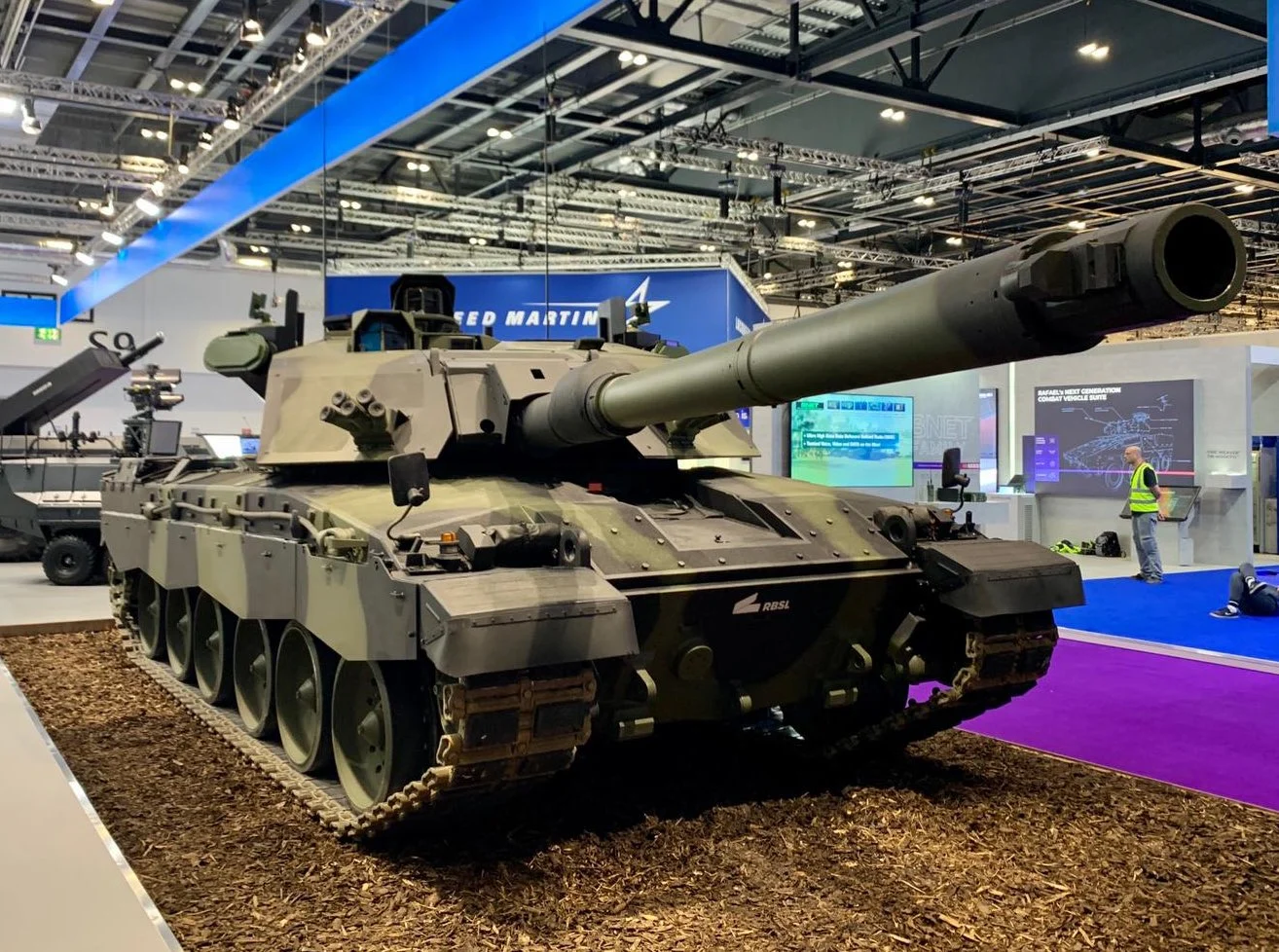
Challenger 3 Tank. Image Credit: Creative Commons.
That decision, however, should not come as a surprise.
In fact, many NATO countries significantly reduced their tank fleets after the Cold War, and that trend continues as new technologies emerge. But the security environment Challenger 3 is entering is curious.
Even as tanks have been exposed to new vulnerabilities, the war in Ukraine has reinforced the continued relevance of heavy (and advanced) armor in high-intensity conflict.
While drones and loitering munitions mean tank formations look different, they still provide something of value: protected, mobile firepower that can seize and hold ground in a way that lighter forces cannot.
Ukrainian and Russian operations have repeatedly shown that drones can destroy tanks, but they cannot yet completely replace them – particularly in offensive operations, where armored units are still required to break through defensive lines and support infantry in close combat.
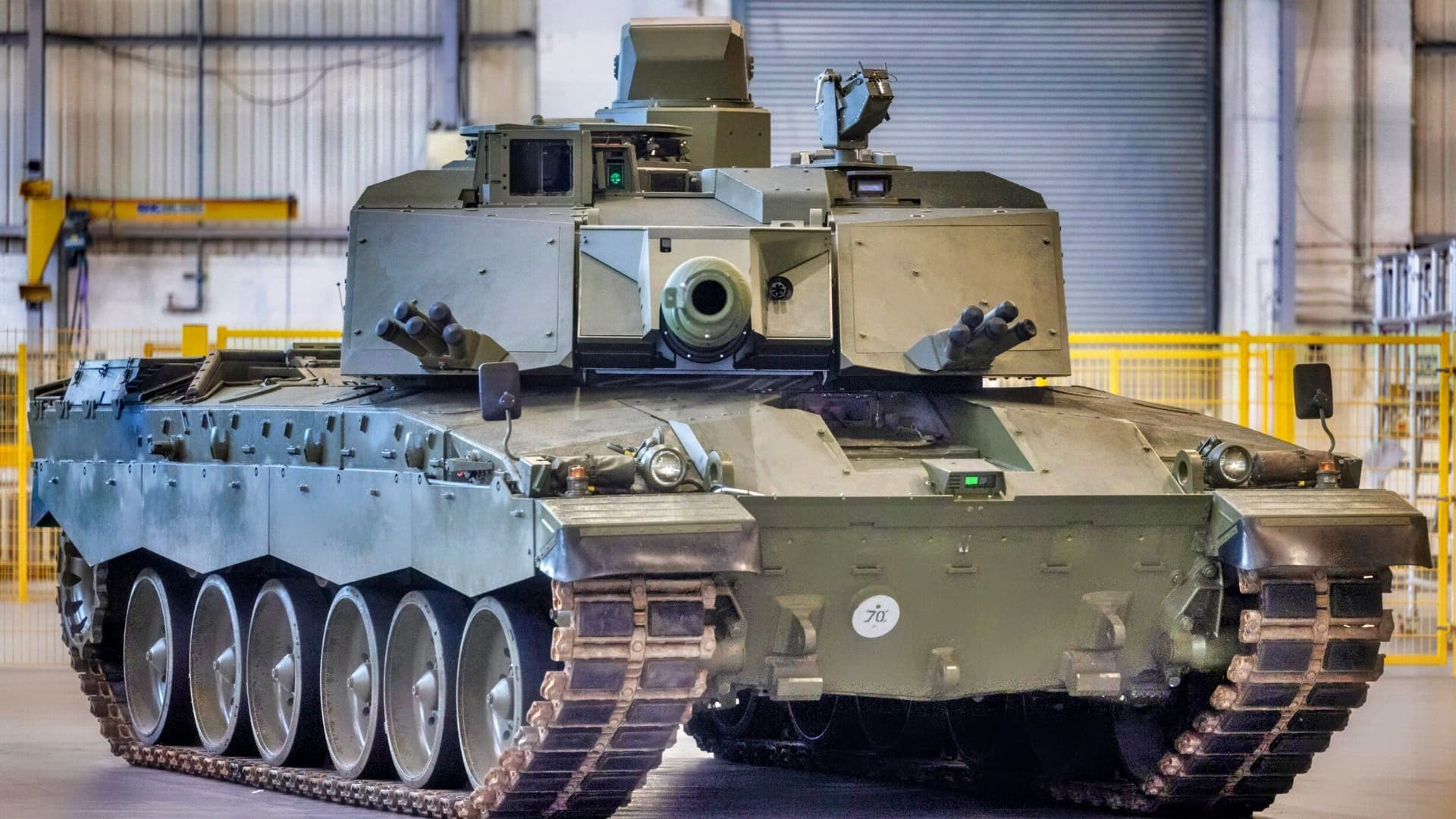
Challenger 3 Tank. Image Credit: British Government.
The lesson should be that tanks are not obsolete, but that they are no longer survivable in isolation, with their effectiveness now depending on integration with air defense and counter-drone systems.
At the same time, Europe’s general defense posture looks to be entering a period of change. Political uncertainty from Washington has raised the possibility – still hypothetical, but being increasingly discussed – that the United States could reduce its role in NATO or scale back its military presence in Europe.
That’s particularly important because U.S. forces are a central component of NATO’s high-readiness combat capability, including armored brigades that rotate through Europe as part of its forward deterrence posture, alongside prepositioned equipment sets stored across the continent.
These formations are not large in absolute numbers, but they are designed to deploy quickly and integrate with allied forces in a way that most European armies currently cannot replicate on their own.
If the U.S. Pulls Back, Does Europe Need More Tanks?
There is no single answer to this question, but there is a credible case to be made that Europe may need more heavy land combat capability overall, including tanks, if U.S. support were reduced.
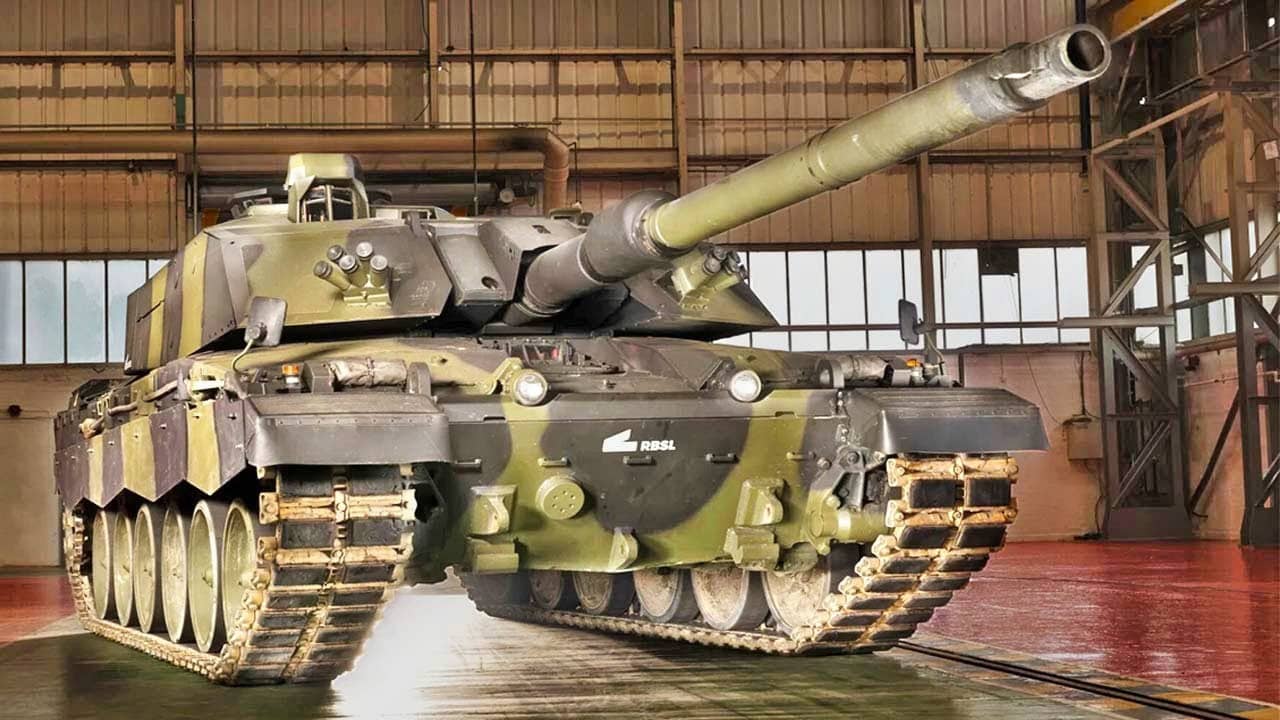
Challenger 3 Tank. Image Credit: Creative Commons.
The United States does not maintain large permanently based armored formations in Europe, but it does provide a continuous rotational presence built around Armored Brigade Combat Teams, each fielding roughly 80-90 tanks, alongside prepositioned equipment stocks that allow additional forces to deploy rapidly if required.
That contribution is limited in numbers, but it plays a disproportionate role in NATO planning because it is structured around readiness, deployment speed, and integration with allied forces.
If that system were reduced or removed, the gap would be measured not only in tanks but also in a loss of capability designed to quickly reinforce and support Europe in the early stages of a conflict.
The scale of that gap has already been examined in several studies.
One estimate by the Kiel Institute for the World Economy suggests that, in a scenario in which Europe had to defend itself without U.S. support, it could require hundreds of thousands of additional troops and around 1,400 additional main battle tanks to compensate for the loss of U.S. support.
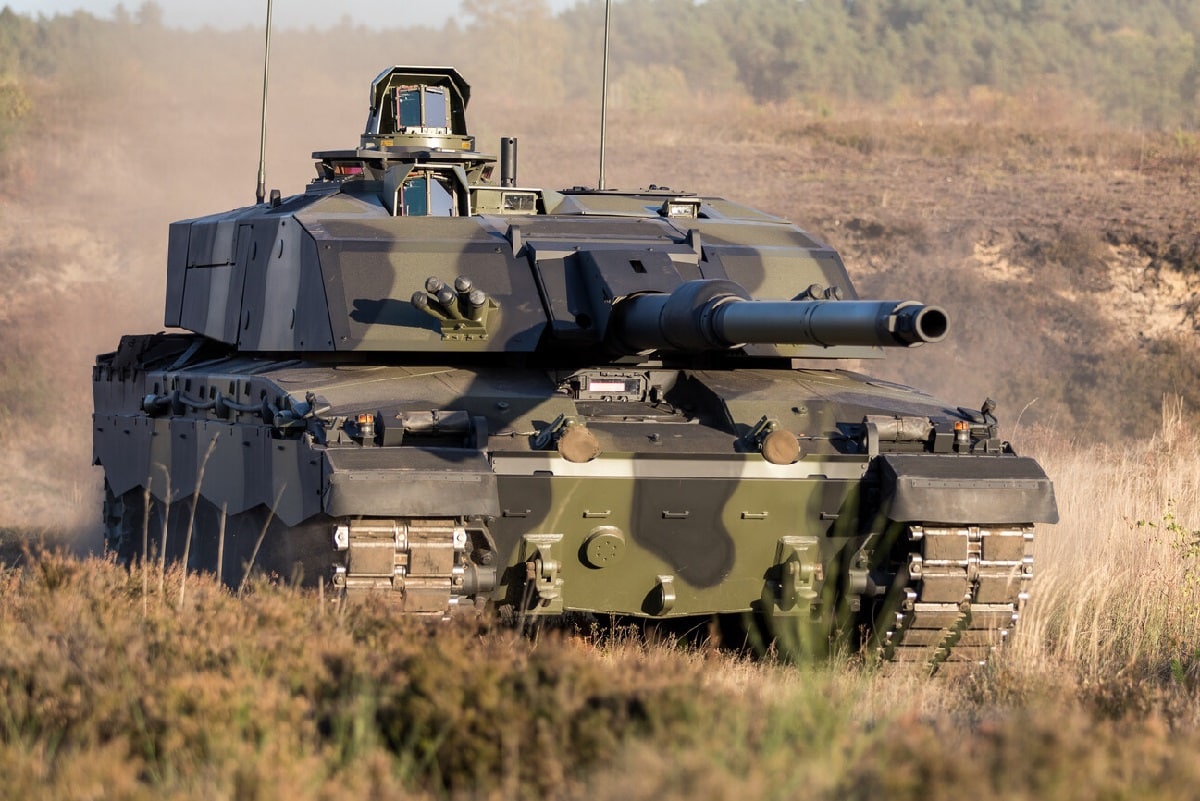
Challenger 3 Image Credit: BAE Systems.
Britain’s coming 148 Challenger 3 tanks, then, may suit its current role – but in a more European-led NATO, that same force could prove more important.
That, then, could raise questions in Britain and across the continent, including whether that number is anywhere close to sufficient.
About the Author: Jack Buckby
Jack Buckby is a British researcher and analyst specializing in defense and national security, based in New York. His work focuses on military capability, procurement, and strategic competition, producing and editing analysis for policy and defense audiences. He brings extensive editorial experience, with a career output spanning over 1,000 articles at 19FortyFive and National Security Journal, and has previously authored books and papers on extremism and deradicalization.