
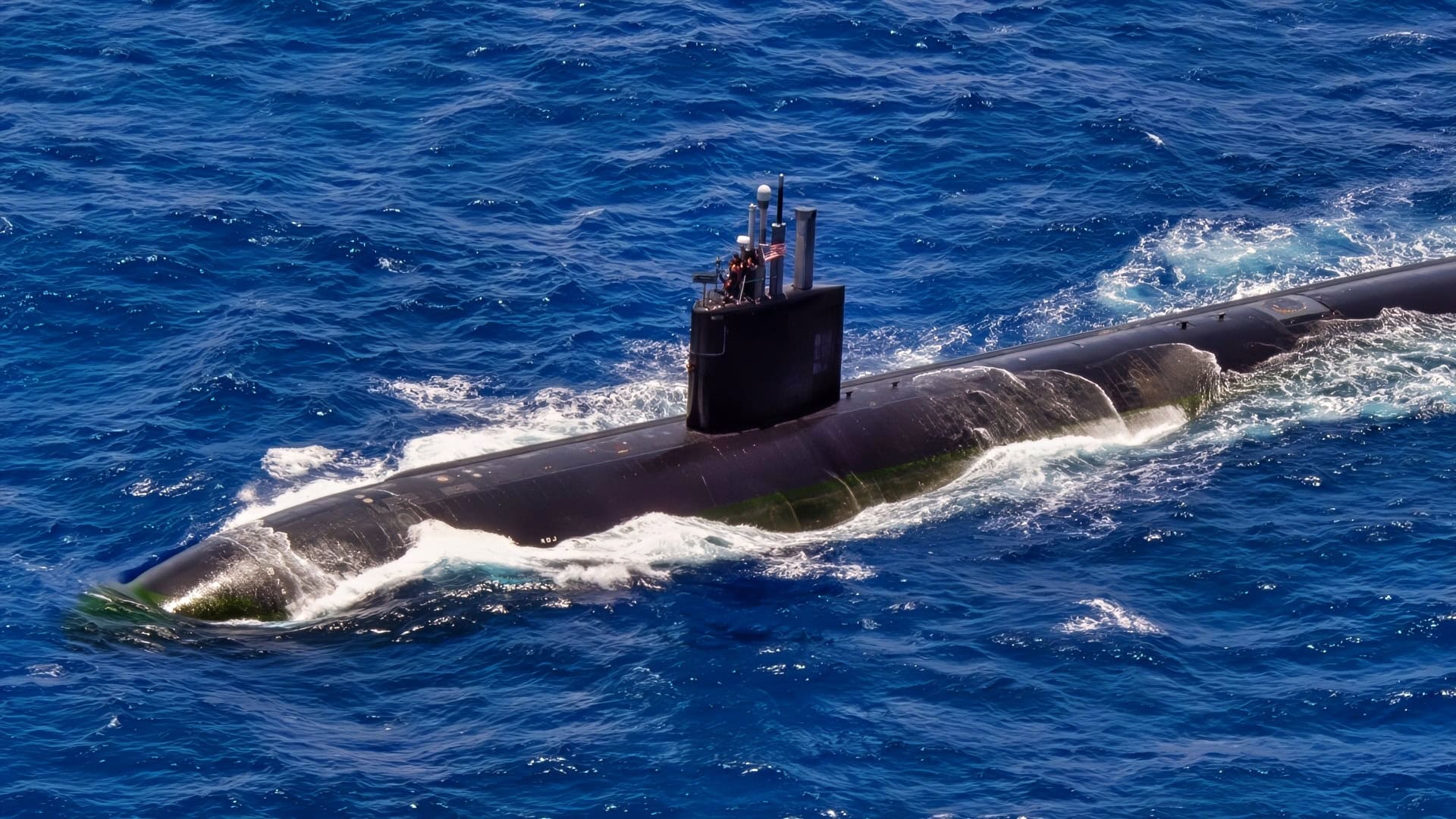
Summary and Key Points: The Royal Navy’s Astute-class and the U.S. Navy’s Virginia-class are the two nuclear-powered attack submarines NATO relies on, and each navy calls its own the best. The Astute, built by BAE Systems at Barrow-in-Furness, displaces 7,800 tons, carries 38 torpedoes and Tomahawks, dives past 980 feet, and wears 39,000 anechoic tiles; six have been built since 2001. The Virginia, from Electric Boat and Newport News, displaces 7,900 tons, carries 135 crew, launches Tomahawks from vertical tubes, and runs on an S9G reactor; 26 are commissioned, the newest USS Idaho in April 2026, with 43 more on order.
Astute-Class vs. Virginia-Class: Who Wins?
The United States Navy’s Virginia-class submarines and the Astute-class subs of Great Britain’s Royal Navy: how do they stack up?
As is befitting of two seafaring nations with a longstanding “special relationship,” both of these countries’ maritime military services rightfully take great pride in their submarine fleets.
So, notwithstanding the recent acrimony between the two nations’ heads of state, how do the Astute-class sub and Virginia-class submersible stack up against each other for bragging rights to the title of Best Nuclear-Powered Attack Submarine (SSN, i.e., Submersible Ship, Nuclear) in NATO?
Contender #1: The Astute-Class
Built by BAE Systems Maritime UK—headquartered in Barrow-in-Furness, Cumbria, England—the Astute-class submarines were tabbed as the replacements for the Trafalgar-class hunter-killer boats.
From a purely semantic standpoint, this was pretty momentous, given how proud a name Trafalgar is in Royal Navy history and tradition.
The lead ship of the class, the eponymous HMS Astute (Pennant No. S119), was laid down on January 31, 2001, launched on 8 June 2007, commissioned on August 27, 2010, and attained full operational status in May 2014.
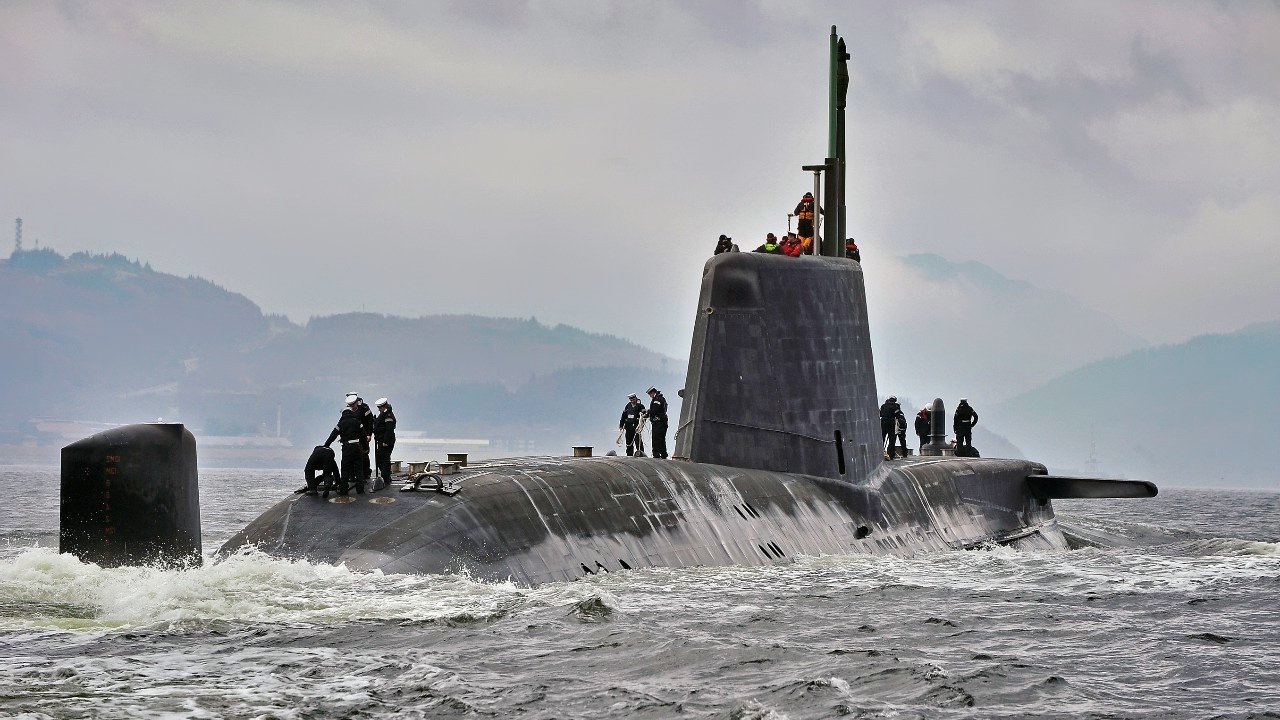
Astute-Class Submarine. Image Credit: Creative Commons.
Since then, five more of the boats have been commissioned between March 2013 and August 2022: HMS Ambush (S120), Artful (S121), Audacious (S122), Anson (S123), and Agamemnon (S124). Agamemnon is currently undergoing sea trials whilst HMS Achilles (S125) is still under construction.
As the official Royal Navy info page proudly proclaims, “The Astute-class submarines are the largest, most advanced and most powerful attack submarines ever operated by the Royal Navy, combining world-leading sensors, design and weaponry in a versatile vessel.”
In terms of tech specs and vital stats, that’s quantified via a submerged displacement of 7,800 tons, a hull length of 318 feet 3 inches, a beam width of 37 feet 1 inch, a test depth/safe operating depth in excess of 980 feet, and a crew complement of 98 commissioned officers and enlisted seamen.
Not to mention, of course, its deadliest vital stats of all: its armament package consisting of 6 x 533 mm (21-inch) torpedo tubes for the Spearfish heavyweight torpedo, and stowage of up to 38 missiles such as the Tomahawk IV Land Attack Cruise Missile (TLAM).
The powerplant is a Rolls-Royce Pressurized Water Reactor 2 (PWR2), which enables the boats to reach a top speed of 30 knots.
These warships are also highly stealthy; “quiet as a baby dolphin,” as some observers claim, or, to quote that RN info page again, “the quietest submarines ever constructed.”
This is because their covering consists of 39,000 anechoic tiles made of a highly classified elastic material containing tiny air pockets, optimized to reduce the typical sonar frequencies of homing torpedoes.
As if that weren’t impressive enough, the Astute-class submarines also have passive/active sonar that can track targets up to 60 miles away, giving them significant standoff attack capability.
Contender #2: The Virginia Class
Meanwhile, the U.S. Navy has tabbed the Virginia-class submarines as the successor to not one but two prestigious, time-honored SSN classes: the Los Angeles-class and Seawolf-class warships.
Built by General Dynamics Electric Boat (GDEB) and HII Newport News Shipbuilding, a total of 26 Virginias have been commissioned thus far.
The newest batch of the boats is the Block IV iteration, which began with the USS Vermont (SSN-792), laid down in February 2017, launched on March 29, 2019, and commissioned on April 18, 2020.
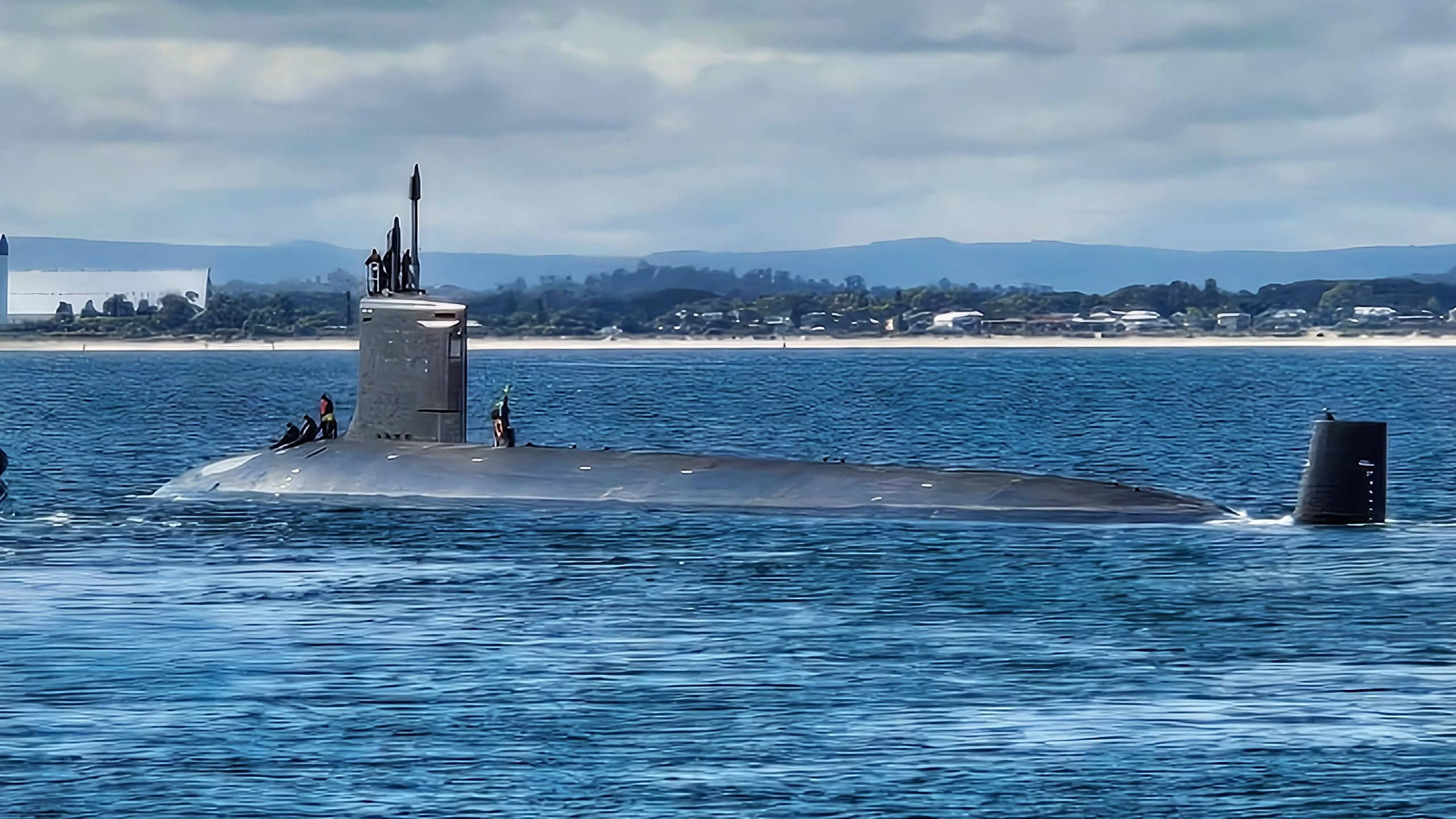
HMAS STIRLING, Western Australia, Australia (Sep. 10, 2024) — USS Hawaii (SSN 776) departs HMAS Stirling Sept. 10, marking the conclusion of a historic submarine maintenance period in Western Australia. As part of the Australia, United Kingdom, United States (AUKUS) Pillar 1 effort, Royal Australian Navy personnel assigned to submarine tender USS Emory S. Land (AS 39) worked alongside their U.S. Navy counterparts to make repairs on the U.S. Virginia-class SSN in Australia during a multi-week Submarine Tendered Maintenance Period, or STMP. (U.S. Navy photo by Rory O’Connor)
The most recently commissioned boat of the bunch is USS Idaho (SSN-799), commissioned on 25 April 2026.
Eight of the warships are currently under construction, with an additional 43 on order, including the upcoming Block V.
Appropriately enough, one of the currently serving Virginias is the USS Hyman G. Rickover (SSN-795), named after the four-star admiral and “the Father of the Nuclear Navy.”
Now, here comes the ironic nomenclatural twist: sometime during the late 1950s or early 1960s, Adm. Rickover put the kibosh on the convention of naming USN subs for sea creatures, with the politically astute assertion and rationalization that “Fish don’t vote.”
That tradition was only briefly revived 11 years after the admiral’s death when USS Seawolf (SSN-21) was commissioned; however, four ichthyian-named Virginia-class boats are planned: USS Barb (SSGN-804), USS Tang (SSGN-805), USS Wahoo (SSGN-806), and USS Silversides (SSGN-807).
Poor Hyman must be rolling over in his grave!
As for the Virginias’ vital stats:
-Submerged displacement: 7,900 tons
-Hull Length: 377 feet
-Beam Width: 34 feet
-Test Depth: *Officially* 800+ feet, but *allegedly* around 1,600 feet
-Crew Complement: 135 commissioned officers and enlisted seamen
-Armament: 12 × vertically launched missiles; 2 × Virginia payload tubes, each capable of launching 6 × Tomahawk BGM-109 cruise missiles; 25 × torpedo tube launched torpedoes & missiles; 4 × 21-inch torpedo tubes for Mark 48 torpedoes or UGM-84 Harpoon anti-ship missiles
The powerplant is an S9G nuclear reactor that delivers 40,000 shaft horsepower, that enables the boats to attain an *official* top speed of 25+ knots and an *alleged* max of up to 35 knots.
Head-to-Head: Which Sub is “Better?”
Well, when we compare the two ships’ vital stats side-by-side, the Astute-class is superior in terms of *official*, on-paper test depth and max speed; however, if the alleged figures about the Virginia-class are to be believed, then the “Yank” sub has a significant advantage in both of these arenas.
Meanwhile, the British boat is more heavily armed, and if the RN’s official claims are to be taken at face value, it bests the USN contender in terms of a submarine’s single most important attribute besides its weapons payload: stealth.
“Quantity has a quality all of its own,” quoth unsung early-20th-century British aerodynamicist Frederick Lanchester, and by that standard, the Americans have an unfair advantage.
But—despite my own patriotic American homerism—on an individual basis, based on verified figures, I’d had to give an ever-so-slight nod to the Astute.
About the Author: Christian D. Orr
Christian D. Orr is a Senior Defense Editor. He is a former Air Force Security Forces officer, Federal law enforcement officer, and private military contractor (with assignments worked in Iraq, the United Arab Emirates, Kosovo, Japan, Germany, and the Pentagon). Chris holds a B.A. in International Relations from the University of Southern California (USC) and an M.A. in Intelligence Studies (with a concentration in Terrorism Studies) from American Military University (AMU). He is also the author of the book “Five Decades of a Fabulous Firearm: Celebrating the 50th Anniversary of the Beretta 92 Pistol Series,” the second edition of which was recently published.